NPR. If you take a look inside your phone or your laptop, you're likely to find a particular chemical element in the battery.
Cobalt is a hard, shiny metal that helps stabilize lithium batteries that can store a lot of charge.
Cobalt batteries seem perfect for electric vehicles.
They don't weigh too much, but can fuel the cars for hundreds of miles.
But cobalt has downsides. It's expensive and has a significant human cost.
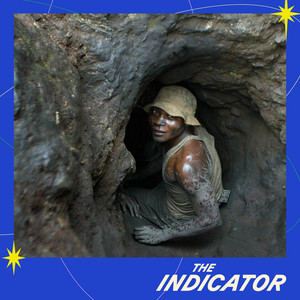
Author Henry Sanderson went to the Democratic Republic of the Congo in 2019, where most cobalt comes from.
A lot of the cobalt was mined by hand by individual laborers, often including children, who dig it up with very little safety equipment and take this cobalt to sell it to stores on the side of the road, many of which are Chinese. and this cobalt then goes to China and makes its way into the battery supply chain and into the electric vehicle.
Back then, there was another battery available without cobalt, one that had been around since the 1990s. lithium iron phosphate batteries.
The two batteries had been in a two-horse race to fuel electric vehicles.
But before 2020, the race really looked like it had been won by cobalt, and the future looked to be fueled by it too.
And yet, last week in a factory in Louisville, Kentucky, Ford made a big announcement.
It was about its future electric vehicle plans.
And Cobalt... was absent. We are going to use lithium ion phosphate batteries.
They are cobalt and nickel free. This is The Indicator from Planet Money.
I'm Darian Woods. And I'm Waylon Wong. Today on the show, the great switch away from cobalt batteries.
We explain how it happened in China and ask why the U.S. is playing catch-up. with no fees or minimums on checking accounts.
What's in your wallet? Terms apply. See CapitalOne.com slash bank for details.
Capital One NA. Member FDIC. On journalist Henry Sanderson's visit to the Democratic Republic of the Congo, he met a former child miner who had seen other children die as cobalt mines' roofs imploded.
Henry learnt about entire road tunnels that would collapse from all the mining that had happened around it.
Soon after Isaiah, there was a big cave-in and lots of people lost their lives.
Cobalt batteries were associated not only with humanitarian concerns, it also had safety problems. ships carrying electric vehicles have been catching fire over the past several years.
Iron phosphate batteries were an alternative.
They had cheaper chemicals. But they had one major flaw.
Less capacity. People were worried about range anxiety.
And China, when it first started to subsidize batteries and electric vehicles nickel manganese cobalt batteries were prioritized Some engineers and business leaders thought differently, like Wang Chuanfu, the founder and CEO of BYD. the Chinese electric vehicle company that's now the biggest seller in the world. even in 2002, you know, he thought that LFP lithium ion phosphate batteries were the way to go because he he thought that the safety aspect was very important if you're going to have all these cars on the roads you needed them to be safe and he also thought they could be cheaper So in the horse race between cobalt and iron phosphate batteries, BYD was betting on the iron phosphate horse.
Then in 2017, the Chinese government changed the way its subsidies worked, and Chinese EV manufacturers would get more subsidies the denser the energy capacity of their batteries.
So this really favored the high capacity cobalt batteries.
Around then, 80% of Chinese EVs used cobalt.
For a moment, it looked like BYD or Wang Changfu had made the wrong bet. by going with this cheaper technology.
But then in 2020, China changed its EV subsidy structure to focus on cost over performance.
This was a key moment. Now cheaper cars were favored by the Chinese government. tilting the playing field more in favor of iron phosphate batteries.
And this was especially the case given technical innovations from BYD and also the huge challenge Chinese EV battery maker CATL.
What BYD and CATL did was build batteries without unnecessary packaging.
BYD even started building directly into the car's floor with a battery pack integrated into the very frame of the car.
Did that reduce the amount of casing and hardware needed so more battery could be squeezed in?
This was taking an existing chemistry and really improving it.
And to be clear, cobalt batteries still have more capacity.
But by better designing the car and the battery packs, you could cram in more of the iron phosphate batteries and get more range.
China's use of iron phosphate batteries skyrocketed.
There are now about 80% of new EVs there.
Cobalt cars in China are now far less common.
So we've seen in five years a complete change in the world's biggest electric vehicle market.
But the U.S. has been slow to catch on. In 2024, less than 10 percent of electric vehicles used iron phosphate batteries.
This is a fact that American engineer Mujib Ijaz wants to change.
I came to the conclusion, especially at the start of the pandemic, that I needed to really start acting upon a vision that we bring North American battery manufacturing with sustainable materials into being.
Moojib founded the battery company Our Next Energy, or ONE, in 2020.
Mujib says that his company's iron phosphate batteries have demonstrated more than 400 miles of range.
Mujib says this is innovation that is built off all the findings coming from China.
It's no different than the entire philosophy of patenting ideas, and then you publish your ideas, and then people...
Think about what you did and they try to do something a little better.
I think actually that's human progress. That's actually... the way in which technologies have always evolved is that we've seen how a step leads to a second step, it leads to a third step, One of those companies that's building off what happened in China five years ago is Ford.
I'm so excited about today. We've been waiting three years for this moment, so...
That big announcement by Ford CEO Jim Farley last week in that Kentucky factory was about constructing electric vehicles from the battery up. building off the techniques that BYD and CATL pioneered and taking it a step further.
Jim also announced a refit of that Louisville factory to build cars that would use iron phosphate battery cells.
We will spend $2 billion here in Louisville modernizing this plant.
Now, to be clear, none of these companies have been citing humanitarian concerns as their top reasons for shifting away from cobalt.
This makes business sense for them. Yeah, there was a lot of self-congratulations for building batteries in America, but it's worth noting that Ford's iron phosphate battery factory licenses technology from CATL, the Chinese battery company. not American startups like Mujib's.
Charles Poon is the head of high-voltage propulsion engineering at Ford.
We asked him why. There are really like two elements.
One is being able to select a chemistry in this particular case and the right technology.
And really the second is to be able to drive the scale.
And our electrification plants are going to be able to support a full-scale operation of a gigafactory.
To translate all this, CATL had the track record and the resources to build lots of batteries fast.
Is there an argument for, I guess, seeding and supporting younger companies that may not be quite there yet but Maybe in five to 10 years, they could grow to be the next CATL.
Absolutely. Just because we don't select one supplier for a particular project. doesn't necessarily mean that they are not being considered.
In fact, Ford has many endeavors in our research and development and in our supply chain group where we're constantly developing and working with startups to be able to build that robust and resilient supply chain in the future.
Ford's announcement shows the US is taking steps towards reducing its cobalt demand.
But there is an open question about whether the technology to enable that will be American or Chinese.
In the meantime, Wajib Ijaz from One is working with a large automotive company.
Ironically though, it's not American. It's the German car giant BMW.
And you know what, Waylon, BMW has a track record here.
In the early 2010s, it took a gamble on a young battery company that was thinking of switching to make EV batteries.
That company was CITL, now the world's largest EV battery maker.
That is a good final detail. That's fun.
This episode was produced by Cooper Katz-McKim with engineering by Kweisi Lee and Gilly Moon.
It was fact-checked by Sarah Juarez. Cake and Cannon edits the show and The Indicator is a production of NPR.