You're listening to Shortwave from NPR. Hey shortwavers, Emily Kwong here, and today we're going on a road trip to the Comanche National Grasslands of southeastern Colorado near La Junta, where if you drive down a dusty road in early fall, usually right around sunrise or sunset, you'll start seeing these little shadows that look like rocks crossing the road.
More and more will appear. And ecologist Dallas Hasselhohn says pretty soon you realize these moving shadows are not rocks.
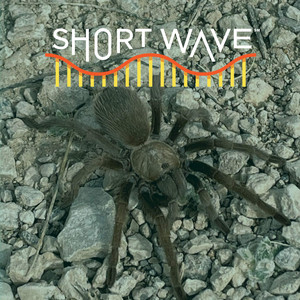
They are tarantulas. Slowly meandering their way across the asphalt as you're driving at highway speeds, trying your best, hopefully, to avoid them.
Tarantulas are a group of large, hairy spiders that I think are quite cute up close.
But feel free to debate me on that. These tarantulas in Colorado are on a mission.
Once a year, from mid-September to mid-October, Colorado brown tarantulas leave their burrows en masse to find a mate.
These wanderers are sexually mature males, crossing the road as the cars try to dodge them.
When Dallas was a tarantula researcher at Eastern Michigan University's Shillington Arachnid Laboratory, they remember the first time they saw these arachnids in the wild.
And I was like a kid in the candy shop. The second I saw one, I pulled over immediately and I jumped out and I just ran straight to it.
Time stopped like a slow motion love scene with the tarantulas running to find a mate and Dallas running to find them.
It felt like I was running through the wildflowers in the grasslands, finally seeing something, because I had only worked with tarantulas in a lab setting.
This was my first time seeing wild ones, and it was beautiful.
It was everything you could imagine. The tarantula migration is so beloved in the local community that every year Tarantula Fest takes over downtown La Junta.
Dallas has been a parade judge and loves it.
It was hard not to continually get choked up, given the reputations of tarantulas and seeing a whole community come around to celebrate them.
But despite the public embrace of tarantulas, very little is known about what triggers this massive migration-like event.
We lack such basic knowledge of their life history.
No one had gotten out and done the gritty, dirty fieldwork to actually see, is there something that's triggering these males to go and mate-seek?
So Dallas did what scientists do and got dirty.
Today on the show, a tarantula migration mystery.
What causes thousands of male tarantulas to leave their cozy burrows after years of being homebodies?
And how is public opinion about tarantulas changing?
I'm Emily Kwong, and you're listening to Shortwave, the science podcast from NPR. and restricting more than 1,000 harmful ingredients. all shipped to your door.
Shop at a grocery store that actually cares for your health at thrivemarket.com slash podcast for 30% off your first order, plus a $60 free gift.
Federal funding for public media has been eliminated, which means decades of support for public radio and television from both political parties is ending.
To be clear, NPR isn't going anywhere, but we do need your support.
We hope you'll give today to keep rigorous, independent, and irreplaceable news coverage available to everyone, free of charge.
Make your gift at donate.npr.org. And thank you.
Okay, Dallas, so we're talking today about tarantulas, and they have a pretty interesting life cycle.
Can you just explain how male tarantulas are hanging out in the years prior to this big day that they go on this quest?
Yeah, absolutely. So males will hatch out of their mom's egg sac.
And then all baby tarantulas, when they're ready to leave their mom's burrow, they'll leave in a single file line.
And then one will break off from that line and a handful will follow.
And then one will break off from that line and they do this weird fractal pattern.
We still have no idea what they're doing that for.
It might be a dispersal mechanism. And then the tarantulas do the most boring thing in the world, right as they're babies, they dig a hole and then they sit there from anywhere between three to 10 years before they sexually mature.
The other fun fact that I love to share is tarantulas are very cleanly.
When they eat, they'll have to liquefy their prey.
They make a protein shake out of their food, and they slurp them up.
And then all tarantulas have these little mustaches, kind of like baleen in a whale.
And what they'll do is once they're done eating, they will sit there and meticulously clean that, make sure there's no food crumbs left in their mustache.
And then whatever leftovers they have, they'll wrap up in their silk.
They're really model citizens. They are.
They are. All right. So you encountered these tarantulas at the moment that the male tarantulas emerged from their burrows to make this mass journey.
What did you find in your research? Yeah, so I went out there a couple of weeks before I had kind of a hunch the males would start coming out.
And I went out to the grassland every day, four times a day.
I went out there right before sunrise, sometime in the morning, at the exact heat of the day.
And then I went back out right around dusk.
And I just counted tarantulas. But I didn't see any males until... early September, there was this cold snap where the temperature dropped significantly.
And then all of a sudden, I saw 20 to 30 tarantulas after seeing none for weeks.
And then fewer and fewer and fewer over the next couple of days.
And then there was another cold snap in late September.
And all of a sudden, I saw around 50 to 60 tarantulas in a day.
And it also happened to be a really, really hot day.
So it was a whiplash as far as temperatures are concerned.
Hmm. And then over the course of the next couple of weeks, all through October, less and less tarantulas until I was literally out there finding frozen tarantulas on the ground in the mornings.
What is the leading reason you think that the cold is correlated to this movement?
Yeah. What I think is happening, if I wanted to like kind of anthropomorphize them a little bit, is that they're sitting in there in the sweltering heat going, I do not want to come out of this burrow.
It is so hot. And then it gets really cold very quickly and it's making them go, oh no, I got to go find a mate.
I'm sexually mature. This is my last hurrah.
Male tarantulas actually die after they've sexually matured within about a year.
So this is quite literally their last hurrah.
And that cold snap is kicking them in the butts.
Yeah. Just to close out the life cycles of tarantula a little bit, once these males find their lady and they mate, what happens to them?
So if you're a male tarantula, ideally what you want to happen is you mate...
And then you're able to skedaddle, get out of there as quick as possible, and go find another female.
Unfortunately, as the mating season goes on, the males are using more and more of their reserve energy.
Typically during a mating season, males aren't really eating or even drinking.
And they get weaker and weaker. And eventually, if they are mating pretty regularly and successfully, they're a little too slow on the draw.
And the female decides that she wants a nice dinner to go along with the date.
And she clamps down on the male. We also tracked the...
You put this little tiny radio transmitter on their backs.
And we quickly found that it was pretty hard to track them down because they would be half eaten inside the female's burrow.
What a way to go. Yeah, we'd have to dig up their burrows to get the transmitter back.
And then, you know, make it a little bit nice for the female again so we're not destroying her home.
Okay. Yeah. So after doing your master's thesis, I imagine your appreciation of tarantulas has only deepened.
And I want to pass that along to our listeners.
What role do tarantulas play in their ecosystems?
Yeah, so we don't know what we don't know.
These tarantulas could be contributing quite a lot to their ecosystems, but we don't even know what's triggering their mating season.
As soon as you start bringing up tarantulas, the question then becomes, well, why?
Well, do we really care about them? What are they actually doing?
And the answer is we really don't know. There's a book written in the 1950s called The Tarantula that points out this lack of information.
And it is a wonderful little read. It is full of old-timey science lingo.
And since then, we still lack the majority of that information.
Okay. You know, I'm struck by the date of this book, too, because the movie, the horror movie Tarantula came out in 1955.
And I'm just wondering, why do you think we know so little about tarantulas?
Because some of this stuff does seem very basic.
Yeah. Yeah, and I think what it is, if you'll allow me to get on a slight soapbox here.
Oh, please. I think what it is is just cultural ideas of tarantulas and their importance.
You know, people love birding in their backyards.
We set up bird feeders and things like that.
People love hearing about tarantulas. You know, anything that's big and fuzzy.
Tarantulas have this scare factor. And I just like to point out that tarantulas are little and fuzzy, you know?
Yeah. But because there's been this push a lot more recently, I think, where people are starting to love, whether it's ironic or not, you know, the creepy crawlies, the outcasts, you know, the roly-polies are getting a lot more popular.
Things like bats. Bats have had a huge cultural shift over the past, you know, two decades.
They went from being the scary creatures of the night that Dracula called to being –
People affectionately calling them sky puppies and things like that.
And I think we're seeing that with a lot of other creepy crawlies like tarantulas.
There clearly has been a major shift. Yeah.
And it's in no doubt because of scientists like yourself providing this information.
So now that we know that these tarantulas need a cold snap to trigger their mating behavior, how are you feeling about climate change?
Yeah. And so one of the aspects of my research that I deliberately chose was the population that I looked at near La Junta, Colorado, is on the northernmost edge of this species range.
And we often find that these edge populations act as like a stronghold for that species because they're subject to more... climatic variations.
And so as climate change starts warming these areas up or we start just seeing much different climatic variation, I would expect that this group of tarantulas actually ends up being able to be that stronghold for the species because they're used to such swings in temperature.
That's my speculation without more so knowing basic life history about them.
Dallas, thank you so much for coming on the show.
Thank you very much for having me. I appreciate it.
Shortwavers, myself and the team have been creating episodes for you for almost six years.
And now we have a small but important favor to ask.
Can you share your favorite episode of Shortwave with a friend or a coworker or a lover or a frenemy?
We really just want to grow the show. And the thing that will help us do that is word of mouth.
Tell them to follow us on their favorite podcasting platform and you should do the same.
This episode was produced by Burleigh McCoy.
It was edited by our showrunner, Rebecca Ramirez, and fact-checked by Tyler Jones.
Robert Rodriguez was the audio engineer.
Beth Donovan is our senior director, and Colin Campbell is our senior vice president of podcasting strategy.
I'm Emily Kwong. Thank you for listening to Shortwave from NPR.
This summer on Planet Money Summer School, we're learning about political economy.
We're getting into the nitty gritty of what government does with things like trade, taxes, immigration, and healthcare.
So politics and economics, which are taught separately, they shouldn't be separated at all.
I think you have to understand one to really appreciate the other.
So what is the right amount of government in our lives?
Tune into Planet Money Summer School from NPR, wherever you get your podcasts.
As AI permeates every aspect of our lives, who are the people behind this huge inflection point?
What keeps them up at night? I fear that what it means to be human may suddenly not be our own.
We've got a special series from NPR's TED Radio Hour.
It's called The Profits of Technology. What they got right, wrong, and where these pioneers think we're headed next.
Listen to the TED Radio Hour wherever you get your podcasts.