This BBC podcast is supported by the UK.
We always recommend Shopify.
It took us from an idea to a real business.
We got set up, I think, in less than a day with very little effort.
We could just focus on the supply chains and the product development.
Shopify gives us the ability to customize without the complexity.
We can change something without introducing fragility or having to pay a developer.
We're Thirsty Turtle and we leveled up our business with Shopify.
Start your free trial at Shopify.com.au.
How are weight loss drugs changing our world?
In the span of just a few short years, weight loss jabs have become so prevalent in our culture that they've transformed the way we live, move and eat.
Restaurants are serving smaller portions and there's more protein-rich food in grocery stores.
Does all of this speak to a renewed obsession with skinniness?
Listen to The Global Story on BBC.com or wherever you get your podcasts.
This is the Global News Podcast from the BBC World Service.
I'm Charlotte Gallagher, and at 16 hours GMT on Thursday, the 12th of February, these are our main stories.
China's annual carbon emissions have fallen for the first time, raising hope they may have peaked.
And Ukrainian skeleton, Bob Racer, is disqualified from the Winter Olympics for planning to compete wearing a helmet depicting athletes killed by Russia.
Also in this podcast, a woman abused by Jeffrey Epstein calls on the British royal family to do more.
They can contact me and the other victims they can contact.
The thing is, I just hope they're not just saying this.
I would like to see them actually taking action.
And has the North Korean leader Kim Jong-un chosen his teenage daughter as his heir?
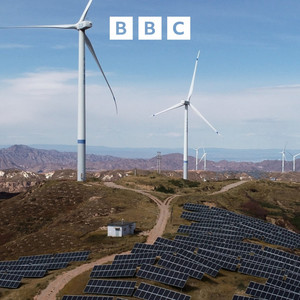
China may still be the world's largest emitter of carbon dioxide, but levels have been falling due to a push for clean energy.
And now new data says 2025 was the first full year to show a decline.
The reported drop in emissions is small, but campaigners say it could be a milestone.
Our climate editor, Justin Rowlett, spoke to Oliver Conway about the figures.
First year ever, China emissions have actually fallen back.
They've fallen back by 03 percent.
Now that really, really doesn't sound much, but what we're seeing.
It is against a background of level of falling emissions for almost two years now, for 21 months in fact.
They sort of peaked in kind of spring of 2024 and then have fallen back a bit more significantly since then.
So we're What people are saying is and look it's couched around with caveats but it appears we might be seeing the beginning of certainly peaking of emissions in China and possibly even the beginning of a decline in emissions in China.
Set that in context.
China is far and away the world's biggest emitter of greenhouse gases, notably carbon dioxide, the biggest greenhouse gas.
I mean, overwhelmingly, a third of all emissions come from China.
So what happens in China, literally in this case, could change the weather for the rest of the world.
Yeah, you mentioned caveats.
There is a margin of error on some of this.
But take us through which sectors have contributed to it.
So what we're seeing is a fall in emissions in transport, power, cement.
So Huge sectors of the Chinese economy balanced against that.
We're seeing an increase in emissions from the chemical industry.
But overall, the net is a slight decrease.
So that gives you a sense, I think, of how finely balanced this is.
You know, most sectors in slow decline.
One sector increasing quite significantly.
So you know, if one of those other sectors change direction.
If, for example, there was a bit of a building boom in China, started using a lot more cement because use of cement has fallen back, you might see emissions push upwards again.
So we're not saying, you know, definitively China's reached the peak and it's going to decline.
We're saying, oh, this looks like an interesting moment in the Chinese economy.
Looks like an interesting moment for world emissions.
Kind of let's see what happens.
Yeah, because it has a goal of reaching peak emissions by 2030.
I was going to ask you if this progress could be reversed.
You suggest yes.
But is China broadly on track?
Broadly on track in terms of peaking.
In terms of carbon efficiency how much carbon dioxide is emitted per unit of production it's actually way behind its ambitions and is struggling to meet the targets set in its 14th five-year plan.
And then we're expecting it to struggle to meet the 15th five-year plan, having missed the 14th five-year plan.
So it's behind on one measure.
But in terms of total emissions, we're seeing this levelling potential peak, maybe even the beginning of a fall.
So, basically on the key measures, you know that should concern us sitting back in the world looking at what's happening.
Yeah, this is this is appears to be possibly a significant moment.
So beginning to maybe go in the right direction.
What is behind China's push towards clean energy?
China a long time ago 20 years ago or so recognised a few things, one of which was that climate change was a really serious threat for China, that China's very water insecure, very big shortage of water,
Climate change was going to affect agriculture.
You know, everything in China was vulnerable to climate change.
They needed to do something about that.
China wanted to pioneer new industries.
And it saw an opportunity in this kind of nascent, this emerging clean technology industry.
So, for example, solar power China sent out graduates to places in the developed world that were pioneering solar power and then brought the technology, brought that knowledge back and set up in the early 2000s new companies to build solar panels.
China has an amazing expertise at efficient manufacturing and it brought that to bear on this challenge of producing clean technology and has delivered unbelievable results.
And for more on this story, you can go on YouTube search for BBC News.
Click on the logo, then choose podcasts and Global News Podcast.
There's a new story available every weekday.
The Ukrainian skeleton racer banned from competing in the Winter Olympics, has said he still doesn't understand which rule he violated.
The IOC says it withdrew Vladislav Hariskevich's accreditation because he intended to wear a helmet and featuring athletes killed in Russia's war on his country.
Our reporter Sarah Mulkerins told us more.
It's been ongoing since Monday here in Italy when, on this first, this initial training run, the Ukrainian skeleton athlete wore the helmet.
It features images of athletes killed during Russia's invasion of his home country.
The IOC.
Have been in conversation with Herescovich and his father Mikhailov, since then about reaching a compromise to allow him to raise, because the IOC says the helmet breaks its rules regarding political statements in the field of competition.
He was told he couldn't wear it, but he could wear a black armband instead.
However, the athlete did not agree with this, insisting that his tribute is no different to those that some other athletes have displayed during these games, such as figure skater Maxim Nomov.
He held up a photo of his parents, who were among 67 people killed in a plane crash in Washington DC just over a year ago.
And he held that up while waiting for a score to be announced earlier this week.
Now.
This morning, the IOC president, Kirstie Coventry, met Oreskevich for more conversations with the athlete just prior to his event.
But no agreement could be reached.
And so the skeleton racer was banned.
He could not compete.
Responding to this on social media, he wrote that this is the price of our dignity.
And he also spoke to the BBC about the situation. emptiness.
And yesterday was amazing training.
Before yesterday was also very good training.
I could be among the medalists in this event.
But suddenly, because of some interpretation of the rules which I'm not agree with, I'm not able to compete.
While other athletes in the same situation were able to compete, and they didn't face any sanctions.
Vladislav Horescovich ending that report from Sarah Mulkerens.
The messaging service WhatsApp is very popular in Russia.
The company says it has more than 100 million users there.
But the Russian authorities have confirmed today that they're blocking it.
Critics say the move is aimed at pushing its users onto a state-owned app, which is seen as less secure.
Olga Ifshina from BBC Russian has been telling us what the Kremlin says are the reasons for its decision.
As always, you know, they say that the companies are not following the regulations, not cooperating enough with the Russian authorities.
To be honest, WhatsApp has been significantly slowed down for several weeks now.
And actually people were quickly migrating to other messengers which, in turn, have been slowed down or blocked as well.
So is there a reluctance from a lot of Russians to join this state-backed platform?
They want to use other ones that they see as more independent.
Yes, so exactly as you mentioned, you know, it seems that all this big trouble started after the Kremlin has introduced its approved messenger called Max, and they are strongly strongly, strongly encouraging everyone to join.
Also using, so to say, administrative resources.
So many like school chats, kindergarten chats, where teachers inform parents about certain things, have been moved to Max.
So people still have to join.
On the other hand, people are very much reluctant because...
There were a lot of independent reviews about Max and a lot of IT specialists raised significant concerns about data breaches and it's unclear how much authorities can see and think through that messenger.
So yeah, Russians are trying to use alternative messages, but they're being slowed down or blocked.
So the biggest news of yesterday for the Russian speakers, for people inside Russia, was the fact that Telegram, another very popular messenger where many people moved after WhatsApp, was slowed down.
Telegram, it was significantly slowed down yesterday.
And some experts believe that that's all part of the big strategy of the Kremlin.
And is there a feeling that, since the start of the Ukraine war, people's internet use in Russia is being more surveilled?
Yes, definitely.
Since the start of the invasion, Kremlin has introduced draconian laws restricting freedom of speech, freedom of expression and also introducing de facto censorship in the media.
That's why people migrated to other platforms, including Telegram, where a lot of Independent journalists or bloggers were posting the news.
So people trying to diversify their access to information, but they are meeting significant pressure from the Kremlin.
Olga Ivshina from BBC Russian.
The actions and the friends of the paedophile Jeffrey Epstein continue to make headlines around the world.
We've also been hearing from one of his many victims.
Juliet Bryant, who's a former model from South Africa, was groomed and abused by Epstein from 2002 to 2004.
She says if the British royal family are concerned for his victims, they should take action by helping to search the emails of Andrew Mountbatten-Windsor, who lost his royal titles over his relationship with Epstein.
She's been speaking to the BBC's Mayenne Jones.
Although it's been over 20 years since she was abused by Jeffrey Epstein, Juliette Bryant still remembers that period vividly.
And the recent release of some three million files relating to the convicted paedophile has thrust her into the limelight once more.
I feel, I suppose, vindicated in one way, but in other ways I feel just shattered, because I was almost hoping that it wasn't going to all be true.
And also it's even darker than what I realised, which has been very, very hard to deal with emotionally and emotionally.
She's also critical of the royal family's response to the crisis, which has led to Andrew Mountbatten-Windsor losing his title.
He's denied any wrongdoing.
Well, I think it's great that they've made a statement finally, but the thing is, are they going to actually act on it?
I'm willing to speak to them any time.
You know any way I can help so they can contact me and the other victims they can contact.
The thing is, I just hope they're not just saying this.
I would like to see them actually taking action.
Ghislaine Maxwell is a character that was central to Jeffrey Epstein's operation.
She recently made a deposition in the US where she pleaded the fifth.
What was your reaction when you saw that?
I think it's just ridiculous.
You know, after they say that she's going to be giving a testimony and everyone's waiting.
It's much like when they said they were going to release the files before, and then they give the testimony and it's just like they may as well have not even done it.
Because if someone's going to plead the fifth, why are they even going to bother?
Because everyone was waiting for the information.
And so I just think they've wasted a lot of people's time.
And I think it's really about time that she started speaking out, you know for her own sake, you know personal benefit, because I think anyone who was involved in this will be going to hell.
Juliet was just 20 years old when she met Jeffrey Epstein and says she was abused by him from 2002 to 2004.
She says she kept going back to him because she feared for her life.
He was a mastermind criminal.
It was, you know, he was highly manipulative.
And for a 20 year old meeting someone who was he was 49 at the time.
You know I wasn't able to, you know, deal with the situation, as many of the other young girls weren't.
You know it was also.
A lot of girls created a sort of Stockholm syndrome where they believed that he cared about them and was going to help.
It was like being like a scared mouse around a snake being around him.
And, you know, he had a way of manipulating people and he also made me feel like it was my fault.
She hopes other victims will come forward and that those mentioned in the files will testify before the US authorities.
King Charles has expressed concern over the allegations against his brother and says his thoughts remain with the victims.
Mayani Jones reporting from South Africa.
Still to come.
In this podcast we remember the life and career of Dawson's Creek star, James Van Der Beek.
He took this character that was not, you know, a jock, was not the cool kid in high school, and made him lovable, and that was not afraid to be emotional.
How are weight loss drugs changing our world?
In the span of just a few short years, weight loss jabs have become so prevalent in our culture that they've transformed the way we live, move and eat.
Restaurants are serving smaller portions, and there's more protein-rich food in grocery stores.
Does all of this speak to a renewed obsession with skinniness?
Listen to The Global Story on BBC.com or wherever you get your podcasts.
North Korean leader Kim Jong-un has never officially confirmed how many children he has.
But since 2022, a young daughter has been seen attending public events like banquets and missile launches.
Now South Korea's intelligence agency says that daughter believed to be 13 or 14 years old has been selected as his heir and is in the process of becoming the country's next leader.
Our correspondent in Seoul, Jake Kwon, told me more.
She is the only known child of North Korea's leader, Kim Jong-un.
And she is probably one of the most privileged teenager in the world right now.
Anytime we see her on television, she's wearing her hair long, which is usually forbidden for school age.
Young women in North Korea.
She's wearing designer clothes, which is out of reach for most North Korean people.
And she is on the line to inherit power.
This country that is really dedicated, entirely dedicated, for the well-being of just one person at the top.
And now what we're hearing from South Korea's spy agency is that she was seemed to be, she was grooming to be a next heir.
But now she seems to be internally decided to become the heir and inherit North Korea from her father.
Now
Her father is only around in his early 40s, likely 42.
But it has been a big mystery and a lot of a matter of speculation who is going to take over North Korea when he passes?
Now, this question of who is going to inherit, of course, is something that the spy agency has been talking about for the past years.
And now we're getting even more definitive answer on what their latest belief is.
But this also raises a lot more question.
One question is, of course, why now?
When Kim Jong-un was selected as the heir, this was just before his father, Kim Jong-il, was going to pass.
So it really seems a lot early.
And also, it also leaves us the question of what about Kim Jong-un's other children?
We understand he also has a son who hasn't been seen on television.
So what is going to happen to this older, elder son, who is dead, widely speculated to be the next heir in a country like North Korea, where male heirs are more valued than a female daughter?
So, just like a lot of things in North Korea, when one question is answered, a lot more questions start popping up.
Jake Wan reporting from Seoul.
In Madagascar, more than 35 people have died after a tropical cyclone with winds of 250 kilometres per hour hit the island nation.
The country's president has visited the country's second biggest city Thomasson, also known as Tamatavi, and said 75 of its infrastructure has been destroyed.
One of those affected is Denise, whose family home was damaged in the storm.
Kamatavi is almost destroyed by the cyclone.
And we had almost six hours of strong winds and heavy rain.
I was with my family in the house.
The house.
I can't say it's a strong house, but the house was trembling like trembling really, really trembling.
And the windows, bricks and lots of water, lots of water in the house.
Almost the house is destroyed, the university, the school, the hospital, everything.
Our correspondent Richard Kogoy gave us this update from Nairobi.
The city, Tomasin, which you just mentioned, a city of about 400,000 people, has been devastated.
Roads have been cut off.
If you look even at people's homes, they're not habitable.
The roofs are blown off.
You know, the port, which is the main core activity of the area, has been quite destroyed as a result of this.
We're also hearing that villages which were literally on the path of the cyclone have also been devastated.
The only thing is that the authorities have not been able to carry out a full assessment, just to paint a picture in terms of the scale, in terms of human loss and also the devastation that was caused to residents and institutions around there.
And how are the authorities responding and getting help into the area?
It's really difficult because, at the moment, the national response has just been focused on the town of Tomasina.
They are just using whatever they can at their disposal, with rescue and emergency services have just been mobilised around the city trying to reach as many people as they can.
The only challenge is that roads have been destroyed, you know, major, major roads.
So access is actually very difficult.
And even for those that have been affected, even getting relief supplies to them food, water and medicine has really been quite difficult.
So that's why actually, the president appealed for international support just to help them with this process.
Richard Cagoy.
Now we're going to talk about all things AI artificial intelligence a subject about which vast numbers of words are written every week.
So many that it's hard for most of us to work out what to think.
Will AI lead to the end of the world?
Or will it make most of our lives much better?
Well, one particular article this week seems to have struck a chord, with more than 70 million views and counting
It's by someone called Matt Schumer, the chief executive of an AI company, and he's warning of the profound impact AI is already having on many jobs, including in the field of AI.
Essentially, AI can do those jobs just as well or better and much, much faster.
And it'll start doing them not in 10 or 20 years, but one or two.
So how alarmed should we be?
Stephanie Hare is presenter of AI Decoded at the BBC and broadcasts and writes on all things tech.
She's been telling James Menendez why she's not too worried by the letter.
You can tell that he used AI, which he has acknowledged, by the way, to write this letter.
So it's really, really long, first of all, which is like a telltale mark.
A human who had to pass this through an actual editor would have been told, you know, lose 50%.
So it's long, it's bulky, it's in the listicle style that we're used to reading when we're told you know, here's the 10 things you need to do to get a beach body for summer, right.
So you can go immediately down to the bottom of the article and see where the cell is.
And his solutions for any of your AI anxiety are as follows.
One, more AI.
He wants you to sign up for a paid version of a tool.
$20 a month, he says, to spend an hour a day using AI to build things for the next six months.
The payoff he promises you is that you will then understand what's happening with AI better than 99 of people around you, which personally I think you could get a lot more bang for your buck doing something for an hour a day for six months and save that 20 a month.
There are ways that you can be using AI in your life and experimenting with it that are not so hysterical and breathless as what you're going to read in this article.
So what's interesting is why did it go viral?
Yeah, well, why do you think it's got so much traction?
Well, I think we're in this period very much like in US politics of flood the zone when it comes to the AI industry.
So they've got to keep the party going because loads of people have invested in AI, right?
It's just enormous, eye-watering sums of money.
And it really hasn't delivered the return on investment that they need, as investors and as companies, to keep this going.
That's why people are worried that there's a bubble that could burst.
And whether or not that would percolate out into the wider economy.
So that's reason one that I think it's gone so viral as people are like, make sense for me.
Is there an AI bubble or an AI apocalypse, which is.
It's coming for our jobs.
We're all going to need to be on universal basic income.
When is it coming?
He's giving you a nice little timeline there.
He's riffing on previous people who've written essays like this.
Yeah, but is that basic diagnosis wrong, though, that it is going to do a lot of our jobs for us?
I mean, that was my takeaway.
It's going to do a lot of tasks for people, but it's not going to be taking everybody's job and it's definitely not going to be doing it in this sort of short, even to medium-term timeframe that Anthropic CEO Dario Amodei warned about in his 50000-word essay two weeks ago.
There's a habit of people writing these essays and then people engage with them and it's all very exciting, but we have to actually look at what's happening out in the world.
You've got 8 billion people on this planet.
I guarantee you that the majority of them are not even using AI today, including white-collar workers around the world.
That's just not happening.
So it might be happening in Silicon Valley, but it's not happening around the world.
So that's point one for us all to calm down.
Point two, it can do some things really well, but it also does a lot of things not so well.
And right now, companies can't take the risk on it getting things wrong, right?
Because they've got liability risks.
They have to train everybody up.
They're doing a lot of stages at the moment where they're still experimenting and trying to figure out where is AI actually useful and where is it not.
Stephanie Hare.
Yeah.
Finally, the American actor James Van Der Beek has died at the age of 48 after being diagnosed with bowel cancer.
He played the title character in the popular drama Dawson's Creek, alongside Katie Holmes, Joshua Jackson and Michelle Williams.
Lee Milner has been looking back at his life.
For many people, James Van Der Beek was one of the defining faces of late 90s television.
I'm Dawson.
You're Dawson.
Dawson, yeah, I know.
We met before.
I'm Jen.
Oh, the granddaughter from New York.
OK.
Born in Connecticut, he found fame at just 21, playing Dawson Leary in Dawson's Creek.
His intense eye contact and emotional speeches made him the teen heartthrob when the show first aired in 1998.
Go, I'm telling you, before I take it all back, all right, just go.
Nearly three decades later, his famous cry face is still one of the Internet's most iconic memes.
After his teen drama days, he took on a mix of roles from big Hollywood films like Vastie Blues.
This is your opportunity.
For you.
Playing football at West Canaan may have been the opportunity of your lifetime, but I don't want your life to comedy roles, including appearances in shows like Overcompensating.
Taking to social media to announce his death.
His wife, Kimberly Van Der Beek, wrote on Instagram that the star passed peacefully and met his final days with courage, faith and grace.
The father of six revealed in 2024 he had bowel cancer.
Since his diagnosis, he's used his platform to promote cancer screening.
A life spent on screen across decades, ending at just 48.
Lee Milner.
Emily Longoretta from Variety magazine told us more about James Van Der Beek and how the role he created on Dawson's Creek was so important to the era-defining TV show.
James Van Der Beek is best known for playing Dawson Leary and the show was built around him and the creator, Kevin Williamson, has said many times you know he wanted to tell the story of his life and Dawson was based on him and He had to find the right person to do that and James immediately stepped into that role and broke through and became such a mainstay in so many TVs and so many living rooms around the world.
He took this character that was not a jock, was not the cool kid in high school and made him lovable in this filmmaker and producer, someone that people fell in love with and that was not afraid to be emotional, something that a lot of men on TV especially young men on TV it's frowned upon.
And James Van Der Beek was able to do that with such eloquence.
And his emotion and connection and authenticity really came through the screen as Dawson and really catapulted his career.
Instead of just being a 90s heartthrob, he ended up going on to do many, many TV shows and films.
And he became one of the mainstays of the entertainment world and something that is why this passing is so devastating for so many.
That was Emily Longoretta.
And that's all from us for now.
If you want to get in touch, you can email us at globalpodcast at bbc.co.uk.
You can also find us on X at bbcworldservice.com. use the hashtag Global News Pod.
And don't forget our sister podcast, The Global Story, which goes in-depth and beyond the headlines on one big story.
This edition of the Global News Podcast was mixed by Holly Smith and the producers were Charles Sanctuary and Stephen Yensen.
The editor is Karen Martin.
I'm Charlotte Gallagher.
Until next time, goodbye.
How are weight loss drugs changing our world?
In the span of just a few short years, weight loss jabs have become so prevalent in our culture that they've transformed the way we live, move and eat.
Restaurants are serving smaller portions, and there's more protein-rich food in grocery stores.
Does all of this speak to a renewed obsession with skinniness?
Listen to The Global Story on BBC.com or wherever you get your podcasts.