
[Cleaning the World Together: The Let's Do It Movement]-[Cleaning the World Together]
📋 Summary
Cleaning the World Together: How One Idea Changed the Environment
The Problem: Illegal Garbage in Estonia’s Forests
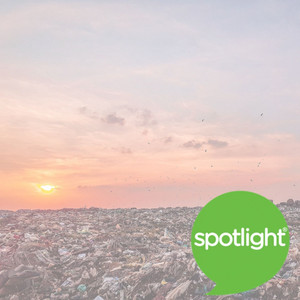
Estonia is a country celebrated for its beautiful forests and natural landscapes. However, for many years, these forests were marred by a persistent issue: illegal garbage dumping. According to the "Let's Do It" team, this environmental degradation was largely a legacy of the Soviet era, when forests were considered state-owned property rather than a collective responsibility. Consequently, the local population developed a detached attitude toward the land, leading to widespread illegal dumping. As Tina Urm noted, the garbage was not merely an environmental crisis; it was deeply rooted in "people's attitudes," as many Estonians had learned to ignore the waste entirely.
The Catalyst: Rainer Nulvak’s Vision
In 2007, businessman Rainer Nulvak and a core team of 20 friends decided that the status quo was unacceptable. Their objective was ambitious: to clean up all the illegal garbage in the entire country in just one day. To achieve this, they recognized that they first needed to change public perception. By garnering support from the Ministry of the Environment, famous actors, musicians, and even the president of Estonia, they transformed a local initiative into a national movement. The project, titled "Let's Do It, Estonia," utilized television and internet media to spread awareness and mobilize the populace.
Technology as a Tool for Change
To tackle the logistical nightmare of locating waste across vast forests, the team turned to technology. Experts developed a specialized computer program that integrated satellite imagery with GPS data. Volunteers scoured the forests, marking the exact locations of illegal dumpsites on their mobile phones. This data was then uploaded to a central map, which allowed the public to see the scale of the problem. The result was staggering: over 10,000 tonnes of waste were identified. This transparency was a "very important step," as it shocked the public into realizing the severity of the environmental damage surrounding their own homes.
The Day of Action: May 3, 2008
The success of the project relied on massive human cooperation. With corporate support providing trucks, machines, and fuel, the team organized a nationwide clean-up on May 3, 2008. Over 50,000 volunteers participated, successfully removing more than 10,000 tons of garbage in a single day. This feat was not just an environmental triumph; it was a significant milestone for Estonian society. As Nulvak explained, "The most important thing we did was build a team," emphasizing that the act of connecting with others helped people overcome their fear of responsibility.
A Global Movement: Let's Do It World
The Estonian success story quickly transcended borders. Witnessing the efficacy of the model, countries like Latvia, Lithuania, and Slovenia adopted similar clean-up days in 2009. By 2010, the initiative had evolved into "Let's Do It World," with over a million people participating globally. Today, nations as diverse as India, Brazil, the US, Cambodia, and Italy are involved in the mission. The movement serves as a powerful reminder that collective action, supported by technology and community spirit, can address global environmental challenges. As the project continues to expand, it poses a vital question to every citizen: "What can you do to make your country cleaner?"

Deep Learning with ListenLeap


