Discussion keeps the world turning.
This is Roundtable.
You're listening to Roundtable with myself He Young.
I'm joined by Steve Hatherly and Yuxian in the studio.
Coming up, here's something interesting among the Chinese diaspora.
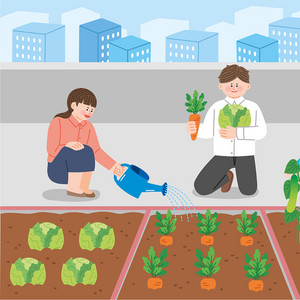
While others garden, Chinese families around the world are busy planting fresh vegetables and some are turning it into a profitable business.
What's behind this love for farming over gardening?
And need a boost to crush the weak?
Our special segment Motivational Monday is your ultimate adrenaline shot to kick things off strong.
Our podcast listeners can find us at Roundtable China on Apple Podcast and any podcast platform of your choice.
If you have questions that you want us to answer on social issues, business, technology, or whatever moves your spirit, you can send those our way Roundtable Podcast at qq .com.
Emails are fine, but voice memos are always better because we are a radio slash podcast show after all.
And now on Roundtable as we turn our attention to this particular topic.
The love for farming among Chinese communities is sparking a fresh trend abroad.
While the Brits are known for adorning their backyards with flowers and manicured lawns, Chinese families no matter where they are in the world, apparently often go straight to planting vegetables from Japan to Italy and by a Yond.
They're growing fresh produce not just for their own dinner tables, but for their neighbors and local community too.
So tell us what's going on.
This might be a little bit of a stereotype of a stereotypical view.
Yeah, I was going to ask, is this true?
I didn't know about this, but this is very much maybe imposed by Chinese people.
I remember back in the 1990s when my parents went to the US to get their degrees and work for a few years among 90 % of the Chinese families at the time who are all, well, in our social circle were poor international students.
If they can find a small plot of land, they will plant vegetables.
And even raise chickens if you can.
It's like something that all Chinese can in a way resonate with that we just love our vegetables and love to plant them.
And what's got trendy recently is that stories of people of Chinese descents living overseas, producing and supplying vegetables to international markets has gained traction online.
And sometimes it just comes natural for many of these people to think about, you know, planting vegetables is just something that could be done almost anywhere regardless of the location because many of them are reported to be doing it in rather a vast areas of farmlands or smaller pieces of soil such
as in front in the front or in the back yard behind your houses when you're living abroad.
And many of them brings Chinese farming methods abroad and adjusted based on the local soil environments, such as one example that's very iconic here is 56 year old In Ming Zhao.
So this guy is a farm owner in Marloca, which is an island in Spain, and he was born just in a city that's next to Shanghai, but became the first Chinese person to grow Asian fruit and vegetables on the Maloka island of Spain as reported by their local media.
So Zhao moved to Maloka in his early 20s and he worked several different jobs before buying three hectares of land locally, where he planted native Chinese crops, and then sells it at the local supermarket that he opened.
So according to Zhao, the climate there is rather similar with that in East China's Zhejiang province where he's originally from, but the water has a lot of salt in it.
So he had to like make many adjustments in order for the crops to grow.
And for him, this is a quote from the report, he says that the watermelon and Chinese melon are very good and actually taste sweeter than they do in China.
And the quality of the red grapefruit, Chinese pears, pak choy and white radish is also really good.
Yeah, I was reading about his story a little bit.
He said it was trial and error with with the farming in the beginning because he would he didn't know which vegetables would grow well and which wouldn't grow well in that climate, but he's perfected it.
And now if you happen to find yourself in the area, please look for Super Mercado Asia.
That is the name of his supermarket.
And as a Chinese person, I can immediately feel my saliva sort of What was it that brought that on?
Radish? Yes, yes, yes.
Okay, so I was gonna say pak choy first.
That's yol cai. And that's a really standard green leafy vegetable for all Chinese people.
And by Luoba, oh, of course, sorry.
Like during winter time, as winter is coming, do stew some braised pork with white radish and put a pour in soy sauce and other ingredients, condiments whatsoever.
And it's zero skill and maximized to taste.
It's just so tasty.
And it's a great Chinese dish.
And it's a great Chinese, I'm claiming Chinese on everything.
I shouldn't do that.
Because white radish belongs to all people who love it around the world, but it is definitely something we love in our dietary.
I looked it up because I knew you were going to ask me if people in Canada loved to farm.
And honestly, I did not know the answer.
And based upon my experience, when I was a kid, my immediate family did not have a garden in the backyard.
We didn't grow anything.
But my grandparents did.
In fact, that was one of the things that they both love to do.
And one of my grandparents' house and grandma would be cooking dinner and she would need potatoes or radishes or whatever.
And Steve, that was my job to go out and pick whatever vegetables she needed at the time to make dinner for that day.
So that would be 50 -50, right?
My parents didn't, but my grandparents did.
And that's kind of how the statistics break down countrywide, as a matter of fact.
A little bit more. Now, as of 2021, they did a survey there in Canada, and they found that six out of 10 households, so 60 % grow fruit or herbs or vegetables or flowers.
That's a slight increase from 10 years prior.
That was 56 % at that time.
So basically the same thing.
I guess we can learn from that, that gardening didn't really become more popular, but it also didn't lose any popularity.
I found this to be quite interesting though.
In 2022, they did a big survey and they found that a million households in Canada planned to start gardening for the first time.
And they asked them why.
Why are you planning on doing this?
41 % said they want to save some money shopping.
49 % said they think they can grow better vegetables than the ones that are available in the Canadian.
75 % said, I don't know, just something to do.
Fun hobby. So is it like every?
No, it's not everybody, but it's a lot more people than I expected though.
That's fascinating because if I may offer just a little bit of a comparison.
I lived in the UK for a few years and gardening is such a huge strand of their culture, of their tradition.
Anybody who is fortunate enough to have a garden, they will plant flowers.
And as a Chinese person, also I'm one of the members of the millennial generation.
So we've been through hardship when we were kids.
When I was a kid, my family lived in one room.
Because Yu Shan is of the Gen Z, the younger Zumer generation.
My family used to live in basements when we were starting off.
It's the same. It's not a competition of hardship, I suppose.
But just for younger folks in this country, a lot of them were born in, you know, living in an apartment.
But back then, when, you know, in the 1980s, 90s, a lot of families lived in Bangalore and having your like a nuclear family in a room, even if it's just one room with no living room, that was considered really nice.
So you're saying there was no space available for - Oh, of course.
And even till today, unless you live in a villa, you don't have the space to garden if you live in Chinese cities.
Well, also the legality of it.
I doubt you can just walk down the street in Beijing and choose an empty piece of grass and plant a carrot there.
You can't do that. I think you can't - That's what I mean.
Yeah, because first of all, in this country, you don't own land.
Yeah, land is a complicated legal matter and it's state owned.
And basically when it comes to the nice lawns that maybe we walk past by in Beijing, oh yeah, that's public land, you can't grow your own stuff.
But that's what I mean though.
So you got to own your own land before you can start your own garden or your own farm as Zhao Heibin did in Italy.
This is another success story.
I mean, yeah, but this guy is a little bit different because comparing with other Chinese descent who prefers to grow it for themselves, this guy actually see the opportunity of growing a business based on his local farming condition and all the opportunity he saw.
So this guy, Zhao Heibin, he first came to Italy from Wenzhou.
The city of Wenzhou in East China's Zhejiang Province, they have like a very close friendship with several cities there in Italy.
So Zhao was among the people who tied this knot and moved to Italy back in 1995.
And he worked there in a Chinese restaurant and where he observed how the restaurants were working and realized that, hey, you guys don't have decent vegetables.
And a lot of the vegetables served in the Chinese restaurant in Italy, according to him, was imported from Thailand and they were relatively limited in variety.
So that's what sugared him to wanted to start this whole business of farming for vegetables from China and also to supply it to local communities and Chinese restaurant.
And he did it because today, Joe's farm covers more than 23 hectares in supplies over 50 types of vegetables, including sweet potatoes, bitter melon.
Have you ever heard of bitter melon?
Bitter melon? I don't think so.
It translates directly into Chinese, into Kuo Gua, but it's something that has a lot of folds on it.
Like, how do you describe it?
It's like a bitter...
Like a little yellow melon?
No, no, not a melon.
It's kind of like, ooh, okay, it looks kind of like a cucumber that's gone under some nuclear contamination.
A nuclear cucumber.
A new clumber. That's not the way to sell it.
Sorry, Kuo Gua. But that's how it looks like in my humble opinion.
And it tastes bitter.
It's not that juicy.
It's a weird vegetable, but Chinese people love it, to have...
love to have a drink, especially summertime when it's supposed to like, sort of bring out the necessary heat outside of your...
out of your system.
And yeah, it's a pretty common summer vegetable.
I've just looked it up.
I'm looking at the image right now.
Yeah, nuclear cucumber.
Yeah, it's like a cucumber that had some plastic surgery or something.
I've seen these in the supermarket, but I haven't purchased one because I don't know how to...
I didn't know how to cook with it.
But anyway, so bitter melon, along with winter melon, celery, green beans, and other vegetable varieties are included in Joe's farming, say, list of things that he's growing in the land of Italy nowadays.
And they're also supplying the local Chinese restaurants, factories, and consumers with the vegetables he grows.
And he produced... his produce is also ordered by merchants from not only from Italy, but also countries such as Germany, Hungary, and Czech Republic and France.
Wow. Wow. So yeah, it's a multi...
He's serving all of Europe then.
Oh yeah. That's really cool.
What a success story that is.
Yes, it is. And also, I've read stories about folks, let's say, living, well, Chinese immigrants, or just business people who live in, let's say, places such as Dubai, or, you know, places that mainly are of a desert climate.
And of course, getting any kind of vegetable is difficult.
And also, for the Japanese example that you guys mentioned, in case you didn't know, fruit and vegetables are so expensive in Japan.
So, you know, in those climates and situations, it makes a lot of sense to try to grow your own vegetable, I would think.
Yeah, there's one...
Sorry, I'm always telling the stories here, but I've been reading a lot of stories lately.
And there's one that's precisely what you just described, Heian, because of the extreme weather in recent years, vegetable prices in Japan is like skyrocketing with one tomato costing as much as 15 yuan, or almost $2, for one tomato.
And that's what triggered this lady named Chen Li Li, who married off to Japan, and also like many other Japanese ladies, she just prefers to stay indoors as a housewife, where she just picked up this gardening skill from scratch through learning from online tutorials about two years ago.
And the main purpose for her is just to grow healthy vegetables and also save some daily costs for grocery as well.
And to ensure the produce was healthy, she rarely used pesticides.
And nowadays, she can grow enough vegetables, including radishes and some, you know, green leaf vegetables that's kind of Chinese, but now growing healthily on the Japanese soil as well, and just supply her family and in a very reasonable price, because according to the report, her family's monthly
food expenses are now reduced to just about 50 ,000 Japanese yen or around 320 US dollars.
Very affordable. And also we see that overseas in Africa, there are some major agricultural projects going on there as well.
And we see that there's increasing agricultural technology cooperation between China and Africa.
The bitter melon also grows in Africa.
I'm sorry, I've just been doing some light reading on the bitter melon while you were talking about the Japanese garden story.
Yeah, sorry to interrupt, African Chinese cooperation, you were saying, or about to say.
No, I forgot where I was starting, but yes, there's been a lot of overseas agricultural projects, particularly between China and Africa for in recent years.
Because, well, as far as I've been reading online, there's been an increasing agricultural technology cooperation between China and Africa as statistics show that there are currently more than 100 ,000 Chinese people engaged in agricultural production and technical guidance on the African continent,
spreading across to more than 50 countries and regions in Africa.
And they also get involved in various agricultural sectors, such as grains, vegetables, fruits, tea, cotton, oil seeds and livestock.
And you know, one big impression I got from my CIE trip as I was kept on reporting for you guys just a few weeks ago, I was talking to this guy from Ethiopia, he is like a local minister or something.
And according to him, every 10 sesame that Chinese people eat, there are eight sesame that comes from Africa.
And in the meantime, these sesame, the seeds, the growing techniques and the cultivation and farming, everything, when it comes to producing these sesame are also in close tie, collaborating with Chinese enterprises and governmental subsidies as well.
So for them, this is like a win -win cooperation, and it brings a lot of jobs.
And it brings a lot of, you know, new ideas on how to grow things better, even though the crops is from China, but they're growing good and they're grown big in the lands of Africa.
Oh, that is so interesting.
And it's so great to hear this from you, you brought something back from your week -long reporting at the CIE and it's truly - from the other things that you were reporting on.
That's awesome. And now, you know, you get the chance to share your observation in the farming industry.
And also here are some figures that really stood out to me.
According to the 2023 China agricultural outlook report, China's total vegetable production in 2022 reached one, sorry, 791 million tons, an increase of 2 % from the previous year.
And here this, China's vegetable exports accounted for approximately 14 % of the world's total vegetable exports.
And because I always just think, okay, vegetables, that's a perishable goods category.
And to export it, well, there's definitely the tech and logistics sort of guarantee that needs to be in place.
And also you need to have an abundance to be able to export.
And this is just such a fascinating topic.
And before we go on, I like just to circle back to one little thing about the stereotype that we didn't get to talk about the second half.
Oh, the people planting gardens and stuff?
Yes. And the thing is, okay, so like we've established that here in China, at least, you know, part of our observation is that can I attribute this maybe to this long standing struggle of food scarcity that has shaped our cultural values and attitudes towards self sufficiency?
Like when you look at the thousands of years of Chinese history, it's only in the last 40 plus years have we been able to feed ourselves properly.
And then when you look at, let's say, you know, oh, the English love their gardens.
There's this long ingrained tradition that they have.
And yes, their gardens, if you're planting flowers, then that is for ornamental and aesthetic purpose.
It's not to feed your hunger.
And then, so in our generation, I just find it fascinating that, you know, when we talk about, oh, Chinese people, do we prefer farming over gardening?
But I wonder if, is it true that it's in our genes or is it still just in our memory that after a few more generations, well, when people don't have that memory of starvation, that they wouldn't want to plant stuff, they would want to plant, well, you know, flowers instead of vegetables, maybe.
Maybe, maybe not. And I don't know if this is a good comparison or not, but there's something in the Korean language culture where after every mealtime or around mealtime, people ask their co -workers or their friends, Shik Sa He Seo, did you eat?
And I found that to be an odd question when I moved there.
Like, yeah, why are you asking me?
Well, the reason is because of what you just talked about.
A long time ago, people didn't have enough food to eat.
And that just became a part of the language culture every day.
So back to here in China, I don't think it's about as much about necessity anymore as it used to be, but maybe it's just, and I'm speculating, I don't know, but maybe it's just a part of the culture now.
And if it's part of the culture, then it'll probably just be a part of the culture for a long, long time.
And yeah, I agree with that because I do believe it's in our genes as well, because, you know, I'm a historian, cultural fanatic.
And according to my reading in previous times, I recognize that this country is just based on such an economic model that's built upon agriculture.
Because thousands of years ago when China became China, it's based on agriculture and how farming has been, you know, supplying the country or multiple different say, rains and altogether become what we call China nowadays.
This whole thing is built on the agricultural civilization.
So yeah, I do believe it's in our genes.
Well, actually, I still would beg to defer that maybe that's going to change.
Give it one more generation.
Who doesn't want to sit on the sofa and just open a fresh box of already cut up...
Bitter melons. Ew. White Motivation on Mondays!
Yushan, what do you have for us?
Oh my gosh, I'm almost not sure if this qualifies as a Motivation Monday.
But here's the thing.
I've probably a hundred year old to a lot of our young listeners out there, but I've recently just had my first first person experience of just playing Black Myth Wukong, but not playing it myself, but to watch other people live stream playing it.
So my thoughts on watching people playing it is also what marks my first time seeing the game, how it's done and all the views, like why people love it.
And it comes, it struck me so hard that this game is not only known for its excellent production quality, but also it incorporates many live philosophies within the storyline, within the narratives as well that's worth pondering into the game experience.
Because I realized there are more than once there are sight -line characters shouting out to the player who is playing the monkey role that don't go any further.
Once you enter here, there's no return.
Or something like run little monkey if you can't defeat him, like defeating a boss or something.
But as a player, you have to keep going regardless of what other characters are saying, because you want to just head to the next step and realize where the story is happening and is leading you to.
But it also reminds me that this whole immersive experience that through these lines, through these other characters, they're trying to build such an experience for you to realize that you as a player behind the monkey, you are going forward all the way with the monkey and you're fighting all the big
bosses, the evil opponents, the powerful opponents with such persistence that's, you know, almost make you unstoppable.
And even for me not playing it myself, I'm just by watching the live streamer playing it, I feel like I'm, I feel empowered of conquering the next step.
I'm not sure it resonates with you guys, but for me, it's like sometimes when I feel tired playing other games and there's no such indications of Oh, you can quit.
But when they say it, it makes you don't want to quit.
Right. So yeah, that's what I felt after watching for three hours yesterday morning.
That's quite the commitment.
Yeah. He went right from the first chapter all the way to the last one.
Oh, wow. So it's like the whole experience.
It's like watching a marathon movie or something.
And that's you watching and not actually playing.
Okay. Oh, you don't know about this?
People watching other people play video games.
That's huge. Huge thing on the internet.
Yeah. And what's your motivational Monday?
Cooking. Cooking. It's funny that you brought up a bak choy earlier in the show and bitter melon.
I didn't use bitter melon in my recipe yesterday, but I was inspired to try to cook some Chinese food and I wanted to do like a stir fry noodle dish like a chow mein type thing and I attempted and I think I failed because I bought the wrong noodles, but I was motivated to try to cook some local food and I'm going to keep doing that.
So I'll report back later.
That's great. And that's our motivational Monday.
Thank you so much, Steve and Yushan for joining the discussion.
I'm a high young, have a beautiful day.
We'll see you next time.