This is Round Table.
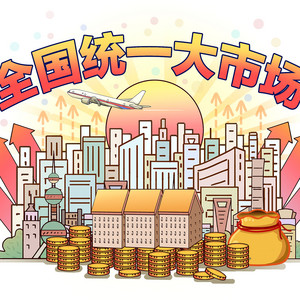
China is building a unified big market.
It could reshape the rules of the game for industries, businesses… and the whole economy.
Who's ready to seize the moment?
And Motivational Monday is here to turn meth into magic.
Tune in for stories and songs that will light up fire under your week.
And coming to you live from Beijing, this is Roundtable, I'm He Yang.
For today's program, I'm joined by Steve Hath Family, and you should, in this studio, first on today's show.
China's top economic planner, the National Development and Reform Commission, otherwise known as NDRC, has unveiled on January 7th, a sweeping guideline for building a unified national market, a concept that promises to break down regional barriers and smoothen the flow of resources?
What does this mean for the products you buy, the services you use or even the ease of switching jobs across provinces?
Let's explore the tangible changes this guideline could bring to your everyday life.
So, do tell us, get into, I suppose, the background and the current happenings of this big policy.
Mmm. So according to this China's top economic planner, the NDRC, this move is part of the efforts to implement the key tasks outlined at the tone -setting Central Economic War Conference held in December of 2024, which emphasized the importance of formulating a guideline for building a unified national
market. So this guideline aims to encourage all localities and government departments to accelerate their integration into the unified national market and actively support its development.
So according to a Xinhua report, this guideline outlined key measures including unifying the underlying institutions and rules of the market, improving the high standard market infrastructure connectivity, building a unified market for factors and resources, advancing the high standard integration of goods
and services markets and enhancing fair and unified regulation and curbing unfair market competition and improper intervention.
This is new, the guideline is quite new but the concept itself maybe not so much because in recent years China has repeatedly emphasized the development of a unified national market.
We go back to 2022 and that is when the government issued the opinions on accelerating the development a unified national market.
And since that time, a series of foundational systems and policy measures with long -term significance, they've been introduced at both central and local levels, clarifying the implementation paths for different types of really important tasks.
So in 2024, related efforts accelerated and became more refined with the topic being highlighted at various, important meetings, for example, the two sessions.
These are two of the most important political events in China.
Now, the guideline has officially been unveiled as Cordeong said to the public, providing a universal, and we can call it a manual book for.
Mm, like a how -to, mm -mm.
Yes, for the construction of a actually unified national market and Wang Shan -Chung, the Director of the Comprehensive Reform Department of the NDRC, stated that the purpose of developing and issuing this manual is to further strengthen positive guidance for regions and departments to accelerate integration and actively
contribute to the development of this unified national market.
And just to offer a footnote, the two sessions is the annual congressional meeting held in early spring every year.
So this year, possibly we could look forward to if this unified big market concept is gonna be further discussed in the proposals this year as China's lawmakers meet for the big policy decisions of the upcoming year.
So the two sessions is kind of the big government event, if you will, where they decide on policy, make plans for the country for the following year?
It's the biggest congressional political meeting for the Chinese policy makers to come together.
Understood. Yes, and China has a unitary political system.
And in our country, people are kind of familiar with one single big market and in this country, you know, you have all these different provinces, municipalities, et cetera, but thanks to technological change, to policy evolution, as such, and then you have one big market where the resources, the talent,
the goods can all flow towards each other.
The concept isn't necessarily new, but when we say oh, there's this new policy to further bolster this concept, does that mean that currently maybe there are some barriers or there are some of these arrangements that hinder more of this smoothness transition and exchange of goods, resources, and personnels,
and all that good stuff.
Yeah, actually some people may have ideas, just like you, Huyeo Sy Gin, they may say ,oh, I think, you know, with economic ties across regions already so strong, isn't the market unified enough and we're still making the national market more unified.
So, according to CCTV News, a closer analysis reveals that issues such as local protectionism and market fragmentation still persist in reality.
So, for example, if you travel to a certain place— and please confirm this for me since I haven't traveled extensively within the country— but you might notice, that the beverages that you drink, for example, or the products that you buy, or even the taxis that you take, there are predominantly local
brands. And this isn't because brands from other regions aren't good enough or something like that.
Not that they're inferior, but because of local protectionism makes it difficult for outside brands to enter.
Is that a fair assessment?
I think it's quite fair.
And one example that I can think of is that, interestingly, each region may have their own milk brand, I would say.
Because back in my hometown, there's a brand called Mashan.
And I know here in Beijing, there's a milk brand called Sanyuan, right?
Right so since our childhood we always have that kind of idea that okay this is kind of like local brand that grow up accompany us when we're growing up.
See that could be seen in a good and bad way.
Yeah exactly and there's a reason why that local companies maybe have this star company in localities.
where we still stick with the milk production example, then freshness is something that people have in mind.
Sure. But if you can source locally then it makes a lot of sense.
And supporting local brands too is often seen as a positive thing.
I'm from Nova Scotia, Canada and we have, this is a beer example, but it's the perfect example for what we're talking about.
We have a beer there called Alexander Keiths and there's a long history of the beer company.
They've been around for a very long time and they market themselves as you are a true Nova Scotian if you support this local beer company.
Everybody drinks that kind of beer, and it's very difficult for beer companies from other parts of Canada to compete successfully.
So maybe from that point of view, from the outside point of view, it might be seen as oh, that's tough to break into that market from the local point of view.
It's seen as a positive thing where locals are supporting their own company.
companies. But from another perspective is that maybe these local brands can only survive in this region and they can not just go nationally or even internationally and then this kind of issue or to address these kind of issues, CCTV News reported that they NDRC's guidelines aim to tackle regional market barriers
with over 50 measures promoting voting, the free flow of people, capital, and goods across the country to unleash market vitality and social creativity.
So, in essence, it means that in maximizing connectivity, I would say in various aspects of our daily lives, as you mentioned, Steve, like things you drink, the products you buy, even taxes you take.
So, a lot of access of our life can be more unified, such as mutual recognition of medical test results and cross -region and cross -store returns and exchanges.
These are things that we may mention later.
But, actually, you know, in fact, some initiatives such as, uh, what I mentioned – mutual recognition of medical test results.
Um, they, uh, have already been implemented in certain areas actually.
relatively. But the guideline calls for all of these measures to be implemented more nationwide.
Mm, well, that's a big task.
Right. Because if you are in Beijing, and you have some firsthand experience of going at hospitals, not even all hospitals within the same city recognize the test results from another hospital, Not always.
Okay. Not always. But sometimes they do.
So, this is really a huge undertaking, actually, for it to happen in a practical level.
But before we get into all these different aspects of life, I'd just like to circle back to one point that we left hanging, that is, you know, regarding the local companies, how breaking down regional barriers could also mean such an increased level of competition.
So for smaller and middle -sized, medium -sized companies, they may struggle to compete with the more standardized and competitive landscape.
I think of course you're going to have the winners, but there's bound to be losers too, because not everybody survives this kind of intense competition.
And now, let's look at the further picture, the wider picture.
There are so many aspects in life that can see changes if this guideline of a unified big market does get implemented to the varying levels of government and also of business.
So, um, you mentioned the medical care aspect, and there's also product purchasing and so many different parts.
So which, which aspect stands out to you?
The product purchasing I thought was interesting.
And actually Yushin and I were having a chat about this, uh, before the show.
So within these new guidelines, this would encourage regions to further streamline processes for cross region and even cross store product returns and exchanges.
What that means is that in the future sometimes customers may find it easier to return something or exchange something that they purchased in a different region without being restricted by the place of purchase, so for example if you were to buy something in Shanghai but you needed to return or exchange
it while in Beijing, you could do so at a local brand store a chain store directly without needing to travel back to Shanghai and I was asking Yushin so in the past if you bought something even with even though it was the same company or the same brand if you bought it in one city and wanted to return
it in another apparently you would have had some difficulty or could have had some difficulty doing that yeah you know this still largely depends on the regulations of each individual brand right It's maybe right now some of the brands they allow you to maybe return and exchange from a different location that you
buy the product. But with kind of the emergence of this guideline, it can be seen as encouraging, or even requiring more brands to relax their return policies and this will enhance the shopping experience and reduce some of the inconvenience caused by cross region purchases because I really like this kind
of policy. This could be one of the reasons that I buy products from this brand because think about it, maybe when you were just traveling in another region and you think, oh, this is a good product and it is quite...
There's a favorable price here in this region and I bought this and then maybe there are some issues coming up and I need to exchange or return And then I can—when I go back home, I can just return immediately with the outlet in my region It's a huge convenience.
Right. Otherwise, you'd be stuck, right?
I don't know if this applies, but I'm thinking car rental, you know, if you had a car rental company in one region of the country, and then that same company could exist in another region of the company, then you could drive it and just leave it there as opposed to having to bring it back to its original
location. I think of that, because in Canada I had to deal with that problem before, and it can be a pain.
Oh, to talk about that there are policies about that according to different car rental companies.
I see. Most of the time you need to pay more.
I know. Of course. And we did have a deep discussion about car rentals a couple of days ago.
Maybe that's why I'm thinking car rentals still.
I think so as well!
Feel free to go back to our archives and look up that topic, if that's something you're interested to listening to.
And I want to get into the meanie part.
This is what a lot of Chinese people are talking about that is the social insurance policy.
Because when it comes to social security usually you pay into the fund where you are working.
But in modern day China when the HuCo system does not tie us down the way it used to and the HuCo system is basically the household registration system that is basically where you're born where you are registered as a baby and in the olden days because people did not move place to place to work and live
and then it's a simpler system you're registered in this place you pay your taxes here and that goes into your social security account and then you retire here and those taxes go into the local government system?
Okay, I understand you.
So with every HUCO account, actually there are many education, health, medicare, and education benefits that are tied to it.
That's why it's so important for the Chinese people when we talk about the HUCO system.
So that's for folks who don't live in this country, who might need a little bit of brushing up on this concept.
And then, now with the unified market, then people are talking about this possibility.
Well, already given the fact that so many people, they work and live in a different province, a different city away from their ancestral home where their hookah was originally registered.
Therefore, now people are paying into the Social Security Fund in a different city, in a different province and then that s all, bear with me, connected back into your benefits and entitlement to education, health, pension, and all those things.
So, now people are saying, with a unified market, then this could be great news for those who are in that situation, and we're talking about the population of tens, if not hundreds, of millions of people.
So how does that affect it basically?
So that means, sorry, I'm gonna put this in question form, so that means that people working in different regions, another region from where you were born, they will no longer be restricted by their hoku, as, I think that's how you pronounced it, is that how you pronounced it in huko, sorry, and they
can more easily participate in social insurance and they can enjoy those corresponding benefits, they won't have the same restrictions that they have before?
Yes, and this policy is mainly targeting flexible or self employee workers actually, because social insurance for employees with employers is required to be paid by their companies in accordance with national regulations.
But with these people who are self -employed, There are some restrictions on their social insurance enrollment in employment locations and improvement of policies for transferring, and continuing social insurance relationships.
Back then, there may be some restrictions for people in some areas who are self -employed and they cannot buy social insurance kind of thing.
And now, with this national market be unified, there won't be no restrictions on that.
Sure. And that's going to promote, you talk about the free flow of people, right?
That's going to promote the flow and allocation of talent from different areas of the country too.
And that's going to give people more of an opportunity to develop in the city and in the field that they prefer and where they can excel best.
and that definitely is in theory what could happen, but also, as we all know, the jurisdiction details and in the implementation to set up to really strengthen a unified market with this breaking down regional barriers and making sure that you know we're also talking about taxation money that goes into
the regional coffers and then you know taxation is always it's a an important part of whether, let's say the local, regional, medical fund or Social Security fund and all these important public service funds have sufficient money coming in and it's very complicated and also on a practical level for it
to really pan out. I wouldn't be surprised if there are some difficulties.
Yeah, and I mean, we just talked about the flow of talent well talent often flows to the mega cities I would assume and when talent leaves one region to go to another well then you're looking you're you're looking at a talent influx in certain places but with that you're looking at a talent drain from other regions
as well. And that could be a major worry for some of the less developed regions and it could be the situation where you see the halo effect where the more developed areas, they just have things better.
Or is it called the Matthew effect, and then those in a disadvantaged position can see things just going increasingly difficult.
So these are definitely some more issues that policy makers preferably could think about, could deliberate and come up with better solutions.
And what other aspects would you like to share with us that you think might show that it's quite significant to build a unified big market at this time and point?
Yeah, of course. We had a discussion on how to make the talent flow more freely through the country, right?
And one important aspect is about transportation, right?
Urban clusters in metropolitan areas will enhance the interconnection of rail and road transportation, achieving standardised rail systems between different cities.
Interconnected facilities, unified ticketing systems and mutual trust in security checks and compatibility in payment methods.
One thing that I would like to mention is that according to what's written on my Public Transportation Card, it can be used in over 300 cities nationwide.
So I think I've mentioned this maybe many times before but it really has made traveling so much more convenient, right?
You no longer need to like queue up to buy natural tickets or pay with coins when you're using public buses.
One card can just take you almost anywhere in the country and honestly I think these these changes would have been unimaginable 10 years ago because back then basically every city had its own transit card.
In my wallet, there are still like different colors of Shanghai public transportation cards.
Yes, back then they have so many different cards in different cities.
Sometimes it's really good just to have the unified one.
Right. I was reading a story talking about the benefits of this unified system and the story that I found was from Yunnan.
Yunnan is a Southwestern province famous for its flowers apparently.
Yushin was telling me that you buy flowers from the Yunnan region quite frequently.
That must be for a special lady in your life but that's for another topic for another day.
Anyway, Yunnan is in a land -locked province and previously was struggling to sell its products to major cities in Eastern China due to its location, but with the development of an advanced cold chain technology and also logistical infrastructure and ecommerce platforms over the past ten years, now next
-day delivery is accessible to most urban consumers, and that's facilitated substantial growth in the sector.
That's from the Center for Strategic and International studies from January of last year.
But that's just an example, isn't it, that when you have the infrastructure in place and you remove the barriers, then it can benefit so many different companies in so many different industries.
And we've talked before about how some maybe livestreaming platforms have helped excellent products from maybe some remote areas to reach consumers across the country via the Internet, and now with the guideline I think these good products may achieve even broader circulation.
Yeah well, for the livestream part of the business, that is essential in marketing, and also finding the right channels to get to people but to get to people for the product to fly from one place to the destination of the consumer's hands, then that takes elaborate and very efficient logistics, and that is something
that China has done a terrific job in, and hopefully with this unified market, it could further strengthen this infrastructure that is already in place.
Building a unified national market is a massive undertaking, one that promises to bring both opportunities and challenges.
As policies unfold, the true test lies in balancing regional interests while maintaining fairness and efficiency.
How this shapes China's economic future, the impacts of daily lives, that will be a story worth watching.
Coming up during the second half of the show, automation promises efficiency, but it also poses challenges for employment and economic equity.
A proposed solution?
What about taxing robots?
Is this an idea you like?
We'll be back after this break.
Stay tuned.