Get the unmissable news stories of the day.
This is the beijing hour, examining the events that impact and shape china and the rest of the world.
This is the beijing hour one hour of news and information brought to you every weekday.
Now here's your host, shane begum, with you on this tuesday, march 3rd 2026.
You're listening to the beijing hour coming to you live from the chinese capital.
On today's program, China's national political advisors will discuss a work report and other key documents when they open their annual advisory sessions on Wednesday.
Israel and Iran continue to trade attacks, launching missiles and drones in the hundreds at each other.
And China's urging all parties to the current conflict in the Middle East to immediately cease hostilities and find a negotiated solution.
In business, China's issuing guidelines on strengthening insurance for the sci-tech sector.
In sports, the diving World Cup season is opened in Montreal.
In culture and entertainment, China Media Group is staging its annual Lantern Festival Gala.
Now check in the day's top stories.
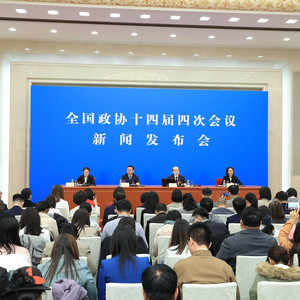
China's top political advisory body opens its annual session on Wednesday.
And during the session, national political advisors will deliberate a report on the work of the Standing Committee, of the CPPCC National Committee and a report on the handling of proposals.
Political advisors will also sit in on the fourth session of the 14th National People's Congress.
They'll discuss key documents, including the highly anticipated government work report.
Leo Jie is spokesperson for the advisory session.
The activity of delivering better services for the people is a new measure taken by the 14th CPPCC National Committee to apply the people-centered development philosophy and to ensure that the CPPCC truly serves the people.
Since its launch in 2023, more than 15000 activities have been carried out, including Over 6000 from last year.
The CPPCC members leveraged their strength and reached out to the grassroots and people from different sectors, actively communicated the policy measures of the party and government, built consensus from the sectors and worked to address people's concerns.
Diplomatic envoys to China will be invited to observe the opening and closing meetings.
The Chinese People's Political Consultative Conference is the top political advisory body in the country.
It's mainly responsible for political consultations, democratic supervision and the deliberation and administration of state affairs.
The conference discusses major principles and policies proposed by the central and local governments and offers proposals on matters concerning political economic, cultural and social affairs.
It also supervises the implementation of the Constitution and the country's rules and regulations, and conducts research into social conditions and public sentiment.
Many foreign diplomats are paying attention to the national strategies and accomplishments emerging from China's two sessions.
Kuwaiti Ambassador to China Jassim Ibrahim Al-Najm is one of them.
Kuwait pays close attention to China's two sessions.
The strategic signals released during this key event shaped China's policy direction in areas like economic development, structural reform, opening up and the modernization of its economic governance system.
We are particularly focused on policies related to high quality development, enhancing innovation and advanced technology, the digital economy, green development and the transition to clean energy.
We're also closely watching policy guidance on improving the investment climate, protecting investors' rights in expanding openness to global markets.
These measures, which facilitate trade and capital flows, help boost international confidence in the Chinese economy.
Against this backdrop, we believe these policies will have a direct and positive impact on the economic partnership between China and Kuwait, as well as on China-Arab cooperation as a whole.
Egyptian Ambassador Khaled Nazmi said his country hopes to learn from China's experience.
We continue to follow closely the progress, development and modernisation achievements China has made across various fields.
China's five-year plans, along with its policies of opening up and international cooperation, have enabled us to benefit and have also helped to further strengthen cooperation among Global South countries.
We look forward to drawing on China's experience to build a future of shared prosperity for Egypt, China and the Global South as a whole.
Andrei Denisov is the first deputy chair of the Russian Federation Council Committee on Foreign Affairs and he said he's confident that the blueprint laid out by China will be realized.
China is no longer just chasing numeric growth, but is now pursuing high-quality development driven by innovation.
China is taking the lead in a range of cutting-edge technological fields.
The blueprint laid out by China will surely be realized.
I am deeply convinced of that.
The two sessions' meetings begin on Wednesday.
A city in southwest China with over 2000 years of history, has become the happiest city in the country.
The secret to its success combines tradition and innovation, from centuries-old tea houses to high-tech community centers.
Penina Karibay visited Chengdu in Sichuan province to discover how locals have cracked the happiness code.
They say you can buy happiness.
But in Chengdu it's served in a cup for between 10 to 50 yuan depending, of course, on what you order.
I'm at the He Ming Tea House.
It's been here for over 100 years and honestly, it's the heartbeat of the city.
But step outside the tea house and you'll find that this happiness isn't just quiet, it's vibrant.
In People's Park, retirement looks more like a festival.
These seniors are redefining what it means to grow old in a modernizing China.
They aren't just passing the time, they are reclaiming it.
But how does a city of 20 million scale this sense of joy?
The answer lies in places like the Chin Yuan community.
One of its most cherished features is the community cafeteria, which provides free healthy lunches to the elderly residents every single day.
What does this meal mean to you?
This place is pretty nice.
It's good for elderly people, too.
You can eat here, chat here and have great conversations.
This place is wonderful.
That sense of belonging is built through a unique form of local democracy.
To resolve conflicts and plan for the future, officials hold baba or open air meetings, whether in the tea house or the residential compound.
They gather the appeals of the residents to design projects that meet their specific needs.
Through tea house meetings and residential compound meetings, we continuously gather opinions and suggestions from residents.
Then we form deliberation rules and discuss together what are the recent needs of our residents.
Based on both potential and explicit needs, we design and integrate resources to provide quality projects, continuously meeting those needs and resolving many conflicts.
By listening to these voices, the center has become more than just a government building.
For some, it has become a sanctuary, a place where the community steps in to catch those who are falling through the cracks of personal grief.
I feel a very, very strong sense of happiness.
After my husband passed away, I almost fell into depression.
But since coming here, with the care from the community leaders and the support from everyone around me, I was able to pull myself out of that dark place.
Now I feel especially happy.
As the sun sets, the happiness code takes to the water.
The Jinjiang River was once just a waterway, but through a massive green renovation project, it has been transformed into a center for leisure and light.
It's an investment in the environment that local planners say pays dividends in the smiles of the residents.
I actually think it's quite simple.
During the Jinjiang River renovation process, we considered returning the space to the people, sharing the culture and creating resonance through services.
We designed the entire renovation of both riverbanks and the cruise route according to this model.
So, actually, I think this is also a microcosm of Chengdu's happiness.
Through these three approaches, we solved the basic logic of happiness.
That logic has turned a polluted past into a vibrant present.
Today, the river is a place where families come to play games, win prizes and breathe in the fresh air of a city that has reclaimed its natural beauty.
You know, after days spent chasing the happiness code, I realized it's not something you find.
It's something that you feel.
It's in the tea.
It's in the community.
And tonight, it's in these lights.
That was Penina Karibay reporting.
Coming up, missiles and drones by the hundreds continue to land in Iran and Israel.
You've been listening to programs from CGTN Radio.
We invite you to visit us online for more audio, pictures and in-depth reports.
At radiocgtncom, you can access a wide range of programs and find your favorite news, talk features, entertainment shows and podcasts.
Hear the difference with CTTN Radio.
Ten minutes past the hour.
Israel has launched new strikes on Tehran and Iran has retaliated.
Israel has attacked Iran's state broadcaster as it continues strikes on Tehran and in Beirut Lebanon.
The number of deaths from the past four days of conflict has risen above 600.
Media reports say two suspected Iranian drones hit the U.S. embassy in Riyadh, Saudi Arabia.
The Israeli military says it attacked multiple government institutions, launching more than 250 bombs and missiles.
Iran's Islamic Revolutionary Guard Corps has announced its naval drone unit carried out its 13th round of operations targeting a US military base in Kuwait.
The Pentagon says six U.S. service members have died and four others are seriously injured.
Iranian Foreign Minister, Sayed Abbas Arachi, has reassured regional countries that Tehran is only focusing its attacks on American forces stationed at bases across the Middle East and will not regionalize the conflict.
We don't seek to regionalize the war.
It will become regional simply because U.S. bases and facilities are spread across our region.
When the United States attacks us, whether by fighter jets or the ships it deploys, It has access to our territory to strike with all kinds of missiles and aircraft.
We cannot reach its territory, but we can reach its bases.
I think those bases are legitimate targets.
Residents in Tehran have expressed shock and anger over the U.S.-Israeli airstrikes.
I'm truly sorry.
Why are they doing this?
Why are they destroying our nation like this, both before and now?
Do you know how these lives can possibly be rebuilt?
We struggled for 47 years to build our lives.
Fortunately, there were no injuries, no fatalities.
We transferred all patients to another location and they are fine.
One of our colleagues who was hit by the blast wave and suffered a brain haemorrhage has undergone surgery.
I was watching the news on TV. when suddenly the doors and windows everything was thrown towards me.
The chandelier fell and thick smoke covered everywhere.
I was in complete shock.
The Iranian foreign minister also condemned the strikes on a girls' elementary school in Manab.
The attack killed over 160 people, mostly children.
The minister posted a picture showing the school in rubble, saying the bodies were torn to shreds.
Manab is home to a military base of the Islamic Revolutionary Guard Corps.
President Massoud Pazashkian has expressed condolences to the victim families and the residents of Manab.
He also condemned the airstrikes, describing them as inhumane and barbaric.
Thousands of Iranian mourners have attended the funeral ceremony for the students.
Pir Hossein Kholivand is the president of the Iranian Red Crescent Society in Tehran.
During an interview with Sapir Sarami, he described the deliberate targeting of civilian service institutions as their biggest operational challenge.
I've come here to the Iranian Red Crescent Society to speak with its head and hear about the latest humanitarian situation and also the support being provided to the civilians.
The first attack targeted a girls' primary school in the city of Minab.
It was a brutal and sad incident. unprecedented in the history of humanity.
More than 168 children aged 7, 8 and at most 9 years old were martyred.
The school was hit in two phases and unconventional weapons were used in this assault.
Our primary challenge is the direct targeting of service institutions.
Just today, five of my colleagues were injured.
These actions are a clear violation of international law and of the principles of the Geneva Conventions.
It also appears that international institutions have become largely ineffective.
These are our main challenges.
We have no internal obstacles to our relief work.
That was Pir Hossein Kholivand, the president of the Iranian Red Crescent Society in Tehran.
U.S.
President Donald Trump is not ruled out putting boots on the ground in Iran.
Nick Harper has more from Washington, D.C.
His first public address from the White House in which he very much defended that US action, laying out the objectives to degrade missile and nuclear systems within Iran, to annihilate Iran's navy and to make sure that it's not able to fund and arm proxies in the region.
He also said that the United States will easily prevail.
He spoke about the potential length of this conflict that hasn't really been spelt out up until now.
He said potentially four or five weeks, but he also said that the US had the capability to go far longer.
In some other comments.
When he was asked about the deaths of US service personnel, he essentially said that that is part of war and warned that there would likely be more deaths on the US side in the coming days and weeks.
He also suggested that he intends to do all he can over the coming days to make sure that Iran is never able to hit back.
And he said perhaps we haven't seen the most extreme US response yet, saying...
We haven't even started hitting them hard.
The big wave hasn't even happened.
The big one is coming soon.
So he seems determined, and he seems determined to continue for many days, potentially weeks yet to come.
That was Nick Harper reporting.
A newly released CNN poll shows that 59 of US citizens disapprove of the US decision to take military action against Iran.
The poll was done shortly after U.S. and Israeli forces launched the strikes.
60% of respondents said they do not think U.S.
President Donald Trump has a clear plan for handling the situation.
And 62% said that he should get congressional approval for any further military action.
The latest poll was released a day after a Reuters Ipsos poll showed that 43 of US citizens opposed the strikes on Iran.
Both polls were released, as Democratic and Republican lawmakers are deeply divided over the attack on Iran.
Congress is expected to vote on war powers later this week, with a Senate vote coming as soon as Tuesday.
British Prime Minister, Keir Starmer, says he stands by his decision not to support US-Israeli strikes on Iran.
United Kingdom was not involved in the initial strikes on Iran by the US and Israel.
That decision was deliberate.
We believe that the best way forward for the region and for the world is a negotiated settlement.
President Trump has expressed his disagreement with our decision not to get involved in the initial strikes.
But it is my duty to judge what is in Britain's national interest.
That is what I've done and I stand by it.
To be clear, the use of British bases is limited to the agreed defensive purposes.
We are not joining the U.S. and Israeli offensive strikes.
Starmer made the remarks in response to criticism from the US president, who said Starmer took far too long to allow US forces to use British air bases.
NATO Secretary General Mark Rutte has made it clear the alliance will not be involved in the military operations by the US and Israel, even as he praised the strikes on Iran.
France and Germany have announced plans to work more closely on nuclear deterrence, marking a significant shift in European defence policy following years of reliance on the US.
Yolo Abdafid has more from London.
Germany immediately has said, we don't want to be involved militarily.
France said, we are expressing solidarity with the Gulf states.
That's why we need to watch them closely.
A mixed stance, I think is fair to say, from European countries, even though the NATO Secretary General, former Dutch Prime Minister Mark Rutte, he said, you know, this Europe is absolutely supportive.
I don't think that's the case from what we're seeing from the various leaders.
And even though the UK has authorised some of its air bases Prime Minister Keir Starmer has authorised British military bases.
It's not something that the British government was keen to do.
They were keen to stay out of it.
That might be impossible, in the same way that it might be impossible for the Gulf states to stay out of this brewing wider conflict.
But I don't think it's true to say that every European country has the same stance towards what's happening in the Middle East.
That was Yolo Abdafid reporting.
The head of the International Atomic Energy Agency says there's no indication that Iran's nuclear facilities have suffered major damage following reported US and Israeli strikes.
Rafael Grossi said satellite imagery shows nothing comparable to previous attacks, despite claims from Tehran that the Natanz site was hit.
Grossi added that the agency remains hopeful that talks between the U.S. and Iran can resume.
Johannes Pleschberger has more from Vienna.
International Atomic Energy Agency is trying to monitor the situation at nuclear facilities in Iran, but it seems unclear if, and to what extent, those facilities have been struck these past days.
According to Iran, the facility in Natanz, a uranium enrichment site, was damaged on Sunday.
But the IAEA says there's no indication that this happened.
But it's also true that we've heard today from the IAEA.
They have very limited communication with the nuclear regulatory body in Iran right now.
So it might be difficult for the agency here in Vienna to actually assess what's going on in Iran.
And the IAEA chief, Rafael Grossi, also said here at the meeting that there's lots of frustration regarding those nuclear talks that happened in Geneva.
The IAEA was part of those talks and apparently they failed given those attacks over the weekend.
We haven't seen... major military activity targeting the nuclear facilities.
We have been looking at different satellite images.
There might be something there, but not significant or comparable in any way to what we saw last time.
So Rafael Grossi doesn't see a structured program to manufacture nuclear weapons in Iran, which could mean that he doesn't also see a justification for those US and Israeli attacks over the weekend which are ongoing.
Actually, here in Vienna we're supposed to be the beginning of technical talks, a new round of those nuclear deal discussions between the US and Iran which have been canceled or postponed.
We do not know yet.
The Iranian ambassador to the IAA told us reporters that he's very disappointed that those talks could not continue here.
And of course, he condemns the attacks against his country.
And despite those ongoing attacks, the IAEA here in Vienna is still convinced that discussions, that a dialogue is still possible between the US and Iran.
And the IAEA chief even sees recognition on both sides that both parties should sit down at the table.
It's just unclear when this will happen.
That was Johannes Pleschberger reporting.
The Israeli military says it struck a building housing the Al Manar Channel studios in the southern suburbs of Beirut following an evacuation warning.
The Israeli military says it targeted Hezbollah command centers and weapons storage facilities in the Lebanese capital.
Strikes followed Hezbollah missile and drone attacks on northern Israel, prompting waves of Israeli airstrikes on Beirut's southern suburbs and across southern Lebanon.
Hezbollah said in a statement that it fired rockets as a reaction to Israeli aggression.
Israeli strikes on Lebanon have killed over 50 people and left nearly 30,000 others displaced.
Iranian missiles have struck Dubai, prompting evacuations from hotels.
The UAE's defense ministry reported intercepting 165 missiles, two cruise missiles and over 540 drones.
Debris from the downed weapons sparked fires at some of Dubai's most iconic locations.
Hundreds of hotel guests moved to the basement for shelter.
Mia Planer recounted her evacuation experience.
So we came to Dubai and this is safe to say it's probably been the craziest trip.
Um, so far we were on a boat when all the missiles started, um, firing.
And this is when we found out that the Fairmont hotel had been hit.
Um, which was absolutely terrifying.
And there was just like missile after missile, like coming from the sky.
So we were like, yeah, we need to get off the boat.
And we basically were then evacuated by the hotel and we had to stay in the basement at like two o'clock in the morning.
There were just hundreds and hundreds of people, like families, kids.
And it was just probably the most surreal experience that has probably ever happened.
The strikes damaged Dubai International Airport, injuring four employees.
Some international flights have resumed, providing the first opportunity for travellers stranded by airport or airspace closures to leave the country.
Coming up, China's urging an immediate halt to the hostilities in the Middle East.
A selection of the best podcasts in China, covering history customs music, literature and in-depth dialogues.
Find your way to a wealth of Chinese culture and thinking, all on POS Plus.
24 past the hour.
China's urged all parties involved in the Iran conflict to stop military operations.
Foreign Ministry spokesperson Mao Ning said that China's deeply concerned about the conflict's potential to spill over into other countries.
Chinese Foreign Minister Wang Yi held phone calls with his counterparts from Russia Iran, France and Oman and laying out Beijing's position and calling for de-escalation of tensions.
On the regular press briefing.
On Tuesday, Chinese Foreign Ministry spokesperson Mao Ning brief media on the phone calls and Mao shared that Wang Yi said during this phone call it's unacceptable for the US and Israel to launch military operation against Iran without the authorization of the United Nations, saying that this action violates the international law and also it violates the basic norms of international relations.
Mao Ning pointed out that China's position has been very clear.
First, call for immediate stop to the military operation on the ground.
And second, is to bring all sides back to the negotiation table and stop unilateral action.
And Wang Yi said during the phone call that major powers should not use military superiority to arbitrarily to attack any other nations, and saying that the world should not return to the law of jungle.
And also Beijing said they will continue to play.
China will continue to play a constructive role in the UN Security Council.
And Beijing, also saying and calling for a media ceasefire and also avoid further escalation of tensions, and also safeguarding the navigation through the Strait of Hormuz, calling that any further disruption could create major impact to global economy.
That was Chen Ziyuan reporting.
China's permanent representative Li Yuan says the country condemns all attacks targeting children.
A Futsong made the remarks at a meeting by the Security Council on Children, Technology and Education in Conflict.
Strengthening protection on children is a top priority.
China strongly condemns all attacks targeting children and urges all parties to conflicts to assume their obligations under international humanitarian law, protect the children from the ravages of war and preserve the bottom line of humanity's conscience.
Attacking schools is one of the six grave violations against children identified by the UN, which should be sternly condemned and firmly rejected.
Fu also called for robust investigations and accountability on incidents harming children and destroying schools.
Search operations have ended at a primary school in Manab, structuring US-Israeli military strikes.
Iranian authorities say 165 people have been killed.
UN Secretary General, Antony Guterres, has called for de-escalation and immediate cessation of hostilities in the Middle East, urging genuine dialogue and negotiations.
According to his spokesperson, Guterres has engaged with some regional leaders to promote peace talks.
He also condemned the recent attacks on Iran and Gulf countries.
The Secretary General has been in touch with a number of regional leaders.
He spoke by phone with His Highness Sheikh Tamim bin Hamad Al Thani, the Emir of the state of Qatar.
The Secretary General reiterated his condemnation of the recent attacks against Qatar, which is in violation of the country's sovereignty and territorial integrity.
He also reaffirmed Qatar's role as a strong and valued partner of the United Nations.
The Secretary General and the Emir discussed the situation in the region and the urgent need to end the current military escalation and a return to dialogue in the interest of regional stability.
He also spoke with the foreign minister of the Sultanate of Oman, His Excellency Bada bin Hamad al-Busaidi.
The secretary general praised Oman for its efforts on mediating a peaceful negotiations and reiterated his condemnation of the attacks against Iran and the Iranian attacks on Gulf countries.
The Secretary General expressed concern over the growing humanitarian crisis and he emphasized the need to protect civilians and infrastructure in line with international humanitarian law.
We're at 29 minutes past the hour.
Checking the forecast ahead of the break.
And Beijing's cloudy overnight.
It's down to minus one Wednesday.
Maybe a light snow and plus three.
Shanghai will be overcast in seven this evening, then rainfall in 12.
Chongqing will see a light rain in 12 overnight, then overcast in 22.
Nanchang is overcast tonight and tomorrow, a low of 9 and a high of 13.
Lass is down to minus 3 and then sunny in 17 degrees.
Elsa and Asia, Islamabad will be cloudy in 15 overnight, a high of 29 on Wednesday.
Vientiane is cloudy tonight and tomorrow, a low of 21, a high of 31.
Phnom Penh is getting a light rainfall tonight and tomorrow, a low of 25 and a high of 35.
And in Africa, Nairobi is getting moderate rainfall and 25 degrees on Wednesday.
It's time for a short break.
So far this hour.
China's national political advisors will discuss a work report and other key documents when they open their annual advisory sessions on Wednesday.
Israel and Iran continue to trade attacks, launching missiles and drones in the hundreds at each other.
And China's urging all parties to the current conflict in the Middle East to immediately cease hostilities and find a negotiated solution.
Shane Begumati, stay with us here on The Beijing Hour.
Shh, listen up.
Can you hear the heartbeat of our world?
It's vibrant and pulsating with the essence of life itself.
From the stem of trees to the gurgle of rivers.
From the silent strength of mountains to the icy whispers of glaciers.
Even the solid ground beneath our feet.
And right there, in the midst of all beats the heart of humanity.
What if those other heartbeats were to stop?
Would ours keep on ticking?
Ever wondered what's actually going on in Africa through the perspective of an African?
How are things really going between China and Africa?
What's the narrative of this relationship?
Well, get a perspective with China-Africa Talk.
Hear from African diplomats, entrepreneurs, academics, Chinese natives, and more.
Get on our wavelength every week To find out what's real with China.
After the talk, find us on your favorite podcast.
We'll see you there.
Examining the events that impact and shape China and the rest of the world.
This is the Beijing Hour, one hour of news and information brought to you every weekday.
Now, here's your host Shane Begum with you on this Tuesday.
Still to come.
In business, China is issuing guidelines to strengthen insurance for the sci-tech sector.
In sports, the diving World Cup season is opened in Montreal.
In culture and entertainment, China Media Group is staging its annual Lantern Festival Gala.
To contact us, you can email radio at cgtn.com or follow our ex-account at cgtnradio.
First of all though a check of the day's headlines, and China's top political advisory body opens its annual session on Wednesday.
National political advisors will deliberate on a report on the work of the Standing Committee of the CPPCC National Committee and a report on the handling of proposals.
Political advisors will also sit in on the fourth session of the 14th National People's Congress.
They'll discuss key documents, including the highly anticipated government work report.
Leo Jaip is the spokesperson for the advisory session.
The activity of delivering better services for the people is a new measure taken by the 14th CPPCC National Committee to apply the people-centered development philosophy and to ensure that the CPPCC truly serves the people.
Since its launch in 2023, more than 15000 activities have been carried out, including Over 6000 from last year.
The CPPCC members leveraged their strength and reached out to the grassroots and people from different sectors, actively communicated the policy measures of the party and government, built consensus from the sectors and worked to address people's concerns.
Diplomatic envoys, China will be invited to observe the opening and closing meetings.
The International Atomic Energy Agency has confirmed no indication that the Israeli and US strikes on Iran hit nuclear facilities.
The agency has activated an emergency response, but has detected no large-scale radioactive leaks.
Agency Director, Rafael Grossi, urged all parties to exercise restraint and resolve the issue diplomatically.
My hope, as I just said, is that we will be back at the negotiating table sooner rather than later.
It is obvious that after this military conflict ends and we all hope that this will be very, very soon we will still need to have a long, durable solution which will provide a sense of predictability, a sense of certainty for Iran and neighboring countries.
Grossi expressed deep concern over the situation and emphasized the potential risks of military operations targeting nuclear sites.
China's called for an immediate cessation of US-Israeli attacks on Iran, urging joint efforts to oppose unilateral actions.
The Chinese envoy to the International Atomic Energy Agency said that the military strikes have escalated the already volatile situation in the Middle East.
China emphasized its respect for Iran's right to peaceful nuclear energy use.
The country reiterated that the Iranian nuclear issue must be resolved through political and diplomatic means.
France and Germany have established a nuclear steering group to strengthen deterrence cooperation.
French President Emmanuel Macron and German Chancellor Friedrich Merz made the announcement on Monday.
The two countries agreed that the group will facilitate bilateral consultations on a strategic mix of conventional forces, missile defense and French nuclear capabilities.
On the same day, Macron announced that he'd ordered an increase in the number of France's nuclear warheads to strengthen the country's arsenal.
The UN Security Council has held a meeting on children, technology, and education in conflict.
The UN Chief for Political Affairs highlighted a 25 rise in grave violations against children from 2023 to 2024.
Rosemary DiCarlo stressed the importance of education in conflict zones and noted the increase in attacks on schools, particularly in Ukraine Israel, Palestine and Haiti.
Globally, one in every five children is living in or fleeing a conflict zone.
This adds up to 473 million children.
Grave violations against children verified by the United Nations increased by a staggering 25 from 2023 to 2024.
These horrific figures should impel us to do more to protect children in conflict.
Education in conflict zones is lifesaving and life-sustaining.
And yet schools, teachers, and education infrastructure continue to suffer violence.
In 2024 alone, the United Nations verified a total of 2,374 attacks on schools and hospitals.
Many more are unverified due to a lack of access.
DeCarlos also pointed out the shortage of teachers in conflict settings, and she urged member states to bridge the funding gap.
U.S.
First Lady, Melania Trump, also called for empowering children through education and technology to promote peace and understanding.
You're listening to The Beijing Hour.
Coming up in business, China is issuing guidelines to strengthen insurance for the sci-tech sector.
The Beijing Hour, your window on China and the rest of the world.
37 pass and turning to business.
Markets in Asia fell sharply on Tuesday amid growing concerns about stability in the Middle East.
On the Chinese mainland, the Shanghai composite was down around 1.4%.
The Shenzhen component lost nearly 3%.
Oil and gas exploitation and oil field engineering were among the top gainers.
Hong Kong's Hang Seng Index decreased over 1.1%.
In Japan, the Nikkei lost almost 3%.
China's announced new guidelines to accelerate the high-quality development of SciTech insurance among broader efforts to strengthen technological self-reliance.
The document sets out 20 measures across six areas and are aiming to build a SciTech insurance system that's better aligned with technological innovation.
The country's SciTech insurance has played a stabilizing role in offsetting the high costs of long development cycles and elevated risks associated with technological innovation.
Last year provided about 8 trillion yuan, or 12 trillion US dollars, in risk coverage, with premiums rising 44 on a yearly basis.
For tech-funded small and medium-sized enterprises.
Insurers are encouraged to offer simpler, more affordable products with greater ease of access and convenient claims processes.
Iran says the Strait of Hormuz is closed, while the U.S.
Central Command says it remains open.
Tracking data shows tanker traffic in the strategic waterway has slowed dramatically since the US-Israeli attacks on Iran over the weekend.
The Strait is a narrow but vital choke point.
About 20 of the world's oil passes through the Strait, including shipments from major producers like Saudi Arabia, Iraq and the UAE.
On Monday, a senior Iranian official said the Strait was closed and threatened to set fire to any ship trying to pass through.
Johannes Pleschberger is here again to tell us how major oil producers are reacting to the closure of the Strait of Hormuz.
Well, it seems OPEC is still taking a sort of wait-and-see approach.
I mean.
So far.
Its reaction was rather cautious, with only a modest oil output increase, a of around 200000 barrels per day starting April.
That was decided on here in Vienna.
That's less than 0.2% of the world's oil supply, so not that much.
Maybe OPEC is hoping that the situation is not as dramatic as it seems.
I mean, some analysts fear that oil would rise even above $100 per barrel.
International Energy Agency did issue a forecast for this year saying that there's enough oil on the market, with additional supply coming from the United States and OPEC.
But whether this can compensate what's happening right now in the Middle East, especially in the Strait of Hormuz, that's the big question.
And I mean even if OPEC wanted to put more oil on the market, it probably couldn't, because most OPEC producers have already maxed out their production capabilities, except for Saudi Arabia.
So whether this can compensate what's going on right now at Hormuz or in the future, that's the big question, because some analysts say that if this disruption at Hormuz continues for, let's say, three to four weeks, then we will most definitely see prices at around 100 per barrel.
That was Johannes Pletschberger reporting.
And for more, Lincoln Humphrey spoke with Chu Cheng, a research fellow at Minzu University of China.
So how high are global oil prices heading in the coming weeks?
Through the whole most straight end.
Also, the productivities in Iran actually accounted for most of the part of the international oil consumptions.
So basically, it's a force of producers of the oil of the OPEC.
Basically, Iran can produce more than 3.3 million of barrels per day.
That's 3% we're talking about.
And basically if you're counted in Saudi Arabia and Qatar in the productions, that's going to be a very, very large of a production zip.
And also we're going to talk about transportation because through the almost basically we're talking about, you know, 30 percent, or at least 20 percent of the global oil and gas shipment, about 14 to 20 million barrels a day.
So if we're shutting down the whole street, as a reporter just mentioned, even just for a week, we're looking at at least over 80 per barrel or very possibly is going to be like 100 per barrel.
And also according to Barclay and also to according to the Morgan Chase, if Trump amends it.
I mean he says it's going to be four weeks of a lockdown and attack.
So Homo straight probably is going to be, you know, locked down for also that period of time.
We're probably going to look at the 120 U.S. dollar per barrel or even 140 U.S. dollar per barrel.
That's going to be very bad for the global supply chain and also inflation scenario.
And if those prices stay elevated for that long or even longer, how significantly could this conflict in the Middle East affect the global economy more broadly, especially if the Strait of Hormuz remains shut for an extended period of time?
Well, we're talking about 20 of oil consumptions and you know one third of the basic oil and gas shipment.
You're looking at a really bad situation.
But because if you take a look at another alternative indicators, which is insurance fee over the relevant shipment, basically it's been rising up already within three days at 50.
We're looking at all the pictures, you see more than 800 of you know cruisers are still, you know, in the stall and basically all the commercial airlines are also being, you know, suspended.
So this kind of a cost will be spelled over to every corner of the whole world, not only about oil and gas.
We're talking about everything manufacturing agriculture, even ai and semiconductors.
Everything is going to be interrupted.
So, according to our modeling basically, if the situation keeps on like we just estimated conservatively, if it keeps going on for like uh, four weeks, The global inflation is going to go up by 05.
And also, I think, several other countries outside this region, like in the ASEAN nations.
They've been producers, they've been manufacturers.
So they're probably going to take most of the hit.
Qatar has shut the world's biggest LNG plants.
What impact will that have?
LNG is very different in the commodity you know, compared to oil, because for the LNG basically the whole globe doesn't have reserve capacities for the productivities.
And also because of its nature chemical nature so it's very hard to storage them, put them in storage for a very long term.
So basically they're going to run out in a very short term.
You always need to circulate on this kind of the gases.
So right now, if you take a look, the futures price is basically almost 50 euros per kilowatt hours.
And also we're going to talk about LPG, we're going to talk about jet fuel and also sulfur, which is a very important strategic resource.
And also the wild side and alumina, which is very important for the EV and also for the cables and also for electricity, you know, solar and wind power productions.
And all that actually will drive up the global supply chain's prices.
And even some indirect energies or some other raw materials will be affected, for example like coal, hydro power and all that is going to rise up the prices.
That was research fellow Chu Cheng at Minzu University of China talking about how the US and Israeli strikes will impact global energy supplies.
In 2025, China's policies prioritized the people's well-being, delivering tangible support for families, the elderly and a growing flexible workforce.
The country bolstered family support with a 3600 yuan annual subsidy, over 500 US dollars per child under three and a free preschool year benefiting 12 million children.
Elderly care reforms advanced with a 2035 network plan and new pilots for disability subsidies and home care beds.
Furthermore, China expanded social security coverage for over 200 million flexible workers by removing residency curbs and broadening injury insurance pilots.
And now, under the 15th five-year plan, China will continue to focus on delivering broad-based support for families and workers.
The ongoing Mobile World Congress in Barcelona has attracted more tech giants this year.
Chinese companies such as Huawei, Vivo and Xiaomi have gathered, focusing on the deep integration of artificial intelligence and mobile communication technology.
This year's Congress agenda centers around six core dimensions, including intelligent infrastructure and AI-centric networks.
Huawei is expected to unveil a full range of products and solutions deepening the integration and innovation of mobile networks and AI.
Vivo's new imaging flagship, the Vivo X300 Ultra, will make its global debut at the event.
Last year, around 288 Chinese enterprises participated.
This year, the number has surged to over 350.
The four-day event expects over 100000 participants from more than 200 countries and regions worldwide.
You're listening to The Beijing Hour.
Coming up in sports, the diving World Cup season has opened in Montreal.
Sideline Story brings you all things sports related.
The hottest topics, latest events, juiciest stories, all with a very personal take.
Subscribe to Sideline Story Podcast for heated sports discussions covering events that are happening in China and around the world.
47 passed and turning to sports now.
Here's Yong Guang.
Thank you, Shane.
Defending champion China kicked off its AFC Women's Asian Cup campaign with a 2-0 victory over debutants Bangladesh in Group B in Sydney.
Wangshan opened scoring in the 44th minute, followed two minutes later by a January strike to sealed win.
The tournament runs from March 1 to 21 across Sydney, Perth and Gold Coast.
Twelve teams are divided into three groups, with the top two from each group and the two best third-place teams advance into the quarterfinals.
China will face with Pakistan in its next Group B match on Friday.
And now to the opening stop of a new diving World Cup season in Montreal.
China delivered a dominant performance, winning all nine gold medals on offer.
In the men's three-meter springboard, Wang Zongyuan led the way, capturing gold with a total of 54035 points.
I'm very satisfied with my overall performance.
From winter training to test events and now the World Cup.
I feel my form is getting better and my confidence is growing stronger.
Teammate Chen Jiuyuan showed resilience after slipping to sixth place following his third dive.
He responded strongly in the remaining rounds to climb back and claim silver.
In the Chinese Super League.
Shanghai Shenhua midfielder Wu Xi has been named 2025 Chinese Men's Footballer of the Year.
He also won the award in 2020.
Last season, the 37-year-old made 36 appearances across all competitions.
He scored nine goals and provided eight assists.
Wang Xuan of Wuhan Jianda Football Club earned her fifth Women's Footballer of the Year title.
Xiao Jiayi became the Chinese football coach of the year.
He guided Qingdao West Coast to a ninth-place finish in the Chinese Super League last season.
In La Liga, Real Madrid fell 1-0 to Getafe on Monday, leaving them four points behind league leaders Barcelona.
Martin Satriano scored only goal in the 39th minute with a brilliant volley.
Despite controlling 77% of possession taking 18 shots, Real Madrid could not find an equalizer.
The defeat marks their second consecutive league loss.
Top scorer Kylian Mbappe missed the match with a left knee sprain.
Real Madrid gave no return date.
Both teams finished with 10 men after late red cards.
Barcelona faces a huge challenge in the Copa del Rey semi-final second leg on Tuesday, trying to overturn a 4-0 first leg deficit against Atletico Madrid.
Ahead of the match, head coach Hansi Flick said they will give their all.
We have four goals behind.
We want to make the impossible possible.
So this is our goal for tomorrow.
We all know that it's not easy, but at the end we never give up and we We start this match.
Important is that, of course, that we have a clean sheet.
Of course, this is very important, but also believe in our strength, believe that we can do it.
Barcelona won last year's final against Real Madrid, but faces an uphill battle for the 33rd title.
Atlético sits third in La Liga, 13 points behind Barcelona, and will also face Tottenham Hotspur in the Champions League.
Last 16.
In Argentina's Apertura tournament, striker Florian Monzon scored the second half as Group A leader, Vélez Sarsfield secured a 1-0 away win over reigning champion Estil Dientes on Monday.
Monzon broke the deadlock just before the hour, finishing from close range after a scramble in the penalty area.
Estil Dientes controlled 57% of possession but managed only one shot on targets.
The victory lifts Vales to 18 points, three clear of second-placed Estudiantes after eight matches.
The new Formula One season kicks off this weekend with the Australian Grand Prix, marking what organisers call the biggest shake-up in sports history.
New engines, new teams and new regulations are expected to bring more uncertainty on the track and in the title race.
Reigning world champion Landon Norris says he's ready for the challenge.
So a big challenge for me, a big challenge for all of us as a team, more power and less grit.
So understanding what driving styles are needed, how I need to adapt inside the car, what I need to be trying to feel for differently or exploring differently.
So yeah, a big challenge, excited for it.
For the first time in decades, F1 has overhauled chassis and engines at the same time.
The new power units run on 100% sustainable fuel with an almost equal electric combustion split.
Cadillac joins the grid, expanding it to 11 teams, while Madrid debuts on the 24 race calendar.
Ferrari is chasing its first team title since 2007 and Lewis Hamilton aims for a record eighth driver's crown.
And finally, the 2026 Milano Cortina Winter Paralympics flame arrived in Trieste on Monday.
It continues its journey across Italy towards Verona for the opening ceremony on March 6th.
The flame was lit on February 24 in Stoke Mandeville England, the birthplace of the Paralympic movement.
It has already visited several cities along the route.
The Games run from March 6 to 15.
Up to 665 athletes from 50 countries will compete in 79 medal events.
Key sports include alpine skiing, Biathlon and snowboard.
Thank you very much.
That's Yang Guang with sports.
You're listening to the Beijing Hour.
And coming up in culture and entertainment.
China Media Group is staging its annual Lantern Festival Gala.
From north to south, east to west, people in China are chasing their dreams and leaving their mark.
Want to know how they beat the odds and made a difference?
Footprints brings you the true life stories of their journeys.
53 past now, turning to culture and entertainment.
A China media group stages a Lantern Festival gala on Tuesday evening, celebrating the spirit of joy, harmony and reunion.
With song and dance, traditional opera, comedy sketches, crosstalk and magic.
The show aims to bring festive cheer to Chinese communities worldwide and friends across the globe.
The Lantern Festival falls on the 15th day of the first lunar month, marking the end of Chinese New Year celebrations.
It's time for families to come together and enjoy lantern displays.
An eastern Chinese city with a history of 2500 years, is home to one of the country's largest ancient towns.
Wu Bin visited Suzhou to explore how the city has renewed and revitalized this heritage.
72-year-old Yuan Xuechun lives in East China's Suzhou City.
When he was young, his home was in a neighborhood called Block 32.
Seven families, around 20 people, lived in this house in the past.
There was once common in this neighborhood.
Block 32 once consisted of government organizations and private gardens back in the Ming and Qing dynasties some 600 years ago.
They became residential communities in modern times, hosting some 2,700 people.
But most of the houses, after centuries of wind and rain, can hardly meet the needs of residents nowadays.
In 2019, the city launched a renewal program in the area.
During our renewal progress, we fully respect the public opinion.
It's up to the people to decide their matters.
So far, over 800 families almost half of the residents agreed to move to new residential buildings like Yuanxuechun.
But still many chose to stay in this century-old neighborhood.
Massive efforts are used to improve their living conditions.
These include moving unorganized wires and sewage pipes, underground setting racks for drying clothes and 24-hour public rooms for all sorts of activities.
Some illegal structures on the roof will be demolished, but valuable elements like the brick-carved gatehouse above will be preserved.
The entire structure won't be torn down.
Instead columns, windows and doors will be restored using traditional techniques to achieve restoration as original.
The next step is to utilize the value of these historic buildings.
The local government has launched a city renewal partner project.
Social entities like bookstores, coffee houses and hotel groups are encouraged to further utilize the ancient heritages.
Through all efforts, we have activated the values of the ancient block.
Many young people already fell in love with the ancient town, came back to the ancient town and revitalized the ancient town.
During the 14 five-year plan period from 2021 to 2025, the country renovated more than 240000 old urban residential communities.
The initiative has benefited 110 million people.
That was Ubin reporting.
The 32nd Zegong International Dinosaur Lantern Festival is now underway in Chengdu, Sichuan Province.
The city glows with more than 200 dazzling lantern displays.
This luminous art comes from a centuries-old tradition.
Over time, simple lanterns have evolved into a sophisticated art form combining paper cutting painting, embroidery and sculpture.
Today, the Zegong Lantern Show is listed among the National Intangible Cultural Heritage of China.
We're at 57 minutes past the hour.
Checking the forecast before we go for the day.
And Beijing's getting cloudy skies overnight.
It's down to minus 1.
A light snowfall and plus 3 for Wednesday.
A Shanghai's overcast and down to 7.
Then a light rainfall and 12 degrees.
Chongqing will see some rain overnight, a low of 12, then overcast skies in 22.
A Nanchang's overcast this evening and through the day tomorrow with a low of 9 and a high of 13.
Lass is down to minus 3.
Sunny conditions tomorrow, the high is 17.
Elsewhere in Asia, Islamabad will be cloudy and 15 and then a high of 29 for Wednesday.
Vientiane's cloudy tonight and tomorrow, a low of 21, a high of 31.
Phnom Penh's getting a light rainfall overnight and through tomorrow, a low of 25 and a high of 35.
In Africa, Nairobi is getting some rainfall and 25 degrees on Wednesday.
And that's it for this edition of the Beijing Hour.
Making news today.
China's national political advisors will discuss a work report and other key documents when they open their annual advisory sessions on Wednesday.
And Israel and Iran continue to trade attacks, launching missiles and drones at the hundreds at each other.
On behalf of the staff.
This is Shane Biggum in the Chinese capital, hoping you'll join us for the next edition of the Beijing Hour and open a window to the world together.
Find The Beijing Hour at precisely 6 p.m.
Beijing time.
We meet you on podcast and on air every weekday.
The Beijing Hour, your window on China and the rest of the world.
He can't live without the Yellow River in his eyes.
The Yellow River is so noble and elegant.
Both my grandpa and dad made a living from the river.
Would you like to move away from the Yellow River?
I don't think I will.
I love it so much.
The Yellow River, the second longest river in China, is regarded as a shaping force in the history, economy and culture of northern China.
Today, about 100 million people live within its water basin, making up nearly 9 of the country's population.
How is climate change felt at its headwaters?
And what are the locals doing to cope with it?
What are the descendants of the boatmen doing?
What has kept some people from leaving their home village by the river?
And what has drawn others back?
Could the fading fishing community revive in a time of digital transformation?
From 2021 to 2024.
Our reporters visited the upper, middle and lower reaches of the Yellow River, talked to the herders farmers boatmen, fishermen and eco-activists who share a close bond with the river, and present their stories in pictures, podcasts and videos, all in our 12 part series, the Yellow River mosaic, available only on CGTN radio.