Get the unmissable news stories of the day.
This is the Beijing Hour.
Examining the events that impact and shape China and the rest of the world.
This is the Beijing Hour.
One hour of news and information brought to you every weekday.
Now here's your host.
Tianleo with you on this Friday, November 29, 2024.
You're listening to the Beijing Hour coming to you live from the Chinese capital.
On today's programme, Israel and Hezbollah accuse each other of breaching the ceasefire.
A north -eastern Chinese city holds a burial ceremony for fallen soldiers who died on the Korean peninsula decades ago.
Australia becomes the world's first country to ban children younger than 16 from accessing social media.
In business, a new advanced manufacturing exhibition area at the China International Supply Chain Expo.
And today we'll bring you the sixth episode of a nine -part special report that delves into China's journey toward sustainable development.
Now checking today's top stories.
Israel and Hezbollah have accused each other of breaching the ceasefire.
The Israeli military says its air force struck a facility in southern Lebanon on Thursday used by Hezbollah to store mid -range rockets.
Lebanese authorities accused Israel of a drone strike in southern Lebanon.
The United States and France brokered the 60 -day ceasefire.
The Lebanese army will take control of occupied territory over the next 60 days as Israel gradually withdraws.
Many displaced Lebanese are returning home from Syria and Iraq.
We will rebuild our houses stone by stone like they were destroyed.
Even if we were to set up tents and stay next to our houses, we are ready to stay in tents next to our houses until we rebuild them again.
Hand by hand, all together, we will rebuild and our houses will come back nicer than they wore.
It is an indescribable feeling.
It is a very nice feeling.
We hope that everyone who left their homes have the same feeling while returning to the country.
Even if there was still bombing or whatever, we want to return to our land and we will not leave it.
We will return even if this was under bombardment.
The Lebanese Prime Minister has urged the pressure on Israel to stop violations of the ceasefire deal.
The ceasefire deal between Israel and Hezbollah comes as a relief for many across the Middle East.
But the news signaled a grimmer period of the war for Palestinians in Gaza and the families of hostages.
They say it marks another missed opportunity to end the conflict for them.
Jonathan Regev has more from Tel Aviv.
With 101 Israelis and hostages there, some of them still alive, as many as half of them still alive.
There is strong pressure on the government to do the same in Gaza.
We're also hearing of the possibility of an Egyptian delegation or an Egyptian proposal that will be set out to both Israel and Hamas.
Hamas, of course, might be feeling a bit more isolated.
There's no more unification of the fronts, as Hezbollah, as at least for the moment out of the picture, Iran is making its own calculations.
And Israel, perhaps understanding that it's not on acting on its own.
If there's pressure coming from the United States, Israel will at some point have no other choice.
This, according to what we're hearing, is what eventually led to the agreement in Lebanon.
So there is pressure to achieve something in Gaza, both on the global arena and from the families who are saying that the government can and should do much more to achieve a Gaza deal.
Now, as Jonathan Rigger is reporting.
Israeli forces have continued to pound targets across Gaza.
Their bombardment of the Strip on Thursday killed over 20 Palestinians.
Ramy El -Magari has more from the Strip.
More strikes from the Israeli army, part of the Israeli army, to the Nusrat refugee camp, but series of Israeli airstrikes have hit the refugee camp since the early morning, killing at least 10 people and wounding about dozens, others maybe for more than 30.
The others have been wounded because of these strikes.
Buildings have been hit, rises have been hit, the top apartments of those rises have been hit by the Israeli airstrikes.
Artillery fire was continuing since the early morning, and the Al -Aouda Hospital, Nusrat refugee camp, is coming under fire, under heavy fire.
That is very close to the hospital itself.
All these strikes have been erupted since the early morning, and the people are afraid that the Israeli army is preparing for some kind of a ground invasion because of the fact that Nusrat is very close to the Natarim area zone that the Israeli army has been positioning forces in for the past few months.
And the hope for a ceasefire is still over there in the territory because of the Lebanese -Israeli agreement or the Hezbollah -Israel agreement.
The people here hope that the American administration should intervene seriously to end this situation and reach a ceasefire between Israel and Hamas.
Also, they hope that the Egyptians will seriously and heavily involve in talks for a ceasefire that they hope it will be seen sooner than later because of the desperate life that the Palestinians in the Gaza Strip are experiencing, especially with continued Israeli army airstrikes and actions going
on in different parts of the region.
That was Rami Al -Maghari reporting.
Russia's attacks on energy infrastructure in Ukraine have left over a million people without power.
Russian President Vladimir Putin's sister move is in retaliation for Ukraine's firing of Western weapons.
Ukrainian President Vladimir Zelensky described the Russian attacks as a despicable escalation.
Lijiang Hwa has more.
The second big Russian attack on Ukraine's energy infrastructure in less than a fortnight.
Once again, residents in Kiev had to shelter in metro stations as missiles and drones targeted their city.
Our mornings begin with checking the phone to see if there is an air alert.
I have to take the eldest daughter to school.
We saw that there was an air alert and went to the metro.
What do we think about all this?
We are indeed fed up with all of it.
Ukraine's Energy Minister confirmed widespread attacks on energy facilities across the country, prompting energy power cuts.
Explosions were hurting Ukrainian cities, including Odessa, Kharkiv and Rivnier.
In the West, Lviv, Valin and Rivnier experienced significant power outages.
Ukraine's President Vladimir Zelensky condemned the assault, calling it, quote, another despicable escalation in Russia's terrorist tactics.
He urged Western allies to expedite air defense support and weapons deliveries.
Ukraine recently fired US and UK missiles into Russian territory for the first time.
Russian President Vladimir Putin, who was attending a security meeting in Kazakhstan, called his country's latest strikes a retaliation.
Tonight, we carried out a comprehensive strike using 90 missiles of this class and 100 drones.
17 targets were hit.
These were military facilities, defense industry facilities and their support systems.
I repeat, once again, these strikes from our side took place also in response to the incessant strikes on Russian territory by American missiles, ATACMS.
As been said many times, there will always be a response from our side.
This marks Russia's 11th large -scale assault on Ukraine's energy infrastructure this year, with Russian ground forces in the East reportedly advancing at their fastest pace since the conflict began.
Ukraine faces mounting challenges as the war enters in third winter.
That was Li Zhenghua reporting.
Coming up, a northeastern Chinese city holds a burial ceremony for fallen soldiers who died on the Korean peninsula decades ago.
The shaky world economy is set to face another wave of turbulence.
American president -elect Donald Trump has pledged a new tariff on Mexico, Canada and China, the top three US trade partners.
Are Trump's tariff threats bargaining chips to push for favorable deals?
Does the world have to go through what happened during Trump's first term all over again?
Who could be the next target of Trump's tariff threats?
And how can businesses and governments adapt to mitigate the negative impacts of these tariffs?
Find out on this week's chat lounge on your favorite podcast platform and CGTN radio.
10 minutes past the hour.
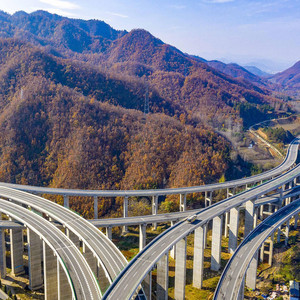
Data shows the total length of rural roads in China reached 4 .6 million kilometers by the end of 2023, enough to circle the equator 115 times.
A white paper on rural road development says it marks an increase of nearly 22 percent over 2013.
The document says better transport has cleared bottlenecks that long delayed economic and social development in poor areas.
It has also laid a solid foundation for rural people to realize moderate prosperity.
Vice Transport Minister Li Yang says China has also shared its development experience and helped build road infrastructure in other developing countries over the past years.
The white paper emphasizes China's contributions to rural transportation development in other countries by advancing technical standards, sharing experience and supporting local roads projects.
China has expanded the availability of foreign language versions of its highway engineering standards to broaden global application.
And in this way we can let more country to get to know the standards of Chinese rural roads construction.
The white paper says China has supported 24 developing countries, including Cambodia, Serbia and Rwanda, in highway and bridge construction and maintenance since 2018.
Shenyang has held a burial ceremony for the remains of 43 Chinese soldiers who died on the Korean peninsula decades ago.
The remains were laid to rest at the Chinese People's Volunteer Party's Martyr cemetery in the northeastern Chinese city.
The soldiers lost their lives during the war to resist the US aggression and aid Korea over 70 years ago.
South Korea returned the remains to China on Thursday.
Li Shiong reports from Shenyang.
In a ceremony marked by reverence and remembrance, the remains of 43 Martyrs of the Chinese People's Volunteer Army is being laid to rest here at the Martyr cemetery in Shenyang northeast China's Liaoning province.
Their sacrifice, made over 70 years ago in the war to resist US aggression and aid Korea, is honored with a burial ceremony where citizens and officials and veterans gather to pay tribute.
The remains of these fallen soldiers were repatriated from the Republic of Korea.
The burial ceremony began at 10am.
The Chinese People's Liberation Army soldiers are carrying the caskets into the grounds of the Martyr cemetery, a place dedicated to those who gave their lives in the defense of peace.
Earlier we heard the military band playing.
The cemetery is proceeding with quiet dignity.
The repatriation of these remains marks the 11th such return since 2014, following a handover agreement between China and the Republic of Korea.
Since then, the remains of nearly a thousand Martyrs have been brought home and laid to rest here.
The Martyrs dedication and bravery contributed to the victory in the war to resist US aggression and aid Korea.
Now here in the center of Shenyang, the spirits of the Martyrs have found their final resting place.
This morning on our way to the cemetery, we saw banners and LED screens showing messages such as welcome home heroes and the soul of the heroes is immortal.
Their spirit lives on.
The legacy of the Martyrs stands as a pillar of strength and pride not just for the city of Shenyang but for the entire nation.
Now with Li Shuan reporting.
Hungary is the country of honor at the ongoing second China international supply chain expo while Hubei is the province of honor, while Meng Jie has more on the partnership and growing cooperation between the Eastern European country and the Central Chinese province.
If you want to know more about the connections between the two, then you'll come to the right place.
The Hungary and Hubei province pavilions here are the supply chain expo.
The Hungary pavilion has showcased the country's leading industries, unique resources and national brand image.
Meanwhile, as the province of honor, Hubei is bringing 28 enterprises to showcase their products throughout 17 exhibits.
As the only event jointly organized by the country of honor and the province of honor, the China Hubei and Hungary international supply chain cooperation conference was held to promote economic cooperation between the two sides.
We will vigorously develop new formats such as cross -border e -commerce and digital trade, jointly build overseas warehouses between Hubei and Europe, creating a high -level economic and trade platform that connects domestic and international markets.
Since the beginning of this, Hubei's imports and exports to Hungary have increased by 8 .1%, which is a reflection of China's high -level opening up.
Today, China stands as Hungary's most important trading partner outside Europe.
Since 2015, bilateral trade turnover has nearly doubled, reflecting a partnership built on trust, mutual benefit and a shared vision for a sustainable growth.
This year also marks the beginning of the upgrade of ties between China and Hungary.
The China Council for the Promotion of International Trade will actively help introduce more high -quality products from Hungary to enter the Chinese market.
The results are obvious, as Hubei has reached a large number of cooperation deals during the expo, including 44 signed projects ranging from new energy vehicles, high -end equipment, artificial intelligence and more.
Now with Wang Mengjie reporting.
The expo is underscoring innovation -driven development, which is China's current focus for stimulating the economy with many players in the new energy vehicle sector attending.
Biran spoke to He Xiaopeng, the CEO of the expo NEV brand.
What are the core strategies adopted by expo in managing its supply chains of its new energy vehicles?
New energy vehicles are essentially acting as chainmasters for their supply chains.
So how a chainmaster manages the entire supply chain is a critical point.
As China's NEV industry grows stronger, we are observing significant differences compared to traditional automotive supply chains.
First, there's a greater focus on globalization.
We're thinking about global layouts and strategies.
Second, we're paying close attention to developing our platform.
With a platform approach, we might source 30 % from supplier A and 70 % from supplier B.
This allows us to better handle supply chain fluctuations, whether upstream or downstream.
Third, we're drawing a lot of lessons from mobile phone supply chains.
In the past, a car might have required around 800 chips.
Now an NEV can use as many as 5 ,000 chips.
Managing supply chains for AI -driven NEVs is fundamentally different from the traditional automotive approach.
When we work with the Chinese supply chains, our expectation is to collaborate with companies ranked in the top three of their industry.
Being in the top three reflects their quality, stability, and level of digitalization.
We're building a comprehensive system covering everything from supply chain management to order placement, logistics, and production.
In this process, supply chains are being managed with increasing precision.
However, managing such complexity manually isn't feasible.
It requires progressing from digitalization to informatization, and ultimately to intelligent systems.
We're now undertaking more full -stack in -house development.
Previously, our in -house efforts began with autonomous driving, focusing solely on software.
Now we've expanded to include autonomous driving cloud models, localized software, cheap computing power, and even the underlying neutral network architecture, which we call the EA architecture.
Through this architecture, we can extend capabilities across the entire vehicle, from the chassis and audio systems, to the rearview mirror, power systems, and power management framework.
This is why AI -powered vehicles will become increasingly powerful.
They will use minimal computing power to manage the entire vehicle's functionalities.
I believe all NEVs, along with many traditional automakers, are undergoing a major transformation, from developing mechanical vehicles to achieving full -stack, comprehensive in -house development with both breadth and depth.
That was expert CEO He Xiaoping discussing the NEV branch's cool strategies and the latest industry trends.
Hangzhou has held events to celebrate the 10th anniversary of the UN -affiliated regional center for space science and technology education in the Asia -Pacific region.
Over 300 people from 22 countries gather at the events in the eastern Chinese city, including industry officials, experts, students, and educators.
Huang Yichang has more.
I would like to congratulate everyone who has contributed to the success of the regional center over the past 10 years.
It's a special occasion for the Space Education Hub as they celebrate its 10th anniversary.
And this center is not just another academic institution.
Located in Beijing University, this is one of six regional centers worldwide affiliated to the United Nations.
And the mission of this center is to enhance space technology capacities of developing countries.
Students from this center, from nations across the globe, are united by a shared goal to enhance space technology in their home countries.
Currently 78 students enrolled in the center's degree programs.
In my country, we're in the coming near future, we will need such technologies actually to monitor the area.
There are a lot of predictions that we can do, flood predictions, things related to agriculture.
As part of the celebration, international delegates toured the campus and the laboratories.
Directors from four other regional centers, including those in Nigeria and Morocco, were also in attendance.
It's my first time in the Asian continent.
With the toll I have around the campus this morning, I'm kind of thrilled and very impressed with the facilities.
We kind of look forward to this kind of collaboration with the China Regional Center.
We can have staff exchanges which we have actually started.
It is the example we can put a bridge between African students and this center.
Over the past 10 years, nearly 400 graduates from 33 developing countries have been trained here.
The institution has also been continuously promoting exchanges with member states and other regional centers.
As a highlight of the ceremony, it was announced that the regional center's coordinated office will be based in Hongjung.
Additionally, delegates from member countries jointly issued the Hongjung initiative, which aims to shape the future of space education through international cooperation.
Hongkung International Airport has launched a three runway system, solidifying the city's status as a global aviation hub.
Hongkung Chief Executive Zhong Li expects the system to bring more business opportunities.
Hongkung International Airport serves as a crucial gateway for the Guangdong Hongkung Macau greater Bay Area to the world, and plays a strategic role in social and economic development.
The new system will greatly enhance the airport's passenger and cargo capacity, bringing substantial business opportunities to Hongkung.
The project includes a reclamation of about 650 hectares of land, construction of a new runway with a total length of 3 ,800 meters, and reconfiguration of an existing runway.
The three runway system enables the airport to handle 120 million passenger trips and 10 million tons of cargo annually.
The construction cost was around 142 billion Hongkung dollars, or 18 billion US dollars.
Coming up, Australia becomes the world's first country to ban children younger than 16 from accessing social media.
Discover the realities and responses to our changing climate with ClimateWatch.
Uncover critical issues, such as the Maasai Maris disrupted roller -beast migration and the drop in the Panama Canal's water levels.
Delve into solutions for a sustainable future.
Tune in to ClimateWatch on your favorite podcast platform.
Become more eco -conscious and take action to protect our planet.
As a direct result of our legislation passed through the parliament yesterday through the Senate and confirmed in the House today, parents can have a different discussion with their young ones.
A different discussion that will result in better outcomes and less harm for young Australians.
Platforms now have a social responsibility to ensure the safety of our kids is a priority for them.
We're making sure that mums and dads can have that different conversation today and in future days.
We've got your back is our message to Australian parents.
The government has not provided specifics on the enforcement of the new law.
Facebook and Instagram's parent company Meta said parliament has rushed the legislation.
Georgia's government has suspended negotiations over the Eurasian country's accession to the European Union until 2028.
Prime Minister Iraqi Kobahize accused some EU politicians of blackmail.
It's categorically unacceptable for us to view EU integration as an act of charity the European Union must grant to us.
Moreover, we believe that Georgia with its rich culture and potential can contribute to the enrichment of the European Union just as much as the European Union can contribute to Georgia's development.
In this context, it's absolutely unacceptable for the Georgian people to witness attempts by some European politicians and bureaucrats to portray EU -Georgia relations as a one -sided dynamic.
The prime minister said the government will fulfill all the agreements with the EU without any financial support from the bloc.
Georgia's opposition led by President Solomare Zura Beshavile has condemned the suspension of talks.
Today marks a significant point, or rather, the conclusion of the constitutional coup that has been unfolding for several weeks, or perhaps months.
Today, the course that began months ago leading us from Europe towards Russia has come to an end.
For those who still have doubts, thinking there might be another explanation, those doubts were disposed today.
Riot police have arrested several protesters in Tbilisi.
The prime minister announced a suspension of talks shortly after the governing Georgian dream party reappointed him to the job.
The party came to power after last month's parliamentary election, but the opposition disputes the results and has declared a boycott of parliament.
British Prime Minister Keir Starmer has announced plans to change the immigration system after new figures show that net migration to the UK hit a record 906 ,000 in 2023.
Starmer criticized the previous Conservative government for the increase.
This happened by design, not accident.
Policies were reformed deliberately to liberalize immigration.
Brexit was used for that purpose, to turn Britain into a one -nation experiment in open borders.
Starmer noted that most arrivals filled the country's workforce gaps, but he announced the changes to prioritize training domestic workers.
Now it's 28 minutes past the hour, checking the forecast for the day.
Beijing is down to 2 on Friday evening.
Saturday will be sunny with a high of 13.
Nanshan is 7 tonight, tomorrow sunny and 18.
Elsewhere in Asia, Islamabad is 10 this evening.
Saturday will be sunny with a high of 23.
Vientiane is 17 overnight, tomorrow will be cloudy with a high of 28.
Phnom Penh is 23 overnight, tomorrow overcast and 31 degrees Celsius.
It's time for a short break.
So far this hour. Israel and Hezbollah accuse each other of breaching the ceasefire.
A northeastern Chinese city holds a burial ceremony for fallen soldiers who died on the Korean peninsula decades ago.
Tianleu with you, stay with us here on The Beijing House.
The best military commander is not he who fights a hundred battles and wings every one of them.
The best military strategy does not lead to the desecration of the enemy's capital city.
Decoding the art of war will help you understand why there is no art in war and how citizens stayed undefeatable using the science of war with fun stories and insightful breakdown of famous battles.
Find Decoding the Art of War wherever you listen.
Embark on a century -long journey with CGTN Radio's latest offering.
Echoes of Coolia, a gripping audio drama series inspired by real -life tales.
From unexpected encounters to heartfelt reunions, immerse yourself in a narrative of love, peace and enduring friendship.
He's a piece of my lost childhood.
Listen to Echoes of Coolia on radio .cgtn .com and all major podcast platforms.
Bing An. Bing. Bing An.
Bing An. Examining the events that impact and shape China and the rest of the world.
This is The Beijing Hour.
One hour of news and information brought to you every weekday.
Now here's your host.
Ti 'alu with you on this Friday, still to come?
In business, a new advanced manufacturing exhibition area at the China International Supply Chain Expo.
And today we bring you the sixth episode of a nine -part special report that delves into China's journey toward sustainable development.
To contact us, you can email radio at cgtn .com or follow our X account at CGTN Radio.
But first, check in today's headline news.
Chinese President Xi Jinping has called for greater efforts to adapt Marxism to the Chinese context and the needs of the times.
He was given instruction on the study and development of Marxist theory in the new era.
A work meeting on a project has been held in Beijing.
The Chinese Foreign Ministry says Nepali Prime Minister KP Sharma Oli will pay an official visit to China next week.
The visit runs from Monday to Thursday.
China and Russia have conducted a joint strategic air patrol over the Sea of Japan.
The Chinese Defense Ministry says the two forces carried out the patrol, the ninth of its kind, as part of their annual cooperation plan.
China will extend tariff exemptions for certain U .S.
imports until February 28 of next year.
The Customs Tariff Commission of the State Council says the extension includes items such as rare earth metal ore, medical disinfectants, and nickel -cadmium batteries, which are exempt from additional tariffs imposed in response to U .S.
Section 301 actions.
Initially set to expire at the end of November, these exemptions aim to alleviate trade tensions and support industries reliant on these imports.
The total lengths of rural roads in China reached 4 .6 million kilometers by the end of 2023, enough to circle the equator 115 times.
According to the latest white paper from the State Council Information Office, that's an increase of 21 .7 percent over 2013.
The document says better transport has cleared bottlenecks that long delayed economic and social development in poor areas, and has laid a solid foundation for rural people to realize moderate prosperity in all respects.
Over the years, China has also shared its development experience and helped build road infrastructure in other developing countries.
The white paper says since 2018, China has supported 24 developing countries, including Cambodia, Serbia, and Rwanda, in highway and bridge construction and maintenance.
Kazakhstan's Vice Minister of Tourism and Sports has announced plans to improve services and infrastructure to attract more tourists from China.
Yakim Bayov Malekovich recently attended a forum under the Kazakhstan Tourism Year in China.
We're seeing more and more Chinese tourists coming to Kazakhstan, so we should improve tourism infrastructure and not let these visitors down.
Today at the forum, we announced that we would open new border crossings and improve the facilities at existing ones.
Some improvement work has already started this year, making these crossings convenient not only for the clearance of goods, but also for people.
China's Council General in Almaty says tourism officials from the two countries have been working to bring people closer.
Zhang Wei added it will help build a more meaningful and dynamic China -Kazakhistan community with a shared future.
Since the launch of the Kazakhstan Tourism Year event, departments on all levels of the two countries, especially the tourism departments, have held promotion meetings, forums and tourism exhibitions in both countries, providing tourists with a variety of colorful activities.
Such events have opened up windows for promoting mutual understanding and friendship between the peoples of the two countries and enhancing mutual learning between civilizations.
The number of Chinese arrivals to Kazakhstan increased by half this year and a third more Kazakh travelers have made their way to China.
2025 is the Chinese Tourism Year in Kazakhstan.
A traffic accident in New Zealand has left the Chinese national seriously injured.
The accident in Wakato on North Island killed one person and injured 13 others.
The Chinese citizen is receiving treatment in the hospital.
At least 20 people have lost their lives after a boat capsized in Cameroon.
Witnesses say the boat was carrying passengers from an island in the country's far north.
Local media reported the number of deaths may rise as rescuers search for more victims.
An investigation is underway.
Boat accidents in the region are often linked to overloading operational issues and severe weather.
The International Tennis Integrity Agency says five -time Grand Slam champion Iga Svyantek has accepted a one -month suspension after testing positive for a prohibited substance.
An out -of -competition test from August ahead of the Cincinnati Open showed amounts of traumatizing.
The Polish pot player was provisionally banned from September 12.
She missed the tournament in Seoul, Beijing, and Wuhan without disclosing the reason at the time.
The tennis integrity agency said it accepts the explanation that the Polish player took contaminated medication to help with jet lag and sleep issues.
The Women's Tennis Association has voiced support for the agency's decision and stressed the principles of clean sport.
The China Media Group has unveiled the official theme and logo for its 2025 Spring Festival Gala.
The theme is, Year of the Snake, Keep Your Spirits Awake.
CMG airs the gala on the eve of the Chinese Lunar New Year, an essential part of the Spring Festival celebration since 1983.
It includes songs, dance, comic sketches, operas, and folk arts.
It is known as the most watched television programme in the world.
This is Tianlu in the Chinese Capital coming up in business, a new advanced manufacturing exhibition area at the China International Supply Chain Expo.
Thank you, Tianlu. We start off with news from the equity market.
Stocks in the Chinese mainland have ended the week with increases.
Timothy Pope has more details.
November has been a choppy month, but Chinese stocks are coming out as winners.
The Shanghai Composite Index rose another 0 .9 % and the Shenzhen component added 1 .7%.
Investors are looking ahead to what's expected to be an improvement in the official manufacturing data, so that's a further expansion in the PMI numbers.
Eyes will also be turning to the government's central economic work conference to be held next month.
That could yield some more information on things like the budget and stimulus.
Most sectors trended higher.
We did see a bit of a retreat from the early highs by the end of the session, but tech and consumer stocks were firmly out in front.
EV maker BYD stocks end of the day flat though.
There are some signs that the price war in that sector is not slowing down.
The financial journal Itzai has reported on a letter that BYD sent to suppliers asking for price cuts on components.
And trying to cut costs along the supply chain is prompting a bit of speculation that this is a signal the company is planning to cut vehicle prices again in the battle for market share.
There was Timothy Pope reporting.
Elsewhere, the Hong Kong stock market also ended higher.
The Hang Seng index was up around 0 .3%.
In Japan, Tokyo stocks closed lower for the day as a stronger yen against the US dollar Weidong exporter's issues.
The Nikkei ended down nearly 0 .4%.
This year's China international supply chain expo introduces a new advanced manufacturing exhibition area that highlights the influence of technology across various industries, including rail transport, aerospace and renewable energy.
Xi Xinqian has details.
The Chinese train powerhouse is also showcasing its latest efforts in making control systems and green power technologies.
And the hope is to use the expo as a platform for finding new partners.
With the addition of the advanced manufacturing chain, more international firms are joining the expo to tap deeper into the China market.
German manufacturing company Knorr Bramze is participating in the expo for the first time, showcasing their latest products made possible with their Chinese partners.
We're 30 years of business ties in China.
The company has integrated with China's industries.
And China's companies are also looking to explore new cooperation opportunities with global firms.
That was Xi Xinqian reporting.
China is intensifying efforts to expand digital trade with authorities announcing new goals for digital service trade on Thursday.
The guidelines project that the share of digitally deliverable services in overall services trade will exceed 45 % by 2029 and surpass 50 % by 2035.
The document also emphasises establishing a secure and efficient governance system for digital trade and enhancing institutional openness.
The country also plans to promote and regulate cross -border data flow and deepen global cooperation in digital trade, particularly in artificial intelligence, big data, cross -border settlement and mobile payments.
Finally, China's central government has approved new travel policies allowing more frequent visits to Hong Kong and Macau for residents of nearby Shenzhen, Juhai and Hong Kong, Guangzhou and Dong Macau in -depth cooperation zone in Hangjin.
Starting December 1, Shenzhen permanent residents and holders of residents' permits in the city will be eligible to apply for multi -entry permits to Hong Kong.
The permits allow unlimited visits to the city within a year and each stay capped at seven days.
From January 1, Juhai permanent residents will be able to apply for one trip per week permit for Macau.
Under the policy, they can visit Macau once per calendar week with a maximum stay of seven days per trip.
Also, from January 1, permanent residents and residents' permit holders in Hangjin will be eligible to apply for multi -entry permits to Macau, enabling unstricted visits for up to seven days per stay within a one -year volatility period.
Thank you very much, that was Wang Zihang with Business.
You're listening to The Beijing Hour.
Coming up next, our special report, Greenland, China, a journey to 2060.
Dive into news like never before with Deep Dive, the podcast from CGTN Radio.
Join our global reporters for captivating stories and thought -provoking conversations.
Search Deep Dive on your favorite podcast platforms and get ready to dive in.
43 minutes past the hour, it is time for a special report, Greenland, China, a journey to 2060, a nine -part program dedicated to exploring China's efforts in carbon reduction.
In next episode, part six, Tianyu takes a look at some of the challenges facing Gali Gong Mountain and the wider world in biodiversity conservation.
When people think of Ríngnan Province, they know it as China's kingdom of plants and animals, or Jingbang of biodiversity.
It's true, Ríngnan is remarkably rich in life forms.
Covering just 4 % of China's land area, the province is home to nearly half of the nation's protected species.
It had seven climate types, within a span of just 900 kilometers, hosting almost every type of ecosystems on Earth except oceans and deserts.
But this remarkable biodiversity is facing significant challenges.
Ríngnan has vast, well -preserved vegetation and is rich in biodiversity, but is also highly vulnerable to climate change, which poses a serious threat.
In Gali Gong Mountain, for example, we need to study how temperature and rainfall changes affect biodiversity.
Another major challenge is evasive species, which are especially prevalent here.
That was Professor Gong Yupong from the Biodiversity Institute of Ríngnan University talking about the challenges that Ríngnan faces in terms of biodiversity conservation.
To know more about the status quo in this regard in Ríngnan and China as a whole, my colleague and I took a three -hour flight from Beijing to Ríngnan to see it for ourselves.
During our stay in Kunmin, the provincial capital, we talked to the locals and tourists to get a sense of their understanding of biodiversity protection.
Many of them shared with us the specific measures they can take to contribute to the conservation of the flora and fauna around them.
However, biodiversity experts have revealed another side of the story.
Professor Gong told us that many people are still unfamiliar with the concept of biodiversity and the hazards that can really tip the balance of ecosystems.
The public's understanding of the harm caused by evasive species is still limited.
Many people don't recognise common evasive species or understand their impact.
For instance, animals like red -eared sliders and crayfish can be easily bought at pet markets.
Some people release them into local rivers or ponds, and the ones released, these resilient species, will establish its population and threaten native wildlife.
There are also misconceptions about using non -native plants in landscaping and agriculture.
While many non -native species like certain crops and flowers benefit us, some others can harm the ecology, economy, and even people's health.
The professor also highlighted the importance of conducting brisk assessments before introducing non -native species to guard against such risks.
From the experts' perspective, Gao Ligong Mountain, which is widely considered a hotspot of biodiversity protection in northwest Ring Nan, is a place that's extremely vulnerable to factors like invasive species.
Stretching over 600 kilometres and covering five latitudes, Gao Ligong Mountain exhibits an elevation difference of nearly 5000 metres.
As we mentioned in our previous episodes, the mountain's unique geographical location, complex terrain, and climate conditions have bred a variety of vegetations and habitats.
During my visit, I woke up every day to a symphony of birds chirping, as the small village I stayed boasts one of China's most diverse bird habitats and is a popular destination for bird watching.
The name of the village is Bai Hua Lin, which literally means the hail of hundreds of flowers.
More than 500 bird species have been spotted here, accounting for over half of the total recorded species in the whole province.
Ho Ti Guo is a local legend.
The 55 -year -old man is Bai Hua Lin's first ever bird watching guide.
He can recognize a bird by its singing alone, and he can even tell if a bird is happy, sad, or frightened.
Bird enthusiasts come from all across the country and hire Ho as their guide.
People love bright -colored birds, but for me, every bird is unique.
Each has its own cause, a mating call, a nesting call, a feeding call.
A single bird might seem four different sounds, and following the seasonal changes, their sounds change too.
Their chirping sounds are especially attractive in spring.
Bird watching is a booming business here.
Over 60 villagers work as bird watching guides, and there are 47 signs for bird watching or photography.
As the bird economy grows, many villagers who had left the village to find work elsewhere are returning to build their lives around conservation.
But Ho told us not everything is perfect here.
Threats to the birds remain, mostly from the local farming practices.
Pesticides harm the birds on wildlife.
The birds eat insects and animals eat pesticide -treated crops.
That can be deadly.
It's a difficult balance.
We want to protect the birds, but the farmers also need to make a living.
We need both conservation and development so people won't go hungry.
While pesticides and weed killers are hard to ban without affecting the farmers' interest, how to reduce their damage to birds and wild animals remains unsolved.
For more insights on this issue, I talked with zoologist Wu Fei with the Chinese Academy of Sciences.
He told me that we should refrain from using a one -size -fits -all approach.
This is where our scientific assessment is essential.
We need to determine if, for example, birds are dying because they eat treated seeds, which are often coated with pesticides or chemicals to promote germination, and deter pests.
Finding a balance here becomes a scientific question.
For endangered species like the green peafowl, even the death of one green peafowl is detrimental to the species.
In such cases, the government might offer compensation or support to encourage farmers to use untreated seeds.
That's one approach, but careful assessment is needed anyway.
We can't simply ban treated seeds just because they may harm wildlife.
Another concern of our birdwatching guide Hao Ji Guo is the shortage of monitoring equipment to help protect the birds.
Over the past few years, authorities in Wingnan have installed infrared cameras around his village to observe and protect the birds.
But Hao says they need more.
If only the government could provide five or ten cameras per observation point, with a bit more support, we could watch over the birds much better.
Earlier this year, China's Ministry of Ecology and Environment released the country's Biodiversity Conservation Strategy and Action Plan.
It highlights the need for better technology to support biodiversity protection, a call that resonates deeply with Hao and his community.
The document also points out that in many regions of China, local communities are experiencing financial losses and even threats to people's health and safety, their livelihoods and property due to human -wildlife conflicts.
In Gao Ligong Mountain, residents are suffering from similar troubles.
Hao told me that many residents complained about how wild boars and bears had wreaked havoc in their altars and on their farmlands, eating their fruits and ruining their corn.
To address this, local authorities have divided the mountains' protected areas into several zones and assigned each one with a forest ranger to monitor and track the activities of wildlife while guarding against poachers or people digging protected herbs illegally.
While these rangers have helped reduce the number of accidents caused by wildlife, the job is a tough one, as the steep mountainous terrain makes patrolling extremely difficult.
Besides, there are not enough rangers.
Mao Qingsheng, one of the rangers, is responsible for patrolling a vast stretch of the forest on the mountain.
He told me that there are days when he survives only on dry food or wild fruit drinking from mountains' dreams.
One day, we went to a high altitude area and it started snowing.
In Yunnan, the weather can change dramatically.
It was February. It snowed so hard that we couldn't turn back.
We made a fire in the snow, spent the night there without blankets.
This has happened two or three times.
On top of that, the shortage of rangers means that not every trail can be covered.
This place is large and steep, with many entry points.
It's impossible to cover everything.
To support the rangers, the local conservation authority hosts regular meetings and invites experts to train the rangers on wildlife monitoring and protection.
Yingxue Jian, chief of Galigong Mountain Management Bureau, told me it takes a long time to train a ranger and few young people are now interested in taking this tough job.
It takes nearly three years to train a ranger.
They need to know the terrain and flora and the fauna of the reserve, as well as the forest laws.
Recruitment is hard because wage doesn't meet young people's expectations.
Galigong Mountain is not alone in these matters.
Professor Gong from Yunnan University said that biodiversity protection across the whole country is faced with a series of challenges.
Scientists have categorized the challenges into five main issues.
Firstly, habitat loss and fragmentation.
This means when forests are cleared for farmland, it turns also to strip away species from their natural habitats and therefore leads to local extinction.
Secondly, environmental pollution.
Water pollution, for instance, can cause algal blooms that deplete oxygen, suffocating aquatic species.
Thirdly, over exploitation of natural resources.
Wild herbs for medicine or rare orchids are often harvested unsustainably, disrupting their reproductive cycles and reducing their populations.
Fourthly, evasive species can disrupt food chains and the ecosystem balance.
And lastly, climate change.
Rising CO2 levels have caused an increase in the frequency of extreme weather and climate events, which also disrupt ecosystems.
Species will need to migrate to survive, but habitat availability is limited, posing a further threat to their survival.
The challenges that China is facing reflect a global issue.
According to a UN report, ecosystems are suffering around the world with the loss of species on the rise since the 1970s.
Human activity has altered 75 % of the land and 66 % of the marine environment globally.
Wu Fei from the Chinese Academy of Sciences says balancing developments with conservation is the crux of the issue.
This is the global problem, especially in developing countries.
Human expansion often conflicts with conservation.
For example, our need for energy often depends on natural resources, which inevitably impacts the environment.
But through research, we can find solutions or at least establish sound boundaries.
Earlier this year, Yunnan Province took a boat step and released its own biodiversity conservation strategy and action plan.
The goal is to make the province a model of biodiversity protection and contribute solutions to the world.
The plan includes new laws, education initiatives, and ecosystem restoration, species recovery, and climate adaptation strategies.
It embraces the country's vision to achieve harmony between people and nature by 2050, emphasizing the need for all citizens to make biodiversity conservation a personal responsibility.
In the next episodes, my colleagues will take you to China's northernmost region, which boasts the country's hub for heavy industry, and tell you what the local factories have done to cut carbon emissions in an effort to build a greener China.
As Tianyu in Yunnan Province will continue our special report, Greener China A Journey to 2060 next Monday.
Don't forget to subscribe our podcast Climate Watch for this series and more insights into climate change.
It's 58 minutes past the hour, quickly checking the forecast.
Beijing is down to 2 on Friday evening, Saturday will be sunny with a high of 13.
Nanshan is 7 tonight tomorrow sunny with a high of 18.
Elsewhere in Asia, Islamabad is 10 this evening, Saturday will be sunny with a high of 23.
Vientiane is 17 tonight tomorrow cloudy and 28.
Phnom Penh is 23 overnight tomorrow overcast and 31.
In Africa, Nairobi will seek slight rain with a high of 26 on Saturday.
That's it for this edition of the Beijing Hour Making News today.
Israel and Hezbollah accuse each other of reaching the ceasefire.
On behalf of the staff, this is Tianyu in the Chinese Capital, hoping you join us for the next edition of the Beijing Hour and open the window to the world together.
Hello everybody, welcome to Round Table coming to you live from Beijing.
Round Table, Round Table, Round Table, connecting China and the world.
We bring you fun and timely discussions about what's affecting our lives everywhere, every day.
Tune in to Round Table where the East meets the West and understanding is the goal.
From North to South, East to West, people in China are chasing their dreams and leaving their mark.
Want to know how they beat the odds and made a difference?
Footprints brings you the true life stories of their journeys.