Discussion keeps the world turning.
This is Roundtable.
Booming sales, growing demand.
China's cross -border e -commerce is thriving.
But with fresh tariffs on the horizon, can Chinese businesses keep up the momentum?
And stick around for our special segment.
Heart to heart, your questions are answers, business, tech, culture, or whatever stirs your soul, we are ready to dive in.
Keep sending them to RoundtablePodcast at quq .com.
Coming to you live from Beijing, this is Roundtable.
I'm Heooman. For today's program, I'm joined by Steve Hatherly and Ding Heung in the studio.
First on today's show, So China's cross -border e -commerce sector is experiencing continuous growth on the global stage, driven by strategic investments in overseas warehouses and cutting -edge AI -powered logistics hubs.
Economic Daily reported that in 2024 alone, China's cross -border trade soared to 2 .63 3 trillion yuan, approximately 368 billion US dollars, marking almost an 11 percent increase from the previous year.
But not everything is smooth sailing.
With the US tariff revisions in early 2025, how are Chinese companies adapting to these challenges and what lies ahead for the future of cross -border e -commerce?
So tell us, well, it's seen as one of the latest developments for China's e -commerce, cross -border e -commerce, is overseas warehouse building.
And could you give us some more information on that?
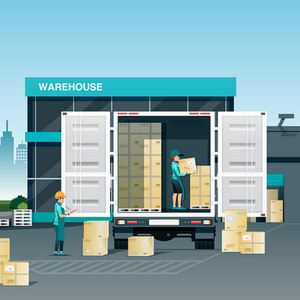
So, overseas warehouses are key logistics hub that those Chinese Ecommerce companies or platforms have set up in overseas territories in foreign countries.
They serve as important nodes for a cross border Ecommerce.
They are functioning as a kind of new infrastructure for international trade because they can faster, faster.
They because they can enable faster delivery, easier returns, for example, and a better customer services for all those Chinese products sold abroad.
So that's the key idea.
And I guess there were some examples, for example, tai niao, which is the logistics arms of Alibaba, its overseas warehouses are located in countries like Germany, in the United States and in some Southeast Asian countries as well, we can take a look at them one by one I guess.
The overseas warehouses are such a big deal because they reduce shipping time by a lot.
You can go from weeks to just a few days or even faster.
They help businesses lower costs.
they improve supply chain efficiency and they expand their presence in global markets as well.
Think about that advantage from a company's point of view.
Having a presence in the region or in the market where people can see when they go out and drive their cars or whatever, they can see your brand physically there, it helps to create a closer relationship with the And that can really help out with market penetration too.
Yeah, especially when we're talking about cross -border e -commerce.
So these are businesses conducted in different countries.
And here in China, I think, especially on Taobao, for example, this is an online marketplace which mainly features small individual vendors.
So I don't necessarily think that small vendors would have the need of having huge warehouses or the means perhaps sometimes.
Yeah, that as well.
Usually, the bigger sellers on maybe T -MALL that is more of where most of the vendors are certified and verified large sellers often establish brands here in China and then that's how they do business.
When you look at that business model and go overseas, then it just makes a lot of sense to and even to reduce costs if you can sell that much and then having a warehouse in your destination country.
And like you said Steve, having people driving by to see, Oh, this company does exist and usually it's a new company for those local people, right?
So it's good for brand recognition, uh, also good for establishing trust as well when you're Seeing like new companies coming into this market.
Yeah, and I think you know Ding Phone brought up the point about faster returns That's that's an important point right?
I don't know about you but I've ordered things from overseas before you know mistakenly ordered the wrong size or something and Couldn't wear it.
I remember a t -shirt as an example and I I guess I didn't realize it at the time But what it did was it?
deterred me from ordering from that place again by no fault of their own.
I'm the person who ordered the wrong size, but just the whole thing of having to go through a return policy for an overseas product, I didn't even bother trying, but it also made me not want to order from them again, so they lost a customer just by no fault of their own.
That is really interesting.
And also we're seeing a few Chinese cross -border e -commerce companies establishing their name, and the last time we talked about this was in July or June 2024.
That's when TiMoo started to become, like, all the rage in the U .S. as well.
So could you also just explain to us a little bit more about how the overseas warehouses are really important for the brands such as Tiemu, Xian and so on.
Yeah, so Tiemu is just one example it is accelerating its global expansion by building those overseas warehouses for the sake of faster delivery.
Xian is partnering actually with some local third -party logistics providers to establish warehouses in America and well according to some advanced and amazing media reports ecommerce platforms like Shopee and Tik Tok shop they have also announced the plans to establish some intelligent logistics systems now actually near the border area between China and Vietnam there were some China Arzion cross -border e -commerce projects featuring modern warehouses.
They can help delivery time from the border area to Hanoi for example the Vietnamese capital city to 1 to 2 days and if we're talking about delivery from the border area to the Hu Ching Minh city which is more southern in in And it will take somewhere between 3 to 5 days.
So this tells a lot.
And also, we are talking about, say, Chinese footprints on the African continent.
For example, there's Kili Mal, which is a Chinese ecommerce platform.
In Kenya, it has set up its own overseas warehouses in Africa making its business model very, very popular for the local people.
It feels like it's almost to become a must in terms of how these e -commerce platforms need to catch up in this particular trend.
Interesting comment.
Do you think this is the way it's going to be in the future, and it'll be hard to exist otherwise, if you don't follow these types of trends?
Yeah, because nowadays, on one hand, we have things like digital supply chain, those at advanced digital technologies like AI, blockchain, big data, et cetera, they are really driving rapid growths of cross -border e -commerce.
They can optimize supply chains.
They can optimize the logistics, et cetera.
They can optimize even payments and marketing.
So all these things really necessitate our logistics system to catch up with the new trend.
Yeah, and if a company doesn't catch up with these trends and they're gonna get left behind Very very quickly presumably yeah, also just to offer a little bit of an explanation for our Chinese listeners at home Teemu which is so big in the US It's actually pinto us global platform.
So, you know, what PDD is about right?
We know we can get a really good deal.
Sometimes you just can't you know You don't think it's true how dirt cheap.
It can be and usually it's like you Group by with a whole bunch of strangers online and you can buy like toilet rolls for like one You want and you get like six or twelve roll rolls?
I don't know how they make it possible stuff like that So the international version of it is team.
It's amazing someone someone texted that to me Texted me the app and said oh if you join I mean, you know, I get some free thing for recommending other people.
And if you recommend other people...
We ended up with like three backpacks and a bunch of stuff just almost totally free.
Yeah. Really unbelievable.
And then I saw, yeah, in other markets overseas how insanely popular that is.
Yeah, and Shian is a well -known fast fashion platform and it's known for being able to turnout designs and fashion goods that really suit the customer's palate at really cheap prices as well as really in vogue styles and the way they do it is relying on high -tech and also to cut the middleman so to keep the designs fresh as well as keeping it really cheap.
I watched a documentary about fast fashion and I learned a lot and one of the things I learned is that in the fast fashion industry they really keep an eye on social media.
They really keep an eye on what's hot, what's trending with celebrities and when they see an item that's hot, they can knock it out within almost hours and get it out there for customers to enjoy themselves.
That's fast fashion, that's part of the industry.
Yes and that's how fast it is I suppose.
So, I'd also like you guys to help us to review what initiatives have been successful in promoting China's cross -border e -commerce growth?
Well, there's been a lot of policy support, market growth to help out the governments continuously emphasized cross -border e -commerce development.
They have introduced facilitation policies, tax rebates, for example foreign exchange settlement return policies, for example, and all of those things help to promote trade.
165 cross border e -commerce pilot zones, this is from China today, have been established nationwide as of 2023 and that helped to form a development pattern of land -sea coordination and from Eastern region to Western region synergy.
All of those points to mean there's been a lot of support, both economically, infrastructure -wise as well, to make this a success.
And also there is the issue regarding international cooperation.
For example, China had signed memorandums of understanding on e -commerce cooperation organization was more than 30 countries as of July 2024.
And e -commerce has been included into the contents of about more than half of these of China's current FTAs, free trade agreements with other economies.
And by the end of 2023 China had assigned 125 international agreements covering digital trades globally.
And also, I think we also need to keep in mind the advancements in terms of the supply chains, the industrial chains, the kind of industrial chain clusters here in China, because a well -established cross -border e -commerce supply chain system can really support all those global sellers and small and medium sized businesses entering the market, not not only Chinese businesses entering the market but also other small and medium -sized enterprises elsewhere in other economies joining the strength in terms of entering the Chinese market.
Let's think about this.
China now has more than, I guess, more than 120 ,000 cross -border e -commerce enterprises, and there were more than 1 ,000 cross -border e -commerce focused industrial parks.
Works. These numbers are really remarkable.
So you have these clusters, you have these industrial capacities.
So that's why naturally we have the kind of advancement in terms of China's cross -border e -commerce.
Yeah, because when you have continued improvement of that kind of e -commerce supply chain, then And that drives or encourages an increasing number of platform sellers and the SMEs, the small and medium sized enterprises, globally, right?
All around the world to get involved to enter into the field.
And it just makes it grow and grow and grow and grow.
And this is essentially international trade.
And these two little words form a huge concept.
And the numbers that you guys just cited and the businesses involved, they are de facto contributing and engaged in international trade by selling goods across borders and also it might be an opportunity for ...
Well this is really something we're very familiar with here in China about these live stream e -commerce, instant retail these kinds of things.
And since COVID, since so much of our lives have been migrated online that internationally we're kind of seeing that this kind of business model is a little bit more prevalent than it used to be.
Yeah, one hundred percent because it's just another path, isn't it?
And it's a very effective path for the retailer to get in touch with the consumer.
Maybe get in touch is the wrong choice of words.
But to establish a relationship, I guess, is what I'm trying to say.
Right. And you can do that so effectively when you're doing things like live streaming or having interactive formats like short videos or live commerce videos because it helps the brand sure it helps the brand showcase the product but it also puts a face to the product too if that makes sense and that helps with trust we talked about trust before and and this is another great example of where you can build that trust with the customer but it's also engaging too isn't it you know you think of flipping through a fashion magazine where you might see an item that you like, but it's just you looking
at the picture and from a business point of view, you're probably very likely to forget about that fashion item within a short period of time.
But when you're engaged watching a video with a person presenting to you, telling you about the item, showing you the item inside and outside, showing you its high quality, it's just a difference maker.
It's a total, total game changer.
In recent years, if we look at the international picture and especially since the second Trump term, international trade has encountered significant challenges including escalating trade wars, shifting geopolitical alliances and policy uncertainties.
These factors have disrupted established trade relationships and supply chains, prompting businesses and governments to navigate a more complex and unpredictable global market?
And when we look at Ecommerce, cross -border Ecommerce in this context, what are the current realities shaping international trade in today's global environment?
Well, this is something I actually followed pretty closely most recently in recent months.
In the case of the United States, we used to have this or they used to have this diminished provision of Section 3 -1 of the Tariff Act of 1930.
It used to allow shipments valued at 800 US dollars or lower than that to enter the United States duty -free.
However, now, I guess it was in February, U .S. President Donald Trump issued executive orders eliminating that particular piece of exemption for goods imported from China, Canada, and Mexico.
This is notably affecting e -commerce companies such as Xing and Taimou, because they have really because previously they have really benefited a lot from these duty -free shipments under this 800 US dollar threshold.
Now they are faced with higher costs, increased costs, and potentially leading to higher prices for consumers and adjustments in their supply chain strategies because ultimately when you have increased the cost, you need to shift these additional burden onto the consumers and that means you will become less competitive.
So, I think they are largely adopting some kind of business strategic shifts.
And here actually, going back to the point we mentioned earlier, these overseas warehouses million.
Yeah, because previously the orders would have been shipped from overseas.
Then that applies that $800 threshold.
But when you have warehouses there, then that solves that problem pretty significantly.
Teemu for example, they began allowing US -based vendors, this is another solution, to sell on its market place in 2024 and that newer model allowed sellers with warehouses in the states to handle fulfillment and logistics themselves creating orders that wouldn't need to cross a border before making their way to the customers.
So the companies that we mentioned they saw the problem, or the speed bump, if you will, and appropriately found a solution for it.
Yeah, that being said, these companies have been sort of preparing for this moment, but still ever since that policy revision came out, we saw quite significant drops in the profits of these two companies, just as examples, because it really affects so many companies, especially small vendors in the US when what used to be duty free might no longer be the case, yeah.
And we've talked about yes, there's the built with the building of warehouses, what do you see as the other possible changes that come due to these, you know, revisions in in these policies or just this shifting climate that we're all facing?
Well, there's a lot of things that can happen, right.
And so many people are affected by this customers are affected by tariffs in two main ways.
Number one, they increase the cost of what we buy, right, because it gets added on to the cost oftentimes from the retailers, which companies pay as a tax to the tariffs to the Federal Government, that price gets passed on, or that tax gets passed on to the customers.
But secondly, and this is a big deal too, they might reduce the range of products available to customers by making some imported products just unprofitable, right?
It's just not, it's just not worth it for anyone.
So from a customer's point of view, those, those are the big deals, but then geopolitically there are things to talk about there as well.
Conflicts, regional instabilities, those can lead to longer shipping routes, um unpredictable costs right, rate rising freight costs, um the traditional patterns for delivering goods are now fragmented and you have to figure out new ways then there's exchange rate volatility there's a lot that happens.
We just need to think about say this crisis occurring um last year, over the course of last year actually, falling on the Red Sea and the Suez Canal because of the Israel Hamas war going on over there and involving the Houthis from the Yemen but that's a geopolitical topic but I feel like say another issue could also be say exchange rates volatility at a time when the global economy is now doing so well there can be uncertainties and fluctuating exchange rates they can challenge the profit margin on the parts of these cross -border e -commerce platforms as well.
So, ultimately, it is question about how China can further develop the business, the e -commerce, the cross -border e -commerce business, despite all these challenges or new realities.
They did some research from Przemalski, the company is called Przemalski Research, and that showed that 76 % of, if we're looking at customers from the United States, 76 % of customers in that country find Teemu cheaper.
81 % prefer Amazon's faster logistics.
So despite differences in prices and logistics, there's no real difference in customer reviews overall.
So as more sellers use multiple platforms, then cross -border e -commerce competition will intensify.
It'll get stronger.
So sellers, they have to adapt pricing strategies to each platform's market characteristics to take advantage of the characteristics that those platforms provide.
There's more than one option and sellers, I'm sure, are aware of that.
And I guess from probably one strategy is that they need to shift from scale to something else.
Because they need to shift from purely reliance on scale to, say, brand construction, precise standard operation, and tech innovation, including investing in digital tools, data analytics.
So they need to adopt a clearer marketing strategy to better position themselves in this increasingly complex, yet competitive market.
Yes, indeed. And before we finish discussing this particular topic, I'd just like you guys to highlight your thoughts on this question.
How does China, with its cross -border e -commerce sector contribute to the world?
Well, there's a lot of challenges right now, right?
And we know that, but when we talk about cross -border e -commerce opportunities, these are There are new opportunities for businesses in a lot of different countries, right?
To enter into the Chinese market.
We know that the Chinese market is the world's largest online retail market.
And this is a good opportunity for international brands and products to showcase themselves and to sell here in China.
And all the things we talked about, right establish that trust in that, that loyalty, that brand loyalty that takes time to build.
But you can do that over over a period of time.
And the point is that when the platform exists, then the opportunities exist for these international companies to have an opportunity here.
And also saying lowering costs, the development of new e -commerce models they can help lower the cost of trade and create new opportunities for both Chinese and international merchandise traders I guess.
Well, regulations and policies may change, but demand doesn't necessarily disappear, but also it kind of depends on whether governments allow them to show their heads.
And the real winners will be those who find new ways to reach global consumers, tariffs or not.