Discussion keeps the world turning.
This is round table.
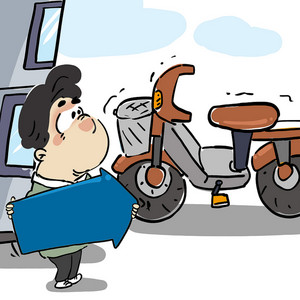
China boasts over 400 million e -bikes, yet surprisingly few are insured, leaving owners vulnerable after accidents.
This low insurance rate presents a significant financial risk for many, so how can e -bike safety improve?
And will new national standards change the picture?
Coming to you live from Beijing, this is Roundtable, I'm Steve, and for today's show I'm joined by Niu Honglin and Yuxian.
First, on the program.
With a staggering figure exceeding 400 million e -bikes traversing its roads as of 2024, China has witnessed an undeniable surge in this mode of transportation, but only a fraction of these e -bikes benefit from insurance coverage.
This lack of insurance leaves a vast majority of owners potentially vulnerable should an accident occur.
So what underlying factors contribute to this low insurance penetration rate among owners in China and in the face of such widespread usage, what comprehensive strategies can be implemented to bolster the safety of e -bike operation.
E -bikes are everywhere, every day.
It's part of everyday life here in Beijing, maybe other parts of the country too.
Good afternoon to you both.
And I wonder, do you own an e -bike or have you ever owned an e -bike?
Not really, I found it really hard to ride on one actually.
It's hard to balance it, especially when it's turning, you can't turn fast while riding an e -bike.
That's what I heard from other people who had the experience of riding and turning very fast and falling for sure.
So it takes me back to my childhood memories because when I was in, I think primary school, middle school, my mom used to own an e -bike and she used that to ride me to school.
It's a small, relatively small city.
It's not - Did you sit in front of her or behind her?
Behind her. Yeah, a little bit like a motorcycle.
I was a teenage girl already.
And the thing is when we were in relatively safety areas, like in the community and the residential community, She would let me ride it a while.
I was, again, too little, but it was quite nice for most e -bikes.
You won it's out of battery.
You can actually steal ride it like a bike.
It's much heavier when you do it manually instead of using electricity.
But the e -bike was quite convenient because the distance we need to cover from my home to my school using an e -bike, we only, it only takes around 10, 15 minutes.
But if you're riding a bike, it'll be around half an hour.
And I think that is the reason a lot of people opt for E -bikes, that is to do a little bit of a commute, make sure that they can avoid the traffic jam in their living circle.
The E -bike that you rode with your mom during your school days, that had pedals.
Yes. Okay, but some of the ones we're talking about today, they don't have pedals.
Is that correct? The later models, the more recent releases, they are just kind of looking like a motorbike instead.
Yeah, let me paint a little picture for our listeners who may not be familiar with the machine that we're talking about here.
When you search ebike in certain countries, you might get a picture of a bicycle with pedals that is also motorized and that's not exactly what we're about today.
Picture for back, lack of a better comparison, picture of Vespa like a little scooter that you sit on and those are the things that we're talking about today.
Now those here in Beijing if we walk outside our studios right now, you will see a ton of them parked on the sidewalk and if you go to the next four -way intersection you'll see another ton of them parked on the It's a way, it's a common way for people to get around.
It's the preferred mode of transportation.
I think for food delivery drivers and things like that which is why they're so heavily populated on the streets.
So much so that according to news portal CE .cn China had 400 million e -bikes as of 2024.
Yuxin, tell us more about that.
Yeah, well some sources said 350 million but more common sources such as Guangming .cn report did say that China now have 400 million e -bikes, and that is as of 2024.
That means, theoretically, in every three to four people living in China, one owns an e -bike, and that's divided by the 1 .4 billion population here in 40 % of consumers are under the age of 30 that's a bit surprising to me.
And what other thing that's so surprising when I heard of this is that so many e -bikes are going on the road insurance less because we know cars right?
When cars are going on the road they need to have license plate and insurance all equipped before going on the road or even upon purchase.
so that is all one set.
but since car is personal property and e -bikes too, I'm a bit surprised to hear that so many e -bikes are going without insurance nowadays, and while they actually should have insurance covered, with complete insurance, the compensation obtained can cover the economic losses of e -bikes when accidents occur.
And even though we hate accidents, we don't want it to happen.
But when it does it's nice, it's safe to have at least some sort of economic compensation given.
Yeah so these bikes are selling like hotcakes.
There were 40 million units sold every year since 2020.
By the way, I think I should correct myself.
I said motor before when I should have said battery.
That's what we're talking about.
The type of vehicle between 2022 and 2023 sales exceeded 50 million and it's not like you can't get insurance for these vehicles, right?
It's available. It's just something that isn't commonly obtained by the people who buy these.
Yes, actually people - many people might even not know that there are insurance and they can buy it.
Some think they can get the compensation if a fire breaks out while charging.
So they don't think they need to buy the insurance themselves for the e -bike instead of because they think there would be one Already for the accident fire and they think they already buy Accident insurances for the family and they don't need to buy it for the e -bike Some would think it's not worth the insurance the e -bike because here in China cost only around 1000 yuan so if you think about it if I need to pay for 1 ,000 yuan for e -bike and then maybe a couple of hundreds for a insurance, then do the math, many people might not make the decision.
Yeah that 1 ,000 yuan is for the year right that would be a year's worth of insurance.
And that's about what $150 something around there 150, 160, 170.
So it's not super cheap, correct?
Well the e -bike itself costs over 1000 yuan not the insurance for the E -bike.
So the insurance is a lot cheaper than that.
There are a lot of different types of insurance out there.
Actually, if you think about a E -bike as a, it is as a transportation mode.
Then you think about, huh, what if I lost my E -bike?
Because stealing an E -bike, stealing a scooter is much easier than stealing a car per se.
So there's insurance for that.
And also there are insurance for, for example, liability.
if you injure someone or damage their property while you drive your ebike, your policy or your insurance may cover their medical bills, pay to repair or replace their property.
And also there's the collision damage to your ebike that insurance can cover.
Some ebike policies include collision coverage while, uh, which can pay to repair or replace your ebike if it's damaged in a collision with a vehicle or stationary objects, and And also there's the, I've talked about the theft damage to your bike for sure.
And another very important one actually is the kind of insurance that would cover the damage your e -bike costs you.
If your e -bike is accidentally starts a fire, that is actually a very important, um, area because like YuXuan has said with one out of four people owning an e -bike previously, I think several years ago, having an e -bike in a, for example, uh, elevator, or sometimes in a commercial building, or maybe some people, since they live in the first floor or second floor, they would get a huge cable, not huge, long, long cable out of their window to charge their e -bikes so they do not have to take their e -bike back home.
Uh, they do not have to take the bad battery back home, but that has caused several severe fire damage, a fire accident, and hence many cities here in China stop allowing people to first to take their e -bikes into the lift. And then there are, of course, different advancement in technology, allowing people to get their batteries easier back home, to charge the battery and find different ways.
So, still having an e -bike causing a fire might also be the kind of damage you may meet if you own an e -bike, which is why there are insurances for that.
Yeah but you mentioned before that it feels like it's kind of a, do I need this?
Is it available? What's available?
From the consumer's point of view.
From the seller's point of view then, I guess they're not always introducing it to the customers because it's not it wasn't a mandatory thing.
And it doesn't sound very cost effective.
I mean, well, it was China National Radio actually conducted this interview among e -bike owners, and also e -bike vendors as well.
And here's what they say.
So most e -bike vendors, they won't introduce insurance to their customers upon selling their product, and only a few ever asked their customers to consider buying the insurance because actually in the shops in those vendors for e -bikes in the shops they provide such services for you to just get the insurance upon purchasing the the bike, so they don't actively offer it and rarely are customers asking for it.
One vendor, however, said that one in 30 buyers as far as as he's counted, would buy the insurance upon purchasing e -bike and also the vendor would sometimes suggest that but most well they will suggest it to their customers to maybe try to persuade them to get one but most consumers would say that they don't need that like Honglin said they don't consider it necessary to add that extra little bit of payment on top of the product itself.
I looked it up in the states in Canada because I was curious to know this is from Apollo scooters it was updated in February of 2025 the National Highway Traffic Safety Administration in America doesn't classify scooters without seats as federally regulated motor vehicles.
And as a result, it's up to the states and cities to establish their own insurance laws for electric scooters.
And as of now, only two states require electric scooter insurance in America.
In Canada, it says at this point, no Canadian provinces require electric scooter insurance.
Then I went to an insurance company website because i was curious what they had to say on the topic and they do offer these types of insurances for electric scooters in all the insurances that you mentioned before those are the same ones that are mentioned on the american insurance website as well so it seems like the situation in terms of insurance is quite similar between the between north america and what's happening here in china quite similar actually in germany we also see that different types of electric bikes are categorized in different genre or different areas, for example, we have e
-bikes with the maximum motor assistance speed of 25 kilometers per hour.
They are treated as regular bicycles and they do not require insurance or a license plate.
And there are also the kind of motor assistance speed up to 45 kilometers per hour for these kind of faster e -bikes, they are considered a type of, uh, moped and require insurance.
And the situation here in China is that according to our national standard, when an electric bicycle is traveling within a non -motorized lane.
So it depends not only on the bike itself, also where you are traveling, where you're riding your bike.
The road, sorry to interrupt.
The roads here are kind of divided in the sense that there's the main area of the road for cars and trucks and what have you, bigger vehicles.
And then off to the right side, you'll often have the bicycle and scooter or e -bike section for people to ride.
Yes. And if you're riding in those in that section, actually the maximum speed must not exceed a 15 kilometers per hour.
And also according to the safety technical specifications for electric bicycles, the national standard, the maximum design speed for electric bicycles with electric drive functionality, must not exceed a 25 kilometers per hour.
It's the same for Germany.
It's the same in France.
It's the same in a lot of other countries.
So 25 kilometers per hour is the highest speed.
The reason I'm mentioning it is because actually I looked up the kind of harm, the injuries that vehicles or transportation means can cause.
At those lower speeds?
At lower speeds or for people or for pedestrians, for other transportations in different types of situations.
If we're talking about speed less than 30 kilometers per hour, we see that the fatality rate for pedestrians is 10 % and the severity of pedestrian injuries is proportional to the square of the speed.
So if a vehicle collision occurs at no more than 30 km per hour, the probability of survival is approximately 90%.
And also if we talk about hitting someone with a speed of 20 km per hour, so that's less than 25, and we see that in the event of this kind of collision, the vehicle will continue to move forward a little bit with breaking distance generally less than one meter and a pedestrian's truck at this speed may be from one to three meters forward. But life -threatening injuries are really rare.
I think that explains how come it's not mandatory by the country to have an insurance for an e -bike.
And it might also explain why consumers, even if they are aware that the insurances are available, maybe they might not opt for it because they think it's just a safer way to get around.
But that being said we still have to ensure the safe usage of e -bikes, so Yuxian how can we do that?
Well there are many ways some are of course included in under the government's actions.
Song Xuxin who was the Deputy Director of the National Fire and Rescue Bureau said that in order to fully curb the frequent occurrence of fire accidents among e -bikes, a full chain rectification of hidden danger in e -bikes has been organized nationwide since April 2024 and will continue until the end of 2025.
So what have they done well so far?
First of all, like we mentioned earlier, that is to curb the fire accident so that there are fewer fire accidents happening among the e -bike area.
Song said that a total of 9 ,175 eBikes fire accidents occurred nationwide from May to December 2024.
That resulted in 6 deaths and 15 injuries, which is a year -on -year decrease of 46 % on accident.
A decrease of 90 % on death numbers and also a 87 % of decrease in injury numbers respectively.
Those are significant gains I would say.
Yeah but that's something that at least gives people a little bit of encouragement in getting their e -bikes insured in the future perhaps.
And also China published four mandatory national standards on the e -bikes as well.
to regulate the e -bike's lithium ion battery, chargers and electrical safety as well.
So, as long as the manufacturing side is secured, I think it's more helpful for the consumer's side to use it safely as well.
What about the charging stations though?
You talked about in the past, people would have to do it out the window of their house or something like that, dragging a cable around.
Is that being worked on?
Definitely. Obviously that's not happening that much here in China.
At present, we see around 245 ,000 of the 530 ,000 residential communities in China have completed the construction of charging facilities as required.
More than 25 million new charging ports have been added, bringing the total to more than 36 million.
and we see that actually 410 ,000 residential areas have started implementing residential electricity prices for charging e -bikes, accounting for more than 77 % of the total, meaning that more people are having better environment, having better conditions in charging their e -bikes.
What about in terms of inspection?
Because I'm thinking vehicle inspection, right?
You have to get your vehicle checked to make sure that it's road -safe every year or a couple of years.
I'm not sure what the regulations are on that.
But is there anything in place for the inspection of these e -bikes too?
Oh yeah, that's very important because nowadays China has also inspected over 870 ,000 electric bicycle production and sales unit urged mainstream e -commerce platforms to remove over 27 ,000 problematic products from their shelf and implemented 308 recalls of electric bicycles and their components as well.
That involves over 300 ,000 products and filed and investigated more than 150 related criminal cases.
That's a lot. Imagine all of those components, parts, and products being released in the market and people are writing them, and parking that in within the residential area every day.
There are huge risks, right?
Also safety for um, for riders comes from education I would think as well, right?
And they've done that too, they've promoted, they've organized more than 1300 policy interpretations in various regions around the country, they've used various forms of media.
That's a smart thing to do these days, right?
Not just publish it in the local community newspaper, I'm not sure what reach would be if you did it that way.
Well the better and more direct approach is now that we see posters inside elevators saying that no battery allowed inside the building and actually this reminds me of one incident I discovered just last month.
There were two police officers sometime last month knocking on my neighbor's door and I just happened to overheard everything.
you happened to. You nosy neighbor.
Not being nosy. Well, that put aside, I heard the police officer asking, oh, somebody reported that you were carrying some sort of an e -bike battery inside the building.
And we're just here.
Don't worry. We're not trying to place charges or anything.
We're just here to remind you that it's been notified and you should pay attention to it.
Don't ever do it again.
As you were watching with your popcorn.
It actually happens in a lot of residential communities here in China, in my community, if you get something looks closer to a electric vehicle into the elevator.
The elevator won't let you go.
It won't close the door, just keep telling you you cannot take electric bike into an escalator, you have to get it out and the reason I know that is because I put my baby stroller in the elevator and they mistook it as a e -bike and they continued saying that to me until I talked back a bit and realize, oh, it's a baby's roller that's cute, but no, that's important, isn't it?
Because the tech is impressive.
But aside from that, your neighbor Yushan, maybe he or she did bring the battery into their house without any knowledge of what it could possibly be, safety wise.
So that's why they've put out 2 .2 million pieces of related safety information.
they've sent more than 15 million pieces of safety reminders.
And obviously, too, they have officers in the area responding to concerns of people bringing them into their house.
So, this is all really, really good.
National standards, though, implementation, I would think, is important too, having a countrywide standard. Yeah.
On top of all that, here is a China News Service Report talking about this mandatory national standard for e -bikes that will be officially implemented since September the 1st, 2025.
So, Huo Ya -choung who is the Director of the Consumer Goods Industry Department of the Ministry of Industry and Information Technology, the MIIT of China, said that the new standards can effectively reduce the risk of fire, thank goodness, and also traffic accidents better meet the actual needs of consumers and also promote these standardized development and technological progress of the industry.
It required all plastic used on e -bikes to be flame retardant.
Oh good idea. Yeah that's a good way to protect at least the outer case for the e -bikes right and plastic only took up less than 5 .5 percent of the total weight of the bike, so it's easily replaceable.
I would imagine and also it strengthens the battery overcharge cutoff and short -circuit protection of e -bikes, further preventing fire accidents in a way.
All that being said, and even when I was explaining the speed limit, and also the kind of injury an e -bike could cause, it sounds like I am against the idea of buying insurance.
I'm partly against it because I think the current system, the current products, as in insurance products on the market is not good enough.
If we have good enough kind of insurance and if this insurance is popularized to an extent that for consumers, we do not find it a huge burden economically and we find it very helpful in, knocking on wood, any kind of incidents, then of course more people would opt for buying insurance while they purchase for e -bike which would make things much better in dire occasions of an accident.
Yeah that's a very good point, so the government put in place, putting in place national standard safety standards trying to make the bike safer but also from the insurance company's point of view offer more attractive I don't know if that's the right word, more appropriate.
Or smart. Smart types of insurance so that riders will be more encouraged to make those types of purchases on top of the bike purchase itself.
Yes. That makes sense.
What those numbers again?
40 million units sold every year since 2020.
50 million units sold between 2022 and 2023.
Obviously, this is an insanely popular way for people to get around the cities of China.
So having those types of policies in place is a really, really smart thing for you to do.
And also, if you are a rider yourself, don't forget, put on your helmet, drive slow, look left, look right before crossing the street all of those standard safety tips so that you can keep yourself and others safe as well.