Get the unmissable news stories of the day.
This is the Beijing Hour.
Examining the events that impact and shape China and the rest of the world.
This is the Beijing Hour.
One hour of news and information brought to you every weekday.
Now, here's your host, Shane Bingham, with you on this Thursday, April 10th, 2025.
You're listening to the Beijing Hour, coming to you live from the Chinese capital.
On today's program, China says it hopes the US will choose the same path as Beijing and solve trade issues, with negotiations as equals.
Germany's Union bloc and Social Democrats have agreed to form a coalition government and Spain's prime minister aims to strengthen ties with China during his visit to the country.
In business, markets continue to react to the latest US tariff moves.
In sports, the 2028 Los Angeles Olympics will offer 22 more gold medals.
In Culture and Entertainment, the China pavilion set for the Osaka World Expo opening on Sunday.
Now checking the day's top stories.
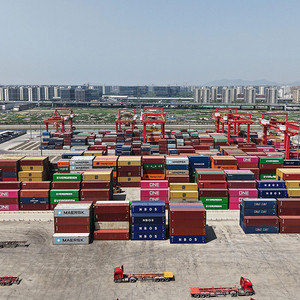
China's reiterated that its doors are open for tariff negotiations, but Beijing will not back down from a fight.
The Commerce Ministry said dialogue must take place under the principles of mutual respect and equality.
A spokesperson said China hopes the U .S. will go along in the managing its domestic affairs and counter uncertainty in the external environment with stability at home.
It pledged to help foreign trade companies expand markets and make full use of its consumer goods trading program.
The spokesperson said China's foreign trade is confident and capable of all challenges.
In a move to defend its interests, China's filed a lawsuit against the United States at the World Trade Organization.
Beijing also put an additional 50 % levy on American goods, bringing the total to 84 percent.
China also added 12 more U .S. entities to its export control list and labeled an additional six American companies as unreliable entities barring them from foreign trade and investment in the country.
Shortly after China's decision US President Donald Trump announced that he's hiking the tax rate on Chinese goods from 104 to 125 percent.
He also announced a 90 day pause on other countries.
However, the White House says a 10 % blanket duty on almost all us imports will remain in effect.
Jim Spellmon reports from Washington, keeping that 10 % base tariff that the president rolled out last week.
But this 90 day pause after that stocks immediately rallied making up a lot of their losses.
Still below where they were last week on so called Liberation Day when President Trump rolled out this latest series of tariffs, and down for the year, but making up a lot of that loss.
So President Trump says that now in this 90 -day period the U .S. will try to work out individual customized trade deals with all of these different countries, President Trump claiming that there are 75 perhaps countries that have approached the U .S. hoping to make a trade deal.
Regarding China, President Trump said he does hope to speak with Chinese officials at some point.
But when asked whether he expected more tariffs on Chinese goods to go into place, President Trump said I don't think we'll have to do it.
We can't imagine. I don't think I'll have to do it.
I don't think we'll have to do it more.
You know, we calculated it very carefully.
He also said that he was open to perhaps some exemptions for certain industries.
He said it's just instinctively, that's his process.
And I think a lot of what you're seeing play out some of the chaos that we're seeing is really the global trading system versus President Trump's instincts.
That was Jim Spellman reporting.
China's foreign ministry says the United States has violated the rights of all countries by using tariffs as a weapon to pursue self -interest. Spokesperson Lin Jian said China's countermeasures to US bullying aim to safeguard China's interests and international justice.
He stressed that China does not want a trade war but will not stand by and watch the rights of its people denied.
He warned that the US action will fail because it goes against the people's will.
46 members of the World Trade Organization have joined China in calling on the United States to abide by WTO rules.
At a meeting of the Council for Trading Goods in Geneva, China said the US tariffs are the wrong prescription and wrong medicine for resolving trade imbalances.
Beijing urged all WTO members to protect multilateral trading rules and address differences through dialogue.
The European Union, the UK, Canada, and Japan warned that the tariffs will disrupt international trade and harm the interests of everyone, including America.
Peru, Kazakhstan, and Chad led a group of countries that condemned the U .S. tariffs on developing countries and stressed the importance of fairness, openness, and non -discrimination.
The World Trade Organization promotions estimated that trade tensions between China and the US could cut the bilateral trade of goods by as much as 80%.
The WTO said the tit -for -tat approach between the world's two largest economies carries implications that could damage the global economic outlook.
It said dividing the global economy into two blocks could lead to a long -term reduction in global real GDP by nearly 7%.
Most members of the European union have voted to approve a 25 % tariff on US products in response to Washington's levies on steel and aluminum.
The list spans from agriculture to industrial products to include soybeans, poultry and vehicles.
Pablo Gutierrez reports from Brussels.
Once they vote, clears the way for new tariffs on a wide range of American goods.
The first round of duties is set to take effect next week on April 15 with more planned for mid -May and December in all the three rounds of proof cover some 23 billion dollars worth of American goods much of them coming from deep red republican states that helped put President Donald Trump back in the White House, now this includes soybeans which are a top agricultural export to Europe.
Also in the crosshairs is beef from Kansas and Nebraska poultry from across the south, tobacco and also motorcycles.
One of the items that is not on the list is American bourbon whiskey, which was removed after Trump threatened 200 % tariffs on E .U. wine and liquor.
This move by the E .U. follows a march decision by the Trump administration to slap 25 % tariffs on E .U. steel and aluminum exports.
Brussels called the U .S. action unjustified and harmful not just to Europe, but to the global economy.
Since then the Trump administration has levied 25 % duties on autos shipped from the EU and a 20 % tariff on nearly all other EU imports to the US that took effect Wednesday.
The bloc says it is willing to work a compromise and that these countermeasures can be suspended at any time should the US agree to a fair and balanced negotiated outcome.
Nearly every member of the EU, 27, blocked back the sterics.
Nobody in Slovakia is happy with this step of the American government.
Maybe 80 % of Slovak industry is automobile industry.
So it will be no good impact to our economy.
It will slow down improvement.
No good for the whole connection.
Hungary's Foreign Minister Peter Sejardo called the retaliatory move a serious mistake warning it could have been avoided.
For now, Europe is sending a message and it's landing in the American heartland.
That was Pablo Gutierrez on Europe countering American trade moves.
Downing Street says Britain will continue to talk with the United States on a trade deal during the 90 -day pause.
A spokesperson said a trade war is in no one's interests and they don't want any tariffs at all.
London said it'll cool and calmly negotiate in Britain's interests.
South Korea is also planning to take advantage of the reprieve to advance dialogue.
The trade ministry said envoy Chung In -kyo has met US Trade Representative Jamison Greer in Washington.
The CEO of the U .S. Soybean Export Council says tariffs will likely keep U .S. soybeans out of China.
Wu Bin spoke with Jim Sutter to find out about the potential impacts on agriculture.
The CEO of U .S. Soybean Export Council says China is a market that they don't want to lose.
As the world's major soybean exporter, this could deeply affect the American soybean industry.
China is the largest soybean importer, and the U .S. is the second largest soybean exporter to China after Brazil.
And if the tariff continues, according to Jim Sutter, both Chinese consumers and American farmers will pay the price.
So the two people on both ends of the transaction, the farmers who were selling and the Chinese consumers or importers and then consumers who are buying, they're both having to pay, either pay a higher price and sell at a lower price.
And it's not good for either side.
China's reliance on US imported soybeans continues to decrease.
Statistics from Chinese customs show that the country's soybean imports from the US have dropped from almost 33 million metric tons in 2017 to around 22 million metric tons in 2024.
The market share of US soybeans in China has dropped 13 % over the last 7 years.
So, China is really important and that's why we consider it such an important market for our US soybean farmers and US soybean industry.
So, it's not a market that we want to lose.
I cannot imagine a world that for the long term we wouldn't have strong trading relations between those two countries.
The US Soybean Export Council says they hope the Trump administration's tariff policy is short -lived plan, and hope both nations can get back to working together.
That was Wubin reporting.
Most African countries are facing the 10 % tariff for their exports to the United States.
This raised alarm on the continent as countries push for fairer trade terms. Michael Bilecki has more from Uganda.
Effective April 5th, all Ugandan goods entering the United States must pay a 10 % tariff.
The economies. The new tariff comes on the heels of Uganda's removal from AGOA, a key trade program that allowed duty -free access for African exports.
That really destroys much more than what people see.
Jobs of young people.
So we had for example exports of vanilla, they went down about 80%.
We had exports of dairy products.
They went down 78 percent.
While Washington insists the taxes lever the playing field, the Ugandan government says the tariffs threaten major export sectors, including coffee, textiles, and hot culture.
Kampala says the move may also affect trade relations with regional neighbors.
Uganda in geopolitics is a very significant country in the hinterland.
We are in the middle.
So, if any of these countries would like to penetrate South Sudan and other countries down here, Uganda can be a very good landing spot geopolitically.
And then we have really, apart from the strategic location, we have really done quite a lot in terms of stabilising the region." As trade tensions escalate, Ugandan exporters are now scrambling to adapt with many fearing the worst. The mood among exporters in Uganda is one of uncertainty.
Many are worried that the tariffs could lead to cancelled contracts, layoffs and rising costs, especially for small scale producers who have just begun to tap into the global markets.
And now attention is shifting to alternative partners.
The developments may fast -track Uganda's move towards new and emerging markets, including China, which has steadily increased trade and infrastructure cooperation across Africa.
Our largest trading allies or partners are India, China.
They are all from Asia.
A lot of the trade is also with the Middle East, where we have...
So in Africa now, it's 159 billion.
China is 282 billion.
And so for me those are markets that are natural to us.
With US doors closing Uganda may now lean harder on the African continent of free trade area, turning to its neighbours to keep goods moving and keep the country's economic growth alive.
That was Michael Balaki on Uganda finding alternatives for foreign trade.
Coming up, a German coalition's recent agreement on forming a new government.
History doesn't just echo, it warns.
As Washington ramps up tariffs and the world braces for economic whiplash, are we watching a 21st century rerun of Herbert Hoover's Great Depression Playbook.
From China's counter -strikes to cracks in America's economy, we unpack whether this trade -war is strategy or self -sabotage.
Get all these on this week's Chalk Lounge, wherever you listen to podcasts, and on CGTN Radio.
At 14 minutes past the hour, Germany's two -party union bloc led by Friedrich Mers has secured deal with the Social Democrats to form a coalition government.
Murs won the election in February but fell short of a majority.
The new alliance aims to tackle issues such as immigration and defence spending.
The deal excludes the far -right AFD party which is topped opinion polls for the first time.
Natalie Carney has more from Munich. Germany looks like it's going to be run by another grand coalition.
We had four weeks of negotiations, 45 days since the CDU conservative party as well as the CSU here in Bavaria won snap elections in Germany.
There's been a lot of pressure on them since to form a government.
Of course, these tariffs from the US as well as European security, Brussels, the entire union want to see a firm, decisive, strong government in the union's biggest economy.
What we do know is that in that coalition deal there are some subject lines about tax -free overtime as well.
Tax on electricity will be reduced, they will be scrapping supply chain regulations and as well a very controversial subject here in Germany, immigration, and there's going to be a change to the immigration and asylum policies to which Frederick Mertz did say that this new coalition deal gave a clear signal that there will be a new Course on Migration Policy.
Frederic Merz has also said that he's going to make this new government more bureaucratically effective.
Now, as far as the next government is concerned, the CDU will hold the foreign ministry, the interior ministry, as well as agriculture and education, while the SPD will be monitoring finance, defence ministries, the environment as well as building and housing.
Now, what is next is basically these parties need to agree on this deal.
If this is all agreed upon, which is very likely.
The parliament can then elect the CDU chairman Fredrick Martz as chancellor.
That is likely to take place on May the 7th.
One of his biggest challenges going forward, of course, is these these tariffs from the U .S. He has previously said that he wants to readjust and rediscuss a free trade deal between the U .S. and the EU.
I'm certain that's going to be something that he makes a priority after the seventh of May.
That was Nathalie Carney on what's next for Germany's leadership.
The ex -leader of South Korea's main opposition parties announced his candidacy for President.
Lee Jae -myung made the announcement after resigning as the leader of the Democratic Party.
South Korea set an election for June 3rd, following the removal of former President secured from office over his short -lived declaration of martial law.
The survey shows nearly 50 % would vote for the Democratic Party's candidate in the next presidential election.
Less than 30 % were in favor of the ruling party's candidate.
Relatives are mourning the victims of a roof collapse in the Dominican Republic that's killed at least 184 people.
Authorities are scrambling to identify the bodies after the incident at a famous club in Santo Domingo.
nitza soledad perez has more.
The Dominican Republic is observing three days of national mourning.
A night of celebration turned deadly when the roof collapsed during a live concert at one of Santo Domingo's most popular nightclubs.
Rescue teams have worked tirelessly around the clock coming to a twisted metal and concrete in a desperate search for survivors on Wednesday emergency officials warned that time is running out.
We still have at least 24 to 36 more hours work ahead of us.
That doesn't mean we aren't thoroughly searching the area.
We are doing it. We are intervening in targeted sections and in the places where we can operate without risking possible remaining life.
Heavy machinery now assessed in the painstaking operation while grip -stricken families gather nearby anxiously reviewing hospital lists and awaiting news of their loved ones.
They removed many bodies from there and the last one they removed was wrapped in a body bag.
kinda fitting for someone of his height and thickness.
but i didn't want to go.
i don't have the stomach to find out the worst yet.
The collapse has claimed the lives of several prominent figures, including Meirenguez star Rubi Perez who was performing when disasters struck, former major league baseball players Octavio Votel and Tony Blanco, renowned fashion designer Martin Polanco and Montecristi province governor Nelsi Cruz.
International aid has arrived, with specialized rescue teams from Mexico Israel and Puerto Rico now joining local efforts in the race against time.
That was Nitza Soledad Perez on the nightclub tragedy in the Dominican Republic.
Chief of the UN mine action program in the occupied Palestinian territories is warning that the ongoing Israeli military offensive and aid blockade in Gaza continues to compound the daily struggles of Palestinians in the Strip.
Luke Irving says the situation in Gaza is becoming increasingly dire with no humanitarian aid getting in.
What people are doing currently right now is they're scared, they are concerned, they're worried for their safety, they're focusing on their day to day survival, if you like, on how they would stay safe, how they stay fed, how they stay watered.
This is the reality in Gaza at the moment.
Irving added that humanitarian workers in Gaza are also at risk, with their movements limited because of the attacks.
mistakes, the official called for an end the attacks on aid workers.
It is a very, very, very challenging time and evidence would show me that were not protected at the moment.
And I hope we do not see any other humanitarians, health workers who are killed or injured doing their jobs going forward because the people need it.
Civilians need it. Innocent people need intervention.
Irving said that they're providing special support for the humanitarian workers to keep them safe and allow them to do their jobs.
The UN says the Israeli military's denied permission for over two -thirds of the 170 attempts to move humanitarian supplies within Gaza since the first phase of the ceasefire ended.
Aid workers say ambulance teams and humanitarian staff have come under fire since Israel renewed the assault last month.
UN figures show that over 410 aid workers have died since the conflict in Gaza began 18 months ago.
Coming up, Spain's Prime Minister is visiting China.
Welcome to Climate Watch, the podcast that brings you the latest on climate change, energy and sustainability, all in under 30 minutes.
Each week we speak with global experts, from energy policy pioneers, to wildfire historians and covering the stories that matter most. Climate Watch is your go -to source for insightful, inspiring conversations.
Tune in to Climate Watch on your podcast platform and let's navigate the path to a sustainable future together.
At 21 past the hour, Spanish Prime Minister Pedro Sanchez is paying a visit to China beginning Thursday.
Now, China says it hopes to take this opportunity to deepen strategic mutual trust and expand opening up.
You Yang reports. Spanish Prime Minister Patrick Sanchez's trip will last from Thursday to Friday.
And this actually marks his third trip to China within three years.
And according to the Chinese Foreign Ministry during his stay, Chinese President Xi Jinping will meet with him.
And Premier Li Qian will hold talks with him.
Well, actually, one of the major highlights of Sanchez's trip to China is that he comes just amid the trade chaos caused by the Trump administration's global tariff war.
But if we take a look at some of the expectations for this trip from global media outlets, we may find that some media reports say that, quote, Spain is pushing for the European Union pivot to China to counter Trump's tariffs.
At the same time, adding that this visit will offer a chance to sweat news on a common problem, on how to respond to an increasingly unreliable US.
And let's also mention that on Wednesday, all but 1 of the 27 EU members voted to impose new tariffs on US goods, in response to Washington's tariffs on EU steel and aluminum.
In fact, ahead of his trip to China, Sanchez also made a visit to Vietnam, where he said on Wednesday that a trade war is in no one's interest — nobody wins with a trade war and every country loses, especially workers and the middle classes.
And last year, scientists also criticised the EU's tariffs on Chinese military vehicles, while data released by the Chinese customers showed that last year, the bilateral trade volume between China and Spain hit over 356 billion yuan or over €44 billion, a year -on -year increase of 4 .5%.
And China's firm trade earlier said Spain is an important cooperative partner for China within the EU and the bilateral relations are at the forefront of China's ties with the European nations.
That was Yo -Young on China and Spain strengthening ties.
Tianjin is hosting a conference on sustainable development to promote industrial development among Shanghai Cooperation Organization member states.
The northern Chinese city is the host of the SEO summit that's coming up in autumn.
This week's event is the first of its supporting activities, when Meng Jie spoke with some of the attendees.
A lot of inputs, insights into how to make future preparations for the papers that will be approved by the head of states in what areas we are going to focus for this Sustainable Development Cooperation in future.
Nearly 400 guests, including government officials and enterprises from SCL member states, attended the opening session.
Sustainable development is crucial as it addresses environmental issues, promotes economic stability and ensures social equity.
While not everyone is in favour of the goal.
Amid news tariffs levied by the US on the rest of the world.
The United States of America will not be the winner because as a country, they will create some new platforms and how to develop without this sanction.
Cooperation is particularly important given global economic uncertainty.
As a rotating chair of SEO this year, China is hoping to boost communications among member states and promote the building of a closer community with a shared future.
That was Wang Mengjie reporting.
China's consumption subsidy program has fueled interest in high -end digital products from home appliances to automobiles and electronics.
Industry insiders say the policy is not just boosting sales but also reshaping consumer habits and market dynamics.
Zhou Yishun reports.
This year China's central government has allocated over 300 billion yuan approximately 40 billion U .S. dollars to extend the subsidy program which began last year.
Since this January, the initiative has expanded to include electronic devices, further stimulating consumption.
With lower prices, everyone wants to upgrade, but this count is good.
I'm satisfied with this deal.
Getting a real discount makes a difference, since people are more cautious with spending these days.
Industry insiders say that subsidies have significantly motivated consumers to upgrade their products, encouraging more traditionally conservative buyers to embrace innovation.
Many sales personnel have observed a rise in higher -end product sales, indicating a shift from price -driven purchases to a focus on advancement.
Many consumers initially came in for mid -range models.
But after learning about the subsidies, they realized they can get a higher performance model without significantly exceeding their budget.
So, they usually opt for the higher -end ones.
Industry insiders say this subsidy policy is shaping more proactive consumer habits and accelerating structural upgrades.
Once people experience high -end, energy -efficient or smart products, they are more likely to continue choosing better quality options, raising overall market standards.
Experts believe this policy is more than a discount initiative.
With more people embracing innovation, the market will be shifting toward a more tech -driven and sustainable future.
That was Joe E. Sheen reporting on new consumption trends.
Scientists say a micro moon is expected to appear in the night sky this weekend.
The phenomenon means the moon will appear slightly smaller to the naked eye.
Astrophysicist Elaine Brassard at Saint Michael's College in Vermont explains how that phenomenon happens.
When the moon then continues its orbit around Earth, it reaches a point called apogee where it is the farthest away from Earth.
So consequently, in the night sky, as a full moon, the moon would be smaller in size.
Micromoons opposite to a supermoon, when the moon swings closer to Earth and looks a bit larger.
Brazar says a micromoon appears about 10 % smaller in size than a supermoon.
Scientists say another micromoon is scheduled for May and 3 more will be visible in the second half of the year.
A report by energy think tank Ember says renewable power generation provided a record 32 % of global electricity last year.
The rise in electricity consumption for artificial intelligence, data centers, electric vehicles and heat pumps contributed 0 .7 % of the global demand growth in 2024.
Heat waves last year also increased electricity demand for cooling.
Coal remained the largest source of generation, providing 34 % of the global share.
We're at 29 past the hour, Beijing down to 12 degrees on Thursday evening.
It will be cloudy and 27 on Friday.
Nansheng is down to 19, then torrential rainfall, the high is 32.
Elsewhere in Asia, islamabads is 17 overnight, a slight rain and 31 on Friday.
BNTR's 25 this evening, then some rainfall and 34.
non -pens down to 25, a slight rain and 34 tomorrow.
In Africa, Nairobi's getting some rain and 28 degrees on Friday.
Kampala's down to 20, then a slight rain and 25.
Juba's 24 this evening, then some rain and 38.
And finally to Oceania Port Vila is 22 overnight, then a slight rain and 31.
Pia will see a slight rainfall friday 30 degrees celsius.
It's time for a short break so far this hour.
China says it hopes the U .S. will choose the same path as Beijing and solve trade issues with negotiations as equals.
Germany's union bloc and social democrats have agreed to form a coalition government, and Spain's prime minister aims to strengthen ties with China during his visit to the country.
Shane Begum with you, stay with us here on the Beijing Hour.
Shhh, listen up. Can you hear the heartbeat of our world?
It's vibrant and pulsating with the essence of life itself.
From the stem of trees to the gurgle of rivers.
From From the silent strength of mountains, to the icy whispers of glaciers, even the solid ground beneath our feet, right there in the midst of all beats the heart of humanity.
What if those other heartbeats were to stop?
Would ours keep on ticking?
Ever wondered what's actually going on in Africa through the perspective of an African?
How are things really going between China and Africa?
What's the narrative of this relationship?
Well, get a perspective with China -Africa Talk.
Hear from African diplomats, entrepreneurs, academics, Chinese natives and more.
Get on our Weiblend every week to find out what's real with China -Africa Talk.
Find us on your favorite podcast. We'll see you there.
Examining the events that impact and shape China and the rest of the world.
This is the Beijing Hour, one hour of news and information brought to you every weekday.
Now here's your host Shane Megan with you on this Thursday still to come.
In business, markets continue to react the latest US tariff moves.
In sports, the 2028 Los Angeles Olympics will offer 22 more gold medals.
In culture and entertainment, the China pavilion set for the Osaka World Expo opening on Sunday.
To contact us you can email radio at cgtn .com or follow our ex account at cgtn radio.
Well first of all a check of the day's headline news Chinese president Xi Jinping says he wishes four countries in Latin America and the Caribbean to make greater achievements on the path of development and contribute more to unity among the global south.
He sent a congratulatory letter to the ninth summit of heads of state and government of the community of Latin American and Caribbean states.
President Xi reaffirmed China's ties with the region and commitments to building a community with a shared future.
Regional leaders are attending the CELAC Summit in Honduras.
Beijing's reaffirmed commitment to stabilizing its economy and foreign trade amid growing challenges.
The Commerce Ministry highlighted the country's trade resilience, pointing to its vast domestic market and steady policy support.
It said China maintains a consistent stance, remaining open to dialogue based on mutual respect and equality while fully being prepared to respond firmly if necessary.
In the meantime, the foreign ministry warns that it'll not sit on its hands while the global multilateral trade rules are being undermined.
The German conservative bloc consisting of the Christian Democratic Union and the Christian Social Union has agreed to form a new federal government with the center -left Social Democratic Party.
The two -party Union Bloc and the SDP agreed on a coalition deal on Wednesday, after weeks of negotiations.
Election winner Friedrich Mertz from the Union Bloc will become Chancellor next month.
The coalition agreement is the result of intensive consultations and negotiations.
Above all, however, it is a very strong and clear signal to the citizens of our country.
It is also a clear signal to our partners in the European Union.
Germany is getting a government that is capable of action, and has the strength to act." Mert said the feature government will reform and invest to keep Germany stable and make it more secure, and economically stronger again.
He said the new coalition government will seek to implement measures such as lowering the corporate income tax and reducing the electricity tax to the European minimum level to improve economic competitiveness.
The governmental also adopt a new course in migration policy including measures of enhancing border controls rejecting asylum seekers and stepping up efforts to deport illegal immigrants the UN Office for the coordination of humanitarian affairs says its operations in Gaza remains severely constrained due to the expanding military operations and blockade of aid in commercial goods UN spokesperson Stephan Dujarric says the Israeli authorities have been preventing aid workers from coordinating access to people needing urgent assistance.
Overall, since the intensification of the hostilities on March 18, the authorities denied 68 percent of our 170 attempts to coordinate, attempts to reach people across the Gaza Strip and to assist them with humanitarian assistance.
Also warned that the hostilities across Gaza are causing further deaths, displacement, and destruction of critical infrastructure.
Thousands of families are on the move yet again fleeing bombardment, shelling, and repeated displacement orders issued by the Israeli authorities.
But as we have warned repeatedly, there is no safe place in Gaza.
And as we've repeatedly said, civilians must be protected whether they stay, whether they leave. Those fleeing the fighting must be allowed to do so safely and they must be allowed to voluntarily return when the situation allows.
Mudujerik added that some humanitarian services have resumed in northern Gaza focusing on urgent case management and psychological first aid and support for traumatized communities.
He said they've identified protection risks in shelters hosting displaced people including extreme overcrowding and acute shortages of food water and hygiene supplies brazil is scheduled the preliminary round of negotiations that help countries prepare for the global climate summit or cop 30.
the early negotiations called the pre -cop will take place in brazilia in mid october.
media reports say the pre -cop has gained importance this year because many countries are struggling to deliver new pledges to reduce the greenhouse gas emissions causing global warming known as nationally determined contributions So far, over 90 % of countries have failed to meet the February deadline for submitting their new NDCs.
The UN's decided to extend the deadline to September.
Municipal authorities or rather municipal meteorologists in Beijing have issued an alert for what could be the strongest winds ever to hit the capital city.
Wind speed will pick up beginning on Friday night and last through Sunday, with gusts up to around 140 kilometers per hour in mountainous areas the severe weather will also bring sands and sharp temperature drops emergency management authorities are reminding residents to avoid outdoor activities and take precautions against fires coming up in business markets continue to react to the latest us tariff moves the beijing hour your window on china and the rest of the Thank you, Shane.
Minglan stocks closed notably higher on this trading day as investors downplayed the latest US tariff increase on Chinese imports and pinned their hope on policy support from state firms. The Shanghai Composite gained nearly 1 .2 % and the Xinjiang component was up almost 2 .3%.
Advertisement marketing and precious metals led the gainers.
Elsewhere in China, the Hong stock market also ended higher with the Hang Seng Index up over 2%.
Meantime, stocks in Japan also ended higher with The Nikkei up over 9%.
U .S. stock futures declined in pre -market trading on Thursday, signalling that the brief relief rally in the stock market on Wednesday may be short -lived.
Mitch McCann reveals the developments in the U .S. stock market on Wednesday, following President Donald Trump's decision to halt most tariffs except for those on China.
The Dow Jones, which was down around 200 points at one moment earlier on Wednesday, surged in the afternoon finishing up 2 ,967 points at the close.
The S &P 500, which reflects the 500 largest publicly traded companies in the US, finished up around 9 .53%, its biggest single day surge since 2008.
And the Nasdaq finished up as well around 12 .16%.
There was some movement of the 10 -year treasury yield which is the interest rate that the US Government pays to borrow money for a decade off Americans.
It surged 12 basis points to 4 .374 % on Wednesday after starting the rate of the week at around 4%.
Now some of the magnificent 7 or the Mag 7 stocks performed exceptionally well on Wednesday for example Tesla which has been suffering big time since early February, it surged around 22 .69%, Nvidia the chipmaker was up around 18 .72 % and Apple rose at the close, it finished up 15 .33%.
And the concern on Wall Street it's been reported that in a note to clients on Wednesday afternoon Goldman Sachs economists predicted that the U .S. economy will grow at a very slow pace of just 0 .5 % this year and it produced a 45 % chance of a recession over the next 12 months." That was Mitch McCann reporting.
The sell -off in the US bond market retreated from its peak on Wednesday afternoon thanks to a successful government auction of $39 billion in 10 -year notes.
Earlier that morning, the yield on the 10 -year US Treasury surged to 4 .5 % following China's retaliatory tariffs, marking a 60 basis points increase that unsettled Wall Street.
Analysts say the rise suggested that U .S. treasuries might lose their status as a reliable global safe haven amidst the escalating trade tensions.
By the end of the day, the benchmark rate stabilized at a high of 4 .3%, maintaining an elevated level.
Official data shows that China's consumer The price index was down 0 .1 % on a yearly basis in March. According to the National Bureau of Statistics, the figure represents an improvement compared to the 0 .7 % decline in February.
On a monthly basis, the CPI went down 0 .4%.
The bureau attributed the improvement to the positive impact of policies designed to boost consumption.
The core CPI, which excludes food and energy prices, rebounded, turning from a 0 .1 % yearly decline in February to a 0 .5 % increase.
On a yearly basis, food prices dropped to 1 .4 % and non -food prices edged up 0 .2%.
Consumer goods prices decreased 0 .4 % and service prices increased 0 .4%.
During the first quarter, the CPI on average decreased one -tenth of a percent over the same period of last year.
For more, Lincoln Humphrey spoke with Liu Zhijun, a senior research fellow from Redman University of China.
What are the primary factors contributing to China's second consecutive monthly decline in the consumer price index in March?
How are these factors likely to evolve in April and what implications might this have for future economic trends?
Actually China's CPI is relatively very moderate, not so on the highest or the very low level, but they're still under control.
Because our touch is very reluctant to show that our capability to control the price is increasing, or the inflation, especially when we are facing it.
So in China, we are facing somewhat a pressure, for instance, the so -called recession.
That is less consumption.
But the policy commitment and the issue is to support all this consumption in China in order to avoid any possible so -called recession.
We want to promote the new consumption.
That's why CPI in March, we can see some different picture, different figures.
But the main figure I am very interested in is that the industry input from the factory has already 0 .5 % increase improvement.
This is a good sign because at this moment when the external conditions on the international trade are meeting turbulence, all this factory input and output is very active.
that shows the resilience of our economy and especially our industrial chain and supply chain.
So from this point of view, we have to take more measures that support economic development, especially to encourage the people's consumption, enthusiasm, and in different ways to support, And to finalize the people's activities in buying, in consuming all their capital goods, this is something very important point.
Yeah, given the government's target for a 2 % increase in the CPI this year, what specific policy measures will be implemented to achieve this goal and how will these policies address current economic challenges?
I think China has its own advantages.
As we always mentioned, China has five different advantages.
First, we have a big domestic market and the second, we have a very big internal circulation.
Third is, we have a big collaboration and cooperation of industry sections.
And the fourth is, we have big unity of whole nations that fight back all these challenges from outside.
The fifth is more important that we have big policy to widely open up, but there's a big open up to ever.
So, we see that China has really prepared a good condition and all policy to deal with all some unexpected challenges and difficulty from outside.
Because at the moment, we see China is at the critical time point, that we are facing really a real pressure from outside.
That's why the policy should have more dynamic strength to support the economic development.
For instance, more subsidies for the enterprises, for private enterprises and more subsidies for the private consumer.
And especially we have to open up our market access to have more individuals and innovations.
That was Liu Juchen at Renmin University.
Meantime, the producer price index for last month declined 2 .5 % on a yearly basis and dropped 0 .4 % monthly.
According to the National Bureau of Statistics, the decline was due to several factors, including the drop in domestic oil prices and declining prices of some raw materials.
Through the first quarter, producer prices decreased 2 .3 % compared to a year earlier.
And finally, Postal Savings Bank of China has announced it will provide no less than 10 trillion yuan, or around $1 .4 trillion in financing, to private businesses over the next five years.
The lender says it will earmark at least 3 trillion specifically for technology innovators and over 3 trillion targeting agricultural sector development.
The announcement is part of the effort to help more than 5 ,000 companies in the private sector enhance their governance capabilities.
The bank, in partnership with the All -China Federation of Industry and Commerce, has recently introduced an action plan aimed at empowering private enterprises and targeting technological innovation and digital transformation.
Thank you very much. That was Wang Zheheng with Business.
And coming up in sports, the IOC approves the event program for the 2028 Los Angeles Olympics.
A night of Champions League drama unfolded with Declan Rice's ice cold dagger and Lonerto Martinez's sparkling moment of magic.
But the story is far from over.
Can Real Madrid summon a historic comeback?
How can Bayern Munich overcome its injury crisis?
Find out more in the latest episode of Sightline Story as we break down the pivotal play and tactical gamble in the quarterfinal first layer games.
Subscribe now on your favorite podcast platform, and join the base.
47 Pass now with sports here is Yangguang.
Thank you Shane, we begin with the latest news about the 2028 Olympic Games in Los Angeles.
The IOC has approved event program and athlete quotas, with 22 more medal events compared to Paris 2024.
Outgoing president Thomas Bach and the president -elect Kirsty Coventry both attended meeting.
The event programmer will see 351 medal events.
The board has also introduced a groundbreaking mixed team event in table tennis.
Sports including archery, the 4x100 meter mixed relay in track & field, golf and gymnastics, and rowing coastal beach sprint will also have mixed team categories.
Three more events will also make their debuts in the coastal beach sprint.
In swimming, the 50m backstroke, butterfly and breaststroke will have men's and women's competitions.
And in sport climbing, boulder and lead events will now be contested as separate medal competitions.
The IOC also announced that all team sports will have at least the same number of women's teams as men's for the first time in Olympic history.
In football, Rafiniha and Robert Lewandowski have scored to lead Barcelona to a 4 -0 win over Borussia Dortmund in the first leg of the Joviva Champions League quarter -finals.
Lewandowski scored twice and Rafinha had a goal and an assist. The Polish striker has 40 goals this season across all competitions.
Lamingia -Mell also scored, as Barcelona dealt a blow to Dortmund's hopes of advancing.
Barcelona coach Hansi Flick is satisfied with the result.
Excellent result, we played at a great level but we made way too many mistakes and we must work on that.
Even more so when you play against a team such as Borussia Dortmund with fast players and great defensive quality.
Those mistakes benefited them but we defended well on a play at a high level and very happy.
The return match is next Tuesday in Dortmund.
Elsewhere Paris Saint -Germain beat Aston Villa 3 -1 in their quarterfinal first leg.
Morgan Rogers gave Villa the lead in the 35th minute.
But 19 -year -old Deziki Douhi drew PSG level four minutes later with a 12th goal in his brick season through.
Kvychak Vatskyalia put PSG in front four minutes after the break, Nuno Mendes added a third goal in established time.
Aston Villa head coach Unai Emery believes they still have chances.
We compete fantastic and we were close to to get good results.
At the end with this goal, still more or less the same because we will win the next week.
I believe Villa Park is our home.
Hopefully we can feel there stronger, we can get there, duels, getting better.
The return leg at Villa Park takes place next Tuesday as well.
Chelsea is in Warsaw to face Loggia in the first leg of their UEFA Conference League quarter -final.
A win will see them become the first club to claim all three active UEFA club titles.
But their recent form has raised concerns with just one away win in their last ten matches.
They ended in a goalie's draw at Brentford in the Premier League last weekend.
Head coach Anson Moriska is full of confidence.
I said after Brentford, I said many times, I think we are there, we have been there all the season.
The improvement is already there in terms of we didn't arrive where we are now in the last one or two games.
We have been there all season.
I know for Chelsea as a club, fans, player it's something normal in the past. But because in the last period we struggled a little bit I think this season, the entire season has been quite good until now.
Llegia Warsaw has only last once at home since mid -September.
Turning to tennis, Novec Djokovic has suffered a second round exit at Monte Carlo Masters, losing to Alejandro Tabillo in straight sets.
Actually more like the worst day.
Look, I was hoping this is not gonna happen, but there was quite a high probability I'm gonna play this way.
It's just horrible, horrible feeling to play this way, and just sorry for all the people that witnessed this.
Thabilo denied Djokovic's latest chance of winning a 180p tour title.
He also handed Djokovic a loss at the Italian open last year.
Defending French Open champion Carlos Alcaraz has begun his campaign on clay with Wayne knocking out Francisco Serendello in three sets.
Alcaraz was coming off a loss to David Garvin in his first match at the Miami Open, the Spaniard is seeking his second title of 2025.
Andrii Rublev has ended a three -match losing round with a straight set win over Gale Memphis in the second round.
And finally in the NBA Nicola Jokic had 20 points, 12 rebounds and 11 assists as the Denver Nuggets beat the Sacramento Kings, won 24 -16.
This is his 32nd triple double of the season.
Christian Brown had 25 points to help Denver end a four -game losing streak and complete a season series sweep of Sacramento.
Zac Levine had 27 points, 11 assists for the Kings.
Luka Doncic scored 45 points, as the Los Angeles Lakers beat the Dallas Mavericks 1 -12, 97.
LeBron James had 27 points.
Najee Marshall led Mavs with 23 points.
Thank you very much. That was Yangguang with Sports.
Just ahead in culture and entertainment, the China Pavilion set for the Osaka World Expo opening Sunday.
Dive into news like never before with Deep Dive, the podcast from CGTN Radio.
Join our global reporters for captivating stories and thought -provoking conversations.
Search Deep Dive on your favorite podcast platforms and get ready to dive in.
53 past the hour in Culture and Entertainment.
This year's World Expo kicks off in Osaka on Sunday.
The China Pavilion combines tradition and technology.
Jung Mung -Yuan reports.
The theme of the China Pavilion at Expo 2025 is building a community of life for man and nature, a future society of green development.
At the entrance a large scale multimedia installation themed on the 24 solar terms is on display.
This core exhibit of the China Pavilion, Harmony Between Mankind and Nature, was created by renowned artist Changshan Na.
She integrated the Dunhuang murals and patterns with the 24 solar terms through animation technology.
Put on the VR glasses, look at the big disc and reach out your hand.
A Phoenix will land on your hand giving you a cool interactive experience.
The China pavilion features a diverse range of exhibits on traditional culture, ecological civilization and technological achievements, including one of the key highlights, a display of lunar soil samples collected by China's space missions.
Above the exhibition area is the famous Dunhuang flying Apsaras pattern.
The Hsueh dynasty's Apsaras Scattering Flowers from the Dunhuang murals, copied by Chang Shana, is the main focus.
It goes well with the moon and the lighting.
The mix of Apsaras scattering flowers and the lunar soil shows the romantic expression of traditional Chinese aesthetics, echoing the current high level of technological development in China.
It is also a brilliant expression of Chinese national culture and cultural confidence.
This time we will exhibit samples collected from the moon by the Chang 'e5 and Chang 'e6 missions.
This will be the most precious exhibit that the China Pavilion presents to global visitors at this year's expo.
As one of the largest foreign self -built facilities at Expo 2025, the China Pavilion occupies 3 ,500 square meters.
This year's World P &E Conference and the 34th Heeze International P &E Cultural and Tourism Festival is kicked off in eastern China.
Heeze in Shandong Province is renowned as the P &E capital of China.
The event lasts for a month, coinciding with the P &E season.
The festival includes several sub forums and dozens of covering tourism, industry development and cultural exhibitions.
In traditional Chinese culture, P &E symbolise prosperity, honor and beauty.
Cities like Luoyang and Heze host grand P &E festivals every year, showcasing hundreds of varieties.
An annual P &E cultural festival is also ongoing in Luoyang.
French artist Fabrice Heibert's first major exhibition in China is taking place at Station of Art in Shanghai.
The exhibition runs till June 29th.
It features more than 70 works that span from the 1990s till the artist's most recent pieces.
Haiber is celebrated for blending art with science, ecology and social interaction, often transforming landscapes and urban spaces into artworks.
Young filmmakers from nearly 40 countries have gathered in Beijing for a film project.
They'll explore China and record their cultural experiences.
The program has invited participants to make 10 minute short films. For 17 days I'll travel to different Chinese cities to experience local traditions and meet communities and discover new stories.
The films will cover many topics including folk art, heritage protection, and how modern society is changing.
The second Macau International Comedy Festival is kicked off in Hangquing, just across from Macau.
A series of events will take place on the southern island and in the city of Macau.
The festival will feature plays and movies.
Comedians with different cultural backgrounds will also attend forums to discuss their creative experiences.
The comedy festival runs from Wednesday through Sunday.
57 past the hour, Beijing's down to 12 degrees on Thursday evening.
It'll be cloudy in 27 on Friday.
Nanchang's 19 overnight, then torrential rainfall and 32 degrees elsewhere in Asia is all my bad 17 overnight slight rain and 31 on Friday be intense down to 25 followed by a slight rain in 34 put on pens 25 this evening some rain and 34 tomorrow in Africa and I row he's getting a slight rainfall and 28 degrees on Friday compel us down to 20 then a slight rain in 25 jubus 24 overnight overnight followed by a slight rain and 38 degrees Celsius.
Find The Beijing Hour at precisely 6pm Beijing Time.
We meet you on podcast and on air every weekday.
The Beijing Hour. Your window on China and the rest of the world.
He can't live without the Yellow River in his eyes.
The Yellow River is so noble and elegant.
Both my grandpa and dad made the living from the river.
Would you like to move away from the Yellow River?
I don't think I will.
I love it so much. The Yellow River, the second longest river in China, is regarded as a shaping force in the history, economy and culture of Northern China.
Today, about 100 million people live within its water basin, making up nearly 9 % of the country's population.
How is climate change felt at its headwaters, and what are the locals doing to cope with it?
What are the descendants of the boatman doing?
What has kept some people from leaving their home village by the river, and what has drawn others back?
Could the fading fishing community revive in a time of digital transformation?
From 2021 to 2024, our reporters visited the upper, middle and lower reaches of the Yellow River, talked to the herders, farmers, boatmen, fishermen and eco -activists who share a close bond with the river and present their stories in pictures, podcasts and videos, or in our .