Discussion keeps the world turning.
This is Roundtable.
Imagine your car telling you, hey, sit back, relax, I've got this, and legally meaning it.
China has just opened the door to that reality, granting its first licenses for conditional self-driving cars.
Why does this conditional freedom matter and what does it reveal about the bumpy road ahead for autonomy?
After that, how do you turn a nation into a nation of readers?
China isn't just recommending books, it's writing a new law.
So what does it mean to treat reading as essential public infrastructure?
We'll look at the plan to engineer a more book friendly world.
We're live from our studios in beijing.
This is roundtable.
Hi there, i'm steve.
Thanks very much for being with us today and for the show.
I'm with yushan and feifei.
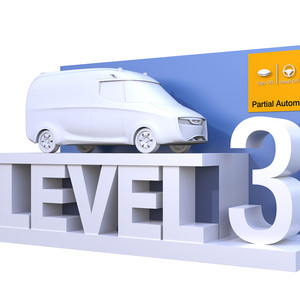
First up, China has moved autonomous driving from the testing phase to conditional real-world use, clearing two Level 3 passenger car models for operation on public roads in Beijing, here in Beijing and also in Chongqing.
But what exactly does Level 3 mean?
And why were these two major cities?
One, of course, is a political and cultural capital and very flat, and the other a topographical challenge of mountains and rivers.
Why were they specifically chosen?
It's a pivotal approval and it's set to accelerate the country's industry's roadmap, forcing critical advancements in regulation.
Also, consumer acceptance.
That might take a little while.
And the race toward fully autonomous vehicles.
Fei-Fei and Yuxin, good afternoon to you both.
This is a fun, interesting story.
And we'll start.
I guess you know we're talking about autonomous cars here, but I said it already in the opening.
Level three, what does level three actually mean?
Yeah, there are actually like six levels based on an international standard and on the who does.
What kind of a principle?
Right.
And there are starting from zero to five.
Now we're at level three.
Right.
And I think level three is absolutely the turning point from the autonomy principle of being just being assistance, to actually they can take control.
So l3 means conditional automation, so system drives in specific conditions and human can take their hands or their eyes off.
Uh, Take their hands off the wheel and the eye off the road.
Off the road.
Yeah.
So level zero, that's where the system provides some alerts, but it doesn't control the car at all.
Humans are in full control of the car.
Level one.
The system controls either the speed or the steering, but still the person needs to have their hands on the wheel and their eyes on the road.
L2.
L2 was kind of a big advancement.
That's where the system of the car controls both the speed and the steering.
But still, still, it's a hands-on, eyes-on operation for the human being.
But then here comes L3.
And this is where humans kind of get to sit back and relax a little bit.
So L3 meaning that's what we understand about autonomous driving is that you're just sitting there and not doing anything.
Yeah, but humans still have to take over when they are prompted to take over.
And there are specific needs that need to be met for the car in order for the person to be able to sit back and relax.
But we're going to talk about that too.
Because you cannot sleep or just leave the seats, right?
If the car encounters a situation that it cannot handle...
A sudden construction zone or maybe some really fast car just blocked you or something like that.
It will alert you to take over immediately and you have to respond immediately because at that moment, of course, you need to see and take control of it.
But still, and I love that stipulation, you're not allowed to leave the driver's seat.
Where would you go if the car is moving?
You're not going to get up and move into the back of the car.
But anyway, that is one of the rules.
But L3 does allow for eyes off driving.
Yeah. meaning that we can look at our phone or read a book while the car is actually driving itself.
In the autonomous zone areas where it's permitted to drive.
So I start to get why this time China only approved, like two models on a very limited road operation only in two cities, Beijing and Chongqing, to pilot this new technology.
It sort of makes sense because you still need some testing and just going around and to see how the car responds to different situations in the open road.
Okay, well, let's talk about these different pilots then.
So this was approved very recently on the 15th of December when the...
China Ministry of Industry and Information Technology.
They approved these two models in Beijing one in Beijing and then one in Chongqing, which is in the southwestern part of the country.
Let's start with that one, the latter one.
Yeah.
So, for example, in Chongqing they are piloting cars that can only run a maximum speed of 50 kilometers per hour and only designated sections of Chongqing's Inner Ring Expressway and New Inner Ring Expressway.
Very specific locations.
Yeah, very specifically.
And it's sort of focusing on different parts of the technology aims to solving the boring part of the commute, you know, stop-and-go traffic, because these two expressways apparently are quite often caught in the traffic congestion.
So they're testing whether these...
L3 autonomous driving cars are able to perform well in a very congested traffic.
So that's the focus of what the Chongqing pilot is aiming at.
And when it comes to Beijing, it's also testing on a faster speed.
The cars are allowed to run at a maximum of 80 kilometers per hour.
Oh, that's quite fast.
That's pretty fast.
Because that's on the highway.
Yes.
That would be close to the speed limit, I would think.
Yeah, the lowest speed limit on the highway.
And those cars will be running on sections of the airport expressway, for example the Beijing-Daxing International Airport expressways.
And they are sort of testing on the high-speed transit on a more predictable and well-mapped route.
So you can see that these are only pilots.
It's not like we are driving, you know, the individual everyday drivers are driving them.
Yeah, right.
But still, that being said, these are not test tracks.
This is real traffic situations on real roads with real other cars.
Yes.
But I think what's also very interesting is that It actually took the government and also these companies over two years to determine on the specific road sections and the car models to get the approval this time.
And then back in 2023, close to 30 of these partners applied to pilot their level three autonomous vehicle models.
And then the authorities take a number of assessments and testing and to see, you know, with a big focus on safety, to see which part of the roads are safe enough to test these pilot cars and what cars can be approved to make this testing.
So you can see that for China, safety is one of the top priorities to rolling out this new technology.
It would have to be.
I mean, yeah, that makes sense, right?
Because the two types of roads that you are listing are, First of all, one.
As you said, they are more complicated.
The roads are more complex, and that is good for testing.
Another one in the Beijing highways, because that traffic scenarios are more diverse.
It represents a more standardized and orderly environment.
That's why it is an ideal for these testing performance under good road conditions.
And i was thinking, of course they have to be like complex enough, but still they need to be.
The road need to be good enough, because i was also uh like uh on the road in some like rural area, uh or not not, suburban area in beijing.
Some of the lines on the road, they are not that clear, to be honest.
That is when, I think, even human eye cannot even identify which lane that you should go to in that situation.
So we that makes sense.
Um, the jump from.
I was watching a video earlier today about the jump from l2 to l3 and the the person in the video was in the car at the time.
It was kind of a cool video because the driver wasn't actually driving the car, he was just commenting on on on the changes And he was saying that it's a really significant jump in terms of the changes to the car.
Because the car, when you go from L2 to L3, it needs more sensors, it needs more radar, it needs a LiDAR unit, which is a sensor system that uses pulsed laser lights to measure distances and create these precise 3D maps.
And then there are also huge upgrades to the hardware and software.
Because there are so many more things that the car has to take into account.
He also said that there are a lot of things that need to happen for the car to take over and become autonomous.
The speed needs to be under a certain amount.
The lane markers, I bring this up now because you just said that, Yushin.
The lane markers on the road need to be really clearly identified.
And it also needed to be daytime and needed to be in good weather conditions as well.
So it's more complicated than we understand about driving ourselves.
Yeah, exactly.
And again going back to the safety points, I mean they're just taking everything they can into consideration right now.
Yeah, you can't move to the back of the car.
You can't sleep.
You can't recline your seat, too.
He was talking about that important stipulation.
But he did say this as well.
He said, when you first start to use it as the driver and the car takes over, you have these few minutes of nervousness and a lack of trust.
But then he said and this is his experience in that specific car but he said, when it takes over and you get used to it a little bit, you start to feel pretty comfortable and pretty confident just sitting in the driver's seat and not really doing anything.
Well, it's a little difficult to imagine for me at least.
You know, I actually you know, sitting one of these autonomous cars, well back, I think, a number of years ago.
That now I think about it, it could be one of the L3 autonomous driving cars, but was only like really testing only on like a very small section of the road for an event.
It's part of a smart technology, internet technology event.
When was that, a few years ago?
That was probably in 2016 or 17.
So the technology was already there.
But they still have some sort of a driver sitting on the driver's seat just in case.
And as we are testing that car, that autonomous car, something really happened.
Like at some point on that road, the car didn't have to turn at some point.
It just goes straight for, I don't remember, a few hundred meters.
And suddenly you start to lose control.
I mean, it could be what's happening outside of the car.
You know there could be an animal passing by and that is sort of making the sensors sort of confused and don't know what to do.
And that's the point that the driver has to take over on the wheel.
And I was like, oh, that was not ready for the market.
But that was also 2016.
Yeah, yeah, that was almost a decade ago.
I want to talk a little bit about the...
The cities, the difference between the two cities, because Beijing can be described like a pizza box kind of.
It is square and it is flat.
And so that creates one style of perfect conditions for for testing.
But Chongqing is different.
I've never been there before but Yuxuan, you were telling me before the show today it's very mountainous.
The roads are more complex, perhaps, than here in Beijing.
Yeah, I stayed a relatively short period of time in Chongqing and I absolutely witnessed how mountainous these roads can be.
And we were just going slopes and slopes and going up and down.
It's a very hilly city.
Hilly city and multi-level traffic systems.
I think...
If you are not a local driver, it's really hard for you to know which turn you should go, because there can be many, many left turns in one intersection.
Easy to get lost, huh?
Yes.
But that provides, doesn't it?
It provides a different and a completely different set of data for the car to collect and to practice in.
Yes, it can offer a more complex and multi-level and also tougher and more extreme conditions for these autonomous driving cars to actually identify and maybe getting more very valuable data in the case that people have to go through these roads.
Why is it then that, you know, if the tech, Fei-Fei, was around since...
For a long time, then why is it that it took so long for China to get to where we are today?
I'm guessing it has to do a lot with the safety, of course, but also liability.
Who's responsible for what?
Exactly.
I mean L3.
When it comes to L3 autonomous driving that is when the car is actually responsible for.
If we are talking about legal terms,
And that means, if something happened, an accident for example, that means, the driver is not legally liable anymore.
That it's more difficult than it sounds, because you still need to take over at some point as a human driver.
And when it comes to laws and liabilities and enforcement, The top question is when is legally required for humans to take over?
And when it is legally required for the system to take over?
And so who has the legal liability in these scenarios?
And then what about insurance?
Who is going to pay for which part of the insurance?
Yeah, well, I was just thinking about that point.
Now we're at L3, where the human must take over when prompted to.
But when we get to L4, where there's no intervention needed, and then full-on L5, where you are really only a passenger in the car, what happens to the insurance industry after that?
So that's why this time we're only seeing some pilots coming.
Because I don't think the insurance industry is ready for this type of new technology.
One really interesting thing or at least it was interesting to me, is that regulators banned the terms self-driving or autonomous for marketing for L2 vehicles.
L3 approvals now require a black box too, that records 60 seconds of data before a crash occurs to prove who was in control.
But yeah, not being able to use those words self-driving or autonomous for L2 cars, because I suppose I don't know the specific reasons behind that, but it makes sense because it could be a little bit misleading to the drivers of the car using words like that.
If I am still being responsible for any accidents when I was using, as you said, that self-driving smart system, then why should I be responsible for that accident, right?
So during the phase of L2 and a lot of these car manufacturers maybe they are developing the technology of being capable of doing that L3 thing, but they will not say that we can be as good as L3, because that is the pivotal point, pivotal changing point to when The car manufacturers or the AI developing company need to be responsible for any accidents that could happen during the self-driving part of the time.
There's also a really important safety measure put in place.
It's called the fail operational system, and China requires this.
And what this means is if the primary steering motor fails, a second one must instantly take over to keep the car safe during what they refer to as a 10-second human takeover window.
Yeah, so in L3 systems, this autonomous driving system performs the entire driving task, as we just discussed.
And the human driver is not required to monitor the road.
But when this system approaches its functional or environmental limits, it will issue a takeover request.
And that's the time when the driver is expected to re-engage and comprehend the situation and take control, And that, according to some of the research and assessment, will take humans about 10 seconds to get ready.
And what does this 10 seconds really come from?
It basically comes from studies that the drivers start to re-engage and they sort of typically need three to five seconds to shift their focus from non-driving at tasks to, For example, if they are reading a book or watching their phone.
It takes them about five seconds.
And then about another five to eight seconds to regain what's happening.
You know the situational awareness to see what's really happening.
So add that up and it takes ten full seconds to drivers to go from basically not paying attention to taking full control of the vehicle.
That language is kind of funny. a request from the vehicle to take over.
It's not a request.
It's please do this right now.
It's a call for help.
Yeah, a call for help.
Yeah, exactly.
So China's cities...
They are not passive environments.
You know, if we look at the infrastructure for the cities here in the country for L3 deployment, they're pretty prepared and going to be more prepared in terms of safety and scalability and regulatory confidence and all of those things related.
Yeah, cities need to maintain clear and also standardized lane markings and signage, especially on these highways and expressways where this L3 is most likely to be deployed.
Also ensure construction zones are well like identified and also digitally mapped and promptly updated to reduce inconsistent and ambiguous road features that challenge that perception systems and also support high precision mapping updates through data sharing mechanisms, because this is not a one company thing.
It is about the whole like road system and offering all of the car owners to drive safely in these roads.
Well, the things that you just mentioned, those were the things that i mentioned before.
From that video that i watched, the the markings on the roads need to be very clear.
That tells the car where to be, for example.
Yeah, basically everything needs to be.
The infrastructure needs to be put in place to allow these l3 vehicles to operate The way that they're supposed to operate.
And that can be one of the bottlenecks when we are talking about rolling out L3 autonomous driving large scale in most countries around the world.
Actually, because even when it comes to, for example, you put up on a construction zone at a certain part of the road, you still need to sort of update on a system so that the L3 system can be alerted and notified about this.
And that really requires a different set of urban plannings that we call smart city planning.
I think at this point
And that is sort of in the process of construction for many cities.
And maybe that's also one of the reasons that Beijing and Chongqing, who are more capable of these sort of smart infrastructure technology to do this, but not in, for example, in smaller ones, in urban areas, in rural areas.
But we are at the beginning right now, right?
I can't walk out the door after the show today to my local car dealership and pick up an L3 autonomous driving car.
No, apparently not.
Yeah, as you cannot just get in that car, but you can absolutely try and experience that autonomous driving features by using some ride hailing services.
So still in designated areas, in designated models that you can try these kind of features.
And as the pilot program progresses and the industry gains a better understanding of all of these safety and risks, these restrictions may gradually be relaxed and autonomous driving will slowly become a part of everyday life for the public.
And what I also seen is that a lot of these companies, both domestically and internationally, they are developing, they're trying to skip that L3 level.
They're going to directly to L4 level because That's, of course, a higher level of autonomous driving and with cars to be drive in the designated or limited areas and car vehicles can operate without a human.
So mostly in some areas, they will deploy a robo-taxi, that kind of thing.
Or in China, I also... Yeah, that's happening in America now, too.
There's a big company called Waymo, I think, that's deployed in a bunch of different cities.
So it has not been that hugely and commercially deployed at scale and is still in the testing and pilot stage.
And I also see an example of these mining trucks also using these kind of features to actually use.
The high level autonomous driving.
So we're seeing a lot of directions that these car manufacturers or companies, technology companies are going to.
It's very complicated, though.
And going back to the point about insurance, that's just one of the complications before we can get to a day in the future which we will undoubtedly get to in the future where everybody's cruising around in their L3 cars.
But the insurance with the automakers themselves.
If they are the ones who are to be responsible should an accident occur, then you have to design a whole new set of policies, I would think.
So there's that background stuff that would all need to be worked out on top of all the safety concerns for the car to operate properly, exactly.
So, for example if, when a human driver is inside the car and they are allowed to switch between autonomous and manual driving models, For laws, for legislators, they need to legally define, for example, the concept of takeover.
They also need to clearly define who's responsible.
That could be a huge gray area, a timing issue of 02 seconds or something like that between when the car and the driver were in that takeover period.
And also for legislators.
They need to define that.
For example, when a takeover moment really happened, is it really a right of the human driver or an obligation of that human driver?
And so they also need to establish a very fair system for distributing these responsibilities, meaning not only the car driver and the human driver, the car makers and human drivers sort of treated equally legally wise.
So it could pose a very large legal question here.
So maybe that's the reason, as you mentioned, a lot of carmakers are just skipping L3 and go straight to L4, which makes better business sense, I think.
So what is in our future then, in terms of the automobile industry?
Because we're at the beginning stages now.
But how will the?
How will the car makers respond?
How will the how will the market respond?
I guess everything is in prediction phase right now.
Yeah, to the, the whole car industry.
This marks absolutely a crucial step in transitioning autonomous driving from that technical validation area to mass production application, but that doesn't mean that mass production is happening already.
And it also represents a key step forward in the country's regulatory framework for autonomous driving.
But we can absolutely anticipate more and more these kind of cars are on the road, because I've seen now we only have two models right and more and more like our car companies are applying for these testings.
So smart technology has moved from being an optional feature for car makers to a must have, shifting the focus from whether it's available to how safe and mature it can be.
So the rollout of these L3 autonomous driving covers basically everything from the vehicle itself to components and software algorithms communication, data services.
And also, I think it poses a bigger question to city planners as well.
So traditionally, when we don't have these smart, highly connected vehicles, they are only planning the cities themselves.
But now I think in the future city planners would also cooperate with these, car makers would also need to cooperate, for example, with other agencies inside the government, to really sort of being more interconnected.
So that for L3 technologies because, as we discussed, they need smart navigation, smart mapping and also very precise mapping of the cities.
And also the consumer trust needs to be addressed.
And I think by us talking about it here on the show and I'm sure plenty of other media outlets are covering this story as well then that plants the seeds in the minds of the consumers.
And yes, these days it will go from wow, this is a cool thing that the car can do to, I don't know 10, 15 years.
I don't know the timeline to every car can do this.
And it's just kind of like a daily thing.
But it's going to take some time for the customers to feel.
Okay, I have confidence in this technology.
Exactly.
I just can't imagine myself turning it on while on a high-speed way, driving at 80 kilometers per hour, and I'm looking at my phone.
And just scrolling, doom scrolling.
Yeah, it just seems so irresponsible, doesn't it?
But that's where we are right now.
Really cool story.