Hello! Welcome to Roundtable, where we serve up piping hot debates on the issues that sizzled in China and beyond.
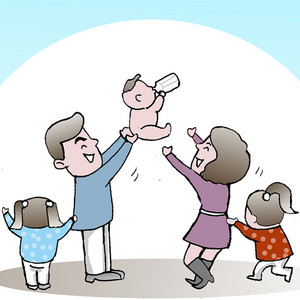
I'm Yuhong Lin. Starting a family is a beautiful journey.
But for many young people today, it can also feel like a daunting challenge.
From childcare to financial stability, the questions and concerns keep piling up.
But what if society could lift some of that burden?
With new policies focusing on birth subsidies and better support systems, could we create a world where starting a family is not a possible but with much joy?
Let's explore how we can nurture a society that helps parents thrive.
For this episode, I'm joined by Li Yi and Steve Hatherly.
Now grab your virtual compass and follow us to the heart of the discussion.
What does it take to create a society where young people feel excited and confident about starting a family?
The new government measures aim to provide just that, boosting childcare support, offering subsidies and expanding maternity insurance.
We all know building a family -friendly society is about more than just policies.
But before talking about how to reshape our cultural environment and addressing everyday challenges new parents face, let's start to take a look at the new measures first.
Sure, I think just very recently, on October 28, the General Office of the State Council, also known as China's Cabinet, introduced a new set of measures and policies to support childbearing and childrearing.
And specifically, there are 13 measures to support the whole childbirth process, and they cover almost all important faces and issues in terms of childbirth.
To me, from offering more childbirth support services, expanding childcare systems, and also to tackle key issues in education, housing, and employment, and also to foster a birthing, friendly social atmosphere.
I think that's more about raising awareness.
And these supportive measures mainly aim to protect the rights and interests of people who give birth to you and also who raise a child, and also in general to help build a birthing -friendly society.
You may say, you know, you grow up, you start a family, you give birth to the next generation, everybody does that.
How can it be hard?
I'm telling you as a mom of a two -year -old, it's challenging.
It's really challenging in the sense that you always aim for the best.
It's like you have a kid, the kid is healthy, and some people would say, as long as my baby is healthy, I am happy.
I'm content. No, you're not!
Once your baby is healthy, you start thinking, huh, how come he's not talking?
He's two. It's supposed to be toxic.
The hierarchy of needs.
Once one is met, your brain moves on to the next one.
Exactly. And it goes so fast.
You forgot about all the challenges you had once you accomplished them, once you dealt with them.
And the moment I was thinking, huh, my kid cannot clap.
What's wrong with him?
Why is he not clapping?
Everybody else is clapping.
And the moment he learned clap, I do not even spend a second celebrating the accomplishment of clapping.
I directly move on to, huh, he's not waving his hand at me.
He's not saying hello and saying, I love mommy.
What is wrong with him?
That is the kind of mentality you face when you're raising a kid.
You're talking about the Christine style of raising a kid.
These are Christine's 13 measures to raise a child.
And what I'm saying here is that being a parent, of course, is very rewarding and it brings you a lot of joy.
But in the meantime, as a society, we also do really want to lift some of the, for example, financial burdens.
And also the kind of challenges a new parent might face in the sense that in the workplace, for example, if you're starting a family, you do not want to bother your coworkers by giving them some of your tasks.
And in the meantime, you also need the post to wait for you to come back from the maternity leave.
So society actually can do a lot of things.
Yeah. I think it's about easing the questions perhaps, or the concerns that potential parents may have.
By the sounds of things, nothing will prepare you for the moment the baby is born.
That's on you. I'm a control freak mom.
That's on you. You got to figure that out on your own.
But policies and measures in place beforehand to make everything as seamless as possible to ease that anxiety that people may have.
Oh, gosh, can we do this?
You know, we're both working, things like this that everybody thinks about.
And if my kid really cannot clap, do I have the financial ability to support sending him to a class and learning clapping?
Is there a clap class?
No, there's not. I'm just saying, financial issue is definitely very important.
And the challenges you may face in workplaces, and if we continue talking about raising the kid, especially before the age of three, you also need to think about early child care services and all these are actually included in the measures.
Of course, I think raising a kid is definitely complicated.
And as someone who has been married and hasn't really given birth to a child, and I think it has been in this mindset or problem or challenges lingering in my mind and also my husband's mind when we were talking about raising a child, I think the very first step is to you have to give birth to a child.
So for me, who is really sensitive to pain, I would think the whole process could be a little bit stressful for me when I think about the whole process and meantime, I might just worry whether there are enough, you know, support policies to help me to deal with the whole process.
And also after you get from birth to a child, you start worry about raising the kid, right?
And for me, I think who and how to raise the kid really is time consuming and meantime expensive because we know in China, you know, we sometimes call a baby meaning that they can swallow gold.
Very, very well - We also call them money shredder.
Oh my goodness. So that means you are not only, you know, expected to provide basic needs for a kid, you are also, you know, trying to cultivate his or her hobbies, activities and everything and also childcare services as well.
So how and who should really take the responsibilities of raising this kid.
I think that also matters a lot to me.
Sounds like you're ready.
No, you're making a plan.
And since you've already mentioned you're sensitive to pain, actually one thing that got my attention among those around 13 measures is the fact that suitable labor paying relief and assisted reproductive technology services will be added to the list of services that qualify for a medical insurance
reimbursement. Meaning that if you choose to have labor paying relief, please choose that.
This cost would be reimbursed.
Oh, interesting. That was not previously covered under - Depending on different types of systems and depending on what kind of medical insurance you apply and also which provinces you are in.
So it's a different for this one.
In this bunch of measures, it's been encouraged, which means that more and more hospitals in different provinces would provide that service.
And one thing is that before, well, because I also am someone who's afraid of the birth pain thing.
So giving birth, in my head, it's the default setting of using the labor paying relief.
But I did research before giving birth and I tried to figure out what is the principle and what's the different options I can have.
But for those new parents who are without the access of such knowledge or cannot do the research by themselves or just they simply do not have the time to do that.
Now, with this new measure, we can imagine more and more hospitals having this as a default setting for women giving birth.
Yeah. It sounds like a small thing, but that could be the difference maker for for a potential parent.
I was watching a drama a couple of weeks ago and in the show, the woman was giving about to give birth.
She was in the hospital telling her mom, no, I'm going to do it naturally.
And her mom was like, you know, I don't think you should.
No, I am. I am. And then when things started, she said, give me the medicine.
Give me the medicine.
I want it. And the mom said, yeah, I thought so.
Another couple of measures.
Let's talk about these.
More people will be covered by insurance.
This one's important, I think, in the country's maternity insurance scheme, including people in flexible and new forms of employment, talking about rural migrant workers and those working in new forms of job positions as well, like ride hailing drivers or delivery couriers or live streaming sellers.
We're talking about a broad range of jobs here.
Yes. And that is actually something very important because, for instance, there are, I think, in general, two types of situations.
One is that you work in a company and one you are on your maternity leave.
It's the possible there is the possible that some of your job would be separated by your colleagues, your co -workers and the ideal situation, which is the situation actually personally I met.
And many people here in China would face is that must some of your job would be given to someone else?
So is your salary that your company prepare for you.
So these people doing more would get paid more.
In the meantime, that doesn't come from your salary.
Exactly. Because in the meantime, once you are covered with the birth support subsidy or the insurance after finishing the maternity leave, when you're coming back, you can actually get the subsidy, meaning that that portion of your salary would be given back to you.
I think the amount of eight months would be given back to you.
So it's kind of like the government is paying for your maternity leave, whereas your company can steal paying for the amount of work that's done by your co -workers.
So it's a win -win -win.
So there's a benefit to co -workers if you become pregnant.
Hmm. In a way, well, they still have to do more.
They have to do the work, but they do get compensated for it.
And that's very important because with these measures, companies would not find hiring someone who's going to give birth someday a burden, which would highly reduce the kind of biased opinions towards women.
So that is one measure that's very important.
And for this new including of those who are, for example, without a fixed job or they're relatively flexible or there are new forms of employment, there with a new form of employment, actually for them, they do well, they basically get paid by the amount of job or the amount of work they do and with a insurance, even during the time
that they're on a maternity leave, they would have certain support so that they can, you know, buy formula for the kid.
Oh, I think that would definitely help relieve the stress for those people who are about to give birth to children.
And also I think it will help narrow the gender gap at workplace.
Somehow. And I think that would be very helpful, especially for new parents nowadays, because we are talking about professional moms and also professional dads and yes, working moms and I think for a lot of superheroes, for a lot, for a lot of young parents, one concern for them to, you know, have a baby or to
raise a baby is the dilemma between work and family responsibilities.
So that applies to giving birth to children.
And that also applies to raising a child as well.
And I think that struggle has been there since decades ago.
We had a term here in China called Xiong Zhong Jia Ting, meaning that in the whole family, mom and dad both work at workplace and so no one really is there to, you know, entirely providing this care for their baby.
So they have to sort out this childcare from an early time.
And me personally, I come from a Xiong Zhong family as well.
So I have this, well, I don't really have this memory, but I was told by my mom that I was sent to this early childcare center when I was one and a half year ago.
And that is pretty young for my peers, because usually you are expected to, you know, go to kindergarten at the age of three.
And I think that still applies to today's world, uh, worlds of raising a but I think now we have more, uh, affordable childcare services or affordable childcare centers and this new round of birthing, supporting policies as well.
It also emphasizes the need to increase government subsidized, affordable childcare services and also to develop community based childcare centers and childcare facilities at workplace and homes.
And, uh, I think that's really important, especially, you know, when, when you are talking about the responsibilities of raising a kid, there are like this involving perception as well, because I don't know, you know, if you know about this deep, because traditionally here in China, somehow, uh, in a family
grandparents are expected to provide a lot of care.
I mean, especially supporting help and you have to stay at home and while your kids are out there to pursue their career and we have to take care of your grandparents, but somehow I just read an article from new weekly the other other day saying that a lot of retired seniors, especially those living
major cities here in China, they start to refuse to do that because they want to pursue their own happy retirement life as well.
And also for their children, they don't really want to sacrifice their parents time and everything to help them provide care to their children as well.
So I think we're talking about more rational sense of who should bear the major responsibilities of raising a kid.
However, it's still a burden for new parents as well.
So I think that's really important for governments to offer this policies, the more support available, the better.
Of course, I think this is an important one too.
Um, assisted reproductive technology services will be added to the list of services that qualify for medical insurance reimbursement.
Um, so various regions in China, including Beijing, um, they were among the first to reimburse fertility treatment bills and, uh, this year six regions, including some different provinces, Shanghai is included in that.
They followed suit as well.
Now there's 10 regions in total, and I think this is just such a wonderful measure because things like fertility treatments can be very, very expensive.
I'm not sure here in, in China, how much they can be.
But for example, um, in America, one cycle of IVF, have you heard of IVF before in vitro fertilization that can cost 15 to $25 ,000 per cycle.
That's 106 ,000 to 178 ,000 yuan.
So, uh, I don't know if we're talking about that here in China when they're talking about reimbursement for fertility treatments, but nonetheless, it's a really great measure to have in place because for couples who, um, may have been trying for a while, but unsuccessfully, then knowing that they can get
reimbursed for for, uh, fertility treatments, that could be another great step too.
Yes. And one thing that we have to face here is that there is a global low birth rate happening.
One, well, there are many reasons.
And I think one of the reasons here is that actually for a lot of women with higher education background, they wanted to be who they are first and they have all the reasons in the world to do that.
But after figuring out who they are making their names, a golden name shine in the workplace, they started to think about starting a family.
And because when we say the clock is ticking, it's not biased or anything.
It's just because your physical condition sometimes would create more problems for you when you want to make the decision of starting a family a bit later in your life stage.
And the beauty of modern society is that if you decided to be a, let's say single person for, for your life, you can do that.
But if you want to have a baby in your late 30 or in your 40, you can still have that option.
And now we're even making that option being included in medical insurance, which is even better.
My sister didn't have her first child until she was, oh gosh, maybe 43 or 44, I think.
And that was such a miracle child, right?
Because they had been trying for a long time and they went through fertility treatments and then they had that baby and they were satisfied.
And then all of a sudden, very shortly after, naturally pregnant.
Yeah. Some of my, well, one of my friends had this similar experience that she did all the things of the assisted reproductive.
And then she had her own baby, well, had her, you know, natural baby.
You talk about declining birth rates.
And it's true around the world.
This is from CNN from earlier this year.
There was a new study that projected that global fertility rates which have been declining in all countries.
I didn't know this and I found this to be really surprising.
Declining in all countries, according to CNN, since 1950, since 1950, and they say it's going to continue to plummet through the end of this century, resulting in a really profound demographic shift.
Globally, the number of children born to one woman in her lifetime, that number has gone from 4 .84 in 1950 to 2 .23 in 2021.
And they say it will continue to drop to 1 .59 by the year 2100.
That's based on the Global Burden of Diseases Injuries and Risk Factors Study from 2021.
I didn't know that this has been going on because we talk about it a lot.
And it's in the news a lot.
And, you know, countries, various countries names will pop up.
Canada has a declining birth rate.
Korea, South Korea, I believe has the lowest birth rate in the world right now.
But I didn't realize this is a global thing and it's been going on for so many decades.
Yes. And I think on one hand, definitely it is something that worth our attention because we do need more people working together, making the world a better place.
So if we're looking at an aging society, if we're looking at globally a low birth rate, definitely it is something that policymakers should concern.
And I guess these kind of measures and policies we're talking about today would in some way make the situation a bit better.
But besides that, I also feel like maybe parents are getting more and more responsible.
They're making responsible decisions about raising a kid.
And if you take a look at some of other measures that are issued by Chinese government, you've got to see that not only are we looking at the situation of, for example, giving birth or planning to give birth and also early time child care, there's also information about how to make education resources
allocated more reasonably and more equally.
There's also talk about how to make the society a child friendly or family friendly society.
So in your opinion, what kind of society, if there is an ideal one, is really friendly for all the individual little families?
Well, I think as as a woman, I would say a birthing, friendly, friendly society is an anxiety where between couples, there are more rational understanding of sharing this personal responsibilities of raising a kid more equally.
And I think that that is still is already happening here in China, especially when you observe those new parents, you can definitely see I mean, in shopping malls, you see more dads, they are carrying their babies and children instead of, you know, traditionally, you think it's the mom's job, I think
that's definitely has already been changed.
And also talking about more practical things, of course, you need to guarantee the well being of pregnant women, and also families who are raising their kids and taking care of their children from from an early stage.
I think in a show on October 14, we just talked about free and the quality early childhood development services are being offered to rural areas to poor families here in a lot of cities here in China, I think that is a very good initiative.
But overall, I think a birthing friendly society is also a society that benefits that guarantee the benefits of each individual.
I think that's extremely important as well.
Yeah, seeing things like on the bus where the seats are designated for pregnant women or the elderly, that's a little tiny measure, a little step on the subway as well.
You can see things like that.
I think more of those types of things that are more obvious in our day to day lives would be helpful.
And I think from a company's point of view, not just things like paid maternity leave or and don't get me wrong, those are great measures, you know, maintaining or retaining your salary when you go on maternity leave or paternity leave.
Those are those are great things.
But also the company being flexible with an employee's schedule with the mom's or dad's schedule.
And you know, everybody works nine to five or nine to six or nine to seven or what have you.
But, OK, you have to take care of your kids today, show up at 11 or just, you know, actually, I'm not even going to ask you.
Just make sure you're taking care of your responsibilities and you just come when you when you can come.
Things like that and making not only that, but making sure that those are recognized policies within the company so that there's no fear from the employee's point of view.
Oh, I know they said I can do this, but if I really.
That's very important.
It's almost more important than the policy itself because you can have the policy in place, but if people are too nervous to take advantage of it.
So I think the bosses and companies in general need to make sure that company wide, everybody knows this is a comfortable thing that employees will be able to take advantage of.
And one tiny little thing that are I think would require the effort of everybody in the society is that nowadays, I think the best situation, in my opinion, would be everybody.
When they're taking their young kids to public areas, they would try really hard to control their kids, not to bother bother others.
In the meantime, everyone without a kid should be a little more tolerant.
They should be able to maybe if the parents really need a change in seat, they would be happy to offer that or to give them that seat they need to exchange the seat.
And when the kid is just really screaming in public places, maybe everyone can be a little more patient and not accuse the parents of being bad parents.
When I was a baby, my parents told me I didn't scream in public.
I just clapped all the time because I started clapping from a really early age.
Oh, and Christy would be super happy.
Now I would ignore the clapping and move right on waving hands or saying goodbye.
But yeah, that is the thing you would started to do when you become a parent.
And hopefully in the future, we can see more and more joy instead of stress.