This is Roundtable.
I'm Steve Hatherly, joined today by Fei-Fei and Yuxuan.
Coming up, China's mice industry is back, and it's bigger than anyone predicted.
Global players are now flocking in, but what's powering this remarkable comeback?
And how is China masterfully weaving its cultural story into the very fabric of business itself?
After that, recent data indicates that museum visits have surged to a historic high, reflecting a booming public interest in cultural engagement.
But...
This success has been accompanied by a notable wave of feedback from visitors, who frequently express concerns about the overall experience.
We'll find out exactly what those concerns are today.
Our podcast listeners, that's you, can find us at Roundtable China on Apple Podcasts.
And don't forget, we love hearing from you as well, and we love hearing your voice.
So send your voice notes our way with any of the thoughts that you may have on any of the issues that we discuss here on the program.
Here's how you do it.
RoundtablePodcast at QQ.com.
Once again, RoundtablePodcast at QQ.com.
And now across China.
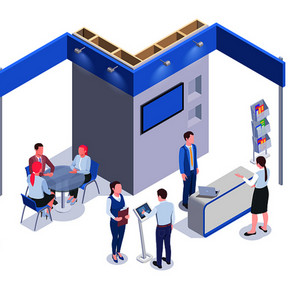
A powerful revival is underway within the mice sector, the engine of business tourism, encompassing meetings incentives, conferences and exhibitions.
It's not merely a return to pre-pandemic activity either.
It's a strategic metamorphosis.
The world is taking notice, with international entertainment conglomerates, luxury cruise lines and elite event planners all drawn to its magnetic potential.
The fundamental question is no longer if the industry is recovering, but how it is being reimagined.
China is no longer just hosting events.
It is curating immersive experiences, transforming standard business gatherings into captivating global showcases of culture and influence.
And mice, we're not talking about our little four-legged friends here.
Oh yeah.
That's exactly what I wanted to say.
We should point that out for someone who's half listening to the podcast or to the show.
We're talking meetings, incentives, conferences, and exhibitions.
Basically all the large scale events that bring professionals and organizations together for business or cultural purposes.
It's a large segment of the tourism and hospitality sector and you can call it business tourism or business events as well.
That's what we're talking about here.
So why is this such a big deal in China at the moment?
I think in our previous episodes we've talked about how many of the recent foreign visitors to China aren't just coming for leisure, but also for a lot of business purposes.
So this my economy or sector is actually a more specific example of that.
And that is actually a huge market right now.
What we're seeing is that the global mice market hit 81 billion in 2024 and could reach more than 140 billion by 2030.
That is growing about 10 per year.
And then China actually hosted more than 3800 trade and economic exhibitions last year, and that is maintaining steady growth from the previous year and signaling a full rebound from the pandemic slowdown.
And also I think it's quite noticeable, especially in recent years.
If you go through the news every day, you will notice there will be some kind of exhibition event going on, big or small.
Even down the street there's a pretty big hotel from our studios here and it feels like there's always some sort of conference or event happening there, either within the hotel or nearby, because I see lots of international people in that particular hotel area.
And I've had chats with people on occasion.
Oh, hi.
Do you live here?
No, I'm just here for a conference.
I'm from Brazil.
I'm from Russia.
I'm from wherever.
And that's often that I've had conversations like that.
Exactly.
And it can be on anything.
I think I one time ran into a forum, really, bringing on scientists and companies on potatoes.
Yeah.
Yes.
So literally anything can be covered.
I mean.
These are important though, because on the ground these exhibitions and these conferences they provide essential physical spaces for face to face networking.
Product showcasing, obviously, if it's that type of conference.
Project cooperation.
Also it helps businesses cut transaction costs and boost trade efficiency in the sense that the business that you might do with another person or with another company, it's organized into one space.
So it saves a lot of time in terms of making phone calls, sending emails and trying to network otherwise.
It's all done through these, through these conferences, strategically as well, these are important for the regions where they are held.
Yeah um, the mice industry enhances regional economic vitality, as they will like, stimulate tourism hospitality, retail and transportation, creating that kind of immediate economic ripple effects and actually cultural exchanges also happening during all of these events right, when international visitors coming to one location and going back, and it is actually a good opportunity for people to know everything and everything authentic from the location.
Yeah, exactly.
And that's why I think here in China, both the central and a lot of the local governments are placing a lot of high importance on developing the mice industry.
So they have like supportive policies. to guide professionalization, globalization, modernization.
For example, they want to reforming on the management so that these events are carried carried out more on market forces instead of, you know, just driven by government policies.
Yeah, letting the companies who run these events do so without interference and things like more tech being involved, and make sure the rules are fair for everyone.
And then, of course, giving support when you can.
That's kind of the role from the government's point of view.
What is behind it, though?
Yeah, some of the world-class infrastructure is absolutely one of the reasons that we, a lot of these places, are capable of growing, holding these kind of events, with more than 150 major convention centers and over 3 million square meters of exhibition space in China here.
That's even surpassing Germany.
And China offers advanced, large-scale venues for global events.
And also, you know measures and policies.
You know included like spend it, visa free.
Yeah, right.
It makes it easier for people to come to.
Yeah.
Now up to like 240 hours.
Also simplified visa applications, optimizing customs and airport transit efficiency.
Some of these shuttle buses are really, really convenient from one location to the airport and also expanding international flights.
Upgrading payment systems now foreign visitors.
I can see a lot of like logos and Notice and telling foreign visitors that you can pay through online or mobile payment through a foreign card.
Yep.
Yep.
So, talking about the events specifically, are there any particular trends or maybe features that stand out?
Well, I think digitalization is definitely one big feature.
And so these events, these exhibitions, are entering into a quote-unquote smart era where, for example, in Hong Kong, with their Exhibition Plus mode, that they combine physical events with online intelligent matchmaking.
They're sort of helping exhibitors and buyers to connect more efficiently and accurately.
And that is one big feature.
Another feature is sustainability really that a lot of these events, even maybe a lot of our listeners, haven't noticed that these exhibitions are going towards transitioning to low carbon and green exhibitions, including the architecture themselves and also the lighting, the energy they use.
It kind of feels like you have to.
These days, right?
Because if you don't, that might get on people's radar for sure.
What types of exhibitions?
We kind of touched on it in the beginning.
I mean, even potatoes.
There's a conference for that, too.
But yeah, basically everything.
But what are some of the notable ones?
China has some of the biggest conferences and exhibitions in the world.
Yeah, absolutely.
I think the Canton Fair just you know, officially the name is China Import and Export Fair held twice a year in Guangzhou, once in spring and once in autumn.
Actually, today is the second phase of this canton fair, this very timely, yeah so, and each session is a session is divided into like three phases and each lasting about five days, And when I traveled to Guangzhou, I actually came across one of these sessions.
Locals told me that during their university days they often made some extra money by working as interpreters for exhibitors at such fairs.
And it has a long, long history holding this event.
And Beijing, I think, is also shaping itself as a global mindset by holding a lot of international and global events.
And SIFTUS is the one, International Fair for Trading Services, held just recently in September.
And I actually went there.
Oh, did you?
Experienced some of the international trades there.
And bought something.
And it's really interesting.
It's open for, I think, businesses and also open for residents.
Yeah, yeah.
I actually reported the very first Siftis a few years back.
Oh, really?
Yes.
That was the first time they started to utilize an old factory base for these events the Shogun Park.
And that is also their sustainability method, one of their sustainability methods.
Reusing old infrastructure.
Yes, and it also brings on this old industrialized vibe that is not only just about service and trade.
You can also get these cultural experiences within the base event venues there.
It makes it even more fashionable.
It's a little bit of cyberpunk now.
Yeah, I know what you mean.
There's so many... I mean, such a big snowball effect too, right?
Because when people come here for these business purposes, maybe they're coming to China for the very first time.
And maybe they're coming to a city within China that they've never been to before, even if they have visited the country.
So what the opportunities present... is the perhaps unseen opportunities of future tourism, right?
People leaving the conference, going back to their own country by word of mouth, saying really wonderful things about their experience here, and then coming back with their own families or friends or maybe telling other people about it.
So...
It's great for the cities where the conferences are held.
It's great for the region where those cities exist.
And it's great for the country overall.
But that being said, it's not always smooth sailing.
So what are some of the difficulties that exist?
The industry actually faces intensifying competition with rising market entrants and also digital alternatives challenging traditional exhibitions, because you need to physically get there to that location to participate in that event right.
And some of these operational risks stem from seasonality.
Complex logistics and potential disruptions such as public health events and financial pressures arise from high upfront costs for events and you need to have that huge venue for that event.
And these are the things that you need to consider, or we are considering, when we are having a lot of these huge events.
Sure.
But still the outlook, the future outlook looks very promising, very dynamic and very bright here in China.
The models that exist now and the events that exist now are so incredibly popular.
I was looking at numbers from the air show that took place last year.
I think that takes place every couple of years.
And it was something like 600000 visitors um came to that show and spent all this money in the region, which is great for the hotels and the restaurants and tourist sites and things like that.
So the mice industry in china here is booming and that is very, very good news.
Stay with us.
Coming up.
Numbers prove that people are still loving visiting museums, but many still have complaints.
That's up next.
Looking for passion?
How about fiery debate?
Want to hear about current events in China from different perspectives?
Then tune in to Roundtable, where East meets West and understanding is the goal.
This is Roundtable.
I'm Steve with Fei Fei and Yu Xun.
Data shows that museum visits in China have surged to historic heights, with 133 billion visits recorded in 2024.
But interestingly there was a report that came out not long ago that revealed that travelers frequently complain about particular things when they are visiting museums.
It's kind of ironic because they're going in record numbers, but they're also complaining about it while they're there.
But let's look at the numbers first because, as I said, 133 billion in 2024, that represents a really significant increase.
Oh yeah, some of these leading attractions, such as the Palace Museum Also Emperor Qin Shi Huang's Mausoleum site museum and the National Museum of China, continue to draw massive crowds, with the first two receiving over 17 million and 11 million visitors respectively, while Sichuan's Sanxingdui Museum saw an 823 increase in five years.
That's reaching 6 million.
And the point is that, with more and more visitors visiting all of these museums and getting knowledge from these things, The boom has sparked growing public frustration over some issues like overcrowding and poor visitor experiences, and turning one hashtag is called regretting museum visits during holidays into a trending topic on social media.
Well, receiving like over 10 million visitors a year will be crowded.
And, for example, during the.
You know, recently the Palace Museum is hosting its, I think, century 100-year exhibitions.
Oh, wow.
100th anniversary of this establishment.
Yes.
So it's impossible to get a ticket into that museum.
And that's another complaint.
That's a complaint I will get.
I will give, actually.
That's a complaint because I never would have expected this.
Ticket scalping has become a common issue for many of the top museums, because these museums, some of them, have become so popular that they'll sell out in seconds.
And scalpers.
I mean, you think about scalpers for maybe a big concert or a sporting event, not for a museum.
But that's exactly what's going on.
Scalpers are selling these tickets at inflated prices and it's forcing visitors to compete for tickets days in advance.
And even some of the so-called less popular local museums.
They're often suffering from being overcrowded as well.
But it's not just the crowds.
It's what's happening inside the museums that's kind of annoying people too.
Mm-hmm.
Yeah, for example, those photo takers, that's one of my complaints as well.
Whichever exhibitions or galleries you are going to, there will be some people sort of hoarding over the site and just taking photos.
Study groups, right?
Not study groups, but more like influencers.
They're taking photos.
Why does that annoy you though?
Because everybody takes pictures.
Don't you take pictures when you go in?
I will take a picture like two seconds and then I leave.
But they will be hoarding that space and take, I don't know, 100 photos and just not leaving.
And then they're trying to clear the space because they want to get this photo just with themselves.
So you are not allowed to get close to them.
Yeah, that's annoying.
They're treating it like it's their own personal space.
Yes, and that's really annoying.
Yeah.
Some people are complaining about study groups.
You touched on that, Yuxuan.
Why are they complaining about study groups?
And because that's a lot of them.
And like students and children, and poorly managed study groups account for over a quarter of museum visitors.
Many young people are annoyed by children running and screaming and playing mobile games.
And they can be really, really loud, and in museums, while some parents don't even intervene, this kind of behavior, which means that it can be very, very disturbing for people who really want to visit there.
And you know, look at these things.
I kind of feel for the teachers though right, or or the people who are in charge of the study groups, not the parents who are allowing their kids to run and scream in in the venues, but Those study groups they'll have maybe I don't know what 20 30, 40 students sometimes, and maybe two or three teachers in charge of those 40 kids.
So that's a really tough task.
Exactly, and especially in a really crowded space inside the museum.
Safety is the top priority, perhaps, over having perfect manners within the building itself.
So yeah, a lot of these study groups are sort of organized by third-party agencies.
And they will charge like tens of thousands of yuan per student.
And so they are sort of this profit generating companies.
And that sort of makes sense.
They want to, you know, gather as many students as they can, but they just didn't really think about the management.
And I think that's one of the responses really the museums really need to take some measures.
I was just about to say the responsibility at least in part has to fall to the museum.
Yeah, exactly.
You should have like a threshold for these kind of group visits, especially in busy, crowded museums like the Palace Museum or the National Museum of China, which is It's, sort of a must-go-to place on any state groups coming to Beijing.
Exactly.
No matter about the management of all of these tour groups.
Also, the layout of the museum, all of these things are should be considered by the management of the museums.
And when they are having a good management, probably the sculpting and the ticket issue can all be solved.
Yeah, okay.
But in defense of the museums...
What was that museum you said in Sichuan?
823% increase in visitors.
How are they supposed to know that's going to happen?
And how are they supposed to be prepared?
For that level of increase.
Technology.
I would say technology, you know.
We can see how many people booked a ticket.
Well, yeah, I suppose.
Yeah.
My argument perhaps was not as strong as I thought.
Yeah, and also on internet.
When people started talking about this particular facility, it was sort of be expected that you will see a rise.
For example, when the black myth woke home, got sensational online, a lot of the temples and actually ancient architecture should be prepared, should be aware that they are being talked about online.
Sometimes it is a little bit more predictable than perhaps other times.
Okay, tech might be one of the solutions.
Just very quickly, what else can they do, Yuxin?
Improve service and talent training.
Maybe regulate third-party tour services to prevent overcharging and disruptions and recruit and train professional guides for deeper cultural interpretation.
And maybe leverage more technologies.
Like people can use virtual technologies, VR and AR to have more online experience that as as going to offline museums.
Yeah, I mean museums can do what they can, but I do understand the complaint from visitors because just when there's so so many people there, A museum is meant to be a place of peace and tranquility and history and knowledge and an opportunity for learning.
And when you've got your elbows shoved into your ribs because someone's trying to take the perfect selfie.
Well, that takes away from the experience for sure.
All right, that'll do it for today's roundtable.
Thank you so much for sharing your time with us today.
Thank you to Feifei.
Thank you to Yushun.
I've been Steve, and please do come back again next time.