Discussion keeps the world turning.
This is Round Table.
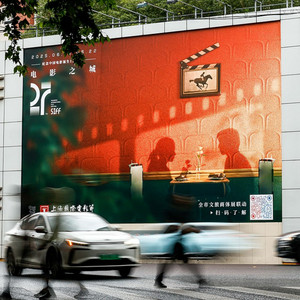
As the 27th Shanghai International Film Festival raises its grand curtain it's also a time to celebrate this momentous year, the 120th anniversary of Chinese cinema.
Where did this journey start?
What are some of the milestones that happened along the way, and how is the festival honoring this rich legacy this year.
Coming to you live from Beijing, this is Roundtable.
I'm Steve, hello there.
And for today's show I'm joined by Ngo Honglin and Yu Shan.
First, on the program.
As the curtain rises on the 27th Shanghai International Film Festival, we're not just celebrating another year of cinema, we're honoring a monumental anniversary.
Why? 2025 marks 120 years of Chinese film.
a legacy that began in the early 20th century and has since reshaped global storytelling, from the silent classics to modern masterpieces.
How has the industry evolved here in the country, and what defining moments have paved the way?
Let's unpack the past, the present, and the future of China's cinematic journey, one frame at a time if you will.
Niu Honglin and Yu Sheng, good afternoon to you both.
You know, if Roundtable were a full -time movie show, I think I'd be okay with that.
I could talk about movies all day, every day.
That's how much you love movies?
I really, really do.
Are you as big a fan as I am?
I mean, movie is a big thing in, nowadays, some young people's entertainment as well, but it's just sometimes when we think about entertainment and just having some leisure time, it's not always about movies, but I'm glad that we're still talking about movies and people are still appreciating movies and even the movie makers these days, they're Still coming up with ideas of how they can enhance the overall movie viewing experience for all.
So that's something that's mattering and that's something that's worth discussing.
I think the job ruined movie for me.
Previously, I was able to enjoy the story, enjoy the plot and movies opened doors to new worlds for me.
I get to see how people living in another city, another country, another time, live their lives.
I get to see the imaginary world in the director or screenplay writer's heart, yet now when I watch movies I say, ah this is a good director, that was a beautiful frame, ah see how he trends it from this scene to another, beautiful, that's really good, it's like when you know too much, yes it can take away from it, And it's like, oh the coloring is really good, but the analytical side of me is taking over.
But before doing the show, I realized how amazing the adventure or the journey of Chinese movie have come along.
It's been 120 years and there has been so many milestones that we're gonna discuss today.
Yeah, and I'm really looking forward to our chat because I think it was yesterday on the show or maybe the day before, I was talking about the fact that when I moved to Korea, that gave me the opportunity to dive into the cinematic world, if you will, of the country.
But in China, I haven't had the opportunity to do that yet.
But there's a lot to learn today and it's all about the 27th Shanghai International Film Festival.
So let's dig in a little bit.
You know, the film festival, we've talked about it.
Of course, it's about, you know, the ton of great movies that you can see and the directors and the plot lines and all of that.
But it really does go far beyond that.
And one of the things that's really cool is the Sif Forum, so please tell us what that is.
Yeah, the Sif Forum, the Shanghai International Film Festival Forum is actually a series of activities to honor this significant historical moment.
As you said, Steve, this is marking this milestone of one hundred and twenty years of filmmaking in China.
So this year's CIFF forum, they organize eight thematic symposiums alongside three CIFF Masterclass sessions, and that include the opening session, which is under the theme of Era of Splendor, Dreams Ignite New Journeys, and that will undertake dual missions.
So that include, one, a retrospective celebration of Chinese cinema's 120 year heritage, and also with forward -looking discourses and talks and sessions on just how to cultivate distinctive, competitive advantages for domestic movies in entering global markets.
And some of those ongoing dialogues, including some that already happened on June the 15th, actually reveal the key interests of the modern day movie -making industry, which include, first of all, the opening session, the cinematic splendor through ages, renewed with New Horizons.
So that's where a bunch of industry experts including investors of movies and movie producing companies, ticketing platform who all sit together to talk about just how can we improve the movie industry?
Where are we going in the next step?
Oh kind of like the behind -the -scenes of the movie industry.
They talk about a lot of sharp questions like how to lower the Because we know nowadays, in order to enhance the storytelling, you got to lower the budget and do not solely rely on star power and the funding of the movie making.
So that's like all big topics that's being discussed on forums like that.
And also there there are...
One that I'm particularly interested in which is called Women In Motion and In Her Flow, that's the theme.
They actually invited Indian filmmaker Kiran Rao, whose name probably is unknown to you, but if you see what she has produced, which is one very famous movie back in 2016 called Dangal, or wrestling competition, or in Chinese, Shui Xiaoba Ba Ba.
So it was like a big name back then, when people see how Indian filmmakers were innovating and portrayed women on screens.
and also Miss Rau, she shared about how she has witnessed more and more women becoming producers, directors, and women in their chair on the site of movie making along the way.
And I found that very fascinating and inspiring.
It's definitely becoming a thing in China as well.
We're looking at a lot of female fume directors, filmmakers, producers and they are giving the product, the final product, a fresh woman perspective, which is something I really enjoy as well.
And if you are in Shanghai, you are in for a treat because the Film Festival also held a commemorating the 120th anniversary of Chinese film, Chinese cinema, an art exhibition naming Dream Making in Action.
It features eight major themed zones covering areas such as film history, martial art films and animation, science fiction.
In VR, a lot of different areas and through over 300 original items from filmmakers, more than 1 ,000 pieces of film -related materials and over a dozen photography collections.
The exhibition presents the dream weaving journey of Chinese cinemas over the 120 past years.
It's a lot of years to cover, isn't it?
So why Shanghai though?
I mean, what's so special about this city?
Why do they call it the capital of Chinese cinema?
There's a long history with Shanghai related to the film industry, too.
Yes, that is true. Although the city of Shanghai, it hasn't always ...
it's still in the center but it hasn't always been in the center of resurgence of Chinese cinema in recent years.
But despite all that, Shanghai is where it all started.
And we can trace that back all the way to 1896.
So that's when the idea of film or a movie, which was back then referred to by the Chinese back then as Western Shadow Place.
So instead of calling them film, Bien Yuen, they call it Xi Yang Yung Si, so Western Shadow Place, which makes sense.
So back then, people, for the first time, screened, or rather debuted, several short clips from France, which also makes sense, because French is kind of the birthplace of movie and moviemaking.
So that's when movie first entered China.
And in Shanghai in the local residence hall, which was later adapted to a movie screening house and entertainment complex in Shanghai, called Shuyu Garden, the Shuzha Yuan or Shuyuan, That in that place, it was seen as the first screening of a movie in modern China.
And then by 1899, the films were screened regularly in Shanghai already and about four years before the pictures started moving to other parts of China in Beijing and the rest of China.
So there's a strong historic and cultural influence in how Shanghai becomes the, quote, unquote capital of Chinese filmmaking and Chinese movie industry.
At the turn of the 20th century, I'll say, Shanghai was already a major cosmopolitan city, which is home to people from all around the world, and it has also become China's cultural and financial hub which back then made Shanghai the Chinese city where western influences were very keenly felt, and of course, that provides a good and suitable soil for films and movie making industry to grow in Shanghai back in the early 20 century.
Yes, so at that time, even in the late 1800s early 1900s Shanghai was the film place to be.
It was very cosmopolitan, lots of people from different parts of the world there.
And I guess, as you garden, as you said would have been the hot place for a Friday night in 1896.
And don't forget to those talented few makers.
Many of them are war in Shanghai.
we see that Shanghai are shooting Chinese cinema's first golden era, producing many of the Chinese classics including Goddess, Son of the Fisherman, Street Angel, and New Woman.
That was where the industry take off, or took off.
But I have to... All those movies were from the 1930s yeah?
Yes, yes, but I have to say yes, Shanghai has a strong link with the movie industry here in China, but a lot of other cities also have their special connections with movie industries, many of different places, our home place for the making or the taking the, the making of very important and very famous movies internationally.
And many movie industries, or I think now we, it's safe to say maybe Shanghai is the the capital of movie industry here in China yet a lot of other cities are doing really well as well.
Yeah, a lot of young people nowadays they think it is the inclusiveness that is the key reflection of how, of why, people think Shanghai is the city of films or the capital of filmmaking in China because it's so diverse nowadays that it incorporates a lot of facilities.
With about 400 cinemas nowadays, the city is a key source of filmmakers, box -office taking as well.
And as of 2024 about 7 ,000 film and television enterprises and studios, they're all located in Shanghai, accounting for almost one -third of China's total.
So they basically cover the whole industry chain of film and television making, including the creation, the shooting, the training, all the way to the distribution of the works.
So it already has this very sophisticated production line of movies.
And it's all there.
Yeah it's all there.
It's all there in Shanghai let's talk a little bit about the the long history we said it a couple of times already 120 years of Chinese cinema so if we go through the timeline chronologically what were some of the where are some of the spots on the calendar that we should stop and pay attention?
Well in 1905 a hand cranked camera in a Beijing photography studio captured a historic moment.
That's the Peking Opera master Tang Xinpei and he performed as a General in the Dingzhi mountain, which is China's first film, marking the dawn of a storytelling revolution for the oriental nation with its silent 30 minute reel.
So it's the same thing.
We know that here in China, the history of moviemaking is 120 years, but worldwide is 130 years, which means we're not that left behind.
Yeah, almost at the same time.
Almost at the same time.
So still silent movie, black and white movie that was the starting point.
And then slowly we move on to the movies with color, movies with sound and movies that can be played in different places with the right technology.
And still at that time, I think the story was the main thing and people would watch the same movie over and over again.
and we talked about the Dingzheng mountain that was definitely the starting point.
Yeah when that movie was first screened, news had it that just nobody go home.
They all rush to the theater and keep on watching it, even though it's silent.
You know the thing about opera drama or opera movie is that you want to hear what's going on, but when people see that the whole scene is being documented, it's not even a whole story.
The 30 minutes only captures some of the best parts of that Opera production and you know how long it took them to make a 30 minutes movie nowadays when we should video for 30 minutes One hour you could do it on your computer And back then it took them three days according to some sources online they said that the mr Tan the the performer the Peking Opera performer had to stay in the theater for Two nights and finished the shooting in three days because everything was moving so slow They have to change the tapes, and they have to manually learn how to do things, so that was epic We've come a long
way in a hundred and twenty in 120 years you mentioned Chinese opera films another point worth stopping on the timeline I think is in 1954 that's when the Shanghai film studio produced the first color Chinese opera film Really cool right it was called the butterfly lovers.
I'm not sure how to say it in Chinese It's a Chinese classic.
It's a Chinese classic novel and the film depicts Zhu Yingtai, who disguises herself as a man to attend an academy, fall in love with her classmate Liang Xianbo.
That is why the novel itself actually is made with the two names of the main characters and forced apart by her father Liang Pish from grief, and Zhu takes her own life.
So it's a tragic story, but it's a classic story and people are familiar with the story for Really long time years and tens and hundreds of years yet one It's moved to a movie theater to the form of a movie.
It's another Very important epic moment one hundred percent.
Can you imagine seeing that in color for the first time?
It would have been mind -blowing Speaking of mind blowing, The Monkey King, Black Myth, WooKong.
We talked about that numerous times on Roundtable, but in In 1962, it was a big moment as well, an animated feature featuring that character.
Yeah, that was in 1962 when the Monkey King, Uproar in Heaven, was the color animation feature from Shanghai Animation Film Studio.
That actually received a special prize at the 13th Cannes Film Festival.
and it became China's first animation flick to have won a competitive feature film festival award. So I think around 1990s and early 21st century, young kids all grew up watching animations like that, and we all know the name of the Shanghai movie making and how they are so excelling at just producing animation films for kids, and I think this Monkey King adaptation is just one very iconic example of that.
And you know what I noticed from so far, like how we've been discussing, you know, back in the feudal times people enjoy entertainment and leisure time by watching Peking opera.
And that gradually become documented screened Peking opera and then it evolves into more varieties.
So that's where Chinese people start to appreciate new ways of acquiring a story.
Even with the Butterfly Lovers they still have its opera or pre -kind opera origin to trace.
Nowadays all of a sudden in 1962 we're talking about animation movie coming up to life.
That just struck me as a very direct reflection of how the movie making is just moving on throughout the years.
Skipping forward a few decades I think internationally Finally speaking, Crouching Tiger hidden dragon needs to be mentioned.
That movie was amazing.
It premiered at the Cannes Film Festival in May of 2000 and it made $213 million dollars plus worldwide made almost 130 million in the States.
It was the first non English language film to break the 100 million dollar mark and universally universally, critics loved Crouching Tiger, Hidden Dragon.
It won over 40 awards.
And I was reading one of the film critics, one of the top critics or most famous critics in the States.
His name was Roger Ebert, and he's tough, right?
When it comes to his criticisms of films, but he said, Aang Lee's Crouching Tiger, Hidden Dragon is the most exhilarating martial arts movie I have ever seen.
It stirred even the hardened audience at 830 a .m. press screening at Cannes.
There was a sequence near the beginning of the film involving a chaseover rooftop.
Soon as the characters run up the sides of the walls and leap impossibly from one house to another, the critics applauded, which they rarely do during a film.
Imagine that, all the critics of the Cannes Film Festival were clapping at the beginning of the movie, just showing how much critics love that movie, too.
It was a good movie, and it was iconic, and it was the moment we realized that we are presenting the world with a Chinese aesthetic, Chinese -style, Chinese story in the form of a film, and we realized that that's how the world is understanding us, understanding how Chinese people think, understanding how the ideas, how the philosophy lives not only in this one story but in every Chinese people's life deeply.
And, um, now we realize we want to do more of those.
Maybe we are in a world where technology is super developed, where if you want to, you can get access to the information, the stories of the local, but it's hard to find the authentic ones often, but movies, good movies would be a good way to get entertained and get what the people in that particular place, is trying to deliver in Time Express.
Yeah, 100%. One last point, I think, worth mentioning as we bring ourselves up to modern times was back in 2019.
That was where tech met the myths if we can say it that way.
The big, major blockbuster that came out in 2019 has to be Guofan's The Wandering Earth, which reached 4 .69 billion yuan, or roughly $652 million US in that year.
It actually set a new record for Chinese sci -fi movies making and back then no one else in the world would ever presume that China can make sci -fi movies that seem so grand and everything is so like Hollywood like in a way.
And then a few years later in 2023, the Wandering Earth sequel, the Wandering Earth 2 again hit the market ranking in over 100 million yuan, that's about 13 .9 million US dollars at the overseas box office, even further presenting just how capable we were back then in making sci -fi movies.
So for the Wandering Earth 2, the production teams already leveraged 3D printing to create intricate spacesuit, quantum AI computers, and robotic arms etc. etc., which reduced production time while maintaining this whole cinematic quality details as well.
So that's something that's really widely discussed.
I remember hosting shows smaller shows about just how advanced the on -site props looked.
Some of them even just adopt real time aerospace materials and making the props for the movie.
And that was a big discussion back then.
We picked out milestone movies as examples to demonstrate the journey of the past 120 years, but there are different elements in movie industry.
We think at the very beginning, the movie we do not, we didn't used to have movie theaters.
It was this huge screen, a cloth that you put in a open air area, and people would grab their little stool and go sitting down and watch the movies much. They watch the movies in squares in towns and in cities.
They watch the movies in their companies, in their factories, in their schools.
That was the initial stage.
And there was the time when movies are first hit, they would first hit the movie theaters, and later on you would be able to enjoy movies in TV channels.
The TV channels is a movie -themed channel, and it's just good movies one after another all the time.
And also movie -related shows talking about movies.
And then it comes to the stage where you can rent a disc with a movie, you can buy a disc, you can be a DVD, or a cassette.
Seems so archaic now doesn't it?
Yes, and at that time China used to, or a little after that time, started to fight over the breach of copyrights because these tapes are really easy to be copied and it definitely violates the rights of the movie makers, of the actors, the dub actors, all of these people.
So that was that stage, and later on you've got internet.
We put movies on the internet, we talk about going to a movie theater, shooting a little part of the movie, but with your own fishy equipment and taking the movie onto the internet and just release it.
So there was that stage.
And even these days, data shows that during the 2025 Spring Festival, over 2 .3 or nearly 2 .3 million infringing and pirated links related to the festivals' theoretical releases were promptly removed or blocked by online platforms because the country is trying everything it can to make sure the rights of these movie industry or movie makers are protected to give the movie industry a better impetus to continue to develop.
Yes they should protect everyone who needs to be protected.
By the way we didn't even mention China's highest grossing film of all time.
Nejatou in our 120 year wrap -up because this is maybe the biggest one and the most recent one that we didn't talk about.
Anyway, there you go, that's kind of like a brief little wrap -up of the last century plus.
So where are we now?
Where do we stand now?
Where's the film industry headed here in the country?
How are people watching films?
What about the production technology or the film plus industry?
We should talk about that too.
So where are we? Where are we going?
We are at a crucial point.
I would like to mention because previously in the past three or four years, we've experienced a little slag in the movie industry.
People started to have the conversation about, why am I going to a movie industry?
I should just be home waiting for the movie to hit stream so that I can enjoy the movies and the experience in the movie theater.
Is it really good enough?
worth going, but that has been changed with the release of Ne Zha Tu.
Like Steve has just mentioned, it was a really good movie and people realize that the experience you can enjoy in a movie theater is totally different than just stay at home on a couch, I'm not saying, well, stay in the couch and having chips and snuggle with your significant other and enjoying a movie is not good, it's just a different experience.
So that has something to do with the improvement of the technology used in movie industry, see if we are sitting right in front of a huge screen.
And not only can you enjoy the magnificent scene on the huge screen.
You can also detect all the details of, I don't know, an actor's porn.
Maybe you can see how detailed it is.
You can see the official expressions so vividly that you feel like you are facing the actor.
He or she is right in front of you the experience is definitely different and there's the sound quality and there's the derivative products that you can buy related to the movie that you're enjoying, so the whole industry is moving to a area where enjoying a movie is no longer just watching a movie, it's the entire experience.
I would agree with that and I think that's why film festivals like Shanghai Film Festival are important because obviously COVID had a lot to do with that.
Movie ticket sales in many, many countries around the world were down obviously during that time, so it took some time for the film industries to rebound and I think people need to be, or needed to be reminded exactly what you just said.
Going to the theater and watching a movie is an experience.
Yes you're getting the story of the film which you can get at home, but it's the experience of sitting in the seat watching the big screen.
You have those beautiful loudspeakers.
I just watch Mission Impossible.
Amazing, by the way.
Tom Cruise is a superhero in my opinion.
I can't watch that at home in my living room.
The experience would be totally different, so I agree with everything you just said.
Yeah and just adding a little bit on top of that now a days when we sit down and watch a movie especially in a cinema, it's not just about watching Flicker, a motion picture, but also appreciate just the team work of a whole team.
I'm talking about Ne Jia.
I'm really grateful that you mentioned this movie because Ne Jia 2, the animation blockbuster released earlier this year, has such an impact that this year, the SIF, the Shanghai International Film Festival, they also invited Lu Yanqing, who is the voiceover of the role Ne Jia in Ne Jia 2, to one of their forums, the women in motion forums, and she talked about how voiceover, Especially in animation movies can resonate so deep with audiences by just simply bringing this character To life in such a reliable Relatable and down -to -earth way you can hear her breath you can hear her screams You can feel
that this person is not acting she's becoming the role and that's all part of Apart from this whole motion picture thing.
That's all part of the experience of watching movies.
It's changing this how we define movies nowadays.
And so, yeah. And by the way, one thing that made me realize how big NeZha 2 must have become even before it hits so many benchmark in movie box office numbers is that people started to talk about it, not only talking about the plot, not only talking about the character, but reciting or citing sentences from the movie, citing the lines of the character.
That was a thing. because back in the days when I watch good, really good movies, people would pick so many lines from good movies, from the movie that we enjoy and use it as a pawn, as a thing in everyday language.
Yeah, people start using it at the office...
Then you know it's really big, you know it's good.
Yes, and it's happening to Ne Jia too.
I think one really cool thing that's happening in the film industry is the connection to the tourism industry.
You know, maybe one hundred and twenty years ago, you wouldn't see places being visited, right?
People watching movies and then going to that location to check it out.
But that's that's an industry that's very much alive.
Oh, totally. The film industry is no longer solely reliant on box office income.
It is actively expanding its value chain, tapping into areas such as merchandising, IP licensing and themed entertainment parks even.
And non -ticket revenue now takes up a growing share of the total income.
For instance, One Da Film reported a 1 .2 billion yuan in non -ticket revenue in the first quarter of 2025 with over 60 percent coming from live action, role -playing experiences and esports revenues.
And now the movie makers are they have to think about much much much more than previous movie makers.
the previous movie makers might concentrate on the plot, on how to deliver the story, and finding or casting the right actors and actresses.
But now they have to think about what kind of technology are we using?
Are we still focusing on real people shooting, even if it's really hard?
Or maybe we can leverage some technologies.
And once the movie hit theater, maybe one or two characters would be really big and should we start making toys out of those characters right now?
And can we adapt this movie, the story of the movie into a play or into an escaping room so people can go and enjoy the movie in this way.
So they are thinking about different ways to improve people's experience.
It's so much more than it used to be.
And the 27th Shanghai International Film Festival is so much more than what you think it is.
2025 marks 120 years of the Chinese film industry.
That is truly a legacy.