Get the unmissable news stories of the day This is the Beijing Hour Examining the events that impact and shape China and the rest of the world.
This is the Beijing Hour, one hour of news and information brought to you every weekday.
Now here's your host. Shane Bigham with you on this Tuesday, August 12th, 2025.
You're listening to the Beijing Hour, coming to you live from the Chinese capital.
On today's program, China and the U.S. have agreed to extend their terrorist troop for a... tariff truce for another 90 days.
Washington's hiked tariffs on India over New Delhi's purchases of Russian oil.
U.S. presidents declared a public safety emergency in the nation's capital.
In business, checking in on the last day of the World Robot Conference in Beijing.
In sports, Chinese swimmers set a world record at the World Games.
In culture and entertainment, a new documentary on China's struggle for national survival has made its debut.
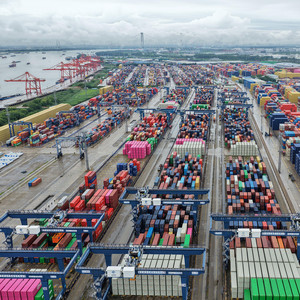
Now checking the day's top stories. China and the United States have agreed to extend their trade truce for another 90 days.
The two sides issued a joint statement hours before the truce was due to expire on Tuesday.
The statement follows the China-US economic and trade meeting in Stockholm last month.
It says China will continue to suspend its tariff hike for 90 days starting Tuesday while retaining a 10% duty.
It would also suspend or remove non-tariff countermeasures against the U.S.
On Monday, U.S. President Donald Trump signed an executive order to extend their tariff suspension on China for another 90 days.
The halt will be in place until November 10th.
Sun Yat has details. The statement had come just hours before the China-U.S. trade truce, the 90-day trade truce was set to expire on Tuesday.
And now it's 90 more days or another three months off the pause of the 24 percent tariff from the U.S. side and countermeasures on China.
The joint statement has come and has come in the spirit of the discussions of the Stockholm talks between China and U.S. in late July.
The joint statement also mentioned that China will be suspending or pausing measures, non-tariff measures against the U.S. side.
Chinese Ministry of Commerce said Of the 28 U.S. entities on the export management control list that have been prohibited from exporting dual use items ever since early this April, 16 of those entities will see those measures suspended for another 90 days.
And for the other 12 entities, they will see those measures stop.
Chinese Foreign Ministry spokesperson Lin Jian has said that China hope the U.S. can work with China to implement the important consensus reached between the two heads of states in their telephone call and give full play to the China-U.S. economic and trade consultation mechanism and strive for win-win outcomes that's based on equality and respect.
For more on the extension of the trade truce, Jiang Tao spoke with Professor Joseph Mahoney of East China Normal University.
What factors have contributed to the truce deal?
Well, first, you know, there are worries the U.S. economy is softening with concerning data on jobs and the likelihood we'll see price increases finally hitting consumers, given the fact that the current estimated effective tariff rate is just over 20%.
Consequently, it's likely that Trump needs to avoid escalations presently that might create economically and politically unbearable unemployment and inflation.
Additionally, it's likely he's waiting to see how U.S. courts will rule and whether he's exceeded his authority.
And it might be the case that he doesn't want to be forced to retreat from a pitch trade battle with China, essentially under court order if they indeed do rule against him. which would sacrifice both face and momentum.
Second, it might be the case that Trump underestimated China's willingness and capacity to resist economic coercion.
Beijing's ability to impose devastating export restrictions on rare earths and the simple fact that Chinese exporters are less exposed to the U.S. economy than before likely has contributed to Trump softening his aggression.
Third, Trump's in a precarious position geopolitically.
He needs more time to see how his upcoming talks with Russia about the conflict in Ukraine will play out, which in turn will have implications for his policies towards China and India.
He likely wants to see how India and China will move forward, given the meeting between Modi and Xi, and likewise India and Brazil, given reports that they're moving closer together. as well as the possibility of two separate trilateral agreements, one that experts are beginning to flirt with, the idea of a China-Russia-India trilateral agreement, and another one that has been gaining momentum, one between China, Japan, and South Korea.
Now, Trump might be near this dangerous tipping point where he's incentivized other major economies to seek better deals with each other to counteract his trade wars.
And he's probably hoping that holding back against China now will soften or might soften Beijing's potential resolve to move forward with a post-American global economic world order.
Looking ahead, how might this extension influence bilateral trade relations in the coming months?
Well, most optimistically, this extension is keeping alive the possibility we'll see a China-U.S. deal reach and possibly a Xi-Trump summit later this year. perhaps before Thanksgiving, to give U.S. consumers more confidence for Christmas spending, given the big role that that plays in the U.S. economy.
Now, in this scenario, we can imagine both China and the U.S. seeking a new normal, one that can accommodate each other without new risks leading to new trade wars, decoupling, or other forms of conflict.
More pessimistically, the extension gives both sides more time to prepare for a bigger showdown.
On the one hand, it might be the case that Trump's strategy is to reach terms with more countries before going head to head against China.
And it's just taken longer to accomplish those deals than he anticipated, especially given the initial recalcitrance from Japan and the EU.
On the other hand, it might be the case that Trump does want a deal with China, but his antagonisms, not only against China, but everyone else, have put too many factors in play.
He's not well liked or trusted around the world.
He presents himself as a constant risk, one that is also undermining U.S. companies.
And frankly, you know, we see a lot of fatigue.
People are tired of his threats and constantly having to respond to his provocations.
Now, this brings us to China as the world's second largest economy, as the major trading partner of most countries in the world, as the only country really able to stand up to the U.S., As the linchpin of BRICS and the leader of the Global South, as the major power of Asia, China will play an outsized role, ultimately, I think, in determining whether Trump's MAGA dreams, which are being driven by his trade war, are capable of reaching fruition.
That was Professor Joseph Mahoney from East China Normal University.
The U.S. has imposed an additional 25% tariff on Indian goods, citing New Delhi's continued purchase of Russian oil.
Now the total duty on American-bound Indian commodities stands at 50%. among the highest of any U.S. trading partner.
A large number of export orders have been put on hold, affecting many sectors in the South Asian nation.
Business operators say the tariffs will disrupt trade with America and the rest of the world.
The impact of the US raising tariffs on the metal products industry is huge.
Almost all orders from the US have been cancelled.
As a result, the work progress has also slowed down.
Now only these machines behind me are still producing orders for the US.
Other orders have been cancelled and the goods are piling up.
It is definitely a difficult situation for the Indian exporters.
They have already prepared the order in number of cases.
They have provided loans for the raw material purchases also and in many of the cases they book this space on container so in that situation industry will be definitely facing the problem but at the same time we are engaged with the government to find some way out for that America is trying to dominate in this trade war and they want to sell more and more products to the Indian markets but this also sends a clear message to the Indian exporters that please don't be dependent on a single market okay try to export your products to multiple countries Meantime, Brazil's initiated dispute consultations at the World Trade Organization over tariffs imposed by the U.S.
It says Washington's trade levies are inconsistent with various trade provisions.
Brazilian President Luiz Inácio Lula da Silva has been engaged in a public dispute with his U.S. counterpart, Donald Trump, since Washington imposed a 50% tariff on imports from Brazil.
Lula plans to speak with leaders of other BRICS countries to discuss a joint response to Trump's tariffs.
Coming up, social and economic achievements in the Shizhong region, also known as Tibet.
A 3,046-kilometer greenbelt now circles the Taklamakan Desert, a leafy wall standing between sand and sky.
Once barren lands are coming alive with trees, birds, and hope.
Each kilometer is a victory against erosion, dust storms, and desertification.
Nature bounces back when we give us a chance.
Plant a tree, grow a forest, stop a desert.
We're at 11 past the hour. It's time once again for our special series, Revisiting the Social and Economic Achievements in the Southwestern Chinese region of Shenzhen, also known as Tibet.
And today we meet a young broadcaster who's woven science and tradition into his radio shows for over a decade.
Together with his wife and co-host, they transform complex topics like photosynthesis into relatable stories, connecting with farmers, disabled listeners, and a changing homeland.
Liu Mohan has the story. Across the vast land of Xizang, there is a voice that has become a familiar companion, a voice that brings stories, knowledge, and warmth to its listeners.
That voice belongs to Pinto Loju. He's a Tibetan broadcaster here in the city of Lhasa.
Luo Zhu has been a radio host at Cizang Radio and Television Station for 12 years, his programs reaching every corner of the region.
One Sunday morning, as Luo Zhu's live broadcast filled the airwaves, listeners eagerly engaged with his content.
In Lhasa, where he shared how he embarked on his career path beginning as part of Xizang University's first cohort of Tibetan language broadcasting students.
When I was a kid, I really enjoyed Tibetan radio and TV programs.
I was fascinated by how much beautiful voices could come from a small box.
In 2009, I was fortunate to enroll in Shizan University's inaugural Tibetan broadcasting program.
There, I gained a lot of professional knowledge.
I was born and raised in Lhasa, and this land has undergone incredible changes.
It's so beautiful now. As an anchor working in the media field, I felt a duty to tell Shizan stories well.
Notably, Loju's wife, Nobu Doga, is also his colleague.
While many draw strict lines between work and personal life, the couple has found harmony, balancing their shared passion for broadcasting with a happy family life.
Being both colleagues and family simplifies things.
We are partners on air, so we don't need to stay late at the office.
We can discuss scripts or plan interviews on our way home.
After putting our child to bed, we often continue working together.
Like she said, we might debate over topics, but even on the way home, we'll keep refining ideas, like how to phrase things so our audience understands.
For our science program, terms like photosynthesis can be confusing, so we'll simplify the process by saying things like the sun feeds the crops, making it relatable.
That's how we connect with everyday listeners.
Once, a listener with a disability called during my show and said he listened every night.
It helped him sleep and learn new words.
Moments like that remind me how meaningful this work is.
For over a decade, Luo Zhu's programs have not just informed but also connected, turning radio waves into threads tying tradition and modernity.
That was Liu Mohan in Shizhong. Lucid waters and lush mountains are invaluable assets.
The signature Chinese slogans become a guiding principle for environmental protection across the nation.
Our high lake in the southwest is an outstanding case in point.
Chen Mengfei went there to explore how science and engineering have been helping to keep the waters clean.
China has over 20,000 lakes, big and small.
And Erhai in Yunnan province is among the most popular.
It's totally worth visiting. How clean and bright it is.
I feel so good here. Its beauty is a gift from nature.
But many people are working behind the scenes to keep it this way.
He's collecting a sample from the bottom layer of the water while I'm taking one from the surface.
They survey across the vast 250 square kilometer lake, conduct on-site analysis, and promptly share their findings with a group of stakeholders.
The head of the Environmental Protection Bureau is in this group chat.
A top concern is the amount of algae in the water, a major threat to lakes worldwide.
Too much of it can turn water toxic, something Erhai has fell victim to multiple times since the late 1990s.
To prevent outbreak from happening, chemicals like nitrogen and phosphorus, which are food for algae, need to be kept under control.
Around 2017, the average phosphorus concentration in Erhai was 29 micrograms per liter.
This year, it's 20. A 9-microgram drop may sound small, but it's actually very hard and rare to achieve, unless phosphorus will also mean noticeably less algae.
This progress is achieved by the biggest environmental campaign in local history, which began in 2017.
It came at a time when China was intensifying nationwide efforts to tackle water pollution with landmark initiatives like the Water Pollution Prevention and Control Action Plan and the River and Lake Chief System.
In Dali, a complete overhaul of the sewage system around the lake was commissioned to intercept pollution at its source.
This project's completion basically achieved full collection and treatment of wastewater from all the villages and towns around Earl High Lake.
New treatment plants like this one were built.
More than a hundred thousand septic tanks were installed in village homes and thousands of kilometers of pipes were laid.
Wastewater that once flowed into the lake is now cleaned and even after treatment it doesn't reach the lake.
Once treated, the wastewater is diverted for farmland irrigation when needed.
The remaining water is discharged through an outflow pipe into the existing shear river downstream of Arai, ensuring that not a single drop of sewage enters the lake.
This system's success depends on engineering mastery, scientific support, and the cooperation of every household.
The Dali prefecture proposed a 4 plus 1 approach to protect Earl High engineering, law, science, and community participation, plus a grid-based management system.
The lake is clean again, and it's given owners like Ellen the confidence to upgrade her business from a basic homestay to an upscale boutique hotel, with rates reaching up to 3,000 RMB or $400 per night.
Investing in an upscale guesthouse requires a significant commitment.
But with Earl High now well managed and the government's dedicated efforts, we have much more confidence moving forward.
Last year, this ancient town of less than 1 million residents welcomed some 70 million visitors.
The challenge of balancing development with environmental protection is far from over.
And this is where law-based governance plays a crucial role.
Earl High has its own protection regulations clearly outlining what is prohibited and what is allowed.
Our bureau strictly reviews everything according to these laws and regulations.
Lake restoration is notoriously difficult.
As Erhai's protectors continue the long fight by uniting science, business and government, they're learning from others and contributing their own experience.
Chen Mengfei reporting. The northern Chinese city of Tianjin will host the Shanghai Cooperation Organization Summit later this month.
Leaders from dozens of countries and international organizations will attend.
There's a cultural element too. Wang Siwen went to meet a young artist from Kazakhstan today. who's capturing hearts and minds in China, not just through her voice, but also with her passion for cultural connection.
Lucia is celebrated as a national treasure, one of Kazakhstan's most celebrated voices.
Singer 2024, Lucia is bridging borders and seeing her way into the hearts of Chinese audiences.
Every singer dreams of standing on the stage.
I was thrilled just to be invited. Here in China, she's building something new.
Abound with Chinese fans, a love for the language.
Chinese music is incredibly rich and I've learned a lot since coming here.
One big difference is the vocal placement.
It's not the same as what I learned before.
Compared to other techniques, The Chinese way of singing feels much more natural.
It's light, effortless, and doesn't strain the voice.
Since Singers 2024, her unique tone has made a lasting impression.
She told me she's taken part in culture exchange events across China, visiting cities like Tianjin, Chongqing, Chengdu, and Hong Kong.
Each one has its own charm. From Astana to Beijing, from the stage to the show, Lucia is using her voice to build something timeless.
My dream is to let my voice carry signs of friendship across the world.
I want people, no matter their background or language, to feel connected.
Music has no borders. In those moments were just people smiling and celebrating together.
Because music, she believes, knows no borders.
That was Wang Siwen reporting. Next up, we continue our special program on China's war of resistance against Japanese aggression.
In this episode, we go to the central city of Changsha in Hunan province, where Chinese forces halted the Japanese advance with grit, strategy, and sheer will.
Wu Yunlin spoke with veterans and experts to learn more.
They thought you will fall like the rest.
But when the Japanese invaders breached Changsha during World War II, they hit an iron wall and burned.
This is Tianxin Pavilion, once a frontline command post in the Changsha campaigns, where Chinese forces mounted fierce defenses from 1939 to 1944.
Across four major campaigns and five years of brutal conflict, this city became the cornerstone of China's resistance against Japanese invasion.
Changsha didn't just hold the line, it was the line.
China's war of resistance against Japanese aggression was a war of endurance and endurance is about time and space from coastal retreat to England resistance China was being pushed to its limit and the limit was here in century China.
China's war of resistance came at a time when the Chinese nation was fighting for its very survival.
Hunan, at that point, was right at the heart of the country, geographically central and strategically critical.
It was also the gateway to the entire southwest.
If Changsha fell, nothing would stop the Japanese from pushing deeper into China's hinterland.
So how did China hold the line with fewer tanks, fewer plants?
They fought smarter, not harder. Being in charge was General Xue Yue.
His secret? A strategy called the Tianlu Zhanfa, or the furnace tactic.
We lured the enemy in, then hit them step by step, section by section.
We deliberately stretched their supply lines, dragging the battle all the way to the outskirts of Changsha.
This area, the Changsha Basin, became a natural furnace.
Our troops, having pulled back to the Hunan-Hubei region, surrounded them from all directions.
It became a trap. Shui called it retreat to win, strike from the wings.
It looked passive, but it was devastating to the invaders.
Not just with terror, the Chinese army fought smarter, turning disadvantages to advantages.
Those planes would come sweeping in, and we'd just wait there, ready to fight the Japanese.
The Japanese forces deployed 322 heavy artillery pieces.
While we only had mortars at the time, a completely asymmetrical combat situation.
Just look at the way they came to fight, waves upon waves of troops like a swarm of ants.
We turned roads into fields, dug them up and flooded them.
The Japanese military vehicles got stuck.
They couldn't move. Slower than walking.
It was one of Japan's greatest defeats in open battle.
Tens of thousands of casualties. At a time when the world was losing ground to fascism, Changsha proved it could be stopped.
Not just with weapons, but with will, terrain and a strategy born from desperation.
My first battle against the Japanese was here in Changsha City and on Yuehlu Mountain.
We fought for nine days and nights. And in the end, they lost.
The complete victory in the Battle of Changsha not only boosted the confidence of the Chinese people to keep resisting, it also sent a powerful signal to the entire anti-fascist front around the world.
With the lives of a few generations, we lay the immortal foundation of a nation for millennia to come.
Today, Changsha still stands, proud and unyielding.
It reminds the world some cities cannot be conquered, some people will not be broken.
That was Wu Yunlin reporting. Coming up, the U.S. president declares a public safety emergency in Washington, D.C.
United in purpose during World War II, the Chinese military and people stood as one, fearlessly resisting Japanese fascism.
China's unwavering whole-nation effort forged the pivotal Eastern Front.
Through fierce battles, immense sacrifices, heroic endurance, and decisive support to the allies on the European and Pacific battlefields, China has helped secure liberation, the final victory, and the lasting legacy for global peace and human progress. resolve and resilience the main eastern battlefield of world war ii only on cgtn at 27 past the hour u.s president donald trump's declared a public safety emergency in washington dc jim spellman reports this is liberation day in dc and we're going to take our capital back.
U.S. President Donald Trump says the federal government is taking over the local police department in Washington, D.C., capital city of the United States.
Under the authorities vested in me as the president of the United States, I'm officially invoking Section 740 of the District of Columbia Home Rule Act.
You know what that is? And placing the D.C.
Metropolitan Police Department under direct Attorney General Pam Bondi will take command of the police department.
Washington, D.C. is not part of any state and the federal government has wide authority over local affairs.
But these actions go far beyond previous attempts to interfere in local D.C. issues.
Activists are vowing to push back. We will not stand here and allow authoritarianism in Washington, D.C.
We're going to be here, and we're not backing down.
Trump says the move is in response to surging crime, despite statistics showing crime in D.C. is falling after a COVID-era increase that peaked in 2023, though crime remains a problem, including youth-driven crime.
We experienced a crime spike post-COVID, but...
We work quickly to put laws in place and tactics that got violent offenders off our streets and gave our police officers more tools, which is why we have seen a huge decrease in crime because of those efforts.
In recent days, Trump says he has sent 500 federal officers, including FBI agents, to boost local police.
Soon, 800 National Guard troops will also be on the streets, similar to deployments in Los Angeles earlier this summer.
And Trump says active duty military may be deployed as well.
Trump is also vowing to remove homeless people from the streets of D.C.
We're going to help them as much as you can help, but they'll not be allowed to turn our capital into a wasteland. for the world to see.
Encampments were common across Washington DC during the COVID pandemic, but many have been removed over the last two years.
And President Trump says if other cities like New York, Chicago and Los Angeles don't bring down their crime rates, he could pursue similar actions in those places.
That was Jim Spellman reporting. Beijing down to 23 degrees Tuesday evening.
Thunder showers in 29 for Wednesday. Shijiazhuang and Hebei will see heavy rainfall in a low of 23 tonight, then cloudy conditions and a high of 31.
Zhengzhou and Fujian's down to 25, then torrential rainfall in 35.
Nanchang's 29 this evening, followed by cloudy conditions and 36 degrees Celsius.
It's time for a short break. So far this hour, China and the U.S. have agreed to extend their tariff truce for another 90 days.
Washington's hiked tariffs on India over New Delhi's purchases of Russian oil.
U.S. presidents declared a public safety emergency in the nation's capital.
Shane Bigham with you. Stay with us here on the Beijing Hour.
Listen up. Can you hear the heartbeat of our world?
It's vibrant and pulsating with the essence of life itself.
From the stem of trees to the gurgle of rivers.
From the silent strength of mountains to the icy whispers of glaciers.
Even the solid ground beneath our feet Right there, in the midst of all, beats the heart of humanity.
What if those other heartbeats were to stop?
Would ours keep on ticking? Ever wondered what's actually going on in Africa through the perspective of an African?
How are things really going between China and Africa?
What's the narrative of this relationship?
Well, get a perspective with China Africa Talk.
Hear from African diplomats, entrepreneurs, academics, Chinese natives and more.
Get on our wavelength every week to find out what's real with China Africa Talk.
Find us on your favorite podcast. We'll see you there.
Examining the events that impact and shape China and the rest of the world.
This is the Beijing Hour, one hour of news and information brought to you every weekday.
Now here's your host, Shane Begum, with you on this Tuesday.
Still to come, in business, checking in on the last day of the World Robot Conference in Beijing.
In sports, Chinese swimmers set a world record at the World Games.
In culture and entertainment, a new documentary on China's struggle for national survival is made its debut.
To contact us, you can email radio at cgtn.com or follow our X account at cgtnradio.
First of all, checking the day's headlines, here's Tianyu.
Thank you, Shane. Chinese President Xi Jinping has pledged to work with Brazil to set an example of unity and self-reliance among major countries in the global south and jointly build a more just world and a more sustainable planet.
In a phone call between the leaders of the two countries, President Xi told President Luis Inacio Lula da Silva that China supports Brazil and its people's efforts to defend national sovereignty and the country's legitimate rights and interests.
The Chinese president also called on global South countries to safeguard international fairness and justice.
He said China and Brazil should continue to address global challenges and promote the Friends of Peace Group's role in facilitating the political settlement of the Ukraine crisis.
China and the United States have agreed to extend their trade truce for another 90 days.
The two sides issued a joint statement hours before the trade truce was due to expire on Tuesday.
The statement follows the China-US economic and trade meeting in Stockholm last month.
It says China will continue to suspend its tariff hike for 90 days starting Tuesday while retaining a 10% duty.
It would also suspend or remove non-tariff countermeasures against the U.S.
On Monday, U.S. President Donald Trump signed an executive order to extend the tariff suspension on China for another 90 days.
The halt will be in place until November 10.
The Chinese Commerce Ministry says the country will continue to suspend a measure which added 11 U.S. firms to China's unreliable entity list for another 90 days starting Tuesday.
The measure was announced on April 4. China will also pause another measure announced on April 9 that added six U.S. firms to the unreliable entity list.
The announcement came following the release of a joint statement on a China-U.S. economic and trade meeting in Stockholm.
Heavy rains have lashed Chongqing in southwest China and the central province of Hubei.
Torrential rains in Chongqing have forced the evacuation of over 15,000 residents.
Water levels in many rivers across the municipality are expected to rise until Wednesday.
In neighboring Hubei, dozens of alerts for rainstorms remain in place, with red alerts issued for the cities of Wuhan, Xiantao and Honghu.
In southern China, Typhoon Podo is expected to make landfall in Taiwan on Wednesday.
It will make a second landing between the mainland provinces of Fujian and Guangzhou.
And finally, UN spokesperson Stefan Dujaric says the organization welcomes the joint declaration signed on Friday by the presidents of Azerbaijan, Armenia and the US.
The Secretary General applauded the commitment of President Aliyev and Prime Minister Pashinyan to sustain dialogue and confidence building and recognize the efforts of President Trump in facilitating this progress.
He reaffirmed the strong support of the United Nations for all efforts to advance While not a formal peace treaty, the agreement marks a major diplomatic step toward normalizing relations.
The two nations remain technically at war, and the deal does not settle the Nagorno-Karabakh dispute.
It follows Azerbaijan's 2023 military victory, which forced Armenian troops and ethnic Armenians from the region.
Thank you very much. That's Tianyu with Headlines.
Coming up in business, checking in on the final day of the World Robot Conference in Beijing.
80 years after the guns fell silent, echoes of China's fight against fascism still resonate.
What can a yellowed newspaper reveal about China's first end in World War II?
What does a blood-soaked vest tell us about a soldier's final battle?
And what does an old record sing about the power of unity on the Eastern Front?
The Unyielding East, China's World War II relics, brings you the forgotten objects and the unforgettable stories of a nation that stood its ground.
Discover China's role in the global fight against fascism and the people whose sacrifices helped secure final victory.
Listen to The Unyielding East, China's World War II relics, wherever you get your podcasts. at 36 past the hour.
Turning to business now, and here's Wang Zihang.
Thank you, Shane. Stock markets on the Chinese mainland closed higher on Tuesday.
The Shanghai composite was up 0.5%. The Shenzhen component also gained around 0.5%.
Telecommunication equipment and semiconductor shares led the gainers.
Elsewhere in China, the Hong Kong stock market also closed higher, with the Hang Seng index up nearly 0.3%.
Meantime, the Nikkei in Japan gained almost 1.2%.
Other Asia-Pacific markets also rose on Tuesday.
That is primarily driven by the extension of the tariff truce between China and the US.
Now, Tuesday is the final day of the 2025 World Robot Conference in Beijing.
One of the main events, the World Robot Contest brings together more than 10,000 competitors from across the world.
The contest highlights advanced applications across various robotics fields.
In the Young Robotics Design category, participants are tested for their technical knowledge, building skills and teamwork.
The competition aims to inspire creativity, drive technological innovation and nurture the next generation of talents.
For more on this front, Lily Lu spoke with Professor Gai Keke from Beijing Institute of Technology.
So let's start with this. In what fields are robots widely used today, and how should society manage the potential impact of robotics on employment?
We can say that robots have been used in many areas today, from small agriculture to manufacturing.
Well, considering the employment, I think on one hand, considering the stage of AI-enabled robot development, we still face a significant talent gap in high-end talent.
I think we need to strengthen our talent pool through higher education, continuous education, or other education manners.
Moreover, we are seeing that many jobs are being replaced by AI solutions, so that's a involves the redesign of jobs.
For example, in disaster relief scenarios, robots are helping to eliminate direct human involvement in many dangerous situations.
This doesn't mean humans are no longer involved in disaster relief.
Rather, the role shifts from being a physical operator to operating robots.
So this situation exists in many fields that are using robots such as healthcare and agriculture as a mission.
Therefore, I think redesigning jobs and enhanced training are key two aspects And also, what would be your assessment of China's robotics industry at the current status, including its key strengths and main challenges?
Well, according to available public sources, China is in the top tier globally in the field of robotics already.
China boasts advantages in test pools, industry and ecosystems, and some key technologies.
Regarding challenges, I believe that there are several areas.
Of course, we face technical challenges with humanoid survivors, including, for example, handling complex attacks and addressing security, privacy, and safety issues.
Well, we need to further explore robot service models to better transfer technology into productivity and services.
Corresponding industry standards or criteria need to be developed as well.
That was Professor Gai Keke on China's robotics industry.
Beijing's Economic Technological Development Area, also known as E-Town, has launched a marketplace exclusively for robots during the World Robot Conference.
The marketplace can help transform machines from lab prototypes to consumer products.
Liu Jiaxin finds out what's in there. In Beijing's E-Town, there's a shopping mall dedicated entirely on robots.
More than 100 kinds robot has a clear price tag.
Even among humanoid robots alone, the price gaps are staggering.
Two humanoid robots can carry price tags differing by tenfold.
The manager noted that supply chain maturity and robotic functionality are critical factors behind pricing.
Most robots currently serve specialized functions.
Their capabilities vary significantly across different contexts like industrial settings, medical applications, and daily companionship.
This functional divergence directly impacts production costs.
I wonder well factory owners actually spend 2 million RMB or like less than 300,000 US dollars on the logistics bot and a transport droid.
For B2B clients, the majority procure industrial or task-specific robots.
Yitang currently offers sales subsidies for these professional-grade machines.
On the consumer side, chess-playing and companion robots dominate the on-site sales.
Total revenue has reached nearly 15 million RMB or 2 million US dollars.
Are you really willing to purchase one like this or one like that?
Yes, yes. We will have a big demand in the future because it's a new area of new direction in the whole world, like cars.
A physical space makes robots visible and tangible, not just for interactive demos, but for side-by-side comparisons that simplify purchasing decisions.
And finally, people can say, there's a place to buy robots.
That was Leo Jiaxin reporting. Private and foreign-invested enterprises saw steady expansion in China in the first half of the year, with nearly 13.3 million new business entities nationwide.
This indicates improving market expectations and the country's appeal as a global investment hub.
According to the State Administration for Market Regulation, the six months saw around 4.4 million new private enterprises, up 4.6%.
Newly registered foreign-funded companies totaled about 33,000, a rise of 4%.
Meanwhile, the country's industrial structure continued to improve.
The number of enterprises in new technologies, new industries and new business forms increased 6.6% to over 25 million by the end of June, accounting for 40% of all companies nationwide.
Newly registered enterprises in culture, sport and entertainment surged nearly 18% in the first half.
The administration says it will push for building a unified national market, safeguarding fair competition and further streamlining government services for enterprises to boost the vitality of all market players.
Tech stocks are soaring on Chinese mainland stock exchanges, with over 260 A shares having doubled in price so far this year.
Experts have shared their insights on the factors driving this strong momentum.
Chief economist Liu Zhe with Dongwu Securities says stocks in industrial robots and semiconductors have become new growth drivers.
Liu also says top performers, like those in the humanoid robot supply chain, have surged over a whopping 380% year-to-date, filled by policy support and tech breakthroughs.
The Economist added that rising demand for AI computing power and semiconductors has pushed some stocks up more than 500%.
Professor Tianli Hui with Nangai University says these stocks typically share two key traits, namely high growth potential and small to mid-market caps.
The professor also says since the IPO reforms on the Beijing Stock Exchange and Shenzhen's Chinex, small cap firms have seen better financing and trading conditions.
China's e-commerce logistics index edged up 0.2 points in July compared to the previous month.
According to the China Federation of Logistics and Purchasing, the index stood at 112 points, hitting a record high for the year.
The federation says with a rebound in business volume, the actual load rate index for e-commerce is also rising, accompanied by a decline in logistics costs.
The sub-index for total business volume increased slightly on a monthly basis to 130.9, reflecting growing demand in the market driven by more diverse consumption scenarios.
The inventory turnover index also showed a monthly rebound as companies scaled back on e-commerce promotions and lowered their inventory levels.
The e-commerce logistics index is based on data from JD.com, a major online retailer in China.
The baseline index starts at 100 points.
Large-scale harvesting of farmed blue crabs is now underway in Qingdao, one of the major marine aquaculture centres in East China.
In Dingzi Bay, farmers begin working at 4am, hauling in nets, sorting crabs and packing them for shipment.
Liu Jun is one of them. For each trip, we work for about four hours, hauling in around 200 to 250 kilograms.
We catch the male crabs first. We catch female crabs after the mid-autumn festival, with their crab cream fully developed.
The inflow of freshwater from rivers lower salinity in the bay, creating a favorable environment for blue crabs.
Buyers are also standing by during the harvesting season.
Farmers ship nearly 10 metric tons of crabs nationwide from just one farming zone each day.
Thank you very much. That was Wang Zihong with Business.
Coming up in sports, Chinese swimmers set a world record at the World Games.
Sideline Story brings you all things sports related.
The hottest topics, latest events, juiciest stories, all with a very personal take.
Subscribe to Sideline Story podcast for heated sports discussions covering events that are happening in China and around the world.
47 past the hour. With sports now, here's Yang Guang.
Thank you, Shane. We begin with World Games in Chengdu, where host China stormed to gold in the women's thin-swimming surface relay 4x50m in a new world record.
The Chinese team secured the gold medal in a time of 1 minute 7.99 seconds, surpassing their own world record set at the Birmingham World Games in 2022.
The win on Monday followed their thrilling comeback victory in the women's surface relay fall by 100 meters on Sunday.
Chinese para-athletes also claimed titles in three dive-in at the World Games.
Also on Monday, the United States edged the Czech Republic 4-3 in overtime to claim the in-line hockey gold medal, the first roller sports title awarded at the Chengdu World Games.
Earlier in the day, Namibia defeated France 3-2 to secure the bronze medal.
China finished 8th after completing its five in-line hockey matches.
Originating in the United States, in-line hockey has been part of the World Games since 1981.
In women's lacrosse, the USA beat defending champions Canada 16-8 in the final to win the gold medal.
Australia edged Japan 13-12 in the third-place game to bring home the bronze medal.
Lacrosse will be included in the 2028 Los Angeles Olympics as a medal sport for the first time since 1908.
The Chengdu World Games features multiple gymnastics events such as trampoline, acrobatics, aerobics and parkour.
International Gymnastics Federation President Morinari Watanabe visited host city and said he was impressed by China's staging of the Games. perfect organization and also gymnastics will organize the world championship 2027 in chandu so that we cannot wait tomorrow we can organize he also said he believes the friendship is the focus of the event you know is a olympic sports is a more compete is fighting each other but this world game is important more friendship And the young athlete is making for the friendship.
This is good, you know. It's a different style from the Olympic Games.
At the World Games, China captured women's group title in acrobatic gymnastics and gold medal in women's trampoline synchronized event.
Chengdu will host the 2027 Artistic Gymnastics World Championships.
The Spanish La Liga is closer to playing a regular season game in the United States.
The Spanish Football Federation has approved a request for the match between Villarreal and Barcelona in Miami on December 20.
The federation will now seek approval from governing bodies UEFA and FIFA.
The match would be played at Hard Rock Stadium.
Staging a match abroad has been part of the league's goal of promoting football in other countries.
Staying in football, the Court of Arbitration for Sport has rejected Crystal Palace's approval appeal over their demotion from the Europa League to the UEFA Conference League.
The London club, who won last season's FA Cup, fell foul of UEFA's rules governing multi-club ownership.
European Football's governing body determined that as of March, the first American businessman, John Texter, had control or influence in Palace and French club Lyon.
It means under UEFA rules, they are unable to compete in the same European competition and Lyon held on to the Europa League spot by virtue of their higher league position.
Nottingham Forest, who finished seventh in the Premier League, are set to replace Palace in the second-tier Europa League.
Brazilian Serie A club Botafogo has completed the signing of former Barcelona goalkeeper Neto on a free transfer.
The 36-year-old agreed to a two-year deal after parting ways with Bournemouth by mutual consent.
Neto made 63 appearances across all competitions for Bournemouth following his 2022 move from Barcelona.
He spent last season on loan at Arsenal, where he played just one match.
Natal will follow in the footsteps of his father who played with Real de Janeiro club in the early 1980s.
And finally, Dubai has launched a month-long fitness initiative designed to promote healthy living and active lifestyles.
The city has converted familiar commercial spaces into indoor running paths every day of August.
Nine of Dubai's malls are opening their doors early at 7am to welcome walkers and runners, offering a cool alternative to outdoor exercise during the peak of summer heat.
You know, oftentimes I want to go out for a run in the evenings and it's really bad.
So I often stick to treadmills and stuff.
And then, you know, an initiative like this inside the mall, it's wonderful.
Running is true, but outside is too much hot.
That's why they arranged here in Mirdeep City Centre.
It's like awesome. We are feeling good. It's my first time in the running competition, like a marathon.
On weekdays, it's a casual go-at-your-own-pace vibe, but come Saturdays and Sundays, the marathon kicks into high gear with four more races. complete with medals, prizes and bragging rights for top finishers.
Dubai's inaugural marathon coincides with the summer of record-breaking heat, giving residents a reason to lace up their sneakers without having to brave the scorching sun.
Thank you very much. That was Yang Guang with sports.
Just ahead in culture and entertainment, a new documentary on China's struggle for national survival has made its debut.
From north to south, east to west, people in China are chasing their dreams and leaving their mark.
Want to know how they beat the odds and made a difference?
Footprints brings you the true life stories of their journeys.
54 past the hour. Turning to culture and entertainment now.
Mountains and rivers bearing witness. A new documentary portraying the 14-year struggle of the Chinese people's war of resistance against Japanese aggression has held its global premiere in Beijing.
Chairman Bai Yimeng of Huaxia Film Distribution said the filmmakers delved deep into a vast collection of rare images and historical data in making the documentary.
They also employed an expert advisory panel to verify the data and images.
The production team also used cutting-edge digital restoration techniques and artistic recreation to craft a 20,000-word script and a 104-minute narrative offering a panoramic historical overview.
Mountains and Rivers Bearing Witness is set for nationwide release in China on August 15th, the date when Japan announced its unconditional surrender in 1945, effectively ending World War II.
Cinemas across China have extended screenings of Dead to Rights to September 24th.
The Chinese film depicts the Nanjing Massacre, perpetrated by Japanese troops in China during World War II.
Ticket sales have surpassed 2.2 billion yuan or more than 300 million US dollars during the film's summer box office run.
It tells the story of a group of Chinese civilians who sought refuge in a photography studio during the brutal occupation of Nanjing by Japanese invaders and how they risked their lives to send photographic evidence of the massacre to the outside world.
The film has topped box office charts in China since its debut on July 25th.
Dead to Rights premiered in the U.S. last week, ahead of the film's wider international release coming up on August 15th.
The National Library of China has opened a public exhibition showcasing rare documents and historical materials from the Chinese People's War of Aggression Against Japanese Aggression.
The publications on display are the result of a project launched by the National Library in 2012 for the preservation of historical archives from the revolutionary period.
Shanghai Museum's gate is open for 168 hours straight from Monday to Sunday during the final week of its grand exhibition on top of the pyramid, the civilization of ancient Egypt.
Museums introduced half-price tickets for late-night visitors during the final week and some visitors have welcomed the idea.
I think the all-night session is pretty exciting.
With the limit of 3,000 people, I figured it might be less crowded.
I'll probably head home once the metro starts service.
I think this exhibition is not an end. Rather, it is more of a beginning.
Such an exhibition will surely bring more high-quality international exhibitions and cultural relics to Shanghai.
The total number of visitors to the exhibitions exceeded 2.6 million since it opened in July of last year.
This has set a new record for the highest number of visitors to a single paid special exhibition of cultural relics in museums worldwide.
The exhibition is the largest of its kind held outside Egypt over the past 20 years.
We're at 57 minutes past the hour. Beijing down to 23 this evening.
Wednesday has thundershowers in 29. I'm sure Jia Zhuang and Hebei will see heavy rainfall overnight, a low of 23, then cloudy conditions in 31.
Zhengzhou in Fujian province is down to 25.
That's followed by torrential rainfall in 35.
Nanchang's at 29 this evening, followed by some clouds in 36.
And elsewhere in Asia, Islamabad's 26 overnight, a slight rainfall in 32 on Wednesday.
And that's it for this edition of the Beijing Hour.
Making news today, China and the U.S. have agreed to extend their tariff truce for another 90 days.
And Washington's hiked tariffs on India over New Delhi's purchases of Russian oil.
On behalf of the staff, this is Shane Biggum in the Chinese capital, hoping you'll join us for the next edition of the Beijing Hour and open a window to the world together.
Find The Beijing Hour at precisely 6 p.m.
Beijing time. We meet you on podcast and on air every weekday.
The Beijing Hour, your window on China and the rest of the world.
He can't live without the Yellow River in his eyes.
The Yellow River is so noble and elegant.
Both my grandpa and dad made a living from the river.
Would you like to move away from the Yellow River?
I don't think I will. I love it so much.
The Yellow River, the second longest river in China, is regarded as a shaping force in the history, economy and culture of northern China.
Today, about 100 million people live within its water basin, making up nearly 9% of the country's population.
How is climate change felt at its headwaters?
And what are the locals doing to cope with it?
What are the descendants of the boatmen doing?
What has kept some people from leaving their home village by the river?
And what has drawn others back? Could the fading fishing community revive in a time of digital transformation?
From 2021 to 2024, our reporters visited the upper, middle, and lower reaches of the Yellow River, talked to the herders, farmers, boatmen, fishermen, and eco-activists who share a close bond with the river, and present their stories in pictures, podcasts, and videos, all in our 12-part series, The Yellow River Mosaic, available only on CGTN Radio.