That particular narrative is a little bit building the lily, shall we say.
First sign that I would look for?
The Chinese would agree that financial products could be sold in China.
And licensing requirements will be eased or eliminated.
Fair competition is also a kind of areas we want to require the US government to give to China's stakeholders.
The two largest economies in the world will have a template agreement that can be used for other countries.
Maybe the consensus is just a start but it's a reflection about the forces of the market and also the combination of different resources.
That's just going to be just another chapter of the unfolding world of globalisation that we live in and we'll just have to wait and see.
The chat lounge. Chat lounge.
Chat lounge. The Chat Lounge unpacks views and opinions on hot issues in a more casual way.
Welcome to the Chat Lounge, I'm Tiyun.
With me today to decode what may come after the China -US temporary tariff deal, Dr. Zheomi, the Deputy Director of the Institute of American and Oceania Study, Chinese Academy of International Trade and Economic Cooperation, Dr. Warwick Powell, Adjunct Professor at Queensland University of Technology in Australia, and William Li, the Chief Economist with the US based Milken Institute.
Thank you all for coming back to the chat.
A warm welcome to you all.
So let me begin with something I saw recently.
I came across a short video about 2 weeks ago.
In it a Chinese trader, even before the tariff talks began, said his American client had I asked him not to worry and to keep shipping goods because the American importer was very confident that President Trump would cancel the tariffs.
At that time tensions were still high.
But within about two weeks the American merchants prediction came true.
I was pretty amazed by how accurate the prediction was.
So shall we start with William, did you expect this coming?
Were you surprised by this U -turn?
What I'm very surprised by is the reaction by most of the world that tariffs are going to be a permanent fixture and it will replay the 1920s and throw the world into a Great Depression.
Those kind of predictions, I think economists earned their name about being practitioners of the dismal science.
If you listen to President Trump at all during his election campaign, you know that the purpose of tariffs, at least the way he envisions it, is to really incentivize people to come to the table and discuss trade relationships.
because there's a growing recognition, I think that acknowledgement, that the WTO rules based system that was set up by the United States, actually after World War Two, is no longer adequate for the 21st century trade requirements of growing middle class countries like in the middle East, in Brazil, in Latin America, China becoming such a massive force in the economy.
We need different types of rules, different types of trade agreements.
And tariffs were one way to incentivize serious discussion that we need to have new trade agreements.
And I think that's what President Trump was aiming for.
And I think the fact that things reversed was all a function of how willing countries were to come to the bargaining table and discuss.
But the purpose of all this is to bargain.
Now, there is going to be a permanent fixture of a 10 % tariff across the board for everyone who wants to import into United States, that's, I think President Trump is trying to say to people, look, the U .S. is a very valuable marketplace for most countries, and we're going to ask an emissions price to sell in the United States.
But his speech during Davos, the very first speech after he got elected, was come partner with the United States.
Come invest in the United States, produce here.
You have benefits of low taxes, fewer regulations, small government to release a lot of resources to make available to the private sector.
And you have a protected barrier of tariffs around the country so that you'll be protected by unfair competition.
So that's a package that he got elected on.
And I think the fact that he actually said, or did what he said, UK, Japan, South Korea, they all said, OK, let's talk.
And that was their research. I think China was one of the first countries to say, hey, I'm not going to get pushed around by the United States.
So you throw a tariff on me, I'm going to throw one back on you.
And then Trump said okay here's my retaliation and so things came to a standstill.
But I think that was in many ways in my interpretation, those gestures were for the domestic audiences.
But the purpose of the tariffs as I said before was to get negotiations going.
And what surprised me was how quickly both the United States and China said okay let's start talking.
Instead of waiting a month or so, which I thought would have taken that much to get professional egos in line and domestic audiences appeas, that leaders are doing the right thing.
They went to Switzerland and really had very productive conversations that almost said, hey, we were here four years ago and we came to an agreement.
So let's use that agreement as a basis for future discussions, future agreements.
And I think that's a very good sign.
Yeah, thanks for taking us back through this dramatic period.
It's less than two months actually, right?
About a hundred days.
We were talking about after the declaration of the tariff war, basically to the rest of the world.
But obviously it began earlier than that.
Then Dr Powell, from an Australian perspective were you surprised?
Well, I want to touch on a couple of points that William touched on.
I actually think that that particular narrative is a little bit Gooding the lily, shall we say.
All right. And in large part, it wasn't just to bring people to the table to have a new conversation about trade arrangements.
As William himself said, the entire proposition was to say to people, come and invest in the United States so that you didn't have tariffs.
That is actually core to the restructuring arrangements that underpins the rationale here.
I'm not questioning the legitimacy of the objective of re -industrialising the United States and tariffs plays a central part in that entire economic strategy.
That's why people think tariffs are going to be a permanent feature because the president has made it clear that they are part and parcel of an economic strategy that aims to change relative pricing to incentivise the relocation of capital back onto the United States mainland.
So that's the first point I want to make and whether or not it's the right strategy to achieve those outcomes is is a different point.
So I think that it's a little bit generous an interpretation shall we say.
The other thing is is that the tariffs were introduced or this particular set of tariffs was introduced on the 2nd of April it took until the 10th of May for the discussions to happen so that was a six -week period actually so in some ways you know it took a little bit of time for the parties to come together and in fact we saw for a substantial part of that period during the escalations and then when it reached a point where the relative price adjustments became meaningless in terms of the marginal impact you know and that happens after 60 % or thereabouts anyway no trade stops but what we saw
actually was this sort of political dance where there was the implied message that somehow China had made the first phone calls.
China's position has always been clear we're happy to talk we're always open to talks but we're not going to talk to you if you think that bullying us with this sort of stuff is going to help have a constructive discussion and the condition for having a constructive discussion was actually the removal of the tariffs that were imposed on from the second of April.
And that's exactly what's happened now.
We actually know that the United States side, made great efforts to reach out to China.
And I have no doubt that was because the president and his advisors began to be concerned about the reactions of both the bond markets, as well as major retailers and people who ran ports, all of whom were starting to say, we're going to have some challenges in terms of availability of products and we're going to run some significant risks, possibly only short term in relation to inflation.
None of this was anticipated when the terrorists were first imposed.
They were ill considered, because they were largely ideologically driven.
But here we are, the issue now is not what's happened in the last six weeks, the issue is whether 90 days is going to deliver anything substantially meaningful.
Indeed. I will explore more about that later on, but Dr Joe, whose side or whose story do you actually tell?
Yes, I think that both of the stories are good.
I think it's just from a different aspect to observe one's affairs because anything, especially these important agreements or how to say, it's a declaration that cannot be only fulfilled from just one reason.
So I would say that the forces of the market and also the political billionaires are the factors that came to the the results.
Personally, I'm also another kind of observer, I just observed from a certain angle, and I will say that for the enterprises, they really need the markets of both sides.
And China's exporters are really taking care of United States markets.
We take it a very important market for us to deal with, we want to export to the United States market.
Although, maybe we will not have so many profits, but I think that has become one of the habits for many Chinese exporters who look at US conception markets.
Well, for US sides, they really enjoyed a lot of welfare from importing from China.
Maybe they can choose some of the imports from other countries, but have to wait a little bit longer term or the quality can show and also the logistics problems really are some of the factors.
So in my understandings, the United States and the pressure, China is in pressures and we have the willingness to try to find some solutions, not just a sit down and wait for everything to becoming worse enough not to recover it from the normal status.
So this is a really important time just in such a short term that we have reached some consensus.
Maybe the consensus is just a start, but it's a reflection about the forces of the market and also the combination of different resources.
But in my understanding, it is still very challenging, because you must have started negotiation with so many trade partners.
How could they locate the resources, especially when the US is under such an opposition to reduce the officials from the government by eating mask in the efficiency department.
So it's really challenging for them to deal with different countries, and I believe this is also the reason why they want to give some results trying to show the world that we can do something in such a understand your stance, but some say the US UK deal was actually meant to set an example for others.
So is Washington's approach with Beijing a carbon copy, if you will, of what we saw with London?
Let's face it, the arrangements with the UK covered actually a relatively small amount of things and certainly not what you described as a comprehensive trade agreement.
The categories of goods have dealt with was relatively small and the big signature item that you see the headlines on, which was improved American beef access to the UK market, we're talking about 13 ,000 tons, when the American industry is in the order of about 60 million tons, you know?
So these things are just drops in the ocean.
These are for political marketing effect.
They're not substantive economic policy arrangements at all.
And we've got these half baked and largely relatively small bilateral arrangements.
We've got one. I mean, the Japanese asked the American counterparts, what it is that the Americans wanted, and the Americans simply looked at them and said, well, what do you offer?
And those discussions have stalled.
So, this has shown that an attempt to rewrite multilateral trade through a new framework of bilateral agreements is simply not as easy to accomplish when in fact, countries around the world have been incentivized to enter into coordination actions in parallel to being open to discussions.
There's no downside in being open to discussions, but they're certainly not going to roll over, particularly when they have other options.
So the fact that they have diversified options means that it's not as easy to impose one's will, as perhaps was the case 30 years ago.
Eventually, yes, we've already had this deal or consensus between the two sides.
So let's break down the joint statement and tariff reductions and see what we've already got.
The joint statement is packed actually with a lot of numbers and many find it a bit confusing.
So, probably, Dr. Zhou, can you explain what tariffs remain on exports from both sides for us after this latest round of reductions from the Chinese side?
Okay, so we're talking about the tariffs.
I think the tariff is a very complicated issue because for different products they are facing different tariff rates.
Well, generally speaking, I would say that the tariffs between China and the United States are still included in several parts.
The first one is the most favoured nation tariff, which is a tariff that both sides have committed when we joined or created WTO as a first time.
And in the previous decades, China has fulfilled our commitments.
We have lowered our tariff dramatically to about 9 .5 % in the year of 2012.
Gradually, we still are furthermore to reduce our tariffs.
And these tariffs are before Donald Trump came into the White House for the first time, it was about 5 percent to United States and to all the other countries and to trade members of WTO.
Well, United States have about 3 .5 percent to us during that time.
This is the first part that is basic and the essential part.
And after Donald Trump came into the office, he put so many new tariffs on the import from China and the biggest one is a 301 tariff.
So in my understanding, according to some of the estimates from the PIIE from United States, the Sink Tank.
And when Donald Trump succeeded by Biden, it was about 22 % about the imports from China.
So together there are 25 % before, you know, Donald Trump came into the White House for the second term.
And after he came to the White House, he ended several new tariffs on the input from China.
The first and most important is so -called fentanyl tariff, it's about 20 percent.
And then he came to so -called elaboration date and the reciprocal tariffs on all the trade partners and now it has been suspended for about 10 percent.
So if we cut these tariffs together, it is about 20, 22 percent of the tariffs, including the 301, 232, 201, a lot of other tariffs on the import from China before he came to the White House this time.
And the new tariffs are the Fintano tariffs and some of the tariffs on the imports in the term of 232, The steel and aluminum, the autos, and also some other specific products and another 10 % of the so -called reciprocal tariffs that have been suspended.
So, it is still, I think it's about almost 80%, it's not a small one.
So, if you're only looking at reciprocal tariff, it is only 10%.
But we have to understand that all the other tariffs should be calculated if the exporter of China wants to export to United States, they are still very complicated and, I mean, it's going at a very high level.
To you and Professor Zhou, the great deal of explaining the very specific complicated structure, but I think an easy way to understand it is to say, we now are talking about 30 % tariffs due to fentanyl.
And that's a separate discussion that the Chinese have agreed to have with the United States because there's some part has been made in reducing the fentanyl flow, and precursors into the United States.
Is it just on fentanyl related items or generally a wide range of - Yeah, the fentanyl level of tariffs is really to focus more action to be done on stemming the tide of fentanyl.
And that's the 30 % tariffs that Professor Zhou mentioned.
Other than that, it's baseline 10 % tariff.
And that's just 10 % left. That's all there is.
there's some specific tariffs on strategic products but those are very minor compared to the overall input of goods from China.
So I think the discussion I think that both sides, the Chinese and Americans have agreed that the place for discussion is for opening up markets.
Tariffs are not the issue.
The reduction of tariffs have been very good on the WTO.
One of the few accomplishments is reduced levels of tariffs, but the level of non -tariff barriers, the health standards and quality standards and legal requirements that companies face to sell into the Chinese market, have been extraordinary.
So that's the main area in discussion.
Financial Services are prevented from being sold in China without all sorts of licensing requirements and co -ventures and joint ventures.
It's a gradual opening process.
William you're saying that President Trump used this tariff barrier to press for the opening of the so -called non -tariff barriers.
That's right. That's right.
That's the high tariffs we put in place so that we can get serious about discussing how to open up markets to both sides.
And that's really the purpose of discussion, because again, it's to incentivize neutral investment in both sides.
And that's really one way of substituting for trade is to allow factors, whether it's labor or capital or both, to move across borders.
And that's the level of discussion, I think, that both the Trump administration and the Chinese are wanting to have. Because that was supposed to be in phase two of the first framework.
We never got to that.
I think that that's also what Beijing is preparing to do actually even before the tariffs were imposed.
So, Dr. Powell, you were about to say anything there.
I think William's effort to clarify is productive, because it is actually not that complicated.
There was Trump 1 .0 tariffs, and some continuation of some schemes and extension of schemes during Biden.
Then there was the additional measures when Trump 2 .0 came into office.
And then there was the liberation day measures and the subsequent escalation.
So, what's happened is that we've gone back to everything.
including the status quo ante as of Liberation Day, with the 10 % reciprocal tariff so -called in place.
And, of course, the 20 % which was imposed ostensibly as a result of a national emergency concerning fentanyl.
So that's where we're at.
And in fact, that was precisely what the Chinese side had said from day one, which is if you want to talk about this stuff, we oppose the unilateral and capricious application of these tariffs.
this is not the way that you engage in conversations with other parties, bullying people through these sorts of approaches is not the way to go.
And if we wanna talk and we're happy to talk, you're gonna move them.
And they arrived at an agreement to do that because clearly being able to talk to each other is a more constructive approach than not creating the conditions in which you can talk.
So that's where they've gotten to.
The real questions I think are the big questions and some of the others have touched on those.
These aren't really about trade issues, they're actually about production issues.
In fact almost all of president Trump's concerns really go to where activities take place.
The fact is that over the course of the last 25 years American companies have had significant opportunities to access the Chinese market.
They make over a trillion dollars a year out of China and of course that's not recorded in trade flow data, but it does get recorded in FDI flows and repatriated profits.
All of this discussion is actually about where production happens.
they're not really about trade.
Trade is a symptom of the changing patterns of locations of productive activity around the world over the course of the last 40 to 50 years.
The challenges that North America faces today is a consequence of 50 to 60 years of progressive hollowing out of manufacturing an attempt to tackle those through trade policies I think is personally quite misguided.
There's a lot of other things that need to be done to head down the pathway of the ambitions of rejuvenating American manufacturing, but you know it is where we're at and and what we've got to be thinking about now is what are the issues and what are the possible pathways forward over the course of 90 days that can actually meaningfully deliver win -win outcomes.
Because, at the end of the day, nobody has an interest in impoverishing anyone else.
China has no interest in impoverishing America and President Trump himself has said that he has no interest in hurting China.
And if we take those views at face value then it is incumbent now upon the parties involved to think creatively and to be able to speak candidly about what their concerns are and what their aspirations are.
And see whether or not there are ways in which win -win solutions can be devised whereby the people of both countries will be able to enjoy improved living standards.
Indeed, actually, well explore what kind of further discussion will be maybe after we talk about some immediate, you know, result we've already got from this.
What are the immediate effects of the of the deal on exporters or importers and consumers in both countries would you say?
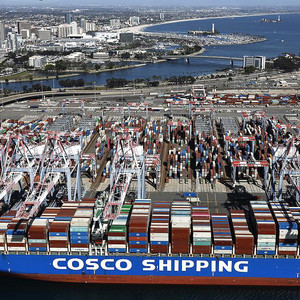
We've gone back to trade as normal for the next 90 days and so all the stuff in the shipping lanes that's about to enter the ports will enter the ports again and not be diverted to other markets.
The Chinese exporters will hopefully get the profit margins that they had counted on.
American consumers to get the lower price way they want.
So I think the immediate effect is that business as usual and the fear mongers have been raising about recession and inflation and things like that will not come to pass.
The latest CPI numbers in the United States show that there's been no goods priced inflation.
Another source of inflation in the United States right now are domestic services, which are not related to these tariff situations at all.
Maybe it's because of the stocking they've already had stockpiles, right?
First of all, there was an enormous amount of stockpiling that took place, a lot of imports took place in the first quarter in anticipation of some kind of stall or cut off trade.
So in fact, all that stockpiling means now that there's a lot of inventory that people have to now sell, so we might actually see some lower prices on Chinese goods going forward. We already see that in so many of the Chinese grocery stores here in Los Angeles and in Nevada.
I think the things that we need to look for are progress about opening up markets and And I think the first sign that I would look for is that the Chinese would agree that financial products could be sold in China and licensing requirements will be eased or eliminated.
And Citibank and other American banks that are already there can sell a wider range of financial products to the companies and retail, which is what the China really needs because China needs to diversify household portfolios in a way that allows them to save money in something other than property or our issues.
And address issues like intellectual property rights and protection that were not addressed in phase one.
These, I think are the first elements that are part of the discussion over the next 90 days that we have to make some progress in.
And fentanyl also is an important one.
Once you have a serious discussion about how fentanyl can be restricted into Mexico and into the United States, indirectly and directly, immediately you get a 30 % reduction in tariffs because those things go away, right?
So that leaves just the remaining 10 % tariffs, which will be there for everyone.
So I think the progress can be made very rapidly and solidified very rapidly once we see a marketing opening that is credible.
Yeah, I believe Washington will bring those issues up in the next 90 days.
But there are also some different opinions on the Chinese side.
I think the Chinese want the same thing because I think the Chinese have been wanting to have expanded financial services in China.
And many of the Chinese – Yeah, but it's at its own pace, right?
It's not like – Dr. Powell just said, it's not like a force by anyone else.
But Dr. Zhou, what does Beijing intend to discuss over the next 90 days?
So what does Beijing want to achieve?
Okay, so I'm not in Beijing now.
I'm now in France. Yeah I'm in China.
Wouldn't say Beijing.
Personally, I would say that China want to have a stable environment for the enterprises.
I agree with Widen that China is not only trying to just to return to the previous status and opening up is always our intention when we are trying to interact with international communities, especially with the United States because the United States companies really are you know having some good ideas and the innovative ways of providing services, products and also create a lot of innovative ideas of doing business.
Financial area is one of the very important areas, as you can find from some of the statements of Chinese government, that we want to do more to open our market and financial sectors, the healthcare related sectors and other sectors.
So if it is possible for both sides to reach some agreement to open the market and trying to safeguard the development of the economy by involving more resources to China.
I don't think it's a bad idea.
And for the agreements, I would say that, as I mentioned, the first target is trying to stabilize international trade systems and also trying to give more confidence to the related stakeholders, including our partners, our other trade partners, except for the United States.
I would say the rules are real important for us to keep our promises in the multilateral system of WTO.
Maybe many people don't think that WTO is still very important, but in my understanding, if you are going to do business continuously and sustainably, we have to return to the normal track of most failed donations, treatment to other countries, and trade partners.
You would think that it's only possible to just try to decide the principles by your own idea.
I don't think it will be effective.
So, my understanding is that for the tariff, maybe it's not that easy to return to the past. But we should treat every country and trade partners equally.
And for the second target, I think it's also to reduce more barriers to stop United States companies to export to China.
If Donald Trump wants to take it very serious about the deficit issues, we should try to encourage experts, instead of just saying that we have deficits.
Many of the experts on the trade issues are to do with some so -called high -tech enterprises or products, like we can find there are more restrictions on the export of Nevada to China.
I mean, that is really a big advantage of the United States.
If you don't want to export to us, how can we rebalance the trade between us?
So, we are seeing there are also a lot of restrictions on investment, even on the listing of the tech companies in the US market.
How could people get to know each other better without enough interactions, just to discuss about opportunities, just to make use or advantages of one's own advantage.
I don't think that will be possible.
The mutual respect and also the two ways opening up is what we expect.
It is also what we have been doing in the previous years.
We want to give the stakeholders more fair treatment, like some U .S. companies argue that Chinese market is not open enough.
Okay, you can propose what kind of areas we can improve, and I believe that is what we want to hear from enterprises.
But if you say that it's just what we can do, you cannot do that area.
I think that companies even for the multinational corporation in the United States will suffer from that.
So the predictable and the sustainable and transparent environment is what we need.
And fear competition is also a kind of areas we want to require the U .S. government to give to Chinese stakeholders, not only in the tariff as a total, but also the e -commerce.
And also you are looking at the logistic about the port fee.
Lots of other measurements targeting Chinese companies and the companies from Hong Kong and Macau.
I don't think that will be probable for us to deal with the situation and have more trust to each other.
This has been the chess lounge.
Check out how may Beijing respond if Washington backtracks when we come back.
Welcome back to the Chat Lounge.
We continue our chat on what may come after the China -US temporary tariff deal.
Going back a little bit to what has been achieved, really, for the US.
An interesting thing is that the country's April tariff revenue hit $16 billion.
That's the highest monthly tariff intake in at least a decade, according to reports.
It's up 130 % from a year ago.
So I'm wondering, to what extent this helps ease Washington's deficit concerns.
And some people wonder whether this kind of so -called success would attempt Washington And to reinstate tariffs sometime in the future, how likely is that, probably Dr. Powell?
Look, it's minuscule actually in the scheme of things.
And in fact, it is very clear that at a certain point, and it's roughly around 30%, tariffs impose that ultimately you'll deter consumption activity on the tariff goods and drive tariff revenues down to zero anyway.
So increasing tariffs reaches a point where you actually do more damage than you do good if the measure of success is collecting tariffs.
The other point to remember about this so -called tariff revenue issue is that it's a sales tax and it's a sales tax specifically levied on imported products.
And a sales tax in effect takes money out of the economy rather than leaving it in the pockets of consumers and enterprises.
And so the offsetting proposal is that the federal government would reduce income taxes.
So we're looking at a shift away from an income tax based or tax on profits to one which is based on taxing consumption and many countries of course have done that over the last three to four decades and that's the sort of structural reform component here but these are taxes that take money out of the system that's I think worth bearing in mind I don't really think that that is fundamentally the driver of all of this the real driver again is to change relative pricing to disincentivize ongoing sales into the United States from manufacturing activity outside of the United States and cause firms
to establish production facilities in North America.
That's the fundamental driver here.
And that's what this has been about.
Can I clarify something here, because it's very important.
A lot of people talk about tariff revenues and calculate it in the traditional textbook way of the amount of imports.
That's not the tariff revenue.
I think that's relevant because as I said, the incentivized effect of tariffs is to bring more production into United States.
More investments into the United States, and more jobs created and more profits in the United States.
It's the jobs and profits where the income taxes will be taxing.
That's the main source of the desired tariff revenue.
The $16 billion, as Professor Paul said, is really a drop in the bucket.
And Congress will not allow those revenues to be counted toward deficit reduction, because those are not considered permanent, unless you really count the 10 % tariffs.
And those are not allowed yet by law.
Those have not been written into the way the revenues will be calculated for them.
So so far, the revenues have been collected, the 16 billion, really are not going toward the credit that President Trump would get for reducing the deficit.
So I think the key thing to remember is the source revenue is from job creation and production in the United States as a result of more investments in the United States.
These tariffs are not about any of the other stuff that gets added into the discussion, which is, you know, it'll get people to the table and talking.
it's fundamentally about changing the relative prices, so it compels firms that want access to the US market to make the decision to no longer export to the US market, but to establish manufacturing activity in the US market itself.
That's the purpose.
Whether or not it will succeed in that is a different story, but we're not talking about that at this stage.
We're simply saying that this is actually what the theory behind this entire tariff gambit is all about, the rest of its window dressing.
Indeed. But I forgot to ask Professor Powell another question.
From a third country's point of view, how would you define the temporary deal between China and the US?
Would you call it some win -win or any other way to define it?
Well, the problem with it is that it actually just prolongs the uncertainty.
So the uncertainty that has been created as a result of these tariffs and then the chopping and changing there after the suspension of the tariffs are being applied to most countries after two days for their own 90 days and and then creating these further deferrals, it raises the question which is, is this going to continually to be deferred, how long will it be deferred for, when will the policy change so all of that makes it very difficult for enterprises to make sensible calculations on until there is confidence that whatever it is, is going to be the regime that will apply for a good, decent
period of time. Capital investment decisions can't be made on the whim.
And so enterprises will sit tight and wait to see whether or not, or wait to see what happens, number one.
But they'll need to be convinced that what happens is going to be stable going forward. And right now, sitting here from a third party point of view, we're looking at an environment where stability is not its defining feature.
I think both William and Dr. Joe mentioned both countries intention in the next three months or 90 days.
So Dr. Power, from your point of view, what do you expect then?
Look, I think that both countries would, in an ideal world, want to be able to achieve some outcomes that they believe remain true to their original objectives, and which will enable them to move forward quickly.
whether or not that can be done I think is the big question.
What do different countries want?
This question of market access, you know we talk about say financial services, I can understand why American financial services would want to expand their access into the Chinese market but I can also understand why even the problems of the American financialised sector which in fact is one of the root causes of its own deindustrialization, well my country like China would be cautious about enabling American financial services firms to come into China and to do to of China's economic model, what financialised services have done to the American business model.
So that's actually not going to be one that I suspect will be quickly solved.
That's not to say that they can't be serious discussions about the issues and what kinds of licensing are required, how we define the rights of product manufacturers, the kinds of products that can be issued, the ways in which we define different investor classes to whom different products can be sold.
All of those things can be part of a discussion but 90 days is a terribly short amount of time to tackle financial services regulations.
So I think the challenge in so far as other products such as agricultural products, remember they were the sort of cornerstone of the first phase agreements back in 2019.
The challenge of course is American agricultural products operating in a global commodity marketplace and they will need to demonstrate they are cost competitive and quality competitive.
of. When it comes to issues around standards, you know, the so called non -tariff barriers, the idea that other countries in the world should necessarily accede to American standards when countries have concerns about things like food safety and also, you know, from Australia's point of view, we've had long standing concerns around biosecurity being an island continent.
You know, the idea that somehow one country gets to decide the rules for all countries, I think, would be a very difficult question to resolve.
And nation States will insist on questions of food safety in particular as well as bio security that they will be able to continue to implement the policies and the licensing and the regulations and the compliance requirements that they believe are necessary to safeguard the safety of their populations and so again in some areas soybeans for example no big issue but American soybeans are going to need to be priced competitive.
William, do you share similar opinions or if Washington cannot achieve what it wants over the next three months, do you expect it to reverse course?
As it often does, right?
No. I think that's very unfair if you say Washington often.
I think that if the discussions continue with other countries in a respectful way – and both sides are serious about making inroads into reducing whatever the barriers are, whether they're health standards, I mean, you know, one way of dealing with health standards is, you know, let the consumers choose.
If the consumers choose that they want American beef for whatever reason, allow them to have it, as opposed to applying some arbitrary health standards because of some pesticide or rather some preservative that's used in American products that's not used anywhere else.
So if it's healthy enough for Americans to be consuming and Chinese consumers wish to consume the same product, it shouldn't be prevented from it.
But the type of setbacks that would be taking place would be if one side or the other decides to be obstinate that they will not allow certain market openings, whether it's United States States or China, and it gets to an impasse, then you get this issue of, oh, if we can't discuss seriously anymore, then we're back to the world of tariffs.
And I think that's really the consequence of not having serious discussions to open markets, or to guarantee various intellectual property and due diligence procedures.
So, you know, both sides have things to discuss about how the other side can meet the market requirements of their home market.
And each country is going to want to protect the citizens, yes.
But protecting is one thing, and restricting the trade is another thing.
And allowing consumers to choose is one way, is one principle by which I think both sides will be operating.
Interesting, you talked about a beef.
Think of British people, they are quite open actually to US products, they don't want American beef either.
So probably you were talking about serious.
American beef has been in the China market actually for a number of years.
From Australia's point of view, we know this very well, because when Australian beef couldn't access the Chinese market, American beef actually quickly filled the shells instead of Australian beef.
The issue is not beef, and that's not about consumer choice per se.
I actually take a little bit of umbrage of that as a glib sort of response, given that America itself has all of its concerns around fentanyl.
You want to protect your population from fentanyl.
You need to do a better job yourselves.
Don't blame it on other people and certainly don't rely on some consumer choice ideology that somehow that solves the problem.
I'm sorry no no no that's not fair, when the Mexican cartels are given this stuff practically for free and helped to smuggle into the United States that's an invasion that is an invasion of this country, that's the health of this country.
You've had 50 years of failed war on drugs right, why is it why is it that the North American market has a disproportionate problem with opioids?
Why is that right? I mean come on take some responsibility for dealing with the challenges of you know the reasons why there are opioid problems, right?
These aren't always problems that other countries are responsible for and certainly America has a penchant for pointing the fingers at other people for its problems. FanDano is a big problem, we already had a separate session for that.
Maybe next time when this issue becomes more serious one, we'll have an episode on that specifically.
William, you said the US side is pursuing a serious discussion.
What kind of serious discussion are you talking about?
You're saying the discussions right now underway are not serious enough?
No, no, I'm saying the setback would be if both sides become resistant to opening markets right now.
I think Secretary Besant has been effusive about how willing the Chinese have been to be mutually respective of each other.
And the US has been as well.
And I think both are acknowledging that it's time that we will make some very rapid progress, very forthcoming.
And I don't anticipate there to be any kind of real setbacks.
And I think the details about property protection and legal ability of American companies to sue for intellectual theft are things that will be hammered out fairly rapidly.
Because I think both sides recognize the importance of trade, strategic trade, between the United States and China.
3 % of China's GDP goes into the US market as exports.
And so if you shut that down, you go from a five percent growth to a two percent growth or four percent growth or one percent growth depending on where your forecasts are.
That's a very serious hit on the Chinese economy and the United States you know have been have been addicted to uh very very high low Chinese prices.
I'm sorry just look at the numbers uh professor Fao.
It's three percent GDP is US exports.
Yes it's a three percent of 100 percent right?
Three percent 100 % not 3 % out of 5%.
So if you shut down 3 % today, your growth goes from 5 % to 2 % That is not true.
It's not three on five, it's three out of a hundred.
China is growing by 5 % a year supposedly, and if you shut down 3 % of the exports.
5 % equals 100%, 3 % of a You worked that out.
It is 3%. It's 5 % times point 0 3.
That's the net impact.
This is a nonsense, right.
You're conflating metrics.
Professor Joe, I will let you arbitrate.
I am done. The chat lounge, the chat lounge and packs views and opinions on hot issues in a more casual way.
Dr. Zhou, did you catch the argument between the two economists?
Yes, I think that depends on what angles you are going to discuss.
That's really important for China's international trade for us.
And I believe that it's also important for any countries who want to be part of the globalization.
So I would say that important acts are what we care, and it's not only about the number, is also about enterprises, about the employment, about the people.
So I believe that maybe we discussed most of us, while trying to look at the number 91%, or more than 100 percent, but even 1 % is important for the enterprises to decide whether it can survive or not.
Right. We may leave that argument or discussion there for the moment, but can we take a look at So you know the implications of this deal between China and the US this time.
After the US -China joint statement, President Trump appeared to redirect criticism toward Europe accusing the EU of keeping medicine prices low at America's expense.
The US has imposed a 10 % baseline tariff on the EU, plus some 25 % on cars and metals.
The EU has proposed the concessions and regulatory reforms. It warns it may impose retaliatory tariffs on $95 billion of US goods.
What kind of implications does the US deal have for other countries or regions like the EU currently in talks with the US?
Dr. Powell? Well, again, the attempt to sort of blame other countries.
So I get the concern around the high cost of pharmaceuticals but the American healthcare system is notoriously high cost. And in fact, when you look at the composition of of inflation and deflation in the United States and I'll agree with William on this, the inflation is largely historically over the last 25 years being driven by the services sector and healthcare as being one of the biggest areas of significant above average inflation growth.
Now, these are American firms. These are American firms that have offshore their production offshore, their R &D found themselves tax optimal, or almost negligible tax structures, where they are doniciled, legally in low tax jurisdictions, making plenty of profits out of North America.
So I sympathise with this objective.
What I do have concerns about.
And this is where good faith discussions will become important in a multilateral sense, Is that if American firms then threaten to in a sense make good what they lose in the American market by affecting the health care Costs in other countries then other countries, of course have a problem and they are suffering because American firms American pharmaceutical firms are seeking to maintain their current profit levels and whether or not that's a fair proposition I think is an open question.
Hmm and William. What do you expect we've seen some, you know, like India already be changed its attitude and decided to impose retaliatory tariffs on U .S. deal, right?
Well, actually, again, I would categorize it differently.
I think all countries have recognized that they have only to gain by having discussions about how to revise the trade agreements that are no longer relevant for trade between various regions, like the United States and India and the United States and ASEAN, like the United States and Latin America.
And having more bilateral deals is one way of getting around that.
And I think model, getting back to your first question, will the US -US -China deal set a template for everyone else?
I think it will because the US -UK template, complimentary production on both sides, you know, we buy the Rolls Royce engines and they buy Boeing aircrafts and there's no towers on any of that stuff.
And that agreement was made specifically for the circumstance of the UK and United States.
With China, I anticipate the two largest economies in the world will have a template agreement that can be used for other countries, because eventually I anticipate China that will want to open up the more financial services and other services exported by United States.
They will eventually buy some more agricultural products, whether, how they do that is something to be determined.
United States is going to be buying much more of the consumer items that are manufactured with such great efficiency in China.
And that kind of production complimentary and consumption complimentary will be again, a model for other countries.
In this sense, this US, China deal also plays a helpful role there.
Can I say that? I think it's gonna be a model template.
I think it will serve not only a helpful role, it will be an example of what other countries can use.
In China I'm sure it will be using it as a template for its own agreements with ASEAN countries, with Eastern Europe as it tries to go into the EU market with more of its high -tech manufacturing.
So again, once we have a few templates, they'll be used around the world, north -south trade, south -south trade, and I think that will show how much better production can be located and how trade can be improved that have been held back by this multilateral agreement under WTO.
Once we have more bespoke, relevant agreements that countries can forge bilaterally or regionally, it'll improve trade and employment wholeheartedly.
Dr. Zhou, does Beijing have any preparations for a worst -case scenario there, which is the two sides cannot come together or break up again?
Yeah, I think that as a major economy in the world, we have to consider about all the possibilities.
It's not only about the United States market.
Also, I always encourage enterprises to take care of the very important of the U .S. market.
We still have too many other possibilities.
So in my understanding that if we are not able to sell the products to the United States market, maybe we can change the styles and try to change the model of capacities.
I don't think it's necessarily to just do the same things if we are not going to make the profit, because enterprises will make the decisions more wisely and more quickly.
So, that would be one of the ideas.
And in another round, if U .S. companies, U .S. families are having few toys every family — maybe Chinese companies, Chinese families will have more.
So, I would say that is very dynamic.
And as I said at the beginning, I would say that the opening up is one of our choices, and it's always our beliefs that we have to adhere to our commitment in the past, no matter which administration has made that.
So, these are really good opportunities for us to reconsider about the credits of the trading partners, and we are trying to encourage enterprises to upgrade their businesses and introduce more technologies in their supply chains and industrial chain.
And I believe there will be not too many, you know, barriers we cannot overcome, even there will be something we don't want to see that will happen.
And Dr. Powell, I understand the opening up of the financial market, like you said, would be a long process.
Then from the third country's perspective what would you expect to see the two biggest economies to come to terms the next three months?
What would be most likely agreement to be reached there?
Well when you don't get to sit inside the room, it's hard to know, so the general approach would be to hope for the best, but also plan for the worst. And the best, of course, is that a stabilised long -term arrangement is achieved which enables everyone else to carry on with with things in a relatively stable environment.
The worst, of course, is that we continue to have a very unstable environment with uncertainty going forward for quite some time.
So and so that's the sort of broad approach. The other thing, too, though, to bear in mind is that there are, of course, a raft of bilateral and multilateral arrangements at a subregional level that exists already.
So many countries have bilateral trade agreements through FDA, free trade agreements and the like.
So it's not new that there are bilateral agreements.
It's certainly not new that there are regional level agreements either.
So for instance, Australia is involved in the Regional Comprehensive Economic Partnership, which covers ASEAN, China, Japan, Korea, Australia and New Zealand.
Australia is a participant in the CPTPP, which of course, stretches across to Canada and some countries in Latin America.
So there are already numerous models of regional trade agreements.
in fact, president Trump himself renegotiated the regional model between Mexico, North America and Canada during his first term.
So a deal that was good back then was ultimately torn up recently.
So again, this raises questions around that sort of long term stability and whether or not the policy design process is driven more by short term political cycle considerations or by longer term policy planning.
So look, in a best case scenario sufficient agreements are reached, not necessarily comprehensive, but sufficient agreements are reached whereby issues that aren't resolved today can be framed as part of a phase two discussion.
At least that brings certainty and stability, but on a worst case scenario we will be confronted with an uncertain environment for quite some time going forward. And William and Dr Joe, what do you expect could be you know the break point for the next phase of discussion maybe Dr Zhou where we can make some breakthrough there?
Yeah, I mean we need some actions from both sides.
The actions are not just the tariffs, the actions are can we believe that we can do it in a better way to deal with our concerns by both sides?
Like you know William has mentioned the IP problems like you know China's concerns about the restrictions on the investment and export are we going to show more friendly attitudes from the other instead of just trying to accuse the other side, that would be one of the attitudes.
If we can reverse those actions, that will be even better.
So I would say that, we have so many topics because these two economies are so huge.
We have so many, so complicated relations on almost every field.
And in my understanding, it is always our attitudes.
We should try to create some actual opportunities for both sides to cooperate.
And if we have some disputes, maybe we can put it aside first and we will try to give the economies to inject more energy to the cooperation, laterally and also in the global levels, because we are saying there are so many challenges that both of our countries cannot do by ourselves.
We have to cooperate.
So if we are doing something, I mean, it's not only just trying to solve the problem, but it's also creating a platform to address the challenges and to create more opportunities.
So I would say it's really very potential areas and a platform for both of us to making use of these mechanisms. We've already seen Beijing loosening restrictions on the purchases of Boeing airplanes.
So William, what do you expect the USAID might do there?
Oh, I absolutely agree with Dr. Zhou.
I think the attitude of the discussion seemed to be And President Biden's people just put on all these incredible amount of restrictions on what can be exported to various countries.
I think today President Trump showed in Saudi Arabia he brought Johnson Wong and said, hey, he's going to sell you guys the most advanced chip that hasn't even been produced yet.
And you'll be the first customers, not domestic customers, but the Saudis.
And I think that to me is a gesture to the world to say, hey, we're free to make a deal.
Just come and discuss seriously with us what it is that you want and what it is that you can offer us and what we can offer you.
And so to me, the attitude is going to be one of positive, mutual respect and being serious about getting things done, as Professor Joe said, it's the actions that count more than words and you see already the actions of President Trump that he's serious about wanting to partner with global investors, wanting to partner with other countries and allowing technology, a high technology to go to any part of the world that can guarantee that it'll be used in a way that promotes progress and doesn't threaten the United States.
So I think those are the basic principles that are already there, and I think President Trump has illustrated it pretty clearly.
Any specific field, you can name one?
I just said, Jensen Wong, before the Saudis were considered suspect customers because of so many inroads, it's second largest training partner is China, and I think the concern in the Biden administration was that if we were to sell high tech stuff to Saudi Arabia, then all the Chinese have to do is just rent their capacity and suddenly they've got access to all that high tech stuff, and so they prevented sales even to Saudi Arabia.
Now you see that being reversed.
I think that's a very clear example.
Okay. And that last question, I want to hear from all of you.
So may I say, the US -China agreement is just the beginning of their tariff talks, but it has already inherited a dramatic change in the global economic landscape.
I'm not sure if you agree with it.
And what's your interpretation, shall we also begin with Dr. Powell?
Look, in some ways, the more things change, the more they say the same, you know, global contours take a long time to evolve.
Obviously, we saw what is in effect an embargo on trade come into effect in relation to the movement of products between North America and China, which of course then leads to you know, adjustments in both markets and across different industries, and different industries will be able to adjust quicker than others, some will be slow, some will be fast. I mean, I just want to touch on this high -tech question though, of course, and that is that the US of course has also issued some announcements concerning the use of Huawei asunder tips, which it now says would violate US export control.
So just as it is seeking to promote, obviously, chips developed by one of its own companies, it's also going out of its way to try to continue to blackmail Huawei.
So what's good for the gander, is good for the goose, I guess is to say, and this goes to the question of the sincerity of the actions concerned.
Look, time will tell in terms of how quickly different markets and different industries will adjust. A bit will of course, well, not a bit, but things will substantially depend on the kinds of tariffs and on tariff agreements that are reached in relation to not only the flow of goods and services, but also the flow of capital itself.
And that's just going to be just another chapter of the unfolding world of globalization that we live in.
And we'll just have to wait and see.
Yeah, indeed. And William, please.
Well, I think one of the things that people have worried about has been pending global recession or depression as a result of all this policy uncertainty.
Policy uncertainty, I think is absolutely one of the most powerful things, keeping people from taking actions and probably one of the best causes for sessions if we were to continue.
I think people have displaced the source of policy uncertainty.
For me the policy uncertainty is whether the smaller government, lower taxes, fewer regulation part of the policy package of President Trump getting elected on will be passed by Congress or not.
As he spends more and more of his political capital on tariffs and explaining tariffs, he loses the odds and timing for passing the most important parts of the package.
So policy uncertainty is certainly a cause of the concern and recession probabilities, but most estimates of higher recession probabilities come from financial markets, whether it's the slope of the yield curve, the short and long term interest rate gap, or it's the spread between treasuries and corporate bonds or its leading indicators.
A lot of these things are survey -based.
In fact, most of these are financial markets and when financial markets overreact people suddenly had, oh, I have a high probability of recession.
And the most famous economist, you know, Paul Samuelson back in the 60's said Stock markets have forecast nine out of the last five recessions and markets tend to overreact all the time.
So I think what has calmed down now in that the financial markets have realized that there are serious discussions going on that there will not be this global recession that people are concerned about repeating in the 1920s and 30s, that has really, I think, eased things substantially and I think most economists are now revising down their risk assessments tremendously and I think that's a very healthy change.
Where Amazon is so into the financial market.
And last but not least, Dr. Zhou please.
Yeah, I think that is, you know, we cannot just over -exaggerate the importance of this deal.
In my understanding, every administration between the United States and China, we should establish some mechanism to discuss about the issues that both of us are concerned.
So this time, we have finally established that mechanism and so it's a good start.
But what will happen is still depend on what can be achieved in the coming years.
But the most important the change, I think that is coming from the United States side, from the so -called reciprocal tariff, there is really a big change for the whole landscape.
But for the deal, I will say it is just a start for the interaction with our official platform for both sides to discuss about what we can do.
Alright. And on that note, we wrap up our chat for this session.
Many thanks to Dr. Jomee, the Deputy Director of the Institute of American and Oceania Study, Chinese Academy of International Trade and Economic Cooperation, William Li, Chief Economist with the US based Milken Institute, and Dr. Warwick Powell, adjunct professor at Queensland University of Technology in Australia.
The show is available on all major podcast platforms. Please email us your comments at radio at cgtn dot com I to you and thank you for listening Join us again for more chat at the chat lounge next week Cheers.
Bye. Bye