Discussion keeps the world turning.
This is Roundtable You're listening to Roundtable.
My name is Steve and today I'm together with Dingheng and Ngo Honglin.
Coming up, can you imagine getting a gym membership and that membership disappears before you even get a chance to blast your quads?
What about a salon that disappeared before you had a chance to get your nails done?
I'm making jokes but I shouldn't because it's a serious issue and China's Supreme Court has just dropped the hammer.
Starting May 1st, new rules ban these pre -paid scams so no more ghosting customers or dodging refunds.
Consider this the end of an era for unsafe business practices.
After that, do you call your spouse or your loved one, honey?
Well guess what? You're old!
At least Gen Z thinks you're cringe.
the classics like Sweetheart and Darling.
Those are now relics replaced by Pookie.
What is that? Whether it's a rebellion against mushiness or just the internet rotting our brains, one thing is definitely clear, Gen Z is done with the old terms of affection.
Our podcast listeners, that's you, Pookie.
You can find us at Roundtable China on Apple Podcasts.
No, it doesn't sound good when I say it at all.
Don't forget, we wanna hear from you as well.
send us your emails or your voice notes, we do love those voice notes don't forget.
Contact us at RoundtablePodcast at QQ .com, RoundtablePodcast at QQ .com and you can share your thoughts on any of the issues that we discuss here on the show.
And now, well if it's happened to you of course you wouldn't feel good about it.
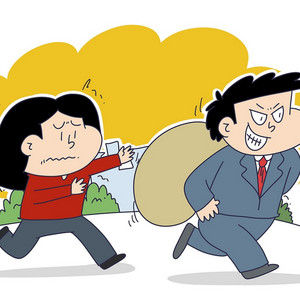
Pre -paid gym cards disappearing faster than your motivation to work out itself.
or a beauty salon that ghosts you after you've already paid your hard -earned money.
As a result, China's top court is putting its foot down.
As I mentioned a moment ago, starting May 1, new rules are now in effect to stop shady, prepaid service practices— the kind that leave customers stranded when businesses shut down, change names, or conveniently forget about your refund.
It's a really big win for consumers and it's a warning to business operators who do business in that fashion.
The message is clear.
The free ride is over.
Yeah, I was making a couple of jokes before but this is a really serious issue and a lot of people, you know, it's happened.
It hasn't happened to me personally before but I'll share a story a little bit later.
I know people who have found themselves in this situation.
Some people can lose a little bit of money, some people can lose a pretty significant amount of money here.
So let's find out some details.
What are the backgrounds on this new regulation?
Well, these prepaid consumption model they are really gaining popularity in China especially in sectors like fitness, gyms, beauty, salaam, Education, and dining restaurants, etc. Oh, I didn't know the restaurants in this platform.
the restaurants are the common practice, not common, but existing practice on a part of certain restaurants so in 2024 regulators the the local regulators in China's northern Shanxi province received more than 4 ,400 consumer complaints related to beauty, salons, hairdressing and bath services that's a 60 .4 % increase from the previous year.
Almost 17%. Yeah, yeah, yeah.
16, not 60%. Right, so just to make it clear for everyone, when we talk about these prepaid consumption, Yeohong Lin, we're talking about...
Let's use a hair salon, for example.
Tell us what that would look like.
There are different ways to prepay a business that you think in the future you will spend money in, and for beauty salons for instance, because you get your hair cut, or hair dye, or hair curved in different ways, and there is a price tag, so what would usually happen in a hair salon is, the business owner would say if you prepay $1 ,000, they will give you 1200 in your card, meaning that you are efficiently getting a discount.
That is the situation where consumers would think about paying.
They're not asking in most cases is that how long will this amount of money be expired if there is expiration date.
Can I use this money I put in the card for everything?
If I do not put money in the card and there are certain discount campaign in your shop, Should I be using that or this?
And if you are already giving me a discount because of the campaign, can I still use the money in the account, in the account, in the card. So it's much more complicated.
Then you just think, oh, I am giving you 1000 and I'm gaining the service a 1000 and 200, convenient.
That is only the example in hair salons.
There are also examples in gyms, which is a different story because Because in gyms you really have to pay to get into the gym to exercise and it's not a one service one pay kind of business anymore.
Which means for most people that I know of, gym membership is definitely a prepaid service.
So gym memberships will oftentimes offer you a steep discount if you are willing to sign up for longer period of time, one year, a one year membership or a two year membership or a three year membership or or what or what have you.
And that's attractive to consumers, obviously, because if you compare that to what you would spend on a monthly basis, then you're going to end up saving a pretty significant amount of money.
The complaints that people had going back to your example, Jingheng of Shanxi province receiving almost 4 ,500 consumer complaints related to beauty salons and hairdressing and bath services, that nearly 17 % increase.
The things that people were complaining about or the issues that were raised, there were no written contracts when purchasing prepaid cards leaving only these kind of unilateral records from businesses and that made it for consumers to claim refunds.
Also misleading promotions.
They complained about that, such as quote unquote free trials or large discounts, followed by poor product results and unfulfilled promises.
They also complained about unfair standard clauses to block refunds or cancellations or a lack of clear pricing for services.
Niu Honglin, you just mentioned it.
Sometimes it's not exactly clear how or where your discount is coming from, and that was the list of what consumers were complaining about.
You know, talking about gyms, and this is what I mentioned in the beginning, this didn't happen to me, but it happened to friends of mine.
There was a huge story in Korea in 2008.
And what happened at that time was my friends bought, And this is from the Jung Aung daily, the story itself.
But I remember because I lived next to the gym.
The gym was selling memberships for one year or two years or what have you.
And my friends were real workout warriors, right?
They went to the gym all the time.
So this is a really attractive thing.
This company was on the surface.
It looked like a really successful business, beautiful interior of the gym, multi floor.
and they had a huge promotion going on.
And so my friends paid for that, along with thousands of other people.
And then in the middle of the night, they emptied out the gym.
And my friends along with other people, they lost their money, and there were lawsuits that followed and lots of consumer complaints.
It was a really big story.
And that's just another example of what we're talking about.
And it happens in different parts of the world, right?
And it can be really frustrating.
Because for the entire amount of money, definitely it's a lot.
But for each and every individual, around $5000 or $10 ,000, it's not a small amount of money.
Yet, you would still question, should I be filing lawsuit?
Should I be filing complaints in probably the company, another company branch, or office that is so far away from me?
What should I do? it's troublesome yeah it's troublesome but the fact of the matter is it doesn't matter whether it's five yuan or 50 000 yuan it's bad business practice definitely and that is why my feeling is that with this new rules very clear laws law articles and also really clear explanations and classic examples of these lawsuits or cases on the website people would have a better idea about what they can do what are their rights and how to protect them well then let's tell let's learn tell us then what are the highlights or maybe some of the key aspects of these new policy changes so basically
the policy is clearly defining the legal responsibility of service providers and third parties such as the shopping malls where that vendor or that services are provided so as to better, you know, examine and vet those business tenants.
I guess this can be helpful in terms of resolving the problem of unclear liability when a business disappears or changes its own name.
So, for example, that's a little bit confusing.
If a business allows others to use its business license or name to sign prepaid contracts with consumers, then this original business is still legally liable or responsible.
And it can be held accountable by the consumers if any problems occur.
So the shopping mall example, if a shopping mall doesn't properly vet the business that they are allowing to operate within their mall and then this kind of business practice happens, the shopping mall itself can be held accountable?
Yes exactly exactly that's very helpful because some of these gyms for instance they open in a shopping mall and one overnight when they disappear, you need to give the consumer some place to file their complaints and get their money back.
And there are also different, one very, very important clauses, that they ban the unfair contract terms. In Chinese, we have a overbearing clause as the name of these kind of clause, meaning that even if you've signed the clause, it's actually not lawful.
It means you do not have to act accordingly.
For instance, in 2020, Miss Huan signed a contract with a company for dense training from April 19th to April 18th, and she paid a fee of 3 ,000 yuan.
And after starting training at a location near her home, the company issued a notice on the next day saying that the current venue would close and students must switch to a new further locations.
And the clause, the unfair clause here is that if we want you to change location because of some reasons that we cannot fight against it, then you have to change.
It's from the business owner's side.
It's saying that I cannot make my needs and make my ends meet and I can no longer afford this office, meaning that you should go to another office.
Yet for the consumer, the new location is too far and inconvenient, And so she sued for a contract termination and refund, and she got it.
Oh, good for her. Good for her.
Because a lot of people might think, oh, there's nothing I can do in that situation.
I guess I'll just give up or I'll just follow what they want, but she fought it and she won.
Here are a couple of more of the regulations.
They're going to make refunds easier so that will invalidate unfair contract terms that block consumers from canceling prepaid cards.
So consumers have the right to a refund.
If a store relocates, that's exactly what you just talked about Yeohong Lin.
If the business is transferred without their consent, if services are not properly provided or this is good too, for health related reasons, like an illness or a disability or hospitalization.
If there are valid grounds for canceling services like haircuts or fitness or elder care for example, then they will be able to get that refund easier.
And also, there will be a seven -day refund period which will make it easier for customers to change their mind, right?
Especially in the case that they do not know what the service or the product would be before signing the contract.
Yet, here, in this clause, the law and also the court decided to protect the proper rights of the business owner a little bit as well because they are legitimate merchants and their rights need to be protected.
Yeah, I was going to say, this is the problem for businesses who don't do this.
Their reputation gets hurt.
So then how can these regulations safeguard the business's interests?
There are really detailed clauses, for instance, the refund within 7 days clause suggested that if you have already tried the services before you sign the contract, before you pay for the prepaid service, then you can no longer enjoy the 7 -day, full refund, right?
Because apparently you already know what you're buying and it's not because the other party has conned you or painted a prettier picture than the actual situation.
I mean this is good news for the businesses who are actually following the rules.
Yeah, so if I want to exploit the rules here under a situation when I already know what I'm buying, I guess I cannot make that happen, right?
I cannot be opportunistic in terms of making use of the rules and seeking refund.
Which is a good thing.
Yeah, which is a good thing.
So if we're looking at what this means for the market, you're probably looking or can expect stronger consumer confidence where customers will hopefully feel more likely to engage in prepaid services like all of the businesses that we talked about before because that could be a serious downside too, right?
When we're talking about this on the show and the government has stepped in with new policies, this could really make customers afraid of taking advantage of opportunities like this to save money and for the businesses to have more of a customer base.
So hopefully this will lead to more consumer confidence, fair competition for these legitimate businesses who are doing what they're supposed to be doing.
And will it be enough to have these regulations alone?
No, I don't think so.
Yeah, because many so -called rogue operators, they are small, they are mobile, they are hard to track.
Hard to catch. So under that kind of situation, the protection for the consumer's rights can be limited.
And as a regular consumer, I didn't know about any of this before doing this show.
It's already out there and it's there on the official website of the court.
They're doing what they can.
But we as media, we are also responsible for talking about it and spread the news and let people know that your rights are protected.
All you need to do is make a phone call or file complaint and then your money that is really just yours will come back to you.
Well said. Coming up, if you call your romantic partner baby or sweetie, well, you're old, says Gen Z.
Stick around to find out how young partners are referring to each other.
and understanding is the goal.
This is Roundtable, I'm Steve with Ngo Hon Lin and Ding Hun.
We'll move over, honey and sweetheart.
Gen Z is rewriting the language of affection.
Those old school pet names that once filled love letters and casual conversations, they are now collecting dust, replaced by something entirely new.
Whether it is this rejection of cheesiness or a shift in intimacy, or just the natural evolution of language, one thing is definitely clear, the terms of endearment that your grandparents used.
They don't, they don't hit the same anymore.
So, let's find out what the new ones are.
Niu Hong Lin. Well there are many new ones terms of endearment like chick, sugar, oat man.
These are no longer you know that accepted by the younger generation.
Hun, honey, muffin.
Muffin sounds old even to me.
You know what a staggering 53 % of zoomers favor the pet named bro.
Bro? Bro. Even for girls?
Even for girls, and 44 % and take a shine to mate and 35, like, bestie.
Interesting, 53 per cent prefer bro.
Bro, whoa. As the romantic term for their partner.
In the past few years, we heard about bae, or king, or queen, or squad, or shoddy, I've heard that before, day one?
Day one? Day one? Yeah, if you've - What is day one?
What is - You're asking the wrong person exactly what that means.
But these are some of the new street slang for affection that young people are using.
And here I guess we're mostly talking about a situation in Great Britain, right?
It's a mystifying truth unearthed via Coca -Cola's freshly resurrected Share A Coke campaign.
Yeah, this is where this all came from, right?
Yeah in Britain, right?
it's the Coca Cola's subsidiary in Britain, and they try to ask those Gen Z's to come up with something, their cherished nickname, and send us to one of their main squares.
So, that's the finding, right?
It was found out by Coca Cola that 37 % of Gen Z's feel the formerly heartwarming handle is one of the most old fashioned and outdated pet names on the planet On the planet Snookums Snookums That's super old Super old Can I ask you Ding Hung How do you and your wife refer to each other Your pet names, romantic names for each other Oh yeah, we will probably use like one character from our Chinese.
That's really official.
And then repeat it?
Yeah, repeat it. Like, Ding Ding?
Or... No, no. Maybe Heng -hen.
Heng -hen is a better choice for my wife.
It's usually from the first name instead of the last name.
And some people would refer to each other with their professional titles.
It's kind of... Your job title?
Yes it's kind of naughty if you're talking about professors or teachers or for instance mister well mister something is quite popular here in fact yeah and uh so like Mr. middle manager or just mister, no no the title the job title and the mister are separated okay oh that's confusing to me though no no it's like Mr. Ding or reporter Ding okay okay okay how about how about your parents you know Honglin in that generation of Chinese people would it would there be romantic terms between between partners or would this be kind of a new thing in China in my parents generation was not huge they would refer to
each other as the father of my baby or just their first name the first I want a surname plus old like if Somebody's surname that thing then maybe call him noting Well, here are the most hated names that Gen Z have ditched they don't want to call each other Well, well, let's go from six to one.
They surveyed them love that's gone.
Hey love. Yeah, that's gone 13 % hate that angel 14 % hate angel Darling, that's out the door.
Don't say darling anymore.
That's 21%. I call my wife darling all the time.
Babe? Babe, babe. Babe is gone.
What about bow -bow?
Can we still use bow -bow?
We use bow -bow here in China.
Okay, good. Babe's gone, 21 % hate that.
Number two, muffin.
Yeah, let's actually hold on.
No, muffin. Yeah, that one's gone.
Number one, the most hated one is Sugar.
Ah. Sugar. Yeah that song is from the 1950s so it kinda makes sense.
I don't think that Sugar is a thing in Chinese either, no. Is that because of diabetes?
Maybe. That will do it for today's Round Table.
Thank you Nghong Lin, thank you Dingheng, I've been Steve, thank you for your time and join us next time.