You're listening to Roundtable with myself, Hyung.
I'm joined by Steve Hatherly and Fei -Fei in the studio.
Coming up, this year's China International Import Expo is packed with pioneering designs and tech from the world's biggest companies, all converging in Shanghai.
We've got the latest buzz at the Expo, with a look at what's new and exciting in the automotive sector.
And are persuasion tactics merely tools of influence?
Or are they exploiting our most natural instincts for gain?
At what point do these strategies shift from gently persuasive to manipulative?
We explore the fine line between honest influence and outright control.
Want to be part of Roundtable's Heart to Heart segment?
Share your thoughts, questions, or hot takes on news, tech, and life by sending us a voice at RoundtablePodcast at QQ .com.
You might hear yourself on our live show.
Our podcast listeners can find us at Roundtable China on Apple Podcast.
Now let's switch it up and explore something new.
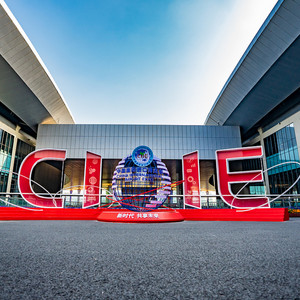
The seventh China International Import Expo, or CIIE, is buzzing with energy in Shanghai, showcasing cutting -edge innovations from around the world.
With nearly 300 Fortune Global 500 companies from 152 regions and nations and organizations unveiling their newest technology, designs, and products, CIIE is the ultimate access point to the Chinese market.
Our reporter, Yu Shen, is on the ground, ready to share some exciting highlights straight from the automotive exhibits.
Hey guys, this is Yu Shen from Roundtable.
And right now I am at the Ultimabille Exhibition Hall here at the seventh China International Import Expo.
And after walking around in several exhibition halls, I can totally see that the Ultimabille section is among the more popular sites of all the exhibition halls because people are just crazy about cars.
Especially now that each of these brands, they're bringing their latest modules and new designs featuring eco -friendly or more of a fun innovation that's trying to attract young consumers out there.
That's looking forward to try out some wild driving experiences.
At the center of the exhibition hall here features a huge cubic of LED screen here that's showcasing images of the green forest, of the water, and all the natural resources.
And the aim is to highlight on the green and sustainable designs in many of the car brands these days.
So guys, the first pavilion I am stopping right now is at the Ford Motor Company.
This year during the CIIE, they're presenting three model types of their car.
Right here in the background, we see that the company is trying to decorate the entire pavilion with desert themed decoration.
I see cactus, I see the mountainous areas in the middle west of the U .S.
So right now I'm sitting into the driver's seat, and I've only been driving for three years and I'm telling you this is the biggest legroom I've got so far.
Right now I see an electronic screen right in front of me.
12 inch IPC and 12 inch IVI screen.
Excuse me, sir? Yes, it's a brand new 12 inch IPC screen and 12 inch IVI screen.
This is kind of American Bronco Raptor version, we just localized it and used it on our local service.
Oh wow, so this whole design is just localized for the Chinese customers?
Yes, definitely. This design is only for the North America.
I also heard that this yellow or rather orange painted type is a relatively new model type.
It's called a cyber orange.
It's a brand new color for our China customers.
Ok. Here we feel that the ceiling of the car and also the doors of the car are already removed.
And I was told by the engineer just now that you can only take like two minutes to remove part of this car.
Yes, in our development center we have a test that we call our colleague to try to compete with each other.
Like the first team, they only take like 40 seconds to remove the hot top.
40 seconds to remove the head top of a car.
Yes. So what about this Bronco model of Ford Motor Group that is so new and so innovative this year?
It's all modular design, you can quickly remove the fan flare, you can choose your customized module, or you can just… Just easily remove the side of it?
Basically this is like a LEGO of a car that you can remove the shells, remove the outer side of the car and just enjoy driving in the very simplified version, especially if you're driving in an open area and it's just to indulge yourself into the wild fun of driving.
Yes, yes. I would suppose this is the first time for the Bronco series to be presented to the Chinese market?
Yes, this is the sixth generation Bronco.
So when you were designing the car, or rather customizing this car from the US model to the Chinese model, how long did it take and what do you think was the hardest part to adapt?
Yeah, we took about 18 months to do the localization.
Here in China? Yeah, in China in Nanchang.
And I think the most hard part is we just need to understand the Chinese customer requirements because they are totally different customers, and we want to keep the inside spirit of the Bronco version, because as you can see it's very unique and very personal, but we want to keep the spirit.
But on the other hand, we should meet our Chinese customers' requirements like we just do the interior, color material enhancement.
As you can see, the A surface here is all leather.
As you can see, the IP dashboard and the seats.
Now currently we just focus on the overall segments, but still we know lots of female customers.
They love the lifestyle, the overall lifestyle.
Female customers? Yes.
Oh wow. I would disagree with that because male customers are so much in love with that too.
You mean the free and wild lifestyle of just driving a skeleton of a car without the doors, without the top?
Yeah, just imagine that.
But yeah, please carry on.
Yeah, and currently I think the sales volume for the China Bronco series is almost 1 ,200 per month.
1 ,200 per month? Do you mind if I ask how much is one of these cars in Chinese Yuan?
337K. So, 337 ,000 Yuan here in China.
Oh wow, I see. Definitely beyond my purchase ability, but for Chinese customers who's interested in indulging in the doorless, topless, kind of wild driving experience, I would see that the Bronco series definitely have its highlighted spots.
So yeah, thank you very much for your introduction, sir.
And apart from day -to -day automobiles, we also see that here in the Automobile Exhibition Hall it's not just for cars, but also car manufacturers and component companies such as the tire manufacturing company Michelin.
It says on the board right here that ever since 1898, Michelin has driven the growth of the aviation industry.
So we see that by supporting the aviation industry, one of its goals is to produce low carbon and more practical solutions.
Their latest tire module is about 10 % to 20 % lighter than comparable products.
And also one of their tire products that's at the center of the Michelin Pavilion this year showcases this new product that features an all -sustainable designing principle.
So apparently 71 % of the tire is made from sustainable material or rather recyclable materials as well.
And in the past three years, this brand managed to increase the sustainable material content inside this tire from 46 % to 71%, which is quite a progress.
And guess what's in the tire?
Natural rubber, steel, and extracts from orange and lemon peels, raisin, and sunflower oil.
Sounds like a food in the tire, but I guess this is the new trend nowadays that's to feature the recyclable idea to the bare ingredients.
That is to make the entire products in a green and futuristic way.
Well, that's Yu Shan at the CIIE Auto exhibit chatting with Feng Jingyu, program analyst from Ford about the company's localization efforts and checking out Michelin's new sustainable tire.
I guess Michelin's not just about fine dining, but fine driving too by suppose.
Very much so. Yeah.
Very much so. Yeah.
I'm jealous, I must say.
You know, she gets to be there hanging out around the car section of CIIE.
That's a pretty amazing experience.
And as she mentioned, it's one of the more popular exhibition sites there.
There's a lot of attention on cars these days and a lot of attention at CIIE as well.
Electric vehicles, we've talked about electric vehicles on Roundtable before, but one of the things under the spotlight at CIIE is hydrogen powered vehicles.
They refer to those as HFCV and it's still a relatively niche field.
They produce, have you heard of these before?
I think I saw it on the news here and there.
They don't get as much attention as other electric vehicles do, but they produce only water vapor on the road.
And as I mentioned, they're under the spotlight there at the Expo.
Foreign experts told a forum on the future of global new energy vehicles that hydrogen as a new energy source is challenging, but it has a lot of great potential as well.
Li Ji -Fung is the director of the Climate Policy Research Office of the State Council's Development Research Center.
And the quote was, China's hydrogen emergency energy development is still facing many challenges such as industry standards and norms that need to be improved.
The hydrogen energy industry chain system is not yet complete.
And there are other issues too.
But again, a lot of attention being paid to hydrogen powered vehicles too.
One of the challenges of electric vehicles when we started to talk about them and they started to become more prominent, charging stations was one of the big issues.
Where can we charge these cars?
And with hydrogen vehicles as well, fueling stations, that's one of the issues they're facing too.
But there are some vehicles on display there at CIIE.
So it's pretty exciting.
Yeah, and CIIE is a place where cutting edge new innovations are being put on display.
So maybe it's not necessarily something that people would buy in stores just yet, but it's an important place and platform to showcase what you've got, maybe in the near future.
And also, according to data from the China Automobile Association, just from January to August this year, total sales of new energy vehicles in China has reached more than 7 million and nearly 60 % of global electric car sales occurred in China last year.
So definitely this is a huge market for the future of cars.
Hydrogen vehicles as well in China, they say that next year the sales will reach 50 ,000 and in 2035 hydrogen powered vehicles will be fully commercialized.
So now it's all about EVs, but over the following years, we're going to be focusing or switching our attention more on to hydrogen powered vehicles.
Well, that's interesting because hearing about what Yuxuan's experience at the CIIE reminds me of a podcast a couple of weeks ago about Ford CEO, Gene Farley, who went on a podcast talking about his trip to China, especially learning about how EVs are developing and how the Chinese market has been developing
over the years. And he actually flew a couple of Chinese made EVs back to the US to have the Ford executives and also management to get a feel of how the current and also maybe the future EVs are like.
And he prays a lot about a particular model, which is from Xiaomi.
That's also been popular here in China since last year, I guess.
Sue Seven. Yeah, Sue Seven.
I think it's the full name is Speed Ultra Seven.
And Jim said he didn't want to give it up after driving it for six months.
And I guess I haven't really drive it myself, but I guess this must be such a driving experience.
And then at the CIIE, so a lot of the Chinese carmakers and also I guess the driving technology companies are also collaborating with a lot of the foreign car makers to debut and to push to showcase their concept cars, which are basically, you know, the first day.
Yeah, those are the ones that look like they should be on the moon.
Yeah, exactly. And who knows?
Maybe the moon is next year, as we've seen at this year's CIIE, the car market is shifting towards sustainability and also localization from groundbreaking innovations to global trends.
CIIE continues to be the place where the future of business unfolds.
Coming up in the world, well, where every purchase decision these days is potentially influenced by algorithms and marketing tactics is our ability to make autonomous decisions being eroded.
Stay tuned. Looking for passion?
How about fiery debate?
Want to hear about current events in China from different perspectives?
Then tune into Roundtable, where East meets West and understanding is the goal.
It's the hour of Roundtable with myself, Hye Young.
I'm joined by Steve Hatherly and the dear friend of Roundtable, Fei -Fei, today.
In the digital age, where every click, scroll and purchase is analyzed, influence and persuasion tactics have become more sophisticated and pervasive.
Back in the 1980s, a well -known book outlined basic principles of persuasion, shedding light on why we make certain choices.
But with today's advanced data analytics and social media algorithms, do these decades old theory still hold true or are they simply outdated tools used to manipulate modern consumers?
With the 40th anniversary of this book upon us.
Well, it's time to question its relevance in a world driven by more subtle and powerful forces.
So, Steve, you brought this topic to our attention.
Tell us about this book.
Yeah, I found this to be kind of a fascinating topic.
So back in 1984, a man by the name of Bob Cialdini, he wrote a book called Influence the Psychology of Persuasion.
And the idea for his study on persuasion started in his university dorm room before that, as you mentioned, the book now had its 40th anniversary, hence it popping up in media circles these days.
So just quickly about what happened, he was in his dorm room one day, you know, he's a poor college student, he had no money and someone knocked on his door.
Would you like to buy this magazine?
And he said, no, I don't really want to buy that.
Thank you very much.
But the guy continued with his sales pitch, saying this is a limited edition.
It's not going to be available for very long.
And it's been very popular around the dorms here.
And so Bob bought the magazine.
And when the guy left, he thought, why did I buy that?
I didn't want to buy it in the beginning, but he convinced me.
And that's what inspired Bob to do all of this research on persuasion and psychology behind purchases.
And that's why he wrote that book.
It sold seven million copies around the world up until today, roughly seven million.
So what did he discover inside?
He came up with six principles in the beginning that are all about persuasion and how they influence us to purchase things.
These are used in marketing these days and have been for a long time.
Scarcity, authority, social proof, liking, reciprocation and commitment and consistency.
Scarcity, referring to only available for a short period of time.
Right. We see that in advertisements.
Authority would be, oh, experts support this.
Experts love this product.
And then social proof, the salesman in the university, he touched on that one, too.
He said, oh, it's really popular in the dorm.
Everybody's buying up this magazine.
So those are the principles that he came up with.
And we still find proof of them being used today.
And while we live in a digital world these days and social media algorithms know us better than ourselves or our moms, it feels.
And it's just so easy.
Well, I wouldn't say easy, but there are so many different theories out there.
So many different tactics out there to get us to buy something or sow that seed of buying the next thing in our minds.
How relevant do you think these theory, well, this theory particular is or what do you see as maybe updated versions as such?
I think some of the theories are still relevant today, even in this digital age.
But I think the theory is still there and reminds me a lot of the promotional videos we saw online and how some influencers online with a lot of the get ready with me videos and what I did today videos and promoting certain products through that videos.
And they're basically using similar tactics here and there.
But then I think but in today's age, instead of what the author experienced having as human to human interaction when making a sale, a lot of the algorithm I think is getting a little borderline dangerous, is that they are pushing to the border of manipulation.
Maybe it's not about making a good sale.
It's more of a manipulate your thought into you over buying certain things.
And I think so that's why I think in today's age, we need to talk more about how do we in terms of privacy or personal information, how do we make the marketing strategies limited within a reasonable boundaries so that people don't feel they are often the case.
I saw a lot of the promotional videos.
I'm only thinking about it, but somehow it popped onto my phone the next second.
I really is a really shivering experience.
Ethics in marketing has been an issue for a long time and companies have to walk a very fine line, don't they?
I think we can still see these his theories from 1984 applied today in many situations.
In scarcity, we talked about authority, meaning experts support this product, social proof, everyone else is buying this, why don't you?
Liking, I think is an interesting one.
The liking theory refers to the likability of the person that you are purchasing from.
And the theory is if you don't really like the person who is selling something, then you're not going to buy it from that person.
And that's why I guess for online sales or home shopping or things like that, they always have a bubbly, outgoing personality and that likability factor tries to come across.
Yes, indeed. And with the rise of social media, new theories have emerged to explain how digital platforms influence behavior.
And some of them have something to do with this cycle, this book of persuasion.
And this could include the social influence model of online interactions where the sheer volume of likes, shares, comments acts as a form of social proof.
And of course, the fear of missing out or FOMO is used to drive engagement in decision making.
And Feifei, you and I chatted briefly about how powerful FOMO can be these days.
FOMO, the fear of missing out, I think is getting people to engage, of course, to boost engagements in a lot of ads.
But I think the negative side of it is driving people feeling anxious for not doing something or the feeling of inadequacy or low self -esteem, which especially among younger generations, that they spend a lot of time on social media and they start to have this emotional toll on them instead of so I
think that's why I said a lot of the tactics are getting into a borderline dangerous areas because we're just making a sale.
You know why? But in the end, some young people are suffering from anxiety for the fear of missing out.
And, well, Steve, do you think in light of all of this, where should we draw the ethical line with persuasion tactics?
Yeah, it's like I said, ethics in marketing has been a long issue and companies need to be aware of this.
And they are on the very bad end of the extreme.
When you talk about how we need to be careful about this, false advertising is something that people need to be aware of when they're thinking about purchasing a product and false advertising is about misleading marketing for things that simply aren't true.
One example, and I thought this was really interesting because I've seen this so many times.
One example of false advertising is what they call puffy.
Have you heard that term before?
Like puffing up your feathers to make you seem better than you are like a bird does.
Puffy, if you if you've seen a restaurant do this before, the best will say cheeseburger, the best cheeseburger in northern China.
Well, that's called puffy.
And the reason that's called puffy and false advertising is because that's impossible to prove because it's subjective, right?
Technically speaking, by American law, not here in China, but in American law, that would be illegal.
But there's kind of a gray area that's hard to enforce.
That's one of the examples of ethics in marketing where, you know, companies, they do their best to try to influence the customer.
But at the same time, they can't go too far.
That's interesting because essentially you're also bringing up the legislation or regulation issue here.
And in China, there are strict laws in advertising saying you can't say you're the best seller unless you absolutely are.
Unless you can prove it.
Nobody has done that in recent years because there's a clear law stipulating that and instead you get the leading seller in, let's say, cheeseburgers or, you know, fragrance soap or whatnot.
But again, that ties back to Bob's theory of social proof saying we are one of the leading sellers.
And that's that psychological theory where you as the customer say, oh, OK, well, if they're one of the leading sellers, that means everyone else is buying it.
Then I guess I'll buy it too.
Then I guess in a lot of countries, customers need to have the right to know that this is a piece of advertisement.
And so why in a lot of cases, especially on social media, they need to have the clear disclosure about this, this is a promotional video or I have a piece of ads within this video to be informed or I've been paid.
Yeah. Well, the principle of influence reveal both the power and vulnerability of the human mind and understanding the psychology behind persuasion empowers us to recognize when we're making decisions and choices for ourselves and when we're being nudged, helping us reclaim a sense of control in a landscape designed to influence.
Thank you so much, Steve and Fei -Fei, for joining the discussion.
I'm Ha Young. We'll see you next time.