Discussion keeps the world turning.
This is Roundtable.
You're listening to Roundtable with myself, He Yang.
I'm joined by Steve Hatherly and Yuxun in the studio.
Coming up, in recent years, thousands of companies have sprung up across China promising to unlock children's brain potential, attracting eager parents hopeful for an edge.
But how much of this market is grounded in real science and how much is it simply clever marketing exploiting parental hopes and life's best moments from the soundtrack of your heart to little things that make you smile.
Join us at Round Table's Happy Place, our podcast listeners can find us at Round Table China on your favorite podcast platform.
Have a question worth exploring?
We are game. Send it over to roundtablepodcast at qq .com.
emails are fine but bonus points for voice memos.
They are our listeners favorite.
Now let's move on to the next topic discussion today.
In China there is a popular saying among parents, generation after generation let the child win at the starting line.
It reflects the deep hope many families carry that early effort will secure life long success.
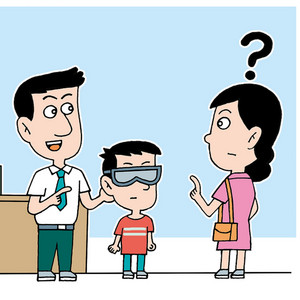
No wonder children's brain development business is booming with eager parents and a steady stream of new products but the market is a chaotic and murky space.
From pricey brainwave headsets and hit bands to so -called brain development training centers some companies package pseudoscience in shiny wrapping.
These impossible results, such as blindfold reading.
Blindfolded reading.
What is that? That's exciting.
It's exactly what it says it is.
How strange. Predicting the words on the page, maybe.
That's an impressive skill.
Yeah, other stuff too.
We're gonna get into a long list, right?
Oh yes, or instant memory recall, all while draining parents' wallets.
Much of this market is built on hype, pseudoscience and commercial scams...
What's really going on here?
Yeah, what we are seeing right now is that in recent years, a large number of these kind of companies in China have emerged, claiming to unlock children's brain power.
Company data platform Qi Cha Cha is showing that nearly 2000 companies offering what's it called, whole brain training services are registered in China and most of these institutions claim their programs work by stimulating both the left and right hemispheres of the brain simultaneously, and their promotional materials often emphasize enhancing children's overall abilities, including concentration, spatial imagination, associative memory and verbal expression.
Also, it's a lot of big words, yeah.
Isn't it? The Beijing News reported, as early as going back to 2019.
So this isn't brand new, by the way.
The concept at that time was becoming increasingly popular here in China and other similarly early education programs sparked this nationwide debate, particularly those promoting, get this, quantum speed reading.
Oh, yeah. Have you heard about this?
Oh yes, I saw the video.
Here's the claim. Here's the claim for quantum speed reading.
Yeah, let's talk about that video in just a sec.
Quantum speed reading claims that children can be taught to read 100 ,000 characters in 5 minutes and in response, the state council issued a regulatory notice addressing multiple institutions conducting quantum reading or whole brain training without proper licenses again that was a few years ago what was the video you were talking about you know they were i don't really know they're actually reading the books but anyway they're they're they are using the books as i think a fan yeah you know yeah that fast you know when you think they're reading you know when you pick up a magazine at the doctor's
office and you're That's what the kids were doing in this video when they were, air quotes, reading.
It's fascinating. Well, one of the largest franchises of this kind of institution has hundreds of outlets across the country.
And it just shows this kind of thing is popular.
Yeah. And some of the offerings in these training centers are not as grand as Quantum speed reading.
The popular ones include flash card drills where they'll do a flashcard two to three cards per second, they'll have memory games and puzzles and abacus, and they're marketed as ways to to boost cognition in the kids and also boost creativity in the kids as well.
Parents, they'll often see these types of programs as more progressive or perhaps more internationally aligned alternatives to rote learning which is fueling the demand.
And rote learning, by the way, that's this method of memorizing information through repetition, but at the same time without any deep understanding of the material.
And that's a major criticism of Chinese education in general.
And guess what, if you want to succeed in the Chinese educational system, you will have to practice, drill it down to your best to be able to rote learning.
That is key to succeeding in this educational system.
Yeah, memorize it and then regurgitate it for test time and then you may not need it again.
And that's not enough.
And but that's key to a few subjects in China, for sure.
And recently this has become news again, thanks to an investigation by a reporter at Legal Daily, Fajr Rubab, the newspaper.
And this person uncovered exaggerated claims made by full brain development centers in Beijing.
What are some of the interesting investigative details that?
have been uncovered?
To be honest, the slogans that they're giving at work, trying to attract parents are quite attractive, I would say.
Create a 500 character speech or essay in 3 -5 minutes.
Improve your focus by 5 to 10 times.
Boost your memory by 20 times.
Memorize an unfamiliar ancient poem in just 1 minute.
You don't need to memorize everything by using that rote learning, but you just come come to our center, and we will give you the techniques to remember all of these things.
Sounds like you work there.
We're a very sarcastic man!
And they are not cheap at all!
The center offered 40 class half -year packages and 80 class annual packages with each session costing around 200 yuan.
So a half -a -year course costs around 8 ,000 yuan, which is approximately 1 ,100 US dollars and yeah, you needed to spend that kind of money on that just to.
It's not cheap. It's not cheap and a lot of institutions too, they'll claim maybe not a lot, at least some institutions claim up to a 98 % success rate in activating, what they call so -called brain screens or photographic memory by stimulating the pineal gland with music if you're listening now and saying what?
yeah so I'm saying what too, so I looked it up about the the photographic memory stuff and photographic memory or eidetic memory as it's also called is this rare temporary ability to mentally see images with high accuracy and it refers to the to recall images or sounds or objects with near -perfect accuracy.
Now I wanted to know, is this possible?
I mean I don't know obviously but what what do the experts say about this?
So I found some various studies and see what they said from 1964 a study called eidetic imagery frequency perceptual and motor skills in children two to ten percent exhibit temporary eidetic -like abilities, recalling complex images after brief exposure, but here's the key.
This fades by adolescence.
Here's another one called the detailed texture of eidetic images.
People have a photographic memory perhaps when they're in their younger years, but in adults no evidence confirms true photographic memory.
So I just wanted to talk about those very briefly because when you make claims that You can teach someone to have a photographic memory.
The experts seem to say that is not possible.
Right, and also, you mentioned the pineal gland.
In Chinese, when I looked at a lot of these advertisements, this term comes up a lot.
It's called mechanism in Chinese, and nobody really knows what it means, and it science a little bit clinical, a little bit scientific, and therefore parents fall for it.
However, Chen Jing, a youth psychological counselor based in Beijing, clarified that the pineal gland or Sun Guo Ti primarily regulates biological rhythms like sleep.
It has nothing to do with sensory or cognitive perception, the concept of whole brain development is vague and it lacks a clear definition, and basically it's false advertising.
When they're using these terms that parents sort of think, okay, you must be scientific when it has nothing to do with what's actually selling.
Yeah, and Chen Jing, that youth psychological counselor, said that based on current scientific evidence that scientists can say with certainty, brain development does not include opening a third eye in your brain.
And that's in reference to one course called Time Travel, where training - Wow.
Yeah, get this, training claims students can see their future exam results via a mental screen and adjust accordingly.
Well, how convenient is that?
Promotional materials say students quickly pass through multiple time -space tunnels - The course is fully online and it's priced at 800 yuan per session and it's only video -based training.
That's all the required materials.
Do they actually even believe what they are saying?
I mean do parents really buy into that kind of stuff?
Do they really think their children can go through time?
Well just to quickly answer part of that question, just attempting to answer part of it, you Not all training centers are offering this kind of coveted course.
This is maybe more tilting towards the extreme type and there are major red flags behind the industry's rampant scams and commercial chaos.
For example, who's going to give these lessons?
Who's teaching time travel?
Oh, Scarlett Lucy, oh, she got her brain developing to like 100%, but when she was like 70 % she can see the future see all of the electric waves.
No, I don't, I don't want her.
I want Benedict Cumberbatch. What's the guys name, the character?
Dr. Strange! Dr. Strange.
I want Dr. Strange to be my time -travel teacher.
Yeah, and I looked at some of the reporting on this subject and one person, a practitioner, who's actually left this business altogether now, but told the legal daily reporter that the key to the business is to fool the parents because the kids know nothing.
They're too young. Like three years old is like the target age or something like that and that if the parents believe in this, even if it's like a one -time thing and you pay and that's how the business is done.
And Chinese authorities have responded with increasing concern over the rise of these classes, especially as many of them are rooted in pseudoscience and deceptive marketing.
Back in 2019, there was a primary school in Zhejiang Province.
That's in the eastern part of the country.
At that time, that school began trialing EEG brainwave monitoring headbands.
And there was public outcry and that public outcry led education authorities to halt the experiment immediately.
And parents and experts and journalists raised questions about the device's effectiveness and the ethical concerns, obviously, of tracking children's brain activity, without any sufficient evidence.
Yeah, they shut that down almost immediately.
Yeah, and also, the broader regulatory response has included new legal and administrative measures the preschool education law.
We talked about that on the show.
Just previously, I think, in the late May or early June, it is effective in June 2025, raises the bar for early education institutions.
Teachers must now hold professional credentials and educational content will be more tightly monitored.
And the Cyberspace Administration of China has enforced stricter rules on data privacy for children, especially around neural data and biometric information.
Yes indeed. And while the government has started paying closer attention to the chaos in this market, why do so many parents fall for these courses?
When we were going through the slogans, the things they're selling, we couldn't help laughing to a certain extent but why do parents keep signing up?
I think the main reason for regulation is to protect children's well -being and authorities are are stepping in not only because these courses lack scientific basis but also because they take advantage of parents worries and put too much pressure on kids.
And some of these programs make really risky and misusing claims that kind of brain science or collecting sensitive personal data in the name of improving learning and that is why I think these kind of parents would worry that okay, my children, if okay, I am not that worried about the process or the whole improvement of my children, but other kids are learning this.
So my children also need to learn this.
Yeah, there's that.
I think, too, there's 1 .4 billion people in China and the job market is competitive.
And when parents think I can get an advantage for my child, what was that expression you said at the beginning about, you know, getting an early start?
That sentence, I think, has poisoned the minds of parents.
So let the child win from the starting line.
Right, but what I want to say is I don't want to sit here and make it sound like these parents are stupid, because they're not.
They're just trying to gain an advantage for their children, right?
They're trying to do what they can to help them in their early years.
And I think that's part of the reason why parents would go for this type of thing.
it's my point is it's coming from a good place in the parent's heart right maybe a little more research and before you make a decision there though another thing I would like to mention is that marketing is really really important in this industry they know how to tap into the psychology of both parents and children they let's say target parents with persuasive promotions like what we just said, that create a sense of urgency and then they use tactics like displaying toys in their stores and promising, well, you know, if you get if you can learn or study here you can get all of these toys and then
children will just cry for these toys.
Yeah well that that okay and also social media plays a role here of course too because you go online you're a parent you see these courses available you talk to your spouse and you think oh maybe this is the right thing for our son or daughter.
Well let me do a little research." I said before, do some research. Let me go online and see if there's any evidence to back this up.
You go online, you see children appearing to read blindfolded or solve these complex math problems with lightning speed, and the parents think, oh okay, yeah I mean, obviously there's something to this.
So that plays a role too I think.
Also, maybe this is preying on the vulnerability of all parents and it's easier said than done that there's a glimmer of hope in every parent's mind possibly that that genius, prodigy, can time travel, can be my kid.
When in fact when I think about this I'm an average beyond average person.
I don't now but even if I'm lucky that one day I do find one he's gonna be an average person too how could two average people give birth to a super genius that could be played by Scarlett Johannsen in a Hollywood movie there's no secret chance to that but maybe if I one day actually give birth after all that pain and trouble and everything and hope into that new life into this world you might still you know when he or she's still young you might think, oh maybe maybe this could be a genius, but I don't know.
I mean that happens, right?
It's not like it never happens I can't even win the lottery even once like you know where are the chances?
And one interesting thing I've noticed is that younger parents, Millennials, and Gen Z may actually be more susceptible to these so -called brain development scams or let's say programs than their older counterparts because they have a strong belief in science or at least in science sounding language.
But without a solid grounding in how science actually works they may struggle to spot pseudoscience.
In a way the slick use of scientific jargon is tailored precisely to their preferences and maybe that has something to do about it and can we can you guys just quickly if you may summarize for us can the brain be developed scientifically?
Oh yeah, of course, it can.
And how? Yeah, I mean Tao Sha is a professor at Beijing Normal University and the Director of the Center for Child and Adolescent Brain Development and and talked about it.
Of course the brain can be developed.
Otherwise we'd be walking around putting our toes in our mouths like babies do, and this is what education does, but you do this through reading and learning new languages and music training and physical activity.
And the brain, it has development of the brain has to be based on understanding and protecting it and not exploiting it endlessly like a coal mine and doing all the things that's done in school, not you know attaching EEG monitors to children to enhance their brain activities.
Also that doesn't mean that you need to or that's necessarily need to cost you that much of money.
Right, and overloading your young children with these kind of mechanical drills abstract thinking and rote memorization too early can actually deprive them of valuable experiences and maybe shut their senses down instead of encouraging them to open for the long term.
Coming up next welcome to the happiest corner on the airwaves.
Round Table's Happy Place!
delivery, delivery, delivery What is it?
Happiness from Round Table.
You should. What's your happy place?
Yes, so this week my happy place is driving school.
Yeah, I started learning how to drive recently.
And... Yay! Well done!
Even though the process itself can be a bit repetitive, and commute is really, really long...
Yeah, the driving school is quite far away from my home.
But there's something oddly satisfying about just sitting behind the wheel and gripping it and realizing that you are in control of this machine, right?
the first few times felt awkward to be honest and even nerve -wracking but the more i practiced the more naturally started feel and i feel that when the car moves smoothly even though it's just five kilometers per hour because i was practicing right now and the feeling of under your control is really magical i would say and i think you know what also make it so rewarding is the sense of progress even though I can it can be so small it's just a maybe smoother turn or just the right time on the brakes but just remembering not to panic when I reverse that kind of moment it makes you feel very you know that's
having a sense of accomplishment have you practiced parallel parking yet yeah I did oh how did that go and yeah I remember all of the points that I need to you know turn right and turn left I I think I did really good, according to my coach, right?
So you're taking the test soon, aren't you?
Yes. And I think that kind of thing all brings me the sense of learning stuff and trying to know new stuff and the thing or the realization of, you don't always have to be fast and exciting when learning something and can be calm and steady and also bring you happiness is something I really like.
Wait, so your driving school doesn't have any time travel courses?
Like you can't predict, you're just, find a new school bro.
He's not paying enough, and you're halfway there, you should - good luck on your test. Getting your license is like unlocking a whole new level of freedom that I can say as a Lao Su Ji, somebody who's been driving in Beijing for more than 10 years, but driving is so cool.
it's not just about going places it's about being able to go when life calls and I wish that for you good luck on the test thanks yeah and that brings us to the end of today's show thank you so much Steve Hatherley and you should for joining the discussion thank you for tuning in you can find us on apple podcast at roundtable China I'm hi yeah we'll see you next time