What's in your wallet?
Terms apply.
See CapitalOne.com slash bank for details.
Capital One N.A.
Member FDIC.
Hey, it's Kenny Malone and I want to take a quick minute to talk about public media.
It was founded to inform, to educate, to expand our perspective.
But, as of this fall, federal funding for public media, including NPR and local NPR stations.
And I'll see you next time.
But we've also tried to balance that heavier stuff with stories to entertain and illuminate even delight, we hope, from time to time.
Like the story about why it is so hard to find a public toilet, or the mystery behind the website milkcom.
We've also taken on some bigger projects this year, like the end of PAX Americana and kicking off our quest to make a board game.
So it's been a lot, and we want to be just as ambitious next year to meet whatever the moment calls for with, of course, your help.
So thank you if you've already gone the extra mile as an NPR Plus supporter.
And if not, you can join our Plus community.
You can get a bunch of perks like bonus episodes and more from across NPR's podcasts and support public media along the way by signing up for NPR Plus today.
You can just go to plus.npr.org.
And of course, thank you.
This is Planet Money from NPR.
Chicago journalist Mick Dunkey has an amazing memory.
He's the type of person who can look at a map of a new city and then go for a run and not get lost.
Or recall exactly where he was on a Tuesday in December of 2008.
He was at the gym.
I'm a regular weightlifter Nick, even though you'd never know it from looking at me, because I'm not a very big guy.
But I'm pretty sure I was in the weight room at that time.
On the floor, on the exercise mat.
I was maybe doing sit-ups or stretching, and the TV was like above the exercise mat.
The TV was playing the news.
Well, the city of Chicago has struck a deal with a private company to take over the city's parking meters.
There's a.
The story was about how Chicago's mayor, Mayor Richard M Daley, had made a deal with some outside investors to sell off the proceeds to Chicago's parking meters for a big upfront payment of 116 billion.
Now, this wasn't all too surprising to Mick.
Mick had covered Daley a lot.
And he says the Daley administration at the time had pretty much constant budget issues.
But they had found this new tool.
They were privatizing stuff all around the city.
They were selling off future revenue in exchange for a much-needed, big, lump-sum payment now.
The first one, the groundbreaking one, happened when the city privatized the Chicago Skyway, which is it's not even a full highway.
It's like a shortcut to Indiana.
It's a shortcut to Indiana.
Thank you.
In that one the city gave up toll revenues for nearly a century in exchange for 18 billion up front.
And people were cool with this.
The way Mick describes it, Chicagoans barely use the road.
It's mostly out-of-towners.
And the Chicagoans who do use it are people going to their summer homes in Michigan.
And if you don't want to pay the tolls, you just drive on local roads.
Honestly seems ideal to be able to sell off out-of-towners slash rich guys who are going to their vacation homes.
It doesn't seem like there's that much of a downside to that one.
That's exactly the way it was received.
And Mayor Daley was praised for it.
And he remembered that praise and then proceeded to look for other stuff to sell off.
Yeah, like the parking lots downtown under the big parks that run along Lake Michigan.
For those, Chicago gave him up for a century and got $560 million up front.
And again, it was another thing that people didn't have to use, because the people who used it were in large part tourists, suburbanites.
I love that Chicagoans love screwing over the occasional tourist.
Oh, absolutely.
Mayor Daley, Chicago, they're on a roll with these privatization deals.
Each one brought much-needed money now at the expense of not only out-of-towners but future out-of-towners.
Which brings us back to the mat, the gym mat.
Mick's on the floor watching this news report.
And he sees that Chicago has struck another privatization deal.
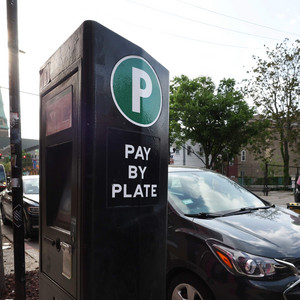
Except this time, it was for all 36,000 parking meters in the city, which...
Those aren't exactly used by out-of-towners.
So if city council approves this lease beginning next year, when you go to feed that meter, you can definitely expect to pay more.
And the city seemed to want to get this deal approved as soon as possible.
This was December 2008, the depths of the Great Recession.
And the mayor was looking to raise revenue without raising taxes.
The mayor clearly worried about the economic crisis.
He hopes... that this will help avert future problems.
Now Mick, he had developed a sort of healthy skepticism of the Daley administration and their privatization campaign.
But this deal seemed weird.
They were selling off the city's parking meters for 75 years in maybe a fire sale.
Immediately, my BS antenna went up and I knew that we were going to have to take a closer look at this.
But you knew you had a story.
I knew I had a story.
And that started more than 15 years of reporting on this deal for me.
Sounds like a sentence, doesn't it?
Yeah.
Yeah.
And it wasn't just Mick who'd been sentenced to 15 years of this parking purgatory parable.
This deal that Chicago made would go down as one of the most notorious miscalculations in the history of city government.
It would call into question what the government is even supposed to do and become a textbook case on the potential pitfalls of privatization.
Hello and welcome to Planet Money.
I'm Nick Fountain.
And I'm Alexi Horowitz-Ghazi.
The word privatization gets thrown around a lot these days.
Recently there have been proposals to privatize all sorts of things that once seemed core to the idea of government.
Social security, air traffic control, the post office.
But infrastructure has long been ahead of this curve.
Chances are you've driven on a private toll road in your life.
You've flown out of a privatized airport.
Maybe you've drunk from a privatized water system.
And behind those deals, to sell off government-run services and the future fees they collect for an upfront payment.
There is a math problem.
How much are the future tolls or water profits worth today?
How much will they be worth in the future?
And when does that trade make sense for the public?
Today on the show, the Chicago parking deal.
There will be kidnapped parking meters, foot chases through City Hall and trash bags filled with secret documents.
This message comes from Grammarly.
They have features that are tailor-made for working professionals, so you can get all your writing done from start to finish, all in one place.
Grammarly is designed to help professionals with real-time writing, support on any project, email and more.
Sign up for free and experience how Grammarly can elevate your professional writing from start to finish.
Visit grammarly.com slash podcast.
That's grammarly.com slash podcast.
They foresee, spotting the signals that others miss and acting before threats become setbacks.
Recorded Future.
Know what matters.
Act first.
We tried to talk to the people from the Daley administration who negotiated the deal to sell off Chicago's parking meters for 75 years.
They did not want to talk.
But we did get to talk to somebody on the other side.
Somebody who wanted to buy them.
His name?
Sadiq Waba.
Parking meters is not the most, uh, what's the right word?
Help me out here.
It's not the most exciting thing, right?
You were trying to not say sexy?
Sexy?
Okay, thank you.
So it's not the most sexy thing, right?
In 2008, Sadek led a firm called Morgan Stanley Infrastructure Partners, where he was tasked with finding new projects to invest in.
And when Chicago put out a request for bids on its parking meter system, he was curious.
Like, what would this actually look like?
No one had done it before in the U.S., taking over a city's parking meter system.
So he flew to Chicago to take a look.
We rented a car and went around understanding what it meant to have a parking meter in a particular area.
You went to the Loop.
You went to neighborhoods like Logan Square.
Everywhere.
Everywhere.
It's this, right?
You get statistics that says there are 200 parking meters in this neighborhood.
Okay, what does that mean?
If I have a parking meter where you have storage facilities, no one really parks there after four o'clock or whatever right.
Then the usage is going to be very low.
And you yourself, the top dog, you were doing this on the ground research?
Yes.
Yourself?
That surprises me.
No, it doesn't surprise me at all.
Of course he hit the streets.
These deals are made on the details.
Details like what the future meter rates were going to be.
The city's rates had remained very, very low for many decades.
Like, too low.
A quarter an hour in many neighborhoods.
Which meant people would just camp out in those parking spaces all day long.
Some city councilors, or aldermen as they're called in Chicago, wanted to raise rates.
But what they didn't want was the political blowback.
Sadek wasn't too worried about all that.
He was focused on other things like calculating how much the future profits from these meters were worth.
Remember, this deal, it was for 75 years.
Trying to figure out, like, the next 10 years of profits is hard.
What if there's another recession?
Will people keep driving?
Will they even need parking?
Now do that every year for 75 years.
The math is daunting.
Especially because this touches on one of the most important concepts in finance and economics and honestly, daily life.
The time value of money.
Are we talking about a certain rate?
Are we talking about the discount rate, perhaps?
The discount rate.
Ah, the discount rate.
Basically, the idea behind a discount rate is that money now is worth more than money later.
If someone offers you 100 today or 100 a couple years from now, you should almost always take the 100 today.
Because if you take it now and stick it in a savings account, you can earn interest.
Maybe it'll become $110 in a couple years.
But if you wait to take it, you'll have lost out on that opportunity.
And also, $100 will buy less because of inflation.
Basically, money in the future is worth less than money today.
And remember Sadek is trying to figure out what money in the future, the profits from the parking meter system for each of the next 75 years, what those are worth in 2008.
Because he's going to pay for them up front in a lump sum.
The good news is mathematicians long ago figured out how to take future earnings and calculate their present value.
They call this discounting.
And the rate at which you discount the future is called the discount rate.
And the discount rate you use to calculate what the future is worth today can have huge implications.
Also, how far into the future you're going.
The longer the time frame, the bigger the discount.
$100 two years from now is very different than $100 50 years from now.
At some point.
The value of what you think that 100 is that you're going to get 50 years from now at a certain discount rate is very small.
So beyond call it- Teeny, right?
50 years.
Yeah, but that value is zero.
Effectively zero.
Correct.
So, Sadek and his team, they plug in all the future profits, they discount how much those profits are worth and they try and figure out the present-day value of 75 years of profits.
The magic number they come up with?
$1.16 billion.
They submit it to the city, and they wait.
And wait...
And then they find out they won.
On a Tuesday, Mayor Daley has that press conference we heard about earlier announcing the deal.
Well, the city of Chicago has struck a deal with a private company to take over the city's parking meters.
Now, as we mentioned, Mayor Daley's administration had already used the privatization tool a couple of times before.
But this announcement happened so quickly, with so few details, that some members of Chicago City Council were taken by surprise.
Scott Wagaspak was a young alderman at the time representing the 32nd Ward.
And he remembers thinking, this deal is weird.
We've got to look at it now.
We're sitting in the ward office.
And we were kind of going, you know, past five, past six o'clock.
You know, we're sitting here talking it through.
And I said, OK, guys, this doesn't feel right.
This does not feel right.
Scott especially didn't like that Mayor Daley's people were trying to strong arm the city council into moving fast.
The mayor's people were saying, listen, the economy is in full on meltdown mode.
Remember, this was late 2008.
We need the money now.
Yeah, they said, if you don't approve this, our budget is cooked.
Because surprise, that budget you already passed.
It includes 150 million in revenues from this deal.
If you spike this, we'll have to raise property taxes.
Scott does some back-of-the-envelope calculations on the parking system's worth and he thinks this deal is bad.
But when he shows up the next day at City Hall to press the mayor's staff on this, he cannot seem to corner them.
At one point, I see the CFO and I go, have you read this thing?
And he's kind of across the room.
And I go, I need to talk to you about this.
This isn't enough money.
We're not getting enough out of this.
That guy turns when I start talking to him and literally runs out the door into the hallway, runs down the hallway.
And I'm like, wow, this thing's got to be really bad if he's hoofing it down the hallway.
He ducked you.
I think he knew what the deal was.
On Thursday, just two days after the deal was announced, the whole city council met to deliberate.
Council will come to order, please.
Clerk, call the roll.
I was just walking around saying, look, don't vote for this thing.
You were literally walking around trying to pick people off, tell them not to vote for this?
Yeah.
I was getting the brush off from quite a few people because they're like, look, Scott, come on.
Yeah, the way Scott and others describe it.
The mayor had a lot of influence over the city council at the time.
Thank you, Mr. President.
Supporting this, and I, just three good reasons.
One, a billion dollars.
This deal needs to get done.
Who's going to give us a billion dollars?
Two, no tax raises.
The administration says it's awesome.
You know, we need to close the budget gap.
And three, we balance the budget.
Thank you.
Scott convinced a few people on the council the deal was bad and to vote against it.
But speaker after speaker stood up and said, listen, is this the greatest deal ever?
Yeah.
It's a deal, and we do need the money now.
I think the concession agreement was actually 520 pages.
I think the initial contract was like 75.
And one of the aldermen next to me, Dick Mel... Thank you, Mr. President.
He stood up and he said... How many of us read the stuff when we do get it?
That was his quote.
Okay.
Let's face it.
And so I hold it up and I kind of yelled out.
I was like, I read it.
I read it.
All right, we've got it.
I know some do it, some do it.
Scott was flabbergasted that a colleague was saying on mic that they hadn't read the deal.
That felt like a dereliction of their duty as elected officials to their current constituents and also for generations to come.
But on the other hand, you can see why Chicago City Council members would be tempted by this deal, even if they didn't fully understand it.
It's a dynamic you see all the time in politics.
Because politicians live on the timescale of election cycles.
It can be strategic to pass some policy that seems to be addressing a short-term crisis, even if it creates bigger problems down the road.
That way, they can at least tell voters that they're doing something.
And so, when it came time to tally the votes for this parking deal, 40 of Scott's colleagues voted for it.
And lo and behold, this thing kind of got jammed through.
And the final vote was basically five people voting against it.
You were one of the five who voted no.
Correct.
How do you feel about that vote today?
Well, I... After the break, the answer to that.
Nah, just kidding.
You know the answer.
I feel great about it.
After the break, why he feels great about it, how his read on the deal was eventually vindicated and how a string of revelations enrage Chicagoans all across the city.
BetterHelp president Fernando Madeira, relates to needing flexibility when it comes to scheduling therapy.
I have kids under 18, so time is very limited.
That's why, at BetterHelp, our therapists try to have sessions, sometimes at night, depending on the therapist, or during the weekend.
So I think that's what we need to tell the parents.
You're not alone.
We can help you out.
If a flexible schedule would help you visit BetterHelpcom.
Slash NPR for 10 off your first month of online therapy.
This message comes from NPR sponsor Adobe.
Introducing the all-new Adobe Acrobat Studio, now with AI-powered PDF spaces.
Need to turn 100 pages of market research into five insights with a click?
Templates for a sales proposal that'll close that deal?
Or an AI specialist to tailor the tone of your market report?
You can do all that with the all-new Adobe Acrobat Studio.
Learn more at adobe.com slash do that with Acrobat.
The parking deal went through.
Chicago got its $1.16 billion in exchange for 75 years of parking revenue.
And they put some of it in a rainy day fund.
And the folks on the other side of the deal got the parking system.
They started by setting up a private company to run the system, Chicago Parking Meters LLC.
And they hired people to collect the quarters, to write parking tickets, to service and replace meters.
In February of 2009, when the private company took over the system, things pretty quickly went awry.
Meter rates went way up.
In some areas they quadrupled from a quarter an hour to a dollar, which meant meters couldn't handle all the quarters.
The company also calibrated some meters wrong so people were being ripped off.
Chicagoans started protesting.
Forget nickeled and dimed.
These folks are tired of being quartered.
The vast majority of the people reject the parking meter deal and reject Morgan Stanley's ownership of the parking meter deal.
Other people started disappearing parking meters, kind of Cool Hand Luke style.
They've been grabbing these like hotcakes.
I don't know who and where.
I don't see how he can get away with it, you know what I mean?
There were TV debates.
Like this one time.
Mick the Journalist got into it with one alderman about what research he did before he voted for the deal.
It's not true.
How much research did you do into privatization?
I did a lot of research on it.
Sonny, you're a damn business.
It is.
You're a public official.
You're representing the people of the city of Chicago.
You're damn right I am, and I do my job.
Yes, people were mad about the meter increases and the dysfunction.
But Scott Wagaspak, the alderman who'd voted against the deal, says as time wore on, another aspect of the deal started to grind people's gears.
Scott says the deal had provisions in it that meant the city had to pay any time they took a meter out of service.
Like for a street fair.
Before, he could just shut off the street.
Now he had to think of the meters.
The parking company would calculate the opportunity cost.
It was essentially...
OK well, if you take 150, 200 meters out of operation for four days They came back and said here's the cost of taking those meters out.
It could be in the tens of thousands of dollars.
How did you feel when they came back to you with a price tag like that?
What the hell?
I mean, that's what people would say.
Like, what are you talking about, Alderman?
It wasn't just street fairs.
Every time a dumpster needed to be in front of a meter, every time somebody proposed a bike lane or a bus stop or a loading zone in front of their business, Scott had to find a new place for the meters or the city would have to pay up.
Do you feel like you've lost control of your streets?
Absolutely.
One year, Chicago's payments to the parking company topped $26 million.
Since 2009, the city has paid more than $160 million.
And yes, the city had been paid its 116 billion, but it was burning through a chunk of those proceeds and sending them out of the city.
Scott says, all of this really reached a boiling point for him thanks to an accidental discovery he made.
One day I'm sitting in my office here, right where we're doing the interview, and somebody called up and I could hear they were angry.
Why?
Because of a big pile of trash that was in an alleyway behind a city building in his district.
So I jumped in my car and I go over there.
So I go into the alley.
And there are piles and piles of paper and bags and some of it shredded and some is not.
And I got kind of angry and I was like, man, who throws all this stuff out here?
So I started digging through the piles and I started finding all sorts of meter deal documents.
And I thought, what in the heck is this paper?
And what is this?
And what, wait a minute, what is this?
Scott says he'd stumbled upon the motherlode of Chicago parking meter deal, documents which had been hidden from city councilors, from aldermen like him.
So I started throwing some of it into my trunk.
I'm standing there in the alley and I remember calling up my brother and I said hey, there's a bunch of acronyms on some of these papers and this looks pretty shady.
And I said, what is a, uh, a D I stand for?
And he said, Oh, uh, that's Abu Dhabi investment agency.
And I said, uh, The meter system has been essentially sold off.
They had flipped it over to Abu Dhabi Investment Agency without telling anyone.
We reached out to the Abu Dhabi Investment Authority that's what it's called to see if they wanted to talk about this story.
They declined.
So did the city's CFO under Mayor Daley, and the CEO of Chicago Parking Meters LLC did not respond to our request.
Now, Scott later found out that only about 25 of the company had been sold to the Abu Dhabi Investment Authority.
And he wasn't exactly annoyed that they specifically were getting the meter profits.
It could have been anyone.
He was more upset about the lack of transparency that he, a city alderman, had no idea what was happening on his streets.
But it wasn't clear exactly how bad the deal was until one person spent months actually running the numbers.
His name?
Aaron Feinstein.
Aaron's a wonk.
He's not afraid of an Excel formula.
In 2008 he started looking into the parking deal when he was working for Chicago's Inspector General.
He says the investigation took over his life.
One day he was checking in with his boss.
And I remember saying to him just at one point, I was like, I hate parking meters.
I've been thinking about parking meters for like four months and I can't.
I just don't care.
I hate parking meters.
Alas, the investigation continued.
Aaron's job was to write up a big report, a definitive accounting of the meter deal.
He started asking questions of the city and its consultants.
And because he worked for the inspector general, they were required to answer him.
And some of their answers were kind of shocking.
We asked them point blank hey, what was the value of the city's parking meters to the city if the city had kept the meters for themselves and raised the rates, increased the hours of operation as outlined in the lease?
Their response was, we did not do that.
We did not consider what the value of the meters would be to the city if we had kept them under city management and raised the rates ourselves.
That is the question, no?
To me, that's the question.
I couldn't believe that they put in writing that they did not do that.
I just, yeah, I think I probably very quickly was like, well, that's it.
We should, that's it.
The report's done.
They didn't consider it.
Ha ha, we got them.
Let's go.
Yeah, right.
Then Aaron realized the only thing the city calculated was what they could expect to get from the private sector, not what the parking meter profits were worth to citizens, to the city, if they kept them.
And for Aaron, one of the biggest problems was the discount rate the city used for the deal.
He says it was just too high.
Basically, the city undervalued the future profits.
Aaron wanted to correct this.
He did a bunch of research, called up experts across the world to see what discount rate he should use to figure out what the present value of the parking meter system was to Chicago, to its residents.
And then he ran his own models using a conservative estimate of profits and a less aggressive discount rate.
We concluded...
That works out to a value of the city's parking meters in 2008 of $2.1 billion or so.
So about a billion dollars more than the city ended up selling it for.
That's a huge difference.
Yeah, that's like double.
Just about.
Just about.
Aaron also looked at the length of the deal.
He found that Chicago got 93 of the value of the deal out of the first half of the lease, the first 37 years.
Which means Chicago got pretty much nothing for the last half, the last 38 years.
And why would you do that?
And I don't know why.
We pressed that point and they never responded to the length of the lease, which is, I think...
The most egregious part of the transaction is the length of the lease, that you've sort of made this decision for three generations of folks who live in the city of Chicago and there's very little they can do to undo this decision.
Does it make you angry?
Yes, I guess.
Angry that it was just sort of this short-term band-aid solution to get through a single year or two's budget problems and now the city has lost this asset that it used to have.
That turns out to be pretty valuable.
It's still unclear whether this deal was so long and so bad because of negligence or myopia, or just ineptitude.
And, in fairness to the city, they said that Aaron's estimates were unrealistic because they didn't have the political will to raise meter rates themselves.
What is clear is that this deal has been super lucrative for the buyer's side.
According to an audit published last year, the company that paid for the meteor system has earned back their billion-dollar-plus investment.
And earned another $800 million on top of that.
And there's still almost 60 years left on the contract.
Yeah, Scott Wagaspak, the alderman who voted against the deal.
He still has a lot of feelings about how this all went down.
It is the worst deal, I think, in municipal history in the United States.
Wow.
Oh, yeah, it's absolutely the worst deal in the history of municipalities.
If you're running a postmortem on what makes this the worst deal of all time, it kind of boils down to three things.
One, Chicago discounted the future too much.
Two, they made the term of the lease too long.
And three, they made the decision too quickly during a moment of crisis.
All of this feels like kind of a case study about why privatization is such a controversial topic.
The case for privatization, of course, is that there are times when the private sector can do things more efficiently or cheaply than the government.
Or, as in this case, that it offers the government access to much needed revenue when they need it, instead of having to collect it quarter by quarter over decades.
But if you don't actually do the math, actually tally up how much those meters would have paid out if the government kept them, or figure out how much it's worth to keep control over adding new bike lanes or closing off city blocks for a parade, you may just end up selling the farm for a pittance.
There is one more reason that I think this deal has continued to piss everyone off.
It's kind of a cynical take.
I ran it by Scott, the alderman.
I have this theory that the reason people really hate this deal is not necessarily because of the economics.
It's because they have to feed the meters all the time and they interface with it all the time, right?
Like selling off the proceeds to toll road used by out-of-towners or parking lots used by tourists is not as viscerally annoying than the parking meters, do you think i agree?
My theory holds and yeah yeah, i agree with you.
You know, when you're going across a um, a bridge or something, and you know, you kind of put the money in for the uh, easy pass.
That's, you know, kind of quick.
But when you're Having to drive around the city and anywhere, you pull up and you're putting money into that box and you're thinking OK, hardly a dime of this is going to the city.
That's money right out of your pocket for the next, you know, what is it, 60 plus years?
Several generations.
Yeah.
Kids and grandkids will be paying for this thing for decades to come.
Everyone who's ever visited a big city knows that finding a parking spot remains one of the great pains of modern urban life.
But because of this deal, Chicagoans have also felt this additional sting.
Now, every time they pop in a quarter or many quarters to feed the meter, instead of funding their own city, they are essentially renting back the space that used to belong to all of them, hour by hour, at cutthroat rates.
Until the meter contractually runs out on February 29th of 2084.
Yeah, you heard that right.
The contract, this whole situation, ends on a leap day.
Hey, just a little reminder on how you can keep our meters running.
Planet Money Plus supporters get every episode without any sponsor messages.
They get bonus episodes and, most importantly, they support this journalism that you're hearing right now directly, which means we can rely less on sponsors or anyone.
You can sign up at plus.npr.org slash planet money.
This episode was produced by Willa Rubin, with help from Luis Gallo and Sam Yellow Horse Kessler.
It was edited by Jess Jang, fact-checked by Vito Emanuel, and engineered by Sina Lefredo.
Alex Goldmark is our executive producer.
Special thanks to Ben Jarafsky, Tony Arnold, David Hoffman and Matt Messbarger from Chicago's clerk's office, who found that amazing recording of the city council meeting.
Also, big, big thanks to Henry Grabar.
I first heard about this story from his terrific book, All About Parking.
It's called Paved Paradise.
I really loved it.
I'm Nick Fountain.
I'm Alexey Horowitz-Gazi.
This is NPR.
Thanks for listening.