Discussion keeps the world turning.
This is Round Table.
You're listening to Round Table with myself, Hae Young.
I'm joined by Lee Yee and Steve Haverly in the studio.
Coming up with shifts.
Chefs I mean. Hit a creative block.
They're turning to something unexpected for inspiration, artificial intelligence.
Yesterday we chatted about AI writing scripts and doing voiceovers for visual entertainment.
Today we're diving into the fun world of AI recipes.
Some are wild and some are surprisingly tasty.
And we love to smell good.
But do our pets feel the same way?
A luxury brand thinks so.
Join us as we explore whether doggy perfume is a treat or a trick.
Our podcast listeners can find us at Round Table China on Apple Podcast.
You can reach us via email always.
Round Table Podcast at QQ .com.
Now let's shift gears to a tech and cooking topic.
Sometimes coming up with new ideas for things to eat can be a real challenge.
Well that's true for you, but it's also true for chefs.
It's a real challenge to be continuously creative with the ingredients at their disposal.
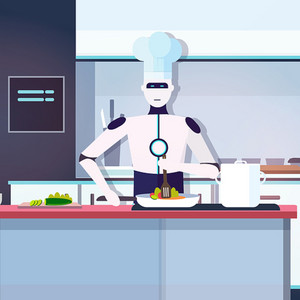
As a result chefs have now turned to AI or artificial intelligence to come up with new menu items.
The recipes are sometimes a hit, sometimes a miss.
But always interesting.
What's going on Steve?
This is a really interesting trend in the restaurant industry.
When we think of chefs I think we think of them to be extremely creative.
Very exciting to see new menu items pop up at your favorite restaurant should they come.
But I think we have to remember that sometimes these chefs need help as well because creativity comes and goes.
Well let's start with an example from a real business in Dubai.
There's a restaurant chain called Dodo Pizza.
I'm not sure how to pronounce that.
Anyway, Spartak Arutunyan is the head of menu development for that company.
Spartak was trying to think of new pizza ideas.
He thought, why don't I ask chat GPT and see what the algorithm has to say about this.
It created a recipe, the restaurant decided to put it on the menu.
It was a huge success and it's still on the menu now.
Now what kind of pizza?
Remember this is Dubai, right?
I don't know if you know too much about the demographics of Dubai.
But 90 % of Dubai's 3 million population immigrants.
He said there's so many cultures here.
There's people from India and Pakistan.
There's Filipinos. There's Arab people.
There's Europeans all over the world represented there in Dubai.
He asked chat GPT to come up with a pizza that represented the cultural mix.
This is what chat GPT came up with as a recipe.
Arab shwarma chicken, Indian grilled paneer cheese, Middle Eastern Zatar herbs and tahini sauce.
Those are your pizza toppings.
Chat GPT came up with it.
He thought I would never come up with these ingredients myself to put on a pizza.
He put it on the menu.
People loved it and it's still selling like I said today.
Li Yi, how do you like chef GPT's creation here?
That's pretty creative and very interesting.
When I look at this topic and I was like, oh, I also want to create my own recipe using chat GPT.
So I actually talked to GPT and asked GPT to give me a new recipe, a new Chinese dish recipe.
What it gave me in the first split is spicy garlic stirred fried noodles with vegetables.
That's not new. That's not new.
That's something we already have.
You need to fire that chef.
Definitely. So that's why I told GPT, no, I want something new.
Something that has not been made and cooked before.
So here's what GPT gave me.
Mango cashew stir fried rice cakes with spicy coconut sauce.
That's so typical Western perceived Chinese food.
Are you kidding? You like that?
Can you give me that again?
Mango cashew stir fried rice cakes with spicy coconut sauce.
Delicious. Table for two.
Really. So GPT tell me to prepare the rice cakes at the first place and make the sauce by mixing the coconut milk, chili paste and lime juice and fish sauce and then stir fry the rice cakes with garlics and peppers and add mango and roasted cashews and pour the coconut sauce and then finish and serve.
Sounds a little bit more Thai than Chinese.
Definitely. It still sounds yummy.
That's really great, even something that I haven't really thought before.
So that also reminds me, you know, GPT can somehow break the boundaries that we assume about cooking and also different combination of ingredients.
But I would actually agree with Steve, your earlier comment that this is more Southeast Asian as opposed to Chinese.
And I suspect that it's not chat GPT being more creative, but chat GPT.
I've I've searched a lot of stuff about China and it gives me terrible answers and it kind of just makes things up.
And I don't know if it's, you know, offering one of those slightly erroneous answers if I'm being super strict or it's actually breaking down barriers or whatnot or create or just recreate or or reinforcing stereotypes and things like that.
Remember, you know, I think when we think about AI and when we think about chat GPT, I always have this image in my mind of this like sentient robot who's having creative thoughts and independent thoughts.
Chat GPT is just the Internet of things that other people put down somewhere and it's just grabbing stuff and putting it out there.
And it doesn't always work.
Here's another recipe recommendation from chat GPT.
What do you think about this one?
Strawberry pasta. What kind of sauce are we talking about?
Does it matter? That sounds terrible.
Strawberry spaghetti.
But Steve, what about the jury and pizzas?
Have you tried them here in China?
I have not just yet durian and I have a contentious relationship up to now.
Here's another example.
In the United States, Venetia Willis conducted a similar AI experiment.
Venetia has a taco restaurant in Dallas, Texas, and she was very curious about AI.
So she let chat GPT come up with a menu item as well.
And she said there were some really terrible combinations.
For example, red curry, coconut tofu and pineapple in a taco.
Is that not good? I can't really tell.
Not really going to be good together.
But the next one was a big hit.
Prawns and steak. She sold, so she put it on the menu.
She sold 22 ,000 in a week.
So you mean like so shrimp and beef together.
That's a lot of cow.
Well, that's like really healthy protein.
It's like a surf and turf taco.
But I think that's a more reasonable combination than the previous one.
Previous one. Yeah.
I'm curious though.
Think about this from a rest.
If you're, if you're listening now and you're a restaurateur.
Think about how you can market this though, right?
It's a fun little gimmick to be able to say to your customers, Oh, I have a new menu item.
I just asked AI to create it for me from a customer's point of view.
They'll say, Oh, what's that?
Oh yeah, cool. Let me try that.
I mean, this sounds really silly on the surface, but Alicia sold 22 ,000 tacos in one week, being able to use AI as a marketing tool to her restaurant's advantage.
That's a, that's a big number of tacos.
That's a lot of money in her pocket.
So can we call AI reliable for recipe creation?
Or am I even, or maybe this is just merely a gimmick, like, um, Steve, you just said.
Yeah. Well, I think, I think it can be both as a matter of fact, because Emily Bender is a linguistics professor at the university of Washington in Seattle.
And she said, AI chatbots are not magic.
Um, she says that they've learned what others have read online.
She said, if you can get chat GPT to spit out something that looks like a recipe, then it's because there are recipes on the internet.
So the AI could have simply grabbed a recipe from somebody's cooking blog that already existed many years ago.
And it seems like this creative fun thing that chat GPT came up with.
When in fact, it was just somebody else's creation a long time ago.
And that decreases, uh, reader numbers, I think, and their ability to make a living from subscriptions or advertising menus when, you know, this is the result.
Well, then should there be ethical considerations around AI using publicly available recipes for commercial purposes?
I mean, there are major lawsuits going on in the U S about, um, you know, the ethical considerations of AI scraping information of, of like publishing houses or, um, licensed and, uh, certified journals, um, those kind of things.
Um, should it be the same argument here about recipes too?
Yeah. I mean, it's a fair point, isn't it?
Because if you put something up online and it's something that you published and you created, and then how would you know if chat that's part of the big problem, I think is chat GPT grabs it and just puts it in its database and then somebody else in another part of the world comes up with it.
How are you supposed to know that that even happens?
So that's one of the, one of the big issues there.
I think in another one is also the discrimination that we have discussed a lot of times when it comes to AI creation.
I mean, when you compare AI chef with human chef, I would always vote for human chef because they're, they're having their different cultural background, their personal background, which can actually be a be taken to the creation of the whole recipe and the cooking process.
But when it comes to chef GPT, I mean, what's the persona of GPT?
You can't really tell even if you're giving us GPT a persona or you're giving the very detailed order saying I want something from China.
For example, I told GPT to have something like Chinese dish, but then how does the machine understand what represents Chinese flavor?
That could also be a very tiny little things that you can take into consideration.
But remember we're in the early stages too, and as AI gets more sophisticated in the future, it may be more helpful in recipe creations and not recommend things like strawberry pasta in the future.
It could categorize ingredients as sweet or acidic and so on, and then find those things on the internet that could taste good together with the more information that's provided to it and the more sophisticated it gets, the more advanced it will become in its recipe creations, which I suppose brings
into question the role of the chef in the future.
I saw a report from Forbes from earlier this year and this was a forecast that was done by a restaurant consultancy firm called Aaron Allen and Associates, and it suggests that as much as 82 % of restaurant roles could be potentially supplanted, be supplanted by robots, 82 % of restaurant roles, up to
31 % of those roles being devoted to food preparation, jobs that are typically done by human beings at this point in time.
It's a big shift towards automation that's happening right now, for fast food establishments in particular, but is it going to replace chefs?
Probably not, but it would replace a lot of the jobs that you find in food automation, burger flipping or things like that, particularly in the fast food industry.
Yes. And also for sous -chefing, a lot of the preparation, you know, this can be done by robots if that restaurant has enough investment in these pretty high -tech equipment at the time.
That and there's that, and then there's also the need for employees as well.
60 % of dining establishments said that they've been struggling to recruit employees.
And according to Aaron Allen and Associates in the US alone, there was a shortage of 300 ,000 restaurant workers in 2022.
Not enough people to work in the restaurants.
They're shifting towards automation.
But will they ever take over the role of chef?
They don't seem to think so.
That said, there are other ways that AI is really helping out.
In fact, this is a really fun idea, business idea.
We go to Singapore.
Italian expat chef Stefano Cantu created an AI powered app that can suggest recipes for you judging by the ingredients that you have in your cupboard and in your fridge.
And we were using the term earlier, but this is the official term.
Chef GPT. So you put your information into the app about the food that you have in your fridge.
It has a dropdown menu and it lets the user specify tools that they have in their kitchen as well.
So what kind of cookware you have, or if you're in a hurry, you can put that in.
Or if you're not a very good cook, you can put that in.
You put all that information in and then the AI gives you a recipe.
And it also gives you a picture of the dish that you are going to be creating.
And if you think, oh, that's a little bit silly.
You got 30 ,000 users within a week and a half of launching last year.
I think this machine will only be welcomed by those people who don't really hold high expectation towards what you have for meals.
Me. Because I always feel like, you know, as a foodie, I always feel like what I want to eat, I want to choose what I want to eat.
And that can depends on my moods, come depend on the weather, depends on what I'm going to, you know, who I'm going to have this meal with.
So there are, you know, so many different unexpected factors when it comes to what to eat.
So I can't really imagine to have a machine or a GPT or a robot to decide for me.
So what I can eat and what kind of combo I can expect.
Maybe the next selling point is the restaurant goer can come in using AI to create their own dish and let the AI slash food automation machine cook the thing.
And then you have AI reviewers.
So the only thing we do is to gulp down the food.
That's the only human element left.
I'll give you one more example before we wrap up this topic.
This one's kind of cool actually.
How can AI influence supermarket chains?
Any idea? Maybe it can help them stock the popular food items.
Kind of on the right track there.
Yeah. There's a U .K.
supermarket chain. It's a chain.
Excuse me. It's called Waitrose and they're using AI to spot food trends on social media.
And one of the food trends that caught the eye of AI in the UK was Smashburgers.
Do you know what a Smashburger is?
It's an American thing.
It's where you really squish the hamburger patty down flat, flat, flat to the grill.
And it makes it really thin and really crispy and really delicious.
I have to admit. Yeah.
It's an American thing, but anyway, it was a rising trend on social media.
And so the UK supermarket, they saw that trend and now three or four dedicated Smashburger restaurants opened up in the UK and they saw that too.
And they launched their own brand, the supermarket did of Smashburgers because AI caught the trend online.
It's pretty cool. So that just took the job of, let's say a PR person or whoever was trying to follow the latest trend and bring it to the company's shelves.
And that is the downside.
That is the downside indeed.
As AI continues to push the boundaries of creativity in the kitchen, it's clear that while technology might assist that process, it can never fully replace the art of cooking.
And the real magic happens when human intuition, culture and experience are combined with AI's analytical power to create something maybe truly extraordinary.
Perhaps the future of food is not the question of AI or chef, but rather how the two can work together to elevate the culinary experience.
But I'd also like to raise one last point.
It's important to remember that the best dishes often come not from perfect algorithms, but from the imperfections of human creativity and passion.
In the kitchen, the true master will always be the one who knows how to balance both.
Coming up next, getting all dolled up for a night out.
What if your dog could join the fun with their own spritz of luxury?
But wait, should we really be spraying our furry friends?
Stay tuned. Looking for passion?
How about fiery debate?
Want to hear about current events in China from different perspectives?
Then tune in to Roundtable, where East meets West and understanding is the goal.
It's the hour of Roundtable with myself, Hye Young.
I'm joined by Steve Hatherly and Li Yee in the studio.
When you get all dressed up and are ready to hit the town, perhaps you'll put on your favorite scent, cologne or perfume.
It's always nice to smell good, isn't it?
Especially when you're meeting people.
Now have a look at your little four legged friend.
Don't you think that they would enjoy the same luxury?
A world famous luxury brand has released a new perfume for dogs, but don't spray them just yet.
Some vets and pet owners are kind of skeptical.
Yeah. Pretty cute little story, isn't it?
Are you guys dog people or cat people or just not animal people at all?
Dog people, definitely.
Oh, I was just going to say you might start a war.
Yeah. This is what happened.
A world famous luxury fashion house, they've launched a new alcohol free perfume for dogs.
It's in honor of one of the designers poodles.
But not all vets, as you mentioned Hye Young and pet owners, agree as to whether it's safe or not.
It's not cheap. It costs about one hundred and eight dollars for 100 milliliters.
That's three point four ounces.
So a little bottle will cost you over one hundred dollars.
And it has been certified suitable for animal use, but it is going to cost you a pretty penny.
Anyway, the designers, they defend it.
They say that it follows a safe pet cosmetics protocol designed to ensure a degree of safety of cosmetic products for animals comparable to that, by the way, required for humans.
The company released a statement as well at the launch of the perfume.
They said through a compliance recognition to this protocol granted by a particular outlet, participating companies demonstrate their sensitivity in creating products that ensure the safety and the respect of the animal in accordance with established standards.
It's a very, very official statement for dog perfume.
And you could just easily replace the word dog with baby.
Yeah, exactly. But and also parents would be up in arms and saying that, huh, should we be spraying the baby or not?
Too early, too late, whatever.
Also a fair question.
I have to say the last time I feel like I don't really understand the fragrance market is I noticed something called fragrance for hair.
That's something I couldn't really understand because I feel like I don't really understand the difference between the fragrance for hair and also the fragrance for body and face.
But this time I feel like fragrance for pets.
First of all, you have to make sure it's safe for pets, right?
So that makes a lot of sense.
And meantime, although I'm a dog person, but I don't already keep any pets because I'm really allergic to dog hair and cat hair.
But I do have friends who are keeping dogs and cats and I can see how much devotion they're willing to take into raising their pets.
They're even having their birthday cakes for their each pet friend each year.
And how much willing they're they're buying different stuff, small stuff like this, you know, for their pets.
Oh, my friend's dog has its own Facebook page, so it's just humans projecting onto animals the things that they want for themselves.
And this is another example.
But veterinarians and I learned something actually from this story.
I've had a dog almost my entire life, different dogs.
And I thought I knew a whole lot about dogs, but I did learn something today.
This is a response from one veterinarian, a veterinarian in Rome, as a matter of fact, by the name of Federico Coccia.
Dogs recognize themselves.
This is the quote. Dogs recognize themselves by smells and they recognize a person by a smell as well.
When the dog arrives, he sees you, he wags his tail, but he first smells you and then recognizes you because you are stored in one of his smell drawers.
That's how he described it.
Therefore, this world of smells should not be changed for an animal, which I thought is a really great point.
And this is this is what I learned.
Smell to a dog is much, much more important than it is to a person.
Scientists say that a dog's sense of smell is 10 ,000 to 100 ,000 times more accurate than a human's.
And one of the reasons a dog has a much better smelling ability than we do has to do with their scent receptors.
So for every scent receptor that a human has, a dog has about 50.
So now think about that when you're spraying perfume on your dog, how strong that smell would be.
And this this is what I learned.
I know I keep saying that I'll get to it now.
When I owned dogs before and I gave them a bath, they have that scented shampoo.
If you're a dog owner, maybe you've seen this before after the bath and after you dry them, they'll go to the carpet or they'll go in your living room and they'll roll around on the sofa or something.
You know what they're trying to do?
Remove the scent of the shampoo.
Yeah, because it's trying to get dry.
No, according to the vets and according to the experts, I didn't know this either.
What they're trying to do is get rid of that that scented smell so that they can have their natural smell back.
So take that into consideration when you're considering whether to to your doggie after you do it to yourself.
That really makes sense.
And that just reminds me of a story, you know, I just read from that saying that when I didn't expect Chinese philosophy to find its way into this conversation.
You know, this story really tells us what suits our, you know, as the pet owner doesn't really suit your pet.
What you think you're offering the best for your pet isn't really the best for itself, because that story just basically tells how an ancient king feeds a very precious bird in the way he thinks is the best.
Feed the bird the meat and everything and water every day.
But in the end, the bird dies.
So that story just basically wants to tell that it doesn't it doesn't really have to be the best that you think you're offering to your friend or to your pet in this case.
So that's also something that we can learn.
Yeah, remember that a dog is a dog.
It's not a little tiny human with more hair.
So, you know, they do say that it's safe to use on pets.
But some dogs are allergic to perfumes as well.
Dogs have allergies as well.
And they might have an allergic reaction to a perfume.
So if you're considering this, I would recommend I'm not an expert, but go to your vet and get your dog tested for allergies and figure out if they have allergies or not.
And then if they don't and you think it's okay, then check your dog's reaction.
Yeah, I feel like leaving a an online comment for that luxury brand.
I bet they didn't do their background research about, you know, the reaction on the dog and how, you know, having this potent smell can not be a great thing sometimes.
Yeah, it's a dog by dog case.
I think I think so, too.
And yes, it raises interesting questions about how much pampering is too much and whether pets actually benefit from them or even enjoy these indulgences.
And that brings us to the end of today's Roundtable.
Thank you so much, Steve Hatherly and Li Yi for joining the discussion.
You can always find us on Apple Podcast at RoundtableChina.
And also if you have something to say to us or want to share a voice memo with us, you can reach us via email, RoundtablePodcastatQQ .com.
I'm He Yang. We'll see you next time.