NPR In rich countries like the US, we spend millions of dollars to save a life.
People with health insurance enjoy befuddlingly expensive surgeries and medication regimens.
Governments shell out for highway improvements to reduce crashes.
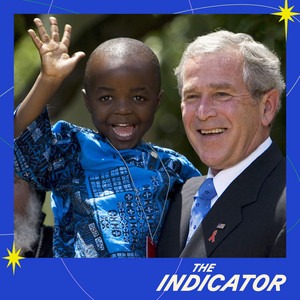
crashes but there's a program that has been saving millions of lives for a fraction of that cost just four thousand six hundred dollars to save a human life that program is called pepfire the u .s president's emergency plan for aids relief ladies and gentlemen george w bush started it in 2003 seldom has history offered a greater opportunity to do so much for so many at the state of the Union, President Bush asked Congress to commit $3 billion a year to fight AIDS in Africa and the Caribbean.
It's now given an estimated 26 million people another chance at life by preventing and treating HIV and AIDS.
Under President Trump, that program is being gutted.
The president paused foreign assistance in January.
Doge then demolished USAID, which delivered a majority of the program's assistance.
And now there's a bill going through Congress that would codify much of these cuts.
So what's happening on the ground?
Journalist John Cohen went to Southern Africa to find out.
They're reeling. They're dizzy.
They're like, what?
What? This is our trusted partner, the United States government.
How can they be doing this?
This is The Indicator from Planet Money.
I'm Darren Woods. Today on the show, HIV AIDS prevention under Trump and a trip to an African clinic to learn about the cost of these cuts.
everything in between, the Hartford is devoted to making it easier.
Connect with your underwriter at the Hartford or visit thehartford .com.
This message comes from Redfin.
With the Redfin app, you'll know the moment your next place hits the market.
Whether you're looking to buy your dream home or rent a suite apartment, give Redfin your gotta -have -it wish list of property features, and you'll receive real -time notifications tailored just for you.
Ready to see it up up close and personal, scheduling a tour is just a tap away.
Don't wait to find your perfect match. Download the Redfin app and start searching today.
This message comes from LinkedIn ads.
Target your buyers by job title, company, role, and skills with LinkedIn ads.
All the professionals you need to reach in one place.
Get a $100 credit on your next campaign at linkedin .com slash results.
Terms and conditions apply.
This message comes from Insperity, providing Not everyone remembers this acutely, but in the 1990s, AIDS was one of the leading causes of death, including in the U .S. And then came game -changing drugs to treat HIV, the virus that causes AIDS.
These drugs were what's called antiretroviral therapy.
therapy. John Cohen is a senior correspondent for Science magazine and has been covering public health for over 30 years.
They could basically allow people who had HIV to live normal lifespans.
Anti -retroviral therapy saved millions of lives in wealthy countries.
Well, that wasn't available to most people living with HIV in the world because the drugs were so incredibly expensive, about $15 ,000 a year per person.
So that's manageable in a rich country, but just completely inaccessible for people from low -income countries.
great in the United States, Europe, Australia, Japan had no meaning for most of sub -Saharan Africa, for most of Asia.
And that's where most people who have HIV infections live.
There were still millions of deaths a year across those countries.
And that's what impelled George W.
Bush to start PEPFAR.
And what's made PEPFAR successful is that the program is heavily monitored for its outcomes.
The metrics that we're talking about here are 95 % of people know their status, 95 % of those people start treatment, 95 % of those people reach undetectable levels.
95, 95, 95. Program managers can look at a country and see where it's succeeding, where it's failing, and what could be changed.
And even some of the country's hardest hit by AIDS have reach these targets.
To date, the program has spent over $120 billion and has saved an estimated 26 million lives.
It's a phenomenally successful program.
That success is now under grave threat.
The hope had been that American assistance could start phasing down around 2030.
But some Republican lawmakers didn't like that some money was targeting higher risk groups like sex workers and LGBT people.
So that glide path has now turned more into a crash landing.
Earlier this year, many HIV AIDS organizations in places like Africa received emails terminating their contracts with the USAID.
The emails were signed off, God bless America.
So in May, John went to two African countries to find out what the reality was at the hospital door.
He flew to Eswatini and Lesotho.
These are two countries within South Africa.
They're small, one to two million people each. They have the highest prevalence of HIV anywhere in the world.
About one in four adults in Eswatini and Lesotho have HIV.
Believe it or not, that is a major improvement from a decade ago.
I'm not sure the countries would exist today had these medications not arrived there when they did.
In some places in southern Africa, entire villages have been run by orphans.
In Eswatini, John spoke to a nurse at a clinic in a brick building, Tetsabile Dlamini.
The PETFAR cuts were starting to bite.
How serious is the situation?
This is really serious.
Is this a five -alarm fire?
No, this is really serious, and it's worrisome.
Now, the Trump administration has said it is allowing life -saving treatments to still be funded.
And yes, the clinic still has the antiretroviral drugs, but they don't have the funds to promote HIV testing to know who needs those drugs.
John saw a young woman named Temelangeni Dlamini who came into the clinic for her pregnancy checkup.
She tested positive for HIV.
So she was swiftly given antiretrovirals.
So when I went to the clinic, I was talking to them and said, said, well, that's great.
You know, it's systems working.
And this outreach worker there said, no, it's not.
We need to now go test the contacts in her home.
And typically we would drive out to her home and do the testing.
Timolangini has two children plus more in the home.
It would be important to make sure they were being tested too.
Without testing, a child with HIV would probably only be seen once it had progressed to AIDS.
And with the cuts, the clinic didn't have the means to send anyone over to test those children.
This time, though, there was kind of an unusual solution.
I said, well, we have a car.
How about if we took you?
Would you want to do that?
And the outreach worker said, yeah, I'd love to do that.
So we went out to the home.
And the woman tested eight children.
And, you know, my heart was in my throat.
You know, I really, it's crushing to see positive tests come up, especially in children.
And here were eight children being tested and they all came out negative, which was just wonderful.
If John hadn't been there and if those children did have HIV, the outcome could have been quite different, especially once it's progressed to AIDS.
At that point, they already would have suffered irreparable damage to their bodies.
When they grew older, they would probably be stunted.
if they survived. That's what's happening.
It's a little harder to see than, hey, are there drugs on a pharmacy shelf?
But that's the reality of what these cuts are doing.
As the head of the U .N. AIDS program said to me in East Watini, it's like pulling someone off a life support machine and just pulling the plug.
White House budget director Russ Voigt said the U .S. is in $37 $7 trillion in debt.
And at some point, the continent of Africa needs to absorb more of the burden of providing this health care.
So could African countries find HIV AIDS treatment and prevention themselves?
Sure. And they want to.
And they're moving toward that.
But to think that this is going to solve our debt problem, I mean, come on, do the math.
This is a drop in the ocean.
Now, you can argue that, hey, it's a charity, as Marco Rubio has said, and it's not our job to to be a charity.
Well, this is more than simply being a charity.
It's more than simply soft diplomacy.
It's creating a stable world where you don't have military conflicts, you don't have countries falling apart because of health.
We reached out to the Department of State asking if its leadership was concerned.
A spokesperson said PEPFAR continues to support life -saving HIV HIV testing, care, and treatment approved by the Secretary of State.
But they also said that other PEPFAR -funded services are currently being reviewed for efficiency and consistency with U .S. foreign policy.
John says, like any large system, there were always wrinkles, like leadership in Washington pushing too hard for those metrics sometimes or debates over abstinence promotion.
But overall, he says, this was an extremely well -run program.
In its hobbled state now, though, researchers from the HIV Modeling Consortium estimated 70 ,000 people have already died.
This episode was produced by Julia Ritchie and Cooper Katzman -Kim with engineering by Sina Lefredo.
It was fact -checked by Sarah Juarez.
KK Cannon edits the show and The Indicator is a production of NPR.
This message comes from LinkedIn Ads.
One of the hardest parts about B2B marketing is reaching the right audience.
That's why you need LinkedIn ads.
You can target your buyers by job title, company, role, seniority, and skills.
All the professionals you need to reach in one place.
To get a $100 credit on your next campaign so you can try it yourself, just go to LinkedIn .com slash results.
That's LinkedIn .com slash results.
Terms and conditions apply.
Only on LinkedIn ads.
This message comes from Jerry.
many people are overpaying on car insurance why switching providers can be a pain jerry helps make the process painless jerry is the only app that compares rates from over 50 insurers in minutes and helps you switch fast with no spam calls or hidden fees drivers who save with jerry could save over one thousand three hundred dollars a year before you renew your car insurance policy.
Download the Jerry app or head to jerry .ai slash NPR.