
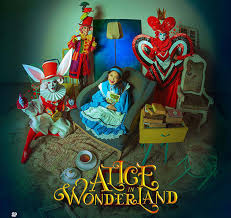
[Alice’s Journey Through the Absurdity of Wonderland: From the Mad Tea Party to the Garden Gate]-[Chapter 7]
📋 Summary
Alice’s Surreal Encounter at the Mad Tea Party
Following the guidance of the Cheshire Cat, Alice embarks on a quest to locate the beautiful garden she initially glimpsed upon her arrival in Wonderland. Her journey leads her to a bizarre encounter with the March Hare and the Hatter, who are engaged in a peculiar tea party. The setting itself is an exercise in absurdity, featuring a "very long table" adorned with "empty cups and plates," yet housing only the Hatter, the March Hare, and a "mouse, who was sound asleep."
The Logic of Nonsense
When Alice attempts to join the festivities, she is met with the contradictory claim that there is "no room," despite the vast expanse of empty seating. The conversation quickly devolves into a series of logical paradoxes. The Hatter poses the famous, unanswerable riddle: "Why is a raven like a writing desk?" When Alice attempts to engage in civil discourse, the March Hare chides her, stating, "You should say what you mean," to which Alice logically retorts, "I mean what I say."
The interaction highlights the chaotic nature of Wonderland's inhabitants, who demand precision in language while simultaneously admitting, "I don't know" the answer to their own riddles. Alice’s frustration peaks when the Hatter suggests she "have some more tea" despite her not having had any yet, leading Alice to conclude that this was "the stupidest tea party" she had ever attended. The lack of social awareness shown by the hosts is further cemented when they attempt to stuff the sleeping mouse into a teapot, a scene of pure, nonsensical malice that prompts Alice to walk away.
Accessing the Garden: A Lesson in Growth
Returning to the woods, Alice encounters a "tree with a door in it," a sight she deems "very curious." Upon opening it, she finds herself back in the hall of "locked doors" and the table with the "little key." Having matured through her experiences in Wonderland, Alice is no longer a passive observer of her own confusion. She demonstrates agency and knowledge of the rules of this strange land, specifically her experience with "growing and shrinking."
She strategically utilizes the resources she gathered earlier—the key from the table and the "mushroom she had taken from the caterpillar"—to manipulate her size. By eating the mushroom, she shrinks to a scale that allows her to unlock the door and finally gain entrance to the garden.
Conclusion: The Fragility of Happiness
Alice’s arrival in the garden marks a pivotal moment of success, as she finds herself "happy in the garden at last." However, the narrative leaves the reader with a sense of foreshadowing. While Alice has reached her destination, the story hints that her tranquility may be short-lived, as she is destined to "meet the Queen and play croquet." This transition suggests that in Wonderland, the attainment of one goal is merely the precursor to a new, potentially more perilous adventure.

Deep Learning with ListenLeap


