
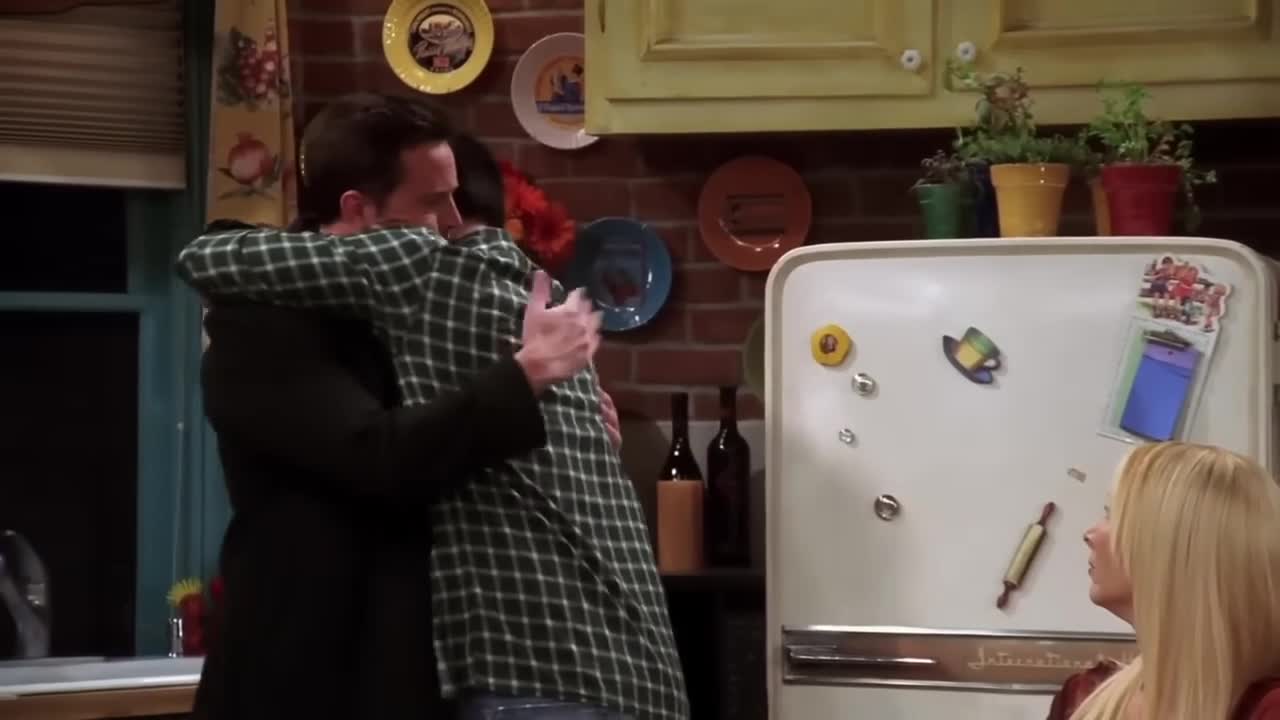
[The Big Move: Navigating Change, Friendship, and New Beginnings]-[Chandler and Monica Find Out If They Got the House | Friends]
📋 Summary
The Emotional Complexity of Moving On
Moving is rarely just about the physical transition from one residence to another; it is deeply intertwined with the social fabric of our lives. In this dialogue, we witness a poignant exploration of how friendships are challenged by the prospect of relocation. The central conflict arises when a couple decides to put an offer on a house, characterized by a "big yard" and "old maple trees," signaling a desire for a new chapter. However, their friends view this move not merely as a change of address, but as a potential rupture in their established community.
The Fear of Losing the "Neighborhood" Dynamic
The friends' resistance to the move is deeply rooted in the comfort of proximity. One character, Joe, expresses a profound sense of attachment to the current living arrangement, admitting, "Sometimes when I'm alone in my apartment, I look over here and you guys are just having dinner or watching TV or something, but it makes me feel better." This sentiment highlights the psychological safety provided by the group. The prospect of being replaced by strangers—"The Gottliebs" or "The Yangs"—creates an existential anxiety that manifests as an attempt to dissuade the couple from leaving, with one friend remarking, "You don't want to live in Westchester. That's like the worst of the Chesters."
The Tension Between Ambition and Loyalty
There is a palpable tension between the couple's desire for personal growth—"We're growing up"—and their loyalty to the group. The group's initial reaction is one of guilt-tripping and emotional manipulation, designed to keep the status quo intact. The couple feels the weight of this pressure, initially feigning disappointment when they receive news that the sellers "passed" and "wouldn't go a penny under the asking price." This deception is a defense mechanism, a way to avoid the immediate conflict of announcing their departure while their friends are so visibly attached to their presence.
The Surprise Revelation and Moving Forward
Ultimately, the truth emerges in a moment of vulnerability. Once the friends have departed, the couple reveals, "We got the house." This revelation marks a shift from the fear of abandonment to the reality of progression. The realization that they are "getting a house" and "a baby" underscores the inevitability of change.
The final scene, where the couple gifts their friends items, serves as a symbolic bridge between their past and their future. By presenting these gifts, they attempt to soften the blow of their departure, acknowledging the importance of their bond while simultaneously asserting their independence. The confusion of their friends, asking "What are these for?", highlights the difficulty of transitioning from a shared life to separate paths. Despite the initial resistance, the narrative concludes with the acknowledgment that life must move forward, and as they note, "We're growing up," signifying a bittersweet but necessary evolution in their relationships and personal lives.

Deep Learning with ListenLeap


