From the New York Times, I'm Anna Martin.
This is Modern Love.
Today I'm talking to two friends who are completely rethinking what it means to retire and what it means to get older together.
Their names are Robin Urien and Cheryl Hough.
A few years ago, Robin cashed out her 401k and bought a piece of land in Texas, about an hour outside of Dallas.
She set up a bunch of spots for tiny homes, she built an outdoor kitchen and she started renting the space out.
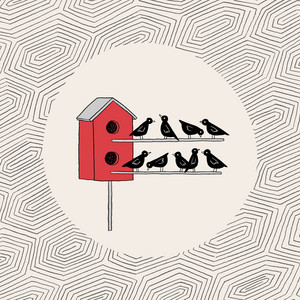
She called it the bird's nest.
Cheryl was the first to move in, then other women joined her.
In fact, the bird's nest is all women, all women older than 60.
And in a country where, for many people, getting older can be isolating and difficult, the women of the bird's nest are learning it doesn't have to be.
Today, Robin and Cheryl tell me why these years at the bird's nest have been some of the freest and happiest of their lives and why they think more women should do something similar.
Stay with us.
Thank you.
Robin Urien and Cheryl Huff, welcome to the show.
Hi, how are you?
Happy to be here.
If I came walking up your driveway of the bird's nest, what would I see?
You would see this huge area, 10 tiny homes, an outdoor kitchen, lots of green.
Lots of dogs would probably greet you.
Just walking around, yeah.
Just walking around.
This was a pasture.
Yep.
My dogs think this is, every house here is theirs, so they're always on somebody's deck.
How did you get the idea to make this land into the bird's nest?
Well, because it, I mean, it was always going to be a tiny house community.
I knew that when I bought it.
So you set it up like an RV park.
So we had all these 14 pads and 14 power poles and on two and a half acres fenced in and the two of us yeah, and there the two of us were and uh, in fact it was funny, i saw some pictures last night that i was like, oh my god, it was desolate out here when we lived here.
We first moved out here, i mean, there was nothing and just the two of us and we just went to work, trying to plant things and you know, make gardens and hauling brush and rocks, and it was crazy.
I want to understand why you decided and how you decided that this should be a community for all women.
Oh.
Well, I didn't in the beginning.
I did not set this up to be an all-women's community.
I just wanted a community.
And I bought a little tiny house that I could rent out, and it was bare bones, right?
And so I thought, okay, I'm going to have a builder's workshop.
And that was for just women.
And I posted it as, learn to use power tools.
For women only, and that we would mess with this little tiny house, right?
And it was a three-day seminar, and these women came.
How many did we have?
Maybe 12?
And didn't know these people from Adam, and we had so much fun.
And we were sitting around the fire one evening, and I said, what if we did this all women?
And it was like, yeah, yeah.
Slow me down there.
So you're sitting around the fire with these women who you've taught to use.
Well, I'm going to show you that I don't know anything.
I'm like a chainsaw, a drill.
A drill.
Color tools.
Yeah, yeah, yeah.
Okay, so I clearly needed the seminar.
But you're sitting around.
Do you remember how it came up?
Like, this should be all women.
Do you remember?
No?
I think it was more like a feeling that gosh, look at what in one day or two days of these 12 women working together, laughing together, eating together,
Look what that's done to us as this small group.
And it made us like, ah, instant best friends.
And I guess it was a feeling, and I think I probably said it.
I'm sure I said it.
What if I did this all women?
And everybody was just...
Gosh, that would be awesome, Robin.
It's one thing to be like man this is a great workshop, great crew, great crew of women to being like I want to live with all women in this relatively like actually very isolated space.
Like what felt possible if you made the bird's nest all women?
Um ease I guess ease being easy with people.
Um that instant bonding the, the recognition that we have things in common just because we're women.
Just because we're women, yeah.
And it was easy.
You don't have to guard what you say or how you say it or what you look like.
And at the end of the day, no matter what anybody wants to say, we women I've seen it in myself we change when men are around.
Tell me more about that.
I've observed it.
Women will carry themselves differently.
They'll talk differently.
They'll...
You know, oh, gee, look at my shirt.
Oh, it's all yucky.
You know, I think, and that's just, I mean, not that it's bad.
That's just in us, I think.
And I'm the same way, not saying anybody's, I'm different than anybody else.
But there's an ease when it comes to.
It's like being in a slumber party that you can talk about the things that are embarrassing.
And even maybe you don't like to talk about it with other women, but when somebody brings it up here, oh yeah.
Oh, me too.
Yeah.
Wait, can you give me okay, you know, you just said it's maybe embarrassing, but can you give me an example of something you're able to talk about with just women that you wouldn't be if you were in mixed company, as it were?
Well, Cheryl, you want to tell what we always come back to?
I pee when I sneeze.
Every time?
No.
Okay.
I don't have allergies.
But things like that, that's a woman's experience because we lose muscle tone.
We've had children.
We...
So we have common experiences as we age.
Things happen to us that people don't talk about.
And then we get together, it's like, you too?
Yeah.
Nobody's judging you for it.
Can you imagine saying that in front of men?
Oh, gosh.
Oh, by the way...
Sometimes when I sneeze, I pee.
And no man would say, me too.
Well, and they're all going to go, oh.
You know what?
Whatever happens to men when they get 65?
They wish they could pee.
And by the way, let's not even talk about it.
Let's not even talk about it.
Right.
They wish they could pee.
And so that's the difference right there.
And it's just small little things like that.
Hmm.
What have you?
This is to both of you.
I'm curious.
What have you discovered about yourself living in a space without men?
I can do, well, I've always been taught this, that I could do whatever a boy could do.
And I've validated that to the nth degree doing what I've done here.
And that's empowering.
And that's what I want all women to realize that you can do it.
You can do whatever you want to do.
You just have to be persistent.
And I think, when you're married and you have the man and you have these expectations that okay, he's going to take care of me.
There's certain things that he's going to do for me.
And here, you wake up in the morning.
And you just, there's something to do, you do it.
Got to take the trash out, you're going to do it.
You don't have, you don't put expectations on anybody else.
And so you're never disappointed.
And if it's something that takes two of you to do it, then you go get somebody else.
And we have different skills.
So if I can't do something, I know there's somebody here that can show me how.
I just want women to realize that you might have to work harder, but you don't have to depend on a man for everything.
You know, and I don't think it's necessarily that Either one of us learned that while we were out here.
It's that we already operated like that.
I know I'm not going to do it right, but I'm going to do it.
Yeah.
And it'll work.
But no, it won't be right.
There might be 10 nails in it as opposed to one.
Yes.
But it's going to work.
It's going to work because I'm not giving up until it works.
And I was already like that.
But out here, it's accepted.
It's encouraged.
You're not judged.
You're not judged.
They'll hand you another nail.
I think it needs one more.
Some of the comments sometimes on these different articles that just tickle me to death.
Well, who's going to... It's always men.
Well, who's going to open a jar?
Oh, my gosh.
No.
Are you serious?
Yes.
Several times.
Yes.
And I think to myself if I have to, I'll take that jar and slam it on the ground and pick out the glass.
So...
I took a hammer to a pill bottle yesterday.
So, yeah.
But I do realize now that strength is going.
So there are... As in your strength, your physical strength.
Yes.
Physical strength.
In fact I was telling my son.
I said gosh, I have to start lifting weights because I don't want to have to yet depend on somebody else to lift my propane tank into my you know house.
What do you think will happen when you reach that point?
I don't know.
I have devised in my mind a little lever and pulley system.
Yes, Cheryl.
Nice, Cheryl.
Yes, I love it.
I love that.
Ooh, what's that?
A bird ringing the bell on my door.
She wants me to go over there and let her in.
And Bird is a resident.
My dog.
Robin's dog.
Your dog.
Technically a resident.
Yes.
She likes to come over and take a little break in my house.
That's so sweet.
And how does a dog ring a doorbell, actually, I'm realizing?
She has a special bell.
Yeah.
A little bell.
It's like a shop bell, but it's down on the bottom of the door.
And she nudges it with her nose?
Yep.
Well, sometimes she smacks it with her paw and then sends me a dirty look.
We'll be right back.
In this community of mostly retirement age women are all... Is everyone in the community over 60?
Is that true?
Yep.
Okay, all over 60.
Yep.
How do you handle it if someone gets sick?
Well, we've had that.
Just...
Last month, we had... It was a bad month.
A total knee replacement and bypassed heart surgery.
And a broken foot.
And a broken ankle.
Wow.
So that left... We ran out of drivers.
We were driving everywhere.
But that's what I wanted.
What did you want?
I wanted us to take care of each other as much as we possibly could.
But with no expectation, which I think is the really interesting part of your.
You wanted a community.
And in fact I think you've created, the two of you, a community where there is this mutual support but there's no expectation.
Can you explain to me how those two things work together?
Sure.
Robin does not keep track.
She just doesn't.
That's not a normal thing.
And it's hard for people to understand that.
And I spend some time explaining, no, she really is not keeping track.
Like not a tit for tat.
I support you.
You support me.
That kind of thing.
No, not at all.
No.
That's very freeing also, that you do it when you feel like doing it, and you feel like doing it because you're not expected to do it.
That's perfectly right.
I mean, we know as a group that are here now and we've been together now for quite a while, that hey, We'll do whatever we can to take care of each other, to keep each other from going into a nursing home.
We all have children.
But, you know, our children are in their mid-30s, late or early 40s.
They're at the epitome of their career, so they're blowing and going to get where they want to get.
So we alleviate that pressure for them also.
And us as parents.
You know, we don't want to constantly call our kids and go hey, can you take me here?
Oh, I broke my ankle.
And so I don't ever feel obligated to take someone or do something.
I just, it's part of our jobs as residents here.
How do you think about the future?
You know, you're planning to age together, right?
So how do you think about what's to come?
I don't.
You know, I don't.
We talk about it, not very often.
I think we've kind of set our peace at one point that we will do whatever we can for each other to keep each other out of a nursing home.
And if that means that somebody ends up with a ramp and we cook them meals and they're in a wheelchair, whatever that as much as we can possibly do, but we can't prepare for the future.
We've talked about maybe we'll get a health care nurse free rent.
And she'll just go from house to house.
I mean, it's a great idea.
Right.
Why couldn't that work?
I mean, I don't know how it all works.
But there are little things that we have discussed, but we're not there.
So I'm not going to lose any sleep over it until it happens.
Cheryl, is that how you think about it, too?
Sort of like we'll cross that bridge?
Yes, because no one knows.
And I don't like to waste happiness. thinking of things that may or may not happen.
Some people over-prepare, and that's where they get their comfort from.
I get my comfort from knowing, whatever it is, we're going to work it out and I'm not going to waste any time on it.
I don't get comfort from getting all the little details down because I don't believe it matters.
And what happens if that doesn't work?
Exactly.
Now you're scrambling because, oh, for 10 years, this is how you thought it was going to happen.
Oh, now I've got to switch gears.
And so it's just easier, I think, to just kind of go with the flow.
And know that it's going to work out.
And that we're going to do whatever we can.
We'll do the best we can.
We'll do the best we can.
I'm hoping that this environment will keep us healthier for longer.
If it's everything people say is, you know, fresh air and moving and joy joy laughter, that that is going to keep us all on track.
Maybe better for what?
Six months a year, who knows what that could possibly be.
But um, you know, i don't think we're ever going to let anybody sit in their house and go oh, poor pitiful me.
I've got whatever ailment.
You know, it's kind of like drawing people out because we all have something.
We all have something, so there's no pity party.
I'm going to ask this, which is maybe it seems obvious, but I'd appreciate you letting me into your thinking.
You know, you say a goal is to not be in a nursing home.
That's clearly meaningful and important to you.
Absolutely.
Why is that?
I haven't heard any good stories about nursing homes.
All I ever hear is you go to a nursing home to die.
It's your last resort.
I've been in nursing homes, and it is not a place that is pleasant.
And I think they're only going to go downhill, you know, based on what's happening out in the world.
But I mean gosh, if you can stay in your home, that's everybody's dream right to die in your own bed.
And I am a homebody.
I just want to be home.
More than I want to go somewhere or do something, I just want to be home.
And to have that taken away from me, I think, would be really hard.
Would be really hard.
Yeah.
What's something.
It can be small, but something specific that made you feel joy recently at the bird's nest.
Both of you.
I smile every time I see my house.
It's just so little and cute.
It's so cute.
When I drive up to it, I just smile.
Yeah, I mean, I wake up.
I don't know.
Today I woke up.
I mean, this morning I was like, okay, I got all the Christmas decorations out.
Now I'm going to... That makes me joyful that I'm going to put up my Christmas decorations.
It's a...
What's the opposite of joyful?
Unhappy?
Yeah, sad, despair.
Yeah, that just doesn't get in my body.
You know, do I get sad?
Sad does, but...
It's fleeting, but despair never.
And out here, my gosh, I'm just grateful for everything that I have here.
I'm a pessimist with hope.
I think things are probably going to go really bad, but I know I'm going to be okay.
Because I'm strong enough, and now I have this support system.
So it's not an everything's wonderful kind of joy.
It's a, you know, whatever it is, we can handle it.
We'll be fine.
I feel kind of emotional hearing you say that.
I just, I don't know.
It's not the, and I don't, you know, who knows.
But this is not... the narrative or the experience that we typically hear about aging.
It's just not, right?
It's just not.
I mean, this is like a, it's not naivete, right?
You're not being Pollyanna-ish.
Everything's going to be fine.
We'll never have a, it's like what comes, we'll handle it.
Whether it takes one nail, whether it takes 10, you know we have the support and And we'll have each other.
We'll have each other.
Yeah.
You know, I mean, what is the worst thing that you can think of?
What is?
For me it's being all by myself in a time of strife or or in it where I'm scared.
You know that is I think that's probably one of my a big fear of mine that to be by myself and dealing, and you have people with you you can deal with so much that you can't emotionally deal with on your own, whether it's friends family, whoever you just don't want to hey, die alone or go through hardship alone.
It's 10 times harder and i know you get that when you're married.
But the majority of of of 65-year-old women I mean I don't know what the statistics are, but they're pretty high that we're all by ourselves.
Yes.
Our husbands have died.
Our husbands have left us.
We've divorced.
And you're in a house by yourself.
By yourself.
And the friends you used to have.
You don't have any activities with them anymore, so you don't really see them.
And during COVID...
All my friends were alone in a house, and they were doing Zoom calls desperately.
And we're over there having margaritas and watching movies on the TV on the side of a house.
That's what this community does for each other.
I think that... more women should do this and spend that money.
Spend that money.
Don't wait.
And why do you say women specifically?
Like what do you think it is?
Why is it so important?
Because clearly women need this.
I mean, you know how many women contact me?
It's just unbelievable.
Living in their cars.
Unbelievable.
Yeah.
Thousands.
In dire straits.
What does that speak to, do you think?
Does it speak to retirement?
Does it speak to the roles that women are expected to fulfill, especially as they get older?
What roles are we expected to fulfill as we get older?
I don't know what that role is.
I don't think women know what that role is.
We don't have one.
What is it?
There's no role for us out here.
Hmm.
We are now done.
Once you retire, what is our role?
If you don't have the means, if you don't... Women have, you know, we haven't had the same salary.
Hopefully, after my generation, that's going to not be a conversation, hopefully.
But, you know...
We took care of the kids.
We had a job that was the secondary kind of job to your husband.
They put all the money in you, their 401K.
And then, okay, now you're divorced.
I can't tell you how many women, their husbands left them at 65.
And they had a menial job.
They never put in their 401K.
Mm-hmm.
And now, now what happens?
What is your role?
That's the question you ask.
What's your role?
There is no role for us.
At the bird's nest, do you have a role?
If so, what is it?
I think everyone here feels that our role is to help.
To help, to be a good person, help when you can.
Do what you can on your own, maybe bring a little joy to somebody else's life.
Just, you know I don't know what my role is, I don't know what our role is out here.
You know you can get all bogged down in the whole political issues and the things going on, but at the end of the day what I try to tell everybody is we can only control and take care of our little part of the world.
And if we in here can be kind to each other and respectful and, you know, do what we can for the community.
I don't know.
I don't know what my role is, but my role is to just be happy.
That's what I want for myself.
Robin, Cheryl, thank you for telling me your story.
I really appreciate it.
You're welcome.
Thank you for being interested.
Right.
The Modern Love team is Amy Pearl, Davis Land, Elisa Gutierrez, Emily Lang, Jen Poyant, Lynn Levy, Reva Goldberg and Sarah Curtis.
This episode was produced by Sarah Curtis and Amy Pearl with help from Davis Land.
It was edited by Lynn Levy and Jen Poyant.
Our mix engineer was Daniel Ramirez.
And special thanks to Lisa Miller.
It was her reporting that inspired this episode.
If you want to read her feature about the bird's nest, it's very good.
We'll link it in the show notes.
Original music in this episode by Marion Lozano, Sonia Herrero, Rowan Nemisto, and Dan Powell.
Dan also composed our theme music.
The Modern Love column is edited by Daniel Jones.
Mia Lee is the editor of Modern Love Projects.
If you're interested in submitting a modern love essay or a tiny love story for consideration, you know the instructions are in our show notes.
I'm Anna Martin.
Thanks for listening.