This message comes from Tourism Australia.
Australia, a land of contrast, where white sand beaches are almost as plentiful as flat white coffees, and where you can go away for a vacation yet somehow feel right at home.
Explore more at Australia .com.
You're listening to Life Kit.
From NPR. Hey everybody, it's Marielle.
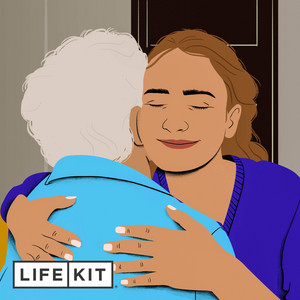
well. Caregiving is a full -time job, and it's one that more and more Americans are taking on.
In fact, the number of Americans acting as unpaid caregivers rose from 43 .5 million in 2015 to about 53 million in 2020.
Before she was a reporter, T .K.
Dutess was a health care provider for 15 years.
She worked alongside caregivers every day to help them take care of their loved ones who might be children, older folks, folks with disabilities, folks who are chronically ill.
And she could tell that her presence offered a short and rare break for family members who were on duty all hours of the day.
On this episode of Life Kit, TK talks about how caregivers can take care of themselves.
She talks with two caregivers about what's worked for them, what they wish they'd done differently, how the experience has changed them, and how we can support the caregivers in our lives.
of December 27, 2024, is representative, subject to change, and requires no minimum.
Funds are swept to partner banks where they earn the variable APY.
Support for this podcast and the following message come from Indeed.
You just realized your business needed to hire someone yesterday.
Indeed Sponsored Jobs helps you stand out.
According to Indeed data, Sponsored Jobs posted directly on Indeed have 45 % more applications than non -sponsored jobs.
Speed up your hiring right now with Indeed and get a $75 sponsored job credit to get your jobs more visibility at Indeed .com slash LifeKit.
Terms and conditions apply.
Hiring, Indeed is all you need.
Support for NPR and the following message come from Edward Jones.
What counts most to you?
Maybe it's spending more time with the ones you love, or maybe it's doing more of what you love to do.
The key to being rich is knowing what counts.
Edward Jones's dedicated financial advisors are people you can count on for financial strategies to help support what truly matters to you.
Let's find your rich.
Edward Jones, member SIPC.
This message comes from Rinse.
These days, you can do a lot from your phone.
Book a vacation, buy and trade stocks, but you can also make your dirty laundry disappear, and then reappear washed and folded with Rinse.
Schedule a pickup with the Rinse app, and before you know it, your clothes are back, folded, and ready to fare.
They even do dry cleaning.
Sign up now and get $20 off your first order at Rinse .com.
That's R -I -N -S -E dot com.
Imagine this. You're living it up in New York City, six months into the job of your dreams and late night TV, and you get a call that changes everything.
That's what happened to Jacqueline Revere in 2016.
I was on the subway.
I received a phone call from my mom's friend who said, there's something wrong with your mom.
You need to fly home.
When she got home, it was really bad.
Jacqueline's mom had Alzheimer's disease and her mental state had been declining.
The mortgage hadn't been paid in two months and a foreclosure notice waited for her.
There was like spoiled food everywhere and my mom was not in a mental space where she could be coherent.
Before getting sick her mother was also taking care of her own mother with dementia.
She just kind of like dropped into the middle of caring for two people who I love.
And so there is a huge emotional, mental, and physical side of care that we just don't talk about that much.
Becoming a caregiver is a big transition.
You go from taking care of yourself, your immediate family, maybe some pets, to taking responsibility for the physical, emotional, and financial well -being of another.
Often coming out of nowhere, shattering any plans you may have.
How did it feel going from college to being a full -time caregiver?
Did you feel like, you know, whoa, this is not fair or like, damn, like I got to leave school.
What was that transition like?
It was just like I had to mourn, you know, the life that I was setting up, the life that we even prepared me for.
Treasure Empire is a multidisciplinary artist from the Bronx who got her start in music and has since branched off into streetwear and swimwear through her company, Conch & Cowrie.
I'm also my mother's primary caregiver and I have been my entire adult life.
So I just crossed my 20th year as a caregiver.
She was leaving for college when her mom had a botched knee replacement surgery that set off a ripple effect of eight more surgeries on the same knee and eventually the other knee.
As time went on, it would render her mom permanently disabled and in need of continuous care.
You know, as an artist, it was a blessing and also a curse to tour, because I didn't know who was going to take care of my mom.
And so it just stopped me from doing things.
Not that she asked me to, but what are you going to do when you see somebody down?
Like, go play superstar?
Which brings us to takeaway number one.
Feel your feelings.
you're going through a life altering event and there's no blueprint for taking care of someone you love can you talk more about mourning the life that you you know you guys prepared you for has your mom ever talked to you about that I mean we do it's very difficult to be you know I feel like it's talk
to you about that I mean we do it's very difficult to be you know I feel like It's messy, like the roles that we play and have played.
We've been each other's caregiver for the same amount of time.
And we're very different people.
My mom obviously loves me and loves me being around.
And I love to be around.
But as a person, if not for these situations, I probably would be far away.
Caregiving changes your life in profound ways.
And it also feels like you're having the biggest case of FOMO ever.
You start seeing milestones slipping away, and you might think, that should be me.
For Jacqueline, who started taking care of her family at age 29, it was hard to see her peers posting about their promotions or engagements online.
And it got to a point where I had to stop social media.
Yeah, because like it's seeing the highlights of people every day.
Meanwhile, I'm here and I'm like, oh, my grandma's incontinent.
Like, how do I figure that out?
You know, or she's, you know, just calling me every name to exist.
Yeah. I'd be like, where did you get that word from?
That's like, I haven't heard that since.
She was pulling out those old curse words at you.
The old ones. Pussy, trollop.
I was like, what? You got, you got, let me write these down.
Eventually, somewhere between changing bedsheets and fielding old school name calling, it can feel like you're being punished or that you're being forgotten.
When you're home every day with two people that you love who are sick and no one is stopping by or when someone calls, they ask how are the people that you're caring for and they don't ask about you.
you start to feel like you're not important.
And then, you know, I went through various stages of depression, feeling worthless.
I was very ashamed for a long time because I didn't know how to explain my role.
Like I'm not a paid caregiver.
Explain my role. Like I'm not a paid caregiver.
And I just felt guilty.
I thought that I was lacking or that somebody could do it better, But I had to learn, like, no, girl, like you are traumatized.
You know, these things are very difficult to deal with alone.
Guilt, loss, shame and resentment are just a few of the feelings that caregivers have while learning to care for their loved ones.
The only way through is to be gentle with yourself and know that everything you do has an effect on the person that you're caring for.
It's very easy to give in to the frustration of caregiving, but it's what I have to do to be the best person I can be.
To really check myself, not for her, but for me.
You want to be bothered?
You want to make her feel like you're bothered all the time?
You're cool with that?
Forgive yourself because when you're starting out, you will make mistakes.
You will get short -tempered, and so you will build up resilience over time.
And so you sitting in a corner completely having a meltdown will happen one year.
But in year four, you're like, oh, just another Tuesday.
Part of building up resilience is the team of people you have around you.
For someone that's entering into this world, I would suggest that you install a care team for whoever you're taking care of, as well as a care team for you, whether it's your best friends or a therapist, some team of two to three people that you can depend on.
And make sure you set schedules for your own life goals.
That's takeaway number two, establish your own care team.
Start by figuring out who's all a part of it.
Everyone's not meant to bathe mom.
Everyone can't. mentally put their head around it.
Yeah. They're like, nah, not that, but I'll send you, you know, $500, you know?
Exactly. Your care team can have specific jobs.
Delegating those jobs can invite your community to help alleviate some of the pressure.
House, having a meal sent, scheduling some time to just show up and just walk.
Something that one of my friends would do is she would just stop by and she would say, hey, let's walk.
And something like so simple would just like help me to clear my mind.
Friendships and other relationships look very different for caregivers.
Every second is accounted for and not all of our friends are built to deal with complicated feelings and situations.
Jacqueline experienced major shifts in her circles.
There are people who I expected to show up who were like, this is too much.
I can't. Every time we talk, you're like crying.
And I don't really want to sit on the phone with you crying every day.
And so though I couldn't offer grace in that moment, I can totally see like how my dynamic as a friend had changed and I couldn't show up for them the same way and they couldn't show up at all.
To be honest, while caring for my mom, most of the friends who I made were people who had already cared for someone or who were currently caring for someone.
Yeah, it becomes like a club, so to speak.
Yeah. Sometime our friends may not ask for help for many different reasons, but it doesn't mean it's not needed.
Being proactive can mean the world to our caregiver for friends.
I guess in terms of relationships, I'm very thankful for everything that anybody could do for me because I don't expect it.
And we are all we really do have.
I don't know if that's the healthiest way to have to live, but it's definitely the American way.
Takeaway number three has to do with the most American thing ever.
Work, hustle, grind.
Making your current workplace understand your challenges is important.
Having the talk with your boss, trying to help them understand what it means to give care to someone.
Like many work cultures understand caring for kids, but they don't really like get what it is to care for it.
Definitely the American way.
Takeaway number three has to do with the most American thing ever.
Work, hustle, grind.
Making your current workplace understand your challenges is important.
Having to talk with your boss, trying to help them understand what it means to give care to someone.
Like, many work cultures understand caring for kids, but they don't really, like, get what it is to care for a senior.
When you're having the talk with your employer, consider asking about the possibility of other options like hours based on need, compressed work weeks or hybrid work schedules.
Look into your workplace's policies and state laws to see if you're eligible under ELECT, which is the Eligible Leave for Employee Caregiving Time Act, to use paid vacation time or sick days to care for loved ones.
If not, see if unpaid leave is an option under the Federal Family and Medical Leave Act.
Financial burden is a huge stressor for caregivers.
It impacts where you can live, what kinds of services are eligible to their loved ones.
And since we live in a world that celebrates productivity overall, it narrows down work options extremely.
So making sure company culture is aligned with your situation is important.
Here's Treasure. Just remember that this is unpaid work and there aren't a lot of rights for caregivers.
Like you can't deny someone for being disabled, but you can totally deny me for my role as a caregiver to someone who's disabled.
That's another way we can show up for caregivers.
Jacqueline reminds us to vote, petition, be on the front lines, fighting for paid leave, caregiver, and domestic workers' rights.
Learning about advocacy, learning movements that are happening to get family caregivers paid, the movements to have more social supports.
Like, this is kind of a field where we need to advocate for what we need in order to get it.
While you work to advocate for the care of your loved one, Treasure, my personal self -care guru, reminds us to make time for ourselves.
That's takeaway number four.
And if it can't be first, then it has to be last.
But there has to be time that is yours.
What does your system look like?
Or, like, what could a system look like?
A good system for me is start your mornings quiet, either movement, meditation, just to stretch your body.
And I pray over myself to hold on to my life.
I try my best to also journal these days just to cut the time off to just make sure that however you felt throughout the day, you could leave it somewhere.
You can also build time in with yourself by making distance.
Booking a short getaway or spa day outside the house gives you something to look forward to that's for you and only you.
Making appointments is a way to make sure you stick to your self -care plans.
As for Jacqueline, remember at the top of the episode, she was six months into a promising career as a TV writer when she had to stop and switch gears?
She turned to online courses and let her care work infuse her writing.
I wrote a pilot based on care.
And so what's sort of happening is that like care and letting care take up my life and caring for people that I love and trying to learn as much about it has led me into the same path that I had started in.
Being in community online has been so instrumental to Jacqueline's caregiving that she started a social media account, Mom of My Mom, where she shares her experiences taking care of and spending time with her mother who had Alzheimer's disease.
Nearly 800 ,000 people look forward to her advocacy, having a place to vent, or just finding support there.
And so my life became care because I didn't know how to be a caregiver without my life becoming it.
Caregiving is about growth.
The person you were when you started the journey is not the person you become.
I shouldn't have expected of myself to know what to do.
As someone who's not taught how to do that, to have to learn in a very survivalist way, to have to learn in a very survivalist way.
But nobody really taught me.
I didn't start, like, dealing with things where even the medical teams would be like, let's teach her.
until recently. Caregiving is hard.
You'll be challenged at every turn, but the life lessons and gifts it provides are invaluable.
I hate to say it, but if I could do it again, I would because I would be so much better at it.
And I would have less resentment and I would just know how to move about it in a much healthy way and know that there is good that can still come from something that is so sad.
What have you learned as a caregiver that's going to carry into the rest of your life?
I love the senior community in a way that I would not have because they are very much invisible when you're not contributing to society in a monetary way.
I think people tend to not seek you.
I can look past that now.
I can look past the monetary value of a human, which I think is what's most important.
let's recap takeaway number one feel your feelings and process them know that you're trying your best and no one is perfect so be gentle with yourself how do you take care of yourself how do you show up for yourself takeaway number two let people help you make sure you have support for your loved ones
and yourself figure out all of the supports that you have let them know what they can do to help.
Takeaway number three.
Learn all the ways your job can support your role as a caregiver.
Have frank discussions with your employer about how you can be best supported at work.
Find out if your state laws or workplace policies offer paid or unpaid leave.
Takeaway number four.
Make time and space for yourself.
A bonus takeaway. Make memories.
I think what's most important is making moments, making value up the time that you have really important.
That was reporter TK Dutess.
For more Life Kit, check out our other episodes.
We've got one on resilience and another on how to switch careers.
You can find those at npr .org slash Life Kit.
And if you love LifeKit and you just cannot get enough, subscribe to our newsletter at npr .org.
This episode of LifeKit was produced by Sylvie Douglas.
Our visuals editor is Beck Harlan.
And our digital editor is Mollika Garib.
Megan Cain is our supervising editor and Beth Donovan is our executive producer.
Our production team also includes Andy Tagle, Margaret Serino, and Claire Marie Schneider.
Engineering support comes from Patrick Murray, Neil Teevold, and Carly Strange.
I'm Mariel Cegarra.
Thanks for listening.
With over 4 ,000 hotels worldwide, you're sure to find the right hotel for your next getaway.
Life's a trip. Make the most of it at BestWestern .com.
This message comes from NPR sponsor Viore, a new perspective on performance apparel.
Check out the latest Dream Knit Collection by visiting viore .com slash npr for 20 % off your first purchase.
Exclusions apply. Visit the website for full terms and conditions.