Discussion keeps the world turning this is Roundtable who says you need to own a car to travel in style?
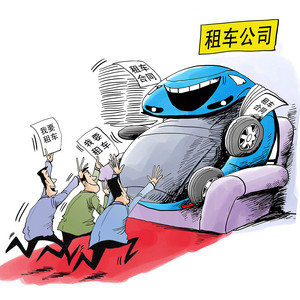
This spring festival, young people are shaking things up leaving behind the packed stations and hopping into rental cars it's the freedom to go where you want when you want without the hassle of ownership So, what's the fresh new development in the car rental world.
And stick around for our special segment heart to heart.
Your questions are answers, business, tech, culture, or whatever stirs your soul, we're ready to dive in.
Coming to you live from Beijing this is Round Table, I'm Heo Young.
For today's program I'm joined by Steve Hatherley and Yushun in the studio, first on a day's show.
If you've been following the show, you probably remember us talking about how the spring festival travel rush officially started on January the 14th and just how significant it is in Chinese society.
Well it's fully underway now.
And if past years are anything to go by, snagging those high -speed rail tickets and flight tickets is going to be a challenge.
With stations and airports bursting with people.
But here's something you might not have expected.
More young people have been adding car rentals to their list of travel ascentials right alongside public transport and private cars.
Whether you're heading home for the holidays or planning a fun trip, why not give renting a car a try?
With the Chinese New Year fast approaching, the first wave of people renting cars to get home is already on the road.
So, what's the scoop on car rentals in China these days?
So, it seems like renting cars has become increasingly common lately.
Data Story, which is a data collection tool gathering massive data on the internet shows that the contents of car rental on major social, media, and short videos platforms have significantly increased with the volume doubling in 2024 compared to 2023.
Also the car rental industry is constantly expanding data showed that China's car rental market has almost 48 billion yuan that's about 6 .5 billion US dollars in 2019 and 137 billion yuan or 18 .7 billion US dollars in 2023 and also 44 billion yuan or 6 billion US dollars in the first quarter of 2024
and these figures show that the marketing the first quarter of twenty?
24 is nearly equivalent to the level of 2019 so we're seeing that People are warming up back towards the idea of renting cars there was a report on Various forms of road trips that was published by an online travel agency called flingy that came out in late December and and they talked about the fact
that the number of domestic car rental orders increased by about 80 % in 2024 compared to the year prior.
Well, that's a massive increase, isn't it?
80 % over the course of a year and the per capita car rental consumption increased by about 30 % in that same time period.
Again, from the report from FLIGGE, that's a fun name by the way, those born in the 90s and 2000s they took up nearly 60 % of the car rentals for their various types of trips.
And I think it's worth mentioning as well that the number of car rentals ordered surged nearly five times, between 2005 and 2009 for that same age group of people.
So young people are out there renting cars these days.
And I wonder whether you see something like this in other countries around the world.
And, Steve, you're from Canada.
You know stuff going on over there.
In China, this is very much seen as car rentals being driven by young people, but what about elsewhere?
I think when we're looking at the car rental market in general, rather than breaking it down by demographic, because I didn't really see any shocking statistics separating Gen -Z renters versus Gen -X renters.
But the global car rental market, in general, is growing and will continue to grow.
This is what they expect.
It was valued at 98 .4 billion in 2021.
It's gonna reach 126 billion by 2028.
And the customer experience about renting a car or in terms of renting a car has, for for a long time, I think, been seen as a negative experience in North America, because it was quite complicated in the past.
If you rented your car, you know, you would do it online or through a phone call and then sometimes when you would show up to get your car, the car might not be there.
Yeah, and if they call it over fleeting I think, which is something that car rental companies used to do in the past.
but pandemic and afterwards, supply issues, not so much anymore.
Yeah, there's plenty of stories on the internet where people show up to get their car and the car rental service says, oh, sorry, we don't have it, and you say, well, wait, I reserved it, and they say, yep.
Also, one of the reasons why here in China this is very much a young person's discussion of this industry is mainly because it's still relatively new as young people who are interested in this, but overseas in a lot of the more developed countries, as in, you know, you have a long culture of people
driving cars and owning cars, then that's different?
I mean, the first mention of car rentals, I think, was from the year, um, sorry 1904 in the United States, where I think it was a bicycle shop also started renting out cars or something like that.
But yeah, it's been, it's been going on for a long, long time in North America Western countries and so yeah it's nothing really new.
Yeah and there are some differences of course but I think as you said Themeing mainly I think young people are doing these kind of things I mean renting a car to go for a little bit trip and that's why also reflecting another reason is that most of the car renting companies are like based online, and then
mostly young people will have that kind of experience in doing these kind of things compared to older folks.
So we can see younger young people do have more experiences in renting a car.
The group renting cars from the median or higher times is mainly the Gen Z who born between 1995 and 2009 and that's over 85 % so what we can see is that they rent the car or using this kind of service quite frequently.
Renting a car three to four times a year is the mainstream which is 47%.
And also 26 % choose five to six times and with approximately one in every two people having this rental frequency.
Yes. So that's what?
Every three, four months, on average people are renting a car.
Which kind of makes sense because it's probably every three to four months that people get out of the city for a weekend - Turn the work trip.
Or something like that.
Almost 37 % rent a car, this is just another statistic to prove your point, rent a car for four to five days.
So that implies, doesn't it, that it's not just a quick trip across the city?
which of course there's that group of people as well.
But a lot of people would probably be using the car rental to get out of the city for the weekend and explore a new neighborhood and then maybe tack -on a day or two to their trip.
And also just to give you a little bit more context, the numbers that you guys just cited are from a 2025 Young People car rental trend report issued by DT Caijing of research Institute under China's financial news outlet Yizhai.
And then it, okay, here's the thing that is important for you to know before we dive deeper into this survey.
The survey results, that is, it is only targeting 1 ,200 young people, so they are not looking at older folks, and they're only looking at people who've rented a car.
So, of course, you are going to get super high figures because you are looking at only those who have had this relative niche experience of renting a car.
China, this is maybe alongside many options of travelling.
So, I think it's important to also keep that in mind to put things in perspective a bit more.
But yes, this is the time which is opportune for us to talk about this, because a lot of people are trying to get tickets.
They're trying to plan for the Spring Festival travel, and renting a car seems to be the thing that a lot of young people are talking about these days.
Yeah, and sometimes it's not even their plan B when they cannot get a ticket.
They just actively choose this kind of way to like rent a car.
Go for a trip maybe with a couple of friends like go to their neighboring city for a four to five days for a little trip.
So that is kind of a recreational activity, I would say.
To rent a car and that is offering a more flexible way for them to travel.
Sure. If you asked this question today, why are you renting a car?
car, you might get the answer I don't think I can get train tickets, or a flight or something like that, but just in general, yeah, it's not a plan B thing, it's just something that they want to do.
And according to that survey result, 71 .5 % said that they rent the car for short -distance travel to nearby places.
That was the number one answer.
That would suggest a neighboring town, a neighboring city, something like that, that maybe, I don't I don't know, maybe an hour, an hour and half away.
That was followed by longer travel, longer trips at 48 % and then cross city business trips.
Oh, there's that group I was referencing before at almost 28%.
And this group totally makes sense to me as well because tier one cities and maybe the tier two, I don't know, maybe the tier three cities are just sprawling, right?
So if you're located, if your company's located on one side of the city To use Beijing, for an example.
And you were to try to get to the other side of the city with a lot of business things that you were carrying.
Taking the subway would be very inconvenient.
So car rental, if you're going to go and come back, might be a more convenient and maybe more affordable way to get across the city.
If you are going to take taxis here and there and everywhere, it might be cheaper.
And also, besides visiting these popular tourist spots, they have more relaxed travel models with like camping and picnicking or business travel as you said and suburban fruit picking.
Oh, that's very niche, isn't it?
That's kind of a recreational activity as well.
That's quite popular among young Chinese people and I was thinking that why that makes sense because if you're just going a long distance trip, of course taking flight or go with the high -speed train, it is even more convenient or faster when you're just going for a long distance.
And then if you're just going in nearby city for a kind of weekend trip, of course having a car is more convenient.
That sounds like more of the popular usage scenario for people because if you live in a big city in China, actually public transportation and just hailing a ride is so much cheaper, convenient.
and what people do anyway.
But renting a car, you have to go through the paperwork, thankfully that can be done online and it's a bit more work than the other options.
So, it makes a lot of sense for most people to sort of go on short trips nearby the city to hire a car and to rent a car.
This is interesting too I thought, 21 % of the survey results said that they own their own car.
Pardon me, isn't that interesting?
21 % said they own their own car.
So if they own their own car, why would they want to rent a car?
Well I think there are other results that we can see to answer your question.
Of course, some of them own a car, but they would like to rent a car.
And some of them are quite fancy cars.
Or are just new models.
And that's the answer, they wanna drive a different type of car for their fun little getaway.
As we can see, top five brands that people rent are Volkswagen, BMW, Audi, Mercedes -Benz and Toyota.
And what we can see is that some of them are really fancy and expensive cars and in this case a lot of people can rent a car to experience how luxurious these cars are and also new OYD, Li Autol, Tesla, Xiaomi and NIO, some of these car manufacturers are releasing new models.
maybe you haven't decided to buy a new car like that, or you just want to experience the new functions, the features of these new cars or NEV cars, then you can just rent a car and try all of these new features.
Yeah, it's like an extended test drive for some people.
like before you actually purchase a car, buy maybe a new car, then experience.
Drive this car that you have in mind for a few days and then you can decide if this is for you or not.
One million percent true.
The potential that rental companies have in reshaping consumer behaviour and helping promote adoption, for example, is critical.
something really, really interesting happened in the United States...
is happening in the United States right now.
It's that car rental companies are buying fewer and fewer electric vehicles.
And the reason they're buying fewer and fewer electric vehicles is because of the resale value.
Resale value for a car rental company is critical because that's one of the ways that they can get back money, right?
So they buy cars, and then if the resale value is going to decrease by a lot, well, they're going to lose a lot of money in that way.
Hertz, for example, the car rental agency in America, they lost $195 million of value in their electric fleet.
So in the sense that the car rental agencies can have that kind of power to give people the opportunity, it seems like in the states for electric vehicles, those are going to be decreasing.
Oh, interesting. As opposed to the traditional fossil fuel cars.
Yeah, exactly. Oh. Yeah.
I think we can call that a negative trend.
Oh, that is fascinating.
Also, we're seeing other characteristics that this car rental market is showing, and apparently currently, there are some top concerns that consumers have.
And well, the first one is legitimate brand.
And then there are some other ones.
Do you guys have an idea here?
Oh, yeah. And I think that's mainly because how you rent a car.
When because from these kind of research data, we can see most of the people will rent a car from a like a legitimate rent, car renting company, right.
Which is about 53%.
And, and about 40 % of people would choose a kind of a travel agency platforms to rent a car.
And in this case, I think, as you said, Hiang, most people were concerned about how legitimate this platform is, and they can actually guarantee the quality of the cars and also all up to make through the paper works done.
And then, when we're thinking about the convenience of renting a car, of course also when you are just get, to get information from this legitimate platform and also get a car from this platform is, I think, more likely convenient for them.
For those born in the 90s and 2000s, one of the things that they're looking for longer is cost effectiveness.
And that's one of the big concerns.
Spacious rear seats, that's another thing that they're looking for, and large trunk capacity.
And I'm guessing that this is because when they're going on things like camping trips, and they need to pack a lot of things.
So in the past, I'm not sure about the Chinese market, but in the past in the United States, for example, if you go to a car rental company and this is a trend in America too, if you go to a car rental company, you'd often get a base model, smaller to mid -sized car, but now consumer trends are changing
and they want more up -scaled cars and SUVs, and that's just a reflection of what people....what young people perhaps are wanting when they're renting a vehicle now.
And just a quick question about the North American rental car business, do people usually step into a physical store and see all the fleet of cars parked in the parking lot and pick one.
Is that usually sort of how business is conducted?
You can, and you can do things in another way as well.
The last time I rented a car, oh my goodness, renting a car in North America during the pandemic was almost impossible.
And if you could find a place, it was astonishing how expensive it was.
I rented a car for eight hours, I was driving from, we were driving from Ottawa to Niagara Falls, I had to call so many different shops.
Nope, no cars, no cars, no cars.
They had supply chain issues because of semiconductors for the auto makers.
I paid $600, I had the car for eight hours.
It was unbelievable.
That's very expensive.
Now, in that place, I went to the location and they had a physical parking lot.
So, that's a common way to do it.
But then they have P2P business platforms as well, where car owners can rent out their own vehicles.
So that's kind of a new angle for the car rental market too.
Maybe it's because it's still quite new to China consumers.
We don't necessarily have that kind of situation that there are no cars for you to rent.
And also, as I said, But mostly, the car renting companies are just online platforms and you can go to these maybe mini programs or just apps to see if they can let you rent, then they will have that car in there.
I suspect that could be in a way called the late -comer advantage of the Chinese market.
That is, because we live in 2025 and this car rental business has only developed maybe maybe in the last few years, I would say like in a decade or so.
Maybe we've seen how it's grown more rapidly.
And therefore, our society when it comes to car rental is very much mobile first.
So rarely do people....
No, people don't do that.
They'll just whip out their phone and fire up that app and check availability and see which branch in this city or the area nearby has a car or your car for you and then they'll go for it.
So it's really interesting how so much of the business is basically done on the platform.
Also the paperwork with the insurance, all that stuff can be a headache.
And a lot of it can be done online.
Yeah, and you asked me before about why people had such a negative feeling towards car rental it's because of the experiences that they've had 69 % of people reported that they had some sort of negative experience during their car rental and that could be gosh I remember I rented a car in Hawaii and you
know it was at the Airport that's often where you'll rent a car not always but anyway I had to wait for like 45 minutes to an hour just because there where so many people in there.
Then you have to return the keys to the same location.
And then again, you've got the situation where the car isn't available and then you just have to try to find a different company.
There's always something it seems which is why the more convenient you can make it with everything being online, then the better it is for the customer experience.
Yeah. And also it feels like it is kind of a honeymoon period for these car renters I mean for consumers.
Because as you said, now we don't need to go through all of these processes of going to a huge parking lot to see which car is available.
But we can have that kind of online platform to compare all of these cars and to see the prices and to finally order or make appointments for the car.
And also, another point is that more and more people are having that kind of pragmatic consumption views they in the past people maybe tended to buy a private car to meet their transportation needs.
And kind of viewing a car ownership as a symbol of identity or status.
But now, when people just need a car, okay, I am living in a city, and I don't have a car I can just rent a car and we don't need to actually treat this kind of status as a kind of identity, but we will just go for the practicality for renting a car.
That's really interesting because car ownership used to be a status symbol but not so much anymore.
And also you can just you can hire or rent a super fancy car via car rental.
And that if you're really wanting to create that luxury image to Please your client or I don't know for what purpose it could be Higher hiring a car can serve that purpose as what sure do it for a day not for the rest of your life I'll be curious to see if China if the if the p2p Car rental service
finds its way to popularity here in China It's basically like how Airbnb works I mentioned it a few minutes ago where you rent a car from a car owner It's still done through a platform and there are downsides as well, for example Unexpected costs like if you need a baby seat.
I saw one site will charge you $35 if you have a pet They'll charge you $40 but still they tend to be more cost effective and Convenience, so I'll be curious to see if the market finds its way here.
That's a really interesting thought Well for a lot of people well for some people who are willing to let out their car They're already maybe ride -hailing drivers.
Yeah, drivers. Yeah.
So it almost exists that way.
Yeah, how fascinating.
And each small variation of this concept of how we use the car can give birth to a whole big -business, new thinking of how business can be done in that area.
You're listening to Roundtable.
I'm He Yangz joined by Steve Hatherly.
And, we'll be back after this break.