
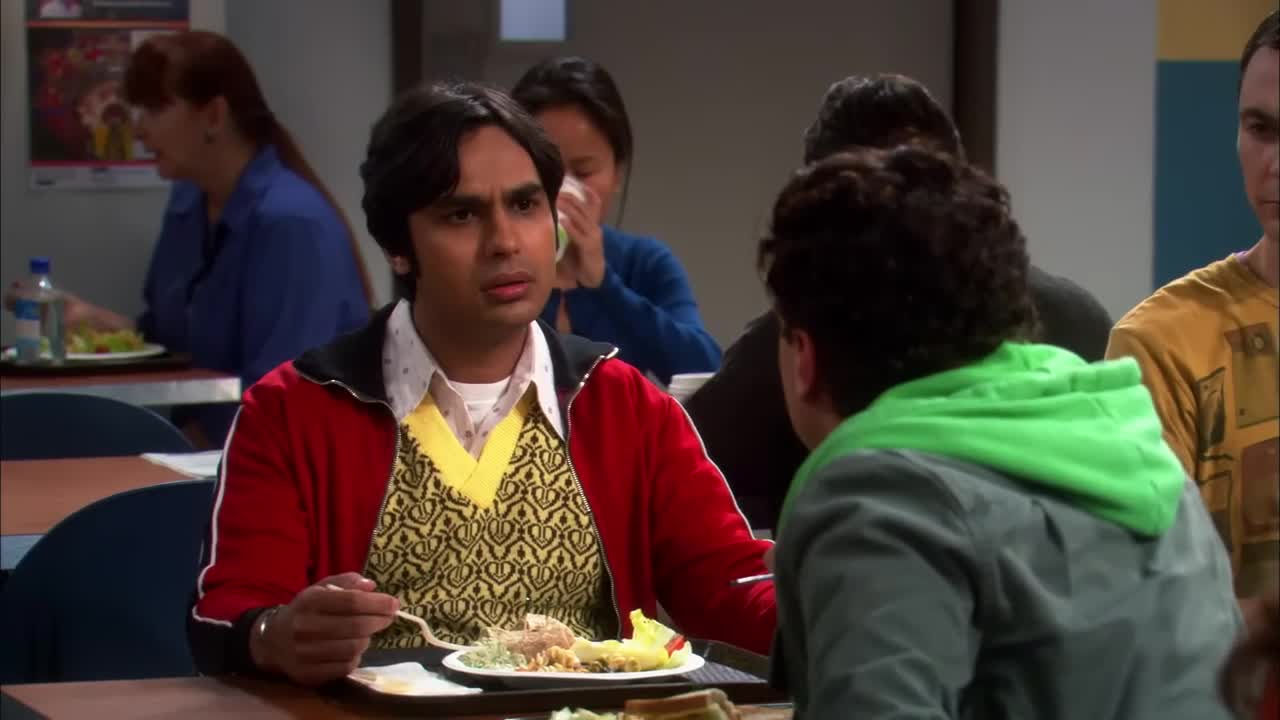
[The Social Dynamics of Insecurity, Career Milestones, and Capybara Trivia]-[The Capybara Conversation | The Big Bang Theory]
📋 Summary
The Struggle for Self-Assurance
The conversation begins with a candid admission from Leonard regarding his perceived inability to attract women. He identifies his core issue as a failure to "project confidence," noting that his natural inclination is to remain "cautious" and "holding back." In an attempt to reinvent his romantic approach, he proposes adopting an aggressive, "mantle of self-assurance." Leonard’s theoretical strategy involves direct, hyperbolic flattery, telling a woman she is "beautiful" and that she "pops, sparkles, and buzzes electric." This comedic attempt to fast-track intimacy by promising a "night you will never forget" highlights the anxiety underlying his social interactions and his desire to break free from his typical timid persona.
Professional Achievement and Bureaucratic Anxiety
The dialogue shifts abruptly when Howard interrupts to announce a significant career milestone: he has been selected for the team working on a "Defense Department laser-equipped surveillance satellite." While Howard views this as a professional triumph, the news immediately triggers a wave of panic for Raj. Because Howard requires a "security clearance," he warns his friends that they may be contacted by the "FBI."
Raj’s reaction is one of profound apprehension, rooted in his immigrant identity. He fears that any interaction with federal authorities will lead to a "one-way ticket back to Gandhiville." Despite his friends' reassurances that he is "here legally" and that "nobody cares," Raj remains unconvinced. He cites his recurring, unpleasant experiences at "airport security" as evidence of systemic scrutiny, illustrating the contrast between Howard’s pride in his government-cleared status and Raj’s fear of being viewed as a security liability.
The Intellectual Clash and Zoological Obsessions
Amidst these personal revelations, Sheldon serves as the group’s intellectual disruptor. Throughout the conversation, he attempts to steer the discussion toward his interest in the "capybara," which he defines as the "largest member of the rodent family." Sheldon expresses frustration that his attempts to make their lunch hours "educational and informative" are constantly "stymied" by his friends' insistence on discussing their personal lives.
Sheldon’s pedantic nature is on full display as he attempts to lecture the group on the capybara, comparing its size to a "baby hippo." When the others finally offer him the floor, he petulantly refuses, claiming the "moment has now passed." He concludes the interaction with a characteristic insult, telling his friends to "feast on your disappointment," while delivering a final, grotesque factoid about the capybara’s habit of feasting on its "own waste." This exchange perfectly encapsulates the group's dynamic: a mix of earnest personal struggle, external geopolitical anxiety, and Sheldon’s utter disregard for social norms in favor of his own niche interests.
Deep Learning with ListenLeap


