Discussion keeps the world turning.
This is Roundtable.
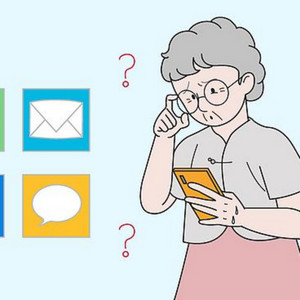
We get our parents or grandparents smart speakers, health trackers, delivery apps, hoping age -friendly tech will make their lives easier.
But after a while, they stop using them.
Not because they don't care, but because the tech feels too fast, too tiny, too confusing.
With parts of the world rapidly turning gray, maybe it's time we stop talking or asking the elderly to catch up and start designing tech that actually keeps up with them.
Coming to you live from Beijing, this is Roundtable.
I'm He Young. For today's program, I'm joined by Steve Hatherly and Ding Heng in the studio.
First, on today's show, we buy smart gadgets, set them up, and feel like we've future -proofed our parents' or grandparents' lives, but give it three months and most of those devices are quietly collecting dust. According to 2023 data from the Ministry of Industry and Information Technology, 57 % of age -friendly smart products in China go unused.
used. A more recent survey by 36KR puts that number even higher at around 83%.
Why? Because many tech designs still assume everyone has the eyesight of a hawk and the reflexes of a gamer.
Comedian Ronnie Chung captured this perfectly.
He once joked that providing tech support for your mom over the phone is the most excruciating form of torture.
It's like trying to defuse a bomb remotely.
One wrong press and it's game over.
So today we ask, what if the smartest tech design is actually one that's maybe a little dumbed down?
So let's go to you first, Ding Hung.
Age -friendly technology is focused on making life easier for older adults.
Can you walk us through what it entails?
And how come so many users still aren't satisfied?
Yeah, so we're talking about these aging -friendly smart devices or products.
Sometimes they are also called silver tech. They are designed to meet the needs of the elderly people.
They focus on both, I guess, safety and the ease of using them.
And they mainly include things like home appliances, furniture, and health monitoring devices like smartwatches or bracelets.
And because of the growing aging population here in China, it has experienced a rapid growth because with more than 310 million elderly people in China, really I think ensuring a fulfilling life for the elderly generation is a growing concern both for average households and for the government as well.
And as more seniors live along, they have become a key target people for those devices.
However, despite the booming markets, the satisfaction rate is quite low.
For example, according to a media report, last year in 2024, China's senior smart hardware market exceeded 100 billion yuan.
That's about 13 .9 billion U .S. dollars in terms of the market size.
But on the other hand, research shows that user satisfaction rate is only under 40%, indicating there is still a significant gap to meet here.
That's a huge gap, isn't it?
Because you've got the population, so you've got the market is there, right?
but you've got the products for them as well for that market, but they don't like them or they're not using them at least if they do like them.
So that's a pretty significant problem that needs to be addressed.
Yes, definitely. And also from the business side, if you want this industry to thrive, then actually you need repeated customers.
You need satisfied customers for these businesses to boom long -term as well.
So what are the primary reasons behind, let's call this a high abandonment rate on age -friendly devices and gadgets?
Well, the tech here in China, it spans different products like health monitoring, rehabilitation care, smart furniture, but there's data from iMedia Consulting.
That's a market research and consulting firm here in the country.
And it showed that 62 % of these products mainly focus on health monitoring.
And the Ministry of Industry and Information Technology, you mentioned that group before, they reported that seniors actually need more solutions for fall prevention and emergency response.
So immediately right there, we can see some disconnect, right?
These companies are designing products for one thing, health monitoring, but the demand lies somewhere else in fall prevention and emergency response.
That could be part of the reason for the high abandonment rate, as you called it.
I think another reason would be the, can we call it emotional rejection?
Because these devices, you know, like a smartwatch, for example.
Well, to a 20 -year -old, that's nothing.
It's easy to use. But perhaps to someone in their 70s, they're not familiar with it.
they've never seen it before, there's a learning curve when it comes to stuff like that.
Also, a device like that is really small.
The screen is difficult to see, so it's the usability factor, right?
Another example would be pillboxes.
And I didn't know what smart pillboxes were, so I went on to watch some videos onto the internet.
So their heart is in the right place when they're designing them, right?
And there's many different kinds of designs of pillboxes, but I saw one where you load the pills in manually and there's an LCD screen that shows the time and stuff like that but then you've got buttons that you need to press and then for that particular design to get the pills out even though it's there on so it's it's there on the day you're supposed to take it at the time you're supposed to take it but you have to pick up the machine and pour out the pills now what's the problem there it's very easy to spill right so the design of some of these products too is not taking into account it seems
everything that the elderly population might have to deal with and that leads me to believe that there's not enough thought going or consideration going into the design and going back to the emotional rejection point you know if you get this smart pillbox or another piece of uh tech then you don't know how to use it you're not going to go back to it because number one, you don't know how to use it and number two, it could hurt your confidence right, these are called smart devices, smart pillbox so if you feel like I don't know how to use this smart technology I just, I don't want to have anything
to do with this and that's echoing human nature I think, but also I just can hear like a million things go wrong with those kinds of designs first of all, it's expensive to buy these things with the pillbox i if there's that much tech involved it can't be that cheap and then when tech is not useful it's a piece of junk and then i can just imagine you know with a lot of these so -called smart technology devices you buy them and then it's just well if you and it's difficult to use so it becomes a piece of um iron junk at home just one more yeah there's that and then Then there's the fact that a lot of these
devices need to be charged as well.
Right. A smartwatch, obviously.
But other tech, too, like some of those pillboxes, some of them need to be recharged.
Now, to me, immediately an alarm bell goes off because if I'm thinking, OK, my parents are relying on this machine, this tech to remind them when to take their pills.
But wait, this thing needs to be charged.
What happens if the battery goes dead?
then the alarm's not going to go off as the reminder to take the pills right so then the person needs to be reminded to oh yeah i have to charge this thing and it just becomes a little bit more complicated and too much trouble and why would you even invite that to your house where you could just take the pills out of the jar and put them in your hand and off you go for the day right so i guess in other words it's fair to say that it's fair to conclude that many of those products actually require a certain kind of digital entry barrier, the threshold is there.
So I guess seniors still need to equip themselves with certain tech skills in order to use these devices properly.
And I guess we need to keep in mind that many senior people are not frequent users of the internet, for example.
As was indicated by the most recent edition of the China Internet Development Statistics Report, seniors aged 60 and above make up the majority of the non -internet users, accounting for almost 40 % of all those non -internet users here in China as of December 2023.
So that's an issue.
And also, I guess many of those designs, many of those products designs, they actually are going against this naturally falling body function of the elderly people.
Yeah, right. According to...
There is a Japanese research we can take a look at.
People over the age of 70 make 4 .2 times more mistakes when they use touchscreens compared to physical buttons.
So if all these devices, their main feature is still about touchscreen, I don't think that works for the elderly.
Yeah, you bring up Japan, but there is a positive example from that particular country.
They designed a phone that has a really large call answering button.
and it takes up about one -third of the total device.
And that device, I was saying, you know, the dangers of battery running out before.
Well, this particular phone has a 21 -day battery life on a single charge.
That's unheard of. And it has button resistance, and this has been really carefully tested.
And this is important because pressing the buttons requires a particular amount of force, roughly the same amount of force that you would apply when you're pressing a standard keyboard key on a laptop and they they designed it that way to prevent accidental touches where you can easily you think about your smartphone screen right if you touch a butt it's so easy to to call somebody by mistake for example right i've been butt dialed so many times right and i've i've been the butt dialer so many times as well but that little type of mistake, it prevents these accidental touches by patients of different
types of conditions, but it still makes it easily operable when necessary.
And that, they say, is a true senior -friendly design for tech. Yeah.
Well, Japan is well known for having a population of longevity and careful designs.
And it's really interesting to see what they've done to to make these age -friendly designs truly applicable for those target users.
And I think this is the major point that's often lacking in the design process.
That is, you have these wonderful plans, but how do they fit and meet the real world scenarios?
And that's the part when I, I'm sorry to say, sometimes can't help but, like, snark a little little bit when I hear all these complex designs of data gathering.
That means nothing for average users who are not familiar with tech because we're looking for real life solutions.
And data collection means nothing to us, but maybe it's essential in coming up with better tech design.
But when we're talking about solutions, we just need something better.
So can you give us some examples in that sense of solutions or things that can go wrong let's do one more thing that can go okay you know i was reminded when i was in um i think i was in middle school or high school and my parents had two cars and mom's car was like this really cool modern type of you know advanced technology car for for the time and dad's car still had like roll up windows you know and no no power seats.
And I asked dad at the time, why don't you upgrade to like, you know, power windows, power seats, all the stuff that's available.
And he said, Steve, the more buttons a car has, the more things can go wrong.
And that's always stuck with me.
And that's what we can talk about here with tech too, right?
Tech can go wrong. There was one staff at a particular social welfare center in Zhejiang province here, And they explained that they had bought 100 smart mattresses for a certain amount of money last year.
Now, those mattresses were supposed to monitor seniors, vital signs and alert caregivers in case of any abnormalities.
Right. But they were abandoned after a few months due to inaccurate data and frequent false alarms. So the tech inside the mattresses, they weren't it wasn't working.
it wasn't doing its job and if the tech's not working well then what's the piece of junk what's the point the more buttons you have the more things can go wrong my dad was much smarter than i realized at the time especially this this problem regarding frequent false alarm that can create trouble both for the caregivers and the people who are supposed to receive the cares right Right.
And also we can take a look at another example in southern Chinese city of Guangzhou, a man named Xiao Shenhua, a resident of the city.
He shared his experience in the sense that he bought a so -called smart camera, but soon had to abandon this camera after only a few times of uses.
Because he said this camera was supposed to have a voice recognition system, but it couldn't just understand this gentleman's Mandarin with a certain level of accent.
When you're speaking with Mandarin with a Cantonese accent, that's quite different from the so -called authentic Mandarin, I guess.
That's what happened.
I don't know if we talked about it on Roundtable or not.
Do you remember last year, McDonald's, I don't think they did it in China, maybe they did and I didn't know, but in the States, they trialed their AI drive -through system, and they did it at 100 different locations across America.
And one of the big reasons that they ended the trial was because the AI had difficulty understanding different accents and different dialects.
And that led to a whole slew of problems like inaccuracies in the orders.
And of course, that's going to make the customers really angry, right, when you're trying to go through a drive -through.
So it's the same situation there.
Yeah. And I thought that, you know, by now these problems would have been sorted out already, but actually kind of a basic problem still persists.
And voice recognition is still one of them.
Yeah. Anyway, sorry, you posed the question a couple of minutes ago.
So, you know, what can we do?
How can we get there?
Well, for seniors, you know, I think we have to remember who's using these products, right?
And sometimes it takes only a single button or a system recognition to solve an emergency.
So like a one click emergency call, that could be a good example.
And a lot of smart aging products, they rely on devices like watches to detect falls.
But these often run out of battery, like I said, at crucial moments, and it doesn't address the real problem.
So maybe creating a better alignment between the tech and the buyers and the people who are using the products, which sounds like such a, yeah, of course thing to say, but that would mean ensuring that the tech works reliably in everyday life, making sure that the people who are using it, their decisions match accordingly with the real experiences in real life.
And that needs to be taken into consideration when they're designing the products.
Make them easy to use, make them easy to learn how to use with very, very, very few barriers between the user and the product itself.
That's a key point.
But also, I think this is creating confusion for the manufacturers in the sense, like, are they designing for this to fulfill the need of the actual users, the so -called elderly person?
Or are they designing this to, first of all, sell it?
Because usually it's the adult children who are buying these products.
70 % of these devices are bought by the adult children for their parents, but only 30 % of seniors end up using them long term.
So this creates a really interesting market dilemma, doesn't it?
Because you're right, Hyung, from the tech designers point of view, they want to build a product that they can sell, right?
And so who are we selling to?
To whom are we selling?
Well, we're selling to people in their 40s probably, right?
People in their mid -40s, early 50s.
But the people who buy the product aren't the ones who use the product.
Now, this has to be very rare in business, right?
So how do you get around that?
Yeah, but I feel like going beyond the corporate profits and interests, if your products, a large quantity of your products end up being idled over there, sitting there not used by the people who bought them in the first place, it's a waste of resources anyway from a bigger economic or social perspective.
So I guess the ultimate goal of these so -called silver tech products is not really to push the seniors to adapt to the new technology, but really to make technology adapt to the seniors.
It's the other way around.
So I guess with that in mind, when designers design products for the elderly, maybe they need to be a little bit dumber in order to be better.
Yeah, I see. I see your point there.
I think what you're meaning is like the products just need to be not just easy to use, but I think the more important point is applicable to daily life.
I found a blog post, because I wanted to know how someone was feeling about this, who was buying these products for their parents, and I did find one.
And this is what the woman had to say.
She said, far too many digital health companies mistakenly assume that because some older people struggle with new technology at first, they're averse to it.
They are not tech averse, it's just that the digital health companies, more often than not fail to design products with seniors in mind.
And then I came across a story from the BBC from, this is from 2019, but it said that for the first time, there were more elderly people than young children in the world.
Okay. So the world is headed in that direction.
So we need to be designing products for the world because that's the direction we're going, but the products aren't there.
Here's another interesting statistic.
This is from UC Davis from 2024.
This applies to America.
More than 90 % of older adults who want to spend their later years in their current home, would rather spend their later years in their current home than in an assisted living facility.
Okay, so what that tells us is nearly everybody who's getting older on this planet, they don't want to go to an assisted living facility.
They want to live at home.
They want to continue to to live in their homes.
That's not surprising.
But the products are not being designed properly to assist them to live in their homes with minimal barriers.
Oftentimes, children live far away from their parents.
Assisted care is incredibly expensive, right?
So these tech designers need to be putting out products that really, really help the people who are using them.
And again, we're repeating that point, but that's because it's the most important point.
And that's what that blog writer was writing about, it's not that older people are tech averse, it's that the products aren't useful for them.
Yes. And I think still till today, although we've talked about this for the last decade or so, but if I'm being completely honest, folks, I still question whether we should be shelling out money for the so -called age -friendly tech. In my little mind, in a perfect world, wouldn't it be great if the existing technology that we use every day has this section or this pool that's got designs tilted, or at least have the elderly folks in mind?
Because this is a huge pool of customers as well.
And you mentioned older folks not being tech averse.
I absolutely agree with you.
During COVID in China, we've seen such a massive migration of older folks onto the smartphone, onto all kinds of e -commerce, social, etc. platforms, because at the time, there was this urgency.
If you didn't socialize online, you socialize with no one.
If you didn't buy groceries online, you couldn't get groceries for a period of time.
And then I wonder, like now, at least I look at my parents, they're in their 60s.
And with their friends, of course, you know, this is a very small sample of the urban population.
They all know how to use smartphones by now and the basic functions.
They are on WeChat every day.
I've heard people's parents on Douyin every day, who knows about all the social gas gossip online better than we do, because we don't have time or that much time to hang around on Douyin or TikTok, the Chinese version.
I mean, if and now these platforms, at least they've made life a little bit easier by it's so easy to get the bigger font on their platforms. But that's only like the first mini step to cater towards a older population.
I know what I'm saying here might not be particularly drumming up enthusiasm for people to buy silver tech, but I just, and I see that as a potential growth area, but they really have to do better in proving that it's actually worthwhile us paying extra for that one more gadget in your home when you know if your parents are gonna abandon them soon or it's not all that useful.
What a waste of money.
Yeah, so I guess a focal point is really try to transition from a mindset that focuses on, say, those techy, flashy issues to really beginning to really address the actual realistic needs on the part of the elderly people.
We can take a look at a particular case back in 2023 at the China International Senior Care and Rehabilitation Industry Expo.
This event, a Shanghai -based the tech firm presented an intelligent anti -shake spoon, which was later on proved to be very much received by the seniors because it was designed specifically for those with hand trauma problem.
That's a common problem for the seniors.
So the spoon is said to be able to counteract more than 80 % of the senior people's handshakes and enable them to eat at the table independently well that's that's a big wow that's a great product that's exactly what we're talking about right my grandfather used to have those hand tremors and uh yeah dining was challenging for him at times so a product like that if it was available yeah it's not to say and you know we don't want to say all senior tech is useless and and we also don't want to say old people are dumb and they don't know how to use anything no we're not saying that either right um
but products like that spoon that helps to counteract the shaking that's genius design that's taking into consideration a personal thing for for a large group of people would who would experience that right And then I've seen other videos as well.
Right. These personal assistance robots at home that are for not just, you know, reminders about taking pills and things like that, but they're there for emotional support, too.
And you might think, oh, that's kind of stupid, but it's not stupid for a senior who, a senior citizen who happens to live by themselves.
That can be a really fun, interactive part of the day.
Right. And I'd watched a video news report from the state and the lady was saying she really enjoyed having that at home.
So, yeah, we're not saying everything's useless.
We're just trying to say let's be a little bit more considerate in the product designs that are coming out so that they are useful for everyone who needs them.
And that is really key to this whole issue.
I suspect that there aren't enough experiments done with actual older folks.
Yeah, let's focus group here a little bit, shall we?
Yeah, excuse me. That's like just the first thought that comes to mind.
I just can't believe it's not done sufficiently.
Because if this is the target group of people, you want to sell stuff that you want people to use your product, then yeah, actually invite these folks in and see what their real need is.
is and also i hate to bring this up but i think it's absolutely necessary cost you mentioned that shake spoon um anti -shake spoon how much is that gonna cost i know my grandma bless her heart she will not spend anything beyond five yuan if it's a a spoon and if i get that spoon for her maybe it cost 301 i think she's probably just going to put it on a pedestal and worship it instead of using it yeah tell her friends this is the spoon my granddaughter got for me yeah that that it sounds like you're joking but there that needs to be taken into consideration as well you know the actual usability of something is it going to get used or is it not it has to
be so convenient that that it makes life easier and better on a daily basis.
I think so.