This is Planet Money from NPR. About a year ago, I got an email from a guy named Phil, an email that really stuck with me.
He wanted to tell me about a drug that saved his life and how then that drug was suddenly taken away and ultimately how far he was willing to go to get it back.
Phil is a chemistry teacher. He is a lot of things, actually.
He is a dad. He's a trivia buff. He loves spending time on Reddit.
Okay, all right, I'm recording. Perfect.
He's someone who for most of his life has struggled with addiction.
It started with prescription painkillers.
He got through that. And then COVID hit, so I started drinking pretty much on a nightly basis.
And if it wasn't that, it was food. And so I was pretty numb at that point.
I mean, 300 pounds, drinking alcohol every night.
Phil says when you're in the grip of addiction, it's like there's this person that you know you can be. a good person, a decent father, a kind husband.
And then every day, you have to look at yourself in the mirror and count the ways you've fallen short.
Yeah, it just makes you feel like you know, something that isn't even alive is stronger than you.
There's just this will inside you that's working against you.
It sucks, you know, it just, it sucks. We're not using Phil's last name because even though these struggles are behind him, he's afraid that sharing his story could put his job in jeopardy. people that aren't addicts like you know it it's uh It's a nightmare.
It's a nightmare to work against yourself.
Know that you're working against yourself. and continue to do it anyway.
By the beginning of 2023, Phil's health was really going downhill.
The doctor said he was pre-diabetic, so they put him on this new drug that was getting popular. called Ozempic.
It was for type 2 diabetes and was supposed to help Phil manage his blood sugar levels.
But for Phil, it did a lot more than that.
Almost immediately, Phil started losing weight.
Within three months, he didn't need his blood pressure meds anymore.
But the most dramatic change... all of Phil's cravings, not just for food, but for pills and alcohol, all those addictions. they just kind of vanished.
Literally, the bourbon in my freezer sat in my freezer for probably...
I would say, Maybe till Christmas or something like that.
And I like I took one drink. I was like, what are you doing?
What are you doing, idiot? I just didn't enjoy it at all.
So, yeah. The craziest thing... that I can describe it.
What it does is, limits the rewards. Like all those, the food and the pills and the alcohol, it quiets all that noise, all that extra noise that's in You know, not in normal people, but in addicts, it just quiets it.
It was actually disorienting. Like, now that his addictions were pushed to the side, who was he even?
All my comforts that I had relied on were no longer there.
Like, I was emotional. My wife called me emotional Phil.
Ozembic Phil, you know, whatever. Just like, and I knew it.
Like I knew I was being a big giant cry baby. and sensitive and just, but all my coping mechanisms were gone.
But now he's he was finally able to be the guy he wanted to be for himself. for his kid, for his wife.
And I think she finally got her husband, you know?
And for this medicine that Phil says truly saved his life, he only had to pay $25 a month. it was all covered by his health insurance. for a while.
Yeah. You see, about a year after Phil started taking this life-changing medicine Phil and his wife had to switch insurance plans.
And when he showed up at the pharmacy counter to pick up his Ozempic, this time they told him he would have to pay full price.
They're like, yeah, if you want this, it's over $1,000.
Yeah, it would cost more than a thousand dollars per month.
And I kind of have to be on this drug. Like, it's not optional for me.
So Phil joined an ever-growing crowd of Americans, millions of people, who couldn't get their hands on Ozempic or Wegovy or Zepbound or Manjaro. because they couldn't afford this drug with the power to change their lives.
But also, there wasn't enough of it to go around.
And all of those collective desires, all of that pent-up demand, it became a force so strong that it is threatening to rewrite the rules around how drugs are sold Hello and welcome to Planet Money.
I'm Jeff Guo. And I'm Sydney Lepkin. Sydney is NPR's pharmaceuticals correspondent.
She's been reporting on drugs like Ozempic for years.
Yeah, I have talked to hundreds of patients and doctors about them.
And what I've learned is that this is not just a health story.
It's a story about economics, about a market that's been stretched to its breaking point.
Right, like, what happens when demand for a new drug is way higher than predicted?
When demand... runs circles around supply.
Today on the show... A drug that's changing people's lives is also challenging the traditional way we buy and sell medicine. creating a parallel market of copycats that might be here to stay.
This message comes from Wealthfront. Markets can be unpredictable, but your cash doesn't have to be.
With Wealthfront's cash account, you earn a competitive annual percentage yield on your cash from program banks. higher than what traditional banks typically offer with free instant withdrawals to eligible accounts.
Go to wealthfront.com slash money. account offered by Wealthfront Brokerage LLC, member FINRA, SIPC, not a bank.
Funds are swept to program banks where they earn the variable APY.
This message comes from Insperity, providing HR services and technology.
From payroll, benefits, and HR compliance to talent development.
Learn more at Insperity.com slash HR Matters.
When Phil went to his doctor to re-up his Ozempic prescription, the note he got back from his new insurance said, nope.
They wouldn't pay for it anymore. His blood work looked too good.
His insurance said he had gotten too healthy for the drug.
Even though these are supposed to be lifelong drugs, And Phil was really worried about going back to 300 pounds, or worse, reaching for the opioids again.
I mean, I basically said, I guess I'll come back when it goes bad, I guess.
I mean, you know... I don't know. I mean, what I want to say to him, I can't say on this podcast, but you know.
You know, that's... That's the country we live in.
That's the country people want, I guess.
I don't know. So Phil did what I think a lot of us would do.
He started searching online for a solution.
And what he found was that a whole world of cheaper alternatives was flourishing just a few clicks away.
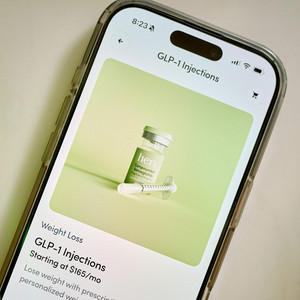
Starting a couple years ago, people were seeing ads all over the internet. online pharmacy selling drugs they advertised as basically identical to the brand name Ozempic or Manjaro.
But instead of more than $1,000 a month, they were charging a few hundred dollars a month.
There's all kinds of different options. It's cheaper.
It's cheaper. But this was weird because selling these kind of copycat drugs... is normally not allowed.
And we're gonna get back to what Phil did next, But first, we should explain how the system is supposed to work and how it all got turned upside down.
You see, when a company comes out with a new drug, usually only that company is allowed to sell it in the U.S. at least for several years.
The idea is that the drug company should be rewarded for discovering the drug testing it and getting it all the way through the Food and Drug Administration's approval process.
And in return for all of that investment, these companies, they get paid. patents and exclusivities, these government-granted monopolies. so they can set the price as high as they want to make as much money as possible.
And then after several years, the government starts letting other companies sell generic versions of that drug.
And that competition is supposed to bring prices down eventually.
But in this case, these drugs we're talking about were still pretty new.
And the two companies behind them, Eli Lilly and Novo Nordisk, they still had years left on their official monopolies.
Their cash cows were Ozempic and Manjaro, which are for type 2 diabetes. and Wagovi and ZepBound for obesity.
We're in a scenario where the manufacturers are new to the market And they have a product that's protected by patents.
This is like the gold mine phase of the drug, right?
Yeah. This is the goldmine phase of the drug, absolutely.
Marta Wyszynska is a health economist at the Brookings Institution.
And a couple years ago, she was also watching all these ads appearing on the internet. these smaller companies selling their own copycat versions of Ozempic or Wegovy.
So I know a bit about the topic and what are the rules that manufacturers have to follow and holy smoke, this is different.
Like, what's going on? Like, how can they get away with this?
How were all these other companies, and there have been a ton of them, selling basically dupes?
The answer has to do with a kind of quirk in the laws regulating how drugs are sold in America.
You see, while Novo Nordisk and Eli Lilly had their great lucrative monopolies on these obesity drugs, It was basically on them to make enough of these drugs to meet demand.
And let's just say they were not quite prepared for that demand to basically go viral.
Let's talk about ways I prepare for injection day.
It is my second dose of Govee today. These drugs became very popular very quickly.
I have been on Ozepic for four or five months.
On injection day, I really make a point to eat. get my protein goal in.
Cheers to injections. By 2022, there was a massive shortage.
People would go to their pharmacies and all these drugs would be out of stock. the drug companies were in a weird situation of having a drug that was too popular.
And they've told me that they just totally underestimated how much the demand for these drugs would blow up.
Marta says this was all highly unusual. She can't even think of another time when a brand new blockbuster drug was just sold out like this.
Clearly, the projections were exceeded. So it sounds like these drug companies made a big mistake, like an epic mistake, like a Billion dollar mistake.
Oh, I think it's a lot more billions of dollars than just one billion.
Now, whenever a drug is in shortage, the manufacturers are supposed to go to the FDA and tell them Hey, we're having trouble keeping up with demand because then the FDA can help, you know, grease the wheels to fix the problem. them source ingredients, get a new production line inspected and up and running, you know, stuff like that.
So that's what these drug companies did.
They told the FDA they were facing a shortage.
I am expecting that, in retrospect, both Novo and Eli Lilly Probably wish they hadn't reported the shortage.
Yeah, because when the FDA officially declares that a drug is on the shortage list, it also opens the door to these kind of copycats that people like Phil were seeing online.
The way it works is these copies, which are not generics, They were coming from something called compounding pharmacies.
These are a special kind of pharmacy that mixes up custom versions of drugs.
For instance, if a little kid who can't swallow pills needs a drug that only comes in pill form, the compounding pharmacy can make them a liquid version.
They can even make it cherry-flavored. Or if a patient is, say, allergic to a certain preservative, they can formulate a version of a pill that doesn't have it.
I mean, think about mortar and pestle, right?
That's really what kind of the heart of compounding is.
And that's how we made drugs for centuries.
Same way you make guacamole. That's what I said.
You like guacamole. Yes. But you're mixing chemicals.
During an official shortage, compounding pharmacies aren't limited to mixing up custom medicines. they're allowed to pitch in and make more or less copies of the drug that's in short supply, even if that drug is still patented.
And for obesity drugs, that little backup system immediately opened up a big opportunity.
Compounding pharmacies around the country, big and small, started jumping in and filling prescriptions.
So some patients, if they live near a compounding pharmacy, could pick it up there.
But lots of people filled these new prescriptions online through a telehealth company.
And then a licensed compounding pharmacy somewhere in the U.S. would send them the medicine in the mail.
To understand how this whole parallel supply chain sprang up, we talked to a guy who started out as a customer, but ended up as a weight loss drug entrepreneur.
Back in 2023, Chris Spears placed his first order for weight loss drugs through a telehealth company.
They were delivered right to his door. There's a brown box sitting on the front steps from FedEx.
It's got a cooler inside of it that you crack open and, you know, a bunch of papers that I'm supposed to read.
And I'm like, well, what else is in here, right?
The meds in that box very quickly improved Chris's health, just like they did for Phil, the chemistry teacher.
But what was inside that brown box was also about to change Chris's life in a different way. because it was this little window into that big new supply chain.
You open up the vial and it's got the name of not the company I bought it from.
It's got the name of the pharmacy. Okay, there's somebody else in this supply chain.
Chris decided he wanted to learn the ins and outs of the business.
He started by visiting a bunch of compounding pharmacies.
And what he found was that they really run the gamut.
Some of the smaller ones, they're mixing up the drugs by hand. but like gloved hands because these are trained pharmacists.
Like, there is a pharmacist in a clean room fully in their geared up white outfit, pulling it out of one vial and putting it into this little vial and then putting a cap on it.
Some of the bigger compounding pharmacies, they're more like mini factories.
There's a pharmacist in there still that has brewed a big bag of medication and they put it in a machine.
And they run, you know, 250 files out of that machine in five minutes.
And what Chris saw, big picture, on his tour of these pharmacies was how quickly and nimbly they were able to expand their operations to meet this deluge of demand.
They saw the opportunity and they jumped on it.
I'm absolutely aware of a couple of pharmacies that went from relatively small to you know 10, 20X the size they were prior to 2023.
So Chris jumps in too. But his idea is not to start another compounding pharmacy, but to build a business to help sell these weight loss drugs, his very own telehealth company.
He would build a website that would connect patients to the compounding pharmacies mixing up these drugs. and also connect them to doctors who could prescribe them.
Yeah, he would be the middleman. By January 2024, he opens the virtual doors to his very own telehealth weight loss startup.
It's called orderly meds, and at first, it did not seem like it was going to work.
I think we got to end of January and we had 14 customers.
And I was like, okay, that doesn't even cover the cost of the hardware and the servers that we're having to run.
But the demand was out there. Pretty soon, Chris had 143 customers.
Then it was 3,000 customers. Last month, he had more than 50,000 customers.
So if compounding pharmacies are one big reason behind the boom in obesity drugs, telemedicine companies like Chris's are another.
They're the ones out there marketing these drugs, putting up bus wraps and Facebook ads, you might have heard of some of the big ones, like HIMSS or Rho.
But also a ton of smaller ones have popped up with names like Dope Doctors or... levity or effecty or mochi, we asked Chris about how many companies Orderly Meds was competing with.
He said he was aware of more than 1,000.
Now, there is one more crucial part of this supply chain for obesity drugs. that is also swelled to meet demand.
And that has to do with where the active ingredients are coming from.
You know, like the stuff that makes Ozempic Ozempic.
It's a white powder called semaglutide. The compounding pharmacies aren't making these active ingredients themselves.
They're ordering them from somewhere else.
Marta, the health economist from Brookings, says before the compounding boom, the Active ingredients were made by a handful of manufacturers affiliated with Eli Lilly and Novo Nordisk in Europe or the U.S.
But then what happened is once FDA announced the shortage, you'll see the floodgates open.
And those floodgates opened mostly in China.
That's where a lot of the world's active ingredients already come from for any medicine.
So the Chinese manufacturers were quickly ready to expand operations.
Marta says none of this surge in obesity medications would have been possible. if there hadn't been this whole set of factories ready and able to synthesize these powders.
I think it's like over 50 manufacturers within a year and a half, like with a short time period. are saying we can make this.
It's really hard to track how big this parallel industry has become. like how many Americans are taking these drugs, because now most sales aren't going through health insurance.
But Marta figured out another way to gauge it.
Instead of trying to figure out how many customers were ordering doses, she decided to look further up the supply chain.
MARTA started sifting through import records to see how much semaglutide was being shipped over.
When I first looked at the quantities, you might see several grams being moved.
And you're like, this is very little. But one gram of that raw ozempic protein. powder is actually a lot.
One gram? is equivalent to 4,000 starting doses of Ozempic.
And a lot of the shipments were 500 grams, maybe a kilogram, but there were several shipments, there were five shipments that were larger than 20 kilograms.
Oh my gosh. Yeah, looking at a period of about a year and a half, Marta counted enough semaglutide to make 1.2% billion starting doses.
That's more than enough Ozempic for every adult in America to take it for a month.
And this was all legal. The manufacturing, the compounding, the telehealth companies getting it to customers.
But at every level of that alternative pipeline, the regulations are different.
These compounded drugs, they don't have to go through the same FDA approval process as new medications. or their generic counterparts.
The compounded drugs are in this kind of regulatory no-man's land.
For example, the manufacturers in China making that ozempic powder Marta says they're not as scrutinized by regulators to make sure they're safe.
So the only requirement is they have to be registered with FDA, which means you have to tell them you exist.
And they're supposed to have a certificate of analysis if they get asked for it.
A certificate of analysis is basically a lab report showing that your raw ozempic powder meets standards.
The problem is that right now there are no public agreed upon standards for things like How do you make this drug?
How do you test its quality? And so on and so forth.
So they get to pick their own set of standards of what constitutes a quality product. of what constitutes a proper senaglutide.
This sounds like a total Wild West situation.
Or as we might want to say here, Wild East, given where the product is coming from.
Marta says making reactive ingredients can be done well, but the molecules are complex and she worries about impurities from maybe something funky happening in the manufacturing process. that might cause unexpected long-term side effects. that manufacturing has less oversight.
And so do some of the compounding pharmacies that are making that, you know, of zempic guacamole.
A compounding trade group told us that They do typically test ingredients before using them in their drugs, and they do test their finished products as well.
But the smaller pharmacies generally aren't inspected by the FDA.
They're mostly overseen by states. and the level of enforcement there can vary.
Plus, we should say, there are also scams out there, just like unlicensed compounders operating totally under the radar.
But remember, this whole web of pharmacies selling these copycat ozempics and wagovis and zepbounds and manjaros. they were just an emergency solution, like Pharma-FEMA.
This whole parallel supply chain that seemingly sprang up overnight was supposed to be temporary. while there's a shortage.
And so, starting around last fall when the FDA announced that, hooray, the shortage is over, All of these companies were supposed to hand the weight loss drug business back to Eli Lilly and Novo Nordisk.
But the Chris Spears of the world, let's just say they had other plans.
And so did Phil, the chemistry teacher. He ended up finding a whole... different way to get his meds.
That's after the break. So here is where things stood near the end of 2024.
Basically, demand for weight loss drugs had grown so big that it kind of broke the normal system for who gets to make and sell pharmaceuticals in the U.S., It unleashed this whole parallel industry, a separate pipeline outside of the control of big pharma.
And these were not generic drugs, which have to go through a complicated FDA approval process.
These drugs were not FDA approved at all.
They were being sold through a looser fasting. system because this was all supposed to be temporary.
And then, in October of 2024, the FDA announced that the shortage for one of the two key ingredients, terzepatide, It was over.
A few months later, it said the shortage for the other one, semaglutide, that was over as well.
That meant that, in theory, this entire parallel industry was supposed to grind to a halt. including the telehealth companies like the one Chris Spears was running.
So October hits, shortage is going away. kind of world goes bananas old, you know, like we've got to figure out what's next for us.
Right. Is that like the end of your company?
Yeah. Unless they could come up with a way to stay alive.
So first, a group of compounders decided that they were going to take the FDA to court.
You see, the FDA had said that, according to its calculations, Eli Lilly and Novo Nordisk had increased their production enough that they would be able to meet all the demand from now on.
But the compounders were like, how do you even measure the demand at this point?
You can't just look at the people getting it the old-fashioned way through insurance and whatnot.
And sure, everyone knows someone who's trying to get their hands on Ozempic. just to lose a few pounds, you know, go from thin to skinny skinny.
But what the compounding pharmacies had shown was that if you lower the price of these drugs, suddenly there are many, many, many more people demanding them.
But ultimately, the FDA didn't budge. They reaffirmed that the shortage was over.
Message to compounders, no more compounded dupes of these brand name drugs.
So next, the companies were like, hmm, what if instead of making dupes, we add something to it to change it up a bit, customize it. because the law still allows compounding pharmacies to make custom versions of a drug,
That's the reason for their existence. Yeah, some companies were like, what if we offered Ozempic as a patch instead of as an injection?
Or what if we took regular Ozempic and we added stuff to it, like vitamin B12?
That's totally different from what Novo Nordisk is doing.
But when Chris at Orderly Meds suggested trying this, the doctors writing his customers' prescriptions were like, no.
No, we cannot argue that these are customized drugs when it's the same thing for like 50,000 patients.
So Chris was like, OK, well, what if we really, really customize these drugs? in the spirit of the original idea behind compounding pharmacies, to meet every patient's unique needs.
That's what he's working on right now. He's leased a huge facility in Tampa, Florida, where they'll mix up 82 different combinations of weight loss drugs.
It is not the doctor prescribing the exact same thing for every single patient.
The doctor is looking at blood work. looking at your gut biome testing, looking at your DNA and then saying, this is the right thing. set of additives for you to have the best outcome.
So that is the state of Chris Spears' current bid for survival.
And Chris says he has gotten his share of cease and desist letters from the brand name manufacturers.
The executive vice president of one of those manufacturers, David Moore of Novo Nordisk, He told me he thinks what this whole parallel market is currently doing is not really in the spirit of compounding.
That's using, you know, safe and approved active pharmaceutical ingredients to to make the compounded medicine you know not something that is imported as a business to be marketed and advertised to patients.
That compounding business is putting pressure on the name brand manufacturers.
Novo Nordisk and Eli Lilly have now both started to offer discounted versions of their drugs. trying to compete.
So if you're willing to pay out of pocket, you can now get a month's supply of, say, Wagovi direct from Novo Nordisk for about 500 bucks.
Still, last month, Novo Nordisk told investors that compounded versions of obesity drugs were officially eating into its sales of Wagovi.
Marta from the Brookings Institution, she has been watching this battle between the drug companies that invented these products and everyone else trying to get in on the action.
And she doesn't see an end in sight. There's just too much money.
There are too many players at this point that have entered.
It's like trying to put a back in the bottle.
It's hard to measure exactly how many many telehealth companies are still selling compounded obesity drugs.
But I did compare the number of new social media ads from right before the shortage was first declared over to six months later, and they went from 40 to 2,000.
You know, those ads are a reflection of the number of people out there come to depend on these drugs.
People like Phil, the chemistry teacher who's insurance kicked him off Ozempic while he was still struggling with food and drug addictions.
As thankful as I am for them to develop this, I'm very thankful for that, but I think it's disgusting that they make this drug and that this life's changing and then so many people can't afford it.
Now, Phil knew about this whole world of cheaper, compounded obesity drugs, but he he started looking for an even cheaper way to get what he needed.
He was like, why do I need to go through a company like Orderly Meds or HIMSS or even through a compounding pharmacy at all?
Where do the compounding people get their drugs?
Where do they get it from? It's coming from a lab in China or India.
Phil discovered these online communities.
Some were on Reddit, some on private channels on Discord. where regular people, like the patients themselves, We're ordering raw knockoff Ozempic powder or raw knockoff Manjaro powder. directly from labs overseas.
So Phil decided that he would try to order these active ingredients for himself.
Recently, he showed us one of the packages that he got.
This There's the thing it came in. Oh, just like a box.
It looks like the size of a contact lens box.
Yeah. In his hands, Phil is holding 10 months' worth of Terzepatide. the active ingredient in manjaro and zep bound, which came in the mail from China.
The little carton is covered in a mix of Chinese and English words.
Multi-fat young skin set. What? Yeah. So it's disguised.
It's disguised. Yeah, it's generally not legal for manufacturers to sell this stuff directly to patients.
Okay, so then you pull it out. Uh-huh. And there's little valves.
There they are. There are 10 of these little vials.
They look like little bottles with big red caps.
Each of them holds 30 milligrams of this white powder.
So, it's... It's kind of a solid chunk there.
You can see it. Yeah. Phil says he watched some YouTube videos that taught him what to do.
He takes this powder, he gets in the mail, and he adds what's called bacteriostatic water. basically sterile water mixed with preservatives, which he also buys off the internet.
And then, once a week, Phil takes a syringe, draws out some of this off-brand Monjaro liquid that he mixed up himself, and injects it into his abdomen.
And for each of these vials, which for Phil contains about a month's supply, Bill is not paying the list price, which is over $1,000.
He's not paying the price that telehealth companies are advertising, which is like 300 bucks a month.
He's paying $50 a month. I get that it sounds crazy, but you know.
I realize that for a lot of listeners, that would be insane.
To order something from China and all that.
But, like... I don't know. I don't trust pharmaceutical companies very much.
I mean... I don't trust them at all. Look what they've given us with OxyContin.
Phil says there are people on his Reddit forums and Discord chats who will send the powders that they're buying from overseas.
And they'll share those lab results with each other.
But listeners... To be clear, we are not suggesting that anyone should do this.
Both the compounding pharmacists and brand name companies say this is really dangerous.
That's because the powder could be contaminated with a fungus or bacteria.
Or it could be too strong and send Phil to the hospital.
Or it could be totally counterfeit and not the drug at all.
You know, that's that to me, like you guys are focused on the risk and I get that. but I'm focused on a drug that I have to have in my life.
That have-to-have and Eli Lilly and Novo Nordisk's failure to predict it That's what has turned our whole system upside down. and given us all a glimpse of a messier market for drugs, where the big drug companies don't hold all the cards Because the competition doesn't have to wait.
And customers can get what they want when they want. but at their own risk.
Thank you. Before we go, a quick shout out to our Planet Money Plus listeners.
Your support helps keep NPR going. Seriously.
And as a thank you for that support, you get access of course, to our regular bonus episodes. which might be an extended interview or behind-the-scenes content or even a new episode format that we're trying out.
If you're not a Planet Money Plus supporter, it's easy to sign up.
Just go to plus.npr.org. This episode of Planet Money was produced by James Sneed.
It was edited by Marianne McKeown, fact-checked by Sarah Hartman.
I'm Jeff Guo. And I'm Sydney Lufkin. This is NPR.
Thanks for listening. This message comes from ritual.
Upgrade your supplement routine with rituals commitment to trust and traceability. during their subscription sale site-wide.
Get 40% off your first month of essentials at ritual.com slash podcast.