This message comes from U.S.
Bank.
Simplify how you do business with Business.
Essentials a powerful combination of no monthly maintenance fee checking and card payment processing.
Deposit products are offered by U.S.
Bank National Association, member FDIC.
This is Planet Money from NPR.
This is the story of how Amelia Schmarzo fell into a kind of rabbit hole, one that involved a lot of online shopping.
But the story isn't about the stuff she bought as much as the new way she found to pay for that stuff.
It starts a couple of years ago, in the spring of 2020, when Amelia found herself, like so many of us, locked down at home bored scared, going a little stir crazy.
I was like, who am I?
Like, what is going on?
Like, oh my gosh, did I hit a midlife crisis at the age of 20?
I was like, I need to find new passions that I can, new hobbies to keep myself busy.
So Amelia's a junior in college.
She's living in an apartment in San Diego and she started doing these at-home exercise videos that were made by influencers she saw on social media.
Good morning, everyone, and welcome back to my channel.
I have 3-pound, 10-pound, and 20-pound weights.
I, like, swear these are what makes your butt grow.
And then I found influencers who follow these influencers, and so that is how I kind of got into the realm of getting influenced by influencers.
That's how you fell under the influence.
Absolutely.
Amelia says the lives of these trendy, jet-setting Zoomers just felt so glamorous.
And she's like maybe, if I get the right clothes and accessories, maybe my life could be more like that.
I mean, we've all been there.
They look pretty.
They look confident.
I want those words, people to describe me as that.
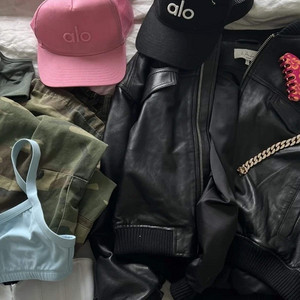
A lot of the influencers Amelia is following are constantly showing off their new outfits.
Welcome back to my channel.
Today I have a summer clothing haul for you guys.
Then there will be a link to the websites where you can buy exactly what they're wearing.
And in one of these videos, Amelia sees the bikini.
Oh yeah, it was literally like a white and brown tie-dye bikini.
It doesn't sound that special, but to Amelia, it felt like the first step to reinventing herself.
So she clicked the link.
The price was somewhere around $200 for the bikini.
And had you ever spent that kind of money on a piece of clothing before?
No, not even close.
But then, Amelia notices an offer in small type just below the total.
Four interest-free payments of $41.99 with afterpay.
It just felt so cheap, you know?
I was like, that is so affordable.
$41.99.
And if I sat there and I genuinely was like, $41.99 times four, I probably wouldn't have bought it.
But I was like, oh, I'm easily going to get $41 next month.
Like, that's nothing to worry about.
So suddenly the most expensive garment you've kind of considered buying feels like it's actually a bit of a bargain.
It really does.
You're like, I just lucked into a kind of a steal.
I'm like, wow, I'm paying $41 for a $200 bikini?
Like, I am a genius.
This was Amelia's first experience with a kind of payment called buy now, pay later.
After an extremely cursory credit check the kind that won't affect her credit score she's approved.
Clicks the purchase button.
The company, Afterpay, charges her card for the first installment.
They accept credit or debit.
She chooses credit.
And the bikini is on its way.
The process was that simple.
And so a few days later, when she sees another influencer showing off something else she liked.
So I guess we'll start off with my most favorite pair of sneakers that I own.
Amelia clicks the link, and again, she sees that buy now, pay later option.
It literally made the price, like, I kid you not, like $8.
So...
In that mindset, I was like, oh my gosh, I can afford the world.
And so that's why I threw in that swimsuit and I threw in the jacket and the jeans.
Hit me.
Yeah, right?
I put them all in the cart.
Yeah.
And my total was literally like $20.
So how does this pick up?
Is it over the next couple weeks?
Is it months?
I would say days, to be honest.
Before she knows it, Amelia has fallen into a kind of shopping spiral.
I got like a whole bunch of like really nice jeans from Aritzia.
She got fancy sweatpants, sweatshirts.
Because sweatsets were super in, right?
Because you weren't leaving the house.
A bunch of new shoes.
Brand new high heels, Jordans, Yeezys.
Buying stuff online was the only thing that really gave me that like adrenaline.
You know what I mean?
When it came in the mail because there was nothing else going on.
It was so exciting.
It felt like Christmas.
Amelia says all of the packages arriving on her doorstep felt kind of like gifts.
Like some mysterious stranger, was footing the bill for everything on her list, just out of the goodness of their corporate heart.
I'm not going to lie, it felt free.
Like it literally felt like free money because I didn't see it.
It wasn't cash.
I don't know.
It just felt like it was never going to catch up.
It just all felt like Monopoly money.
So you're like watching Tiger King, mashing that buy now, pay later button.
Life was good.
What was the first sign that trouble might be brewing?
I didn't think about it literally until I got an email from Discover saying your statement is ready to be viewed.
One thing to know about Amelia before she started using buy now, pay later, she was pretty allergic to using her credit card at all.
It was one her dad helped set up for essentials and emergencies.
And her statement had only ever been a few hundred dollars at the very most.
But this time?
I saw that it was $2,000, which was my limit.
And then I saw my debit card went from $700 to like $20.
And that's when I was like, I am going to throw up.
How did this happen?
Hello and welcome to Planet Money.
I'm Alexi Horowitz-Ghazi.
And I'm Taylor Washington.
At its most basic, a loan is a way to get money now in return for a little bit extra.
Or a lot.
When you pay it back down the road.
That's been true as far back as, I don't know, ancient Babylon.
But all of a sudden, over the past couple years, there's been an explosion of new companies offering what is essentially free money.
A no-interest loan.
Today on the show, what exactly is Buy Now, Pay Later?
How it works, and why it seems to be everywhere.
We originally reported the story of Amelia back in 2022.
Since then, buy now, pay later has continued to spread across the economy, and people are using it for all sorts of basic necessities as living costs shoot up.
All right, as credit scores are falling, especially among Gen Z.
So today we're going to revisit our original episode on how companies like Klarna and Afterpay and Affirm make money, and we'll get an update on Amelia in 2025.
So let's get started.
We'll find out exactly who is using Buy Now, Pay Later now and if it's ever a good deal for you, for Amelia, for the economy.
This message comes from Apollo Global Management, who believes the global industrial renaissance is transforming the world.
Over the next decade, industries like energy, infrastructure and technology will need an estimated 75 to 100 trillion to modernize and meet demand.
Long-term projects need long-duration capital.
That's where Apollo steps in.
With scale flexibility and a focus on growth.
They're partnering with companies to drive the future, one innovation at a time.
Learn more at thinkitnew.com slash renaissance.
This message comes from NPR sponsor Odoo.
Some describe Odoo like a magic beanstalk because it scales with you and is magically affordable.
Odoo.
Exactly what a business needs.
That's O-D-O-O dot com.
Okay, so Taylor Washington, you are a producer here on the show.
Yep.
And you first brought up Buy Now, Pay Later in one of our editorial meetings a while back.
Yeah, so I heard about it a while ago because all of a sudden I saw a ton of people my age, you know.
Fellow Zoomers were using it.
And they were going on these crazy shopping sprees all over TikTok.
A lot of people jumping in headfirst, just like Amelia.
And so it seemed like something we should look into.
Right.
Okay.
And we will get back to Amelia's story in a bit.
But Taylor, what I remember from when you first pitched this was that a lot of us kind of knew what you were talking about.
Like we'd seen these buy now, pay later options online, but nobody really understood, like how it actually works.
Yeah.
So people started talking about payday loans or rent to own or layaway, because with layaway you also pay in installments but you don't get the thing until it's paid off.
Yeah.
That's what buy now, pay later feels like.
Good old fashioned layaway.
This is Terry Bradford.
She's a payments expert at the Kansas City Fed.
And a couple years ago, she and her colleague Julian.
Julian Alcacar.
I also work at the Federal Reserve Bank of Kansas City.
They teamed up to start looking into buy now, pay later.
How would you kind of describe your dynamic as a duo?
Are you more like a Batman and Robin style thing?
Are you like Sherlock Holmes and Dr. Watson?
You know what?
I would say we're Woodward and Bernstein.
How about that?
Ooh, yeah.
Those are terms that we can understand.
Okay.
So when our financial, Woodward and Bernstein started looking into buy now, pay later, a couple years ago, the business model was still a bit of a mystery to them.
But one thing was clear.
It's credit by another name.
That's what it is, yeah.
So it's not unlike, I guess, buying a car or buying a house.
The difference is you aren't paying interest, you know?
Yeah, yeah.
It almost is like too good to be true.
Too good to be true because here's what most buy now, pay later companies are offering.
They're saying, as long as you are able to clear a pretty low bar, like a soft credit check that won't show up on your credit score, they will spot you the money for whatever you're buying.
You agree to pay them back in four installments.
They collect the money from whatever bank account or debit or credit card you want.
And those payments are all interest free.
Which raises a pretty big question.
If most customers are not paying any interest... how are you making money on this?
Interest-free loans, where's the value proposition in that?
Yeah.
So where was the money coming from, right?
Right.
Where was the money coming from?
Lending money is usually a big moneymaker because of some combination of interest and fees.
But when Terry and Julian peaked under the hood of the business model, not only are the companies not charging interest, the fees generally aren't super high either.
So for customers, as long as they don't buy more than they can afford, which is obviously a big if these loans can be a great deal.
Basically the cheapest money you can get.
I was always expecting this gotcha moment.
Yeah.
And it wasn't coming around.
So I was very like, where's the surprise?
I was.
You know, when you watch a scary movie and you can hear the suspenseful music, and then there's Michael Myers behind the door.
That's what I was expecting.
The gotcha moment was not what they expected.
Instead of making money by gouging their customers with hidden fees.
It turned out buy-now-pay-later companies were taking their cut from the other side of the transaction, from the businesses actually selling the goods.
So it goes between 4% and as high as 9.5% is what merchants are paying buy-now-pay-later firms.
Credit card companies usually charge merchants anywhere from 2% to 4%.
So buy now, pay later companies are often asking for a way bigger cut.
So I just want to break this down clearly.
They're saying we're going to charge you a round double of what credit cards charge per item that you sell using our payment service.
Yeah, it doesn't quite seem to jive, does it?
What makes it jive is that credit card charges are widely variable depending on whether it's a MasterCard or an Amex or a Visa and whether there are rewards.
It makes things harder to predict.
Also, credit cards come with these pesky consumer protections that put businesses on the hook if customers complain.
So if something goes wrong and the product that they bought broke or didn't perform to their satisfaction, they have the right to request a chargeback.
And so the merchant could have that whole amount that they'd received withdrawn by the credit card company because the customer said the product was no good for them.
Right.
So if you've ever asked your credit card company for a refund because the thing you bought turned out to be junk, that's what she's talking about.
That can be a big pain for businesses.
But the biggest reason that businesses are signing up for Buy Now, Pay Later is that it's helping them sell more stuff.
For example, by bringing in a new pool of customers.
Because what Terry and Julian saw as they dug through pitch decks and advertisements and influencer videos was that at first, Buy Now, Pay Later, companies were targeting a pretty specific demographic.
They wanted to offer small loans at the point of sale to reach people who don't usually buy on credit.
Which is actually a lot of people.
For example, people who don't have much of a credit history, people who have bad credit, or people like Amelia, who grew up during and after the financial crisis and are more reluctant to use credit cards at all.
All of those people might not have bought anything without Buy Now, Pay Later.
So not only are businesses getting new customers, but many of those customers are young.
As they get older, they'll likely earn more money, and they might come back and spend it.
On top of that, Julian says Buy Now, Pay Later helps retailers with a problem they call cart abandonment.
Which will be familiar to almost anyone who's shopped online.
Most consumers will put items in their virtual shopping cart and then, when it comes time to check out, they'll be like I don't need to spend 200.
And so...
What Buy, Not Pay Later does it actually reduces cart abandonment because it makes large purchases seem smaller to the consumer.
Remember Amelia and her Monopoly money?
The lower price tag can lead people to buy more than they would have otherwise.
Now, Buy Not Pay Later has been growing in the U.S. since at least 2015.
But it reached critical mass at the perfect moment, just as the pandemic set in.
All of a sudden, online retail exploded.
And Terry says...
So did the number of Buy Now, Pay Later services.
It was Afterpay and Affirm and Klarna and Zizzle and Zip.
Like, how many of these things are there?
Yeah.
And you were also hearing about the partnerships that they were beginning to form with large merchants like Amazon, for example, and Target.
And it was kind of like, okay, wait a minute, what is happening?
And they're popping up absolutely everywhere.
Buy Now, Pay Later was no longer this niche thing, mostly targeting young people allergic to credit by partnering with trendy brands.
It was the new form of payment for all kinds of purchases.
One thing that I found is that there's a Buy Now, Pay Later firm for just about anything.
From small business to medium-sized business, financing to auto repair, to helping you remodel your home, and for easy payments.
To even health care.
Yeah.
This might be TMI.
I had to get my wisdom teeth taken out.
And my dentist can take my wisdom teeth out using buy not pay later.
Wow.
And that was wild.
That's where I was like, this is a little much.
And talk about deep throat.
There you go.
We've looped back around.
So when our investigators take a step back, here is what they see.
Buy Now, Pay Later is finding its way into more and more corners of the economy.
It can be a pretty good deal for customers, and it looks pretty good for businesses.
But you know who is not totally thrilled?
Besides Amelia, of course.
Credit card companies.
And some of the big banks behind them.
What they've been doing to fight back after the break.
This message comes from Superhuman, the AI productivity suite that gives you superpowers everywhere you work.
With Grammarly Mail and Coda coming together, you get proactive help across your workflow so you can outsmart the chaos.
Experience AI that proactively helps you go from to do to done faster.
Unleash your superhuman potential today.
Learn more at superhuman.com slash podcast.
That's superhuman.com slash podcast.
This message comes from BetterHelp.
This month, BetterHelp's encouraging people to reach out.
Grab lunch with a friend, call your parents or even find support in therapy.
BetterHelp makes it easy with its therapist match commitment and over 12 years of experience matching users with qualified professionals.
Just like that lunch with a friend, once you reach out, you'll wonder why you didn't do it sooner.
Go to betterhelp.com slash NPR for 10% off your first month.
This message comes from NPR sponsor, U.S.
Bank.
With U.S.
Bank Business Essentials, you get more than just a bank.
You get a dedicated partner that provides you a powerful combo of checking and card payment processing with quick access to the money you've earned, proving that there is nothing as powerful as the power of us.
Visit usbank.com today to learn more.
Member FDIC.
Copyright 2025 U.S.
Bank.
Loans are basically the oldest financial technology in the book.
But since the 1960s, when you think about how people pay with credit for everyday things, you usually think about credit cards.
So you can imagine how threatening this explosion of buy now, pay later was to stodgy old banks and credit card companies.
There was one report that showed that banks lost between 8 and 10 billion in revenue to buy now, pay later offerings.
Wow.
Because, as Buy Now, Pay Later, grew more popular, a lot of people started using it instead of credit cards, which means a lot less transaction fees and interest payments for the credit card companies and the banks behind them.
And those banks, they obviously weren't going to stand for it.
Financial institutions don't generally just sit back and let things happen to them.
And so the banks and credit card companies are trying to fend off this horde of new competitors.
At least one bank, Capital One, is refusing to let their credit cards be used for most buy now, pay later purchases.
But for the most part, banks and credit card companies are getting in on the action.
They're acquiring buy now, pay later companies outright or rolling out their own services that look a lot like buy now, pay later.
And this is why it is now possible to buy your plane ticket to go get your wisdom teeth removed while wearing your new Yeezys, and pay for it all later.
And the way the system is currently set up, a lot of that spending does not get reported to the credit bureaus.
Which brings us to the part of Buy Now, Pay Later that got Amelia into trouble.
Every time she chose to pay later, she was taking out a little loan for the sneakers or the sundress or whatever.
But the company giving her that little loan had no idea how many other little loans she had already taken out from other Buy Now, Pay Later companies.
And this is where people like Terry and Julian see the greatest potential danger.
One of the things that really set off the alarms was the opportunity for overextension from the consumer.
Because, when compared to a traditional credit card or even personal loan, they will check if you have good or no credit or if you have outstanding loans.
Buy Now Pay Later firms had no idea that how many buy now, pay later products a consumer was using.
So the opportunity to stack, it was fairly easy.
The same thing happened with credit cards when they first came on the scene in the 1960s.
This new kind of credit became available to more and more people.
And it was so different from what was possible before, so unregulated, that a lot of people got in over their heads, spent more than they could afford.
People like Emilio.
You know, when you're just in a state of She'd maxed out her credit card and almost emptied her checking account after around a month of buying now and paying later.
She did manage to get her dad on the phone.
Did he play the dad card?
Was he like, I'm not mad.
I'm just disappointed.
Oh, no, no.
He was mad.
He was like, I am mad.
She got a whole lecture.
He was like, Amelia, that's very dangerous.
Installment payments are extremely dangerous.
Like this affects your future.
He's like, you're not paying $10.
You're paying $40.
He did not bail her out.
Amelia had to pay off all that spending by herself.
And how did the conversation end?
What did you agree on?
Just to stop using it, pay off what I had to pay off, and don't continue using it.
If you really want something that's expensive, you're going to have to take that money out of your savings and pay for it right then and there.
You have to wait for your next paycheck.
I think I was 20 at the time, 19 or 20 and he was like you shouldn't be able to afford all this right now and you clearly can't.
So pay off what you have to do and don't put anything else on it.
And how long did it take before you...
Bought now and paid later again.
Like two weeks.
I didn't learn.
That was 2022.
And for a while after, Amelia says, she kept using buy now, pay later a lot.
It got to the point where I just kept getting texts like 2299 is being pulled out from this debit account.
$22.99 here, $22.99 there, adding all the way up to $900.
These charges were piling up.
I was using different platforms.
I was using Klarna, Afterpay, and probably Affirm, like, all at once.
It feels like you're just being buried alive.
After another year and a half of buying, Amelia woke up one morning and realized she had more texts from these companies than from her friends.
The later in Buy Now, Pay Later had finally arrived.
That's when I was like OK, if I can't manage it, then like I need to just like cut this out because like I can't have nice things clearly.
Like I'm not capable.
So two years ago, Amelia decided to go cold turkey.
No more buy now, pay later.
She says she hasn't used it since.
And she's paid off all of her buy now, pay later debt.
But every time she's buying online, she sees those colorful buttons tempting her.
And they're in more places every day.
Like this.
One time, when she was getting her lips done, the tech asked if she wanted to use something called Cherry to pay.
That's a lender that finances lip fillers and plastic surgeries for up to $50,000.
Amelia said no thanks.
That's the scariest thing to me.
I was just like, if I didn't learn my lesson, oh my gosh, literally my...
Lips would be on an installment payment.
There's just no place, I think, where you cannot see buy now, pay later right now.
That's Terry Bradford with the Kansas City Fed, again the Woodward of our financial Woodward and Bernstein from earlier.
She's kept up with these kinds of services over the past few years and she says that is the big change.
A few years ago, tons of buy now, pay later companies were trying to be everywhere.
Now they are everywhere.
Today, people use Buy Now, Pay Later for all kinds of things and not just luxuries.
When we first had this conversation, it was more about the nice-to-haves.
And now you're saying Buy Now, Pay Later for things that you need.
Gasoline, groceries.
Terry says we also know more about who exactly is using these services.
The Fed's research has found that Black and Hispanic women are about twice as likely to use Buy Now, Pay Later, than any other demographic group.
And the Consumer Financial Protection Bureau found that Buy Now, Pay Later users also tend to have balances on things like student loans and car loans and personal loans.
Also, almost half of Buy Now, Pay Later borrowers paid late last year.
Which could spell trouble because there are plans to factor Buy Now, Pay Later into your credit score, starting sometime this fall.
Which could land heavily on Gen Z consumers, because the people most likely to use Buy Now, Pay Later are younger and Gen Z credit scores have been falling over the past year.
The demographic that's heavily using Buy Now, Pay Later is a younger demographic.
And without maybe, some education about how using Buy Now, Pay Later can spiral on you, it could become a problem and it could become a lingering problem.
Now Terry says Buy Now, Pay Later can still be a good deal if you are a prudent shopper, for example, and you need to buy groceries but you don't have access to credit or cash.
Because there's no interest on these loans.
They're generally better than something like a payday loan, but not if you are going on a shopping spree.
Which brings us one last time to our Gen Z shopper, Amelia.
After cutting out, Buy Now, Pay Later.
Amelia also cut out credit cards, but she couldn't quite give up the influencer life.
In fact, she now works for a company that helps influencers partner with brands, and she dabbles in some influencing herself.
Okay, guys, I'm getting ready to go to a pool party.
Which helps scratch that bikini-buying itch.
So I'm going to give you guys a mini haul and have you guys pick which one we like the best.
This time, without all the debt.
Bandeau style top, which I really like.
And it has little ruffles on it, which is so cute.
If you're looking for a guilt-free way to spend money, may we recommend Planet Money Plus?
Each monthly subscription means a steady source of funding we count on and we can use to plan our reporting.
It really helps, and we'd love for more of our funding to come directly from all of you.
Thanks as always to existing supporters who get bonus episodes and sponsor free listening.
Sign up at plus.npr.org slash planet money or click the link in the show notes.
This episode was originally produced by Emma Peasley, engineered by Josh Newell and edited by Molly Messick.
Our update was reported by Vito Emanuel, produced by Willa Rubin and edited by our executive producer, Alex Goldmark.
Special thanks to Taylor Washington.
She is no longer a producer with us.
She's currently in nursing school, about to graduate.
So if there are any hospitals out there looking for a smart caring, trend-spotting healthcare professional, you know where to look.
I'm Alexi Horowitz-Ghazi, and as she said three years ago, I'm Taylor Washington.
This is NPR.
Thanks for listening.