My name is Emily and I'm a psychologist and regular guest on The Imperfects.
I was proudly born and raised on Wurundjeri country and now live, work and raise my own children on the lands of the Whadjuk Noongar people.
I'm inspired by the strength and endurance of the world's oldest living culture.
We at The Imperfects pay homage to traditions of story and, in particular, its role in healing, when we share and create space for stories on this podcast.
Together with the Imperfects.
I acknowledge the Wurundjeri people of the Kulin Nation as the traditional owners of the land on which this podcast was recorded and extend my respects to all Aboriginal and Torres Strait Islander peoples.
I acknowledge this land always was and always will be Aboriginal land.
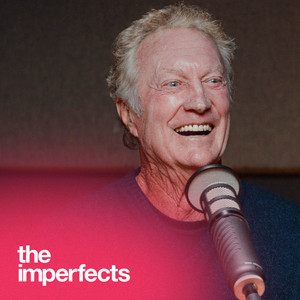
Brian Brown is an Australian icon.
I was convinced that I had something that was poisoning me and was going to kill me, and it was a headspace.
I had anxiety.
Brian has worked with some incredible people over his career, including Paul McCartney, Tom Cruise, Judy Davis, Sigourney Weaver, Ben Stiller and many, many more.
Better say Sam Neill or he'll have the shits.
Very good point.
He should be in there.
Sam Neill is always messaging the show.
So I go out on this beautiful day.
I remember thinking, if I was to die today, it's been the most perfect moment to have died.
Bent down to light a match and World War III happened.
I don't know if I'm dead, I don't know if I'm on fire and I just come up screaming.
Oh, my God.
Do you mind me asking what answers you came to in terms of what do I value?
I valued being alive.
The Imperfects invites you into a very safe place.
A place where we share without judgement and drink heaps of vulnerability.
Grab yourself a cup.
This is the Vulnerability House.
Australian icon alert.
Australian icon alert.
We have a legend in the tea house.
We do.
This is so exciting.
Truly an honour, Brian, to have you on the show.
We've had some really amazing people on this show, but you are... The oldest.
You are...
That actually might be true.
You are the wisest.
The wisest, yes.
Brian, it's such a privilege to have you on the show.
That's very nice of you.
Thank you.
Now, people who listen to the show regularly will realise that there is no Hugh today.
There's usually a third co-host, myself and Josh and Hugh.
Hugh's had a rough couple of weeks, so he's taking a few days off, a bit of a mental health break.
So you're stuck with the two of us, Brian.
Yeah.
Good, I can handle that.
Good, thanks.
I don't know if we can, but I'm glad you can.
We'll see how we go, which means we usually read a bio, and Hugh usually does that, but it means the job falls to me today.
So you've stolen the first line of my bio, but I think...
Because I think there are a few people that this actually applies to, and it's not sort of sycophantic that Brian Brown is an Australian icon.
Brian grew up in Western Sydney with his mother and sister, and what he later discovered was a somewhat poor upbringing.
But at the time, his mother made him feel as though they wanted for nothing.
Finishing school with nearly perfect marks.
Not sure he wanted to study.
Brian began working at AMP as an actuary.
Actuary.
One of my friend's brothers, I remember in school, was studying to be an actuary.
And isn't that reserved for like the smartest people are actuaries?
Totally.
Yeah.
And let's get it right, I was an actuarial student.
Oh, okay.
That's what I went in to do because I was very good at maths and stuff.
But I didn't want to go to uni.
I got a scholarship to go to uni because they were giving them out to everybody then.
But I didn't want to go to uni.
I didn't, you know, school was the best lurk I ever came across.
Yeah, okay.
Four months holiday, play sport.
You got mates.
You knew what the teachers wanted, so you just gave it to them.
I often wish I could go back to high school.
I had a good high school experience.
I was lucky, but I often wish I could go back to high school, knowing what I know now and appreciating it for what it is.
Mate, it's a lurk.
Yeah, it's a lurk.
I've never used that word before, but now I'm going to use it a lot.
It's sticking in.
Okay.
So whilst working at AMP at the bank, Brian decided to... Insurance company.
Insurance company, sorry.
Yeah.
In our research it came up that you auditioned for an end-of-year review at the insurance company's drama club.
Yeah, that's right.
So the insurance company had a drama...
Well, you've got to remember.
In those days the big companies employed lots of people and people went to work there for 40 years.
You'd meet your partner there, you'd get your mortgage there, all that sort of stuff.
So if people are going to be there all the time, a smart company would make sure they had activities, social activities, for their staff.
Yeah.
You know, they'd have skydiving clubs, they'd have boat clubs, they'd have all sorts of things.
Wow.
Snooker clubs, they'd have all sorts of things, right?
And the AMP had a drama club.
I didn't know about that and this was four years after I'd been working there.
I didn't know they had a drama club and they sent a thing around saying we're doing an end-of-the-year review.
Yeah. and anyone that would like to audition come on after work.
And so I said to a mate of mine who was a bit of a larrikin there in the office.
I said let's go and do this.
I said, there's got to be girls we haven't met yet.
Oh, so you weren't a... Sex drives everything.
Yeah, and here we are.
LAUGHTER
So you weren't into acting at this point?
This was purely just for meeting girls?
Surfing, rugby league were the two things that my emotions were happy in.
Okay.
But your emotions must have become happy in acting pretty soon, because you quit your job, sold your car, moved to London to pursue a career in theatre.
Which is based on what you just said Brian, in terms of companies back then, where it was like a career for life.
I think now if someone did that, it wouldn't be that dramatic, pun not intended.
But now to leave a company that young for a career that has no security is...
It must have been quite a radical thing.
Well, when I think about it now, I would never recommend it to anyone.
Yeah.
Because just at the time I auditioned for this amateur night at the insurance company, I'd also looked around as an actuarial student and I said to someone who are all those blokes that come in here with the fast, the sharp cars and the good-looking suits and everything?
And they said, they're the salesmen.
And I went, well, oh.
She said, all right.
And I went to the boss and I said, I want to become a salesman.
And the thing about it was that, as a salesman, no one knows where you are, as long as you get your figures in on a Friday.
And I did this one-night review.
And I loved it.
I didn't know what I loved, but I knew I loved it.
But what I did know was they said to me after I did the audition.
They said look, if you want to do this, you can be a part of the company.
And I went that next morning when I wake up to go to work.
And I like going to work.
I couldn't wait to go to work because at the end of that day I was going to do this thing called rehearsals.
I didn't have a clue what it was, but I knew I had to be there.
Yeah.
What was it about rehearsals that you liked?
Well, I just knew I had to be in this thing.
Like when they gave me this piece of paper to audition and I read opposite someone and I felt great.
Yeah.
And I wanted to go back and do more feeling great.
Yeah.
You know, and so I joined an amateur theatre, and so I was there at the amateur theatre, you know, all weekends.
I gave up surfing, gave up rugby league.
Wow.
And just was there all the time.
And, of course, as you said, my mother brought me up and everything, and so she was very happy when I decided I'd be an actuarial student.
He's going to be professional.
He's looked after him.
Thank God I've done the right thing.
I've set him on the right track.
Then I say, no, I'm going to become a salesman.
She goes, oh, Christ, your father was a salesman.
But that's the only negative thing she said, and I was like, all right.
Then, when I turned around, I said you know, when I was 25, after four years of being a salesman and I did well as a salesman I said I'm going to England to become an actor.
She was like, Right.
Okay.
What's wrong with being a salesman?
I'd say that for a parent, that's a very supportive response.
I know.
I think about it now and she never said, oh, darling, do you really think?
She never said those things.
Oh, really?
Yeah.
I'm very appreciative that she didn't.
Amazing.
Well, once getting to London, it says, you just took every opportunity you could, moving from set to set, performing for schools, making friends with directors.
And before long, you were offered a one-year contract with the National Theatre?
National Theatre of Great Britain, yeah.
Yeah, wow.
And then, since then, Brian has worked with some incredible people over his career, including Paul McCartney, Tom Cruise, Judy Davis, Sigourney Weaver, Ben Stiller many, many more, in over 100 projects.
Better say Sam Neill or he'll have the shits.
That's a very good point.
He should be in there.
Sam Neill's always messaging the show.
In over 100 projects, including Break My Rant.
Australia Sweet Country Cocktail.
Two Hands Gorillas in the Mist.
Many more.
I can't name all 100.
But back in 1983 Brian starred in The Thorn Birds, for which he was nominated for a Golden Globe and Emmy.
And it was on this project that Brian met Rachel Ward, whom he would marry only 10 months later.
And 40 years later, Rachel and Brian share three kids Rosie, Matilda and Joe, a farm and, I'm sure, a lot more than that.
And three grandkids now.
Wow.
Amazing.
Exhausting.
How's that?
How's being a grandfather?
Well, it's the interesting thing, you see.
Like people said to me like, oh, you're going to love being a grandfather and everything.
I went, yeah, hold on.
I need to find out, all right, because I never knew grandparents.
See, my mother was an only child and her parents had died by the time she was 16 or something.
Yeah.
And my father had pissed off and so I never knew his side of the family.
So I never knew – what a relationship was a kid to a grandparent.
Yeah.
So I had no textbook to go by.
Point of reference.
Point of reference.
But of course, as soon as a grandkid comes along, it's goo-goo ga-ga, come here.
You know, you behave like everyone else.
But I had nothing to know how I would emotionally behave, you know.
Yeah.
I feel like I could.
I mean, we've got the Voluntary Realty House cards here that you're going to pick some cards.
Choose a question and hopefully something will come to you.
But before that I feel like I could ask you career advice for hours, but I kind of feel like you are.
You are kind of like, in my eyes, the model of a great Australian man.
Unlike many other men, I would say in Australia, in the sense of your character and how you are the picture of an Australian man.
I'd be fascinated to know if someone slash me was to ask you what advice would you give a man to live as a great man?
Hmm.
Well, first of all, let's get it down to live as a man.
I think everything in living is about finding who you are.
What's the deep part of you?
What do deeply you value?
What do you deeply – react to?
Do you like to be literal or humorous?
What is the you?
And then allow that you to go into all the things you do.
But you've got to find you.
And do you think you found you early?
Well, I probably did, but I didn't know that.
And I think it has a lot to do with my upbringing.
I mean, I had in front of me a woman who worked hard.
She had to.
She had to get the rent to pay.
This is your mother?
Yeah, and she had two kids to bring up.
So I saw work as a very valuable institution.
It got you through life.
You got paid some dollars.
It got you through life.
You could pay the rent, the electricity, you know.
So I saw work as something that was incredibly important, right which doesn't account for the fact that I became an actor, so I could get out of it.
But anyway.
There is a paradox there.
I mean, as a maths genius, that doesn't add up.
I'll let it slide.
But so I saw that.
I also saw her values.
You know what was good or bad in terms of whether that was something that did disservice to something or actually made something better.
So that was all in front of me.
My mother was also quite silly and funny at times in there.
Yeah.
That was great.
I saw someone who never whinged in her life and never saw her cry, and God, she must have wanted to at times.
Wow, yeah.
No, I just saw someone who just went, this is my lot and, by God, I'm going to make the most of it.
And to her, her lot was bring up two kids and give them a chance at life.
Gee, what a woman.
Yeah, what a woman.
Amazing.
And it's interesting.
The older I get, the more I go, what a woman.
Yeah, yeah.
And then I go, what a woman.
You know, like the older I get, the more I appreciate it more.
And I have this thing that you know like I just go, just give me 10 minutes please, just so I can say thank you.
Oh, yeah.
Just give me another.
I don't think I thanked her properly, you know, but we all think that.
I'm saying this so my kids hear this and they'll –
I'm ready.
I'm waiting for the thank yous.
We'll clip this up and send it to them.
It's not a request.
It's just a suggestion.
Okay, so we've got these cards here Brian, and for those who haven't heard this show before, we have this deck of cards.
We call them Vulnerability House cards, and on each card there's a question, and hopefully one of those questions that you pick will invoke some memory story, something from your life that is vulnerable.
Right, so do I take the top three?
Take the top three, yeah.
And you could just read them out as you pick them up.
If you could relive one moment in your life, what would it be and how would you do it differently?
What's been the scariest moment in your life?
Have you ever taken a risk that didn't work out?
Jeez.
Wow.
I mean, I can only imagine the depths of stories you've got for all of those.
Well, I think I'm going to go with what's been the scariest moment in your life.
Yep.
Great.
So what's the scariest moment in your life?
Okay, so I've had a couple of scary moments.
There was one time I was doing a film in Canada and I had to go down these rapids and I was with this big bloke who's American, Indian big guy, and the pair of us had to wade in the water and then we'd go over the little cliff and into the rapids and then there was a boat down there to grab us.
Was this for a job?
For a job.
For a job, yeah.
And so it's getting late at night or late in the evening.
The light's going, like always, on a movie and they're saying hurry hurry, we've got to get a move on, we've got to get a move along.
And it's meant to be winter and we're dressed in very heavy clothes.
Yeah.
And so we get to there and we start to go and the stunt guys had done it just before us.
And as we're starting to do it, I'm thinking there's something about the stunt guys that's different to us.
There's something about the stunt guys.
Anyway, we start to go, and we go, get up to our waist, and then the water rushes us over the rapids and down the river.
No one had asked this big American Indian guy if he could swim.
Oh, really?
So he now is doing the one thing that you do when he's finding something to push himself up, and that's me.
So he's now pushing me down and we're both in really heavy clothes pushing me down because he's trying to save himself.
Yeah, yeah.
I'm realising that this is not a great position to be in.
The river's rapidly going now.
I fight my way up, and here, only about 10 metres away, is the boat that has to get us, or else we just go forever down this river and die.
They throw out a rope and luckily I'm able to get the rope and the pair of us get pulled in.
He goes straight to hospital because his blood pressure's gone through the roof.
Yeah.
I go straight to the pub.
Yep.
The only answer.
So far that aligns perfectly with what I imagined you to be.
Yeah, exactly.
That's exactly what I imagined you would do.
So that was a scary moment.
But the one that's the scariest moment was.
So it's a beautiful day right, and I'm up at my farm up on the north coast of New South Wales, and there's a beach there that I surf at.
So I go out on this beautiful day to the beach and it is beautiful.
The sand is just golden.
The sky is as blue as you like.
There's nothing that Melbourne knows about.
And the ocean's just looking, but it's flat, but it's very beautiful.
And I think, all right.
I'll go for a walk up the beach.
So I go for a walk up the beach a kilometre or so, and I stop and there's a log there and I think okay, I'm going to go in for a swim.
I take off everything and I dive in and I'm under the water and I come up and it's just so beautiful.
You know, come up to this water and I'm just feeling sensational, right.
And I come back and I sit on the log and I look out and I go...
If I was to die today, it's been the most perfect moment to have died.
I've just experienced a really wonderful natural high.
Yeah.
Wow.
So I'm feeling great.
Yeah.
So I get dressed.
I go home.
Rachel says to me, look, I've got some stuff here I want you to burn off, right?
So I go, yeah, all right, we'll do that.
And she says, here, I've got the can of petrol here.
I said, no, no, no, no.
We don't put petrol on the fire.
We go and get some diesel.
So we get the diesel.
We put that on it.
We light it.
It burns down.
And she goes, and I think, right, beautiful morning.
I've done that.
That needed to be done.
This is very – now I'm emerging more as a male.
You certainly are.
And I'm thinking right.
Okay, the bloody gutters on that little cottage there.
I've been wanting to clean them for ages.
Let's go and clean them.
So I go and get the ladder and I say, now, Brian, this is where blokes get into trouble.
They fall off ladders.
So I hold on tight and I clear the guttering and I put the gun and I come back and now I'm feeling even better.
Like everything's going up.
How long have you had the farm at this point?
Oh, 35 years because this is about four years ago this happened.
Oh, gotcha.
Okay.
So now I look down to a barbecue area and there is a bit of stuff there that I've been meaning to burn.
I think I'll burn that off now too.
I go, I just used the last of the diesel.
Oh, I'll just sprinkle a bit of petrol on the back end of the stuff.
So for someone who doesn't know, why don't you use petrol?
Well, what you don't do is throw petrol on a fire.
Okay.
That I knew because it'll just come straight, the flame will come up at you.
Okay.
That's why you see people with petrol.
They'll put a little bit along the way and they'll light it there, so it runs up and gets there.
So anyway, so I go, oh, I'm out of diesel.
Okay, so I'll just put some petrol on the back of it there.
A couple of pieces of paper down here bent down to light a match and World War III happened.
And I just come up screaming.
Oh my God.
And it's a surreal experience.
I don't know if I'm dead.
I don't know if I'm on fire.
What I do know is my body's going ding ding ding, ding ding.
You're in trouble, you're in trouble, you're in trouble.
And I start screaming and I get rushed to hospital.
I'm in the burns unit for a week.
So your body was on fire?
No, the heat.
The heat.
It had been.
No, I wasn't on fire, but I'd been had a heat hit that eventually took off all my face, all my arms, all the skin off my face and arms.
All the skin off your face and arms?
Yeah, all the skin off.
Rachel, where was Rachel during this?
Rachel, I think, was having a drink and wondering why the hell I was disturbing her.
But I was rushed to the hospital and then they put stuff on me to take the heat out of my body.
Then I was sent by plane down to Sydney and I was in the hospital there for a week.
And I'm laying in there in the hospital and, like, my face is all burnt off, my arms.
And I'm laying there and I'm thinking okay okay, you've done all right with that head for 74 years, you know.
What, you can't take another 10 years of –
You know, disfigurement will see what you like, won't it?
See where you're going.
I mean, these are the thoughts that are going through my head.
You mean you're thinking your face is going to be forever changed.
Yeah, yeah, yeah.
And I'm going okay.
Well, you know, the thing is, you've been lucky to have a head to start with, and now this is a new challenge that you're going to have to face.
Well, the long and short of it, is that I didn't get disfigured.
I lost all the skin, which means I have to be.
This is all new skin, so I have to be very careful about the sun now, you know.
I've got to slather myself with stuff and everything.
But it was one of those things where I remember thinking, if I was to die today when I was on the beach, I'd be happy.
And I nearly bloody did.
Yeah.
You know, and it was.
Did that memory when you were in hospital, did the memory of that earlier point in the day come back to you?
Yeah, yeah, yeah.
I remember thinking, I remember I saw it as the whole journey from the Arriving at the beach no surf going for the walk going.
What a lovely, how lovely this feels.
And if I should die today I'd be happy.
I remember thinking that.
Then coming home, then doing, oh, I'm going to do a job, clean up the place, all that.
So there was a whole journey of life there that I was having to where I'm laying in a hospital bed at the end of it going well.
I may have a terribly burnt face and body from now on.
And all in the space of like, you know, an hour or two hours, that change to your life can happen.
And we're all faced with that every day.
I mean, you can walk out of here and someone you know falls asleep at the wheel and hits you as you're going.
You know, life can be quite momentary.
So make the most of the moments always.
I've never touch wood, had an injury that significant that I've needed to be in hospital for an extended amount of time.
But in that state, other than what you've just described in terms of your appearance and how you look, what thoughts are you having?
Hmm.
Yeah.
Silly bastard.
That came past me at one stage.
But I guess there was a profound time where I'm thinking I could be dead, you know.
I'm not dead.
What do I value?
So different thoughts did run through me like that.
Do you mind me asking what answers you came to in terms of what do I value?
I valued being alive.
I remember thinking, okay, I could be dead.
I'm not.
I'm really glad I'm not.
I'm enjoying life.
I enjoy life.
I enjoy this fact of being able to get up and breathe and say hello to my kids and my wife and friends and talk rubbish to people like you.
I value that.
Yeah. and I would not want to lose it for a while.
But you can.
You can lose it in five minutes' time, you know, so value it.
Do you think there was a time before that where you didn't consciously value all those things?
No, I think I did, but I don't think I'd had the time to really stop going.
This could have ended right now, you know, or even worse than that, because it could have ended in the river thing.
But actually no, you're not going to end it, but you could be walking around now, facially very different.
And some people have to do that.
And so probably it also makes me go it's not what's up here in the – how we look that counts.
It's what's inside us.
Just teaches you once again to value stuff, what you got.
This could be a pointless hypothetical, but if you, if this happened to you 40 years earlier, do you think you would have come to that conclusion as quickly?
That's a really good question because I know the answer, no.
I'd have been a screaming mess.
Yeah, right.
I reckon.
Yeah, yeah.
I think the fact was I was older.
I'd had a life.
Okay, this is something that's changed it.
How are you going to now change that?
You may have another 10 years in your life or something.
It's very different to if I was 35.
Yeah.
Very different.
And I thought about that.
I don't think I would have had the ability to not toss it off but think that way again.
Yeah.
Then no.
Yeah, absolutely.
Hugh and Ryan.
Yeah, Josh.
As you guys know and as a lot of people know, we're doing a new live tour this year together again.
Grand new show.
What might be exciting is to tell people who will be joining us on stage.
Oh, there's some absolute beauties.
Yeah.
Hit us with some names, Josh.
So, they're not going to all be there at once.
Different places, different people.
But Steve Curry.
Dug a hole.
Susie Youssef.
Oh, yeah.
Christy Whelan-Brown.
Yes, please.
Hannah Ferguson.
Okay.
Rana Hussain.
Love her.
Matt O'Khan.
Great guy.
Hamish Black.
My best friend.
And...
Dr. M. Oh, my second best friend.
Imagine any one of those people at a show.
It's going to make it so much more fun for us because we love all of those people.
It's going to be great.
LiveNation.com.au for tickets to see us and a collection of Ryan's friends in order.
We have heard you talk a little bit about anxiety and actually interestingly, you mentioned your mate, Sam Neill, and in our research he was quoted as saying it really shocked him when you told him that you'd been suffering from or experiencing anxiety.
Do you feel comfortable telling us a little bit about what that feels like and what it was for you?
Sure.
Sure.
It was interesting.
This is about 25 years ago.
Yeah.
The essence of it is about 25 years ago.
And I was in Los Angeles and I was shooting a movie with Ben Stiller and Jennifer Aniston.
Along Came Polly.
Oh, yeah, yeah.
So I was shooting that movie and I'd had to work on the Sunday, and On the Friday night I'd gone to a mate's place in Los Angeles for a dinner with a few people and was sitting out in his backyard.
And I said, oh, it's cold.
Can we go inside and finish the dinner in there?
And everyone was like...
Oh, you're cold.
Oh, you're all right.
So others weren't feeling cold.
So that was a Friday night.
The Saturday I had lunch with a bloke and he said, are you all right?
Your eyes are looking a bit – the colour seems wrong, something wrong in your eyes or whatever.
That's very observational.
Yeah, I know.
This bloke was.
He said something, yeah.
I said, no, I'm all right.
Then on the Saturday night – and I was to go to work on the Sunday morning and I was then to fly home to Sydney on the Sunday because I had a week off before I then had to go to Hawaii to finish the movie with Jennifer and Ben Stiller.
And so the Saturday night I pack up all my things, I go to bed, but I'm up quite a lot peeing quite a lot.
Anyway, comes a Sunday, they pick me up.
I've got my bags all packed to take with me.
So we start shooting on the Sunday.
I had to do a lot of stunts, stunt work and whatever.
And I said to them, look, do you think, can we make this pretty quick?
I don't want to do the stunts more than once or twice.
If we've got it, we've got it.
Because I said, I'm feeling not so great.
I said, I think I got maybe the flu coming on or something because I was flying out that night.
And so at about four o'clock that afternoon or three o'clock that afternoon, one of the assistants said we're taking you to hospital.
And I went, oh, no, I'm not too bad.
They said, no, we're taking you to hospital.
So we go to the hospital and the lady says, what's wrong?
And this is where I realized something was wrong.
I said, I've eaten too many lollies.
And I wanted to say, I don't feel well.
But out came, I've eaten too many lollies.
I hadn't had a lolly at all.
It's like, no, that's not right.
So something was going on.
I was getting deranged in some way.
Whoa, that's scary.
So they put me in hospital.
I ring Rachel and I say, look, I'm in hospital.
I'll be out in time to get the 9 o'clock flight because I was flying out that night back to Sydney.
Then they took me out.
They checked on me.
They took me up to a bed.
Then a nurse went on either side, felt my pulse and everything.
They said, we're taking you downstairs.
And they put me in intensive care.
And I went, right, well, I won't be going home.
So I'm in intensive care.
And I was in intensive care for two days.
And they said, your blood pressure is going down, down, down, down, down.
And so I'm looking at it, hoping that my pulse or whatever would go up while I'm in it.
And you didn't know what?
Yeah.
I had a urine infection.
Okay.
I had a urine infection.
And that had sort of – is that the thing that was sort of triggering how you were feeling on the Friday as well?
Yeah, I'd obviously started to get it.
You know, in two days, you know, I'm in intensive care.
Yeah.
And that experience of sort of the deranged thoughts and that – because I know that happens – that can happen quite often.
Is it a UTI?
Was it a UTI?
Yeah.
Because there's a great episode of Succession actually where Logan –
Yeah.
He has like exactly the same thing.
Yeah.
Yeah.
So anyway, so at the end of that week, I was all right.
But what I didn't realize every time I'd start to travel or go somewhere, what would happen to me is I'd go somewhere and I'd start to want to pee more.
What was happening was that subconsciously, I'm thinking, oh, I'm going to such and such a place.
Well, I hope they've got a really good hospital there if I get sick.
Well, maybe they haven't got a good hospital there.
So that was building up the anxiety.
But what it was showing was that I was wanting to pee.
Yeah.
The first time this happened, I went to the doctors and it was like okay, you've got a urinary infection.
Again, we'll give you these antibiotics.
I didn't have a urinary infection at all.
I had anxiety and that was bringing it on.
And that would happen to me.
That happened to me during the next 12 months quite a few times, right?
And it was, you know, like, oh, not this again, not this infection again.
I knew how important it was I had to get rid of the infection.
Well, I didn't have an infection.
I actually had anxiety.
Right.
And so it was only when I was with Matilda, my daughter, and we were coming from Sydney down to the Melbourne Film Festival or something, and as we went to get on the plane, I went oh God Tilly, I've got that.
I must have the infection again.
I want to go to the toilet.
And she said, Dad. you're like me when I go for an audition.
I want to pee.
And I went, is that what it is?
Is that I haven't got something's making me want to pee?
So I said, all right, I want to talk to a –.
When I went home I said to my doctor I want to see a psychologist.
So I went to see a psychologist.
For the first time?
For the first time, yeah.
And so what I discovered was that, like what's going on in the back of their head was like oh, you're going to this place.
Oh, what if they haven't got a good hospital there?
If you get sick again and you know you nearly died, after two days you're erased to intensive care and, like you know, will they have a good hospital.
So all this stuff just goes through your head which causes the anxiety.
Yeah.
You know, and once I realised what it was, of course I never had the problem again.
Oh, that's amazing.
Yeah, it lifted because it's like, oh, I'm not infected.
Ah, right.
I'm not infected.
It's this.
And so you know, deal with this and talk with the psychologist some more and whatever, and help that get away.
But I was convinced that I had something that was poisoning me and was going to kill me, and it was a head space.
But luckily Matilda said, Jesus, you're like me when I go for an audition, Dad.
I was like, really?
It was a light bulb.
I haven't got an infection?
It's my head that's doing this?
Yeah.
I'm sure there'll be one person listening who'll probably – you'll be there, Matilda.
Yeah.
I'm sure.
But the interesting thing about it was that –
It changed me too, because up to that stage, you know I'm pretty practical sort of bloke and it's like people would say oh, I'm depressed or I'm down, and you know like, and I would think oh, just pull your finger out and get on with it.
Yeah.
You know, because I came from a background of a woman who got on with it.
Yeah.
Right?
And so I always saw that as like, oh, someone's whinging, whatever.
When this happened to me…
I couldn't get on with it.
I needed help.
Yeah.
And when you were overwhelmed with what turned out to be anxiety, how debilitating was it for you?
Well, mine was a physicalness of wanting to pee every bloody 10 minutes or every half hour.
That physicalness of it, you know, like I'm disruptive of anything I was doing.
Yeah.
And of course, that made me more anxious because I didn't know, you know, am I going to get an infection that kills me in two times, you know?
So I've got to deal with this.
But once I knew what it was, you know it made me a better person, because I now, when someone else came to me, would come to me and say I'm feeling down or I've got this.
It's like that's a real thing.
Yeah.
That's a real thing.
That's a huge shift.
Yeah, big shift.
It was very good for me.
Yeah, absolutely.
Were there times where you – like you didn't travel because you were so – I'd get – yeah, I'd try to make an – like Rachel wanted to go to Paris.
She was doing some research and this was like –
This was about four months after I'd come back from LA and she wanted to go to Paris for six weeks to do some research.
And she said, come on, let's go to Paris.
And I was like, oh, I don't think I want – and I'd seen –
I'd seen the psychologist at this stage and we'd been talking about it and I said I don't think I'm well enough yet to go over.
And I went to see the psychologist and I said well, Rachel wanted to go, but I'm not well enough to go yet.
He said, Brian, go.
Really?
He said, go.
You've got to go.
He said, you can deal with it.
He said, ring me, whatever, and, you know, as you go along.
But you've got to go.
You know, so we did go.
She was already there.
And I remember flying to, I went to the toilet a couple of times on the plane.
I got to Paris and I rang him and he said, how'd you go?
I said, I'm here.
I've made it.
He said, good, okay.
Well, ring me when the next thing, you know, the next stage of it and all.
So we stayed on top of it.
And that was because it didn't just drop off when I knew it was mental.
You know, I had to go through a process of getting this out of me.
That's an important thing.
Yeah, it wasn't like, oh, I suddenly found out that's what it was and it was all over.
No, you know, I now really had to deal with this.
And the psychologist was great.
He was fabulous.
Yeah, yeah.
And, you know, I ring him and say, yeah, I'm doing okay.
I'm doing okay.
He said, yeah, you will.
Keep going.
It's okay.
But face it.
You know, it was really great.
He said no, you've got to go on that plane, he said, because if you stop doing things, your life's going to get smaller and smaller.
You've got to do this.
Yeah.
And I'm really glad he said that.
That's great advice.
It's quite a vulnerable thing to sort of say I'm struggling with something and I might need help, or even not even getting to the point of like I might need some help here, just that I'm struggling with something, be it depression or anxiety.
And traditionally we say vulnerability is...
Not archetypally male.
I'm interested to hear your thoughts on how vulnerability works with regards to masculinity.
Does that question make any sense?
Yeah, yeah, yeah.
Now, I'm very glad that that happened to me.
It opened me up in a way that I had needed to be opened up before.
I'd come from a woman who didn't ever seem to be depressed or down.
She just had to struggle with stuff.
But I saw the obvious things she struggled with.
I didn't necessarily know there might have been something else that she was dealing with too.
She probably would have been with the struggle.
So I'd never... come across anything like that.
And it enlarged me in sorts of ways where I thought more about what it's like to be human.
And it certainly made me very aware of you, know of people and what they go through and realise that mental health
It's worse than physical health.
You know, like physical health, you can see it.
Oh, I've cut myself.
I better fix that or I've broken my arm.
Mental health, you can't see it.
You're just dealing with it.
But it is real.
It's real.
It's powerful.
But...
Given my nature, as soon as Tilde said that, I went, oh, Christ, I don't want this.
I want to see a psychologist then.
I want to see the person that deals with this shit.
So I would say don't ever be scared of saying I've got this.
We all get it.
There's no shame in us.
No, there's no shame in it.
God, no.
You're human.
Those things happen.
Deal with it.
And there's people out there that will help you.
Yeah, I think that is the surprising thing that people can't believe.
People who've maybe dismissed psychology or therapy in any way.
But you find the right one and it can be helpful in ways that you can't yet imagine.
Oh, yeah, absolutely, absolutely.
It was such a relief when I realised that this wasn't physical.
I actually was glad to know it wasn't physical.
Oh, right, there's a whole new world out there.
Here's got to get sorted out.
Oh, so how do we sort up here now?
What do I got to do?
Don't be scared of travelling.
I'd get on a plane and I'd immediately want to go to the toilet.
You know, after this, after I got to, didn't have a piss for weeks.
That's another issue actually.
That's a whole different episode.
I love the way you said it before about it being part of the human experience, because I've had bouts of depression and some moments in my life of dark times and I never want to glamorise them because they're shit.
It's really, it's tough.
But I do think when I'm in a better space, I do feel like there's no shame in it, and there's no shame in being vulnerable about it, because it kind of means to me like I'm experiencing more of what it is to be alive.
To be human.
Yeah.
Yeah, no, I'm glad I went through this.
You know, I could understand other people better that they'd gone through.
I wouldn't be dismissive of it in my mind about someone.
It's real.
Yeah.
But also it's mine.
So let's, hey, can you help me with mine, please?
You know?
Yeah, well said.
You know?
I...
This might seem like a bit of a sidestep, but you seem like someone who is in love with life in a non-cliched way, not like I'm loving life like a postcard thing, more of loving learning about the experience of life.
Is acting the end goal or is acting more like the best way you've found to learn more about the human experience?
Yeah, that's a really hard question, right, that you're asking there.
I go back to that day that I had to go along and audition for that thing at the end and the strange high that I got out of it that I didn't understand at all but wanted more of.
I felt comfortable there.
And so my job is I play characters.
I don't pretend to be other people.
I have to be other people, whatever that's called, you know.
And I don't want to get into this because it can be terribly wanky.
But I think when you realise it's not pretending but being is a wonderful place to be.
And it's got to be the same for a muso.
It's got to be the same of anywhere in the arts a ballet dancer, whatever where suddenly You're not you.
You're the thing that needs to be at that moment.
It's a great place to find yourself at.
We could ask you many questions about what you've learned from being an actor, but I want to find out what you learned from being a salesman.
Yeah.
I'm really glad I became a salesman.
I'm really glad.
I mean, like, I learned statistics.
So I had to get a sale.
So basically, to earn the income I want, say, let's say I had to get three sales in a week, right?
I'd have to make, say, 100 phone calls.
20 people would say, yeah, come on round.
And three of those 20, I would get a sale.
And that would be, so there was statistics.
And so, you know, I spent four years as a salesman and that statistic was you don't get turned off by a no.
Someone said, no, I don't want it.
You think, you ripper, got that out of the road because the yes is down the road here.
You know, embrace the no's.
Embrace the no's because you're going to get them and get them out and you'll get down to what your statistic is.
You should get three sales out of ten.
Yeah.
I was going to say that would come in handy as an actor but I can't imagine you would.
It does.
Oh, okay.
Good.
It does.
Well, I can't imagine you would have been told no much but, yeah.
Well, yeah, everyone is.
Oh, man, I auditioned for number 96 and some of those and I couldn't get a job.
Yeah.
Thank God because then I got films instead.
Yeah.
But no, so you sort of work out what your statistic is.
So what I learned as a salesman was to embrace the no's, right?
So when I became an actor, you're going to get a lot of no's, you know.
You're going to get a lot of no's, particularly as you're starting out.
Before you maybe get a name where people want you, or something like that.
So whenever I'd go for an audition, someone saying no, not for us, instead of going into a depression of being going oh, I wasn't good enough, you know I'd go.
Oh, I got that fucker out of the road, you know, let's go for the next audition.
Gee, that's an amazing way to look at it.
Big course, big course, it's there.
Yeah.
You can't have everything immediately you want it.
Just, you know, it'll come.
Just, I guess, persevere and you get what your statistic is.
But it was a really great thing to learn, which I was able to take from being a salesman into the business I went into, where there's a lot of rejection.
But I didn't see it as rejection.
I just saw it as a statistic.
And moving one step closer to the yes.
And moving closer to the yes.
The yes is there.
Yeah.
That's such a great lesson.
It reminds me of, like you know, in sport, where you know like, whether it's like anything like basketball, footy or anything, but you know there's a player like say, in basketball, I'm always amazed at the really good players who will keep shooting and they keep missing and they'll miss like 10, 15 shots.
And I just think, stop shooting.
Like it's not your day, but they keep shooting and eventually it starts going in.
Yeah.
And that's an amazing skill.
Because what they know is they might get the first two.
Now they're going to miss the next 13.
Yeah.
Or you might do the 13 and then you get your two.
But you're going to get your statistic.
Yeah.
You're going to get it.
But to get it, you've got to keep at it.
Yeah.
God, that's very good.
Yeah, that is such a good point.
And it kind of ties back to what you said about knowing what you value, because I've spent a long time honestly probably 35 years of my life seeing other people do it, do life and say that looks pretty good.
I'll take a bit of what they're doing and that looks good.
I'll be a bit of that and I'll be a bit of that.
And it took me until having kids, I think, and maybe starting this show to go.
You're okay as you are.
Just listen to what's in here.
Yeah.
Do you have advice to people who are on that journey and a little bit where I was maybe?
Well, I think you just answered it, you know.
Have kids.
Well.
There's a lot to be said for that.
Like, you know, they want you to be honest.
They want to know who you are because you're important to them.
So who are you?
You know, I think my mother helped me going, you have to be who you are without ever saying that.
But like, here's our circumstance.
This is what we have to do.
You've got to mow the lawn for me.
You've got to do, it all had a place to be.
That was my job to do that.
That was her job to bring us up.
It wasn't as though there was a lot of fancy frill stuff to muck around in, but it was good.
Yeah, i never never, wanted anything else, but that it was fabulous.
You know i was loved.
What more can you ask for, you know?
And someone wanted to work their ass off to make sure i had a life.
So what more can you ask for?
So i learned, i learned a lot from, from molly brown.
I learned a lot.
Did you ever have a chance to talk to her about how hard it was?
No,
No.
Because she never made it look hard.
She made it look like that's what had to be done.
Yeah.
So there was never a, I never got her, I mean, she, you know, I got belted a few times.
You know the strap would come out, you know when I'd be stuffing around and making things difficult.
I'd be like, okay, and that probably happened. five or six times during my life.
But you know, once again, I used to get the strap at school and you know the job.
The thing at school was to see who could get the most straps.
Oh, it was like a challenge.
A challenge, you know.
But with her it wasn't a challenge.
It was like with her.
It was like I had disturbed something that was important and that was about growing up having values.
I disturbed it and she was going to remind me by a good bloody whack around the legs.
Very different time.
Yeah.
Yeah.
And it wasn't as though you were butchered every day of the week, but three or four times a year.
You'd made her life difficult, and it was difficult enough because you were being selfish.
Simple as that.
You'd taken the selfish approach here.
Yeah.
One day you'll have to write the story of Molly Brown.
Actually, on that, you're an author with a new crime fiction book out now, The Hidden.
What drew you to writing?
Yeah.
Yeah, good question.
Well, making movies and television drew me to it.
Like I was watching CNN one night and they were showing this group of people all around my vintage and they had a celebratory dinner.
There was about eight of them, men and women.
And the celebration was that they'd all just been let out of jail in Hong Kong.
And the judges said, you're not drug mules, you're stupid.
And they'd all got caught up in cons, in scams, and got caught carrying something that they didn't know they were carrying.
And I was watching that and I thought, if I was one of those people, if I was one of those blokes, I'd want to find out who did this to me.
And I went, not a bad idea for a series, Brian.
Yeah.
So I started to write this story of a bloke who's in that situation, comes back to Sydney and has to find out.
And he's not a cop or anything.
He has nothing to go by.
He has to find the person that's behind this to him.
So I started to write it.
Mm.
And so eventually I ended up with 17,500 words as a short story.
And a friend of mine, Jenny Byrne, who's a journalist, she read it and she said, it's very good.
She said, have you got any others like that?
So it's crime.
And I said well, I did have one that I wrote 30 years ago, which was about an Australian couple who had gone to America on a holiday hire.
A car, breaks down, gets caught in the country, kidnapped.
And I went back and looked at that and I went That's very – right, the style's very similar to this one.
And then, of course, once someone says, have you got any others?
You know, I'm driving along the car one day and I'm thinking – this thing's in your head and I'm going what if Sam Neill was a thief?
And I thought, right, well, he'd be useless, but –
We are going to get torn to shreds by Neil.
I can see it now.
He's going to be trolling us in the comments.
But I had a title, Sam the Thief, and I went, all right, who's Sam the Thief?
So I started to write a story about who's Sam the Thief and what he's done.
And so then I had a bunch of short stories and that led to it.
But it led to it through storytelling, not through writing.
I was interested in the story and that's what I've been involved in for 55 years is telling stories and I've worked with writers and all that stuff.
Um so, as Matilda said someone asked Matilda about you know, is it surprising your dad's written a book?
She said, no, it's just another platform for him to tell stories.
Yeah.
We wouldn't usually ask about, like you know, celebrity friends or anything, but you've mentioned Sam Neill a few times.
Yeah.
You've obviously got a really good friendship with him.
I mean, male friendships, uh, especially ones that I imagine has gone for a long time.
How, how has that affected your life?
How meaningful has that been?
Well, I don't think many of us have a lot of close friends.
I mean, I've got a lot of acquaintances.
I've got a lot of acquaintances that I know quite well.
But I've got a small group of people who I'd say are are close to me that I'd go.
I haven't spoken to so-and-so in two days I must ring him.
Other people I mightn't talk to for three or four years and I bump into them and it's really lovely to see them.
Or I haven't worked with them.
I'm going to work with them again.
So I think it's a small group that works for me.
And I don't know if that's because I came from a family that was like my mother, my sister and I.
There was no.
Outside family, yes.
There was friends and you know mum played piano at ballet class and all that sort of stuff, so I could have a perv on a Saturday morning.
I'm sure that was her reason.
We must let him have a perv.
Brian, I'm going to take up piano at the ballet only so you can come and perv on the girls.
No other reason.
Of course, the really funny thing about that is I remember she used to play on a Saturday morning and I'd go to football and then I'd come back because I couldn't go home and I'd get dropped there, wait for her and I'd have to wait an hour or so until she finished playing at the ballet class.
And, you know, I used to wait with all these girls there, you know, like, oh, you know.
And then one day...
One day I'm out the front you know of the dancing place, and some of the other girls are out there, and these two blokes come down the street and they start talking to the girls.
And I'm thinking, hold on, they're my girls.
That makes perfect sense.
You can't talk to my girls like that.
I've put in the work.
And I suddenly, and I remember thinking, suddenly something's changed.
I'm looking at the girls differently.
You know I'm thinking of them as like.
Suddenly, you know like, and I remember it wasn't long after that before mum said we're leaving the ballet class.
So she noticed you're looking differently.
But it's so interesting that moment from where, I don't know.
Sexual attraction comes in.
How old were you then?
Five.
Wow.
No, you fool.
Jeez.
I was trying to act like that was normal.
Yeah, nah, same.
I started dating at about five or six.
No, I was probably around maybe ten or something like that, yeah.
But yeah, but that thing where suddenly – suddenly they were interesting in another way that you hadn't really thought of much.
Yeah.
You'd heard of girlfriend and boyfriend, but here was a, you know, really like, oh, hold on.
What's this feeling?
Yeah.
Who was your first girlfriend?
Well, there was a girl called Susan Swain who I really liked when I was about five, but I got one of my mates to send her over a couple of lollies that I'd bought at the tuck shop and tell her that Brian Brown loved her.
And so my mate went and told her that Brian Brown loved her and she said, Brian Brown's a sewer rat.
So I gave up on her.
That's the most, that's top five most Australian stories I've ever heard in my life.
A couple of lollies from the tuck shop and Brian Brown's a sewer rat.
Wow.
I think she kept the lollies.
Of course she did.
Of course she did, didn't she?
She wasn't a fool.
She wasn't a fool.
No, she's not.
That's good.
Wowee.
Well, Brian, it's really been, I really wish we could talk for a long time.
It's been such a pleasure.
My pleasure too, boys.
Yeah, you're an absolute legend.
Lovely, lovely man.
So, so talented.
Incredible career.
It's really a privilege to meet you.
Thank you.
Well, thank you.
Thanks for having me on your show.
Of course.
You can come back anytime.
I'm sure there's plenty more stories.
Thanks, Brian.
Good on you.
Thank you.
If you liked today's episode of The Imperfects, or even if you didn't, you're still allowed to sign up to our weekly newsletter, My Imperfect email, at theimperfectscomau, and it has reflective questions every week and takeaways on that week's episode.
The Imperfects is not a licensed mental health service and is not a substitute for professional mental health advice, treatment or assessment.
The advice given in this episode is general in nature, but if you're struggling, please see a healthcare professional or call Lifeline on 13 11, 14.