On the Throughline podcast from NPR.
Immigration enforcement might be more visible now, but this moment didn't begin with President Trump's second inauguration, or even his first.
A series from Throughline about how immigration became political and a cash cow.
Listen to Throughline in the NPR app or wherever you get your podcasts.
It's been 20 years since Brokeback Mountain hit theaters.
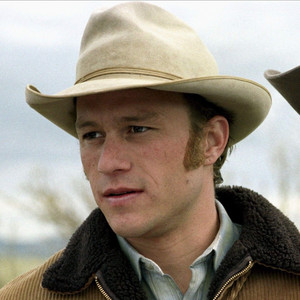
The film starred Heath Ledger and Jake Gyllenhaal as two sheepherders who fall in love in a place and a time that keeps them apart.
Before its release, Hollywood considered it a huge risk.
It went on to be a critical and box office success, but it also made a lot of folks so uncomfortable they made cheap jokes about it for years.
Today, its legacy is a tough one to untangle, but we figured now was as good a time as any to try.
I'm Glenn Weldon, and today on NPR's Pop Culture Happy Hour, we're looking back at Brokeback Mountain.
A lot of short daily news podcasts focus on just one story, but right now you probably need more.
On Up First from NPR, we bring you three of the world's top headlines every day in under 15 minutes, because no one story can capture all that's happening in this big, crazy world of ours on any given morning.
Listen now to the Up First podcast from NPR.
Shortwave thinks of science as an invisible force showing up in your everyday life.
Powering the food you eat, the medicine you use, the tech in your pocket.
Science is approachable because it's already part of your life.
Come explore these connections on the Shortwave podcast from NPR.
Talk about everything from grief and God to ambition and forgiveness.
Watch or listen on the NPR app, YouTube, or wherever you get your podcasts.
For world-renowned cellist Joshua Roman, long COVID caused an identity crisis.
That was probably the lowest point.
No confidence in my ability to recover.
Crisis of faith about what music meant.
On the TED Radio Hour, how he found his way back to music and a new sense of self.
Listen on the NPR app or wherever you get your podcasts.
Joining me today is NPR film critic Bob Mondello.
Hey, Bob.
Hey, good to be here.
Great to have you.
Also joining us is Jarrett Hill.
He's the co-author of the book Historically Black Phrases.
Hey, Jarrett.
Hey there.
Hey there.
And rounding out the panel is freelance music and culture journalist Rihanna Cruz.
Hey, Rihanna.
Howdy, Glenn.
This is a good mix.
I like this mix.
This is going to be good to talk about.
Brokeback Mountain came out in 2005.
Heath Ledger starred as Ennis, a poor cowboy who gets a job tending sheep on the upper pastures of Brokeback Mountain in Wyoming in 1963.
He's paired up with Jack, played by Jake Gyllenhaal, in the months they spend alone atop the mountain.
The two men become deeply entwined. both emotionally and sexually.
Over the years, Jack and Ennis reunite sporadically and in secret on camping trips away from their respective wives.
Ennis is married to Alma, played by Michelle Williams.
Jack is married to Lorene, played by Anne Hathaway.
Brokeback Mountain went on to be nominated for eight Oscars and win three Best Director for Ang Lee, Best Screenplay and Best Score.
But it also became the butt of a lot of jokes from people it made deeply uncomfortable, who dismissed it as the gay cowboy movie.
In particular Jack's line I wish I knew how to quit you became a cultural punchline, a meme, even before memes were like a whole thing.
I wish I knew how to quit you.
We wanted to focus on how this movie looks and feels today, two decades after it was made.
Bob, let's start with you.
I went back and listened to your NPR review of this film, which was, you'll be shocked, very lovely.
Thank you.
Here's a clip.
Jack and Ennis crafted an Eden atop Brokeback Mountain, but when they came back down they couldn't bring themselves to be themselves and it evaporated.
Sad story.
Terrific movie.
I'm Bob Mondello.
Couldn't bring themselves to be themselves.
Nailed it.
How have your feelings about this movie changed over the years, or have they?
I don't think my thoughts about the movie have changed, but I had forgotten huge swaths of it.
I realized when I was watching it last night.
It is much less on the mountain than I thought it was.
In my head it was a movie between these two guys, and it's actually about them and their wives as much as it is about them with each other.
And I was fascinated by that because I genuinely didn't remember a lot of those scenes.
The performances strike me as gorgeous.
I remember vividly feeling that this was the best picture of that year and then being really frustrated when it didn't get best picture, especially considering that it went to crash.
I don't think my feelings about it have changed terribly much.
Okay.
Now, Rihanna, I'm guessing you saw this movie back then.
I was, what, six years old, so probably not.
All right.
So, Rihanna, you must have seen it at some point.
You just rewatched it.
When that much time passes, does the movie that you remember differ from the movie that it actually is?
I feel like I absorbed Brokeback Mountain through like cultural osmosis, right?
Because I was like the type of child who was very invested in cultural ephemera.
I watched like VH1, like Best Week Ever type beat, you know what I mean?
So I think my perspective on Brokeback Mountain was built from the like proto-memory.
And even growing up, you know, realizing I was queer and everything like, I never really thought about Brokeback Mountain.
And then the past couple of years I feel like it's come back into the cultural consciousness is like this is actually like an all timer, like goaded movie.
And I watched it for the first time three or four years ago.
And I remember I was in my room at my old apartment like absolutely devastated, and I've watched it like every six months since then because yeah, it feels like one of those movies that I genuinely can't get off my mind, no matter how hard I try.
I'm kind of always thinking about it and I'm a sucker for those like Western contemplative, swallow the scenery type films like this movie kind of just sticks with me.
I've never let it go.
And I live in L.A., so I'm grateful enough to see it on the big screen every few months or so.
Oh, that's great.
Now, Jarrett, you are the unicorn here.
You're the test case.
You have not seen this film before.
We asked you to see it for this podcast.
So I am fascinated to hear how the actual movie works.
Compares to the one that, as Rihanna says, the one that the culture kind of put in your head through osmosis.
Well, actually I related a lot to what Rihanna was saying about always hearing about it and feeling like I know this movie even though I've never seen it.
I watched it yesterday for the first time.
And at the risk of being the contrary opinion on this panel, I was not really moved.
It made me think about how my friends talk about Hocus Pocus.
Right.
Every Halloween, they're like, hocus pocus this, hocus pocus that.
Oh my gosh.
What is this?
What is happening?
This is terrible.
I hear you.
I didn't feel this was terrible about Brokeback Mountain, but I just found myself really frustrated with the movie.
Bob, you mentioned that Crash won the Oscar that year and I know that is a big controversy, but I'm one of the nine people that actually really enjoyed Crash.
Okay.
Okay.
So you can take my opinion with a grain of salt if you choose, but I loved that movie.
Well, I was going to say, if you're going to be a contrarian, that is definitely the contrarian.
I'm intrigued because I guess I'm the only person here old enough to remember 1963, right?
Yes, you are.
I was a teenager at that point.
So it affected me back when I saw it, you know, originally as a memory of a time, right?
Which was, for a lot of people, I think it probably wasn't that.
I had a lot of reactions to it as a gay man in 2005 that had to do with my position at NPR.
I wasn't particularly out to the public.
I was out to my bosses, and they knew I was interested in this movie.
But it was an important movie back then in a way that it can't feel important today.
Right.
Because back then it was the unicorn.
There weren't other films like this in the marketplace.
That's why it's powerful for me of those guys performing in that movie when an awful lot of other actors were afraid to play gay back then was a big deal.
That's certainly a fact here.
But Jared, I want to hear from you a little bit more about why this movie left you cold.
I kept reminding myself that this movie came out in 2005 and that it's set in the 60s into the 70s.
I found myself, like, one, frustrated watching the characters not be able to get together.
That's just like a character thing.
One.
I was like watching this movie and thinking like I haven't seen a black person throughout this whole movie, which I'm always watching and paying attention to.
Yeah.
But I remember thinking to myself, at this time when this film came out, my exposure to queerness in media would have been Will & Grace, right?
And Will & Grace had started to shift the culture in the way that it did in 2005.
We were in the middle of the Bush years, right?
And so I'm like I know that this was something that people hadn't seen on screen before, but I thought that there was going to be something bigger that would happen.
I thought there was something that would be really groundbreaking in the way that these characters come together.
And then for Jack to die.
Spoiler alert 20 years later, I was like wait wait wait wait wait wait, wait.
They're not even going to actually be together?
I remember their first sex scene, it seemed like a fight.
And I was like, wait, wait, wait, what's happening?
I didn't understand how we even got here.
Mm-hmm.
Then there was no like real intimacy between them at all, other than like kissing, when Ennis' wife saw it.
And so I was just like confused.
But I also want to acknowledge and recognize like that this was something in the 60s and 70s that we would not have seen in culture at all.
Right.
That kind of relationship was not something that would have been OK.
And I think that's probably also very frustrating to me, because it's like I see a sliding back into that time right now, as we have so much erasure happening.
Yeah. and rolling back of making America great again.
I'm concerned about that.
So I think that frustration came from that place as well.
No, and what I can say, Jared, is that your concerns with this are baked into the source material.
This wants to be a story not about these two characters, but about homophobia and the way that they can't bring themselves to be together because they can't envision themselves together.
I have a different perspective here.
October 1997.
I remember reading this story the Annie Proulx story, in The New Yorker and being surprised.
Before I realized it was a gay story, I realized it was a Western story.
And I was like, this isn't The New Yorker.
This is not their vibe.
This is like their usual genre is white suburban heterosexual alcoholics in despair.
And this ain't that.
And then I got to the gay stuff and I was like well, this is cool, because the New Yorker I mean they published Cheever, they published Greganus, but this isn't their lane.
And then I realized, reading this beautifully haunting story, it's the prose.
That's the reason it's in the New Yorker.
This prose is so spare and austere and unsentimental.
Yet that restraint is holding back this wariness wall of emotion, and the reason that works is because that's Ennis.
Ennis is spare and austere and unsentimental, but he's holding back so much and I don't know if this happens anymore.
But at the time, if you knew any short story writers, this story was all we talked about for months and my friend group became convinced that if Hollywood touches this, they're going to screw it up, because to us It's the prose that makes this sing.
It's the tension in this prose is what makes this story so magical.
You know, in the circles I traveled in back then we would never put it like identity and representation and appropriation.
Today we would say publicly identify as queer.
Back then we said they're all straight.
Now we must say none of them publicly identify as queer.
And it wasn't our focus, but it was certainly a factor.
Then the press junket came and everyone asking Ledger and Gyllenhaal about what it's like to film these sex scenes.
And can we just all agree these hilariously chaste sex scenes where it was clear there were no gay people involved?
No gay people on that set because, among other things, the angles don't work.
We have to leave it at that.
Say that.
But these scenes aren't really meant to be erotic because that would offend people.
What they are meant to do, and I think they do do, is they convey loneliness and need.
And in that motel scene, they convey a tenderness that certainly Ennis feels...
He doesn't have a right to.
Not only that, but he can't afford it because it's too dangerous.
I thought that made sense to me.
Are there any thoughts about how this movie would land differently today if it just appeared in theaters now?
The discussion over who gets to tell the story, I don't know, the explicit or the sex.
Any thoughts about how it feels different?
Well, it reminds me of when, a couple months ago, I assume at this point, there was that discourse on Twitter about Joaquin Phoenix dropping out of Todd Haynes, I believe, queer project.
And everybody was very mad at Joaquin for dropping out and screwing the project over.
And I was thinking about that while watching this movie, with the context that, like this, was a hard film for both of those actors to film, I assume.
Right.
And they're getting asked those questions on the press junket.
I don't really know if the culture has changed that much in the discussion of queerness.
I do see this film being made in 2025.
It would probably get a TikTok cancellation.
Nobody that made this film is gay.
This is why this is problematic.
But at the same time, I watched it on a plane last night.
I think a movie always holds up when you can watch it on a plane and be like, that was still good.
That's why you cried.
I was thinking a lot about the sexuality of both characters, you know, and how they're portrayed and, through the lens of 2025, sexual politics.
Jack is gay.
I think inarguably so.
He is a gay character.
But Ennis, I don't really know if he's gay.
I don't know if I would call him gay.
I think he has a lot of repressed emotions and a lot of repressed emotional baggage that may manifest in inability to penetrate emotions sexually.
That was a very interesting phrase.
I know.
Bad word choice there.
Bad word choice.
Yeah, I was going to say.
I don't know.
Freudian slip.
It's on the mind.
I don't know.
And this is more like the phenomenon of like DL trade in 2025.
I think that's actually a really great point.
I felt like there's such an overt message about like the origins of toxic masculinity in this film.
The expectation and conditioning of men in our culture that tells them that you can't feel, you can't emote, you certainly can't be queer, you can't go near anything that even touches femininity or something like that.
And we see that in the story when Ennis is drinking and drinking and drinking, right?
Every time we see him, there are four beers sitting on a table near him, right, empty beer bottles.
And then when we see him connect again with Jack, the passion of that is like they are like jumping on each other.
Right.
The kiss is so strong.
It's so aggressive.
It's like bursting out of him.
How many straight men and also queer men are repressed in having any emotion, whether it be about queerness or about sex, the death of a parent or not being able to have the career they want, or whatever those different things are that we see people repress day after day after day.
This message is so loud and clear in this film but it's never really addressed.
But it's right there, front and center.
And that was really, really something that I think I was wrestling with as well, not necessarily frustrated with the film, but frustrated with the story of the characters and how they're dealing with this thing.
Rihanna and Glenn, you both have posed this question of whether or not these characters are gay.
And it made me think about when I came out to my mom, I came out in this long letter, very dramatic.
And like, I told her in that letter, like, whether I came out to you or not, I would still be gay.
Whether I went on and had a family and had children and all of these different things, I would still be gay.
I would just be dealing with that.
And as I look at these characters though I don't think these characters would call themselves gay certainly not Ennis, because Ennis never gave himself the space to even ask another question about how he felt about Jack.
So much as he wanted to have sex with Jack.
He wanted to kiss Jack, he wanted to touch Jack and be in Jack's presence.
That was not relationship.
That was just how he felt about Jack, as he says in the film, right?
And watching Jack really want to try and be with Ennis in some kind of way, and Ennis not even having a framework to even figure out what that would even look like.
It was something that I was really really kind of struggling with, because we then see Jack murdered in the way that he is right.
And we hear the story of how he supposedly died.
It hurt to watch that because you know that Jack in another context would have been an out gay man maybe, right.
If he was in the era of Will and Grace.
He had the mustache.
He had the mustache for sure.
I wrestled with that as I watched this film as well.
No, but I mean, we're all wrestling with this film, Jared.
And like to that point.
We would call it fan fiction.
She didn't call it fan fiction, but like would write fan fiction and send it to her to rescue the story from heartbreak and despair.
Now, I read that and my first reaction is simmer down, girl.
Like, People can do whatever they want.
And they can even send it to you.
You are not required to read it.
Let it go.
But then she went on to say something interesting, and I'm going to quote it here.
She said, they, these men, can understand that the story is not about Jack and Ennis.
It's about homophobia.
It's about a social situation.
It's about a place and a particular mindset and morality.
They just don't get it.
So...
As far as she's concerned, she wrote a story about two men who landed on the moon and tried to take a walk without spacesuits, and they died.
And people are striving to make that story not be that and rewrite the story so they can find some spacesuits and have a nice walk.
But her point is, guys, the moon does not have air.
They die.
And to Bob's point, they couldn't bring themselves to be themselves.
Society wouldn't let them.
You know, the time that they're in wouldn't let them.
But the point of the story is that Ennis himself as you say Jared, Ennis himself wouldn't let them.
He couldn't picture it.
The story is not Jack and Ennis fall in love.
The story is these two men cannot be together, deal with it.
And the way that it was received ought to have pleased her a great deal, because everybody in the society at the time seemed to have trouble with the relationship, seemed to have trouble with the idea of it being depicted on screen.
I did a piece for Digital about the marketing of this movie and they had a lot of trouble marketing it.
They were trying to figure out what to do with it and they did a slow rollout and they were going to make it over a period of many months.
But the reception to the film by audiences was enormous and they did these interesting ads that were They'd have a picture of the outline of the United States and hit cities in it where the film was playing and have quotes from critics in those cities.
And they made it a point not to have it New York and Los Angeles to indicate that there was a nationwide interest in this movie.
And then later in the trade papers they started running what the grosses were in those places and they were enormous.
And so within three or four weeks, they were in a whole lot more theaters than they expected to be.
And the picture was becoming one of the most popular Westerns in history.
Everybody was sort of astonished by it.
But you were still fighting this enormous battle when it came to awards and things like that.
I remember one of the producers was talking about having been at a party and was being introduced to Clint Eastwood.
And as she was being taken over to meet Clint Eastwood, The person who was introducing her said he will not have seen your picture.
And she realized at that moment that, oh, well, we're not going to win the Oscar.
That's not about Clint Eastwood.
That is about society.
That was about... It's a little bit about Clint Eastwood.
Well, sure, it's about Clint Eastwood.
On brand.
But it's also about the Oscar voters at the time who were older and were not receptive to this notion.
And the success of the movie was enormously important to films that came after.
Brokeback wasn't making the mold.
There was a rule back then that gay characters didn't ever succeed.
The gay character always had to die at the end.
And it was one of the world's most frustrating things to read that kind of thing.
But you can understand why people wanted To have the success of a gay relationship.
It just wasn't appropriate to have it in this particular movie.
I think there's an added pressure to have the gay characters succeed and have a fulfilling relationship and you know quote unquote live their best life but the reason why Brokeback Mountain is so singular I think is because I think it's the best example of a movie about homophobia personally.
Like I watch it and it feels to me like a washcloth that is like full of emotion.
And throughout the movie, the entire over two hour runtime.
You're slowly wringing out the washcloth And it's like dripping and it never fully is devoid of emotion.
It just steadily is like a drip, drip, drip.
And I think it's successful in making you feel something.
And I think like in 2025, a lot of my issues with modern queer movies is... in this pressure to have a fulfilling queer relationship where the characters fall in love and it's happily ever after, we lose that simmering tension and we lose...
That power because of the I think the queer pressure to dodge sadness, you know, in our media.
I don't want to leave this topic, this movie.
We talked about the men a lot.
Let's talk about the women briefly.
I was struck when I compare the story to the movie.
In both, I would say the women are equally underwritten, just as flat.
Now you could argue that that is endemic to this story because of what we talked about, what this story represents.
They represent the culture that keeps these men apart from being who they want to be.
But that has really strong dramatic implications.
Like when you read on the page that Alma finds out and she accuses him and she says –
Jack Nasty.
You didn't go up there.
Son of a, you don't know nothing about her.
I don't think even Michelle Williams can sell Jack Twist, Jack Nasty.
I thought they were extraordinary.
And I thought Michelle Williams was... I'm always impressed by her.
I think she's an extraordinary actress.
In this, I could feel what she was dealing with.
I mean when she went out on that staircase and saw accidentally what she saw, it was just, oh God, the pain.
I think they do a lot with relatively few lines and relatively little to play.
And Anne Hathaway.
I mean, I actually came away believing that she was a rodeo rider, which I think is kind of amazing.
And I assume she's not.
I thought she was kind of great in a very understated way.
She let you know how much she knew.
And it's not there in the lines, it's just her.
I feel like the women were underwritten, but well-performed, right?
I remember thinking that like, oh my God, all these gay icon women, right?
Because I was like, Andy from The Devil Wears Prada, and picking those things out.
And I was like, well, there's some irony there that none of them could have known was coming.
I did feel for the women in these stories, especially the Ennis-Alma relationship, because you see her see that moment happen and she's never the same after that.
Their relationship is not the same, and they obviously eventually divorce.
And so watching her play that, I felt like a beautiful job of that consternation, that holding it in and trying to figure out what to do on her face and in her delivery.
But there was not much depth to these characters.
I felt like we got a little bit more of Anne Hathaway's character having a bit of background when we first meet her with her father selling the big farming equipment and things like that.
We don't really get much from these women other than them being a device to recognize the kind of opposition that this relationship has.
I'm more on the side of Bob here, I gotta say.
I think they're really well written in between the lines.
Great eye acting, I have to mention, you know, like the eye acting in this is phenomenal.
That's a phrase I plan to use in a review coming soon.
Absolutely.
Eye acting.
All right.
Is there anything else you guys want to hit about this movie?
I did want to say that the tension between the two men on the mountain reminded me a lot of like the psychological implications of like a show like Love Island, where you trap two people in a location without external stimulation and there's nothing to do except let your emotions sit and fester and fixate.
A pathological connection can happen, come out of that.
I've been reading a lot about um reality tv, in particular emily nussbaum's book cue the sun, and there's a lot in that about the psychological structure that love shows create.
So when i was watching it this time i thought a lot about that in the context of these two men on a mountain, no external stimulation of course, they'd become psychologically connected to one another Because they truly have no other option, which I think goes back to like are they gay?
Well, in point of fact Rihanna, when Annie Proulx was researching this story, she talked to a kind of head of a ranch who said yeah, we always put two men up there together just in case they want to poke each other.
So from that –
From that nugget of an idea came this beautiful piece of art.
It's not as if this hasn't shown up in a lot of other movies.
I mean, Twilight Eclipse, there is a scene in it where the two guys have been fighting over Bella.
Great pull here, Bob.
I never would have expected those words to come out of your mouth.
I did not see a Twilight reference coming through me right now, Bob.
I did not see that coming.
They are sitting in a tent high atop a mountain and they're talking about love, with Bella lying between them because she's cold, and they're keeping her warm with their bodies.
And they talk about love till the sun comes up.
And I thought, all they need is a herd of sheep outside.
And this scene, I mean, it was just unbelievable.
Well, we want to know what you think about Brokeback Mountain.
Let us know.
If you're one of the folks who wish you knew how to quit Facebook but haven't yet, find us there.
Or maybe you can find us stemming the rose, whatever the hell that means, over on Letterboxd.
And that brings us to the end of our show.
Bob Mondello, Jared Hill, Rihanna Cruz, thank you so much for being here.
Thank you, Glenn.
This was much more fun than I thought it was going to be.
This episode was produced by Liz Metzger, Janae Morris and Mike Katzeff and edited by our showrunner, Jessica Reedy, and Hello Come In provides our theme music.
Thank you for listening to Pop Culture Happy Hour from NPR.
I'm Glenn Weldon, and we'll see you all next time.