And I've always been of the opinion that effective communication is important.
Yes, you need the nuts and bolts.
You need the basics of grammar.
But I often stress, and in my courses, I don't teach hardly any grammar.
It's all communicating.
And if you make a mistake with a preposition, does it really matter if you're getting the point across?
You're listening to the Influency Podcast.
I'm Hadar, your host, a pronunciation expert, fluency coach, and a proud non -native speaker.
With over 16 years of experience teaching, I am here to share with you all my secrets on how to show up in English clearly, with confidence, and freedom.
On this podcast, I'll provide step -by -step strategies, lessons, stories, and practical tips to keep you inspired and motivated on your English journey.
Are you ready? Let's do it.
Hey, everyone. It's Hadar.
Thank you so much for joining me.
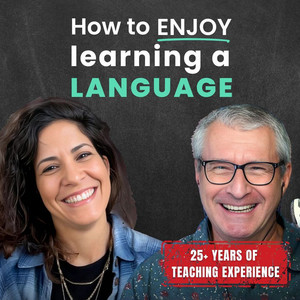
Today, I want to share with you a conversation I had with a fellow English teacher, Craig, from Ingles Podcast.
Craig has been a teacher since 1997 and he has a lot to share about teaching English and helping his students reach confidence and clarity and enjoy the process of learning.
We talked about learning Spanish, we talked about challenges that Spanish students and other speakers have, and we talked about creating content in English, different personalities in different languages, and so much more.
I really enjoyed this conversation and I hope you will too.
So, let's go ahead and listen to this interview.
Hello, Craig. How are you doing?
I'm doing very well, thank you.
How are you? I'm doing really, really well.
Super excited to talk to you and host you on my channel and podcast, finally.
Last time we talked, it was, I think, nine months ago when I interviewed for your podcast, right?
That's right, yeah.
And I remember having a great conversation, first of all, because it was right after I moved to Spain, and we talked about living in Spain because you also live in Spain, right?
Yes, I live in Valencia down the coast from you.
Yes. So it's so nice to kind of like talk all these months later and for me to be at a totally different place than where I was when we first talked.
So I'm going to link to our interview on your podcast in the description for those of you who want to go back and listen to it.
But before we start with our conversation, Craig, why don't you introduce yourself to the audience?
Yeah, sure. So, I'm Craig, originally from the UK, from London.
That's where I grew up.
I did some traveling, quite a bit of traveling for a few years, and that's where I started teaching English.
And that eventually took me to Spain because my family moved here.
So, I've been living and teaching English in Valencia since 1997.
Well, that's nearly half my life.
I worked for the British Council for many years, teaching English there as a Cambridge examiner as well for speaking tests for Cambridge.
And at the moment, what I'm focusing on is I work full time, 100 percent online, mainly teaching conversation courses in small groups and also helping students to prepare for Cambridge exams, for job interviews, that kind of thing.
All that experience.
I have like the first thing that came to mind is like, I'm really curious to hear how you have changed as a teacher throughout all these years, because it's been, you know, I have been teaching for 16, 17 years, but that was since 2008, you know.
so you have like 10 years extra on on top of my experience and I know all the changes that I've gone through so have you do you feel like you went through a lot of changes as a teacher oh uh changes I obviously now the information that's available to students on the internet is unbelievable I think
if you're if you're not taking advantage of the wealth of information that's online for you as a language learner then really you've got no excuses because there's so much out there and that wasn't there in the 90s and early 2000s to the extent that is now and of course with AI that's opened another
door with artificial intelligence so as a teacher the changes I'm harnessing or trying to harness the new technology and help my students using that but one thing that also comes to mind is when I started out teaching it was probably a confidence thing but if a student asked me something that I didn't
know a point of grammar for example I'd say that's a very good question but we don't have time in the lesson now I promise you next lesson we will look at that indeed and that gave me chance to look in the book and learn it and then teach it whereas now as a more experienced teacher I'd probably say
well that's a really interesting question I don't know I'm not sure let's put write some examples and see if we can work it out together because I think with the time I've learned obviously that nobody knows everything teachers are fallible we make mistakes we don't know and sometimes it's good for the students
to know that and as a learning experience together you can explore and you can say oh it's because of this um what's the difference between raise and rise well let's look at some sentences the sun rises you raise your hand transitive intransitive and you work it out together yeah so that's one thing
that i've learned i love that like that really warmed my heart when you said that because first of all i can totally relate i used to be ashamed or like never admit that i don't have an answer and find my way around it and now it's like you know we're all humans i'm not supposed to know it all and really
like with the with the fact that content is so accessible i want to show them that we're in the same boat and i think this is such a good um point of view that you offered to us that i bet that when your students see that it gives them the confidence to show up the same in front of others so i love
that Yeah, and also to make mistakes.
I think if you're not making mistakes, you're not really learning.
So to encourage the students to explore, to be curious, I think that helps them learn.
Yeah, absolutely. So, Craig, what made you want to become a teacher to begin with?
well it was in that part of my life and i was traveling quite a lot and i had a good friend who didn't speak any english and he wanted to start a conversation with a girl that he knew but couldn't speak to she was norwegian she spoke perfect english as many scandinavians do and he said greg you've got
to teach me english i want to meet this girl i want to speak to this girl I really like her I really fancy her and I want to start a relationship I said well okay and we sat for months actually with an old grammar book from the 1950s I had no experience of teaching English but somehow with this book
over time I managed to help him to learn a little English so through that I discovered two things the first thing I didn't really know anything about my own language I didn't know how the grammar worked and that annoyed me and the second thing I really enjoyed the little progress we made and the fact
that after spending an hour or two with him he knew some things that he didn't know before he could express himself and I think that sparked off the the flame in me if you like to to go I mean back to London I took my first teaching course to teach English as a foreign language and then progressed from there
but it was that initial attempt at teaching my own language and realizing I couldn't I didn't really know it I wasn't effective at teaching it that's what got me started teaching in the beginning yeah so I have two questions on that or two remarks one that knowing a language doesn't necessarily make
you a good teacher a good teacher is someone who knows how to facilitate the language and encourage encourage someone to learn it and understand it so it's a reminder for everyone and the second comment is whatever happened to your friend did he end up well he did end up communicating i think it might have been
more physical attraction than intellectual in the beginning but eventually they had a short -term relationship and i'm still in touch with him but obviously um i think the young lady is now back in Norway and probably married with kids so maybe even grandkids by now because it was a long time ago yeah
but um yeah did you start in a similar way I started as an actress really I studied in New York and when I moved back home I just wanted to find something to do that had an impact and I also needed the money and I was like what am I gonna do because I I kind of like quit acting.
And I was like, but for me, acting was a way to connect with people and to impact people, which is like exactly that moment that you describe, right?
Like recognizing that you're able to do something that makes an impact and makes someone happier.
And also like the teaching experience is really unique.
There is something very intimate, especially when it's one -on -one and special.
So at first I did it because it was like, oh one more thing that i i need to do it wasn't intentional right like i let me think of what i can do to earn more money and after my first lesson i was like oh i love this so much you know like when you're like you're like you get hooked yeah you get hooked
like if you if you're born to do this or you have this purpose of changing lives you know you find your niche you find your way and for us I think it was just teaching and that's how life led us yeah so okay so you're facilitating the language to others and teaching it to others but you also live in Spain so tell
me about your Spanish journey because I am total like really struggling with it right now mainly because of time because it's been so hectic over the past few months but tell me about your journey in Spanish?
My journey in Spanish?
Well, I didn't know Spanish before I came here.
I took a short course before coming.
And then because I was working at the British Council, my social life tended to be with English teachers.
So I was speaking English in the classroom, outside the classroom, in the pub, in the bar.
So I didn't really have much connection for the first year.
And I call that my kind of honeymoon year where I don't know if you're still in it, but everything's fantastic.
Everything's wonderful and the culture and the food.
But I didn't really focus on the language.
And then I kind of realized I needed it.
So I took courses in Valencia, started learning Spanish.
Obviously, we have a really fortunate advantage.
We live in a country where the language is spoken and many of our students don't.
so we can walk out the door and start practicing which i did and then eventually i picked it up my wife's spanish that obviously helps so with time and a little bit of studying i was i wasn't a good student but i did study in the beginning um then i i eventually learned to yeah to communicate and um
get by i suppose my spanish isn't great i have friends who have been in the country less time than I have and they speak much much better but I speak well enough Spanglish we speak a mixture we my wife speaks English and what's funny is that sometimes we'll have a conversation and everything's fine
and then I walk out the door and speak to a neighbor and my neighbor looks at me with that that scared deer in the headlights look like what are you talking about because obviously she understands me after so many years but sometimes strangers don't i know that look yeah yeah but another thing i think
it's important to say especially for people watching who get a bit frustrated even after being here 25 more than 25 years i still meet people speaking spanish who i find it very difficult to understand from a listening perspective and I'll meet somebody in the street and they'll speak so quickly that I
can't catch it and and I think that's something that you should you should acknowledge that you need to listen as widely as possible and then also expect sometimes you'll meet someone who speaks too quickly or with an accent and you can't quite catch it and that's okay you just ask them to repeat it
yeah without feeling like there's something wrong with you exactly yeah totally normal specifically working with students because at the british council you worked you were teaching right spanish speakers to communicate in english um what were some of the most common challenges whether it was like language
linguistic challenges or pronunciation challenges or just mindset challenges that you constantly saw well obviously there are different reasons why people are learning so with the exam focus students who were motivated extrinsically because they needed the paper they needed the exam they were driven
by that the people who were there for fun and for social reasons and for travel they had a different kind of intrinsic motivation and I found the intrinsic people who just were studying there for the love of the language because they're interested in the culture and they wanted to speak English when they
traveled, they were more motivated funnily enough.
So on the most from a motivation point of view, I think it's our job as teachers, if they're taking exams to really try and introduce them to the culture, to find an, in, to get them to listen and to read.
Things in English about their hobbies and their interest to, to try and to widen it out so that they are actually enjoying learning the language through their hobbies and pastimes which which gives them which motivates them more but as far as specific problems are concerned let's see obviously spanish
is more syllable time so they give equal stress to the words and english is stress timed which means we have weak forms and sounds are reduced which makes it very difficult to understand english when you hear it And when Spanish speakers speak it, they can sound very choppy, a bit monotonous, maybe
even boring or bored when they're speaking because of this difference in the way the language is spoken.
them. And specifically that, I think we can also say that it's probably relevant for any language that is syllable timed, right?
Because ultimately, most languages have the same, have similar rhythm or different intonations than English.
And I think what you're saying is relevant as well.
So something to think about.
So can you explain a little bit the difference between the rhythm of Spanish and the rhythm of English or the rhythm of a syllable -timed language?
Well, look, if I say in English, if I count in English and I click my fingers on the beat of the number and I say one, two, three, four, one and two and three and four, a one and a, sorry, a one and a two and a three and a four, it's the same because those ends become unstressed.
So the timing is different, whereas a Spanish speaker probably wouldn't do that.
They would say one and two, and so that becomes longer.
So it's something to be aware of and practice, listen for those weak forms.
And I don't know if you agree, Hidal, but I tell my students it's more important to recognize the language when it's spoken to you, when you're listening rather than actually producing it unless you specifically want to sound like a native english speaker which some people do but it's fine not to contract
if you if you don't need to it's fine to give equal stress but just try and identify what you're hearing with modal verbs with tenses etc when you're receiving the language would you agree with that I agree 100 % and I'm going to add that you don't have to use reductions, but I do think it's important
to understand the distinction between function and content.
Not for the sake of rhythm, but for the sake of delivering a clear message.
Because if you end up emphasizing every single word the same, your listener is going to have to work more to understand you and then ultimately that just affects what like what you want to get from the conversation because if people need to work harder to understand you then your communication is not as
direct as it could be and then you are as a speaker is affected so I think recognizing the difference and then maybe not changing necessarily the rhythm because the reductions are challenging especially for beginners but knowing that you need to take your time a little bit more with the stressed words
and um and the difference the lexical difference between the the words is important but for listening it is critical and I do think that to improve listening you have to practice reductions because then the brain you train the brain but it doesn't mean that you need to consistently use it when you speak
it doesn't matter as much exactly and i like the way you said twice now stressing that do i do think that because that's another aspect that spanish speakers don't necessarily do that emphasis and you said knowing i do think putting the point across being a more effective speaker is knowing where to
put that stress yes and a lot of that is noticing a lot of that is listening critically um asking yourself why was that word stress what what does the speaker want to convey with stressing that do or that knowing oh it's important in the sentence okay they want me to understand that more than the other
words so listening critically and asking questions of why why did my voice go up then that's really useful yeah and recognizing your own patterns that you bring from your first language which is ultimately just habit for example if we're speaking about Spanish speakers then and and other speakers as
well sometimes there is a tendency of stressing the last word in the sentence especially if it's a pronoun what are you going to tell them right and in English it's usually the last content word what are you going to tell them but the tendency in Spanish is to emphasize that last pronoun which is not something
that you do in English.
And again, it's not that it's not clear.
It's just like it takes a minute to understand what's important because English kind of like it's spoon feeding you with intonation.
Like it's spoon feeding the content with the right intonation.
Would you agree with that?
Like in that sense?
Absolutely. But again, there's so much to it.
It is quite complicated, but yeah.
yeah, but it could be what was the sentence?
I don't know about them.
It could be you're stressing the them, depending on the context again.
Depending on the context.
Exactly. Yeah. That's also a thing, right?
How do you change the focus?
How do you listen to the difference?
A friend of mine sent me a sentence that said, if you stress a different word in this sentence, it would mean something else each time I didn't say you stole her money I didn't say you stole her money I didn't say you stole her I didn't say I didn't say you stole her I didn't say I didn't say you stole her money money
exactly I didn't say you stole her money so it can be in compound nouns as well are you are you an English teacher or you know an English teacher.
Are you a teacher that is English or is the subject that you teach English?
It depends where you put the stress.
It completely changes the meaning.
Right. Yeah. So interesting.
But so interesting.
Yeah. Very interesting.
I want to go back to a question that came up when you spoke about your Spanish and your English.
And I think that relates to this.
Do you find that you have a slightly different personality or behavior or even voice when you speak in spanish versus in english oh i love that question i was speaking about that question with my on my last course uh yes because for me as speaking spanish brings me down a tone i tend to speak at a slightly
lower level i don't know if it's more macho more assertive it just i don't speak as high when i'm speaking spanish i don't know why and um another thing when i'm speaking spanish i tend to be more open and less English I remember when I was trying to get served in a in a bar my first month in Spain and it
was very busy it was very crowded and in England you kind of hold the money and you're very hesitant and you wait to be asked what you want whereas in Spain you shout oh yeah cerveza from the other side of the bar and that's perfectly polite it's perfectly normal and i could not do it so i just could not it
took me ages the language brings you up culturally right like exactly now i do it without any problems if the bus driver doesn't open the door i say oh yeah jefe hey boss open the door well i would never do as a polite englishman never do that so it's it you know i am my personality does change when i
speak spanish for sure and i'm sure there are other ways that don't come to mind but yeah definitely love it yeah i i feel the same the other day i was with um my family at a restaurant they asked something the server and my voice kind of like went up i was like um you know and and and kind of like
i tense it up and then my daughter and i were like laughing at what happens to my voice when I speak in Spanish but it's kind of like I adapt because I hear people speak and I hear that vocal quality especially where I live in Barcelona and and I adapt it because I'm exposed to it all the time and I
have that tendency of kind of like you know imitating so that's what I hear that's what I imitate but then it's like wait it's not me but I also feel comfortable in it it doesn't feel like not me.
So interesting. Speaking of using your voice at some point in your life and journey and time in Spain, you decided to not only teach, but also become a content creator and use a podcast to share your vision of teaching in the world and just like an opportunity to express yourself.
So tell me about that.
Tell me about your podcast and tell me about why you decided started the podcast is called ingles podcast and it started because back in 2001 fairly early days of the internet as i i started with a with a friend actually my friend lewis started a website called mansion ingles .com specifically aimed
at spanish learners of english and we had a newsletter that we sent out every month a series of exercises reading vocabulary grammar at different levels and that was fine but of course I thought well they need to hear it as one thing we didn't mention before you know you don't pronounce English words
the way that you spell them very often as you do in Spanish so it's difficult for learners to know how to say words I thought wouldn't it be nice to create an audio version of this and that developed into a podcast so we'd send this podcast just to our subscriber list and that helped them that was an audio
complement to the newsletter and then I got really interested in podcasting so then the podcast kind of branched off and got a life of its own and I started doing it with a friend and colleague at the time at the British Council my friend Reza who is still doing it with me today 10 years later.
And it became a passion and a labour of love to do this podcast.
And we built up a fairly sizable audience.
I didn't realise all the time in the British Council that when I left the British Council and started teaching by myself online, that pretty much 85 -90 % of the students I have are now coming from the podcast.
So it developed from the hobby into something very useful for what i do now to to get a salary and keep the lights on so it's become very useful but there's still that i'm very conscious of not turning it into too much of a business because i don't want to lose the chemistry i have with my co -host i don't
i don't want to lose the the love i have for the medium of audio so i'm trying to keep it pretty much as it's always been and that's getting feedback from the listeners, et cetera.
So that's the story.
What will people find on the podcast?
Oh, pretty much everything.
There aren't many areas we keep away from.
We speak about vocabulary, grammar.
It's a weekly podcast, so we've covered pretty much all the grammar I think there is to cover.
I'll be very surprised.
I know, because how long have you been doing this, 10 years?
10 years, yeah. 10 years.
550 episodes. but vocabulary areas well most of the topics come from the listeners uh they they let us know they send voice messages and emails and let us know what they'd like us to talk about there's only one thing i can remember that we really didn't want to talk about and in the end we did and that was brexit
oh so we kept away for a long time too many and then the weight of public opinion talk about brexit tell us what's happening how do you feel so eventually we said okay we'll we'll speak about brexit yeah but yeah pretty much anything nothing like we always say you know not knowing about a subject has never
stopped us talking about it before nice yeah uh what so you recorded over 550 episodes right yeah um what is the most memorable episode or your favorite episode that you've recorded oh that's easy that was when you were on in episode 474 that's probably my favorite it was called improve your english
pronunciation with hadaf shemesh but that's my favorite so after that episode besides after that but in second place i think basically any any episode that that kind of gets a lot of feedback that we know is has been popular with the listeners that we get comments on because at the end of the episode
we always give a call to action we say what did you think have you got an opinion send us a voice message practice a vocabulary let us know so any episode from which we get a lot of that feedback is one that I thought oh yeah that was that was good because I just enjoy getting together with my friend
and i'm recording it and editing it so it's yeah it's still a labor of love yeah do you listen to a lot of uh podcasts as well i do yeah and it changes over time if i'm interested in learning something or studying something to do with productivity or marketing then i'll focus on more information style
podcasts and then there are some podcasts i listen to for entertainment comedy podcasts and then what they call in Spain meta podcasts which are podcasts about podcasting so how to be a better podcast I listen to some of those as well nice I noticed that because I am a YouTube content creator first
right like I started my channel back in 2016 but I wasn't a consumer of YouTube videos.
Like I wasn't an active YouTube subscribers or viewer, which was funny to me.
Cause I was like, I'm a content creator, but I don't like watching videos.
And then I fell in love with podcasts.
That was before I started my own podcast.
Cause I never thought about it.
And then I was like, I love this format.
There was something so intimate about the connection between, you know, like when you have someone's voice in your ear.
in your ear for half an hour or for 40 minutes it's such an intimate thing you do other things like a part of your day and i felt so connected to the people i was listening to and i was like i should maybe and when you meet them when you meet people um i've been to conferences i've met you feel like
you know them you've known them for years um and they obviously don't know you if they're famous podcasters and i've met a couple who at conferences who are pretty big podcasters and I just feel like I know them and of course they're looking at me and I'm telling them things about their life and and um
yeah it's very intimate it's it's a very unique um format podcasting and of course easier to edit than video yes and to film slash record I have another question about teaching, so two last questions.
One, what is the least conventional thing about you as a teacher?
What would you say?
Oh, I love that question.
I would say off the top of my head that I don't put a lot of emphasis on grammar and accuracy, and it was always a bone of contention, a controversial topic in the teacher's room at the British Council are you more fluency based are you more vocabulary and fluency based are you more accuracy and grammar
based and I've always been of the opinion that effective communication is important yes you need the nuts and bolts you need the basics of grammar but I often stress and in my courses I don't teach hardly any grammar it's all communicating and fluid and if you make a mistake with a preposition does
it really matter if you're getting the point across so yeah i think that might be controversial to grammarians and teachers who focus more on accuracy to hear that um yeah i don't place a lot of importance on it in my classes you're my type of teacher because i'm really oh i'm pleased you agree not many
people do i'm pleased to agree also like as a listener and how i know the human brain works just like that example you gave with prepositions people put so much emphasis on getting it right or they feel bad about making a mistake but with all honesty the listener would probably not notice because people
are not even focused 100 on what you're saying they skim through whatever it is that you're saying with their you know like they kind of like uh listen to bits and pieces their brain anyway fills in a lot of the gaps and they may not even notice and this is why also these words are reduced because they're
not as important for the message so people also know how to not how to skip them so they don't notice it's not like oh they made a mistake this is so terrible now i i understand that people want to know this because it it holds them back sometimes and if that's the case, yes, you should learn the structure
so that you are not holding yourself back as you're planning your sentence.
But I agree that this is not should be, this shouldn't be emphasized.
And more importantly, making a big deal out of mistakes is detrimental.
It's so critical for confidence, for fluency, for freedom, and for grammar, for learning grammar, because you're like obsessing over getting it right and not understanding the context or you know yeah yeah obviously if you're studying for an exam and you need and you're going to be tested on grammar
that's a different story but even in business if you're trying to be an effective business communicator if you're giving presentations in English look native speakers make mistakes as well I hear them every day on the TV for example they might say less people rather than fewer people it happens all
the time so if you slip and you make a mistake it's not the end of the world as long as you're being effective and getting the message across exactly okay so my last question what would be one piece of advice that you'd like our students to leave with today and you can't choose not learn grammar because you
already don't learn any grammar forget grammar no grammar don't learn any grammar yeah okay two you have two yeah well I can have two so the first one I think we've already mentioned don't be afraid of mistakes go outside your comfort zone get out there and speak uh even if your level is is not very
high you can't pick up a guitar and play like Eric Clapton you need to put in the practice you need to make mistakes and also have fun that's my second one be curious as we said before be curious about the language ask yourself questions notice things like intonation stress vocabulary collocations and with those
things i think you'll be fine being curious noticing how people are speaking how native people native speakers are speaking and then getting out there and and practicing because you you mentioned before there about the changes over the years in English teaching it's still basically the same we're analyzing
chunks and pieces of language we're presenting it we're making the students notice it and we're hoping that they're going to repeat it and that's basically it you just have to have to focus in on the language and absorb it and use it you make it sound very simple it's not rocket science but um it's
just practice and motivation time consistency and everything else that you said like being open and and remembering that it's not about just like getting to like a final destination because it's an ongoing journey I think it's like really enjoying the moment and finding joy in speaking like why make
yourself miserable by having negative thoughts or avoiding or overthinking or second guessing.
Yeah, students will learn when they're having fun.
And that's something you do on your channel very well.
The motivation videos that you make are excellent to get students motivated and get them enthusiastic about learning more.
Yeah, I think it's important.
Excellent. Craig, thank you so much.
How can people find you, study with you, listen to your podcast called Inglés Podcast?
Inglés Podcast? Yeah, it started off being Spanish.
Now it's for everyone.
Ingléspodcast .com is the website address, ingles .com.
And if you're interested in courses, go to englishcraig .com and you'll find information there about my conversation courses.
Fantastic. and we're also put we're gonna put the links all the links in the description great thank you so much i'm looking forward to meeting you in spain whether here or in valencia um but we'll have i can promise you the best paella in valencia if you let me know when you're coming um i'll take you to my favorite restaurant and it was invented in valencia so i
will i will be happy to invite you to paella here if you ever get to can't wait definitely All right, Greg, thank you so, so much.
And thank you everyone for joining us today.
Thank you.