Support comes from our lead sponsor of Ted RadioHour.
RaymondJames, a firm focused on transforminglives, businesses and communities through tailored wealthmanagement, banking and capital marketsolutions, disclosures atRaymondJames.com.
This is the Ted RadioHour.
Eachweek, groundbreaking TedTalks.
Our job now is to dreambig.
We're delivered at Ted Conferences to bring about the future we want to see around theworld.
To understand who weare.
From thosetalks, we bring you speakers and ideas that will surpriseyou.
You just don't know what you're going tofind.
Challengeyou. We truly have to askourselves,like, why is itnoteworthy?
And even changeyou. I literally feel like I'm in differentforces.
Yes. Do you feel thatway?
Ideas worthspreading.
From Ted andNPR. I'm ManuchZomerodi.
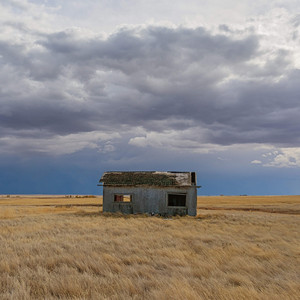
Today on theshow, AbandonedPlaces.
I remember walking through some villages where you look through the windows and there are still shoes near thedoor.
There's still books next to thebed.
There's still a child's toy on thefloor.
There's so many remnants of the lives that were left on very shortnotice.
For nearly fourdecades, ever since the nuclear disaster inChernobyl, the surrounding 30 kilometer radius known as the exclusion zone has mostly been empty of humanlife.
It's kind of this odd mixture of very surreal abandoned homes and abandonedlives.
There are otherinhabitants.
You keepgoing. And then in this one house that is very vivid tome, I remember a nest of a family of boar that had made residents in the front porch of one of thesehouses.
And it was very obvious that whilehumans, at one time decadesago, lived in thisplace, now the boar were living in this samestructure, creating this place for their family and to stay home atnight.
This is KaraLove. She's an integrative biologist and was visiting Chernobyl regularly to study the animals that are flourishingthere.
So if you're walking through thezone, you'll probably be the Eurasianbison, Eurasianmoose, all sorts of birdlife.
And we got really lucky one year and actually saw two Eurasian links just driving around to our wolfsites.
Wolfsites. Kara and her colleagues are specifically researching the area's apexpredator, the graywolf.
These wolves have been thrivinghere, despite constant and intense exposure toradiation.
Some of the wolves are exposed to upwards of like three chest X-rays a day worth of radiation perindividual.
On the mostextreme, but still pretty significant for the long-term chronic exposure over an entirelifetime.
Youknow, I had always had questions of what impacts the radiation might have on populationdynamics.
Shane was just a perfect collaborator to bring on to add the element of evolution and natural selection and ask these questionstogether.
And I think that has made this collaboration soincredible.
Shane Campbell-Staten is an evolutionarybiologist.
And in2019, Kara recruited him to help answer a bigquestion.
How have these wolves genetically adapted to survive all thisradiation?
Because we know that the wolves in Chernobyl have been there at this point for about seven or eightgenerations.
So they've been exposed their entire lives to this novelpressure.
And by understanding how natural selection has gone about molding organisms to still be able to survive andreproduce, by studying thatprocess, it may lead us to newinsights.
Shane has spent his entire career studying how species evolved to adapt to humanbehavior, including inChernobyl, which is unlike anything he's ever seenbefore.
A pup that's born in the Chernobyl exclusion zone from dayone, it's being exposed to radiation from theenvironment.
And that pup will live half a decade ormore.
And eachday, be continually exposed to thatradiation.
On top ofthat, thesewolves, they're getting another dose of radiation from each meal that they eat in a concentrated dose because they're apexpredators.
So they're eating European bison that then ate grass and other vegetation that was infused withradiation.
And we know that radiation causes lots of damage to the mammalianbody.
Forgive me if this is a dumbquestion.
But are some of these wolves living withcancer?
So that is one thing that we're exploring rightnow.
What we do know is that when you look at theirblood, and you look at the immune profiles of theirblood, they show patterns that you would expect from a person withcancer.
So now all of asudden, if you're interested in that specificquestion, how would a mammalian genome change in order to become more resistant or resilient tocancer?
That's the kind of stage that you would want to set up in order to understandthat.
And astragic, absolutely tragic as the Chernobyl incidentwas, we do have an opportunity to learn something of potentially incredible value from the aftermath ofit.
From a tragic event to a rareopportunity, when people moveon, there isloss.
But there is also a chance for renewal if we make the most of what gets leftbehind.
On thisepisode, stories about abandoned places and ideas for transforming them into resilienteconomies,cities, and even a thrivingspecies.
So back to evolutionarybiologist, JeanCampbell-Staten, he says the gray wolf's ability to withstand so much radiation is just one example of evolution unfolding at a breakneckpace.
Here he is on the TEDstage.
Now, when CharlesDarwin, my man ChuckD, when he first proposed thistheory, when he first proposed a theory ofevolution, he imagined it as this slow gradual process that played out over thousands or millions ofyears.
Butnow, in the face of all the different changes that we are making to theplanet, we're finding that evolution is rapidly altering species around our planet in order to live alongsideus.
Many of these stories of rapid evolution aresad.
But some also offer us hope for our own future on thisplanet.
In nature's struggle to deal with all the nonsense that we're throwing at her in all these differentways, some of those solutions may lead us to novel insights that may help our bodies deal with things that we currently struggle with that will allow us to survive all the different changes that we're making on thisplanet.
SoShane, the novel insights you're talking abouthere, you are looking into what is happening to these wolves genes and if they've evolved to resistcancer, what have youfound?
Okay,yes. So when we sequenced the genomes of the wolvesintranobal, we compared them towolves, a wolf population right outside of the exclusion zone in Belarus and also the wolf population inYellowstone, which is really faraway.
So we have these three populations and the questionwas,like, if there's something special happeningintranobal, then whatever genes may help some individuals better deal with cancer thanothers, the hypothesis is that those regions should be changing intranobal and only intranobal at a very fastrate.
And we identified those patterns and identified those genes and then you look at the function of those genes and they're all related to some aspect of cancerbiology.
And most of those genes have some known function in immunity or in the anti-tumor immune response or in immunephenotypes.
Now we know a lot about the genes and mutations that are responsible for many cancers or make an individual more predisposed to gettingcancer.
We know a lot less about potential genetic mutations or variation that may make an individual more resistant or more resilient tocancer.
But perhaps nature has already found thesolution.
And one of the things that our data are showing us is that the fastest changing regions of the Chernobyl wolf genome occur in and around genes that we know are involved in cancer or in the mammalian anti-tumor immuneresponse.
Now we're now working with biomedical companies and cancer biologists to understand the physiological impacts of these mutations with the hope that at least some of these changes may lead us to novel therapeutics that might result in new treatments for cancer inhumans.
Okay, so let me see if Iunderstand.
The wolf genome in Chernobyl is mutating like crazy and the parts of the genome that are mutating the fastest are the ones that show some kind of immunity tocancer.
So is it like whatever doesn't kill you makes youstronger?
It's so evolution andadaptation, they're not planning onanything.
It's a reactiveprocess.
So you get thrown some kind of a curve ball and whatever you have in hand is what you have to deal withit.
And if you can come up with a solution that makes you slightlybetter, then selection will run withit.
In thiscase, the most likely scenario is that withinChernobyl, there's some degree of standing variation in these genes that affect the way that they interact with cancer formation or cancer proliferation ormetastasis.
And some of those mutations are better at dealing with those things thanothers.
In this particular environment exposed to this novel pressure and extremepressure, somehow we see that the ability to deal with something biologically that maybe no other organism is able to deal with in the sameway.
We don't know enough yet to reallyunderstand, but it's clear that something special ishappening.
Jane and hiscolleague, CarolLove, are hoping to get more data from thewolves.
But the war in Ukraine has kept their teams from spending more time in theregion.
And learning more about what the implications could be forhumans.
Someday,hopefully, when we're able to gain access or when my colleagues and Belarus are able to go back into the zoneagain, we'll be able to really fine-team that question a bitmore, butunfortunately, it's still a question yet to be fullyanswered.
When we come back from wolves toelephants, more with evolutionary biologist Shane Campbell state in about how humans are speeding up evolution and town nature isresponding.
I'm ManoucheZamorodi, and you're listening to the Ted Radio Hour fromNPR.
Stay withus. This message comes from NPR sponsor SKGroup.
SK is committed to creating a betterfuture, from building EV batteries in Georgia to advancing AI memory solutions in California and along the EastCoast, developing innovative medicines that enhance the lives ofpatients.
NPR companies in communities across the country are investing in American manufacturing and creating the jobs of thefuture.
For more about SK's commitment toinnovation,transformation, and next generationtechnologies, visitsk.com.
This message comes from NPR sponsor Sierra Nevada BrewingCompany, where trailblazing runs in thefamily, from crafting a movement with their iconic pale ale to taking the IPA haze craze nationwide with hazy littlething.
It's an adventurous spirit you can taste in everysip.
Find your next favorite beer wherever fine beverages aresold.
With new brews for everyseason, there's always something todiscover.
Sierra Nevada BrewingCompany, still familyowned,operated, and arguedover.
This message comes from ApplePay.
Everyone knows that credit card numbers can bestolen, but you know what's harder to steal yourface.
This message comes from NPR sponsorDiscover.
On your creditcard, at the end of your first year with cashbackmatch, double the cashback is something sogood, you might do a tripletake.
Get rewarded no matter who you are or how much you spend withDiscover.
See terms at discover.com slash creditcard.
Before we get back to theshow, I want to ask you to please consider becoming a member of Ted Radio HourPlus.
You'll get extraadvice,stories, and expertise from Ted Speakers every other week and no adsever.
And you'll be supporting publicradio.
Listener Support is crucial to keeping usgoing.
Go to plus dot npr dot org slash Ted or give it a try right in the Apple Podcastapp.
It's the Ted Radio Hour fromNPR.
I'm Anouche Zamorodi and on the showtoday, abandonedplaces.
We were just talking to evolutionary biologist Shane Campbell-Staten about how animals can adapt when humans radically change their naturalhabitat.
The one pretty much universal thing about humans is we don't know how to do anything a littlebit.
So whatever we do to an absurddegree, which means that we're changing environments very quickly to an absurd degree in all of these differentdimensions.
And that rapid environmentalchange, if it affects the ability of the organisms that live in an environment tosurvive,function, andreproduce, that necessitates a pace of evolutionary change that can track the environment or you riskextinction.
Shane has also been studying how some African elephants have adapted in response topoaching.
Here he is again on the Tedstage.
InMozambique, there was a Civil War from 1977 to1992.
During this time in Gorongosa NationalPark, elephants in particular were reduced by90% because of the ivory trade being targeted for theirtrademark.
Tusks. Under mostcircumstances, African elephants havetusks, but there is a small number of females that carry a gene that prevents them from growing theirtusks.
But after the Mozambique and CivilWar, one half of the surviving females completelytuskless.
Now, during a time where individuals are being hunted specifically for atrade, not having that trade puts you at a decided advantage in your ability tosurvive.
Those surviving females then went on and passed that gene onto many of their daughters that turn over of genes acrossgenerations, that is rapidevolution.
In our short time on thisplanet, we havetrimmed,trained, and reshuffled the tree of life at breakneckspeed.
I dedicated my life to trying to understand the lasting biological impacts of our humanfootprint.
One of the things that I've learned along the way is that life is aparadox.
It simultaneously incredibly fragile and relentlesslyresilient.
One of the things you say in your talk at this line just stuck withme, which is that life is incrediblyfragile, yet also simultaneously incrediblyresilient.
We are just too much for most species tohandle.
You see that fragility in the long list of extinctions that came along with the rise ofhumans.
In thatcase, life is aparadox.
It is fragile and it needs to be caredfor.
At the sametime, it does find all of theseimaginative,innovative, completelysurprising,quirky, weird ways to eat through when needbe.
I think it's easy to see hope in thesestories.
I think that's actually a goodthing, but I think it is a mistake in short-sighted to then sort of shirk offresponsibility.
The world is going to be from now on what we makeit.
The story isn'tover, and right now we are the drivers of thatstory.
That was Princeton professor and evolutionary biologist ShaneCampbell-Staten.
He's also the host of a PBS documentary series called HumanFootprint.
You can see his full talk atTED.com.
Many thanks to hiscolleague, integrativebiologist, CarolLove.
On the showtoday, abandonedplaces, or in thiscase, abandonedstuff.
So imagine a lab looking like a corridor of ahospital, so verysterile, verywhite.
In amongst thatcorridor, there's going to be lots of freezersystems.
This is GaryCooper. In2008, Gary was at NorthwesternUniversity, working in a research lab on a drug discoveryprogram.
To do thatwork, Gary and his colleagues filled the banks and rows of freezers with all kinds ofsupplies.
We would say haveantibodies, probes that attach or recognizeproteins, all the way to buffersystems, thousands of thosethings.
And because you can't just buy a single antibody or a fewenzymes, they bought them inbulk.
And then you so call aliquat thatout, so you kind of make separate vials ofthat.
And then you stick those aliquats in afreezer.
What is allocate in labspeak, divided up for differentuses.
And while some of the enzymes and proteins would getused, others would be put into storage and forgottenabout.
You leave the lab and no one knows that they're just thesetubes.
Whether these tubes are just markedalpha, no one even knows what these tubesare.
Andmeanwhile, literallysomeone, probably you'resaying, floor is trying to buy that same aliquata or trying to get analiquata, trying to get a whole bottle of that antibody or that restriction enzyme or that buffersystem.
And so they're buying thatnew, literally the refrigerator across thehallway, has what they're lookingfor.
But because they don't know it'sthere, you have this double wasteproblem.
This really botheredGary.
Not only was all thiswaste,well,wasteful, it wasexpensive.
Meanwhile, I knew other students who were in labs that were smaller and less resourced and had lessfunding.
And they were sometimes be looking for the things that we were maybe using or in fact that we were going to throwaway.
And so I thought that wasabsurd.
So oneday, I literally just got acart, put things that we weren't using on thecart.
I would then push the cart around thefloor.
Not antibodies in the cartthough.
Well, actually they were in thecart.
So I would put them in dryice.
And I waslike,hey, do you need to have a quadof, youknow, whatever itis.
But let me tell you people wouldsay, oh mygosh,yes, we were about tobuy.
Oh, this is sothankful.
Sometimes they would say thingslike, what can I giveyou?
And when they saidthat, it made methink,oh, there's something more than sharinghere.
There's potentially a whole system ofexchange, ofsharing, of exchange ofvalue, I wouldsay.
That could be had if this was more than acart.
We can't scale one person at a university on onefloor.
That's not a global scalingsolution.
Tell meabout, as you started to research on a broaderscale, what the situation was in terms of wasted equipment or materials orproducts, lay it out forus, bigpicture, what did youfind?
Yeah. So something like45% of all global greenhouse gas emissions is because of what we call a lineareconomy.
So that's an economy where we take things out of theground.
We make something withthem.
And then when we're done withthem, we throw themaway.
If we did all the things we have to do with energy and gridding andfood, there's still a45% whole and closing the gap to netzero.
And the only way we can get there is by structuring this thing called a circulareconomy.
Where the item that you're using doesn't start from newproducts.
When you makeproducts, you design them with the end of life and reuse inmind.
So this is when you take a bigleap,Gary.
You decide to leave neuroscience and start acompany.
That'sright. I knew exactly the pain points that someone would say if you said them to reusesomething.
On the otherhand, I knew thebenefits.
And so some ways I was our customer and user numberone.
I knew exactly how the system should work in the working world and for it to have global importantscale.
That's how we startedReplay.
Replay, the company I founded andrun, helps organizations identify and catalog the things theyown, reuse them internally when theycan, and distribute them to other organizations when theycannot.
It's like a high-tech scaled-up version of me with the push card atNorthwestern.
But with hundreds of organizations from technology to manufacturing leaders and millions of items available for sell anddonation, all catalog on a digital platform stretching across partners in a localarea, a city orstate, creating connected networks ofreuse.
Replay helps organizations reuse things like building materials and IT and industrial equipment andfurniture.
Gary imagined a sort of craigslist for business that could also keep track of where all the objectsare.
We didn't even know where every chairis, we didn't know where every deskis, we didn't know where every dooris, because if we know where those things are before their quotelost, we can plan for their nextlife.
This marketplace would show when and where a chair or desk or door is available and then get the item from A toB.
Whether they be a nonprofit next toyou, whether be your colleague and then on the floor besideyou, I see thatdoor, I see thatcouch, I see thosechairs, I want them when they'reavailable.
Let's take a look at how it works forfurniture.
An investment bank in New York City had about 2,000 premium office chairs that they no longer coulduse.
When they hiredus, we sent in a team to inventory that furniture on thatfloor.
When it was determined that these items could no longer be usefulentirely, a notification was sent out through our platform to all of ourpartners, hundreds ofthem.
I'm happy to report that all of these chairs found new homes in a localuniversity, a community housingorganization, and a local refurbishmentcompany.
Intotal, about 68,000pounds, a potential waste was diverted fromlandfill, and about $100,000 of value was recaptured and shared with theseorganizations.
Not to mention the carbonsavings.
One of these officechairs, which weighs about 55pounds, releases 245 pounds of carbon emissions into theatmosphere.
Gary, I am having a hard time envisioning 2,000chairs.
What would have happened if thiscompany, thisbank, didn't have a service like yours to find new homes for all ofthem?
Generallyspeaking, what they do with the old stuff is they liquidate it or they dispose ofit.
The dispose word is just AKA for landfill or throw itaway.
When they liquidateit, I can tell you about95% of thetime,5% of that stuff isresult,95% of it is also disposed into alandfill.
Somebody comes along and buys the thousand chairs and islike, I'll take care of this foryou.
Exactly. Maybe they make a little bit ofmoney.
They're not going to hold inventory that they can't sell in theirwarehouses.
They're going to get rid of it as soon aspossible.
Let me tell you adifferent, more circular way of doing that versus the linear way we justdescribed.
We send these thousand chairs to a remanufacturer who re-apulsorsthem, who makes them look a little bit more befitting to thedesigners,wishes, who's designing your newspace.
Then they send those chairs back toyou.
You've only paid for the updating ofthem, the remanufacturing of them and thereshapement, but you're not having the carbon emissions that comes from the manufacturing of thoseitems.
So the whole part of the circular economy from a carbon emissions perspective is trying to reduce net newmanufacturing.
That's where the largest share of carbon emissions happens in the world is with throughmanufacturing.
And so when you think on both the manufacturing side and on the dispositionside, circularity or usage is such a betteranswer, even at the level ofchairs.
So we know how to create a circular economy with a microscope on a push cart like me atNorthwestern.
And we know how to do so inside and outside of a building with either its building materials or things like IT infrastructure on a digital platform likeReplay.
And how do we get to the scale of acity?
Andwhy?Well, cities occupy about3% of global landmass, but how's over50% of the globalpopulation, which commands over75% of all globalresources.
Cities are aperfect, tractable front for us to drive down greenhouse gas emissions and create a lot of jobs by building local circulareconomies.
Now to transition any city's linear economy to a circularone, we're going to at the very least have to do threethings.
First, we have to build a digital infrastructure to connect every citizen and every company to everything in theircity.
Next, we're going to have to build the operational infrastructure to make reuse and recycling a remain factoring easy and universallyacceptable.
Next, we're going to have to incentivize every person and business to participate in their local circulareconomy.
So you are actually working with the city of San Francisco right now on a pilotproject?
Absolutely.Absolutely.
So in SanFrancisco, we have launch and it's exactly all these things are operating in SanFrancisco, so we have the digitalinfrastructure.
We have operational capacity and infrastructure that's provided by the city and a fewpartners.
We have about 200 different businesses on the platform and San Francisco has passed a set of ordinances that either require or strongly encourage people to participate in their local reuseplatform.
If we can get a thousand cities to circularly by2040, we can reduce global greenhouse gas emissions by 63 percent and get us back on track for meeting the 1.5 target set out the Paris ofcourse.
And if we can't dothat, it's going to be maybeimpossible.
I'm guessing that the only person listening to this who might think that this is a bad idea is the chair manufacturer who'slike,well, wait asecond, what about mybusiness?
Yeah, and I have good news forthem.
They should be participatingtoo.
They have all theupside.
So forinstance, your iPhone somewhere between 50 and 60 percent of the materials in your iPhone are reharvested byApple.
I'm able to re-upcycle materials that were in that old phone into a new phone so that my cost for new manufacturing go waydown.
If you think about the recommercemarket, the recommerce market is growing about 16 times faster than the global apparelmarket.
If you look at companies like Patagonia andREI, comparatively to their marketcounterparts, they have operationalizedcircularity.
They've operationalized these environments or principles and they're obviously crushing their competition in themarket.
It's a better system for a manufacturer to lease or to rent something as a service than to sellit.
To make way moremoney, they control their reverse supplychain.
I was just talking about the iPhone scenario and it's just more predictablebusiness.
The problem I would say having friends in the manufacturing world is how do we go from where we are tothere?
How do we go from what we're doing today to a newsystem?
And I think there's some good questions and good people working on thoseanswers.
Gary, this was so exciting and it's makingme, youknow, I live in Brooklyn where there's like a stoopeconomy, but it just wentway, youknow, where you clean itout, you put it out and it's disappeared by the next day and also someone ofit.
Right? And my neighbor who is the textile recyclingguy, everybody knows it's easier to take your textiles and dump it at the farmer's market on Sunday than put it in yourgarbage.
That'sright.Oh, and there's an opportunity because he has turned it into hislivelihood.
Like, this is what hedoes.
Yeah, Imean, just on thatfront, I think compared to NANFO and incineration and one ofit, these circularcities, it can create millions actually of greenjobs.
I think six X more recycling jobs than current and 50 X more reuse jobs because of what you're just saying because people will start remaining in factoringbusinesses.
They will start repairbusinesses.
They will start what I'll call reverse Uberbusinesses,right?
I got to take this item toyou.
So that's going to create these local jobs that don't need collegeeducation.
In somecases, don't even need aapprenticeship.
They just need someone to care and someone tosay, I'm going to read their local remanufacture chairs or furniture or desk or whatever itis.
These assets do not belong tolandfill.
They don't deservethem.
When we say these areassets, theirvalue, then the questionis, what do we do withthem?
How can we make money off ofthem?
And the circular economy has theanswer.
Barry Cooper is the CEO and co-founder ofReplay.
You can find his full talk atTED.com.
On the showtoday, abandonedplaces.
I'm Anush Zomerody and you're listening to the TED radio hour fromNPR.
We'll be rightback. For moreinformation, visitTED.com.
What does it mean to berich?
Maybe it's less about reaching a magic number and more about discovering the magic inlife.
Edward Jones financial advisors are people you can count on for financial strategies that help support a life you love because the key to being rich is knowing whatcounts.
Learn about this comprehensive approach to planning atedwardjones.com.
Flash Find Your Rich Edward Jones memberSIPC.
This message comes from NPR sponsorBetterHelp.
Social media makes it easy to compare your life to everyoneelse's.
But therapy can help you focus on yourself instead so you can live your life to thefullest.
If you're consideringtherapy, give BetterHelp atry.
It's entirely online designed to beconvenient, flexible and tailored to yourschedule.
BetterHelp.com slash NPR to get10% off your firstmonth.
This message comes from NPR sponsorWhatsApp.
Texting between two different kinds of phones can sometimes make communicationdifficult.
But withWhatsApp, everyone can enjoy messaging with the added protection of end-to-endencryption.
Streamline your messages across all devices onWhatsApp, message privately witheveryone.
This message comes from NPR sponsorChevron.
And for energy is projected to continue rising in thefuture.
To help keepup, Chevron is increasing theirU.S.
oil and gasproduction, and they're innovating to help do it responsibly across theiroperations, including their Gulf of Mexicofacilities, which are some of the world's lowest carbon intensityoperations, helping supply energy that'saffordable, reliable and evercleaner.
That's energy andprogress.
Learn more at chevron.com slash meetingdemand.
That's the Ted Radio Hour fromNPR.
I'm ManoucheZomerodi.
And on the showtoday, abandonedplaces, stories of desertion andrenewal.
Back inJuly, I went to Ted's climate conference this year inDetroit.
Detroit, ofcourse, was the once wealthy motorcity, but it hit incredibly hard times when manufacturers and locals left indroves.
But onespeaker, a woman named AnikaGoss, is working to build a new future forDetroit, one abandoned lot at atime.
All of youhere, this isfantastic.
To get people tostay, shesays, Detroit citizens need to remember why their families came here in the firstplace.
I am a third generationDetroiter.
My grandmother moved to Detroit in 1936 during the Great Migration and brought all of her southern ways withher.
She owned a home on Mendoza Street and knew that home ownership would create wealth and opportunity for her growingfamily.
My family's story is not an unusual Detroitstory.
And up until the late1950s, Detroit was a haven for middle-class families living in neighborhoods where there was green space and community connectivity andopportunity.
But my grandmother's Detroit is not the Detroit that I live intoday.
In 75years, our city went from a peak population of 1.8 million down to a population of 620,000 in2022.
All of those sites where there was manufacturing and industrial sites that led to our economicboom, many of those industrial sites stand vacant andabandoned.
We now have about 19 square miles of vacant land inDetroit.
These industrial sites have led to dangerous contamination both to our land and our water and ourair.
After Anika gave hertalk, she and I got together at a local coffeeshop.
I could learn more about herorganization, Detroit FutureCity, and why having fewer people means rethinking Detroit's economy andlandscape.
Imean, it sounds like the things that made Detroit so livable then those havechanged.
Yeah. You have this sort of draw picture ofnow?
Yeah. So I think what's reallychanged, the population loss has had a pretty dramatic effect in ways that I think people aren't necessarily focusedon.
When you think of populationloss, you think of just lesspeople.
But infact, population loss also means fewer dollars forinfrastructure.
When I sayinfrastructure, I mean like there's fewer dollars to fix streetlights and repair water mains and take care of parks andtrees,right?
Thebasics. Thebasics.
That's what thatis. So all of that puts the people who are living in those communities at risk for climate impactsfirst.
More airquality, contaminatedwater, heat islandimpact, and I think people are thinking that it's all equal across theboard.
But these people who have been livinghere, who live near afactory, an operating factory or a vacant factory are definitely at the most risk for climate changeimpact.
So here weare, a city that really thrived by being entrenched in itsways.
But those ways aren't workinganymore.
And that's where you comein.
Tell me about what you're trying todo.
Yeah. We began to see at Detroit Future City that we have to do something in those neighborhoods rightaway.
And that's what we really call a resilient neighborhoodmodel.
This idea of planting urban treecanopy, so an urbanforest,planting, intentional foodgardens, but also sustainablegardens.
When you think ofgardens, you're thinking of kale andcarrots.
But sustainable gardens is what brings beesback.
It's what brings butterfliesback.
It attractsbirds. It cleans the air and thesoil, and which actually supports cleanwater.
So planting sustainable gardens alongside food gardens in neighborhoods that are also vulnerable for economic inequity is criticallyimportant.
And he could took me to visit several abandoned lads that had been given radicalmakeovers.
This is sobeautiful. It'sgorgeous.
We stroll through a woodedarea.
What was once six vacant lots is now covered withtrees,gardens, a firepit, and thestage.
So we've done about 55 vacant lots inDetroit.
We've spent well over a million dollars throughout thecity.
To help residents envision what they can do with these vacantlots, Anika and Detroit Future City have a kind of catalog ofoptions, like a choose your own adventure forlandscaping.
Soyeah, we provided the landscape design forthem.
And we worked together with the community for thedesign, for the kinds of trees that they wanted to seeplanted.
This neighborhood picked an urban forestdesign,another, a meditationgarden.
Wow. This was been a ton ofwork.
Unbelievable. I was particularly partial to the friendly fencedesign, which helps neighbors turn an empty lot between them into a rain garden that looks pretty and manages storm runoff with an optionalpond.
If you'refish.Yeah, there's a lot of fishinghere.
Isee. If you come from a city that has a lot of greenspaces, maybe creating community gardens doesn't seem like a big deal toyou.
But for theseneighborhoods, it is transformative and reminiscent of bettertimes.
My relation to this neighborhood goes wayback.
This is KatrinaWatkins.
She grew up in the historically black area called BlackBottom.
My family has been in this neighborhood since1946.
I grew up hearing stories about Black Bottom and Paradise Valley from mydad.
And he waslike, Blacks have businesses and people looked out for eachother.
And it was those type of stories that made mesay,wow, we just really need to bring thatback.
Just a few yearsago, Katrina and her dad took it upon themselves to mow all the vacant lots around them and try and spruce up theneighborhood.
We just would go and start cutting down theovergrowth.
But then Katrina realized that more grants were becomingavailable.
And with help from places like Detroit FutureCity, she could begin to strategically revitalize theneighborhood.
And it just grew fromthere.
Katrina founded the Bailey Park Neighborhood DevelopmentCorporation, where she is now theCEO.
The neighborhood's new centerpiece includes a playground and concertarea.
It's just a reallygreen, chill environment where people feel safe to bring their children andfamilies.
We do live music events on theweekend.
But they can come and just enjoy it and feel theneighborhood.
There are now some 250 more trees in the park and allaround, native plants at theedges.
When you see the park and the greenery makes such a difference in thetrees, and I have someone just tell meyesterday,wow, that's in thisneighborhood.
When people walk and feel thatway.
And it's about more thanbeauty.
Katrina recruits her neighbors to work on these projects by explaining how tree roots anchor thesoil, helping to protect their homes from climate events like the massive floods that hit a couple yearsago.
It's about as a cany residence on the importance of trees and native plants and how it makes the aircleaner.
That's really goodactually.
Back at thecafe, Amika explained to me that this slow but steady approach will help revitalize the city as awhole.
Allright, what's going tohappen?
Give me your short-term vision forDetroit.
My short-term vision for Detroit is that we're going to see a lot more youngermiddle-class, black and brown families that are moving into theseneighborhoods.
And these neighborhoods are going to have amazing greenspace, treecanopy, urbanforest, and it's going to look like a city that you just wouldn'texpect.
And not just in the nine mile radius arounddowntown, but it's 139 squaremiles.
This is ashort-term, like how short-term are wetalking?
I think you should comeback, give me fiveyears.
Okay. I think we'll have something to showyou.
Amika Goss is the CEO of Detroit Future City to see her full talk go toTed.com, many thanks to KatrinaWatkins, CEO of the Bailey Park Neighborhood Development Corporationtoo.
To wrap up ourshow, we want to talk about an animal that's being forced to abandon itshome.
Polarbears, as you've likelyheard, are leaving the Arctic Circle because of climate change and meltingterrain.
Conservationist Lissa McCall explains that as the bear's headsouth, that means that people need to learn what to do if a polar bear turns up in theirbackyard.
Here she is on the Tedstage.
So what happens when ice bears start losing theireyes?
They get stuck on land and they gethungry.
Polar bears use the frozen ocean fortraveling,mating, and hunting their main preyseals, specifically high-calorie sealblubber.
Polar bears can't out swim seals so they use the sea ice to sneak up on unsuspectingprey.
Polar bears need sea ice for sustenance andsurvival,period.
Polar bears want to needblubber, but they're stillbears, so they will follow their noses to fill theirtummies, whatever thattakes, but it takes alot.
Most one polar bear needs a lot ofseals, and just one seal is equal to about 74 snowgies or 216 snow gooseeggs, it's a bigomelet, or 3 millioncrowberries.
This amount of food doesn't exist on the tundra in quantities great enough to sustain a population of blubber hunting icebears.
So when polar bears can't find good food toeat, just likepeople, they'll fill up on junkfood, and for polar bears junk food is humanfood, and for a hungrybear, the best late night fast food takeout can be their northern neighborhood'strash.
But we have a saying inconservation, a fed bear is a deadbear, and this has major implications forcoexistence.
This is a rising safety concern for humans who are always the number onepriority.
It's also a concern for the bears because when a polar bear has a negative encounter with ahuman, it risks being taken out of the population in a defensekill, which is the legal killing of an animal to defend life forproperty.
Luckily, non lethal tools are available and more are being developed particularly inCanada, which is home to two thirds of the world's polarbears.
And one of the best testing grounds for tools is in the self-proclaimed polar bear capital of theworld, ChurchillManitoba.
Churchill is home to the western Hudson Baypopulation, some of the best studied and most southern polar bears in theworld.
In thisregion, the ice-free season islengthening, meaning these bears are on land longer and have less access to calories compared to theirgrandparents.
This does not mean all the bears are starving todeath.
It means the females are having a harder time havingcubs, the cubs are having a harder time becomingadults, and some bears have just moved elsewhere in search of betterconditions.
As aresult, this population has declined from about 1200 bears in the 1980s to just over 600today, almost50%.
Churchill is also home to about 900people, but grows by thousands during touristseason.
Polar bears are an economic keystone inChurchill, driving tourism and creatingjobs.
It's important Churchill protects them and theirpeople, which they do through a wide variety ofefforts.
But one of the most interesting and effective is their wastemanagement.
Unsurprisingly, Churchill's garbage dump used to beoutdoors, which was fine until it became a popular polar bearbuffet.
So this is a problem for thebears'health, but also because when they're on their way to the snackbar, they risk bumping intopeople.
Polar bears are no more likely to actively hunt and kill people than blackbears, but they are more likely to attack neartowns, especially when food isnearby.
So Churchill did the smart thing and they've just moved their garbage dumpindoors.
Now the bears can't even get toit.
They also installed residential bear resistantfins, so no polar bear with late night munchies in this town gets any wrong foodrewards.
Churchill continues to evolve their waste management because it's key andcoexistence, but not everywhere can doit.
Churchill'sdone, so we need moreoptions.
Just oneexample. GPStracking.
It can tell us where one and why polar bearsmove.
It's criticaldata, but we've only successfully collared adultfemales.
Adult males have these like pile on heads with next sticker than their skulls and they just pull colors rightoff.
And then the sub adults are stillgrowing.
And this is really too bad because the sub adults or the teenagers often cause the mosttrouble, bigsurprise.
So we've started working with3M, the sticky stuff company that makes postednotes.
And they're helping us figure out how to stick a tracker to any bearsfur.
These bur on fur tags could be a conservation gamechanger, letting us temporarily take any bear that comes too close to a community and uponrelocation.
We can track that bear and intercept it before it gets tooclose.
This could help reduce stumps or diving and reduce negative human bearingcounters, keeping both speciessafer.
So there's different coexistence tools being worked on for different needs across thenorth, but we can't talk about conservation without mentioning one of the most important tools of alleducation.
If you are going into bearcountry, polar orotherwise, please get bearaware.
Staytogether, secure your snacks and carry a deterrence like flares or bangers or bearspray.
Bear spray works even in the cold and thewind.
Butfinally, the number one most important coexistence tool we have is our willingness to cut carbon emissions and stop trapping so much heat in ouratmosphere.
But on thatnote, I have someoptimism.
The ice is very responsive to atmospherictemperatures.
We can keep this habitat in theArctic, but it will mean drastically reducing our emissions and eventually getting them tozero.
Polar bears arefat,white, hairy canaries in the coalmine.
Warning us to actnow. The faster we switch to cleanerenergies, the better we can protect future generations of polar bears andpeople.
I'd be lying if I said I wasn'tworried, but action is the best antidote to anxiety and I'm working to ensure climate change doesn't separate our species forgood.
But untilthen, it's bringing us too closetogether.
Coexistence is the onlyoption.
Let's make it safe forall.
Thankyou. That's AlyssaMcCall.
She's the director of Conservation Outreach at the Nonprofit Polar BearsInternational.
You can see her full talk atTED.com.
Thank you so much for listening to ourepisode, AbandonedPlaces.
It was produced by HerschenAhada, James De LaHousie, MatthewCloutier, and Lane KaplanLevenson.
It was edited by Sanna'sMeshkenport, James De LaHousie, Rachel FocknerWhite, andme.
Our production staff at NPR also includes Katie Montellone and FionaGearen.
Our audio engineers were JosephineNeonai, NeilT.
Vault, JoshNewell,Gilemon, and TedMeabang.
Our theme music was written by RomteenArablui.
Our partners at Ted are ChrisAnderson, MichelleQuint, AlejandraSalazar, and DanielleBalorezjo.
I'm ManoucheZomerodi, and you've been listening to the Ted Radio Hour fromNPR.
Support for this podcast and the following message come from RaymondJames, a firm where financial advisors help you plan for every part of yourlife.
No two lives arealike. That's why everyone deserves a financial plan as unique as theyare.
Backed by sophisticated resources and teams ofspecialists, a Raymond James financial advisor gets to knowyou, yourpassions, and everything that makes your life uniquelycomplex.
Because what inspires your goalsmatters, whether that's charitableendeavors, mapping out the future of abusiness, or building a legacy for yourfamily.
Raymond James advisors use thoughtful planning and powerful tools to help people theyserve, embracelife, and live itwell.
To learn more or connect with an advisortoday, go toRaymondJames.com.
Raymond James and associatesInc.
member New York StockExchange,Zipack.
This message comes from NPR Sponsor MintMobile.
From the gas pump to the grocerystore, inflation iseverywhere.
So Mint Mobile is offering premium wireless starting at just $15 amonth.