This message comes from NPR sponsor Capella University.
Interested in a quality online education?
Capella is accredited by the Higher Learning Commission.
A different future is closer than you think with Capella University.
Learn more at capella.edu.
This episode contains mention of sexual assault.
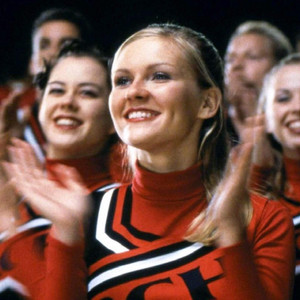
The cheerleading film Bring It On turns 25 this month.
It spawned direct-to-video sequels and a Broadway musical, and you can still find people who quote its best lines and relish the story of the battle between the Rancho Carne Toros and the East Compton Clovers.
Bring It On stars Kirsten Dunst, Eliza Dushku, Gabrielle Union and Jesse Bradford, among many others.
And a lot has happened in 25 years that might make it feel very timely or very dated.
I'm Ayesha Harris.
And I'm Linda Holmes.
And today, in this encore episode of NPR's Pop Culture Happy Hour, we're revisiting our conversation about Bring It On.
This message comes from Apple Pay.
Forget your wallet.
It's all good.
Because with Apple Pay...
You can pay with a simple tap of your iPhone, the wallet you never forget, at millions of places worldwide, including websites, apps and anywhere.
You see the contactless symbol.
Security is built in with Face ID, so you don't have to worry about your cards getting lost or stolen.
And the best part, you still earn the card rewards, points, and cash back you love.
So say goodbye to the bifold.
Add your card to Apple Wallet and start paying the Apple way.
Terms apply, or make weeknight dinners a thing again, with quality cookware that makes mealtime a breeze.
Get organized, refreshed, and back to routine for way less.
Head to Wayfair.com right now to shop all things home.
That's W-A-Y-F-A-I-R.com.
Wayfair.
Every style, every home.
This message comes from Charles Schwab.
When it comes to managing your wealth.
Schwab gives you more choices like full service wealth management and advice when you need it.
You can also invest on your own and trade on Thinkorswim.
Visit Schwab.com to learn more.
This message comes from NPR sponsor, Capella University.
Sometimes it takes a different approach to pursue your goals.
Capella is an online university accredited by the Higher Learning Commission.
That means you can earn your degree from wherever you are and be confident your education is relevant, recognized and respected.
A different future is closer than you think with Capella University.
Learn more about earning a relevant degree at capella.edu.
Joining us today is the executive producer of 99% Invisible at SiriusXM, Kathy Tu.
Hello, Kathy.
Hi.
Also with us is Tobin Lowe.
He's an editor at This American Life.
Hey, Tobin.
Hello.
I don't know how many of you are or aren't terribly familiar with Bring It On, but the story is that Torrance Shipman, played by Kirsten Dunst, is the new captain of the cheerleading squad at the very affluent and very white San Diego school, Rancho Carne, that's meat ranch, or ranch meat, depending on how you think about it.
She discovers that her ruthless predecessor as captain was stealing cheers from the East Compton Clovers, a mostly black squad led by ISIS, played by Gabrielle Union.
Eliza Dushku shows up as a new and somewhat reluctant recruit for Torrance's team, whose Discman listening brother Cliff, played by Jesse Bradford, takes a liking to Torrance.
It's directed by Peyton Reed, from a script by Jessica Bendinger.
Aisha, how do you feel about Bring It On?
Mm-hmm.
So, if my memory serves correctly, this was either the first or one of the first movies 12-year-old Ayesha was allowed to see in a theater without an adult present.
Yeah.
And I have very, very, very strong memories of seeing it there.
And I feel like it's a movie that has stuck with me, even though it's not one that I necessarily return to as much as –.
People of my age have.
I feel like Mean Girls for me was a much more formidable teen movie.
But I will say that it is, as you mentioned at the top, such a quotable movie for better or for worse.
And I realize, after not having seen it in years probably a decade is the last time I actually watched it in full how much of it still just came back to me and popped in my mind really, really easily.
I really, really enjoy the way in which this film treats cheerleading as more of a sport than it had been previously treated within pop culture.
You know, the running gag is that they've won all these championships, but the football team sucks.
And so that's one of my favorite jokes in the movie.
It's such a such a great joke.
And I really appreciate it.
Now there are lots of dated aspects of it that are just who.
You could not make this movie today in the way that they did.
There is. eating disorder jokes where the dance coach encourages them to get an eating disorder.
This is also very clearly pre-JLo and pre-JLo in her Versace dress, because there are lots of jokes about having too big of a butt.
And I'm like, whoa, now.
This is like...
Everyone wants that butt now.
And that's very different.
I will say that for me, though, the highlight remains Gabrielle Union's character.
And there's a really great interview with her in Vogue magazine for the 20th anniversary of this film.
And she talks about the ways in which she got the part.
And she was like, look.
There are some things about this that we need to change.
So it was a very collaborative experience of her working with the director and the screenwriter and making sure that the character of Isis was not just like a villain, even though there are still people today who consider her to be the villain.
Oh, that's crazy.
Torrance has had her awakening, or her whitening, and realizes that her whole cheerleading career has been a lie.
She insists that her dad make a check for the Clovers to be able to afford to go to the tournament so that she can beat them.
And so she arrives and she's like, here's my check.
And so let's play actually, a little clip of the scene where Isis just rips up the check and is like nope.
You want to make it right?
Then when you go to nationals, bring it.
Don't slack off because you feel sorry for us.
That way, when we beat you, we'll know it's because we're better.
I'll bring it.
Don't worry.
I just think it's a great scene because it is this character just being like I'm not going to take your charity.
I'm going to win fair and square.
And frankly, this is the way in which I feel like most or a lot of Black people are brought up.
It's like, we don't want handouts.
We don't want you to give us these things.
We want to earn it.
And the irony is that the white team that Torrance is on, they all have to learn how to actually do work.
And like be good and not just rely on plagiarism.
And so it's a great message.
You know, they could have gone farther.
There are obviously lots of homophobia as well.
Like maybe we'll get into that as well.
But overall, bring it on.
Still bringing it 20 years later.
Yeah, it's funny that you say that she didn't want Isis to be a villain, because to me, every time I watch it I'm like well, Isis is right about literally everything.
Everything.
She's right about the stealing.
She's right about Torrance's motivations.
She's right about the way she's being treated.
She's right about the lack of respect and She's basically right about everything.
And I think in a lot of ways, the thing I have always liked about the movie is that she is the character who you would expect to be the villain in a sports.
If you think of this as a sports movie, then the opposing team you know, captain leader would be.
You know, like the guy who runs the dojo in The Karate Kid.
And she's not that at all.
She's actually right about everything.
Kathy, what do you think about this movie?
Oh, my God.
So this came out when I was in middle school, and I was a huge Buffy the Vampire fan.
So...
I only went to go watch this movie because I loved Faith and Tobin hates this part about me.
I don't hate it.
It's just a controversial take for Buffy fans.
I love Faith.
I love Eliza Dushku.
So the only reason I went to go watch this movie was because of Eliza Dushku.
And she played this character that I tried so hard to relate to, because she's kind of considered the outsider in this like cheerleading world.
And somehow I was able to like apply this to my life and feel like an outsider.
And I really related to her.
But then I was so pleasantly surprised that I loved this movie.
And it was about cheerleading, which I had no experience with.
And I just kind of assumed this is actually it was documentary.
Like this is what it's like to be a cheerleader.
I think most of it still remains true.
And I'm surprised 20 years ago, they were talking about cultural appropriation.
I didn't have those words then, but that's what was going on.
And I'm kind of shocked when you watch an old, old movie and you realize how progressive it was at the time.
And there are some things, obviously, like Ayusha said, does not work anymore.
Maybe the whole Sparky-Polastri thing can just entirely go away.
He didn't need to...
Be there, really.
But continue to love this movie.
Continue to love Eliza Dushku as Missy.
And that's my take.
Yeah.
For me, upon the rewatch, I really feel like the movie starts as soon as Eliza Dushku enters.
Like she was so good in this in a way that I maybe took for granted before, but watching it a second time I'm like wow, she really does a lot of the work in this to I don't know.
There's so many people who, I feel like, are delivering Disney Channel kid-level acting, which adds to the camp and, I think, makes it funnier.
But I think her performance stood out to me on a second watching or no, probably this time hundredth watching, of how good it was.
Oh yeah, my being a fan of hers exploded after this movie.
I mean because she was like the kind of person that I thought I would be around all of my friends who were not cheerleaders but certainly of like the popular crowd at school.
So I was like, okay, I'm going to take tips from this person.
Wear all black.
Wear all black.
And then carry a chain.
Well, and when I first saw her, I was like, what is that?
What is that hair?
Are those tiny toes?
Are those tiny dreadlocks?
And I was so relieved that her hair did not stay that way.
Because I was like, did her hair stay this way and I just don't remember it?
You know how in The Wizard of Oz when the lion gets his hair done?
That's what it kind of looked like, those ringlets.
It was weird.
I was like, what is this?
Yeah.
Well, I'll just echo the sort of like this hit when I was entering high school.
So there was something about this movie that it was like the first foray for a lot of us into having something that felt a little bit edgy, that we could quote to each other and sort of like this like tilting at a more adult sensibility of humor and edginess without actually being that edgy or adult.
But rewatching it, I think, the things that I still love.
I'm going to echo Aisha in saying that Gabrielle Union performance is really amazing.
And it was amazing to revisit because in my mind The Kirsten Dunst and Gabrielle Union characters are like the two pillars of this film.
And re-watching it, Gabrielle Union has like half the scenes, if that.
Oh, yeah. who this character is and the motivations and to get you to root for her too.
And yet in my memory, you know, those two are toe to toe.
They're representing, you know, these two leaders.
So that performance still totally holds up.
And then I think the other thing that that saves this movie from going maybe into a bad direction and sort of all these things we're talking about, is that I still love that the Clovers win at the end.
Oh, totally.
Totally.
Such an important choice for this film.
Yeah.
For honestly like white folks to learn that if you appropriate in this way, you not only need to own up for it.
You can still try your hardest to make it right and it's still like not okay for you to win in the end.
That's true.
I think the fact that the Clovers still take it as a subtle but very important thing about this film, and I was so glad to rewatch it and have that feeling again.
Yeah, in a way the Clovers winning at the end of this movie is sort of like Julia Roberts not getting the guy at the end of My Best Friend's Wedding.
It's sort of like it makes the movie a completely different like thrust and in the same way it it requires that the main character sort of sacrifice what it is that they originally tell you that they want.
And in most movies you you don't get the main hero of the story sacrificing the fundamental thing that you get told that they want the person that they want or the victory at nationals that they want, especially once you get the sort of You know everybody doubts Torrance.
People don't believe in her.
She has to sort of overcome all these doubters.
It really puts you in a position to expect them to win.
Right.
Totally.
I didn't particularly love the fact that they were sort of threatening to beat them up.
I didn't love the fact that it was like you go over to this with this Black cheerleading squad and the Black cheerleaders threatened to beat you up.
I sort of wished that that had not happened.
I also had the funny experience recently of seeing somebody on Twitter say it's very upsetting that this movie has a sexual assault in it.
It took me a second because I was like, what are they talking about?
And then I realized they're talking about the guy who makes the joke about taking advantage of the girl in the lift.
Right, right. to feel inside her underwear essentially.
And I think the movie tries to have it both ways a little bit in, maybe implying that she's sort of into that or that she consents to it in some way.
But they also play it like you can't tell that that's true.
It's certainly not unambiguously true.
And like I said, I think the movie wants to have that both ways.
And having had that pointed out to me, that played really awkwardly to me as well.
Yeah.
There's such a weird attitude towards sexuality among these kids because they're trying to have them be very like, sexually frank in some ways, and talk about gay people and talk about what team you're on and all that kind of stuff.
But it's not done from a position of genuinely everybody being gay.
Fine with whoever you are.
It's just they just talk about it a lot.
I mean, I definitely think that the blessing and the curse of this and the dialogue is that it does sound so much like what I was hearing at school when I was that age.
Like they talk like teenagers.
And I was around teenagers talked and so there was a lot of throwing around the F word and, you know, the D word for lesbian, like all of these really harsh words and framings, and you know we were all like 13 years old, we didn't know better.
Quote, unquote.
But like I wonder how much of it was like a chicken and an egg sort of thing, because this was common in all of these teen movies.
So we were watching these teen movies and.
They sound like us, but then in part, do they sound like us because we are watching these movies?
Like another movie I can think of that has a lot of issues with it is something like Can't Hardly Wait.
If you go back and rewatch that movie, there's just so many things that are wrong with that.
And that's the one with Jennifer Love Hewitt where it's like the house party at the end of senior year.
And it's just...
Lots of things happen.
Everybody is in that movie.
Everyone is in that movie.
And you know, if you go back and rewatch all these movies, there's always going to be at least a few moments that are just like this is this is not okay and I think bring it on handles it better than most like it, because it does kind of try to have its cake and eat it too, and it doesn't always seem so vindictive.
It just seems kind of like this is the way people talk, but it is hard to swallow.
Yeah Well, I was going to say it's interesting to hear you say that Aisha, about the like chicken or the egg problem, because watching this movie again it reminded me that, like so I would have seen this freshman year.
And then when I started coming out to people senior year, I suddenly remembered that I, like dropped the F-bomb when I did it.
Like for a couple of people, I would say like I'm a F-bomb.
And it suddenly made me think like, did I do that because of this movie and like watching it?
It's sort of the casualness of like dropping that word.
Also to Linda's point, I think with like there were so many more instances of them saying the F word than I remembered.
Yeah.
It does seem to hide behind the like you were saying, the having it both ways, where not only is the jock saying it, but the gay character himself is throwing it around because he's so cool with it and casual with it.
And I think that's how they sort of rationalized getting away with using it so much.
I don't think that holds up, but I see what they were trying to do.
What pleased me the most about it was both that kind of framing around the Gabrielle Union character that we talked about and that great scene that Aisha played.
That is also my favorite scene in the movie.
But also just, like, it does have just a lot of funny lines in it.
I think the opening sequence of this movie, the sort of cold open of this movie, is so...
Yes. bloopers at the end of films.
But I think both the very beginning and the very end really effectively build this kind of really funny, silly mood that I did very much enjoy revisiting.
I'm not trying to be the buzzkill of Bring It On.
I enjoy this movie a lot.
It's just it's of its time.
Yeah, definitely.
The thing that I felt like worked the best for this movie was that every scene propelled the story forward.
There weren't that many scenes that were just sort of superfluous.
Though I will say the Jesse Bradford character was kind of useless as a love interest, but you had to have that in a teen movie.
He's into the Ramones, dude.
And the Clash.
He's a very particular kind of, I think, honestly, like 80s movie guy in some ways.
Because the first time you see him, you see like the sneakers coming up the hallway and he's got the Clash shirt.
And I mean...
He's like the third generation photocopy of that guy already.
Oh, yeah.
He was giving me serious Paul Rudd and Clueless vibes.
Absolutely.
It's very similar where it's like, I'm cool, I'm deep, and you're just a...
Yeah, totally.
But he's also like very sincere and makes her the mixed.
I think this is kind of the waning era of the actual mixtape, because he's also carrying around his disc man, as I mentioned earlier at school.
Yeah.
Discman.
That was not a good technology.
Terrible.
Terrible.
It's interesting that he occupies that liminal space between the mixtape and the Discman.
I guess that's what I'm trying to say.
See, this movie does it all.
He's the Rosetta Stone of this movie, you know?
He just captures.
All right.
Well, we want to know what you think about Bring It On.
Find us at Facebook.com slash PCHH.
That brings us to the end of our show.
Kathy Tu, Tobin Lo, Aisha Harris, thank you so much for being here.
Thanks.
Thank you.
Thank you.
This episode is produced by Will Jarvis and edited by Mike Katziff and Jessica Reedy.
And Hello, Come In provides our theme music.
Thank you for listening to Pop Culture Happy Hour from NPR.
I'm Linda Holmes, and we'll see you all next time.
This message comes from Mint Mobile.
Mint Mobile took what's wrong with wireless and made it right.
They offer premium wireless plans for less, and all plans include high speed data, unlimited talk and text and nationwide coverage.
See for yourself at mintmobile.com slash switch.
This message comes from NPR sponsor Capella University.
Interested in a quality online education?
Capella is accredited by the Higher Learning Commission.
A different future is closer than you think with Capella University.
This message comes from NPR sponsor, Viore, featuring the Performance Jogger.
Visit viorecom slash NPR for 20 off your first purchase on any US orders over 75 and free returns.
Exclusions apply.
Visit the website for full terms and conditions.