Let's paint a picture of just what it was like to join Airbnb in your 50s.
I was mentoring Brian, but he was also my boss.
I was 52. The average age was 26. I had to be both wise and curious and often the dumbest person in the room.
So it's great to be in founder mode. It's not as great to be working for someone in founder mode.
Brian assumed everybody else was going to work at the same pace and duration.
His point of view is like, hey, we're having a meeting in the office tonight at 10 o'clock.
You know, be there. Everyone's talking about we got to make the product better.
We got to optimize this button and improve conversion.
Isn't the product the homes and the apartments?
Jobat said, no, product in the tech industry is something different.
I just said, listen, let's get some older people who are hosts in here.
This whole... Story is a really good example of the value of having folks that are older.
When you have older brains connecting the dots, younger team members being really fast and focused, it's brilliant.
And people won't notice your wrinkles as much as they'll notice your energy.
The Airbnb experience led you to starting something called the Modern Elder Academy.
So if you think about the caterpillar to butterfly journey, midlife is the chrysalis.
Midlife is not crisis. I'm happier today at 64 than I was at 47 when I was going through my flatline experience.
Well, let's back up a little bit. This near-death experience.
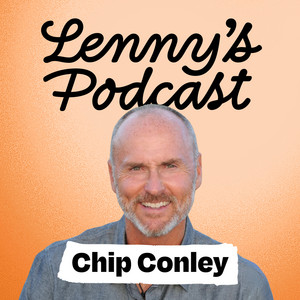
Today, my guest is Chip Connolly. Chip is one of the most extraordinary and interesting people that you'll ever meet.
He was a founding member of the board of Burning Man.
He was on the board of the Esalen Institute in Big Sur.
At 26, he started a hotel chain called Joie de Vivre, which went on to become the second largest boutique hotel chain in the U.S.
After selling it, Brian Chesky personally recruited Chip to join Airbnb to help Brian and the company transform from a fast-growing startup to the world's most valuable hospitality brand.
After leaving Airbnb, where he was known as the Modern Elder, Chip started the Modern Elder Academy, now known as MEA, the world's first midlife wisdom school, with large, sprawling, beautiful campuses in Baja and Santa Fe.
He's also written seven books, given a TED Talk, and is just a genuinely interesting and amazing human and friend.
In our conversation, we explore how to be successful in tech as you age, what he's learned working with and for Brian Chesky, including a lot of real talk, how to build a great culture at your company, his near-death experience and how it changed the trajectory of his life, and so much more.
If you enjoy this podcast, don't forget to subscribe and follow it in your favorite podcasting app or YouTube.
Also, if you become an annual subscriber of my newsletter, you get a year free of a bunch of incredible products, including Replit, Lovable, Bolt, N8n, Linear, Superhuman, Descript, Whisperflow, Gamma, Perplexity, Warp, Granola, Magic Patterns, Raycast, JetPRD, Mobbin, and more.
Check it out at lenny'snewsletter.com and click bundle.
With that, I bring you Chip Connolly. This episode is brought to you by Great Question, the all-in-one UX research platform loved by teams at Brex, Canva, Intuit, and more.
One of the most common things I hear from PMs and founders that I talk to is, I know I should be speaking to customers more, but I just don't have the time or the tools.
That's exactly the gap GreatQuestion fills.
GreatQuestion makes it easy for anyone on your team, not just researchers, to recruit participants, run interviews, send surveys, test prototypes, and then share it all with powerful video clips.
It's everything you need to put your customers at the center of your product decisions.
With a prompt as simple as, why did users choose us over competitors?
Great Question not only reveals what your customers have already shared, but it also makes it incredibly easy to ask them in the moment for fresh insights from the right segment.
Picture this. Your roadmap's clear, your team's aligned, you're shipping with confidence, and you're building exactly what your customers need.
Head to greatquestion.com to get started.
This episode is brought to you by Vanta.
When it comes to ensuring your company has top-notch security practices, things get complicated fast.
Now you can assess risk, secure the trust of your customers, and automate compliance for SOC 2, ISO 27001, HIPAA, and more with a single platform, Vanta.
Vanta's market-leading trust management platform helps you continuously monitor compliance alongside reporting and tracking risk.
Plus, you can save hours by completing security questionnaires with Vanta AI.
Join thousands of global companies that use Vanta to automate evidence collection, unify risk management, and streamline security reviews.
Get $1,000 off Vanta when you go to vanta.com slash lenny.
That's V-A-N-T-A dot com slash lenny. Chip, thank you so much for being here and welcome to the podcast.
Oh my God, Lenny, I sort of feel like I'm your father, who's so proud of his son.
My son has done so well, and I like to talk about, tell my friends about you.
Wow. I am honored. I'm happy that I'm making you proud, Shiv.
And I feel the same in reverse. We got to work together for many years at Airbnb.
I got to learn a ton from you. I'm really excited that more people are going to get to learn from you from this conversation.
I'm thinking that the way that we break up this conversation is kind of break it up into three parts, which are kind of the three arcs of your career.
And the three parts are your early career building Jirada Vee. your time at Airbnb, where we got to work together, and then talking through what you're working on now, the Modern Elder Academy.
I actually want to start with the middle chapter.
I want to talk about Airbnb, where we got to work together.
Let's paint a picture of just what it was like for you to join Airbnb in your 50s, surrounded by a bunch of 20-something, 30-somethings, reporting to Brian Chesky, who is, I don't know, in his 30s.
What was that like? So, yeah, I wasn't planning on doing this.
I got a call from a woman named Natalie Tucci, who worked at Airbnb and said, Brian Chesky and I've been talking about having you come in and give a talk.
Are you open to that? And I was like, well, what is Airbnb?
This was 13 years ago. I think it was the end of 2012.
And then Brian called me and said, listen, we really want you to come in.
And so I came in and gave a talk about innovation and hospitality.
And I think I didn't realize it was sort of a dress rehearsal for Brian to sort of see whether the younger crowd there...
I was 52, the average age was 26, would feel good about an old geezer like me with a bricks and mortar boutique hotel background talking about the industry that Airbnb was disrupting.
And as it turns out, people liked me. And so Brian said, I want you to come in and work 15 hours a week as a consultant.
I want you to be my in-house mentor for both me and Joe and Nate.
And I said, okay, you know, 15 hours a week is great.
And then within three weeks, it was 15 hours a day.
Yeah. And I was saying to Brian, you're actually not paying me anything.
He gave me a little bit of stock that would vest in six months.
And I said, I don't know that this deal is working for me.
It seems like the company needs me a little more than... you said and and he said yeah i gotcha i just wanted you to get in here and see like what you could do and long story short is i ended up going full-time and um it was hard at first lenny because i didn't understand the tech lingo i I didn't have any background.
I was 52. I'd never worked in a tech company before.
I was mentoring Brian on leadership, but he was also my boss.
I was the head of global hospitality and strategy.
Initially, I was in charge of all the hosts in the world.
Over time, that meant a lot more things too.
I was involved in many parts of the business, definitely not the technical parts.
But I think the hardest thing for me was just that initially when people were talking about product and Jobot said, you know, I'm the chief product officer.
And I'm like, well, isn't the product the homes and the apartments?
And Jobot said, no, product in the tech industry is something different.
And so I had to be both wise and curious and often the dumbest person in the room.
And that required me to have a certain amount of humility, as well as to be reporting to a guy 21 years younger than me, Brian.
That actually, the point you're making there about what is the product, I asked Laura Hughes, formerly Laura Modi, what to talk to you about, who we got to work together.
She's the CEO of Bobby now. You work closely with her at Airbnb.
And she said this is the thing that stuck with her most about working with you is coming in and everyone's talking about, we got to make the product better.
We got to optimize this button and improve conversion and everything. product, product, product.
And you're just like, what is the product?
I thought the product of Airbnb was the hosts and the experiences and the trips.
And I think that shows the value of someone like you coming in with different experience and also older and helping us communicate differently to hosts who also don't understand.
Well, there's an interesting thing also, Lenny, and you know, the difference in age between our hosts and our guests was probably about 10 years, maybe.
And over time, it actually got higher because we started actually reaching out more aggressively to, you know, boomers and Gen Xers to be hosts.
And So you had, I remember at one point, and again, let's get into a product talk here.
I remember at one point there was a conversation that was going on about taking Airbnb so it was mobile only.
I mean, partly because back in the day, the two sharing economy darlings were Uber and Airbnb.
And of course, Uber was pretty much a mobile only app.
And Airbnb started as non-mobile and then went mobile.
And then it was like, oh, wouldn't it be interesting if everything was mobile?
And at some point I just said, listen, let's get some older people who are hosts in here to see how well they will be versed in managing their listing purely on mobile.
And so there were times where I was a voice for older users, in this case hosts, and that was helpful to, you know, guys and women in their 20s who are the engineers and designers and product managers.
And I always liked working with you. I want to just compliment Lenny for a minute.
How sweet is that? Because... And we did a lot, you know, we did a lot of different things together.
And what I appreciated was you... You had a humility to you that was different than a lot of the other product managers.
There's other product managers. I'm not going to mention their names.
And some of these product managers were very good.
There were other product managers, though, who I found it sometimes hard to work with because... they expected me to know as much as they did.
And I guess if the opposite side of that would be an older manager expecting a younger manager to have as much emotional intelligence, because emotional intelligence on average is something we get better at as we get older.
So I think the key for me to work in that environment and make it work was to not pretend to know things I didn't know.
It was to have a sense of humor and humility in how I operated.
And it was to show respect and hope that I got it in return.
And I don't know if you felt that way, Lenny.
You know, that's the kind of environment I tried to create. embody there.
Absolutely. There's a couple of threads there I want to follow.
One is just working for Brian. A lot of people talk about founder mode and the power of founder mode.
It's so great. And guess who populated that recently?
That was Brian. Exactly. So it's great to be in founder mode.
It's not as great to be working for someone in founder mode, often a very challenging place to be.
You reported to Brian. Also, you were just your own boss, basically your entire career.
You never really had to report to someone before.
Also, he was in his 30s, you're in your 50s.
What was it like working for Brian? You know, like the more real you can be, the better, because a lot of people always talk about here is like, oh, it was wonderful.
I learned so much. Just like, what was that experience like?
What did you learn from working for someone like Brian?
Well, let's start with the fact that I would never have gone to work for Airbnb before. if I didn't believe in Brian.
Because quite frankly, when Brian approached me and we started talking about it, I was like, I wasn't sure I liked the business model all that well as a hotelier.
So I had to believe in something beyond the business model because I wasn't sure that the business model would work.
Although soon after joining, I saw the numbers.
I was like, wow, this is working pretty well.
But I believed in Brian because the thing that Brian showed up with initially was just a curiosity and an appetite for learning.
I remember back in 2011 when the big debacle happened with the apartment getting trashed by a guest.
And so Brian decided he was going to go to find George Tenet, the former head of the CIA.
And so like... Brian would go to experts and say to the expert, I don't know what the hell I'm doing.
And he did that with me when it came to hospitality.
So I appreciated that a guy who had a lot of hubris, and Brian definitely has a lot of hubris, could also have the humility to say, I want to learn more about this.
So it's sort of a growth mindset. What was hard with Brian is, I'd say, three things.
Number one is Brian assumed everybody else was going to work at the same pace and duration.
And he still has this issue. The beautiful thing about Brian is he's been very honest in the last couple years on podcasts about his workaholism and about the fact that the way he lives his life is not like other people.
But back when I joined, his point of view was like, hey, we're having a meeting in the office tonight at 10 o'clock.
Be there. I was like, really? No, I don't think so.
So I think the fact that Brian assumed everybody else What was as one dimensional in their focus as him was at times a problem, especially for a guy like me, who was, I was at a stage in my career where like, I have a lot of interests.
Um, so that was one number two is Brian. admires and admired in back then steve jobs so much that there was a sense that as a guy who came from the product world uh from the rhode island school of design he knew better than anybody else and so there was this you know one of the challenges for a ceo sometimes and i had this was my experience in my 24 years of running joie de vivre my boutique hotel company is it feels good when you feel needed.
And to come into a room and sort of see something and then point out the things that are wrong makes you feel good.
And if you don't have emotional intelligence, that process can really piss people off or demotivate people.
And in Brian's case, I didn't have to deal with that too much because he didn't understand it.
When I was starting, it was really, I was in charge of the hosts around the world.
And so quite frankly, the idea of what's the psychology of the host, what's a host entrepreneur like, I went on a world tour to 20 different cities and went and talked to hosts.
And I think I came back from that with a little bit of credibility with Brian to say like, Hey, you know, yes, our data science team and the quality is, Folks who are doing qualitative interviews, they're getting something out of this.
But I actually went into the homes of these hosts all around the world.
And I think I was lucky because Brian did less of that than he did with other people.
But for the product team, my God, I mean, a product meeting with Brian would keep people up the night before, not just because they were actually working all night long to get prepared, but also they knew they would work all night long because they probably wouldn't sleep in anticipation for this.
So that was another issue, I'd say. In each of these cases, I think Brian's getting better.
So just like Steve Jobs got better over time when he left and then he came back, he was much better when he came back from all the people I've talked with who worked with him.
I'd say the third thing for Brian was the sense... that adding a zero to something in terms of expectations or thinking you're going to set a deadline that is unreasonable is necessary because if you don't do that, there's an almost an underlying message that people won't kick ass on their own.
So there was a sense that Brian had that he had to maybe create ridiculous goals because even if we hit half of that goal, it was very encouraging.
What he missed in that was the fact that when you miss a goal, And when you have someone who has power over you setting the goal or encouraging a particular goal, you're setting people up for a lot of stress.
And so at the end of the day, I think Brian is a generational leader as a millennial.
And I think he deserves a lot of credit.
And Airbnb is as successful as it is partly because of Brian's leadership.
And I would not have been there without him.
Having said that, I had to hold my tongue in meetings sometimes when I saw how he was operating.
Because I wouldn't have done it that way.
And I think over time, I hope I had a little bit of influence on him in terms of how to apply some emotional intelligence to leading people.
For people in this position, a lot of people work for founders, especially now that founder mode is a thing.
Every founder is just like, I'm the founder.
You got to do what I tell you. It's founder mode.
This is how we win. We're in founder mode.
You shared really good insight of building credibility as a really good lever to work better with someone like that.
Is there anything else you just think as tactics to be effective with founders in founder mode?
So knowing what I know now, I would say, Lenny, let's do a little pep talk, you and me before the meeting.
I want you to start the meeting with the following as you present and Brian's in the room.
So Brian, let's talk about what we're trying to accomplish here.
Let's get really clear. And you probably did this, but let's get really clear on what both what's the intention of this iteration we're doing on the product, like what defines success and what do I want to get accomplished in this meeting?
And you start with that because that actually helps to make sure there's alignment.
And frankly, if there's not alignment, you might as well not have the meeting.
Let's spend the rest of this meeting talking about alignment.
That's what I would do because that's something you can come back to over and over again during the rest of the meeting when Brian or the founder, whomever it is, is beating you up on something and saying like, well, let me tell you why it looks like that or why we're doing that.
It goes back to that, you know, the three principles or the three key goals we're trying to do with this product update.
And, um, Yeah. So try to set alignment on the front end.
That's an important tip for anyone working with anyone even.
So I love just that that works especially well here.
And then just going back to the credibility piece, what you shared there is you went on this world tour, not something everyone can do, but just like getting really close to your customers and using that as a, hey, I actually know what I'm talking about.
You actually should listen to me, even though you're the founder.
Yeah, and I think the other thing is PowerPoint or whatever tool you're using, I mean, like, just be careful about being overly reliant upon it.
It just, it's... especially when you have a combustible founder who may take you off path such that your deck in its current order makes no sense at all.
So I always wanted to really limit the deck as much as possible because I didn't know where the meeting was gonna go.
And I wanted the decks helpful at the start, at the very start to just sort of set principles, set goals.
But yeah. So this whole story of you joining Airbnb in your 50s is a really good example of intergenerational collaboration, something that you're big on, just the value of having folks that are older working at tech companies.
Maybe just talk about that broadly and then we segue into other elements of your career.
I wrote a book called Wisdom at Work, The Making of a Modern Elder after my Airbnb experience.
And I did a lot of research. I was like, wow, so why do we have less intergenerational collaboration in the workplace, especially in Silicon Valley, than we could use?
And I started interviewing people. Then I started talking to brain scientists, neuroscientists, and realized that a younger brain has fluid intelligence, tends to be fast and focused, really good at problem solving, very good at linearity in terms of looking at things.
As you get older, the brain shrinks a little bit. you have crystallized intelligence.
And in crystallized intelligence, what's going on is you're going from left brain to right brain more adeptly.
There's a little bit less focus, a little more holistic thinking, systemic thinking, connecting the dots.
So you can imagine that on a team, when you have older brains connecting the dots, thinking broadly, peripherally, younger team members being really fast and focused and being able to think linearly, how do you get things done? that combination can either be successful or not.
When it's successful, it's brilliant. And I think Laura, you know, Laura Modi, Laura Hughes Modi, who was my director of hospitality, but also we worked in so many different capacities with her in the company.
I loved working with her because her brain worked different than my brain.
And that's the opportunity, is when you realize that diversity on a team, there's lots of kinds of diversity, but when it comes to brain diversity, not just with neurodiverse people, but age diverse people, you get a benefit, an effective benefit that is not as noticeable, quite frankly, in some other diversities.
Uh, so I found that over and over was really helpful.
Part of my job sometimes was to find the blind spot.
You know, again, if you are very focused, you know, one of the things I said to Brian early on, um, was, you know, I, I've seen the business plan now.
I know the goals of how big we want to be in three years.
This was very early in my tenure. I said, but what we really have done, everything we're trying to do is to like have no regulations and pay no occupancy tax.
Now hotels pay a bed tax occupancy tax. We're not paying it and we're trying to do everything we can not to pay it.
Knowing that, you know, so for our listeners and viewers to know this, this is something that a guest pays.
It's not the host who pays it. The guest pays it.
It's part of the bill. If you go and stay in a hotel, there's a big, big tax part of the bill.
But it made us more affordable by not having to have our guests pay taxes.
Long story short is I said to Brian, if we're as big as we're going to be three years from now, I promise you we're going to be regulated.
I promise you we're going to be paying occupancy taxes.
So let's take some proactive steps toward building a strategy for how we're going to be regulated.
And that has consistently been Airbnb's biggest challenge is regulation in municipal markets all around the world.
If we'd started a little earlier, maybe in New York, maybe in New York, it wouldn't have gotten to the point where it has been toxic in New York for the last dozen years, ever since I was there.
And there's a few other markets in the world where it was like that.
So I would just say, you know, the value in... in having some age diversity, even when you have an older person reporting to a younger person, is it can be collaborative.
There was a guy named John Q. Smith, an engineer.
I think you probably remember him at Airbnb.
So this is a guy who looked younger than he was.
And he was a little bit nervous about telling people his age.
But the thing that was great about John is over time, he was not necessarily going to be the best coder at Airbnb.
There was a whole new collection of coders coming in every month.
But he became a great manager. And the beautiful thing about moving from the individual contributor to the manager, the person who can actually bring out the best in a bunch of younger people who may be better technically than he or she is, but they know how to elevate talent.
I call this invisible productivity. It's productivity in which you make everybody else around you better.
And that's something I tried to do with my teams at Airbnb.
And ultimately I had six different teams, five hospitality and five other teams reporting to me.
And I did my best to just be the kind of person who wasn't solving all the problems, but I was trying to elevate.
There's a woman named Lisa DeBost who is at Airbnb and She one day, the HR department was reporting to me at one point and she was running HR.
She was 25 and had no background in HR at all.
And one day she came into me and she just said, Chip, you are my confidant.
And Lisa has a French accent and, you know, fluent in French.
And so she said confidant in just the right way.
And I said, oh, well, thank you, Lisa. But I said to her, you haven't given me any juicy details yet.
Like a confidant is someone who has the secrets.
Right. And she said to me, no, in my part of friends, a confidant is somebody who gives you confidence.
And it was like, oh, well, maybe that's what a mentor can be, is a confidant, someone who gives you confidence and helps by asking questions, helps you as the younger mentee find your roadmap to success.
So you're sharing a lot of really good examples of the value of older folks being within tech companies.
So let me just ask you this. How real is ageism in tech?
And I ask because a lot of people that are hiring are probably thinking, no, no, I'm not biased.
I'm going to hire the best person. If there's someone in their 50s, I'll hire them.
No problem. It doesn't feel like it actually works out that way often.
Just how real of a problem is this? What do you see?
Yeah, you know, it's clearly a problem. I'd say it's maybe a little bit less of a problem than it was a dozen years ago.
Because I think a dozen years ago, it was almost a blind spot.
In Airbnb, we had a group called Wisdom at Airbnb.
It was an employee resource group for people 40 and older.
And so there are lots of these kinds of groups that didn't exist a dozen years ago in all kinds of tech companies. which is good because it means that there's a voice and a way to congregate with a bunch of people who are older.
Ultimately, we had these senior nomads come in and be like the voice of the customer for 10 weeks at Airbnb.
And it was the wisdom at Airbnb older employee group that really actually pushed for this with Brian.
But the challenge is, in a world in which the smartest new people, especially when it comes to technical skills and engineering, are coming in with a whole new set of skills that an older person doesn't have, the older person is both expensive and maybe perceived as slow.
In the era of AI, it's a whole new ballgame.
And the question I think will be, if... What AI cannot do is the human wisdom piece.
Artificial intelligence and human wisdom might be the balance beams here.
Is it possible that older managers who have a little more emotional intelligence, a little bit more pattern recognition, a little bit more wisdom can be a value to a company?
And so it's still... The jury's still out.
There was a New York Times article that just came out about the question of, is AI going to wipe out older people's jobs or younger people's jobs?
And I think the answer is both. But the question is, how bad is it for both of them?
And... I think what I would say to an older person, and when I say older, I mean 45 or older, if you've done well financially and you're doing okay, the question you might ask yourself is, are you open, as I ultimately was with Brian in my fourth year at Airbnb, I took a substantial pay cut.
I think it went down to 40% or 50% time.
And my stock, my options were dropped to that level.
My salary was dropped to that level because I didn't want to work full time anymore.
And there are a lot of people who can be valuable in a company who have some institutional wisdom, some process knowledge of how to get things done in this organization.
And in tech companies, that's really important.
Airbnb, one of the biggest challenges that Airbnb has always been, how do I get shit done around here?
And Process knowledge allows you to understand how do you deal with an org chart and get things done partly because you understand the motivations of different groups.
And that is something you build over time.
So long story short is, I just think that older people might look at their workload and say, I'm willing to take a 20% or a 40% pay cut to go to 80% or 60% time.
And the company is going to get their money's worth in that.
That's a really interesting point that if you're older and you're maybe less connected to the most cutting edge ways of building and coding, AI makes that a lot easier in many ways where you start to just talk to it.
You don't even need to understand what's happening underneath.
Yeah. So there's a lot of listeners who are older in tech.
There's a lot of listeners who are approaching midlife, let's say, worried about what happens to their career.
When you look at people you've worked with and had at your academy, which we'll talk about, who continue to thrive and continue to have a really healthy career in tech, what do they do differently?
What do they have in common that other folks you think should work on and focus on?
I think this idea of being a mentor and a mentor and an intern, there's just the voracious appetite for curiosity.
When I talk to someone who's in midlife and wants to be in the tech world or already is, the thing I say is show up with curiosity and a passionate engagement for what you do.
And people won't necessarily notice your wrinkles as much as they'll notice your energy.
And energy has two parts to it. They notice that you are not just sort of resting on your laurels.
You have physical energy in how you do your job.
And when people are like that, they are sort of timeless.
They're age fluid, as I say. We talk about gender fluidity.
Well, this could be age fluidity. They're not defined by their age.
But the other part of energy that's important is being positive.
You know, that's sort of more energetic, like a little bit more California energetic.
There's a sense of like when someone's got good energy, you're drawn to them.
So it's about showing up with the kind of energy of someone 10 or 20 years younger than you and then showing up with positive energy.
And I think one of the things that I would say I did well at – I mean, there's lots of things I didn't do well at Airbnb –
But in terms of what I did well is I was very approachable.
And over the course of time, the number of mentees I had, the number of people who just wanted to have coffee with me or tea, the number of people who just said, thank you for being in that meeting.
You just sort of gave it a positive feeling was really important.
And, and, um, So my energy, both the positive energy part and then also the fact that, yeah, I could work 60 and 70 hours a week and I could travel around the world as the secretary of state of the company, which is what Brian called me a couple of times on stage.
The fact that I could do that meant that no one was looking at me and saying, let's get rid of the old fogey.
Well, maybe some people were, but I wasn't aware of them.
So I just think show up with that passionate engagement, that curiosity, that energy, the ability to be both the learner and the teacher with respect for people younger than you, and you're going to probably do pretty well.
That is really great advice. We'll see you next time.
In fact, you don't have to waste time searching for anything because everything your team needs from project trackers and OKRs to documents and spreadsheets lives in one tab, all in Coda.
With Coda's collaborative all-in-one workspace, you get the flexibility of docs, the structure of spreadsheets, the power of applications, and the intelligence of AI, all in one easy-to-organize tab.
Like I mentioned earlier, I use Coda every single day and more than 50,000 teams trust Coda to keep them more aligned and focused.
If you're a startup team looking to increase alignment and agility, Coda can help you move from planning to execution in record time.
To try it for yourself, go to Coda.io slash Lenny today and get six months free of the team plan for startups.
That's C-O-D-A.io slash Lenny to get started for free and get six months of the team plan.
Coda.io slash Lenny. Interestingly, curiosity comes up a lot when I ask AI forward people, what are they focusing on helping their kids learn most?
Curiosity is the most common way to describe.
So at every stage of life, curiosity is something to cultivate.
I want to go to the flip side of companies looking to hire.
Feels like there's this... untapped supply of awesome people that companies with ageism in tech aren't finding and hiring.
So to help hiring managers and companies take advantage of this, what's something you suggest they do?
How do they shift their mindset or maybe shift the way they hire that might help them find these people?
I think we're moving into, there's a book that David Epstein wrote called Range.
And the whole premise of Range is that we're moving out of the era of the specialists and into the era of the generalists.
And I think AI is just accelerating this.
As we are more reliant upon AI, and AI can be exceptional at technical skills and solutions really expeditiously, I think generalists, people who can think broadly, become all the more important.
And I think that what I would say to someone in HR or recruiting is beyond what I already said before is, is the person passionate?
Are they curious? Are they a learner? Do they have good energy?
But I would also say... Are they a generalist when they're a problem solver?
Because I actually think that's gonna be an increasingly important part of how effective companies think broadly.
So I think that's a key one. I think also this idea of how do you create intergenerational collaboration in the form of mutual mentorships.
One of the things I loved at Airbnb, there were a few people I did this with where I had something to teach them and they had something to teach me.
So a good example, my iPhone. So there's 97% of the utility of my iPhone that I probably don't use and don't know how to use.
This was back in, let's say, 2013, 2014.
And So there were people who knew iPhone or Google Suites back then.
I'd never used a Google Doc back then when I joined Airbnb.
So there were people who could teach me something technical.
And then they wanted to learn something from me, which would be like, how do you run a great meeting?
Or how do you give a great employee review?
There are a lot of managers who've never been a manager before.
And so how do you disperse people like me in the organization so that there's usually not enough time for these young managers to come to some training session on how to do a good employee review.
So you sort of have to do it out there in the field.
It's like apprenticeship. Yeah. You know, back in the trades, you're an electrician apprentice, not because you're watching some video on it.
You're out there in the field doing it. And that's a huge value in a younger company when you have some older people who have not been vested with the responsibility of managing those younger people because they may actually be reporting to someone younger than them, but they're there to actually be support.
And in some ways, I think that was part of the...
I'd expected value that I was able to offer to Airbnb and to Brian specifically, because there are a ton of people in Airbnb who were not even in my departments who would come to me and say, I'm having a problem.
How do I solve this? Can we spend lunch together?
And, you know, I almost always said yes.
I think the reason people did that in many ways is you just have a very unique aura of wisdom and it's hard to replicate that, Chip.
I mean, yes, and it all comes back to curiosity.
If I was just the older elder dispensing wisdom people would have gotten bored very quickly.
And I think the fact, yeah, I mean, I was on the board of Burning Man.
Ooh, that's cool. And so I show up as someone who feels younger than I am.
I mean, I'm turning 65 this year. So the bottom line is I think people lost track of my age, partly because I lost track of my age.
That's such good advice. On the front end, to be successful as a person kind of getting older in tech is curiosity, positive energy, the way you talked about it, passionate engagement.
Is that the term? Yep. And then on the other side is hire generalists.
This actually comes up a lot in the AI conversations, just exactly as you said, the power of generalists reminds me, I'm going to this gym now and the lady there is just like, I love AI so much because I'm just such a big picture person and I'm so bad at just getting, thinking about the details and AI solves all that for me.
It's like, here, here's what I want to do.
I'll do this, move my house to here, here.
And it's like, here's what you need to do.
Step one, two, three, four, five. It is remarkable.
I mean, you know, since the time I've known you, how fast it has become dominant in our lives.
But yeah, I think one of the last thing I'd say is I'm privileged.
So for those of you who are listening or watching this and you're saying, well, you know, Chip, you were 52 years old and they came to you.
Like, that doesn't happen to me. I'm not in that position.
The thing I would say is you're right. So I...
But I could have been plucked and brought in.
And partly as Brian's boy, people would have rejected me because if I didn't show up the right way, it wouldn't have worked well.
And there are lots of people who Brian brought into the company didn't work well so i think i think the key is how do you get the foot in the door and at the end of the day um you know the second and third order of you know degrees of separation um in terms of networking is are still essential but the most important thing is to be able to articulate what you have accomplished in a new way that a recruiter says, wow.
And so I, I really tell people like, I, I would love to see a resume.
First of all, the question that, uh, I think it was, who was, someone asked it.
I don't remember if it's Cheryl Stanberg or someone else asked her, who said like, what's the biggest problem you're dealing with here and how can I help you?
Like, that's a great, that's a great line.
Number two is, uh, What I love to see is not so much what roles you've had, what bullet points do you have of the things you've learned.
Give me, in a paragraph, a thorny problem you faced.
Um, what, what was the problem and how you got, how you, what skills you used to actually accomplish it and what was the result of that?
I would love to see a resume like that. And the older you are, the more you can actually have a resume like that.
And then you can use that as the conversation piece when you're doing interviews.
So I love that we're getting into interview advice and resume advice.
Yes. Speaking of thorny problems and also why Brian decided to reach out to you, I want to go back to the beginning of your career.
Yes. So you're good at this, by the way.
You're good at this. I was thinking ahead.
Okay, so you're in business school. You left business school.
You're like, maybe I should start a hotel.
Something that rarely works out. Usually probably leads to a lot of money lost and a lot of frustration and just like, okay, what have I done with my life?
Worked out for you. Ended up building the second largest boutique hotel chain in the world, Girodivi.
Beloved. I loved every single experience I've had at Girodivi.
When you sold it, I was like, that is so sad.
Talk about just that story. I know this could go on for hours, but what's the... Yeah, I'll be brief.
Yeah. 26 years old, a couple of years out of Stanford Business School, working for a commercial real estate developer.
I was bored, silly. I wanted to do something more creative.
Bill Graham, famous concert promoter, said to me, you know, because I had gotten to know him, what San Francisco really needs is a rock and roll hotel.
So I decided to start looking to find a broken down motel hotel that I could turn into a rock and roll hotel.
And I found something in the Tenderloin. uh and uh and turn it into the phoenix which became a famous rock and roll hotel that i have owned for 39 years now um so long story short is that was how i started joie de vivre in the company and we grew to 52 hotels around california became the second largest as you said in the in the world uh in terms of the number of hotels boutique hotels that we operated And I loved it until I hated it.
In my late 40s, I hated it. I didn't want to do it anymore.
The Great Recession came along, and it was just kicking my ass.
And I really went through a bit of what I now call a midlife crisis, where I just wanted to change everything.
And I got through it. I had an NDE. I had a near-death experience where I had an allergic reaction to an antibiotic, and I died.
And from that point forward, I realized every day is a gift and a bonus.
And, you know, I decided to sell my company at the bottom of the Great Recession.
So that's really how I created this space in my life to be able to join Airbnb.
Well, let's back up a little bit. This near-death experience.
Share more there. What happened there? Yeah, so I write books.
I've written seven or eight books. And I had written a book called Peak, how great companies get their mojo from Maslow.
And it was a book that Brian really liked.
And part of the reason he wanted to reach out to me.
I was on a book tour. I had a broken ankle.
I broke my ankle at a bachelor party playing baseball.
And I... Ended up with a cut on my leg and the cut on my leg had fertilizer in it and went septic.
And so I was on a very strong antibiotic and I died.
I went flatline from the allergic reaction to the antibiotic.
And so I saw, you know, it happened nine times over 90 minutes.
I kept dying, kept flatlining. And yeah, ended up in the hospital for a couple, three days.
And they finally said, listen, it's an allergic reaction.
We believe they, they thought it was, I thought they thought it was a heart attack, not a bunch of stuff, stroke, et cetera.
Nope. It was the allergic reaction. So, but you know, I saw birds.
I mean, I saw all this beautiful stuff. I, we don't have time to go into it.
I did. You want to hear this? Yeah, I know.
I saw this beautiful stuff. The, the best, I think, There's a hotel in San Francisco called the Vitali that I built across the street from the Ferry Building.
And it's still there, but it's no longer called the Vitali.
In that hotel, there were these slippers in every guest room.
One slipper said slow, the other slipper said down.
And so I was wearing these slippers in my flatline thing flying in the air in a 40-foot tall living room in the Alps, surrounded by birds that were tweeting and chirping at me.
And I understood bird talk. I understood exactly what they were saying.
And they kept telling me, if you slow down, you will see beauty and you will see awe.
And there was a bunch of other things, but let me just limit it to that and just say, and then the birds would say, it's time to go.
And the birds would go out the big window into the mountains.
And I would try to follow them. And right as I would get to the window, all of a sudden I'd come back to life.
Holy shit. I love that there was a message inside of this experience.
I don't know how many people experienced that.
Clearly, this led to a big life change. And it's interesting that a lot of times you need something like that.
You've been doing this for how many years at that point, running Gerard V?
At that point, I've been running Gerard V for 22 years.
22 years. And it's interesting that you need something like that a lot of times.
Otherwise, it's just momentum just keeps carrying you forward.
Yeah, within two years I'd sold it and I had the chance to move on.
So with building Joie de Vie, something you've written about a number of times is just the way you built it is a really unique approach to building a business.
Specifically, there's a huge focus on culture, which also came out at Airbnb.
Talk about just why you see culture as such an important part of how you build a business, like tangibly, because a lot of people talk about culture, warm, fuzzy stuff, but you think about it very tangibly.
Culture is what happens around here when the boss is not around.
And the more distributed a company, the more culture is important because the boss is around in a traditional bricks and mortar workplace where everybody shows up at eight and leaves at six and we all see each other.
But in my company in Jorat Aviv, we had 52 hotels and 25 restaurants and four spas and it was distributed.
So I couldn't be in all those places all the time.
And similarly with Airbnb. I mean, Airbnb had offices around the world and it was a global company.
So the more distributed you are, of course, in the remote work world we live in, the more culture is important and more difficult because when you're remote, you know, there's these few cues you have about how we do things around here.
And they're usually in a digital virtual format. which is why it's all the more important for you to have in-person gatherings of a team more often if you are virtual.
So at the end of the day, the reason the culture is important is because it actually helps guide people in terms of making decisions.
But it's also a magnet for the right kind of people.
So Oracle has a different culture than Apple, which has a different culture than Facebook.
And so you can choose the place you're going to work based upon the culture.
And there are people who can be very good at what they do.
But if they're in the wrong culture, they're in the wrong kind of environment, and they're not willing to shift to fit that culture.
And we saw it at Airbnb over and over again.
In fact, Airbnb saw it, I think, with Amazon people.
Apple people have resonated pretty well at Airbnb.
Amazon people less so. And those are two different cultures, Amazon and Apple.
And therefore, understanding a culture before you even actually take the job is one of the more important decisions you need to make.
It's like, is this culture a culture that I can live with?
And maybe influence. There's language about culture fit.
I like to say culture add. Because culture fit to me means, can actually be quite negative toward somebody who is The aberration.
You have to fit in. And especially if this is like a demographic thing, a person of color, a gay person, a person in a wheelchair.
So you have to fit in. But a culture add suggests that actually having some diversity on the team is helpful because it actually adds to the culture.
But you still have to be able to get along in that culture.
So culture is an intangible. That's the problem with it is it's hard to measure.
But you see its value and you understand whether it's working based upon employee pulse reports and things like that.
You talk about having to understand the culture is such a key part of having success at a company.
Do you have any advice for just how to understand the culture for someone interviewing?
I don't know. Like, you know, you came in, you work part time.
It's easier to experience it all. Any tips there for like, OK, this is for me.
It's not for me. When you're interviewing, you're also interviewing them.
When you're interviewing, it's not about you having to prove yourself.
It's also for them to actually prove themselves as a company and also try to understand if there is some alignment in the company.
And so the kind of questions I would ask as someone who's being interviewed would be, what are three to five adjectives that define this culture? what's the biggest problem in this culture in terms of something that's just endemic or so like baked in across the organization and is it ever going to get fixed and how could i come in and maybe help that uh which frankly at a very junior level you're not going to be able to help it uh except for in very minor ways if you're a senior person you might be able to help it um So those are the kind of questions I'd want to know.
And frankly, if I'm asking that same question about what are the adjectives to multiple people, am I hearing the same thing over and over again?
And if I'm not, is that because there's not alignment?
Is that because different departments have different flavors?
Because you could have a culture within a department that's very different than the overall corporate culture.
The corporate culture certainly has an enormous oppressive influence.
But you can be in a culture, a really great culture of a team or a department in an overall company culture that's not good.
In the long run, that oppressive company culture is either going to have to evolve or your department, you may lose people.
When I reflect back on the impact you had at Airbnb, one of the funny things I think about is triangles showing up a lot on decks.
And specifically rooted in Maslow's hierarchy, just like everything's this Maslow hierarchy metaphor.
Yeah. True. And this one, I don't know, specific piece of this is you have this kind of model you think about for how to help employees be successful at a company.
It's kind of rooted in your peak book philosophy.
Maybe just talk about that. And then if there's anything else you want to expand on with this power of thinking through the Maslow hierarchy.
So Maslow's hierarchy, basically five levels.
Later in life, he had a seven and an eight level model.
But at the base is the kind of physical water, food, air.
And you move up to self-actualization at the top.
So to use this model as a hierarchy of needs for employees, customers, and investors is what the peak model is about, the peak, my book.
The employee model is really simple. It's money or compensation at the base. recognition in the middle and meaning at the top.
Now there are some industries and some kinds of jobs in which money is 90% of the pyramid.
So just because it's at the base doesn't mean it's not the dominant part of the pyramid.
But the differentiation often is in recognition and meaning.
In nonprofits, usually the money piece of it's rather thin and the recognition is this and meaning is huge.
So understanding how do you create an organization?
And I gave a TED Talk in 2010 about this topic as well.
How do you measure the intangibles of meaning and how do you create an environment where people feel a sense of meaning?
So the customer pyramid, briefly, I'll just say that one, is meeting expectations at the base, meeting desires is in the middle, and then meeting unrecognized needs.
And I think one of the things that we did at Airbnb about a year after I joined and when Jonathan Mildenhall was joining is we really tried to... ask ourselves, are we in the home sharing business or are we in some kind of business that is even bigger and broader than that?
And ultimately, we came up with the idea that we were in the belong anywhere business.
Airbnb was not in home sharing. We were in belonging anywhere.
So Once you have that down, that was sort of the unrecognized need at the top of the pyramid.
Then that becomes an organizing principle for how do you teach your hosts to create a sense of belonging?
How does our marketing and advertising play up the belonging piece, especially in the everywhere piece?
Because hotels are not everywhere, but homes are.
And so I would just say that this model, the idea of hierarchies is, I think, very helpful.
And yeah, my book Peak has been out for 18 years, but I still have asked to give 20 or 30 speeches a year on it.
Oh, man. This pyramid of comp recognition meaning is really interesting, especially these days, because with all this AI researcher poaching, there's all this talk of just like, will people just go work wherever they get the most money?
Or is there a mission and meaning to the work they're doing that will keep them not taking a $100 million offer?
And it seems to be happening in a lot of cases, which shows you the power of meaning.
Yeah. I mean... If you know you're working for a toxic company, at some point your conscience kicks in, whether it's toxic in terms of the purpose of the company, toxic in terms of the leadership or the culture.
Yeah, life is too short. Okay, so you've had two major shifts in your career.
You started the hotel chain, then you went to Airbnb.
Most recently, the Airbnb experience, I imagine, led you to starting something called the Modern Elder Academy.
Talk about what is the Modern Elder Academy.
Yeah. What is going on with that Modern Elder Academy?
The Modern Elder Academy. So there was a couple of times where I was called the Modern Elder at Airbnb.
And then I was told that a Modern Elder is someone who's as curious as they are wise.
So Jonathan Mildenhall, who was the chief marketing officer at Airbnb, used to call me the modern elder as well.
And he said, if you ever create a school, modern elder would be a good name.
And so we talked about it. And next thing I knew, I was saying, OK, this is called the Modern Elder Academy.
We now call it MEA because elder is a fraught word on some level.
It makes you sound elderly. But what I really wanted to create was a place where people could come and do a workshop, you know, their five day workshops in Baja on the beach or in Santa Fe on a big four square mile horse ranch.
And reimagine and repurpose yourself and navigate transitions.
We go through so many transitions in the middle of our life.
I define midlife as 35 to 75, guys. So it's a very long life stage.
So we go through a lot of transitions. We are constantly evolving our purpose.
We're building our wisdom. We have knowledge management tools out there, but where are the wisdom management tools?
Where are the tools that help us to get wiser over time?
And then we need to reframe our relationship with getting older because Becca Levy has shown at Yale that when you shift your mindset on aging from a negative to a positive, you get seven and a half years of additional life, which is more life than any other biohack that's being done right now.
So that's what we do. And we have 7,000 grads from 60 countries and 56 regional chapters around the world.
So it's a bit of a movement. And I teach.
I teach some of the workshops. And we have all kinds of famous people who come and teach.
For me, creating the World's First Midlife Wisdom School just feels like the natural next thing for me to do.
I love hospitality, so it's a very upscale kind of experience, but we have scholarships.
I love retreat centers. I was on the board of the Esalen Institute in Big Sur for 10 years.
I love wellness. I've owned the Kabuki Springs and Spa for 28 years, which is the largest spa in San Francisco.
And I love education. And my book, Wisdom at Work, The Making of a Modern Elder, gave me a curriculum in which we've expanded quite a bit with Harvard, Yale, Stanford, and UC Berkeley professors helping us create a curriculum around midlife.
And so that's how MEA came about. To your point, I forget who said it.
I think you said Jonathan said this was the natural next step for you.
I completely agree. It's like looking back, this is the obvious thing you should be doing right now.
Yeah. Also, I'm learning more things about you.
I didn't know you were involved with the Kabuki Spa.
I think Esalen and I knew. Just keep getting more interested.
Thank you. There's a couple threads here I want to actually follow.
So this point you made about shifting your mindset to aging is a positive thing helps you live longer.
That's such a powerful point. Can you just speak more to that?
Just what does that look like? Yeah, there's a couple.
There's lots of data points. I'll talk about two.
One is this Becca Levy study, which has been going on for 15 to 20 years.
If you sort of buy into the ageism of American society or Hallmark cards when you get a card at age 40, 50 or beyond, there's a belief that life gets worse as you get older.
And if you can survive your midlife crisis, all you have to look forward to is disease, decrepitude and death.
And the bottom line is there's a lot of things that get better with age.
I wrote a book called Learning to Love Midlife.
The subtitle says it all, 12 Reasons Why Life Gets Better with Age.
And what I really wanted to do with that book, which is really, it summarizes the MEA curriculum, I wanted to write a book that sort of helped people to see the upside of aging, the unexpected pleasures of aging.
So they had a pro-aging, not just an anti-aging point of view.
Because when you actually have a pro-aging point of view and you see the upside of aging, you take better care of yourself. both your mind and your body, you actually are willing to learn and try new things.
One of my favorite MEA questions is, 10 years from now, what will you regret if you don't learn it or do it now?
It's a powerful question. Really important question as we get older.
When you're young, you've got all of your life left ahead of you.
But when I moved to Baja part-time in Mexico at age 56, I had a mindset which was, I'm too old to learn Spanish.
I'm too old to learn to surf. But when I said, 10 years from now, what will I regret if I don't learn it or do it now?
And I said, well, 10 years from now, I might still be living in Baja.
I should learn Spanish. I should learn how to surf because we're right next to a surf break.
And so I did. So what I believe is that anticipated regret is a form of wisdom.
And it's a catalyst for taking action. So that's one data point.
The other data point is something called the U-curve of happiness.
And it's been around for 20 years. And it shows the following.
It has changed in the last couple of years because young adults are unhappy like never before.
So a 20 or a 22-year-old, really unhappy.
24-year-old, really unhappy. But historically, the way it was is you were happy from 18 to 23 or 24.
And then around 23 or 24, you start to see a long, slow decline in life satisfaction that actually bottoms out between 45 and 50.
I'm sorry to tell you that, Lenny, since you're 44.
But your mileage may vary. So you're saying I'm the least happy I'll ever be.
Like, that's only upside. That's great. Well, here's the part that's weird is that Before this research was done, and it's global research across all demographics, what they found was starting around age 50 or 52, you get happier so that you're happier in your 50s than your 40s, 60s, 50s, 70s happier than 60s, and the women in their 80s happier than 70s.
So, wow. And it's partly because we are in around 45 to 50 doing this thing called the midlife unraveling.
What Brene Brown calls the midlife unraveling.
You're unraveling your expectations, what you define as success, your definition of what a beautiful body looks like.
And you're liberated into freedom in your 50s and beyond.
And I can say that, yeah, I'm happier today at 64 than I was at 47 when I was going through my flatline experience and not wanting to run my company anymore.
You used this term earlier, the midlife chrysalis.
Was that what it was? Or chrysalis. Chrysalis.
What is that? Is that kind of along the same lines?
So if you think about the caterpillar to butterfly journey, midlife is the chrysalis.
It's that cocoon in which all of the change is happening.
At the time, when you're going through it, it's like, oh, shit.
My life is liquefying in front of myself.
But on the other side of it, there's a metamorphosis that happens.
And so I like to use the language. In fact, I have a podcast called The Midlife Chrysalis because I want to help change the dialogue around midlife so that the number one word attached to midlife is not crisis.
But in fact, it's maybe chrysalis and the idea that life is meant to be transformative during that era.
That is actually very empowering. I am sort of going through that, not necessarily in this intense way yet, but that might be coming.
You said there's a bunch of upsides to getting older.
It might be helpful just to share a couple of those things for folks that are like, oh, wow, I didn't realize that.
Emotional intelligence grows with age. Our wisdom can grow with age, although we know 70 year olds who are not as wise as 30 year olds.
So it's a matter of what you do with your life experience.
I define wisdom as metabolized experience, mindfully shared for the common good.
What else gets better with age? You learn how to edit.
You have no more Fs left to give, no more fucks left to give.
That is absolutely true, especially for women as they age.
You are more spiritually curious. I mean, the list is long.
And so there are a lot of things that... Actually, another one that I love is you're not compartmentalized. when you're younger, you're compartmentalized.
As you grow older, you are growing whole.
And that means you're alchemizing curiosity and wisdom, introvert, extrovert, masculine, feminine, gravitas, depth, and levity, lightness.
And the people who I really admire who are 85 years old, they're so present and they're so whole.
They are just who they are. There's a quote I found from you along these lines, the societal narrative on aging is just don't do it.
Yeah. I mean, we sort of say, like, we don't want to age, but we do want to live.
And quite frankly, aging and living are the same thing as our aging and growing.
Coming back to MEA, just for folks that are interested, curious about this, who's this for, would you say?
Who should seriously look into this program?
The people who tend to come to MEA are in the midst of a transition.
It could be selling their company, leaving a job, getting divorced.
Having kids, becoming an empty nester, taking care of parents till they're passing away, having a health diagnosis that's scary.
So average age is 54 and it's people of all walks of life.
So it's not just the tech industry, but it's very popular in the tech industry.
It's people who are looking to maybe do a reframe of their purpose and maybe even a reinvention of their career.
And so, yeah, and the two campuses are just gorgeous.
It's been called the Four Seasons meets Blue Zones meets the Esalen Institute, which I like.
And we have online programs too. And so you don't have to come to either of our campuses in Mexico or on the beach or in New Mexico.
You can actually do it online. Those three, yeah, that's the tagline.
That's your tagline right there. Esalen meets Blue Zones meets, what was the first one?
The Four Seasons. The Four Seasons. Yeah.
Nailed it. Okay, I'm going to zoom out and take us to a recurring segment on this podcast.
I want to see if this goes anywhere. AI Corner.
And with AI Corner, ask us just what's a way that you've found AI useful in your work or in your life?
Any kind of trick you've learned, any workflow, anything you found useful?
Yeah, you know, I have a daily blog. It's called Wisdom Well, and it's on the MEA website.
And when I'm looking for inspiration... you know, AI does it for me.
And ultimately it gives me a first draft and that's good enough for me then to say like, okay, because there's times when I'm like missing the inspiration.
I tend to write really well in the morning.
If it's any other time of the day, I do not like writing creatively.
So if I have a deadline for tomorrow and it's five o'clock in the afternoon, it's like, okay, chat GBT, I'm on my way to you.
And I tend to use chat GBT the most because I don't know.
I mean, I like Claude as well, but, Yeah.
Okay, awesome. I was going to ask which tool you use.
And what's your workflow there? Is it you use voice mode?
Do you just kind of type out, here's what I'm thinking about, write me a little drop blog post?
The good news is that at this point, it knows me well enough and my blogs.
And I've actually, you know, it knows my sort of weird sense of humor.
So it's able to ape me pretty well. So I'll just say I need a 250 word post on um like today the you know today's post was a post that chat gbt helped me with it i said i believe that there's a a reframe that needs to happen with the soul we tend to say like i have a soul or i don't have a soul but what if this my soul has me um what if in fact my job is just to be this vehicle for my soul to go to the next lifetime.
And my, so my job is to be the steward of the soul.
And I said, write me something around that.
And so it was just a weird idea. And of course my, not all my blog posts are so new age and, and I like that.
I, I, I read a lot on leadership, but that was one that, you know, within 30 seconds, I had a 250 word, you know, blog posts that I then adapted and there you go.
Amazing. Chip, we've covered a lot of ground.
We've gone through your entire life. Maybe actually just the tip of the iceberg.
With that, we've reached our very exciting lightning round.
I've got five questions for you. Are you ready?
Yes, let's do it. First question, what are two or three books that you find yourself recommending most to other people?
My favorite book of all time, Man's Search for Meaning, Viktor Frankl, in a concentration camp in World War II.
When someone's going through a hard time in their life, I say, read that book.
You'll realize it's not so bad what you're going through.
But it also really speaks to this idea of despair equals suffering minus meaning.
I wrote a book called Emotional Equations that was a New York Times bestseller. that spoke to this idea that what if you could take all of your emotions and turn them into equations, very engineering minded of me.
Um, so that's one, um, I, you know, I love, uh, any book by Liz Gilbert, um, sort of the opposite.
So Elizabeth Gilbert wrote, he pray love her, her book.
She's a, she's on faculty at MEA. She teaches here.
Um, uh, big magic is just a beautiful book about sort of like, how do you get in the flow to.
Allow the genie to come through you. Her TED talk in 2009 was about the fact that genius is not about being the genius yourself.
It's about being the receptacle for the genie to come through you.
I want to come back to this equation you shared.
I was going to get to it, but I didn't. So this is a good opportunity to.
So there's a couple of that are really interesting to me.
This is you wrote about these in a book.
You have a bunch of these equations about living a happier life.
So the one you shared is despair equals suffering minus meaning.
Yes. And so the implication there is if you want less despair, increase the meaning.
That's right. So suffering, the Buddhist philosophy, the first noble truth of Buddhism is that suffering is ever-present.
And so if suffering is a constant and you have two variables, using some algebra, I guess, you know that if you have more meaning, you have less suffering.
And so that's that one. The other one that I love is anxiety equals uncertainty times powerlessness.
Maybe talk about that one briefly. 98% of anxiety comes from two sources.
One is what you don't know. And number two is what you can't control or influence based upon social science.
And so you can create an anxiety balance sheet and create four columns.
First column is what is it you do know about the thing that's making you anxious?
The second column is what is it you don't know?
The third column is what is it you can control or influence?
And the fourth column is what is it you can't control or influence?
And when you take free-floating anxiety and put it into an equation, it actually makes it more tangible and you often are less anxious as a result.
Boom. Okay. So if you're feeling anxious right now, this is an exercise you can do and you'll feel less anxious in like five minutes.
Yes. Okay. Excellent. Very, very good nugget of advice.
Okay. Let's keep going with the lightning round.
Come back from our tangent. Do you have a favorite recent movie or TV show you really enjoyed?
I mean, Ted Lasso is like a sucker for that show.
You know, when it comes to movies, I'm a total movie buff.
We have an annual MEA film festival at our Santa Fe campus.
And I would say that the film that I'm most excited about that is coming out that most people have never heard of is called I'll Push You.
And it's the story of two guys, one of whom is in a degenerative health condition and in a wheelchair.
And his best friend pushes him the 500 miles of the Camino de Santiago.
And it's the relationship they build along that way.
Amazing. Very deep cut. Do you have a favorite product that you recently discovered that you really love?
Yes. Hair growing material. No. You know, Viore shorts.
I, you know, I sound like Scott Galloway because he advertises this.
But Viore shorts are like, I just love them.
You know, they're just breathe and they're comfortable.
Yeah. I'm wearing Viore joggers right now.
The one downside of Viore, not to make anyone mad, is they're not like very, they're kind of plasticky if you look at the material.
So I'm trying to like, I don't know. But I do love, there's nothing better.
That's the problem. I haven't done anything else like this that is all cotton.
Yes. But I'm a fan. I have many Viore, I don't know if they're called joggers, just, I don't know, weekenders or something.
Anyway, love you, Viore. Okay. Do you have a favorite life motto that you often come back to and find really useful in work or in life?
I imagine you have many, but is there one that comes to mind?
I mean, my favorite one right now is your painful life lessons are the raw material for your future wisdom.
And the premise of that is that wisdom often comes through the school of hard knocks.
So when you're in the midst of a really challenging time, you're developing your future wisdom that's going to be valuable to you.
Okay, final question. You were on the board of Burning Man or you still are?
I was. I helped found the board of Burning Man.
Okay, no big deal. So I don't know if you know this.
I got married to Burning Man. We had an unofficial wedding there on bicycles.
So it's really meaningful to us. I've been there four or five times.
What's something about Burning Man that maybe people don't know?
Some insight story or a really unexpected piece of the journey?
I imagine there's a lot, but what comes to mind?
I would say the best... not well-known thing about Burning Man is that Burning Man owns a place called Fly Ranch.
And Fly Ranch is about 10 miles from Burning Man.
Now, when you go to the burn, the event around Labor Day, you cannot go over there.
It's locked off. It's 3,400 acres. But if you look at Fly Ranch, flyranch.org, I think it might even be, or it's on the Burning Man site.
Fly Ranch is like the opposite of Burning Man.
Burning Man is this alkaline desert. There's no living life there at all.
It's very masculine. Fly Ranch is like porous and lots of desert grasses and hot springs and hot pools and And birds and wild horses.
And it's one of my favorite hot springs places in the world.
So just check it out. And you can go there when it's not during the event.
And it's quite beautiful. Feels like you might have inspired MEA in many ways.
It did. Yes. Chip, two final questions. Where can folks find you online and how can listeners be useful to you?
So online, meawisdom.com is the website for MEA.
My website is chipconley.com, C-O-N-L-E-Y.
And I'm on LinkedIn. That's really, from a social media perspective, the thing that I do the most.
I actually take my daily blogs and put them on LinkedIn. so and then what the what the your community can do just yeah come say hi come uh check me out and if wisdom is interesting to you and i think wisdom should be interesting to everybody here um on the mea website at the very bottom footer you will see a bunch of free resources one of them is called why successful leaders value wisdom It is a free resource.
And there's also a free resource down there called the anatomy of a transition.
Those two free resources, understanding how to build your TQ, your transitional intelligence, and understanding how to develop wisdom are two, to my mind, two of the most important modern skills that we can have.
It's funny when you say you're on LinkedIn, that feels, doesn't resonate with me.
You can chip calmly on LinkedIn, just posting on LinkedIn.
So think about that. No. Why? Because I'm a little too Burning Man?
You're just, yeah, exactly. It feels like that's not your vibe.
But I love that you do it because that's where the people are.
Oh, I put wild, weird stuff up on LinkedIn.
And, you know, thank God somebody's doing that.
For some reason, I don't see it. I need to fix that.
Chip, this was incredible. Everything I was hoping it'd be.
Thank you so much for being here and for sharing your wisdom.
I am so proud as I go back. Like, I'm your proud papa.
Who just loves to see you in your element.
And I just want to make sure everybody knows the following.
Lenny was so good to work with. Whenever you were assigned to a project as a PM, I appreciated it because I just knew that we were going to have great conversations.
And you're just an interesting dude. Well, I appreciate that, Chip.
That's going to be the beginning of this whole episode.
We're just going to put that up front. Just joking.
That was awesome, Chip. Really appreciate it.
And thanks, everyone, for listening. Bye, everyone.
You can find all past episodes or learn more about the show at lennyspodcast.com.
See you in the next episode.