Welcome to Spotlight.
I'm Colin Lowther.
And I'm Alice Irizarry.
Spotlight uses a special English method of broadcasting.
It is easier for people to understand, no matter where in the world they live.
In 2008, Dr Heinrich Frank discovered something strange.
He was driving home from his work at the Federal University of Rio Grande do Sol.
He noticed a hole in a building area he drove by.
He was a geologist. a person who studies the earth and its minerals and structures.
The tunnel interested him.
It looked different from other tunnels in the area.
So, several days later, he went to investigate.
Inside, the tunnel was different from anything he had seen before.
Most caves form when water flows underground.
They do not go in a straight line.
But this tunnel did.
It went back into the hill for 15 meters.
And strangest of all, there were marks on the walls.
They looked like claw marks made by a huge animal.
When Frank left the cave, he did not know what he had found.
Soon he understood that he had discovered his first paleoburrow.
These ancient tunnels were made by prehistoric animals over 10,000 years ago.
Today's Spotlight is on paleoburrows.
We know about most ancient animals through their fossils.
The study of former life on the Earth as preserved in fossils is called paleontology.
Usually fossils are the bones of an ancient animal.
These bones have turned to stone over time.
Sometimes scientists are able to find other remains.
Rarely scientists may find animal droppings and even footprints.
But these paleoburrows, or ancient burrows, are new in the history of the paleontology.
These were an animal's home.
A burrow is a hole an animal digs in the ground. as a living space or shelter.
Through these burrows, scientists can do more than picturing how the animals looked.
They can study how an animal may have lived and worked.
They can know more about the animals' social relationships.
Each type of paleoburrow would have been dug by a different kind of animal.
All of these burrow tunnels are very large.
They are dug out of solid rock.
It would take many animals working together a long time to dig a burrow.
One paleoburrow found in the Amazon is over 100 metres long and 2 metres high.
Minas Gerais is a state in Brazil.
There, scientists have found a paleoburrow with six tunnels 40 metres long.
This burrow has a large cave in the middle.
The cave is 4 metres tall and 10 metres across.
Scientists think many animals digging for many generations made it.
So what creatures might dig a tunnel year after year for their burrow?
There are two possibilities.
And both creatures may be responsible for different kinds of paleoburrows.
The first possibility is the lestodon.
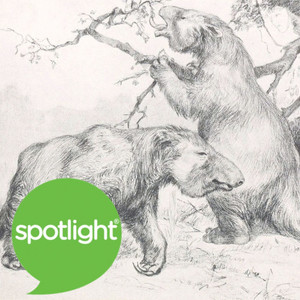
The lestodon was a huge ground sloth.
These sloths were different from the slow-moving tree climbers we know today.
Picture a sloth that looks like a hamster, but with the size of an elephant.
Thelestodon was two meters tall and four and a half meters long.
It had huge, powerful claws on its hands that it used for digging plants.
The Lestodon probably dug the taller, wider burrows.
Another possible animal is the ancient armadillo.
Like today's armadillos, they had protective shells on their backs and heads.
But unlike today's armadillos, they could grow unbelievably large.
The biggest of these armadillos is called the dodecarus.
The dodecarus was a metre and a half tall and three and a half metres long.
It may have weighed 1500 kilograms.
It also had a large spiked club on the end of its tail.
It was the size of a small car.
Scientists believe these animals built the shorter burrows.
But they may have made longer, more complex ones also.
One great mystery about paleoburrows is where these are found.
Giant ground sloths and ancient armadillos lived throughout North and South America.
But scientists have only found paleoburrows in South America.
Most are in Brazil, in the states of Santa Catarina and Rio Grande do Sul.
These findings may be because most scientists studying paleoburrows live in Brazil.
But these scientists also search in other places.
But Brazil seems to have the most of these prehistoric burrows.
We just do not know why.
Greg MacDonald is a scientist who studies ancient ground sloths.
He is from North America.
He spoke to Discover magazine about North America's lack of paleoburrows.
The fact that we do not have them here could be that we have not found them.
Or it may be that we had them up here but we did not have the right kind of soil to let them survive for a long time.
Another mysterious thing about paleoburrows is the size.
Huge animals made these tunnels.
Most scientists believe the tunnel's size is greater than necessary.
Scientists use the example of the giant armadillo.
The giant armadillo is the largest kind of armadillo alive today.
They can grow up to a meter long.
Large ones can weigh almost 50 kilograms.
Like ancient armadillos, today's giant armadillos make tunnels.
These modern tunnels are usually 40 centimeters around.
Modern armadillo tunnels can be about four and a half meters long.
But paleoburrows have been found more than 100 meters long.
Of course, Ancient animals that dug these tunnels were bigger than a modern armadillo.
But these paleoburrows are larger than a single ancient armadillo or sloth would need.
Why were many of these paleoburrows so large?
The creatures that built paleoburrows may have had very complex behaviours.
They may have worked together to create huge structures.
They may have used these burrows to shelter from the cold.
Or they may have hidden there from other animals.
Scientists today are imagining the lives of these ancient animals.
Regrettably, paleoburrows are in danger.
The study of these ancient tunnels is new.
The money for research is limited.
Few scientists have the chance to study them.
Paleoburrows are also in danger from modern technology.
Often, people find these during building projects.
By the time they know they are digging into a paleoburrow, parts are already destroyed.
People build highways and houses on these ancient burrows, making it difficult to study what is below.
Still, scientists hope more people will soon understand how important paleoburrows are.
They are trying to raise understanding.
One day, we may be able to learn more about the unbelievable creatures that built these burrows.
Do you remember Dr. Heinrich Franck from the beginning of the program?
Since his first discovery, he has become an expert in paleoburrows.
He and his team have found almost 2,000 of paleoburrows.
And he supports the idea of studying these mysterious structures.
He spoke to the world about why.
These are so important.
You can remake the home of a prehistoric animal.
This research does not exist in any kind of ancient animal studies.
You have the dinosaurs.
You have their bones.
But you do not know where they lived.
But we find the homes of ancient animals.
Our group is working in a new area.
Do you like ancient animals?
What is your favourite dinosaur or ancient mammal?
Why?
We want to hear your thoughts.
You can leave a comment on our website.
Or email us at radio at radioenglish.net.
You can also comment on Facebook at facebook.com slash spotlight radio.
The writer of this program was Dan Christman.
The producer was Michio Osaki.
The voices you heard were from the United Kingdom and the United States.
All quotes were adapted for this program and voiced by Spotlight.
You can listen to this program again and read it on the Internet at wwwspotlightenglishcom.
This program is called Brazil's Most Mysterious Tunnels.
We hope you can join us again for the next Spotlight program.
Goodbye!