Two fun facts about our newest sponsorship partner, Ramp.
First, they are the fastest growing fintech company in history, reaching a level of revenue in five years that I can't quote exactly, but is eyebrow raising.
Second, they are backed by more of my favorite past guests, at least 16 of them when I counted than probably any other company that I'm aware of, a list that includes Ravi Gupta at Sequoia, Josh Kushner at Thrive, Keith Raboy at Founder's Fund and Coastal Ventures, Patrick and John Collison, Michael
Ovets, Brad Gerstner.
The list goes on and on.
These facts demand the question, why?
Having been personally obsessed with the great businesses through history, one clear lesson is that the best of them are run by disciplined operators.
These operators manage costs with incredible detail and they are constantly thinking about how they can reinvest every dollar and every hour back into their business.
This is Ramp's mission, to help companies manage their spend in a way that reduces expenses and frees up time for teams to work on more valuable projects.
First, on expenses.
The average American business has a profit margin of 7 .7%.
This means saving 1 % on costs is the equivalent of making 13 % more revenue.
The average Ramp customer is able to save 5 % on their expenses each year.
Of course, every entrepreneur is looking for ways to grow revenue by 50%, they should just as seriously seek to save 5 % on their expenses.
Second, on time. Unnecessary complexity is why most finance teams spend 80 % of their time doing operational work and only about 20 % of their time on strategic work.
Ramp makes spend management very simple by handling your company's expenses, travel, bill payments, vendor relationships, and even accounting.
It's notable that some of the best in class businesses today, companies like Airbnb, Andoril, and Shopify, and investors like Sequoia Capital and Vista Equity are all using Ramp to manage their spend.
They use it to spend less, they use it to automate tedious financial processes, and they use it to reinvest save dollars and hours into growth.
At both Colossus and Positive Sum, my businesses, we've used Ramp for years now for these exact reasons.
Go to ramp .com slash invest to sign up for free and get a $250 welcome bonus.
That's ramp .com slash invest.
As an investor, I'm always on the lookout for tools that can truly transform the way that we work as a business.
AlphaSense has completely transformed the research process with cutting edge AI technology and a vast collection of top tier reliable business content.
Since I started using it, it's been a game changer from my market research.
I now rely on AlphaSense daily to uncover insights and make smarter decisions.
With the recent acquisition of Teagis, AlphaSense continues to be a best in class research platform delivering even more powerful tools to help users make informed decisions faster.
What truly sets AlphaSense apart is its cutting edge AI.
Imagine completing your research five to 10 times faster with search that delivers the most relevant results, helping you make high conviction decisions with confidence.
AlphaSense provides access to over 300 million premium documents, including company filings, earnings reports, press releases, and more from public and private companies.
You can even upload and manage your own proprietary documents for seamless integration.
With over 10 ,000 premium content sources and top broker research from firms like Goldman Sachs and Morgan Stanley, AlphaSense gives you the tools to make high conviction decisions with confidence.
Here's the best part.
Invest like the best listeners can get a free trial now.
Just head to alpha -sense .com slash invest and experience firsthand how AlphaSense and Teagis help you make smarter decisions faster.
Trust me, once you try, you'll see why it is an essential tool for market research.
Hello and welcome everyone.
I'm Patrick O 'Shaughnessy and this is Invest Like the Best.
This show is an open -ended exploration of markets, ideas, stories, and strategies that will help you better invest both your time and your money.
Invest Like the Best is part of the Colossus family of podcasts, and you can access all our podcasts, including edited transcripts, show notes, and other resources to keep learning at joincolossus .com.
Patrick O 'Shaughnessy is the CEO of Positive Some.
All opinions expressed by Patrick and podcast guests are solely their own opinions and do not reflect the opinion of Positive Some.
This podcast is for informational purposes only and should not be relied upon as a basis for investment decisions.
Clients of Positive Some may maintain positions in the securities discussed in this podcast.
To learn more, visit psum .vc.
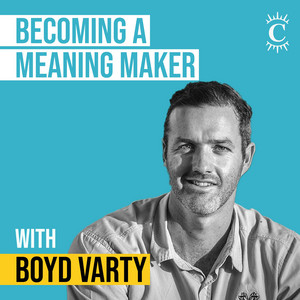
My guest today is Boyd Barty.
Boyd was one of the most popular guests way back in 2016 and 17 in the early editions of this podcast.
He's a lion tracker, a storyteller who grew up in the South African wilderness, living amongst and tracking wild leopards.
This is his fourth time on Invest Like the Best, but the first in six years.
Boyd is the perfect follow -up episode to my episode with Lulu Misurvi on packing the intricacies of storytelling and why it is such an essential skill for founders.
Boyd walks us through different mechanisms of cultivating storytelling and becoming a meaning maker.
He encourages everyone to become someone whose stories happen around and be a character who finds characters.
We discuss his concept of story hunting, leveraging stories in business, and continually finding new meaning in life.
Please enjoy my discussion with Boyd Barty.
Can you believe it's been six years since we last did this?
Oh my god. We had been diagram on the podcast.
Here we go. And can you believe the amount of freaking adventures we've had together since six years ago?
Yeah. I mean, if I think about our first meeting in your New York apartment and then I've got images in my head of other scenes, jumping off a waterfall, tracking a lion, sleeping in the bush, it's a lot of ground we've covered since then.
We're going to talk about stories today and the relevance for everyone of living stories, having stories, telling stories, maybe a little bit of an angle for business because, I don't know, I'm interested in the application of everything you've learned to how people might build their thing or contribute
to building something.
But maybe you could just explain to us why, right now, your creative output is so dedicated to stories and hunting stories.
I love that idea being a story hunter.
What made this so interesting for you to explore in the last couple months?
Yeah, it's a great place to start.
I mean, I think there's a few parts to it of things coming together.
The first was I grew up around campfires and I grew up around incredible storytellers.
I have these memories of my childhood of someone being out on a safari or my father taking someone out and something going incredibly wrong.
Then that night, sitting around the fire, a great storyteller would be telling the story of what happened.
For example, I remember one occasion where some folks came down.
This is when they were still building the safari business.
They went out to track a lion.
They tracked for a number of hours.
The guests were tired and hot.
Then they found the lion and the lion stood up and growled at them.
There was 30 seconds of absolute terror.
Then the lion turned and it ran into the bush.
That night, sitting around the fire, my father was telling the story of how incredible it was as the lion stood up out of the grass and growled and how you felt this energy move through the group.
Everyone grabbed a hold of each other and the gaze of this animal standing there in the tawny grass.
Then how it turned and ran off in the feeling of being on your feet with a lion.
When it had actually happened, it had just been scary.
But now in the telling of the story later, these new pieces of meaning were being added to it.
Those guests would go back to Johannesburg or wherever they had come from.
Probably Monday and Tuesday, they were recovering from the experience.
Then by Wednesday, they went out to the first dinner party of the week and they started telling the story as they had heard it that night around the fire.
By the next weekend, people would be coming on safari.
In their mind, it was this incredible adventure, this amazing encounter.
So I started to see storytellers as meaning makers and I started to see storytellers as context creators.
Then later, when I started working more in the coaching space and working with teams, there was this incredible sense that if you are leading your family, if you're the CEO of a company, any form of leadership is context creating.
You are the head storyteller.
What you are doing is you are the first speaker of the meaning.
You're helping people understand how to feel.
You're helping people fall into a context and all of that can become the culture of a business.
It can become the why of a business.
So that's where I started to see this incredible overlap and why it was important.
If you are a good storyteller, you are a meaning maker for the village.
Maybe explain a bit more about how you've seen people find the meaning in the first place.
We'll talk a lot about actual storytelling and story hunting and stuff like this, but that seems pretty hard to be confident in something unique that's meaningful and relevant as a leader.
How have you seen people find that thing in the first place?
There's no one that teaches you that you have to find it for yourself.
So the best leaders feel incredibly convicted in the thing that they're trying to make happen in the world that a team has gathered around.
What about just finding meaning or purpose in the first place?
It is a big question.
That's why I called it story hunting, because it is a turning of your attention.
I think our first podcast was about tracking.
I'm always interested in this idea of turning your attention onto something because that's essentially what tracking is.
That's why it became story hunting because you have to develop a way of seeing and almost drop into a of principles.
There's a few things that I said.
The one was become someone stories happen around, and I think of this all as a practice.
So that is an awareness and an openness to life.
It's a willingness to say yes, it's a willingness to try things.
Often it's going into uncharted terrain.
I had one friend who whenever we go on a hike, almost always if there was a path that said this path is closed, he wanted to go down.
So the first part is be someone stories happens around.
And that to me is a mindset.
I would say be a character who finds characters.
And what I mean by that is the more you become aware of what lights you up internally, the more you're willing to follow your curiosity, often that will pull you into unusual encounters.
So many of the most amazing and outrageous people I've met is because I was willing to follow something.
I think about recently that trail we went on together, Matt, who is this old man trail guide.
It's like a willingness to go and try things.
And you start having encounters with people who are very in tune with what brings them to life in the world.
Can you explain him?
That's a really good example of just a person that has this vibe about them.
Maybe say a little bit more about Matt.
Yeah, in the realms of be a character who finds character, he loves the wilderness.
He loves wild places.
His company is called wild child Africa.
His central mission is to find the most remote wild places and then take people there.
And so he's just following a love for what he likes to do.
And then he's figuring out how to expose that to other people.
And then even within those wild places, he finds ways to go on little adventures and have little experiences within them.
I mean, this is a guy who's made friends with an eel in a pool in the Pondo land.
Something about that is he's full of that be someone stories happen around, be a character who finds characters, he's just living in that way.
And then I would also say that storytelling is attention.
We are so distracted most of the time.
If you are a storyteller, you have to be paying attention and seeing what is actually there.
One thing that I'll do with people early on, if they want to improve their storytelling is I'll just say to them, tell me about your life.
And there's something about taking time, even thinking about all of the threads that brought you to where you are, all of the plot twists, all of the unexpected encounters.
And literally when you take the time to put attention on how you got to where you are, you start to find that there is a narrative component to life.
There is meaning to the way that it all tied together.
And literally, when you take the time to put your attention on it, these threads start to come together.
And so to get back to your original question, to become someone who can hold the meaning for the village, for the company, for the team, it requires you to start to turn your attention to what is meaningful to you, to be willing to be open enough to try things, to follow your own curiosity and meet
interesting people.
And it's an opening of your life and your attention.
And the other thing then is I say that great storytellers are always context creators.
And I think Steve Jobs was so good at this.
If you watch old clips, he's so good at saying, here's how I'm thinking about this.
Here's the challenges that come up when I think about this.
Here's how I think we should be facing that.
And here's the things I don't know about it.
He stays away from being just singularly positional, and he just creates a context.
And then into that, people start feeding their ideas.
So the journey to actually finding more meaning is to start to open yourself to the awareness of your stories, what's going on here, looking with the right type of eyes.
That's sort of how I start to think about how it constellates.
What about fear? Thinking back on our most recent time together with Matt, if you just asked me to viscerally recall something from the trip, the two moments that come to mind were the two by far physical scariest moments.
And both of which are, like you said, with the lion in the moment, you're just kind of scared.
But then after the fact it becomes this thing imbued with meaning, what do you make of that that it seems like so much of the meaning and purpose is found, like there's some fear in or around the path?
Yeah, absolutely. And I think there's sort of a sweet spot there.
There's the type of fear that's overwhelming and actually shuts you down.
But then there's the type of fear that as you face it together, and you stand in the face of it, it actually brings you together.
I mean, I think about we had to swim across that one wild piece of ocean.
But again, the story there, the way that Matt framed it as a storyteller, is part of creating a shared sense of how we're going to do this together.
This is a very rough piece of ocean.
I can tell you that if you get sucked off to the side there, swim in that direction, and it'll pop you back in.
We have a couple of guys here who are going to be the grabbers when people swim back.
I am going to call the gap between the sets.
And so he's giving us a sense of we do this with the right type of people.
If you do this, and we approach it with the right mentality, we can do it safely.
We do have to take care of each other and be aware.
But the briefing he gave us on that was a great example of helping us understand that this is an edge.
But if we approach it properly, and if you follow my guidance, and we work together, we can get through that.
He created a frame for us to think about it.
He created a context that we got to watch ourselves here.
But he also created the guidelines for how to do it well together.
And I think that was the perfect example of being up against an edge, but then framing it correctly so that people know how to handle it.
He helped us understand how to feel about it.
And I think that is so important as a leader.
You're screwing people into how to feel about this situation.
Probably the most common question that we get these days is from people running companies, usually successfully, who want to know how to tell their and the company's story.
Which is so strange, because you would think it's really hard to create a company that works, and often at big scale.
And even the people that have had objective success come with this same question, we don't know how to talk about ourselves, or what resonates, or what people will care about.
We know our story, obviously, we've lived it, but we don't know how to tell it.
What would you tell someone like that?
Because there's lots of those people out there trying to figure this out.
I think that's right.
And I see a lot of that too.
And I actually think that great stories need to be worked on.
Because sometimes in the reflecting on it with other great storytellers, and in a context, you can start to help find out what was important about it.
And so my sister and I started doing these things called story labs, where we would just chat to people about their journey.
And then we would help craft the narrative.
So I think that's the first thing, even if you look at great storytellers, comedians, they work on that material.
So I do think you need to step back and consciously work on it.
I think you need to work on it with people who aren't close to it, so that you can get a context of what was almost the wallpaper to you, it was so like, central to you that you maybe can't even see why it was interesting.
So I would say that's absolutely critical to step back and work on your narrative and work on it with people who are good at it.
The second thing is I would say that when you develop a cohesive narrative, that in some ways is also the beginning of an incredible culture.
Because that's the other question that people are asking me a lot.
As they found things, how do we create culture?
And I always think that an incredible story is the beginning of shaping that culture.
And for example, at Londolozzi, I think we have an incredible culture there as a business.
And what I love is that it starts with a shared narrative.
And then like we've spoken about before, it becomes compounding.
So then you ask yourself, once you have a narrative of who we are and why we are, then you can take every decision against that narrative.
Does this reflect who we believe ourselves to be in our own identity?
That's the initial phases of it.
And then what culture is, is many, many micro decisions that are a part of that identity.
And over time, that becomes your culture.
And then what you want is at first, it's narrative.
At first, it's actually consciously creating an identity for yourself and the business.
But then what it should become is an identity that people don't even have to think about it as an identity.
It's just embedded.
And so as people join and the culture deepens and the story of who we are deepens, it's like it becomes its own self -creating field.
And individuals working within it relate to themselves as a part of that story, that culture, that way of being.
So that's why I think early on, if you can create a shared language, consciously work on telling your story, it will result in the beginnings of a very, very deep culture and actually a self identity and a group identity, which is really what culture is.
Maybe just to put a finer point on it with an example, how would you describe the Londo's culture and maybe the story that was the seed of what's become that culture?
I think at this point, it's almost become a law and there were elements to it.
It begins with this incredible love.
The business was founded with its three mudhuts out of a sense that if we don't start something here, we're going to lose this wild piece of land.
And then the founders almost lived the story into life.
And at first it was a passion to restore the land.
And then later it became a passion for excellence in service.
Now over the years, that story has been told enough.
It has become central to everything that happens there.
And there's such a sense of who we are that has emerged out of that story, care of the land, care of the people there, making sure that we give people transformative healing experiences in nature.
And it's just been spoken so much and then lived so much that it has now become a way of being.
So the challenge of it, I guess, is that it becomes quite like it's almost ethereal, but it is a culture of belonging.
It is a culture that you join, and it's a group identity and an individual identity at the same time.
It's a way we do things around here.
People arrive now at Lando's.
The culture, if they are not of the culture, and it's amazing how quickly people are assimilated into that culture, they expunge themselves almost.
It's like an energetic beat that is off.
My favorite thing is three or four weeks after a new person arrives at Londolozzi.
And I think of us actually consciously working on our narrative, being really good at storytelling, making sure we understand how to express, that we've taken the time to express all the dimensions of what we're trying to do.
And then you find yourself walking along one of the paths and you hear a new arrival coming the other way.
And they are telling the story in literally something that you heard in a workshop two months ago that you've spoken about and put into our information about who we are.
And then you start to see how it's translating.
And then living into it, I think, also the story has to be backed up by daily ways of being and actions.
And so that's why the story is the beginning of framing who we are and our identity, but then the real culture of it is brought to life by living it.
How do you make that work?
I love the notion of doing such a good job that the people in the culture, the story becomes portable and they start telling it.
Is there any advice you give on how to make a story portable in that way?
And is it for someone to pick up and run with themselves?
Yes, I would say that for us, we have our history, why and how we came to be where we are.
Then we have who we are right now as a big part of the story.
We're a futuristic African village.
We take people on world -class encounters in nature.
We're a culture business.
We care about people.
And we deeply believe that if we take a lot of time to make sure that this is an incredible place for people to live and work with dignity in South Africa, that results in amazing outputs.
On the other side, we're obsessed with excellence.
So we have these pillars and then we speak to them vigorously.
And so when you're inducted at Londolozi, all of these things will get told to you time and time again.
One of our things is that we're a place and a space for individuals to become the best versions of themselves.
It's focused towards being a growth environment, but we can then measure ourselves at every juncture, are we living up to that?
Are these individuals who've joined our team, are they becoming the best version of themselves?
What do they need to grow?
Because that's central to how we relate to ourselves.
So on some deep level, once you've taken the time to work on it and frame it, you live it until it becomes a group identity, and then actually individual identities within that.
It should offend you to operate outside of your own cultural values on some level.
When Duncan McClarty, the general manager, sees something that is subpar, it offends him personally because it's against who we are on some fundamental level.
So again, I would say that what people don't realize is when they see good storytellers, they think, oh, he's just a good storyteller and I'm not.
And what I'm saying is that actually becoming a good storyteller is a mindset and it's an approach.
You can practice it and becoming a good storyteller is taking the time to work on the craft of it.
And actually realize that if you get this stuff right, it can have an incredible impact into your life and into your business and into your culture, but it does deserve being taken up as a powerful practice.
Your point on Duncan makes me wonder what you've learned about dealing with violations of a story or a culture.
What is the most effective way when you see something that's been done wrong and out of sync with the culture to deal with it?
Well, the first is to deal with it quickly and to use it as an opportunity for messaging.
And often it's just you deal with it right there and then.
I think that messaging is a powerful thing.
You should find ways to continuously as a storyteller be messaging into your organization.
Jobs used to have this thing that as the source of a company and as the head storyteller, you should constantly be iterating and telling the story because there's something about the power of it over time.
And so it's not like you just tell it once.
Almost every strategic meeting we have, we begin with who we are, where we've come from, and we reiterate that story constantly.
Something is outside of your culture.
It's an opportunity.
And the way you deal with it can be an even more powerful way to convey who we are.
So that's the first thing is anything that's outside of culture, you should be thinking of it as how can I use this?
How can I use this to deepen a sense of who we are, to use it as an example without shaming people or hurting people.
If you do that well, and you do that continuously, and you don't let things drift.
And that's the thing, if you are building narrative culture, if something is slightly left of what you want it to be, you have to arrest it.
Because over time, that two degrees off can become 100 degrees off.
So you have to own the story.
I remember someone telling me once that they were at a table with Disney executives, and someone made a sarcastic comment about, oh, you guys are just obsessed with a mouse.
And the whole meeting went cold.
They will not allow any kind of comment about their symbolic horror of their narrative to be off.
So you have to arrest it.
And then over time, what's become most amazing is that if you deal with those things upfront, if you deal with them hard, if you continuously create a critical mass who deeply understands what our culture, story, our narrative, our way of being our identity is, then very quickly they start to fix things.
And so in some ways, to me as a culture business, I would say that's the most amazing thing, that someone can come in from a different background, and within about a week, can deeply understand what this is about.
It becomes so self -generating as a field.
And that's why I think it's worth investing in culture and meaning story.
Why? Because it creates such a rapid acceleration of bringing talent and people into your business that literally the vibe in the space starts to tune them to your desire for excellence, your direction, who you believe yourselves to be, where you want to take the company.
You said earlier, a favorite question is just tell me about your life.
Obviously, if you have a day to listen to someone's answer, you could probably find the story embedded within what they tell you.
Are there other questions that you like to ask or you would encourage people to ask of themselves as they try to solve this?
And again, my like business hat is on, but this is probably relevant for any story.
If it's one of these companies like, wow, we've created this great thing, but we don't know how to talk about it.
Are there any other question prompts that you would offer that might help them triangulate on this problem?
Yeah, I think what brought you here?
How did this idea first come to light?
What was unexpected?
What did you think it was going to be, and what did it actually turn out to be?
There's usually some we thought it would be this, but actually it's this, or people think it's this, but actually when we look closer, it's this.
What were the major challenges and how were they actually the way to break throughs and transformations?
As you have built this, what has come to be most important to you and to your teams?
Why does this continue to grab you and who do you believe you could still be as an organization?
And then I like to say you must dwell sometimes on plot twists because plot twists are powerful parts of any story and plot twists in your own life, plot twists in the genesis of the business will almost always have juice to them.
But what else do I think about that?
That would be powerful places to start.
I love that list. Do you think that stories need some sort of archetypal core?
Maybe I've been reading too much young lately, but it seems like a powerful idea.
What do you think of trying to find some sort of very classic, deeply embedded human psyche archetypal core to a story?
Well, one thing that I would say to that is I believe in a universal personal and almost always if you can be really personal about what you are trying to say and mine yourself for some of those questions I asked, why, what hurt, what was inspiring about it?
The more personal you go, strangely archetypal, the more universal it becomes.
And so almost always when we do a story lab with someone, I will ask them more personal questions about what was going on for them as they try to create this thing.
What drew them to it?
Because what are they afraid of?
What are they still afraid of?
Because within that there is almost always what will make it profoundly relatable to other people.
And so the more personal something can be almost always the more universal.
So that's the principle.
I remember you telling me when you started the podcast, my whole business plan was I just like talking to the people I want to talk to and wanted a reason to.
That's such an interesting genesis because inside of it is so many things, more than anything a willingness to follow your curiosity without any sense of where it's going.
And that is very unusual in modern times.
Mostly people want to know where things are going.
I always think of that.
If we dove into it, we would find more of those type of things.
That's very universal to me.
I've seen you talk about this notion of leverage, not like financial leverage, but energy leverage or something.
Your point there reminded me of it.
Can you say a little bit more about harnessing leverage to create stories and as an agent of your curiosity?
I would say that an incredible story is leverage.
Imagine you're in a room with a whole lot of great ideas.
Actually often the idea that wins out is the one that is not always the best one, but it's quite often the one that is best conveyed.
And so there is an incredible power to being a story hunter and cultivating your skills in this department.
I think the example that I was telling you about is so often when a safari is going badly, and this came back from when I was still a safari guide.
If you could pull out a story at the right moment that you had worked on and crafted, you could swing the whole momentum of the safari in your direction.
When I look back on so many moments in my life, having a really brilliantly articulated story has changed the energy of the group.
Alex and I used to have this thing that you need an incredible 90 minutes to bring any group over to your side of the fence.
I would swing the momentum towards you and a story is certainly part of that.
So I learned that everything I look at, I would say, where are the leverage points here?
Because I'm interested in working with leverage.
So often the answer for me has been the power of a story as leverage.
If you imagine yourself at a dinner party or a networking event or at a founder's gathering, one incredibly told story can stand out in people's minds through a whole night of cocktail talk and shop talk and business talk.
Someone who has an incredible piece of storytelling in those types of gatherings, it can set you apart.
It puts you in people's minds.
It shifts the direction of the energy in the room.
So I actually think that take time to work on stories, construct them, because they are powerful leverage points.
Can you talk about this notion of living outside in versus inside out?
Yeah. So one of the principles that I mentioned earlier is be a character who finds characters.
I think you and I share this.
I'm so interested in finding interesting people.
And then when I have found interesting people, I ask myself, what is it that makes them interesting?
And usually it's that they have found their way into some very unusual niche by following a set of internal expressions.
There's a self knowledge to it.
The guy that I talked about in the podcast was as a character was this guy, Chris Buckas.
Tell us about him, please.
Back before the guy who I met in the Damaralland desert, and I'll never forget, we walked into a bar.
Chris has one arm because his arm was bitten off by a crocodile and he has a one eyed Jack Russell.
And I remember walking into the bar with a group of people.
And he was standing at the bar with a huge pint of lager.
And he knew that we were his arriving clients.
When he saw us, he picked up the pint of lager and his eyes locked with eyes.
He started downing it.
Then he slammed it down and he picked up a second pint as we made our way across to him.
And he started downing that.
And then he slammed that down as we sort of arrived next to him.
He put out his good hand and he said, Hi, I'm Chris, a big red hair, burly.
And someone said, hi, I'm Steve.
I'm Jim. I'm Boyd. I'm James.
And there was like 12 of us.
And then he said, okay, let me just check.
I got that right. Steve, Jim, Boyd, James.
And he nailed everyone's name, 12 in a row.
I was like, okay, we're in for something here.
Then he's Jack Russell came running in and he scooped it up with his good arm and it had one eye said, Chris, what happened to your dog's eye?
He said, he bit my arm off.
So I felt desire. I just immediately knew we're in for a ride.
Yeah. And we had this incredible next couple of days with Chris in the desert.
And he loved the wilderness.
He loved the desert.
He loved rock and roll around the fire.
At night, he started singing AC, DC songs.
And you could just see he had built a life around what he loved.
And he had been guided by these internal pulls and longings.
What in my other body of work, I would call the tracks of your life.
And he had found his way to all of the things that he liked expressed internally by following these things.
He found a way to be in nature, to guide people, to be in the desert.
And I realized that my encounter with him came because I had heard that if I went on this trip, there might be a chance to track the desert black rhino.
And so my curiosity to follow, to have that opportunity had resulted in me meeting a character like Chris.
And so the great characters of this world are not people who are trying to fit themselves into some external box, into the frames that the culture tells you, this is who you should be and how you should be.
But rather they take the time to get tuned into what actually they feel pulled to.
And then they figure out how to build their life externally around those internal knowings.
And that usually results in a very original person.
And so I've said, be a character who finds characters because willing to become a character, follow your own internal knowings will lead you to other unusual people.
And that's where the meaning of life is.
There's density in being willing to live like that.
All of this is very much in the realm of getting going.
The opposite side of this is, let's say you do all that successfully, whatever.
You build the culture, you build the company, you do the thing, you meet the characters.
And we were talking earlier about before recording, becoming a sort of slave to your greatest hits, like the Eagles or something.
And there's a question here around reinvention or returning to some core essence or curiosity that got you to where you are in the first place.
What could you say about that corollary problem of like you do the first thing successfully.
And then again, the world tries to build a circle around you and wants you to do the thing it knows you for versus the thing that you want to do at your core or something like that.
I mean, I think that's one of the deepest tensions of any creative process.
I have the example that you use is one my sister loves where the Eagles get up at their concert in Vegas now.
And people are still screaming, play hotel California.
Something they wrote 40 years ago and then an artist becomes famous for a certain body of work, certain type of painting style.
And then that's all that is commercially wanted of them.
And so it's a deep tension.
I think that that's why I consider story hunting a practice.
And it should never be a destination.
Now, with culture, it does embed, you know, but even as a business, you have to be constantly willing to look at it all and reinvent yourself.
And the only way to do that is to be willing to be in states of reinvention yourself.
I always think about personal identity.
I think about practice.
I think about how that could become an external expression, a group identity in the coaching space.
One thing we would say often is like being aware of your own stories.
And I think that changing identity is an art form.
And I think that you have to be self -aware enough to realize that there are times when change comes upon you as a result of a catalytic event.
And there are times when you should if with enough self -awareness sense that you are becoming calcified in your consciousness, in a certain identity.
And the art of reinvention is exactly that.
It's an art form. And it usually begins with some form of letting go of how we thought it had to be.
You know, it's Tiger Woods being a world champion, being the best in the world and going to reinvent his swing.
It's a very, very courageous moment.
And you can only know if you've reached that calcified place.
And so then you have to go and melt down.
And that's usually stepping out of life and allowing your ideas about who you think you are, who you would think you are meant to be, who other people have made you to be.
You have to let that melt.
And that means you have to step into like, I don't know what's going to be next and really dwell in that not knowing.
And then the next phase would be to start to attune yourself to the meaning again.
How do you hunt the story?
You have to start paying attention to those original curiosities, things that pull you forward, characters who light you up and start to ask yourself, what is it about these things that grab my attention?
And then you go into another phase of starting to build around that.
If you're someone who can constantly put attention on transforming yourself, almost always new meaning will constellate around that.
A new story of yourself will constellate around that.
And sometimes in coaching, we will even say to someone, you can feel when someone's stuck in something and it's just become an old schtick.
And we'll actually say, you know, that's actually just starting to feel like a story.
It doesn't feel like it has a liveness in it.
So self -reinvention, the courage to self reinvent, the courage to melt down and change your own identity and to be in the practice then of hunting new stories and new ways of being.
That is the art form of staying original, keeping your consciousness malleable and staying in tune with what actually brings you to life, as opposed to being just rolling out your greatest hits album for the next 30 years.
I guess what I'm saying is this is a practice and you have to consciously practice it, consciously be stepping back and saying, does my story about who we are, who I am even fit anymore?
I'm thinking about the story lab, which is such a good idea.
And the other people that I've turned to teach me about components or elements of a good story.
And the one that always comes to my mind is Graydon Carter who used to run Vanity Fair and was certainly no stranger to a great story, which was basically narrative conflict.
And he called it proprietary data, something I know that other people don't know.
A great story has those three components to it, narrative conflict and some unique information that others could learn from.
I'm curious your reaction to those three.
I mentioned them just as an example of what I'm after with this question, which is the components to you of a great story.
Yeah, I think those are very strong.
Just from a technical point of view, I think you want to start with something very unusual.
So I think that the opening line of any piece of storytelling is incredibly important because it immediately helps people know how to feel about where this is going.
Then I think you should develop your characters and you should help people understand how your characters were thinking about issues.
Then you should help people understand what the challenge was and what the conflict was and how they got through it.
Then you should have some callbacks to things you learned along the way.
And then you should land it in a very universal place as much as possible.
Those are more like technical beats.
And then within that, I would say that the use of language is incredibly important.
With a single word, you can change the real feeling of something.
If I said, the buffalo was close by by the time I saw it versus when I saw the buffalo, it was adjacent.
There's just a difference in energy on that.
You want to be crafting all of those type of things.
There's an element to everything you've talked about in story hunting, which is this tension between complete solitary chasing of something.
I think of that old idea of entering the forest at the darkest point.
Don't enter a beaten path.
Find the darkest part and enter the forest that way versus the camaraderie or the collective or the, we talked about culture earlier, like the involvement of other people.
And I'd love you to just riff on that a little bit.
So much of the pioneering spirit that leads to great stories is a sort of solitary pursuit.
When we were together in Africa on the wild coast, Matt was telling us the story about, at first he did this alone.
He went by himself and figured this entire thing out.
And then he brought back that wonderful experience and exposure to other people in a repeatable way.
And I'm really curious about that combination of solitary searching and then collective experience.
I'd love you to riff on it.
So much of art, if it's going to be original, it has to come out of self -knowledge.
And I don't think you can get all the way to really knowing yourself if you aren't willing to commit to big periods of solitude and a willingness to explore yourself in solitude, explore your own thinking through writing a lot.
I think that writing is absolutely critical.
If someone who was coming to you, Patrick, and saying, we want to tell our story better, I would say, you have to put aside the time to be alone and write about it, write about the journey, take the time to explore your own thinking because things will emerge.
If you want to talk about the culture that you want to create, go spend some time by yourself writing about it, thinking about it, making notes about it.
All of that stuff that you spend time personally contemplating, suddenly you find yourself in meetings telling stories and you have frameworks, you have iterative thought on this.
And I just think it's so, so valuable to do that.
And I would say as an artist, if you can't be by yourself as a storyteller, as someone who wants to convey something, you're too bombarded then by the social construct and social ideas.
And if you want to be original, you have to have time away from that.
So you can just be with your own inner beat and feel that a little bit.
And it's funny, I sometimes have been talking to founders and teams or people who are leading teams about the real jobs.
It's like, part of your job is to go away and be in solitude.
If you are going to hold the narrative story, if you're going to be the source of the culture, if you're going to be the person who is constantly talking about this as a way to anchor who we are, you need to go away and be in solitude to be with all of that, because it becomes authentic in you then.
And you may say, I can't get away from work.
And what I'm saying to you is that is a massive part of your work.
If you invest in that, it's going to pay back incredibly.
And a lot of people, we pulled into the culture of I have to be there, I have to be hustling, I have to be busy.
But actually the time to step back, contemplate and be in those questions results in very powerful outputs.
Can we talk about stakes, the role of high stakes, just in general?
Because one of the most powerful things anyone ever told me, a few people I would call a mentor said something to me to the effect of the most unhappy I've ever been is when I have the most optionality and the happiest I've ever been is when I have the highest stakes, meaning the fewest things that have to
go right in order for things to work out or whatever.
What have you learned about harnessing or creating high stakes and the role that that means to you and the role that that could play in story hunting?
The way that I think about it is levels of aliveness and levels of awareness.
You'd have to ask yourself, what is the opposite of meaning?
And I would say that things becoming too mechanical, too much familiarity, too much comfort, too much of the known almost is where it's hard to keep meaning alive.
Now it's not that it's not there.
In deep states of Satori states, you would say that everything is just in its beingness.
But for most people, most of us aren't there in that profound level of Satori, I would say you have to be moving towards what you know will bring you aliveness to be up against something enough that it's forcing you to new places in yourself.
It's forcing you to relate to life in new ways.
And that tension of finding out that life's going to be not exactly what you think it's going to be, but it's also not exactly what life says it's going to be.
It's this co -creative space that is often where meaning is structured.
And so if your life is short of meaning, it's probably because you aren't going up against enough aliveness.
Now stakes, people who are up against high stakes come back and have tremendous meaning.
There's that amazing scene from the Hurt Locker, where the soldier comes back and he's been living with such states.
And he's walking down the cereal aisle in the grocery store.
And it's just totally dead to him because of where he's been.
I would say that you can get overwhelmed by stakes to the point where it's just stressful, and it actually starts to become subtractive somehow to your energy.
But I think that if there's not enough meaning in your life, you're not fully up against enough of your aliveness.
And then that means you have to turn your attention on, you need to be hunting the story a little more thoroughly.
And there is a sweet spot where you're on your edge in a way that is generative and adding to you and forcing you to learn new things, constellate yourself in new ways.
And then you can tip over that edge into an overwhelm where the stakes are probably a little too high.
So to try and find your way into that sweet spot is powerful.
Can you tell us about the recent experience you had with the endurance hunt of the kudu?
I don't know if that's the right term for it.
That's how I think about it.
And maybe just using that as an example of some of these principles that we've talked about.
Yeah. So recently our mutual friend, Alex and myself and another friend, James, we went into the Kalahari to be with the Kalahari Bushman, the San people.
And we went on an expedition to find out what level of tracking skills still exist there.
And it was just this profound journey.
Firstly, going into the unknown with three of your friends.
It's right on that edge of we don't know where we're going.
We have to figure it out every day.
We're in the desert and you can get things very wrong in the desert.
It's incredibly dry out there.
It's incredibly hot.
You can dehydrate yourself.
You can get heat stroke.
Your car can get stuck in the sand and no one's coming to fetch you.
So immediately that increases your awareness.
And when I say storytelling is awareness, anything that is bringing more awareness is almost the doorway into a good story.
And what we found there was an incredible thing.
We found the people who are living in modern ways, the Bushman people now are living in various villages and they've been pushed off some of their lands.
And yet they are still getting about 80 % of their food from the desert.
And they think of the desert as their storehouse.
So immediately I started to see the simplicity with which they were living and this incredible sense of abundance that they have.
They literally think of the desert as their storehouse and that.
So it started to open up these new pathways in me.
And then we started to see what level of tracking is still alive.
And we had these incredible days where we would go out tracking and they were showing us what good trackers they were, but we also wanted to show them that we had some skills.
And so we would have these sessions where it would be almost like a peloton at the front of the track and someone would be on the track and the minute someone lost it, someone else would be on it.
And it was this almost friendly, competitive tracking environment.
And we couldn't be more culturally different, but we were united by this ancient art form, which is essentially a form of storytelling.
And that was profound to me relating through a practice with people versus trying to relate in a social way.
We were actually just having this very deep dialogue through this shared skillset from very different cultural backgrounds.
And then the other thing that we were trying to do is we were trying to find out if the persistence hunt still exists.
And the persistence hunt is probably the most ancient tracking art form.
It's referred to as the great dance because it's really a spiritual practice by the Bushman people and it involves actually running after your prey in the heat of the desert, incredibly soft sand, 47 degree heat.
And you actually, you run just under a marathon distance in some occasions and you have to keep running.
You have to run and track at the same time.
And so you're doing a lot of things.
Your tracking has to be incredibly high level.
Your endurance has to be incredibly high level.
Your adoption to that environment has to be incredibly high level.
So we were finding out if that still existed and was remarkable.
Although it hadn't been done in many, many years, we found a group of Bushman people who are still able to do it.
And so I was reflecting on how that affected me, that trip.
And it was all there, the willingness to go and we met these incredible trackers.
The willingness to go is to be someone's stories happen around.
We found by knowing that we are passionate about preserving this ancient art form of tracking, we met these incredible trackers.
Being out in the desert and the attention that it required to be that awake and tuned into each other to keep ourselves alive and safe.
It immediately made everything more meaningful.
What was it like at the end of that?
So you're chasing this kudu around for, I don't know how long, long time in the heat.
What was the climax of the story like?
Well, what was incredible is that when we had completed it, and in this instance, we didn't kill anything.
We were just running on the tracks and we were finding out if it was possible.
And then eventually we got to a point where we could see the kudu and we left the hunt.
We called it off at that point, because we didn't want to push the animal too much.
But the culmination of it was this amazing feeling that together we had done something that very few people had ever done.
And what was most powerful is that the younger Bushman people had never done it.
They had heard about it in stories.
And so when we actually did it, there was like this reigniting of this ancient art form.
And we could see around us that that story of that day was going to be told in villages everywhere.
And the sense that this thing could still be done would start to come back.
And there was a pride in it that we are some of the few people in the world that are still holding this art form alive.
It had this very transformative energy to it.
And yeah, I think for me, it was another example of when you go and follow something without any sense of what's going to come of it, it brings something to your life.
It brings powerful meaning to your life.
Another phrase that I heard you use in your new series is simplicity in abundance.
Quite like that. Can you explain that?
Simplicity in abundance and simplicity as abundance.
I think that what I learned from being with the Bushman people is that, I mean, so many things.
The one is that they consider the simplicity of their life, the gift of it.
And they have these incredible social structures.
They will usually operate and move in the desert through the early morning, gathering, hunting, and then they rest together through the middle of the day.
They share everything because they feel that the desert provides everything that they need.
And it's very hard to spend time with them sitting under a tree lying in the sand.
There's this relaxed, incredible social connection, just to wonder, man, are we getting it right in any way, shape or form, as we add more complexity and more intensity to our lives?
There's just something so pure.
And without being constantly bombarded by devices or stories of things happening around the world, they just drop into this quiet, simple presence with each other.
And I found it to be very, very powerful and transformative.
And I also thought to myself, if you imagine that with the generation of AI now, the world will probably change more in the next five years than it has in the previous 100.
I kept having this feeling that being with them out in the desert, was I 300 years in the past, or was I somehow in the apocalyptic future where whatever happens, happens, they just walk quietly back into the desert and continue to live their lives.
It was a deep presence for me.
You talk about seeking out characters to become one.
What makes a character?
What are the features of the people that you find yourself most drawn to?
That's what I got obsessed with it.
One is they're inside out.
They're attuned to their own aliveness in some ways.
They know what brings them to life.
They're authentic. And so authenticity and originality is a byproduct of that.
They have been willing to walk their own path and break out of social constraints.
And I think that's a big one.
If you think of most people being highly socialized, a character has broken that and become more self -authored.
They're creating their own story literally.
And the word authored is they have their own narrative about themselves.
They're not trying to fit themselves in with the cocktail scene of where they're from.
Often they have made a bold decision to do that.
And they've been willing to do something out of a knowingness in themselves before it existed.
If I think of the characters I grew around, part of it is that they believe that they could do certain things that there was no safari industry.
They were making it up.
They came from hunting, but then they're self -defined into what they could become.
They're willing to be on the journey and realize that we don't know what this is yet, but I'm interested enough in it.
And it brings me to life enough that we could still be finding out what it is.
It's really the first two principles.
Be someone's stories happen around and be a character.
Those are the two things that bring you to great characters.
And then there's usually a moral sense almost where they believe in their path and they're unswayed by it, unswayed by other people's opinions, and they're courageously standing in that in some ways.
And then quite often, if they've had the courage to persevere at that, then being around them is usually quite inspiring.
It's almost like an embodied activism.
Their sense of self, their sense of what they're doing, their sense of knowing what their speed is in life.
When you get around it, there's usually passion there because they've had the courage to find out what that thing is that brings them to life.
And that becomes very, very infectious.
What is the edge of your curiosity?
Talk about being someone that's stories happen around.
You've had more interesting stories than probably anyone I've ever met.
And you're relentlessly seeking new experience and aliveness.
But what is the thing you are currently curious about that you're chasing?
My life has landed a lot in practice.
I think about my life as a practice.
The architecture of my life is designed for me to continuously both dwell in the things that I know work for me and also to find my way into new frontiers.
What I was mentioning to you earlier, I probably live very much between the attention that Sebastian Junger talks about, of the courage to step towards new things and the trying to be smart enough to stay still and stay with things that are really valuable.
It's funny how life can come at you.
I think the biggest frontier for me right now is probably becoming a father.
Of all the wild things I've done where the track leads now is into figuring out how to be a really stable and solid presence for this new arrival who's coming into my life.
So that's what's amazing about it is that it's not like, oh, these are the things that are wild and exciting and interesting.
Life leads you where it leads you and anything can be a frontier.
Settling down can be a frontier.
Especially for you.
Especially for me, but it has much aliveness there for me.
What has surprised you so far about the prospect of becoming a father?
I think just how committed I am to it and how committed I am to becoming a good temple.
Like, Laird Hamilton had this thing where he says being a good father is the central pole of the tent.
Every now and again, people come over and just kick you a bit to see if you're solid.
I like that metaphor.
I'm sure there's a lot more to it than that, but I like the idea of just being really, really solid for the people around me.
Then probably figuring out how to make a dynamic way.
Be a practice of that.
Who right now is inspiring you?
I am really inspired by Jesse Eitzler.
When I look at him, I see someone whose output I find really great.
He approaches life with so much intentionality and you can feel there's a big output around him.
He knows the things that he likes to do.
He's very much inside out as a character.
He's self -constructed.
I like the thought of his life as a rapper, then became an entrepreneur, now speaker, endurance athlete.
You can feel his Venn diagram is very him, his output to touch a lot of lives.
Certainly him. I'm very inspired by my sister.
Her spiritual practice is evolving so fast and the presence that she brings to her life.
Just being around her, she emits so much energy.
I'm very inspired. I have three really close people in my life outside of my relationship with you, Jim Deathma, Graham Duncan, and Josh Waitskin.
The three of them have just talked about building your own field around you.
Just the way that they approach their life is enigmatic, their characters, they live on their own path.
They're super inspired by those three.
They've built lives that are real expressions of who they are.
Each one is a very unique character.
It's a good reminder for me to ask you about my topic of obsession, which we call life's work, which we define as the quest to build something that expresses who you are in service of others.
What do you think about that concept?
Do you think it's useful?
What do you think about that idea of calling the role of work in a life and maybe even the very lofty term of life's work, which implies your personal masterpiece or something built over the long period?
I'm obsessed with this.
I'm curious what you think about it.
I do too. To borrow from Josh Waitskin, he talks a lot about being in your self -expression.
He has an artistic soul.
I think that is an element of mastery.
I continue to ask myself, as part of this willingness to live in the practice of being a story hunter, a meaning maker, a tracker.
It's a constant question.
Am I as fully expressed as I could be?
For me, that comes down to touching a lot of people's lives in towards wholeness, connecting people with the natural world, helping people bring the full expression of themselves to life through their own stories and living their stories.
I think we're aligned there.
I guess the question for myself is, where am I not quite as fully expressed as I could be?
I think that's an ongoing thing.
In some ways, I think that it's just an output thing.
There's probably more of a frontier in the scale at which I could be doing that.
That's fun. I like thinking about how to both keep a deep quality.
I've said often when people talk to me about scaling your work and that type of thing, I like to operate more in the campfire.
I like human connection.
I like personal connection.
But I am also interested in seeing if we can bring really transformative work to more people.
Any closing thoughts you would leave people with after creating this series called Story Hunter that everyone should go check out at their amazing short, where everyone's going to love this series of podcasts that you put out.
Anything that you would leave people with thinking about that little mini body of work that you just created?
Yeah, I would say that you're not fair on yourself if you just say, I'm not a good story teller.
Everyone has the capacity to develop their skills as a storyteller.
It is a practice, and you should go away and practice it.
And I promise you, if you take up these principles and live through them, you will start opening up very, very interesting dimensions of yourself.
And you will learn to be better at this.
And my bet is, is that if you're a father, if you're a mother, if you're a leader, if you're a CEO, you're a storyteller.
And getting better at this is an incredible leverage point.
It will amplify you in ways you can't imagine.
So I would just say, don't shy it.
It's totally worth doing.
Everyone go get in the Story Lab.
Please, everyone, go listen to this series.
We'll link to it and make it easy to find Boyd and tell her next adventure.
Thank you so much, Patrick.
Great to see you. If you enjoyed this episode, check out joincolossus .com.
There you'll find every episode of this podcast complete with transcripts, show notes, and resources to keep learning.
You can also sign up for our newsletter, Colossus Weekly, where we condense episodes to the big ideas, quotations, and more, as well as share the best content we find on the Internet