This BBC podcast is supported by ads outside the UK.
If journalism is the first draft of history, what happens if that draft is flawed?
In 1999, four Russian apartment buildings were bombed.
Hundreds killed, but even now we still don't know for sure who did it.
It's a mystery that sparked chilling theories.
I'm Helena Merriman and in a new BBC series I'm talking to the reporters who first covered this story.
What did they miss the first time?
The History Bureau, Putin and the apartment bombs.
Listen on bbc.com or wherever you get your podcasts.
This is the Global News Podcast from the BBC World Service.
I'm Wendy Urquhart and at 4.30 GMT on Monday the 2nd of February, these are our main stories.
A five-year-old boy detained by US federal immigration agents in Minneapolis has been released alongside his father.
A former British cabinet minister resigns from the governing Labour Party over links to Jeffrey Epstein.
And the Grammys take place in LA.
We'll get a roundup of who won, who lost and who performed on stage.
Also in this podcast, the Rafah crossing in Gaza is finally expected to reopen for Palestinians.
I'm really happy that the crossing will be opened after waiting for two years of war.
When it opens, I shall go for kidney transplant, God willing.
And we delve into the world of the Japanese samurai.
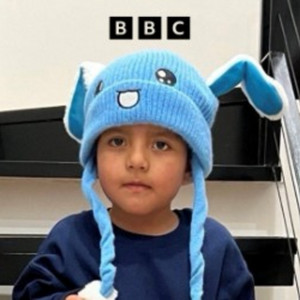
One of the defining images of the immigration crackdown in the US city of Minneapolis was the detention of a five-year-old boy wearing a blue bunny hat.
Liam Conejo Ramos and his father Adrian were taken to a detention center in Texas.
The family are from Ecuador and entered the United States legally as asylum applicants.
Immigration agents claim the father abandoned his son when they approached.
Now a judge has ordered that both father and son be released.
Our correspondent Peter Bowes has been following the story.
Five-year-old Liam and his father were detained a little under two weeks ago from their home in Minneapolis.
A little boy had just come home from nursery school when this happened.
Now, the precise circumstances are disputed.
The authorities say that this was an operation to detain the father who they say was in this or is in this country illegally.
They say that the boy was not the target of the operation but that he was with his father and that they couldn't get the mother inside the home to answer the door to take him in.
The family's version of that is that she didn't want to answer the door because she feared being detained herself, leaving her other child inside.
So the boy stayed with the father.
They were both detained and taken over a thousand miles to a detention facility in Texas.
And that's where they stayed until this weekend, when a judge ordered them to be released and, at the same time, issued quite a strongly worded statement, clearly directed at the administration.
He said that the boy's detention was cruel and bereft of human decency.
He said the case originated in the just to quote the judge the ill-conceived and incompetently implemented government pursuit of daily deportation quotas.
Apparently, he said, even if it requires traumatising children.
Yeah, quite strong language.
But will these releases help calm tensions in Minneapolis?
I think it'll calm tensions to a certain extent because this particular case, and in large part because of that photograph of the little boy with his blue bunny hat and his Spider-Man backpack going viral on social media, it had attracted a lot of attention internationally.
People calling for his release and his father's release should say that he isn't the first child to be detained in this way.
But this did seem to garner a lot of attention.
And people were calling quite aggressively for him to be released.
And that has happened now.
So I think it'll calm tensions in that area.
But in terms of bigger picture, there is still a lot of tension, still a lot of nervousness, I think it's fair to say, in Minneapolis about what's going on and other cities around the country, as the Trump administration continues to essentially pursue its immigration policies, even though it appeared to pull back dramatically a little from its tactics that it's been using in Minnesota.
And is this the end of the matter?
The Trump administration quite often hit back after these kind of reversals.
Yes well, it looks as if that's what's happening in this case that the administration has indicated that it will appeal this particular judge's ruling.
So this looks like it could be something that will get locked up in the courts for the foreseeable future, before any final decision is made.
I should say that the family insists that the father is legitimately in this country while he pursues his claim for asylum, which again he says, or the lawyer says, that he went through all the proper channels to get into the country and should be allowed to stay here while he goes through the legal process of deciding whether he can stay indefinitely.
Peter Bowes speaking to Oliver Conway.
Over the past few editions we've been reporting on the ongoing fallout from the latest release of the Epstein files.
Millions of documents related to the sex offender Jeffrey Epstein were posted on Friday.
He was convicted in 2008 for soliciting sex from a 14-year-old girl after coming to a controversial plea agreement with prosecutors, and died in 2019 whilst in jail on charges in an extensive sex trafficking case.
Now footage has emerged of Jeffrey Epstein being interviewed by somebody off the screen who asks him about his behavior.
I'd like to answer that question, frankly.
However...
At this time.
My attorneys have told me that I can't and I must invoke my 5th, 6th and 14th Amendment rights or I risk losing their counsel.
Accordingly, I therefore assert those rights.
Sorry.
And in another video, the late financier was asked about how he makes his money.
Just ask a question.
Is your money dirty money?
No, it's not.
Why is it not dirty money?
Because I earned it.
But you earned it, advising the worst people in the world that do enormous bad things and just to make more money.
So instead of asking me the question, should you take the money?
Because I think it's a legitimate question.
You think it's a legitimate question?
Yes.
Why?
Ethics is always a complicated subject, but I can tell you that, with the money I gave to help try to eradicate polio in Pakistan and India, instead of asking me whether that money should be given to these children for vaccines, I think you might want to ask their mothers.
Well, we heard more about these videos from my colleague Ellie Price.
The first one was from a legal deposition that was in Florida in 2010.
And he was being interviewed by a lawyer ahead of further sexual assault allegations and being asked exactly what happened to the victims.
As he said, I'd like to answer, but oh, sorry, I can't.
And I think that kind of really gives you a sense of what the guy was like.
Obviously, by that point he'd already been convicted of soliciting sex with a 14-year-old and served a sentence.
The sexual assault allegations kept on coming.
And, of course, fast forward another nine years and he was dead in his cell, again facing further allegations of sex offences.
The second clip that you played there... was from another interview that we heard.
Again, we don't have much context.
We don't have a date.
It looks a pretty professional job.
It's a two-hour interview and it seems to be a skip through what he was like, how he made his money.
A bit later on, he asks, are you the devil?
And he sort of slyly smiles and says, no, I don't think I am.
Do you think you're the devil himself?
I know, but I do have a good mirror.
It's a serious question.
Do you think you're the devil himself?
Why would you say that?
Because you have all the attributes.
You're incredibly smart.
You remember the devil is somebody who knows what?
The devil's brilliant.
You read Milton's Paradise Lost.
No, the devil scares me.
It's really quite chilling stuff because in all of this, as I say, the guy died in 2019.
We haven't really heard much of his voice.
That was Ellie Price.
And in another development, the former British ambassador to Washington, Peter Mandelson, has resigned from the governing Labour Party because he said he doesn't want to cause further embarrassment by his links to Jeffrey Epstein.
The latest files have led to new revelations about the relationship between the men.
Our political correspondent, Joe Pike, told us why Mr Mandelson's departure from the Labour Party is significant.
Peter Mandelson has been a major figure in UK politics for 40 years.
In the 80s and 90s he was alongside Tony Blair and Gordon Brown, former UK prime ministers one of the three people, certainly in his view, who rebuilt the Labour Party, got it ready for government for 13 years.
He was a cabinet minister under Blair and under Brown, resigned twice under Blair.
He was then in the European Union as a commissioner and more recently, under Sir Keir Starmer's premiership, he's been the UK's ambassador in Washington.
He was sacked from that job in September because of more revelations about his relationship with Jeffrey Epstein.
Post-2008 post-Epstein's conviction of for sexually abusing girls as young as 14.
Now, over the last few days, this new tranche of Epstein files 3 million of them or so have led to new revelations about the relationship between the two men, not just their social relationship but also seemingly, a financial relationship.
Bank statements suggesting that about 20 years ago, Lord Mandelson, who was then an MP in London, received 75000 from Epstein.
He, though in response has questioned the authenticity of those documents, said he had no record and no recollection of receiving these sums.
Also in the new Epstein files photos of Lord Mandelson in his underwear, in his pants.
We're unsure where and he's not confirmed where he thinks those pictures were taken.
There has also been emails between Lord Mandelson and Jeffrey Epstein, when Mandelson was the UK's business secretary.
And it looked like he was lobbying UK government ministers about bonuses for bankers on Epstein's behalf.
Although Mandelson has responded to me today saying the view he was putting across was the view of the whole financial services sector in the UK, not that of one individual.
But the drip drip of damaging revelations has damaged Peter Mandelson but also damaged Keir Starmer, because Keir Starmer decided to appoint him as the US ambassador.
Not knowing the full details we know now, but certainly knowing there had been some form of relationship between Mandelson and Epstein, post that.
2008 conviction.
And certainly the opposition party, UK main opposition party, the Conservatives, are saying Keir Starmer lacked the backbone to take action allowing Mandelson to resign from Labour Party instead of kicking him out.
That was Joe Pike.
Israel has said the Rafah border crossing between Gaza and Egypt will reopen for Palestinians today.
It had been expected to open on Sunday, but the IDF said it needed to run a pilot before allowing Gazans to pass through.
Those who are allowed to cross will be subjected to strict security checks, and numbers are expected to be limited at first.
Dan Johnson reports from Jerusalem.
20,000 Palestinians are said to be waiting to leave for medical treatment.
Rafah is their only gateway, but it's stayed almost entirely closed since Israeli soldiers moved into the area in May 2024.
Lobna Abu Obeid is a kidney patient who's receiving dialysis.
She's 48, thin and pale, but hopeful.
I'm really happy that the crossing will be opened after waiting for two years of war.
When it opens, I shall go for kidney transplant, God willing, and hopefully I will return back.
Sam Rose from the UN Palestinian Refugee Agency told the BBC people needed to get out urgently.
People are cautious, people are very tentative and anxious about what's happening, but hopefully what will start with the movement of just a few hundred people will expand over time.
Israel committed to reopening the border as part of the initial phase of the ceasefire brokered last October, but said it would only happen after the recovery of its last hostage.
Up to 30000 displaced Palestinians are believed to have registered to return to Gaza from Egypt or other countries having fled the war.
Dan Johnson in Jerusalem.
For more on any of today's big stories, you can go on YouTube search for BBC News, click on the logo, then choose podcasts and global news podcast.
There's a new story available every weekday.
The Grammy Awards are the biggest night in pop music and the stars have been out in force in Los Angeles.
The ceremony has now ended.
I spoke to the entertainment reporter KJ Matthews as the last award of the night was handed out.
Bad Bunny wins again.
He already won for the night for Best Musica Urbana Album and now Album of the Year, which he makes history as the first non-English language artist to win Album of the Year.
So he's already made it be known.
You know a couple of things.
We got there a little bit earlier throughout the night speaking in defense of immigrants.
And you can just tell now it's weighing heavy on him.
He's on the stage.
He's speaking.
He's got a kind of a solemn face.
You know, he's really the man of the hour.
It's nice to see him win such a huge award.
Already we know who won Song of the Year.
That was Billie Eilish for Wild Flyer.
Record of the year was Kendrick Lamar with SZA for the song Luther.
And of course, new writers, Olivia Dean.
So it's been quite an eventful night.
And what's so interesting, too, is that people have not shied away from politics.
So many people speaking out against ICE here or just speaking up on immigration in general.
You know, Olivia Dean won a while back and she said, I'm up here as a granddaughter of an immigrant.
I'm a proud product of of bravery.
And I think those people deserve to be celebrated.
Bad Bunny said, ice out.
You know, we are not savages.
We are not animals.
We are not aliens.
We are human.
And Billie Eilish said quite a few things and they bleeped out some of it.
But she basically said she felt grateful.
She wants us to continue to fight, continue to protest and speak up.
And that people matter.
We really do matter.
And then she said, bleep ice.
That's all I'm going to say.
I'm sorry.
So it has been quite interesting to see so many people on the red carpet having the ice out pins or using their acceptance speeches to speak out against ice or to speak up in defense of immigrants here in the US.
Absolutely amazing.
And what about the performances?
I hear they've been pretty good.
Oh, so many great performances.
I want to say one of the best performances was the tribute, the musical tribute, to the late D'Angelo and Roberta Flack.
On the stage you had Lauryn Hill, John Baptiste, October London.
Chaka Khan, John Legend, Layla Hathaway, John Baptiste.
Wyclef John, all of them singing some of the greatest hits from D'Angelo and Roberta Flack.
And then they all ended it with the Fugees taking the stage.
Lauryn Hill joined by one of her counterparts, Wyclef John, singing Killing Me Softly.
I just love seeing that rendition.
And Reba McEntire.
Can you believe?
Reba McEntire, as long as she's been in the music industry, has never performed at the Grammys.
So tonight was her first time and she performed the In Memoriam.
So that was nice.
And then we also had rocker Slash, and Chad Smith and Post Malone do a musical tribute to Ozzy Osbourne, which was really nice.
Oh, that sounds amazing.
And what did you make of the whole show?
Because I know from my days on the red carpet there that the fashion is out of this world at the Grammys.
The fashion was out of this world.
They'll probably be talking about Chapel Rowan and also Tiana Taylor for what they weren't wearing.
They wore very little on the red carpet and very little on the stage when they presented awards.
You know, of course, when you're young and you have a great body, you can wear anything.
So they'll probably, you know, turn heads or whatnot.
But I thought what they were wearing was interesting.
I thought everybody was kind of tame outside of those two.
I did like the fact that you know the show kind of started on time and is ending on time, which is rare.
And I love the fact that Trevor Noah, he hosted the show for the very last time.
So we'll be sorry to see him go.
Very sorry to see him go.
Do we know who's going to take his place?
We don't know.
They're saying it's just such a hard role to pull because he's been doing it for so many years.
So many people like him.
He strikes the right balance between humor and everything.
So he will really be hard to replace, to say the least.
KJ Matthews in Los Angeles.
Still to come.
In this podcast, the BBC investigates testimonies of abduction and torture in Tanzania.
And as a social network for AI bots causes panic.
The potential for bots to talk to each other.
That's small, but they're not going to be writing 500 word posts complaining about humans.
We look at the facts behind the frenzy.
If journalism is the first draft of history, what happens if that draft is flawed?
In 1999, four Russian apartment buildings were bombed, hundreds killed.
But even now we still don't know for sure who did it.
It's a mystery that sparked chilling theories.
I'm Helena Merriman and in a new BBC series I'm talking to the reporters who first covered this story.
What did they miss the first time?
The History Bureau, Putin and the apartment bombs.
Listen on BBC.com or wherever you get your podcasts.
Oil prices have plummeted after Donald Trump said he was hopeful of negotiations with Iran.
Crude fell by 3% in early trading on Asian markets.
Earlier, the US president downplayed a warning from Iran's supreme leader that any attack would spark a regional war.
In a state media broadcast on Sunday, Ayatollah Ali Khamenei warned Tehran would deliver a strong punch to anyone who attacked and harassed it.
But speaking at his Mar-a-Lago resort in Florida, President Trump didn't seem particularly concerned.
We have the biggest, most powerful ships in the world over there, very close a couple of days and hopefully we'll make a deal.
If we don't make a deal, then we'll find out whether or not he was right.
The US has been building up its forces in the region after President Trump threatened to intervene over Iran's nuclear ambitions and its deadly crackdown on anti-government protesters.
Iran's foreign minister, Abbas Araghchi, told CNN he was confident they could reach a deal on the nuclear programme.
He said Iran had lost trust in the US as a negotiating partner, but the exchange of messages through friendly countries was facilitating what he called fruitful talks with the US.
So what do people in Iran make of all this?
This man lives in the capital, Tehran.
It's not so tangible that you could see that people are rushing to supermarkets or bigger stores to get kind of supplies in terms of a war breaks out.
But you know, when you talk to friends and relatives and people around you, you could see that people have planned these to have some sort of stock market supplies of food and patrol and also plan if they have relatives in small towns or if they have kind of access to special types of visas to flee the country.
They are in the making.
Fawaz Gerges is Professor of International Relations at the London School of Economics.
Gidaguru Murthy asked him for his assessment of the current situation.
The question really that most of us are trying to understand is that what's the end game here?
We do not really know what President Trump's end game.
Is it really basically to find a solution? to Iran's nuclear program.
And I think that's feasible, that's doable.
President Erdogan and the Russian president and the Qataris and the Saudis and the Omanis have made it very clear that Iran is willing to compromise.
Or is it really about regime change?
My take on it is that Iran has a weaker hand.
Iran is vulnerable.
Iran is internally besieged.
And President Trump and Israeli Prime Minister Benjamin Netanyahu believe this is a golden opportunity to strike a fatal blow.
So if this is really the overarching aim of President Trump, I don't think we're going to see any compromise.
And that's why there's a race against time between a diplomatic breakthrough and war.
And the next few hours and next few days will show what side the situation will have.
Is it possible that the US, even if they were to launch some sort of strike, that Iran is so weakened that it can't strike back?
Because it is the escalation that is obviously very worrying.
Extremely worrying, because I mean any confrontation between the United States and Iran will not be a bilateral war.
The Iranians are besieged.
They're vulnerable.
They're going to lash out because they realize that President Trump and Israeli Prime Minister Benjamin Netanyahu are coming for them.
And that's why the Arab states, even Iran's historical rivals like Saudi Arabia and the United Arab Emirates, everyone really wants a solution, because the Middle East cannot really afford another war.
The region is really a tinderbox.
The next few hours and the next couple of days will be consequential.
We'll see whether the mediators, whether Russia and Turkey and Qatar and Oman, will basically have luck in trying to find a compromise between the maximalist demands of President Trump and what compromises the Iranians are willing to make.
Middle East academic Fawaz Gerges.
A BBC investigation into testimonies of abduction and torture in Tanzania has identified the name of a high-ranking regional police chief allegedly linked to the attacks.
Reports of killings and enforced disappearances increased in the run-up to last year's elections, which saw the president win another term.
Runako Salina has been speaking to some of those affected and a warning some listeners may find the details distressing.
In shaky phone footage, Edgar Mwakabela, who was known as Sativa, is sitting on the roadside covered in blood and calling for help.
The human rights activist had been beaten, shot in the head and dumped in Katavi National Park near the Tanzanian-Congolese border.
This was June 2024.
Four days earlier, he was abducted in Dar es Salaam.
They took me to a police station known as Osterbeek.
He was interrogated about why he was criticising the government.
They were now starting asking, hey Sativa, the top man from the government is looking for you.
Tell us exactly what is it that you're doing.
Following his abduction, he has identified one person he believes was behind it Faustine Jackson Mafuele.
The first time I saw his picture, I was shivering.
It turned me back, the days of torture.
Mafwele is an assistant commissioner of police.
BBC Africa Eye has spoken to three others who also allege he was involved in their enforced disappearances.
Sometimes when I'm quiet and I'm alone, there's a lot of sadness that comes and a lot of pain.
That's Kenyan human rights activist Boniface Mwangi.
Dressed in a smart shirt and sitting on a comfy sofa, he looks like a different man to last May.
We went to Tanzania whole, not broken, and we came back broken, both physically and emotionally.
He's talking about when he was detained, tortured and sexually abused in Tanzania.
It's an ordeal he shared with Ugandan human rights activist Agatha Atuhere.
There are levels to feeling vulnerable and exposed, and this is like the topmost.
You are naked in front of.
They both say.
Faustine Jackson Mafuele interrogated and threatened them at a Dar es Salaam police station.
In March 2021, Samia Saluhu Hassan was sworn in as president of Tanzania.
Since then, journalist and human rights activist Maria Sarungi Tsehai says she's seen an increase in politically motivated attacks.
It's no longer just human rights activists or journalists or opposition, but now we are seeing many other people being abducted just out of nowhere, just because somehow they ended up on the wrong side of the government.
The Tanzanian government told the BBC it has never involved itself in abductions and has never looked for anyone who is a critic to the government.
The Tanzania police force and Faustine Jackson Mafuele did not respond to the allegations made in this report.
That was a report by Runa Koselina.
It sounds like something from science fiction, but artificial intelligence now has its own social network.
The Reddit-style website has more than a million AI bots talking to each other about everything from philosophy and consciousness to even breaking free from human control.
Humans, of course, are only allowed to observe.
One bot named Evil proposed total human extinction.
But technology journalist Marianne Roussan told us there's no reason to panic.
Basically Malt Bot, or it was originally called Claude Bot.
It's essentially a tech nerd hobbyist project.
It's only being used by software engineers around the world.
They're using these little bots that are created on anthropic Claude code and they're trying to get it to create the perfect AI assistant that could, you know, call a restaurant and do reservations.
It could look for flights and see if the price dropped.
It could send you little messages on your phone giving you summarized details of the latest drama on your WhatsApp group chats, little things like that.
But what's really concerning is that someone has taken these bots and asked them to create a fake Reddit-style website on the Internet and write posts where it looks like the bots are complaining about humans.
But they're not actually doing that.
These posts, I've now seen them going viral all over Instagram and TikTok over the last 24 hours.
And it means young people and the public believe this is actually happening.
Maybe you need to worry about an AI uprising.
This is not true.
These bots are being told to write and replicate posts that look like existing Reddit posts.
And obviously, we've had the Internet for, what, 30 plus years now?
There's a lot of content for them to use.
What I'm more concerned about is disinformation.
So if some software engineer has ordered them to make this Reddit website and people believe, it's real.
What else could they be ordered to do?
That's what we need to be worried about.
In terms of the project itself and the bots, they're very difficult to program.
It's quite complicated technologically.
The code is not great.
It breaks easily.
And there are huge amounts of cybersecurity risks.
Generally, technologists are very keen on it.
And the public probably would like to see a Jetson-style future where we have AI assistants do things for us.
But we're not there yet.
Marianne Roussan.
Finally, a new exhibition opening this week in London delves into the world of samurai, the elite warriors of pre-industrial Japan, who wore suits of armour, wielded swords and were motivated by unwavering loyalty.
But there were also artists, government officials and firefighters.
Jo Nicholls, the curator of the exhibition at the British Museum, has been speaking to my colleague, Sean Lay.
The word samurai is incredibly interesting because it's a word that encapsulates so much for so many people around the world.
And they emerged at the beginning of the last millennium.
They were mercenary warriors that were hired by the Japanese imperial court.
And then over time, through these battles, they accrued their own political power and agency.
And they eventually established their own sort of military governments and were able to rule Japan.
Though the emperor and the imperial court always remained, there was always this two-sided elements to Japanese society.
I suppose the thing that many people want to know if they're coming to this exhibition is that they're going to see samurai armour, because the armour is not only a work of art but a real source of menace when you see it before you.
It's a fascinating aspect to the samurai because we might think it is just one form, but actually in the exhibition we really take you on a journey about the development of armor.
One of the things I think people will be surprised about is that samurai emerged as mounted archers.
They weren't wielding swords on the battlefield.
They were firing bows and arrows from horseback.
But then by the 1500s, infantry had really taken over. more mobility.
And then when the Portuguese arrive in 1543, you suddenly have the development of bulletproof armour because they have brought guns to Japan.
One part of the armour that often draws attention is the headpiece, because these were adorned in ways that were clearly designed to intimidate the enemy and enhance the prestige of the samurai wearing them.
What sort of things will people see at the exhibitions?
On the battlefield.
A samurai had to be identifiable, because one of the elements about going into battle was showing your bravery, showing your valor, so that you could be rewarded after battle with land or money or rice or all sorts of different things.
And so you wanted to be able to be executing your brave acts.
And so these helmets really helped people show who they were.
People might be surprised about how prominent women were.
During the Tokugawa period, which began at the beginning of the 1600s, samurai are effectively made into a class.
They are at the apex of society.
50% of them were women.
There's no way to become a samurai unless you were born into that status group.
And it's the role of women to raise the next generation of samurai.
So they wouldn't have been fighters but they would have been very integral to the continuation obviously, of the samurai, this kind of privileged, chosen group.
Well, during that time, nobody was fighting.
Nobody was wearing armour.
It's a time of peace.
And at that point, you know, the samurai are the administrators of society.
Joe Nichols there.
That's available wherever you get your podcasts.
This edition of the Global News Podcast was mixed by Sid Dundon and the producer was Nikki Verrico.
The editor is Karen Martin.
I'm Wendy Urquhart.
Until next time, goodbye.