Hi there, Alistair here.
You might have seen that we're doing something special this week.
We're releasing a previously member only episode, like this one, every single day.
All the accompanying interactive transcripts, subtitles and study packs are also free for this week only, so I hope you'll enjoy them.
The other thing we are doing is perhaps even more special, and it's a once a year Black Friday sale.
Until midnight on Sunday, 1st December, you can get 33 % off your first year of our annual pro membership, saving a whopping 67 % versus the monthly price.
This gives you access to more than 250 bonus episodes, interactive transcripts, study packs with advanced vocabulary and quizzes, and learning challenges like the one that is starting on Monday 2nd December.
Essentially, it turns this podcast from an interesting thing to listen to, into an incredibly powerful tool for improving your English.
Okay, enjoy this special bonus episode, and if you'd like to unlock more than 250 more member only episodes at a massive discount, well, there's a link to our Black Friday sale in the description for this episode.
That's it, and I hope to welcome you as a member soon.
Hello, hello, hello, and welcome to English Learning for Curious Minds by Leonardo English, the show where you can listen to fascinating stories and learn weird and wonderful things about the world at the same time as improving your English.
I'm Alistair Budge, and today we are going to be talking about the Irish Troubles.
It was a 30 -year period of violent conflict that cost thousands of lives and injured tens of thousands more.
To some, it was a necessary fight for justice and freedom.
To others, it was a period of unjustifiable violence and murder.
As you may know already, it is an incredibly long and complicated period, which cannot properly be understood or explained in a single episode, but will cover the most important parts to give you a sense of the what, the how, the who, and the why.
Okay then, let's not waste a minute and learn about the troubles.
Belfast is not a famously sunny place, with a total of a miserable 21 hours of sunshine recorded during the entire month of December in 2021.
But for the residents of Canmore Close in the west of the city, it isn't just dark clouds and fog that block out the sun.
Overlooking the houses runs a huge wall towering 14 metres into the sky, more than three times the height of the former Berlin Wall.
This wall is no ancient historical monument.
It is not some beautiful Celtic construction.
It is a peace line, a huge wall erected in 1969 to separate the two warring sides and maintain the peace.
On one side were the unionists, the predominantly Protestant community that wanted to remain part of Great Britain.
On the other side were the nationalists, the predominantly Catholic community that wanted to join the rest of Ireland.
This wall has now been up for 55 years.
Unlike the Berlin Wall, which has mostly been torn down and the only remaining parts serve as a historical artefact, this wall still serves a function in the 21st century.
To this very day, it keeps two communities apart and maintains a fragile peace between people who have been fighting on and off for hundreds of years.
The story of why this huge wall was first put up, and why it still exists today, is the story of the Irish Troubles, one of the bloodiest and most violent periods of recent without understanding the historical relationship between Ireland and Great Britain.
For almost a thousand years, this relationship has been marked by conflict, conquest and rebellion.
English intervention in Ireland began in the 12th century, with the Norman Conquest, when Norman Lords, under the authority of the English Crown, began settling parts of the island.
But it wasn't until the 1500s that England, in the form of the Tudor King Henry VIII, really began to assert its dominance over the island.
Henry declared himself King of Ireland, and then in 1603, King James I became the first British monarch to rule over Scotland, England and Ireland.
And it's here that religious differences really start to become important.
Ireland was a predominantly Catholic country, but James was a Protestant.
And the Irish were not happy to be ruled over, not just by a foreign king, but by one preaching a different and, in their view, heretical branch of Christianity.
Knowing that Ireland was a potential hotbed for rebellion, James had an idea.
To cement his authority in Ireland and create a loyal Protestant base in the country, James I encouraged loyal supporters from Britain to settle in Ireland.
This started in 1609, with what would come to be known as the Plantation of Ulster.
Essentially, this was a state -sponsored campaign to push the native Irish, who were almost exclusively Catholic, out of the most fertile areas of the north -east of the country, and give their land to English and Scottish settlers, who were Protestants.
These Protestant settlers got the best land, and therefore made the most money, and the native Catholics were pushed out, forced to hand over their land and survive on lower -quality arable land.
This is a key piece to understand the origin of the troubles, and why Ireland is divided.
The Plantation of Ulster is the reason that it's the north -east part of Ireland that is still part of the United Kingdom, in the former Northern Ireland, and it's where there is the largest Protestant population, and the greatest support for Britain.
It can all be traced back to James I in the 17th century.
Fast forward to the early 20th century, and the whole of Ireland was still under British control.
It was one entity. Starting in 1919, there was a bloody guerrilla war fought between the Irish Republican Army, or the IRA, and British forces, which resulted in the Partition of Ireland in 1921.
The largely Protestant six countries in the north remained part of the UK, while the rest of Ireland became the Irish Free State, which would later become the Republic of Ireland, or simply Ireland.
Now zooming in on Northern Ireland, the country was a mixture of Protestants and Catholics.
The Protestants, who made up the majority, tended to want to remain part of the UK, and were so -called Unionists.
But there was still a sizeable Catholic population, which tended to feel that it had been cut off from the rest of Ireland, and supported a unified Ireland, becoming one country.
I use the word tend here, because not every Protestant was a Unionist, and not every Catholic was a Nationalist.
Especially in this story, there are many exceptions, and we need to be careful not to generalise too much.
But if I stopped every 10 seconds to add disclaimers, then it would be really irritating.
So I hope you'll forgive the odd generalisation.
Now, talking again specifically about Northern Ireland, the Catholic population continued to be treated as second -class citizens.
Not from a legal point of view.
They weren't officially treated any differently.
It wasn't a full apartheid -type system like in South Africa.
But structurally, Catholics were marginalised.
All positions of power were held by Protestants.
Public sector jobs were given to Protestants.
Priority when it came to housing was given to Protestants.
Catholics were pushed to the margins of society.
And they had little recourse to do anything about it.
To vote in elections, you had to own property.
And after decades of persecution and limited opportunities to gain wealth, property ownership was much lower among Catholics than it was among Protestants.
In some areas, a single Protestant family might control multiple votes due to property ownership, while entire Catholic families didn't have a vote between them.
And even in the areas with majority Catholic populations, areas that might have voted for Catholic politicians, Protestant politicians and lawmakers adjusted the borders of voting areas to split up key Catholic areas and ensure that no Catholic ever won public office.
If you would like a piece of advanced English vocabulary, the technical term for this is gerrymandering.
To state the obvious, it was a deeply unfair system, and there was increasing animosity from Catholics towards Protestants.
But there was little agreement about what should or could be done about it.
Inspiration came, in fact, from across the water, but to the West, not the East.
The American civil rights movement had started in the 1950s and had given Irish Catholics an example of how to fight for equal rights.
Importantly, it was largely non -violent, it was characterized by peaceful protest.
This was exactly what was first tried in Northern Ireland by Catholic civil rights protesters, peaceful, non -violent marches modelled on the civil rights marches in America.
Their demands were, I'm sure you'd agree, perfectly reasonable.
Their main requests were for one man, one vote, and equality when it came to things like job opportunities and housing.
But these peaceful protests were often met with violence, both from the police, which was predominantly protestant, and from loyalists.
Now, loyalists and loyalism are terms you'll hear quite a bit in this episode.
Loyalism is often used as a synonym for unionism, support of Great Britain in Northern Ireland.
But it typically has a more violent and militant connotation.
And why were loyalists not keen on the idea of improved civil rights for Catholics?
Well, it was a threat to their dominance, and they also feared that it could lead to increased calls for unification with Ireland, which they didn't want.
One of the key early flashpoints came in October 1968 in Derry, one of the cities where Catholics made up the majority, but still faced deep -seated discrimination.
There was a civil rights march that the Ulster government had tried to ban, but people marched anyway.
Although it was a peaceful march, they were violently attacked by the police, which was almost exclusively protestant.
The images of police brutality were broadcast across the world, showing unarmed civilians being beaten in the streets.
It's important to understand that these protests were not initially about Irish unification.
They were primarily about improved civil rights for Catholics.
But the government's heavy -handed response only increased tensions.
Peaceful protests soon spiralled into street violence, and by 1969, the British government made the decision to send in the British army to restore order in Northern Ireland.
Initially, some in the Catholic community welcomed the soldiers, thinking they would protect them from loyalist violence and police brutality.
But, it didn't take long for this relationship to sour.
As the soldiers' role shifted from peacekeeping to maintaining order, they were soon seen as occupiers rather than peacekeepers by the Catholic nationalist community, especially when their presence became more about stopping the IRA, the Irish Republican Army.
Now, the IRA had played a pivotal role back at the start of the 20th century, but they had largely been dormant since then.
They sprung back into action as a reaction to the British army arriving in Northern Ireland.
But, like many paramilitary groups, they split along ideological lines.
On the one side was the official IRA, which focused on Marxist politics and largely renounced violence.
And on the other was the provisional IRA, which believed in armed struggle as the only way to achieve Irish reunification.
To keep things simple going forward, I'll use IRA as a synonym for the provisional IRA, the more violent wing, which had the larger role during the troubles.
The IRA saw themselves as the defenders of the Catholic population of Northern Ireland, fighting against British rule and for a United Ireland.
And they were prepared to do almost anything to achieve it.
On the other side were the loyalist paramilitary groups, such as the Ulster Volunteer Force, the UDF and the Ulster Defence Association, or the UDA.
These groups were just as determined to keep Northern Ireland within the United Kingdom, and they targeted Catholics, nationalists and anyone they saw as a threat to unionist dominance.
And these two groups fought each other tooth and nail.
As violence escalated, Northern Ireland became a battleground with bombings, shootings and riots becoming a part of daily life.
Entire neighbourhoods were divided along sectarian lines, and the peace walls, like the one at Canmore Close, began to be built to physically separate Catholic and Protestant communities.
And of course there was the British Army, numbering 21 ,000 at its peak, a permanent reminder of what was to many nationalists a colonial occupying force.
So, you had this increasingly volatile situation, militant groups on both sides, the army and, trapped in the middle, the millions of civilians just trying to go about their daily lives.
Unfortunately, things would only get worse.
1972 was the bloodiest year of the conflict, with over 470 people killed.
One of the most infamous events of that year, and of the entire troubles, was Bloody Sunday, which you might know from the U2 song Bloody Sunday.
On January 30th, 1972, there was a civil rights march in Derry.
These marches had become increasingly common, and would normally involve young Catholic men marching and perhaps throwing the occasional stone at the lines of policemen or soldiers who would be there to ensure that no serious violence broke out.
But this march went differently.
British soldiers opened fire on the protesters.
14 people were killed.
The British government claimed the soldiers were responding to IIA gunfire, but this version of events was widely discredited.
An inquiry held decades later concluded that the victims were unarmed, innocent and posed no threat.
Bloody Sunday was a turning point.
It fuelled even greater anger among the Catholic community, and significantly increased support for and membership of the IRA.
Peaceful protests for civil rights looked like they were going nowhere, and the IRA offered an alternative path.
The violence intensified, and the conflict became even more entrenched.
The IRA responded with bombing campaigns targeting British soldiers, government buildings and even civilian areas in both Northern Ireland and mainland Britain.
And the numbers here are staggering.
Over the course of the troubles, there were 16 ,000 bombings and 37 ,000 shootings.
47 ,541 people were injured, and 3 ,720 people were killed, of whom 54 % were civilians, and 41 % were under the age of 25.
And another particularly troubling statistic is that every single day of the year marks the anniversary of someone being killed during the troubles.
Today, whenever you are listening to this episode, someone, somewhere, is marking the anniversary of a relative killed in the troubles.
It was a seemingly unstoppable cycle of tit -for -tat murder.
A Protestant area would be bombed, so a Catholic civilian would be murdered in retaliation.
And again, it was not as simple as Protestant vs Catholic or Irish vs British.
On both sides, there were multiple different groups, all with different aims, beliefs and viewpoints on how to achieve their goals.
And by the mid -1970s, it seemed as though there was no way out.
Violence had become part of daily life, with both sides suffering terrible losses.
Checkpoints, bomb scares, people being kidnapped and murdered in the middle of the night.
The divisions between Catholic and Protestant communities, which had always been present, now seemed impossible to bridge.
Given the guerilla nature of the violence, and the fact that this was no ordinary war, the police took a heavy -handed approach, and would often round up large groups of young men if there was even a whiff of suspicion that they had been involved in violent activity, particularly if they were suspected
to be part of the IRA.
They would be carted off to the purpose -built Mays prison, which housed suspected and convicted IRA members.
And this infamous prison was the setting for a significant event that helped change the course of the conflict, the hunger strikes of 1981.
These hunger strikes were led by IRA prisoners who were being held in the prison.
Some of these men, they would later transpire, were completely innocent.
They'd just been at the wrong place at the wrong time.
But others had committed acts of extreme violence.
They had planted bombs that had killed dozens of people.
They had murdered innocent women and children.
Acts with awful consequences.
But these prisoners considered themselves political prisoners, and demanded to be treated as such.
Political prisoners typically didn't have to do things like wear prison uniforms or do prison work.
And that's what these prisoners wanted.
And when the British government, led by Margaret Thatcher, refused their demands, a group of prisoners, led by a young man called Bobby Sands, went on hunger strike.
They refused to eat.
This was all over the media, and support for the strikers was so great that Bobby Sands got enough votes in a by -election to be voted into the British parliament.
But after 66 days on hunger strike, and now as an absentee British MP, Sands died.
His death, along with the deaths of nine other hunger strikers, galvanised support for the IRA and the wider Republican movement.
The fact that these young men would give their lives for the cause attracted huge international attention, and brought the conflict in Northern Ireland into the global spotlight.
And while the hunger strikes and the deaths were tragic, they also marked a turning point.
The IRA began to realise that political means might be more effective than violence in achieving their goals.
And against the backdrop of all this bloody violence, behind the scenes, there had been secret talks taking place between the British government, Irish politicians, and paramilitary leaders from both sides.
To state the obvious, these were tense and difficult negotiations.
Many of the leaders, especially those on the paramilitary side, would refuse to be in the hatred and vitriol they had for one another.
Plus, a condition for peace talks even starting would typically be a ceasefire, and some form of decommissioning of weapons.
And, perhaps perfectly understandably, groups like the IRA didn't want to surrender their weapons, as the threat of more violence was one of the main cards up their sleeve.
Now, to cut a very long story short, the culmination of over a decade of talks led to the Good Friday Agreement, which was signed on April 10th, 1998.
This agreement was signed by the Government of Ireland, the Government of Great Britain, and eight different political groups in Northern Ireland.
Key to the agreement was the creation of a new Northern Irish political assembly, which would contain representatives from both unionist and nationalist communities.
It also included the requirement for paramilitary groups to decommission their weapons, and for British security forces to leave.
And importantly, controversially, it required the release of all political prisoners during the troubles, no matter what they had been convicted of.
People who had murdered and tortured, people from both the unionist and nationalist sides who had committed acts of extreme violence, they were to walk free.
Serious compromises were made on both sides, but the agreement was signed.
The deal was hailed as a breakthrough, a masterpiece of diplomacy, which brought together so many distinct groups that had such a visceral distrust of one another.
And it has worked, for the most part.
It was put to the test a few months afterwards, when in August of 1998, a splinter group at the IRA, called the Real IRA, detonated a car bomb that killed 29 people in the town of Omar, in Northern Ireland.
But the reaction to this was, for the most part, one of disgust.
People had had enough of the violence, and they had just enjoyed a few months of peace.
There was little appetite to return to the violence of the 1970s and 1980s.
And fortunately, ever since, attacks and killings have reduced significantly.
But they have not stopped.
Since the signing of the Good Friday Agreement more than 25 years ago, there have been more than 150 people killed related to the conflict.
It is a significant improvement, a drop of 96%, but there are still 150 more dead bodies than there should be.
And the hard one piece is a tenuous one.
While Catholics and Protestants might have equal opportunities, and there is no longer the same extent of structural persecution, there is clear segregation.
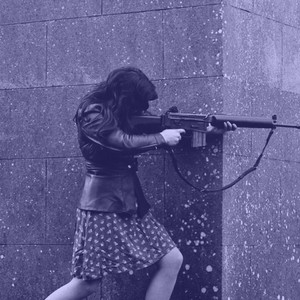
The peace lines are still up, and on one side there are murals, wall paintings of IRA members brandishing machine guns and the Irish flag.
While on the other, you'll find the Union Jack, the flag of Great Britain, flying proudly above shops and houses.
If you remember, 41 % of all the people killed during the troubles were under the age of 25, and most members of the paramilitary groups on both sides were young men.
This category of people today, anyone under the age of 25, was not born when the Good Friday Agreement was signed.
And this is a fear about Northern Ireland.
One of the key things that keeps the peace is the lived memory of how bad things were, and the young people of today who might think their political aims can be furthered by violence have no personal experience of what life was really like during the period.
Fortunately, tens of millions of people across Ireland, Northern Ireland and Great Britain can remember, and it is their and our responsibility to make sure that nobody forgets.
Okay then, that is it for today's episode on the troubles.
I mentioned it at the start, but it is such a complicated period of history, and there are so many interesting elements to it that we didn't have time to talk about today, from going deeper into the political aims of each group through to stories of spies, murder and more.
And there is also the impact of Brexit on Northern Ireland, which is a topic for its own episode.
If it is a subject that you'd feel you'd like to delve more into, I would highly recommend a podcast called The Troubles Podcast.
There are almost 100 episodes, each nearly an hour long, and the host speaks clearly with a wonderful Irish accent.
So if you'd like to explore this subject further, that's the one to go for, it's called The Troubles Podcast.
You've been listening to English Learning for Curious Minds by Leonardo English.
I'm Alistair Bunch, you stay safe, and I'll catch you in the next episode.