Hello and welcome to Chinese Folk Tales.
I'm Lisa O'Sullivan and I've got a very special story to tell you.
I hope you enjoy it.
Now, as many of you know, in China each year is associated with one of the 12 animals in the Chinese zodiac.
In this special edition, we're waving goodbye to the Year of the Rabbit and welcoming the Year of the Lung, or the Year of the Chinese Dragon.
That makes it a very special year indeed.
There is a very good chance of encountering nearly all of the animals in the chinese zodiac in your daily life.
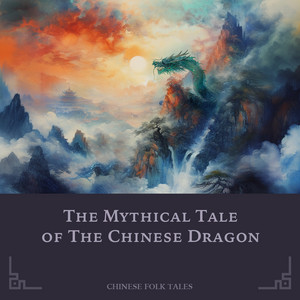
But the chinese dragon, or lung in chinese, takes a bit of imagination to see.
But that doesn't make it any less real.
The chinese dragon is a symbol of strength power wisdom, nobility and good fortune.
It's also associated with rainfall and the fertility of the land.
But how has the Chinese dragon come to represent all of these great qualities and things?
There are so many explanations, so many to choose from.
But how about this one? on a day such as this.
People were going around their business preparing for a new year of cultivation, getting new seeds, removing weeds, ploughing and fertilising their land.
In fact, they were so busy that they totally forgot about worshipping heaven for the good luck they had been able to enjoy.
The Jade Emperor, the supreme ruler in heaven, who also presides over the human world, was not very happy about this negligence.
I don't believe it.
How impolite of these people.
Have they completely forgotten about the principles of basic courtesy?
Your Majesty, might I respectfully suggest that you punish them?
Punish them?
A subordinate had approached and knelt down to offer his advice.
You could demand that the Dragon King who, as you know, is in charge of rain, prevents the rain from falling.
That would surely teach them a lesson.
That sounds like a lesson they would remember.
And that's just what happened.
The Dragon King decreed that rain would not fall.
As a result, there was a drought that lasted for three years.
Crops withered in the fields, rivers almost dried up, and famine spread across the land.
Everyone was fighting for survival and became increasingly desperate.
Now the youngest son of the Dragon King, the azure-coloured Chinese dragon Qinglong, was sad to see the people suffering so
Oh, this is truly awful.
I can't bear it.
The mortals don't deserve this.
It's just not fair.
If only there was something I could do.
He hatched a plan.
I will quietly bring some rain during the night when everyone is asleep.
This will water their crops and then they'll have something to eat.
And?
That's exactly what he did.
But there was just one problem.
The following day, the Jade Emperor was filled with rage at what Qinglong had done.
He summoned Qinglong for a severe reprimanding.
Who do you think you are?
I wanted to punish the people for neglecting to honor heaven for their bounty.
And what did you do?
You went and rained on them.
Yes, but... Enough.
You're no better than them.
The same subordinate stepped forward, petitioning the Jade Emperor to enact punitive measures.
Punish him, Jade Emperor?
Yes, but how?
Why not drop a mountain on him and trap him?
That's it.
I now rule that a mountain shall be dropped upon you, and underneath the mountain you shall stay Forever.
Your majesty,
That seems a bit harsh.
Well, I suppose that Qin Long could stay under the mountain until... until...
The golden beans bloom.
Then so be it.
It is decreed.
It is decreed.
It is decreed.
Jin Lung must remain under the mountain.
Until the gold beans bloom.
Until the gold beans bloom.
And so Ching Lung was placed under a mountain, awaiting the day when the gold beans would bloom, which was essentially forever.
A tablet was erected with the following words.
Qinglong has violated the laws of heaven and shall be punished for eternity.
Only when gold beans bloom will redemption be possible.
When the people saw the stone tablet and how Qinglong was suffering, they were very sad.
That's awful.
He was only trying to help us.
If only there was something we could do.
Good luck with that.
The Jade Emperor decreed it.
I'm not going to go against his word.
You do it if you dare to.
As it happened on the second day of the second month on the traditional Chinese lunar calendar, an old man was drying soybeans and corn kernels.
Oh, isn't this fun?
These seeds, so yellow, they look like gold beans.
I've often noticed that before.
The old man put the soybeans and corn kernels in a wok, put the lid on and stir-fried them.
After a while, he heard a noise.
A popping, crackling sound.
What's happening?
Oh look, look, isn't this something?
The gold beans are blooming like flowers.
All the people gathered around and agreed that they certainly looked as if the gold beans were blooming.
They all hurried back to their homes and tried the same.
Before long, all the households had plates and plates of popped soybeans and corn kernels.
They set up tables in the street to show off this miraculous turn of events.
The Dragon King learned of this and came to take a look.
Good heavens!
This certainly looks like the gold beans have bloomed.
He immediately went to the Jade Emperor and submitted a report of what he'd seen.
The Jade Emperor descended to see for himself.
This certainly seems as though the gold beans have bloomed.
I suppose I have no choice but to pardon Qinglong and release him from under the mountain.
And he commanded... So be it!
Qinglong, I order you to help your father bring rain back to the human world.
Almost immediately, with a thunderous roar echoing through the sky, the mountains split in two.
Qinlong burst through the rocks, lifted his head, emitted a long roar and soared right into the sky with pleasure.
The sky was filled with black clouds and the heavens opened bringing torrential rain.
Almost immediately the crops began to revive.
The land became green and lush.
The streams were as clear as crystal.
Chin Leung was so happy.
He circled above the heads of the people expressing gratitude for their rescue.
Thank you, thank you.
I cannot thank you enough for getting me released from the mountain.
I wish you all prosperity and bumper harvests for the year ahead.
Ever since then, the second day of the second month in the traditional Chinese lunar calendar has been designated as Dragon Lifting Head Day, a momentous occasion when people symbolically celebrate the awakening of the dragon.
People wish each other prosperity and strength at this time.
They fry popcorn and look forward to a prosperous year ahead.
And that's our story.
There are many more, but this one is as good as any.
Maybe you know others.
Either way, the Year of the Dragon promises to be a year of innovation, vision and growth.
And who can complain about that? it only remains for us to say... Happy Year of the Chinese Dragon.
Health, wealth and happiness for the new year ahead.
Thanks for listening.
If you're interested in hearing more Chinese folktales...
Follow us on your favourite podcast platform.
Subscribe to Chinese Folk Tales for free on Apple Podcasts, Spotify or wherever you get your favourite podcasts.
Bye for now.