Hi there, Alistair here.
You might have seen that we're doing something special this week.
We're releasing a previously member -only episode, like this one, every single day.
All the accompanying interactive transcripts, subtitles and study packs are also free for this week only, so I hope you'll enjoy them.
The other thing we are doing is perhaps even more special, and it's a once a year Black Friday sale.
Until midnight on Sunday 1st December, you can get 33 % off your first year of our annual Pro membership, saving a whopping 67 % versus the monthly price.
This gives you access to more than 250 bonus episodes, interactive transcripts, study packs with advanced vocabulary and quizzes, and learning challenges like the one that is starting on Monday 2nd December.
Essentially, it turns this podcast from an interesting thing to listen to, into an incredibly powerful tool for improving your English.
Okay, enjoy this special bonus episode and if you'd like to unlock more than 250 more member -only episodes at a massive discount, well there's a link to our Black Friday sale in the description for this episode.
That's it, and I hope to welcome you as a member soon.
Hello, hello, hello, and welcome to English learning for curious minds by Leonardo English, the show where you can listen to fascinating stories and learn weird and wonderful things about the world at the same time as improving your English.
I'm Alistair Budge, and today we are going to be talking about the amazing story of the Affair of the Diamond Necklace.
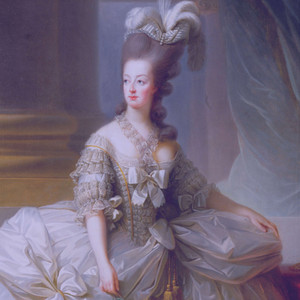
If you've been paying very close attention, you might remember this being mentioned in Passing in episode number 429 on the life of Marie Antoinette, but in today's episode, we are going to go a lot deeper into this fascinating story that sounds almost too good to be true.
It brings together queens, cardinals, prostitutes, con artists, diamonds, forgery, theft and revolution.
Ok then, the Affair of the Diamond Necklace.
You probably know the 1952 song by Marilyn Monroe.
Diamonds are a girl's best friend.
It starts like this.
The French are glad to die for love, they delight in fighting duels, but I prefer a man who lives and gives expensive jewels.
Exactly 180 years before that song was released, the most powerful man in France did not die for love, nor did he delight in fighting jewels, but he did decide to give a woman he loved the most expensive jewels imaginable.
Louis XV, the King of France, had a mistress with particularly expensive taste, Madame du Barry.
He wanted to do something completely over the top, and give her a piece of jewellery that blew everything else out of the water.
He called for the finest jewellers in Europe, Charles Auguste Beaumere and Paul Boissange, and commissioned a vast diamond necklace containing 650 diamonds and weighing almost 2800 carats.
Even if you are not a diamond connoisseur, you might have some idea that that sounds like a lot, but let me give you a few more details for you to truly understand the scale of it.
It weighed over half a kilo, half a kilo of diamonds to hang around your neck.
Even today, in the age of multi -billionaires, the most expensive diamond necklace in the world is 383 carats.
So this necklace was more than seven times more luxurious than the most expensive one that exists today.
It was vast, a huge collection of diamonds so ostentatious, so over the top, that its purpose was to scream, look at me, look at how expensive this is.
The cost was two million livres, which is around 15 million euros in today's money.
The jewellers started work on it, procuring the diamonds with a small down payment from the King.
Sourcing the rest of the diamonds was very expensive and took a long time, several years, because the jewellers had to save up and go into debt to pay for the raw material for the diamonds.
But this was the cost of doing business.
After all, the King had ordered it and when the necklace was complete, he would settle the bill quickly and the two jewellers would be in for a huge payday.
However, before the necklace could be completed, Louis XV died.
When the throne passed to Louis' grandson, Louis XVI, the jewellers hoped that they could sell the necklace to his wife, Marie -Antoine Itz, who had a bit of a reputation for the finer things in life.
But she was having none of it.
Firstly, she strongly disliked the original intended recipient of the necklace.
Her husband's grandfather's mistress, so she didn't want to wear the jewellry of a woman she despised.
Secondly, the mood had changed in France.
Sure, Marie -Antoine Itz was no stranger to luxury, but even she could understand that wandering around in half a kilo of diamonds while revolutionary fever was brewing might not be the best idea.
She was offered the necklace multiple times by the jewellers directly and by her husband, but each time she rejected it.
So, the jewellers were in a bit of a bind.
They had this huge necklace, worth literally millions, but it was so expensive that nobody could afford it.
They had to wait, bide their time in the hope that Marie -Antoine Itz would change her mind, or that someone else might come along, who might have pockets deep enough to take the necklace off their hands.
And it's here that we must meet another character in our story.
Her name was Jean Beauvalois Saint -Remy.
She was born in 1756, so was a direct contemporary of Marie -Antoine Itz, who was born a year earlier.
Jean's mother was a servant of low social status, but her father was a descendant of an illegitimate son of Henri de...
Henry II in English, the 16th century French king.
Despite her father's claims of nobility, the family had no money.
Jean's father would tell anyone who would listen about his supposed noble lineage in the hope that someone would put in a word and he would be given land, a title, and the allowance that he felt he was owed.
It didn't work. He was rebuffed at every turn, and his children, including Jean, were forced to beg on the streets.
When begging, the children were told to tell people about their noble lineage, asking people to take pity on someone with noble blood.
This, in fact, did work.
The children caught the eye of an elderly noblewoman who took them under her wing and vowed to help them win back their royal title.
After a genealogist was consulted, Jean was confirmed as an illegitimate descendant of Henry II, given a small monthly allowance and sent to a boarding school.
Her life's trajectory had changed, and she vowed to make the most of it.
Jean grew into a strong, brave, and outgoing woman, and, like her father, she was not afraid to tell anyone who would listen about her noble blood.
She got married to an officer called Nicolas de la Motte, and the pair started calling themselves Cont et Contes de la Motte Valois, Count or Countess.
And, just in case you are unfamiliar with how aristocratic titles work, you can't just call yourself Count.
If you don't inherit it from a parent, you need to be granted that title, typically by the ruling monarch.
But Jean, as you'll come to find out, was never one to let real -world restrictions get in the way of ambition.
As long as she called herself a Countess, she behaved and lived like a Countess.
Then people would believe that she was indeed a Countess.
The first problem was that being a Countess is expensive.
You have to maintain a certain lifestyle, and she was unable to do that on her officer -husband's modest salary.
She wanted to ask Marie Antoinette directly if she would support giving her a larger allowance, as a member of the nobility, but Marie Antoinette wouldn't even meet with her.
She had heard rumours about Jean's life being associated with someone who had an unorthodox life, shall we say.
See, despite being married, Jean was having an open affair with one of her husband's friends.
A man called Eretot de Villets.
And this affair was tolerated, and perhaps even encouraged, by her husband.
Marie Antoinette had no interest in associating herself with this woman, and refused all of Jean's advances.
So, she tried a different approach.
Sometime in the mid -1780s, she met a cardinal, a senior church official, called Cardinal de Roan.
The cardinal was older than Jean.
He was in his 50s, and he had developed a reputation for indulging in some not particularly church -like behaviour.
Specifically, he was known to have affairs, despite having taken a vow of chastity of being celibate.
He also lived a life of huge luxury, spending vast amounts of money.
He was also power -hungry.
He sought to have a greater influence in the world of French politics.
The problem was that he too was out of favour with Marie Antoinette.
Not only had he spread rumours about the French queen, but he had made fun of her mother at a dinner party.
Marie Antoinette had never forgiven him, swearing to have nothing to do with him.
As a senior church official, he had baptised her children, but she reportedly looked away from him for the entire service.
Such was the disdain that she held for him.
Jean met the cardinal, and despite being 20 years his junior, the two soon became lovers.
The extent to which this was true love, or whether it was Jean using the cardinal, or perhaps even the cardinal using Jean, is unknown.
As we'll see, it seemed like it could be an advantageous alliance for both of them.
Jean told the cardinal that she was friendly with Marie Antoinette, and that she could help him win back her favour.
The problem was, Jean was not friendly with Marie Antoinette.
She had never even met her.
But this small detail wasn't going to derail Jean's plan.
She told the cardinal that she, Jean, would act as a go -between between him and Marie Antoinette.
She would put in a good word about the cardinal, and slowly, slowly, he could restore his relationship with the queen.
A letter exchange is formed.
The cardinal writes Marie Antoinette letters, gives them to Jean to pass to Marie Antoinette, and then Jean brings back a letter from Marie Antoinette to the cardinal.
The letters start off cold, with Marie Antoinette distant and unfriendly.
And then she makes an odd request.
Marie Antoinette, in one of the letters, writes that she needs to know that she can trust the cardinal.
She would like his help in transferring 60 ,000 francs to help a friend in financial distress.
Marie Antoinette could ask the king, but she doesn't want to tell him about this.
And if the cardinal could help, this would be most appreciated, and show that he was serious about their relationship.
So, the cardinal agrees, and duly gives Jean the money to give to Marie Antoinette.
Marie Antoinette writes back that she was most thankful, and she seems to warm up to the cardinal, becoming friendly and warm in her correspondence.
After this, there were further requests for money.
It seemed that Marie Antoinette didn't have a lot of cash on hand, and she would often ask the cardinal for a few thousand francs here or there to give to charity, or to give a friend, or so on.
But, as you can probably imagine, these letters were not from Marie Antoinette.
Jean's lover, Retaud de Villets, was an expert forger, skilled at copying other people's handwriting.
Jean would stand and dictate the letters, and he would write them, signing them as if he were Marie Antoinette.
And, of course, the money never went to the queen.
It was all an elaborate con from Jean, who used the money to buy a townhouse, to buy dresses and furniture, to pay for the noble life that she felt she was entitled to.
The cardinal had no idea.
And, what's more, he even started to believe that Marie Antoinette was falling in love with him.
She wrote in such a sensuous manner that he felt the French queen was urging him on.
The problem was that in public, Marie Antoinette showed no sign of affection towards the cardinal.
Her look was cold. She never acknowledged him in public, and it seemed that nothing had changed.
Jean started to get nervous, fearing that this ruse, this trick, would be discovered if the cardinal ever asked Marie Antoinette about it in public.
So, she came up with another trick.
She decided to arrange a meeting between Marie Antoinette and the cardinal in the gardens of Versailles, the royal residence, in the middle of the night.
The cardinal was ecstatic and brought a rose to give the queen as a gesture of his love for her.
In the middle of the night, he arrived at a secret meeting and threw himself down at the feet of a woman he believed to be Marie Antoinette.
It was not Marie Antoinette.
Jean had sent her lover out into the streets of Paris to find a convincing lookalike.
And he had found a prostitute who bore a striking resemblance to Marie Antoinette, and paid her to dress up as the French queen.
In any case, the plan worked.
The cardinal was sure his love was not unrequited, that the French queen loved him back.
And then something happened that gave Jean an opportunity she had not been expecting.
While at a dinner party one evening, she heard talk of the two French jewellers who were still unable to sell this elaborate diamond necklace.
We're at the start of 1785 here, 13 years after the necklace was first commissioned, and still nobody has bought it.
Jean has told everyone that she's close to Marie Antoinette, so she is asked whether she thinks she can persuade Marie Antoinette to finally buy the necklace.
And a plan pops into Jean's head.
She tells the cardinal that she's spoken to Marie Antoinette about the necklace.
The queen would like to buy it, but she doesn't want it to be publicly known that she is the buyer.
Marie Antoinette was already viewed as an ostentatious, free -spending foreigner, and if word got out that she had bought the most expensive necklace in her history, well, this would not be good for her already unfavourable public image.
But there was a solution.
Jean told the cardinal that he would be doing Marie Antoinette the most monumentous favour by acting as a go -between, ordering the necklace from the jewellers and then delivering it to her.
This way the queen would get the necklace without anyone ever knowing, and if he did this, Marie Antoinette would be forever in his debt.
It was an offer the cardinal could not refuse.
This was his chance, finally, to win back the queen, perhaps even make her his lover, and secure the political power he had so longed for.
He wrote to the jewellers and offered to buy the necklace on behalf of the queen.
She would pay in instalments, he said, and he showed the jewellers the queen's letters to him, to prove to them that this was a genuine request and that he was good for the money, or rather, she was good for the money.
The jewellers saw the letters and accepted.
He was a high -ranking cardinal and Marie Antoinette was Queen of France.
Of course they would be good for it.
The jewellers handed over the necklace, no doubt rubbing their hands in anticipation over payday they had been waiting 13 years for.
The cardinal hurried to Jean's house.
There was a knock on the door and a man who the cardinal believed was the queen's valet came to take possession of the necklace.
The deed had been done.
A few weeks went by, but the cardinal was surprised to never see the queen wearing the necklace, even behind the closed doors of Versailles.
Also, there was no sign of this long -awaited acceptance into her inner circle.
She was as cold as ever towards him.
Of course, the necklace never got to the queen.
It was broken up and the individual diamonds were sold on the black markets of Paris and London, never to be seen again.
When it came to the due date of the first instalment, the first payment for the necklace, the jewellers received nothing, neither from the cardinal nor from Marie Antoinette.
Days went by, and not wishing to embarrass Marie Antoinette publicly, given the discreet nature of the purchase, they first wrote to the queen, politely reminding her that she had an overdue balance of some 15 million euros.
Marie Antoinette, of course, had no idea what the letter was about, and did the 18th century equivalent of marking it as spam, throwing it in the fireplace.
Several more days go by, and with no response to their letter, the jewellers turn up at Versailles and ask Marie Antoinette directly.
She says she has no idea what they're talking about, and they promptly bring out a letter, signed by her, Marie Antoinette de France, Marie Antoinette of France, agreeing to buy the necklace.
Marie Antoinette looks at the letter and scoffs.
It's clearly a fake, as a real queen would never sign de France of France.
It's obvious where she is from.
This is clearly the mark of a fraudster.
The penny then drops, and the jewellers realise that they had been tricked.
The cardinal is dragged to Versailles and is publicly arrested in Versailles' hall of mirrors.
He is believed to be an active participant in the fraud.
He, for one, should know that a king or queen never signs their name de France, so he should have spotted the forgery a mile off.
He didn't. He was taken away to the Bastille, the famous prison in central Paris.
It didn't take the authorities long to track down Jean, her lover and husband, who were all presumed to be accomplices.
There was a huge public trial, with people cramming to get into the courtroom.
Despite the fact that Marie Antoinette was almost certainly an innocent victim of this fraud, she was so loathed by much of the French public that people simply didn't believe her innocence.
Journalists wrote that she must have been involved, such was her love of luxury, or that this was part of a plot to dupe a naive and gullible enemy in the form of the cardinal.
It did huge damage to her already battered public image, and, according to some at least, was even the straw that broke the camel's back in the French Revolution.
As to Jean, she was sentenced not only to life imprisonment, but first to be publicly whipped and branded, burned with a V for veaux leurs, thief in French.
She didn't spend long behind bars though, as she managed to escape disguised as a boy, fleeing to London where she wrote her memoirs.
Unfortunately, Jean did not live a long and happy life, and it seems that the money from the sale of the diamonds ran out more quickly than she had hoped.
In 1791, six years after the and aged just 35, she tried to escape from debt collectors and fell out of a hotel window, suffering what sounds like a pretty horrific death.
She never managed to achieve the wealth or noble titles that she felt she was entitled to, and, ironically, she played a not insignificant role in the French Revolution, and the destruction of the aristocratic system that she had so longed to be a part of.
Okay then, that is it for today's episode on the affair of the diamond necklace.
If you would like to dive more into this period of history, we have episodes on the life of Mary Antoinette and the French Revolution.
Those are episodes number 429 and 152 respectively.
So I'd encourage you to check those out if you haven't done so already.
You've been listening to English Learning for Curious Minds by Leonardo English.
I'm Alistair Bunch, you stay safe, and I'll catch you in the next episode.