
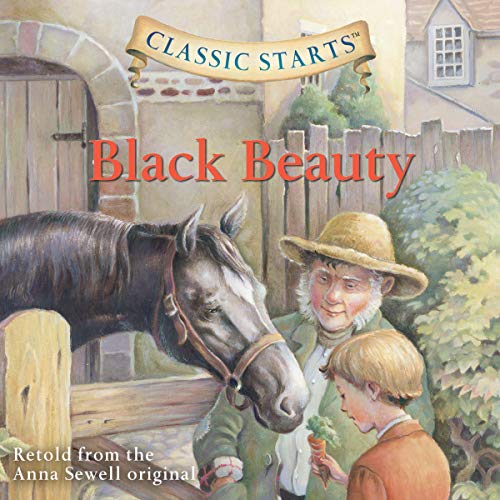
[Lessons in Cruelty and New Beginnings: Reflections from Chapter 5]-[Black Beauty - Part 06]
📋 Summary
The Cost of Cruelty: A Lesson in Empathy
Chapter 5 of the narrative presents a striking moral lesson regarding the treatment of animals, centered around a young boy’s interaction with his pony. The story begins with a scene of overt abuse, where a boy attempts to force his pony to leap over a gate that is clearly "too high for him." When the animal refuses, the boy resorts to aggression, hitting the pony "hard with a whip," and subsequently striking the animal "several times in the head." This behavior escalates to the boy kicking and punching the pony in frustration.
The narrative takes a turn for justice when the pony, pushed to its limit, finally rebels. By putting his head down and throwing up his heels, the pony successfully sends the boy "over a hedge." John, the observer in this scene, refuses to assist the boy, remarking, "Serves you right." John’s refusal to intervene is rooted in a fundamental belief that the boy’s actions were unjust. He explicitly tells the boy, "You shouldn't jump a pony over a gate that's too high for him," emphasizing that the pony had "behaved well and tried its best" before it could "take it no more."
Accountability and Parental Responsibility
John takes the matter further by informing the boy’s father, Farmer Bushby, about the incident. Upon arriving at the farm, the tension is palpable as the parents fear for their son's safety. However, once John explains the context—that the son was "whipping and kicking and punching that little pony"—the father’s reaction shifts from panic to realization. The father recognizes that the pony is "better off without a rider" and acknowledges that his son "needs to be taught a lesson," noting that this is "not the first time he has been mean to that animal." This interaction highlights the core theme that "cruelty being the devil's trademark" is a serious character flaw that requires correction, even within the family unit.
Transitions and Professional Growth
Following the resolution of this conflict, the narrative shifts toward the professional development of the characters. In early December, the master receives a letter from his brother-in-law, Sir Clifford Williams, seeking a younger coachman to learn the trade at Clifford Hall. This presents a significant opportunity for James. Despite the mutual affection between James and John—with John stating, "I would hate to lose you as well, James"—they both understand the importance of growth. John, demonstrating selfless support, asserts that he "would never stand in your way for the world." The chapter concludes on a hopeful note, with the arrangement finalized for James to transition to a new position where everyone is "sure he would be wonderful at his new job."
In summary, this chapter serves as a bridge between the moral imperative of kindness toward those under our care and the inevitable evolution of one’s career path. Whether dealing with a mistreated pony or contemplating a professional move, the characters are defined by their integrity and their commitment to doing what is right.
Deep Learning with ListenLeap


