
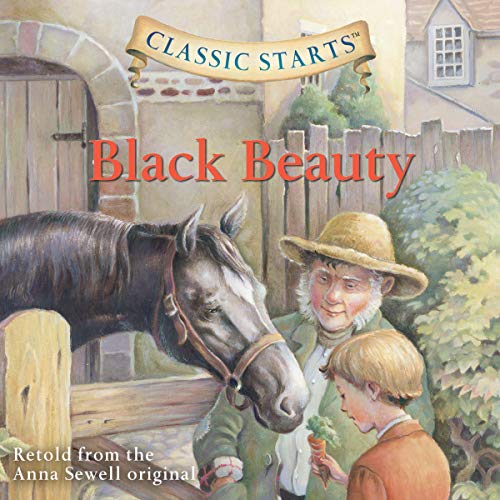
[Reflections on Life and Empathy: The Stories of Ginger and Merrylegs]-[Black Beauty - Part 04]
📋 Summary
A Journey Through Hardship and Kindness
In this chapter of Black Beauty, the narrative shifts from the protagonist’s personal experiences to the poignant backstories of his stable companions, Ginger and Merrylegs. Through their accounts, the text explores the profound impact of human treatment on animal behavior, highlighting how empathy and kindness serve as the foundation for a harmonious relationship between master and horse.
Ginger’s Troubled Past: The Cost of Harshness
Ginger’s story is a sobering reflection on the consequences of mistreatment. As a "high-spirited horse," she required patience and understanding, yet she was met with neglect and cruelty. She recalls being "shut up in a stall day after day" without exercise, which led to her frustration. Her conflict with the master’s son, Samson, serves as a pivotal moment of trauma; after he hit her with a "rein" and she attempted to defend herself by "rearing up" and "kicking," she was left abandoned in a field, hungry and suffering.
It was only when the old master intervened, speaking "gently" and tending to her wounds, that she began to recover. Ginger’s subsequent life in London, where she was forced to wear a "bearing rein" to look "fashionable," demonstrates the vanity of humans often at the expense of animal welfare. The constant physical pain in her neck and the lack of consideration from her handlers made her "mean-tempered," proving that a horse’s temperament is often a mirror of how they are treated. However, under the care of John and James, she begins to soften, proving that "all it takes is kindness" to transform even the most broken spirits.
The Wisdom of Merrylegs: Discipline and Loyalty
Merrylegs offers a sharp contrast to Ginger’s cynicism. As a pony favored by the children, he maintains a sense of dignity and duty. His account of "pitching" some boys off his back when they pushed him past his limits with "whips made of sticks" is not an act of malice, but a calculated lesson. Merrylegs explains that while he was tired, he was "very careful with the young ladies and the little children," showing a protective instinct that Ginger lacks.
His philosophy is rooted in deep loyalty. When Ginger suggests he should have "given those boys a good kick," Merrylegs refuses. He states, "I would not like to make my master or James ashamed of me," noting that they "trust" him. His reasoning is pragmatic and heartwarming: he loves his masters and fears that acting out would result in being "sold in a jiffy" to a cruel owner. Merrylegs represents the ideal relationship of mutual respect, where the animal understands the human’s intent and chooses to remain a gentle companion.
Conclusion: The Power of Compassion
The chapter serves as a moral commentary on the responsibilities of stewardship. Through the contrast between Ginger’s past trauma and Merrylegs’ disciplined loyalty, the narrative underscores that animals are not merely tools for transport or entertainment. They are sentient beings who respond to the "sweet and soothing" words of a kind master. As John observes, kindness is the universal language that turns a difficult mare into a pleasant companion, reinforcing the central theme that the quality of one's life is inextricably linked to the compassion shown by those in charge.
Deep Learning with ListenLeap


