
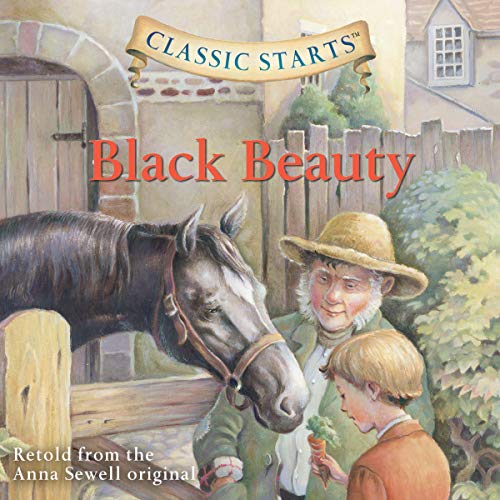
[The Formative Years: A Reflection on Black Beauty's Early Life]-[Black Beauty - Part 02]
📋 Summary
The Formative Years: A Reflection on Black Beauty's Early Life
A Gentle Beginning in the Meadow
Black Beauty’s early life is characterized by a serene and idyllic existence in a "large pleasant meadow." Growing up under the watchful eye of his mother, the Duchess, Beauty spent his days playing with other colts. However, the contrast between Beauty’s upbringing and his peers was stark. His mother, a "wise mare," instilled in him the importance of being "well-bred" and maintaining a "good temper." She explicitly warned him against the "bad ways" of the cart horse colts, who would "kick and bite," emphasizing that he should "do your work without complaining" and always remain "gentle and good."
The Trauma of the Hunt
One of the most defining moments of Beauty’s youth was witnessing a brutal fox hunt. The narrative describes a harrowing scene where the hounds chased a terrified rabbit, resulting in a "shriek" that marked the end of the creature. The chaos of the hunt led to a tragic accident involving the squire’s son, George Gordon, and a horse named Rob Roy. Watching the horse being "badly injured" and subsequently put down with a "loud bang" left a lasting impression on Beauty. His mother, visibly "upset and sad," avoided that part of the field ever after, signaling Beauty’s first encounter with the senseless violence often brought about by human activities.
The Process of Being "Broken In"
As Beauty reached the age of four, he underwent the rigorous process of being "broken in." Squire Gordon evaluated his physical attributes, noting his "soft and bright black" coat and his white star. This transition required Beauty to adapt to significant physical constraints. He had to learn to accept the "bit and bridle," the heavy "iron" shoes fitted by the blacksmith, and the restrictive "blinkers" that forced him to "look straight ahead." Despite the discomfort—particularly the tail strap that made him feel like "kicking"—Beauty maintained his composure, noting that he "did not kick my kind master" because of his patient approach.
Education and Adaptation
Beyond physical training, Beauty had to learn to navigate the sights and sounds of the human world. When exposed to the "long black train" that went "puffing out billows of smoke," he initially felt "scared." However, by observing the calm behavior of the sheep and cows, he learned to "ignore the trains." This period of training was essential in preparing him for his future service, teaching him to remain steady and composed regardless of external disturbances.
Lessons for the Future
As he prepared to leave for a new home, his mother’s final advice served as a moral compass. She reminded him that while "some are good, but many are foolish," the life of a horse is often a "matter of chance." Regardless of who buys or drives him, Beauty is urged to "do your best wherever you are and keep up your good name." This foundational wisdom frames Beauty's character, setting the stage for his lifelong commitment to duty, kindness, and resilience in a world where he has little control over his own destiny.

Deep Learning with ListenLeap


