Discussion keeps the world turning This is Roundtable You know the trend that's ruffling feathers across nature, photography and travel lovers in China this spring?
Bird watching. Celebrities are joining in, tourism bores are rolling out bird maps, and internet users are geeking out over great crested grebes, and that is the name of a bird. But, why are so many people zooming in on birds?
Is it the gear? The glory?
Or something deeper, like a quiet love letter to nature?
Coming to you live from Beijing, this is Roundtable.
I'm He Yang. For today's program, I'm joined by Steve Hatherley and Yu Shan in the studio.
First on today's show, move over cat videos.
China's newest influencers have wings.
This spring, bird -watching has gone from quiet hobby to social -media sensation.
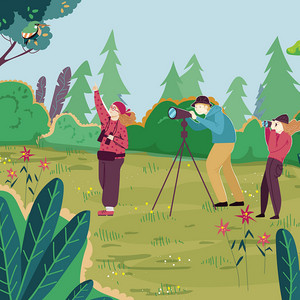
In parks from Beijing to Dali, flocks of photographers, some with pro lenses, others with just a phone, are chasing that perfect flutter, snap, and post. What started as a niche hobby among camera -wedding park -goers has now taken flight nationwide, with tourism bureaus across China rolling out the welcome mat for bird lovers.
So birding is an established hobby among enthusiasts around the world but this spring, the buzz has reverberated beyond the inside circle.
Tell us what's going on.
Yeah well with the spring that that is now in full bloom now in China, it's not entirely surprising for us to hear that bird watching or bird photography more specifically has now become this captivating trend that is whipping across the entire country.
And on April the 4th, very recently, the Ministry of Ecology and Environments had already shared a post via its social media highlighting how bird photography had recently become this trendy topic and has led to a wide discussion online.
And photos of just vibrant plumage, elegant silhouette in flight, and rare bird sightings.
They're all filling up social media feeds and just sparkling such a collective out for Wildlife and just birds appreciation in general, even there's a well -known actor I think I'm not in really a fan of that actor, but I heard that he has been recently spotted in Beijing's Yuantan Park and perfectly blending into a group of dedicated Say bird photographers and just adding feel to the growing fascination for bird photography as well.
So now it's just a popular activity among both amateur and professional bird photographers.
And yeah, many people are now into it.
I heard that youngsters include, including just maybe people born after the 2000s, even though bird -watching or bird photography used to be stereotypically viewed as something enjoyed by older generation?
Am I correct? I think that's a fair assessment, yeah that's probably true in North America as well.
I was reading a blog post from the CBC about a young bird enthusiast, a young woman, in her 20's, and she joined, this was in Ontario, she joined a bird watching group, and in the beginning she said the same thing.
It was mostly older members, but then slowly as the past and over time more and more younger members started to join she started to see more and more posts in the group from younger people and she found that to be kind of a really cool and really encouraging thing is that the hobby that was typically seen and I think there's that's true there's kind of a stigma in the West anyway I'm not sure about here in China about bird watching it's kind of for nerds and older people and it's not really considered cool but that's changing now and more young people are getting involved as more young people
are getting more connected to nature.
I'm glad that there isn't such stigma in China but I bet that everybody's got, in your WeChat friend moments, somebody's dad or somehow you know that this is possibly a retiree who has daily updates of photography of all kinds of birds in the wild.
And these folks publish in their WeChat friend circle with a sense of pride.
And I think that's great.
They have the leisure time, they have possibly the money to purchase expensive camera, and they have this wonderful feeling of sharing with the world, of this little messenger of nature And also, during springtime, you get lots of birds, I guess, out there.
And this is prime time for them to take these pictures and share with the world.
I mean, I used to think just like how I described Huiyuan, like maybe this is just something for people who truly appreciate it.
But once I see the pictures taken and those posts shared online, I kind of understand why it's so fascinating.
Yeah, you get it right.
Like birds' dynamic movements, There's this fusion of enjoying nature and art that's all depicted through the say the feathers color and they're just Vivid movement on water in the sky on the tree branch. That's very say Elegant in a way and it reflects the most vivid Side of that nature that we all live in but perhaps don't pay attention to on a daily basis I totally agree with that.
Yeah, there's a lot to it, right?
Because these photographers, they can capture moments that will disappear almost immediately, right?
Depending on what the bird's activity happens to be at any given time, and there's something very poetic about that, something very artistic about that, so that's the romantic side of the hobby, I think.
But then, you have the technical side, too.
I mean, a lot of people who go out to do this, they take this very seriously, don't they, and they have really good gear.
They have really good equipment to help them with their hobby.
They can get advanced cameras with telephoto lenses and high speed burst shooting and precise autofocus.
And for the tech savvy enthusiasts, you've got that part of their personality satisfied, and then if they also enjoy nature and these quiet serene environments, then that satisfies that aspect of it, too.
So it's kind of two worlds in one.
And some of them even carry this up to a whole new level.
Like, I'm not just enjoying nature by taking photos of the birds.
I am trying to create art or create this photograph that's going to, say, win a competition of sort or be surprisingly appreciated by other photographers in the field.
That's why there's this some sort of a gear competition among these professional photographers as well.
and experts say that entry level bird watching gear starts around ten thousand yuan yeah that's fourteen hundred US dollars but expensive equipments are really expensive ones that's not really necessary for everybody even just a basic camera can allow beginners to appreciate the entire bird watching experience it's just like any hobby, isn't it?
you know you go out for the first time and maybe you'll even borrow someone's gear or rent something for a day but no I kind of like this and as you get more into the hobby then you start spending more on the hobby and that's that's an option here is well yeah and that gives consumption a boost oh wow and it's really funny when you guys mentioned the cameras and you know people waiting for the bird to come out and there are some prime locations in Beijing that I know.
For example, I like to take a stroll in the Tiantan Park, the Temple of Heaven park, and I noticed that there's one tree out of so many trees in that park.
It always have, I would say at least 50 people, each with the professional camera, and pointing at that particular tree.
Like almost every other weekend when I go, I see these people there.
And then it's really funny.
This reminds me of once when I was reporting at the Beijing Film Festival and then the paparazzi, as well as, shall I say legitimate photographers.
When you're waiting off on the sideline of the red carpet for some famous movie star to come out and everybody's got their professional cameras waiting.
And then once the person steps on the red carpet everybody's like - Flash.
It was exactly the same treatment for that bird and then I remember like those professional bird watchers they did not once the bird sort of like showed its beak and then they were all like suppressing the oohs and aahs because they didn't want to scare away the bird as they were taking photos that just shows the level of enthusiasm of people.
It doesn't have to be that level though to get started.
You can use your phone too, right.
It doesn't have to be expensive.
There are entry level costs as well.
That you can shave some money off of the bill.
So I bet that tree in the Tian Tan Park, the Tawahalla Heaven Park is one of the well known spots.
What are the other popular birdwatching paradises in this country that's worth our attention?
Well, there are around, say, 11 ,000 bird species worldwide and about 1 ,500 species have been recorded here in China, and that's reported by CCTV news.
So with so many varieties and species of birds in this country, it's not entirely surprising that we have so many, say, bird -watching good spots.
Take Beijing, for example.
There's this Beijing's Yu Yuan Tan and Olympic Forest Park.
And Yu Yuan Tan Park is a bit closer to where we work.
I think it's on the central western side of Beijing.
And I took a few trips next to it in the past few weeks, especially during the weekends.
And I'm telling you, it's crowded in a way that I've never seen before.
or even traffic police officer were there in line trying to tell the cars to move forward, move forward, no stopping by, you need to turn around and stop at a different gate or something.
It's so popular these days, because it attracts over 130 bird species that includes great crested grebes and gray herons.
And then the Olympic Forest Park has recorded 299 species, including rare ones like the read Harold's bill.
That's the first time I've ever heard about this bird species before.
And I've also had the pleasure of chatting with one of our office colleagues just now before we entered the studio.
And she and her husband and apparently her father are all bird watching enthusiasts and they're all based in Beijing.
And according to her, they have been noticing just new birds species every year.
Even at the same spot, there are new species emerging every year.
And in the past year, there are two very rare species showing up right here in Beijing as well.
It's pretty cool, isn't it?
Beijing lies along the east Asia, Australasia migratory flyway.
And that's important because it makes it kind of like a, like a layover, if you will, A key stopover for a lot of migratory birds each and every year.
And the city itself covers less than 0 .2 % of China's land area, but it's home to over one third of the country's bird species.
There's over 500 recorded species here in the city, making it one of the most bio -diverse major capitals for birds in the world.
That is cool. I did not know that about Beijing, but it makes it a real haven for bird lovers here in the capital.
Well, speaking of the most biodiverse major capitals for birds, I was just thinking about another province, which is probably the most biodiverse to major provinces in China, and that is Yunnan Province in Southern China.
That place, we've talked about it many times in previous shows, it has such a great climate and it just cultivates It's very good, say, plant, breeds, and apparently, birds species as well because it's all surrounded by rivers, lakes, and mountains like the Erhai Lake, the Chengshan Mountain.
The city of Dali especially in Yunnan Province is a heaven for bird watching and water birds as well.
And just the way you introduced Dali and Yunnan Province just sends my mind soaring.
and I was there last year on a reporting trip, and I was astounded by the rich rainforest resources they have there and they have one of the biggest clusters of rainforests there with wild elephants only surviving there and also lots of birds and the local economy is actually benefiting from the fact that the local people as well as authorities have I suppose quickly and Noticed that your Amazing natural habitat can become a treasure trove and also economically as well and they actually have established these Bird -watching zones where you actually need to climb mountains and really go through
some trouble to go to these artificially preserved areas where I had the privilege of going and none of the birds I've seen there have I ever seen elsewhere.
And then I'm not particularly into bird watching to start with, but when I was there, you just can't help it, but you have this sense of, I should be doing something to preserve and protect these little beauties of nature.
And I think that all, you know, kind of, I didn't expect it, but it's all part of the joy and takeaways from bird -watching.
So yeah, Yunnan is amazing and also you've got Quanzhou in Fuzhan province and Guangdong as well.
So just go on telling us a couple more of these amazing places.
That's all on the southern side of China, right, where the climate and the ecological environment, kind of shares some sort of similarities.
So Fujian, you mentioned, in Fujian province, the city of Quanzhou, it is home to over 300 bird species, including many migratory and rare varieties.
Weitou Bay is now one of the southeastern China's premier bird watching destinations.
And then there's Guangzhou in Guangdong province.
That's the local urban biodiversity city is on full display in the Hiju wetland, which recently recorded 202 bird species.
The appearance of the Rudy's shell dog, a protected species known for its caramel colored plumage, has delightedly been viewed by visitors and spotlighted the city's successful environmental restoration efforts as well.
Steve, could you explain to us how bird -watching or birding is actually connected to protecting and improving the natural habitats that we enjoy?
Sure. There's a lot of conservation efforts that happen around the world, but here in China too.
Beijing, I'll mention that as an example again.
The city as an example again.
and it's improved its park by increasing water flow, planting nectar rich plants and other plants.
Those are important to have in the parks because that's food for the birds, right?
That's a move that's incorporated in the city's greening strategy, going back to even 2018.
According to the Beijing Municipal Forestry and Parks Bureau, the city is home to as I mentioned, I think before 500 species of wild animals, birds making up 98 % of those so it's big for the city to recognize that they are residents of the city as well and going out to enjoy them is is part of what people love to do here so protecting those environments is a very big deal.
The food by the way it's not just the plants trees too.
Pine trees, gingko trees, mulberry trees, persimmon trees, jujube, which we like to eat as well.
That's a pretty steady food supply across all seasons for the birds and that helps them in the very harsh winter time.
Well since we're talking about Beijing, I think in previous years the city has also announced public advocacy on bird watching and bird protection in general because, well, the city of Beijing released a map for interactive bird watching just in 2024.
And that's pinpointing 45 observation spots and the best viewing seasons to encourage public participation in just appreciating the birds in various places, parks and national parks or mountainous areas in Beijing.
So that's like a vast publication of just for people, amateur or not or professional, whoever are interested can all participate and join this amazing adventure of seeing just just appreciating the nature.
And then there's legal measures as well.
There's progress on the side of wildlife conservation but China will intensify its efforts to protect wildlife in general but also that includes birds doing things by cracking down on illegal hunting and trading of wild animals and birds and things of this nature.
They will focus their enforcement of protection measures and integrating wildlife conservation into local government accountability systems as well to help have a more comprehensive ecological protection system in place.
Well, as we're doing research on this topic, I gradually realized that birds are truly ecological barometers in a way.
They are considered indicator species, meaning that their population health often reflects the condition of their environment, and a sudden decline in a bird species might signal pollution, habitat loss, or climate change.
Birds play such a crucial role in monitoring these changes, raising public awareness and pushing for necessary action to restore ecosystems if we as human beings realize it.
So besides them being beautiful, cute, and really the star of people's hobbies as we're talking about it, why are birds so important?
I mean I didn't know this before, but here are some data that I recently found that's so astonishing.
Because when we're talking about why birds are so important, they can also boost agricultural development and forestry because birds are natural pest controllers.
One single cuckoo can eat over 50 ,000 pine caterpillars in a year.
A nest of swallows can consume grasshoppers lined up for three kilometers over one summer.
An owl can eat over 1 ,000 field mice in a season.
And a pair of wood can protect 500 acres of forest from insect pests.
So that's truly the guardians of the forest, I'll say, they're impressive.
And a buffet for them, if you will.
Yeah, pest control is one important function that birds play in an ecosystem, but they also spread seeds, don't they?
They disperse seeds, hummingbirds, sunbirds, honeyeaters, they pollinate flowering plants.
So without them plant regeneration would be disrupted.
Ecological balance would be severely affected.
So birds play a big role in that sense.
And also they contribute to protecting public health and environmental hygiene as well.
Well, we've mentioned several cities, Guangzhou, Beijing, they are all cities that's so well developed and populated with human.
But now the birds are sharing that city or urban environment with us.
the insectivorous birds like cocoos and thrushes, they reduced to feed the need for pesticides, lowering harm to human health and environmental pollution as well as they become part of this urban ecosystem.
And vultures help clean up carcasses and diseased animals and that's more on the wild - Yeah, those would be the bigger birds that don't live in parts in Beijing.
Not in Beijing. Not in any urban areas.
Well, birds like starlings, they eat ticks that threaten livestock and wildlife, and that's also perhaps outside of an urban environment, but it's also very helpful to say farmers and the stocks on the farms. Well, actually, sorry to quickly jump in you mentioned owls.
Owls are raptors. Yeah.
So they're like also, although they could be really small in size, but they're actually birds that fed, that are not vegetarian.
And also if you live in Beijing or if you have the chance to come to Beijing.
IFAW is a wonderful charity organization that has been devoting its efforts into all kinds of birds, wildlife preservation and conservation in this country and they have this wonderful exhibition on right now of birds and this is all, I think, really great for public awareness as such and also protecting birds and birdwatching.
This is an important part of, well, let me bring up the economy again for eco -tourism and this has become a huge part of local governments what they're trying to do here.
I was just about to say, and that's not just in China, this is big in the United States too.
I was really surprised to learn this.
In 2022, around 96 million people in the U .S. closely observed, photographed, or tried to identify birds in the wild.
That means that more than 35 % of the country's population aged 16 and over are birders.
I was really surprised by that.
And when you have that percentage of a population interested in a hobby spanning various age groups, well they are going to spend a lot of money.
In 2022, Americans spent about $107 billion on expenses related to their pursuits of their hobby.
And that could be things like buying cameras or related equipment, like binoculars and things like that.
Binoculars can be quite expensive as well if you get some really good ones.
good ones, but that's also travel costs, right?
Because a lot of people will travel, you mentioned Yunnan province, a beautiful spot in China, if we were to go see some birds in Yunnan, we'd have to travel to get there.
And that is expenses for us and it's contributing to the economy as well.
So maybe that's kind of the unseen or perhaps maybe unexpected side of bird watching or birding is that it's a big industry.
It creates a big economy.
That's why a lot of the cities are now releasing their own bird watching map as well.
Take Guangdong province for example.
Their bird watching map was released in 2022 and that showcases 50 top birding spots across the province, and it also highlights key species, habitats, and best viewing times, making it just like a guidance or a menu and very useful for bird watchers of different level of professionalities and also to educators and conservative conservationists who are just interested in going to Guangdong and perhaps bring their kids or schools, hosting activities or bringing the entire classes there to their local birdwatching spots and that's generating a lot of revenue as well for the local economy.
And then once you generate revenue for the local economy, the local people could be more inclined to also chip in and participate in the conservation efforts and creating a really positive circle of life kind of mechanism which is always fantastic and before we go on to our next topic just in a few quick words I would love you guys to share with us you know how to better observe birds without disturbing them.
Yeah keep your distance right remember that's their environment that you're entering into, so be respectful of the places that you're visiting and remember, they always say this on Canadian nature websites, travel websites, leave the place better than you found it.
So if you're entering into a place, you see some stuff on the ground, some litter or something, pick it up, take it with you, throw it in the garbage and leave it in a more pristine condition.
I think viewing or watching birds is more like viewing a flower because when you see something as beautiful as a flower you're always educated to not pick it.
Just leave it there.
Take a photo and keep your distance.
Just like what you said Steve.
And we just mentioned how ecotourism can be so fully integrated with local bird watching activities.
And while this whole tourism is booming it's important to balance the development and conservation as well and the best way to do is just to add bird watching walkways and limit the number of visitors that's allowed in certain regions.
I think that's going to be helpful.
And also just one last small tip which I find to be kind of interesting and I didn't know until really diving deep into this topic, that is please do not bait, so do not like put in some food to lure the bird over, so you can take a photograph, and please say no to staged photography too, because you really just do not want to interact with the bird, we are just observers, let them lead their own lives, I suppose.
I suppose.