Get Sleepy is a production of Slumber Studios and is made possible thanks to the generous support of our sponsors and premium members.
If you'd like to listen ad-free and access weekly bonus episodes, extra long stories and our entire back catalogue, you can try out premium free for 7 days by following the link in the episode notes.
Now, a quick word from our sponsors...
Save up to 40% your first year at LifeLock.com slash podcast.
Terms apply.
I am so excited for the spa day.
Candles lit.
Music on.
Hot tub warm and ready.
And then my chronic hives come back.
Again, in the middle of my spa day.
What a wet blanket.
Looks like another spell of itchy red skin.
If you have chronic spontaneous urticaria or CSU, there is a different treatment option.
Hives during my next spa day?
Not if I can help it.
Learn more at treatmyhives.com.
Welcome to Get Sleepy, where we listen, we relax and we get sleepy.
My name is Thomas, thank you so much for joining us tonight.
This evening's story was written by Alexandra and I'll be reading it for you.
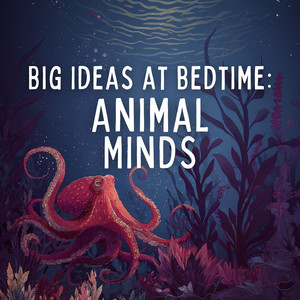
We're starting a new ongoing series called Big Ideas at Bedtime, where we'll delve into ideas and concepts people often wonder about.
Tonight, we'll be exploring a topic that's long been a source of fascination, animal minds.
How intelligent is a bird or an octopus?
And what exactly are animals thinking and feeling?
For a long time, these things were total mysteries.
We could only wonder.
But over the centuries, philosophers and scientists have been trying to understand how, like us or unlike us, animals really are.
This exploration is presented in somewhat of a chronological order, touching on some of the earlier perspectives of ancient philosophers and others whose ideas are now largely a thing of the past.
But we'll try to keep things simple and relaxing, so you can follow along easily.
It's fascinating to consider how our views as human beings have changed over the centuries.
As an animal lover, I'm relieved to know our understanding has progressed so much and perhaps there's still a fair way to go.
Now as always, don't worry if you drift off to sleep whilst listening.
You can come back and pick up wherever you left off another time.
So make yourself as comfortable as can be, relaxing into the support of your bed.
And as you settle into the quietude of this moment, embracing the chance to rest, remind yourself that tomorrow is an opportunity to start afresh in any way you see fit.
Perhaps you're feeling bogged down by something, or you're doubting yourself in some way.
Maybe you've even associated certain behaviors or emotions with your sense of self so much that over time you feel it's become completely ingrained in who you are.
It can be really challenging to let go of those things.
But a new day presents a new opportunity to be the person you want to be, without feeling held back by any sense of negativity.
So, as you settle further into bed, preparing for a good night's sleep, Take some deep breaths and, with each exhale, release anything that you no longer wish to associate with your sense of self.
Maybe it's certain anxieties, ill feelings towards someone or a sense of self-doubt that is holding you back.
If any of this resonates with you, just know that that negativity doesn't have to be a part of you anymore.
With each release of the breath, let it flow out of you.
And know that tomorrow is a chance to start afresh and to evolve and grow.
We all deserve happiness and self-love.
And though it won't always be a constant, it's important to avoid hanging on to anything holding you back from having that freedom of mind and comfort within yourself.
I hope you rest well tonight.
And when you wake tomorrow, you can feel that sense of positivity and renewal coursing through you.
For now, just listen to the sound of my voice as we begin our story and explore the mystery of animal minds.
Think of an animal you know, your own pet perhaps, or any dog or cat.
What's going on in their mind?
Sometimes you might feel like you have some idea.
You can imagine their thought process and guess at what they might be feeling.
But then again, you're probably aware that you can never really know what it's like to be a dog or a cat or any other animal.
Animals are fundamentally different from us, and their minds are something of a mystery.
Humans have always lived in close contact with animals.
They've been our companions for tens of thousands of years.
Dogs were domesticated at least 15000 years ago and possibly much earlier, followed by sheep pigs cattle, horses and then cats.
Perhaps it was in this period of history that people first became curious about animal minds.
If your days are spent herding sheep or riding horses, you can't help but wonder what they're thinking, or if they're thinking.
So, these are the big questions we're looking at tonight.
How intelligent are animals?
And to what extent are their minds knowable?
Let's start with an early example of someone who took an interest in animal intelligence.
Aesop was a storyteller who lived in Greece in the 6th century BCE.
Perhaps you know Aesop's fable, The Crow and the Pitcher, which tells the story of a thirsty crow.
The bird drops pebbles in a pitcher one by one to make the water level rise so it can drink.
The story was most likely based on Aesop's own observations, and it's an insightful depiction of corvid behavior.
Modern scientific research shows that crows really are that clever.
They're capable of a certain kind of reasoning.
The ancient Greek philosopher Aristotle, who lived in the 4th century BCE, also took an interest in animals.
He wrote numerous scientific texts cataloguing animals, describing their anatomy and making observations about their behaviour.
Aristotle didn't perform experiments.
Instead, he observed a wide range of living animals, everything from bees to octopuses.
However, while Aristotle recognized animals' intelligence, He saw it as more of a practical intelligence, something based on instinct and perception.
Animals lacked humans' capacity for reason.
On the whole, Stoic philosophers in ancient Greece and Rome also took this view.
Animals were intelligent in their own way, but they acted on instinct and were incapable of reason.
Now, there are a couple of issues with this viewpoint.
Firstly, if we dismiss animal intelligence, labeling it as inferior to human intelligence, we're less likely to be curious about animals.
We're not as motivated to study them, to learn more about how their minds work.
And there's another problem.
Although Aristotle and the Stoics didn't condone animal cruelty, their attitude has some troubling implications.
If we think that animals are below humans, it doesn't matter so much if we treat them well or not.
They're not so different from inanimate objects which exist for our use.
That brings us to another influential figure in the debate, the 17th century French philosopher René Descartes.
He was the one who famously said, I think, therefore I am.
Well, according to Descartes, animals don't think.
He argued that they are merely automata, mindless machines.
They aren't conscious, and they can't feel pain.
Of course, this belief seems shocking to us now.
And it's particularly hard to fathom knowing that Descartes had a beloved pet dog called Monsieur Grat or Mr Scratch.
Nonetheless, Descartes did say that animals are essentially machines.
And as a leading figure in Western philosophy, he was incredibly influential.
This is what Nicolas Malbranche, a philosopher inspired by Descartes, had to say about animals.
They eat without pleasure, cry without pain, grow without knowing it.
They desire nothing, fear nothing, know nothing.
Other rationalist philosophers, including Spinoza, Kant and Leibniz, also took a fairly dim view of animals.
For better or worse, rationalist philosophy had a profound influence on early modern science.
Perhaps this explains why it took so long for scientists to take animal intelligence seriously.
But in terms of general cultural attitudes in the West, there's also another influence we need to consider.
Religion.
Nowadays, of course, the majority of Christians believe it's important to treat animals well.
But early Christian theologians, people like Thomas Aquinas, saw animals as inferior.
Aquinas, who lived in Italy in the 13th century, argued that we shouldn't be cruel to animals, but only because that might lead to us being cruel to people.
Ultimately, he shared the view of thinkers like Aristotle.
Animals were irrational and thus inferior.
What's more, God made animals for human use and, according to Aquinas, there is no sin in using a thing for the purpose for which it is.
Some early Christian thinkers also believed that animals lacked immortal souls.
While this viewpoint is theological rather than philosophical, it's not so far removed from Descartes and his belief that animals are mindless machines.
Ultimately, the implications are the same.
Animal intelligence, if it exists, is so inferior to human intelligence that we don't really owe them anything.
Animals have no moral worth, so there's no need to worry about their rights.
Now you might be thinking that these are just the opinions of a few men, some random philosophers who lived centuries ago.
Does it really matter what they thought?
Well, yes, it does.
Thinkers such as Descartes and Aquinas were extremely influential.
They made a lasting impact on cultural attitudes across Europe.
At this point, you're probably wondering, what about the other side?
Surely there was someone who took a more positive view of animals.
And thankfully, yes, there was another French philosopher.
Michel de Montaigne was one of the most important philosophers of the Renaissance.
A prolific essayist, he wrote on all kinds of topics, from customs to cannibalism.
But for our purposes, what's interesting about Montaigne is what he had to say about animals.
In one essay, written in the late 16th century, he declares that man is no better than the animals.
Montaigne challenges the idea of human superiority.
It's just vanity and arrogance, he says, that make people think they're better than animals.
And there's plenty to admire in the animal world.
For instance, he writes why does the spider make her web tighter in one place and slacker in another?
Why now make one sort of knot and then another if she has not deliberation, thought and conclusion?
We sufficiently discover in most of their works how much animals excel us and how unable our artists to imitate them.
For Montaigne, there's no doubt that animals think and feel.
Just because we have language and reasoning abilities, it doesn't make us any better than them.
Other philosophers also had a more sympathetic attitude towards animals.
In the 17th century, the English philosopher John Locke took issue with Descartes and his idea that animals were no more than machines.
Here's what Locke says about animals.
For if they have any ideas at all and are not bare machines, as some would have them, we cannot deny them to have some reason.
It seems evident to me that they do some of them, in certain instances, reason.
And a bit later in the 18th century, the Scottish philosopher David Hume also made a case for animal intelligence.
According to Hume, animals are capable of learning from experience and understanding the link between cause and effect.
They do indeed have thought and reason.
The real turning point came in the 19th century, not with a philosopher, but a scientist.
As we've seen prior to this, ideas about animal cognition were mostly pretty abstract.
Some philosophers said that animals were just machines.
Other philosophers disagreed, and that was more or less it.
Although some people took an interest in animal minds, there wasn't much in the way of systematic research.
But that began to change in the 19th century, thanks in part to the English naturalist Charles Darwin.
Darwin recognized that when comparing the mental abilities of animals and humans, there was a spectrum.
In his words, the difference in mind between man and the higher animals, great as it is certainly, is one of degree and not of kind.
Although this statement might not seem groundbreaking, it was the start of a shift.
Acknowledging that animals had a kind of intelligence and that they existed on a continuum with humans meant that they were worthy of study.
Darwin also believed that animals had a deep capacity for emotion.
In his book, The Descent of Man, published in 1871, he wrote at length about animals and emotions.
According to Darwin, the lower animals, like man, manifestly feel pleasure and pain, happiness and misery.
He gives examples of playful puppies, ill-tempered horses and sensitive baboons.
Sometimes, perhaps, he goes a little too far, giving animals human emotions and personalities.
Nonetheless, Darwin helped to lay the foundation for scientific study of animal cognition.
At last, it was time to take animals seriously.
As we move from philosophy to science, let's look at animal intelligence in a bit more detail.
What evidence do we have for their intelligence?
And how do different species compare?
Let's start with crows, one of the undisputed geniuses of the animal kingdom.
Time and time again, crows have proven themselves to be remarkably clever.
For example, they're able to hide food and also keep track of where other crows hide their food so they can later steal it.
In order to be that sneaky, they need to have an impressive spatial memory.
Crows are also capable of creating tools.
For instance, turning a twig into a hook so they can pull food out of a hole.
Given that crows have problem-solving capabilities, we might put them in a similar category of intelligence to monkeys.
However, crows and monkeys have very different brains.
All primates, including humans of course, have a portion of the brain known as the neocortex.
This allows us to think and problem solve at a more advanced level.
Birds lack a neocortex, but scientists have discovered that crow's brains have dense clusters of neurons which make them capable of highly intelligent behavior.
Crow's brains evolved over time, just like ours.
And of course, there are clear evolutionary advantages to intelligence.
If you can make tools to get food, for instance, you have a better chance at survival.
But sometimes, it seems that animals use their intelligence just for fun.
Young corvids are known to play complex social games.
And then there are parrots, some of whom are better at cognitive tasks than the average five-year-old human.
Parrots also use their intelligence in a playful way, solving puzzles and echoing human speech.
Now, there may be evolutionary reasons for this kind of behavior.
But either way, it forces us to reflect on what exactly we mean by intelligence and how animals compare to humans.
We too use our cognitive abilities just to have fun.
Tackling a Sudoku, for example, or playing a video game.
Our intelligence allows us to get more out of life.
And if the same can be said of birds dolphins, elephants or any other animal known to play games, are they really that different from us?
As we've seen, for centuries, human intellectuals were so dismissive of animal intelligence.
But now finally, scientists are catching up and realizing that the gap between humans and animals may not be so great after all.
Of course, that's not to deny the differences.
Obviously, we have different brains.
And in different species, intelligence doesn't always manifest in the same way.
But what's become clear is that historical attitudes like Descartes dismissing animals as machines incapable of thought, were completely wrong.
The more scientists study animals, the more examples they find of surprising intelligence, from some dogs' vast vocabularies to pigs' abilities to play video games with their snouts.
When we're presented with this kind of evidence, the intelligence of the animal seems obvious.
You don't need to read scientific papers to become convinced that crows are clever.
Witnessing their behavior is enough.
With some animals though, it can be harder to assess just how clever they are and how they think, if at all.
Take fish, for example.
As fond as you might be of your pet goldfish, you probably wouldn't rate its intelligence very highly.
And many people have no qualms about eating fish, in part because they're generally perceived to be less intelligent than other animals.
If we are going to make a hierarchy of intelligence, we'd put ourselves at the top, with monkeys, corvids and dolphins, high up dogs and cats somewhere in the middle and fish at the bottom.
Above insects, maybe, but pretty far down.
And on a side note, we shouldn't be too quick to dismiss insects.
Just look at ants and what they're capable of in a group.
Solving puzzles and using all kinds of environmental cues to navigate.
But let's get back to fish.
There's a widespread belief that fish have a three-second memory.
But that is simply not true.
In one scientific study, some fish were trained to evade a trap.
When they did the test again a year later, they were even better at finding the escape route.
And these weren't special super-intelligent fish.
They were just ordinary fish that had been caught in a creek and trained for about an hour.
Fish learn more quickly in a group as they observe each other's behavior.
And not only do they learn from their peers, but they also pass information from one generation to another.
What's more, they're capable of something called time-place learning.
If you've ever owned fish, this is something you've probably seen for yourself.
How they learn to gather in a certain part of the tank at feeding time.
So, fish do indeed show signs of intelligence.
Scientists also agree that they feel pain.
While their brains may be different from ours, fish and humans have the same pain receptors.
A more complex picture is starting to emerge.
And, if you think about it, there is an interesting parallel.
Just as people used to be dismissive of animals in general, something similar has happened with fish.
We've been slow to recognize that fish too have minds and feelings.
Of course, they don't think in the same way that we do.
And they must experience the world in a very different way, which we may never be able to fully understand.
But remember what Darwin said.
When we're comparing the mental abilities of animals and humans, there is a spectrum.
We're different.
But are we that different?
So far, we've been focused on the topic of intelligence.
But there's more to life than how intelligent we are.
As humans, our experiences on Earth are complex and varied, involving a whole range of physical sensations and emotions.
So, what about animals?
As we've seen, the experience of pain is not unique to humans.
It's something that most, if not all, living creatures experience in one way or another.
This raises questions about other kinds of experiences.
For example, what colors can an octopus perceive?
Do bees dream?
And can a pig experience hope, shame, or nostalgia?
These questions might seem unimportant or even silly, but actually, they are worth thinking about.
These days, scientists and philosophers are interested in taking things even further and understanding how animals experience the world.
So, what we're talking about now is not just animal intelligence, but animal consciousness.
And that's a big, tricky topic.
Testing a bird's intelligence is one thing, but understanding its thoughts, perceptions and self-awareness is quite another.
One obvious block is communication.
Although we've learned to communicate with some animals, so far there are none not even the African grey parrot that are able to give us meaningful information about their inner life.
We can make some inferences from observing their behavior, But again, there's a limit to our learning.
For instance, you spend so much time with your pet dog or cat, but do you ever really know what's going on in their head?
All you can do is make guesses and assumptions, which are affected by our own human biases.
Your dog might be thinking about how much he loves you, but equally he could be thinking about something completely different.
Food, the prospect of a war, or even the meaning of life.
There's no way of knowing.
Another option, of course, is to study animals brains.
In recent years there have been significant advances in neuroscience that might provide some answers.
If we have a deeper understanding of a bat's brain, for example, maybe we can understand to some extent how a bat experiences the world.
Not what it thinks, but at least what it's capable of perceiving.
However, despite our best efforts, there's something about consciousness that's just challenging.
In fact, it's debatable whether we can even truly know and understand another human being, let alone an animal.
Maybe animals are just too different from us.
In the 1970s, the American philosopher Thomas Nagel published a famous paper entitled What is it like to be a bat?
In this essay, he discussed the difficulty of understanding consciousness.
The thing about consciousness is that it's so subjective.
That's true whether you're talking about a human or an animal.
But to give one example, think of a bat.
How does a bat experience things?
Is it possible to see the world from the bat's point of view?
Well, consider the fact that bats interact with the world in a completely different way to humans.
They use echolocation, producing sound waves that echo in order to find their way around.
According to Nagel, the answer to the question what is it like to be a bat?
Is simply we don't know.
And we can never fully know, because our understanding is limited by our subjective human perspective.
The mind of a bat, or any other animal, is essentially unknowable.
Not everybody agrees with Nagel, but to this day many experts feel that understanding animal consciousness is a near impossible task.
Still, that doesn't mean we shouldn't try.
And according to some scientists, we should accept that, at the very least, animals have the capacity for consciousness.
Their way of experiencing the world may be different from ours.
But that doesn't make it inferior.
In 2012, a group of neuroscientists signed a declaration known as the Cambridge Declaration on Consciousness.
The gist of the statement is this.
Even if animals have different brain structures to humans, they're still capable of conscious experience.
Here's a quote that further sums it up.
The weight of evidence indicates that humans are not unique in possessing the neurological substrates that generate consciousness.
Non-human animals, including all mammals and birds, and many other creatures, including octopuses, also possess these neurological substrates.
In other words, the hardware for consciousness exists in many different animals.
It's there in their brains.
The Cambridge Declaration doesn't claim to be a complete understanding of animal consciousness.
But it makes the point that based on scientific evidence, we should assume it exists.
So, where does this leave us?
Animal consciousness may or may not be knowable.
That's still up for debate and perhaps depends on whether you take a scientific view or a philosophical one.
As research continues, hopefully we'll get a clearer picture, if not a complete one.
In the meantime, even if we can't know what it's like to be a bat, maybe it's safest to agree with the neuroscientists to believe in animal consciousness.
In our exploration so far, we've mainly focused on Western civilization, thinkers like Aristotle and Descartes.
But now let's take a moment to consider another perspective, one that might help us to accept the mystery of animal minds.
In Buddhism, animals have always been viewed as sentient beings.
Mahayana Buddhism, in particular, emphasizes the concept of Buddha nature.
All humans have it, and so do animals, even if they're not aware of it.
We all have the same essential nature and the possibility of attaining enlightenment.
Buddhism also has a doctrine of rebirth.
One can be reborn in a human or a non-human body.
That means that in a previous life, an animal might have been a human and vice versa.
So for Buddhists, there's never been any doubt that humans are sentient and have some form of consciousness.
That's why it's so important to treat him with respect and compassion.
These are the words of the Dalai Lama, the spiritual leader of Tibetan Buddhism.
Whether they belong to more evolved species like humans or to simpler ones such as animals.
All beings primarily seek peace, comfort and security.
Life is as dear to the mute animal as it is to any human being.
In Hinduism, too, many people have similar views about animals.
Various Hindu scriptures emphasize compassion towards all living creatures and recognize a fundamental connection between humans and animals.
Here's an extract from an ancient Hindu text, the Bhagavata Purana.
Deer, camel, donkey, monkey, rats, creeping animals, birds and flies.
One should consider them like one's own children and not differentiate between one's children and these creatures.
It's important to note that there's a wide range of beliefs within Buddhism and Hinduism.
Not everyone shares the exact same viewpoints and there's some debate about the extent of animals' awareness compared to humans'.
However, for many Buddhists and Hindus, animal consciousness, or animal sentience at least, is a given.
Of course, you don't have to be a Buddhist or a neuroscientist to believe in animal consciousness.
It's something that many of us recognize instinctively.
Whether or not we understand their minds is almost beside the point.
What matters is that we acknowledge their sentience and see that, on some level, we are similar.
This recognition comes much more easily when we're thinking of our own pets.
There's no doubt that your cat is conscious.
But what about a lobster or an octopus?
This is where it becomes a bit more controversial.
Remember what we were saying earlier about fish intelligence.
We tend to view fish and other sea creatures as inferior, in some way less intelligent and perhaps with a lower capacity for pain and consciousness.
However, this might be about to change.
Some countries are starting to recognize that certain crustaceans are sentient and capable of experiencing pain.
The UK government recently passed the Animal Welfare Sentience Act.
This legislation recognizes that decapod crustaceans, such as crabs and lobsters, and cephalopod mollusks like octopuses are sentient beings.
So, many people agree that these creatures feel.
But do they think?
Now, it's time to take an in-depth look at one particular creature, the octopus.
When we're comparing humans and animals, the octopus is about as other as you can get.
These extraordinary creatures are different from us in just about every way.
They have three hearts, eight arms, and nine brains.
A central brain in the head, plus one in each tentacle.
They have blue blood, and they live short, solitary lives in the ocean.
So it's not surprising that throughout history we've mostly ignored octopuses and shown little interest in their minds.
While there were some scientific studies in the 20th century, it wasn't until the 2000s that research into octopus cognition really took off.
Scientists are now fascinated by octopus's remarkable intelligence.
They can solve problems, make tools out of rocks and shells and recognize individuals that belong to different species.
Octopuses can tell humans apart and make their feelings known.
One octopus was known to squirt water at a person they apparently disliked.
However, we're still just scratching the surface.
Scientists don't yet fully understand how octopuses process information or to what extent they are self-aware.
And it's this element of mystery that makes the creatures even more fascinating.
With minds and genetic makeups so different from ours.
Octopuses have been compared to aliens, The closest thing we have on Earth to extraterrestrial intelligence.
And it's not just scientists who are curious.
The general public is also becoming increasingly interested in octopus minds.
A recent documentary, My Octopus Teacher, explored an unconventional friendship.
The bond between the filmmaker and a wild octopus.
The film was a hit, partly because it was surprisingly moving.
It forced viewers to consider, perhaps for the first time, that there's more to these creatures than meets the eye.
Attitudes are slowly changing.
If it's possible to connect with an octopus and if we accept the capacity for consciousness in most, if not all animals, then what?
Well, for a start, there are some obvious ethical questions to consider.
Some people might want to rethink their diets or change their stance on animal welfare.
Things that may have once seemed absurd, like the notion of crustacean rights, now appear quite reasonable.
However, as important as these things are, it goes even deeper than that.
Perhaps we'll never know what it's like to be an octopus, a bat, or even a dog.
But it seems we'll never lose that fascination, that desire to know.
It's a very human curiosity and in trying to better understand animals we might transform our understanding of intelligence, consciousness and even life itself.
It's certainly something to think about.
Thanks for watching!
Thank you.
Let's pray.
Thanks for watching!
Thank you.