Hello, welcome to Roundtable, where we serve up piping hot debates on the issues that sizzle in China and beyond.
I'm Yuhan Lin. In the city of Melians, how do you make sure every voice can be heard when needed?
Beijing has been practicing a 1 -2 -3 -4 -5 system for the past several years, and it's working.
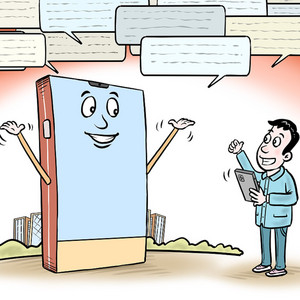
Through this smart system, citizens' complaints are not just listened to but acted upon.
From swift responses to a smarter and happier city, how many more steps are still ahead?
What are some other modern governance trends transforming urban life?
For this episode, I'm joined by Lai Ming and Yuhan.
Now grab your virtual compass and follow us to the heart of the discussion.
Ever had that one complaint about your neighborhood that you felt was just going into the ether?
No one listening? No one caring?
Well, Beijing is turning that on its head with a system that takes your every call seriously, promising that your traffic complaint might just be the most important thing on someone's to -do list.
To talk about this specific topic, I'd like to ask both of you, Lai Ming and Yuhan, have you ever filed a complaint?
Not in person. I mean, in a restaurant, if you're not happy with the dish, of course.
Talk to the server.
Most occasions. Yet, have you ever filed a complaint through a telephone call or an online complaint accepting kind of page or anything?
Well, I'm more directly confrontational kind of guy.
So when I'm not satisfied with anything, for instance, a loud neighbor, I just go and knock on their doors.
And so in most cases, they will respond immediately.
They will tone it down a bit.
So I haven't had the occasion to really make a call to the authorities to launch a very official complaint about anything.
But I see now with this forum being held and now with the publicity on what Beijing is already doing, I think I got more leverage against my neighbors.
This is very interesting because when I was living in Hong Kong, for example, I had received a complaint not directly from my neighbor.
The complaint was actually from my neighbor about us getting home a bit too late because we had to do the self -studying session at school.
So that was it was a bit late when I get back home and maybe we slammed the door behind us a bit too hard.
Anyways, the thing is, they didn't come to us directly.
They go to the house property management and it was the house property management people who come to our door and talk about this issue.
So that was the first taste of complaint dealt with for me, even though it was not my complaint.
You were the target of the complaint.
I was the target of the complaint, but I suddenly realized, oh, so here's a system for everything instead of going to the doorstep of your neighborhood and talk to their face.
Actually, there is the other way to do things.
And that was a fun experience.
How about you, Yuxuan?
Have you ever complained?
About anything? File a complaint in a very official way.
I mean, we're talking about this forum that's held in Beijing now.
And as a Beijinger who's been living here for 20 some years, I actually had dialed that hotline for once.
The hotline one, two, three, four, five.
That's we call it the mayor's hotline, right?
The Shi Zhang Ruisen, something that you can just dial and like say your problems or voice your issues.
And the mayor was going to take your call and talk to the mayor, someone that works for the mayor is going to take your call and going to address the issue.
And in my case, I actually dialed that because I was dining in a restaurant next to my community and it's supposed to be a non -smoking area.
You know, now that Beijing and a lot of public facilities have this sign like pasted on their walls, specifying that it's not allowed for smoking indoor.
But still in that restaurant, they were all like old middle aged guys.
I'm not trying to give any stereotypical views on them, but on that day it was all middle aged guys smoking around me.
And I felt like super, super annoyed by that.
And I just dialed it and the female voice just calmed me down immediately by trying to ask for every single details of where that restaurant is, what was the issue and how bad it was.
And also, like, what's the time and how are the waitresses or the staff of that restaurant was responding to it.
And then a few weeks later, when I go back to that restaurant, I can see bigger signs of non -smoking inside the restaurant.
I'm sure the biggest sign came with more stringent measures on the part of the waiters and waitresses for them to interfere.
And you can just tell how this whole mechanism is working at this point.
Like, I dialed someone and someone took in my complaint and found a way to have my voice come back to what I'm complaining about.
It sounds easy, doesn't it?
It sounds like you file a complaint, someone go deal with the issue.
But if you come to think of it, the reason is called the Mayor's Hotline or it's nicknamed the Mayor's Hotline is because actually it's a very complicated thing.
You are calling about someone smoking in a non -smoking area.
Someone might be calling about a traffic light that has too short a time for the green light period that they cannot get across the crossroad with that limited time someone else might be calling because their neighbor is decorating their houses and it's beyond working hours.
And if you really think about it, all these complaints have to be dealt with by different departments in the city.
It's not like you call someone and that exact someone can just put down the phone and stand up and go out of the street and go to the direction you talked about and tell the owner of the restaurant, this is a no smoking area, you should be doing something.
It's much more complicated than that.
And I think that is why this issue deserves to be talked about and it even deserves a forum to be discussed by people from all around the world, thinking about how to improve the living standard, the happiness of their citizens in their cities.
And this specific forum is called Swift Response to Public Complaints Forum.
Yeah, it's something the city of Beijing has been pushing for in the past few years.
And this is very meaningful because we live in a world where cities are, well, the society is rapidly urbanizing as of 2023, more than half of the world's eight billion inhabitants living cities.
And the United Nations expects that figure to reach 70 percent by 2050.
So we are going to be living in the environment that's getting more and more crowded and people have way more interactions than they do when they live in separated villages.
So the encounters and the interactions and the possibility of having conflicts and differences of agreement can arise.
And so it's very important for us to have a way or a mechanism to deal with our grievances if we were to live comfortably in ever more crowded cities.
So before we go into even further details about this one, two, three, four, five, because it's more than just a hotline.
There are apps on our phone.
There are many apps in our WeChat, which is what we usually spend hours on these days here in China.
And there's a page on your computer that you can just easily open and file the complaints.
Before we go deeper into that, let's talk a little bit more about the forum, what we should know about the forum.
So this is according to a recent government report that the Beijing Forum on Swift Response to Public Complaints is held from December 18 to 19, 2024.
And it isn't, well, this is really interesting to me because I only know it as a Beijing based platform.
But actually, it is an international platform dedicated to searching for innovative practical solutions to issues facing public services and sharing experiences on urban governance.
And, you know, the forum is held this year in December, but also it has been held in 2021 and 2022 in Beijing as well.
But well, to be honest, is the first time I heard about it, heard about it.
But you know, it's just a very long term thing that the hotline has remained ever since 2019, I think, because I made that phone call in 2019.
That's how I remember it.
But, yes, it's really nice that now there is like a more globalized international platform that's held in the form of a forum that's addressing this topic as well.
Well, a swift response to public complaints is something the city of Beijing is seeking to achieve.
And it seems that they are doing very well with the examples that it can provide over the past few years.
But this forum, I think this is something like you said earlier, an international platform whereby experts can come together and discuss what we can do with the with regard to the governance of cities, because not only are cities in China, there are plenty more cities internationally and each city might have their
own individual problems and unique issues that they need to deal with.
But I'm sure there are some commonalities with regard to traffic, with community management, with I think certain procedures that bureaucracies that each resident might need to go through.
And and also the way different government organizations and departments can perform and function efficiently, these are things I think have international commonalities if a different mayor from a different country might want to know about.
And actually, the permanent theme of the forum is people city better future makes a lot of sense.
And this year, the special theme is modernizing for people centered urban governance.
For those of you who do not know this, actually, people centered is something that we hear a lot about.
And it is the kind of principle that people work aligned with, it has been there for quite a long time.
And we want to solve people's problems as small as someone adjacent to me is smoking.
It's it sounds like a small complaint yet it bothers you when you're actually at that position.
And I think, let me allow me to be very proud and say this, I think Beijing is really good at, you know, doing this.
If you take a look at the figure in the past six years, Beijing has processed over 150 million public complaints, spending every aspect of urban management and providing services for both the business community and ordinary citizens.
The reason I specify business community and ordinary citizen is because if you actually check the app on your phone, when you're complaining or when you're filing a complaint, you get into the mini app on your phone of the one, two, three, four, five.
Then there are different categories you have to first choose if you're a citizen or if you're a business owner.
So if you're a business owner and something is bothering your business, you can also file a complaint as a business person.
So that's why there are these two categories.
And if we take a look at the resolution rate and satisfaction rate, both of these rates are 97 percent.
But it's not always like this at the beginning.
I mean, five, six years ago, it was actually 53 percent, only half of the complaints were dealt with and also the satisfaction rate were 65 percent, meaning that the kind of complaints that have been dealt with only made over 65 percent of people happy.
The remaining 35 percent people were not happy about the complaints, but thinking about now, now it's 97 percent of people's response have been dealt with and people are happy with the results.
So yeah, we've come a long way and it makes a lot of sense that the forum is happening here.
We can provide many good, I would like to believe examples.
Yeah, there are many mayors from international cities like San Jose, from Costa Rica, and Athens from Greece.
So and also I'm sure there are plenty more mayors coming to the foreign to share their insight and perhaps discuss ways to make the system better to cater to the needs of the residents.
I mean, you mentioned earlier, Honglin, that more issues have been addressed lately.
That is because today over 60 different hotlines have been consolidated into one.
That is the one, two, three, four, five hotline.
And I was just listening to another CGTN program earlier this week that there is one operator that's dedicated to only doing English service.
And according to this guy, it's a very sophisticated process that once they are operator receive a call from the foreigners and they will just transfer this call to the English speaking operators and also have them to maybe just like how my complaint was dealt with back in the days.
These days, there are these English speaking operators helping foreigners delving this so -called Beijing mayors hotlines.
And maybe some of them are lost in Beijing or some.
It's true. I know you're not.
It's a big city. But it's true that when people are lost, they actually dialed this number to ask for directions.
And also this English speaking operator also said that for some foreign residents in Beijing, they also called in to ask for services or say guidance on problems such as water shortage or power outage.
So it's something really closely practically related to daily life that these operators are trying to help with the foreign residents here in Beijing.
And also, according to him in this year, up till now, they have already addressed 403 phone calls in English.
Yeah, that's something.
Not only are they responding in English, I find this tiny little detail a little bit surprising and in the meantime, kind of nice.
That is, they are telling all of those who are answering the phone call to talk to the complaint filer in a moderate voice, in a relatively lower volume, in a softer manner.
Like, please calm down.
Yeah, something like that.
I feel your pain. I mean, the thing is, not only are they working on the actual issue, they're also working on the emotion.
Sure. Trying to deal with the emotion.
And of course, artificial intelligence is in place, trying to figure out what are the most complaint issue.
And what is the next step?
Actually, since 2021, Beijing has annually selected prominent and reoccurring issues from these citizens' complaints and started to figure out what are some issue that they should be working on.
Not passively, but actively and proactively.
So they focused on a project called Monthly Priority.
And using this monthly priority over the past four years, more than 60 issues have been included in special government projects, resulting in the completion of over 1 ,800 tests and the formulation of over 400 policies.
This approach has shifted the focus from solving individual problems to addressing categories of issues, addressing the issue that is commonly seen.
And I think this is another very meaningful aspect of having this hotline.
That is, not only are we solving the problems, we're trying to see what are the areas that would have more problems.
And let's just tackle the problems before, even before the complaints happen.
I think you're right, but I would place the focus more on the system behind the hotline, rather than the hotline per se.
I think the hotline actually is only a tool that facilitates communication and identification of issues.
But the entire system of swift response to public complaints more often is placed on the handling of issues once these problems are identified.
So, yeah, I agree with you, Leiming, because, well, again, quoting from the CGTN show I heard earlier this week.
So what the one, two, three, four, five hotline reflects, it's a new form of government accountability.
It's a Chinese approach that government can be a benevolent force that serves everybody in a very wide variety of ways.
We mentioned how big Beijing is, how complex the form of Beijing is.
It's such a big city and it has 21 million people.
So it's basically one of the largest cities in the whole world.
And the very fact that this system can actually operate in such a large scale is already such an achievement.
So we're not just talking about fixing the street.
We're not just talking about like pointing directions for lost foreigners, but also sometimes it's more like old people who live alone, they're calling in just to try to feel connected by someone.
Like they they're probably not really in need of any instant help of any sort, but just, you know, feel heard and feel like they're talking to someone.
That is also included as part of the services the hotline provides.
That was what astonished me as well.
Again, this is a system that helps people to feel connected and it's an integrated platform to not only address issues, but also like in the meantime, get to the people in a very Chinese approach.
We've got some fans of 1, 2, 3, 4, 5.
And if you really want to praise the 1, 2, 3, 4, 5 system, actually, when you go into the mini app of the 1, 2, 3, 4, 5, there is a column of praising something.
In Chinese we say biao yang, so you can actually click on it and tell people what are the things that they're doing really, really well and you want to speak high about.
So yeah, there's that.
Positive complaint that you can leave for people.
Interesting. So the other point I'd like to highlight is what you mentioned slightly earlier.
And that is this is the 1, 2, 3, 4, 5 hotline actually is a consolidation of some existing hotlines.
It's the reason why people are able to get this with response like you said, got earlier with her complaint about somebody smoking next to her in a restaurant.
Now we already have a hotline, I believe about smoking in prohibited areas.
I think I made a complaint similarly, but not on the platform that we are talking about today.
And that issue was addressed too.
And the other example that you mentioned about elderly people seeking company or seeking to be heard.
I'm not sure that 1, 2, 3, 4, 5 people can provide the immediate solutions to what they need, but I'm sure they know someone who knows someone who can, who can provide the expert guidance to elderly people who do have the need.
Okay. So the they know someone who knows someone who might know someone is only Leimings assumption.
And I know for a fact, actually more high tech resolutions are involved in the whole process.
Big data, artificial intelligence, actually not only here in Beijing, but for example, in Hubei, that is a province in the southern part of the country.
I'm not really sure if you're familiar with the idea of digital twin, that is to basically have a collection of data, having all the information, the data of a city or a person or event in the forum in the virtual universe that is on any kind of server or in the computer.
And the reason we are having that is to have all the information about the entire city, about the situation in the computer so that when things happen, they can find a better way, the fastest way, the swift way to get into the problem.
And that is the high tech element I was talking about.
The reason we can have the complaints solved in time and properly so that people can be happy about is because we have the data of the city.
We even have number of each and every building and also the shape of the building in the form of data is stored in the huge server.
I have personally visited a high tech company and they're providing a smart solution for cities.
And I want to walk into the hall.
I see this huge screen of all different information of the city, the traffic, the weather, whether or not different shops are opened.
And that system is hooked into the surveillance cameras in the city so that when you actually file a complaint, they can find the right person at the right time, at the right place to go deal with the problem.
And I feel like that is the next step we're looking at.
Because again, Beijing is too big a city.
Maybe these kinds of smart solutions, smart city systems can be easily applied to little towns or little villages where there are millions of people.
You know, see in China, that's our scale, millions of people, small city.
But one is 21 million people in this huge city.
That system is definitely harder.
And also we have different issue to dealt with.
For example, if the civilian camera is in someone's shop, whether or not we should include that in the system.
Who should have the authority to visit such system?
And what kind of emergency is too big an emergency that we need to alert everybody?
All these issues definitely would be dealt with in the future and hopefully would be talked about on the forum.
Yeah, I think we talk about this similar practice between different government organizations, central government organizations.
And that has made things much easier for people.
For example, that are seeking to get have the visa approved or get a new passport, that kind of thing will get a new identification card.
But now we're only beginning to see similar things taking place on the city level.
And imagine the kind of data that the city has to collect to create more like a twin of the entire city rather than the twins of individual residents in the city.
And this would drastically help with a lot of work.
For instance, smart man Hall covers can help the authorities monitor the flooding situations and perhaps assist in some emergency rescue operations.
So we are not only promoting the system to solve individual issues of individual residents in the city.
We're also seeking and also aiding the work of different government organizations and departments in what they do.
So I can only imagine, no, in fact, I can't imagine the kind of potential that such a system can deliver going forward.
Well said. The integration of technology into urban governance is changing the very nature of how cities operate.
And we're only hoping for a happier, smarter city for our future.